From Wadeville to workshops across the country
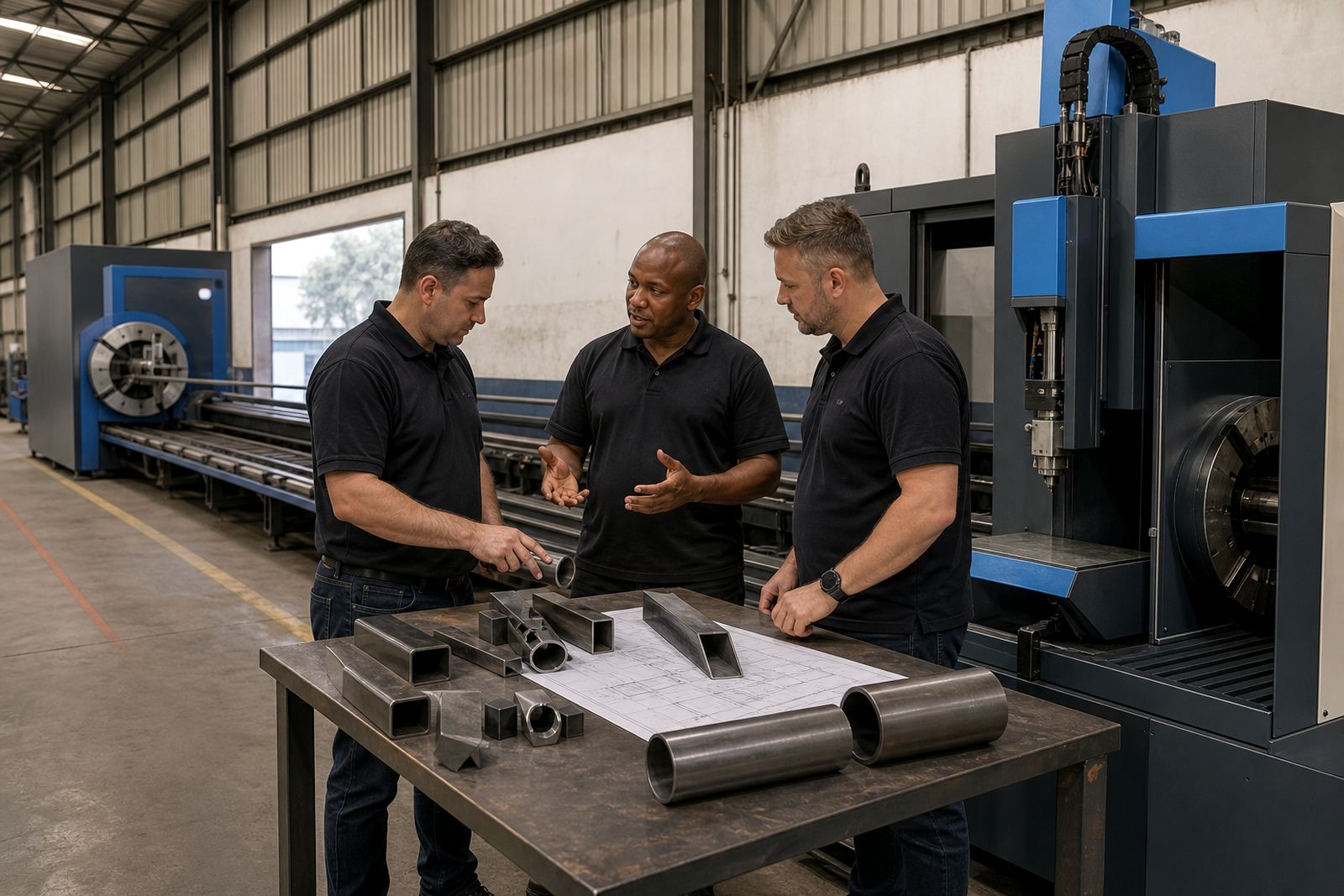
LaserTube is based in Wadeville, Germiston, where heavy industry and metalworking sit close enough to the day to day pace of fabrication. We work with small job shops, medium fabricators and full production plants that cut round tube, square tube, rectangular tube, angle and channel for guards, frames, structural parts, agricultural equipment and general steelwork.
The work around tube and profile cutting is detailed. Material length, clamp points, cut quality, bevel angle, burr control and nesting all affect what leaves the machine. Our role is to match the machine and the setup to the material mix, the workshop layout and the parts that need to be produced. That includes supply, rigging, installation, commissioning and training across Johannesburg, Pretoria, Durban, Cape Town and Gqeberha, with work also reaching Bloemfontein and Nelspruit where fabricators need the same practical hand on the ground.
Our work covers the machine supply, installation and handover, not merely the transaction. That means site assessment before the machine arrives, careful delivery rigging, setting the machine in place, checking alignment and proving that the first parts cut as they should. It also means staying useful after handover when a workshop needs nesting support, chuck alignment, bevel calibration or help on a difficult profile.
The machine choices that suit real fabrication work
Fibre laser tube and profile cutting is not one fixed setup. Some workshops need a compact machine for shorter production runs, while others need longer bed lengths, stronger handling and more automation for regular output. We help match the machine to the material sizes, wall thicknesses and shift pattern in the workshop. That includes straight cutting, precise hole work, copes and mitres, plus bevel heads where angular cuts are part of the job.
Chucks matter here. A good chuck arrangement keeps the tube steady, grips consistently and feeds material without marking it more than necessary. The choice of front and rear support, the clamping method and the loading arrangement all affect repeatability. On profiles, the same care applies to channel and angle, where the shape itself changes how the material sits through the cutting cycle.
Assist gases also form part of the discussion. Different materials and cut finishes call for different gas choices and pressure settings, especially where edge quality, dross and internal cleanliness matter. Safety is just as important. Correct guarding, safe access points, extraction where needed and clear operating routines all form part of a proper installation. A machine can only do its work properly when the surrounding setup is sound.
- Round, square and rectangular tube cutting
- Angle and channel profile cutting
- Bevel head setup for angular edges
- Chuck alignment and material handling checks
- Assist gas setup for the material and finish needed
Installation that respects the workshop floor
A tube cutting machine is only as useful as its setup. Floors need to be level enough, access routes need to work for delivery, and the machine must land where operators can load material safely and move finished parts without crowding the area. That is why our installation work starts with the site itself. We look at the space, the material flow, the service access and the way the machine will sit among the rest of the workshop equipment.
Sibusiso Bhengu leads the installation side, with delivery rigging and commissioning handled in a way that suits the site rather than forcing the site to suit the machine. On larger units, that often means careful positioning, checking clearances, setting up the loading side and confirming the line of travel for tube and profile material. Once the machine is in place, we work through commissioning step by step so the machine is ready for actual production use, not just a power on demonstration.
In many shops, the first difficult part is not the cutting. It is the setup around the machine. That includes safe material staging, correct gas routing, clean operator access and enough room for the parts that come off the table. We take those details seriously because they decide how the machine performs once normal work begins.
Training that leaves operators more confident at the controls
Leanne Mabuza coordinates operator training and nesting training, and the aim is always the same: help the team use the machine properly on real work. That means showing operators how the software ties into the machine, how tube and profile nests are built, how to reduce waste and how to check that a file matches the material on hand. Training also covers practical habits like loading correctly, checking clamps, watching the cut path and spotting when a setting needs attention.
We keep the training grounded in the actual workshop routine. A production plant does not need theory that stays on the screen. It needs people who know how to handle changing tube sizes, short runs, repeat jobs and bevel work without guessing. Smaller shops often need help setting a standard process so different operators produce similar results across a shift. Both setups benefit from clear instruction and direct support.
- Machine controls and safe operator routine
- Nesting for tube and profile parts
- Cut quality checks and first part verification
- Bevel jobs and profile handling
- Material usage and scrap reduction
Service that stays useful after the handover
Machine performance changes when chuck alignment drifts, bevel calibration slips or assist gas settings are no longer matched to the job. Pieter Visser handles service work with a practical eye, because most breakdowns do not start as dramatic failures. They begin as minor changes in cut finish, unusual wear, a loading issue or a setting that no longer matches the material being processed.
Preventive maintenance keeps the machine closer to its intended working condition. That can include checks on motion, alignment, safety functions, wear points and the condition of the cutting setup. Remote diagnostics are useful where the fault can be narrowed down from the machine data and the operator’s description. When a site needs physical attention, breakdown response is part of the service picture too.
Michael Dlamini leads the business side of LaserTube, with Anika Kajee managing sales discussions and applications support around machine choice and fit. Ayanda Mashaba works on applications when a job needs more considered setup, especially where the part mix or material behaviour asks for a tighter process. The team works from one base in Wadeville, but the work reaches fabricators across the country who need a supplier that understands actual production pressure, not just machine brochures.
The contact form is a good way to start a discussion about a new machine, a site visit, training or service support.