

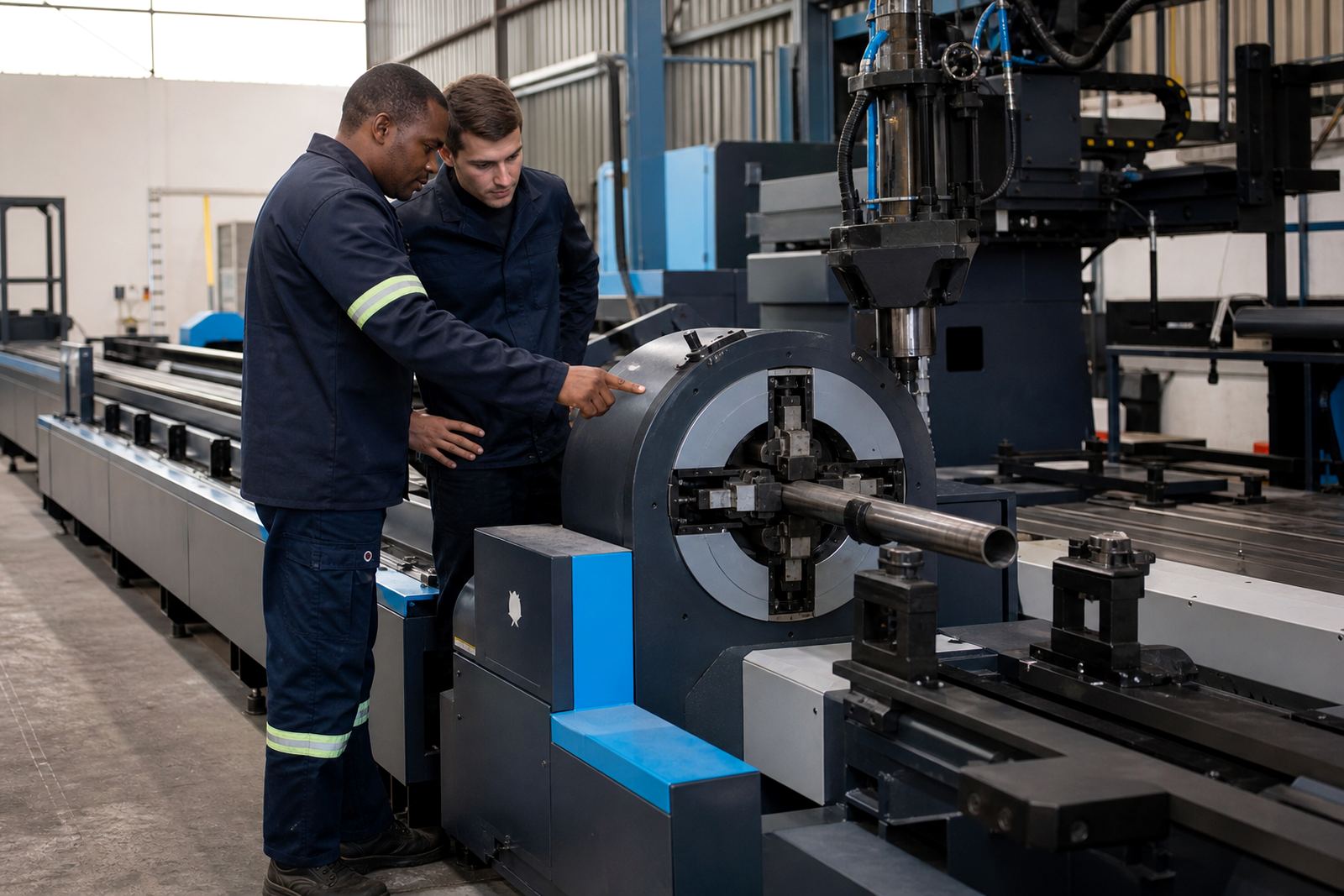
Roles that suit the work on the shop floor
We recruit for technical and customer-facing roles that keep machines cutting cleanly and safely. Some people spend most of their time on installations and commissioning, while others focus on machine sales, applications support, training, or service visits to fabrication sites.
The work changes by project. One week may involve a full machine handover, the next may call for chuck alignment, bevel calibration, assist gas setup or a nesting session with the client’s production team. Good hires pay attention to detail and stay calm when a tube bundle, clamp setup or cut quality issue needs sorting on site.
- Installation and commissioning technicians
- Applications and process specialists
- Sales support for machine enquiries
- Operator and nesting trainers
- Service technicians and maintenance staff
What strong candidates usually bring
We work with people who can read a drawing, speak plainly with fabricators and keep safety in view around high-power laser equipment. A background in sheet metal, structural steel, machinery, automation or industrial maintenance is useful, though the practical fit matters more than a long job title.
- Confidence around mechanical assemblies, sensors and moving parts
- Comfort with tube, profile and nesting terminology
- Care around assist gases, interlocks and guarding
- Willingness to travel for installations and service work
- Clear notes, tidy records and a steady pace under pressure
We also value people who can explain machine behaviour without overcomplicating it. On a busy plant floor, that usually matters more than fancy wording.
Where the work takes you
Our base is in Wadeville, Germiston, and the job often reaches fabrication sites in Johannesburg, Pretoria, Durban, Cape Town, Gqeberha, Bloemfontein and Nelspruit. Some days are local, others mean loading equipment, checking rigging plans and making sure the machine lands safely in the right place.
That mix suits people who enjoy seeing a project through from delivery rigging to commissioning, then back for preventive maintenance or a breakdown call. Coastal sites can bring extra attention to corrosion, dust and humidity, while inland factories may need more focus on layout and handling around the production line.
Training, support and field discipline
Training is part of the work here. Operators need to understand clamps, chucks, nesting software, cut sequences and safety checks before a machine is pushed into daily production. When our team trains clients, the job is not to impress anyone. It is to leave people able to run the equipment with confidence and good habits.
The same attitude applies to service. A technician or trainer who keeps a clean notebook, tests methodically and respects the machine’s settings will fit in well. It helps if you can explain what changed, what was checked and what the next step should be.
People who shape the customer side
LaserTube also needs people who can support quotes, product discussions and job planning without losing sight of the machine on the floor. That includes sales coordination, applications support and practical follow-up on machine specifications, tube sizes, bevel heads and cut quality expectations.
- Reading a client brief and translating it into machine requirements
- Explaining differences between tube cutting and profile cutting setups
- Helping with production planning, nesting and gas selection
- Keeping records for installations, maintenance and service visits
We work with metal fabricators who need straight answers, not theatre. People who are patient, precise and comfortable in industrial spaces tend to do well here.
How to put your CV forward
To work with LaserTube, send us your CV and state the role area that suits your skills. Tell us whether your strength is service, installation, training, applications or sales support, and include any machine types, tooling systems or industrial environments you have worked with.
We read for practical experience, not polished wording. A short note on the jobs you have handled, the sites you have worked on and the tools you know is useful. If you have handled fibre laser equipment, that matters. If your background is in a related trade, that can still be a fit.