

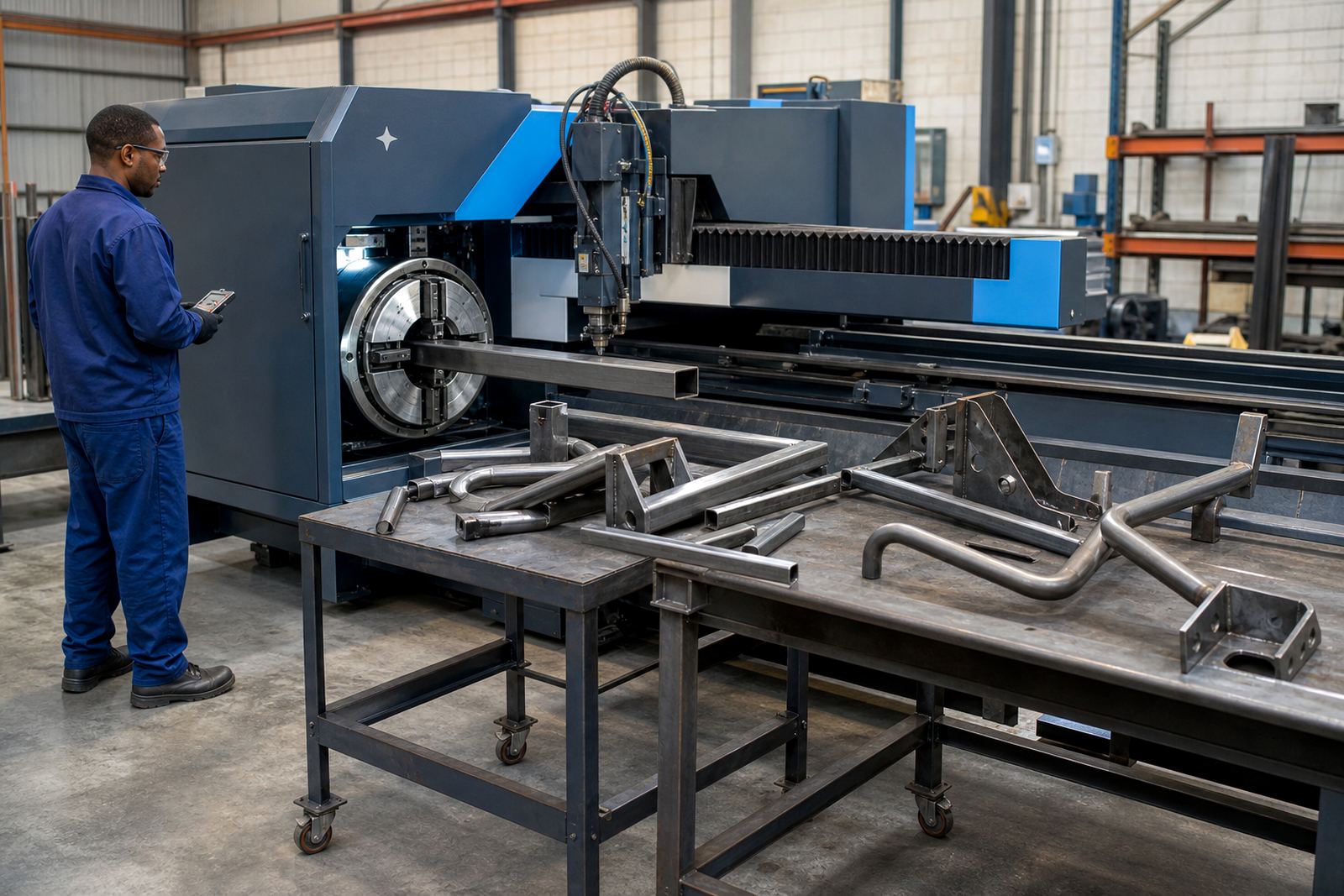
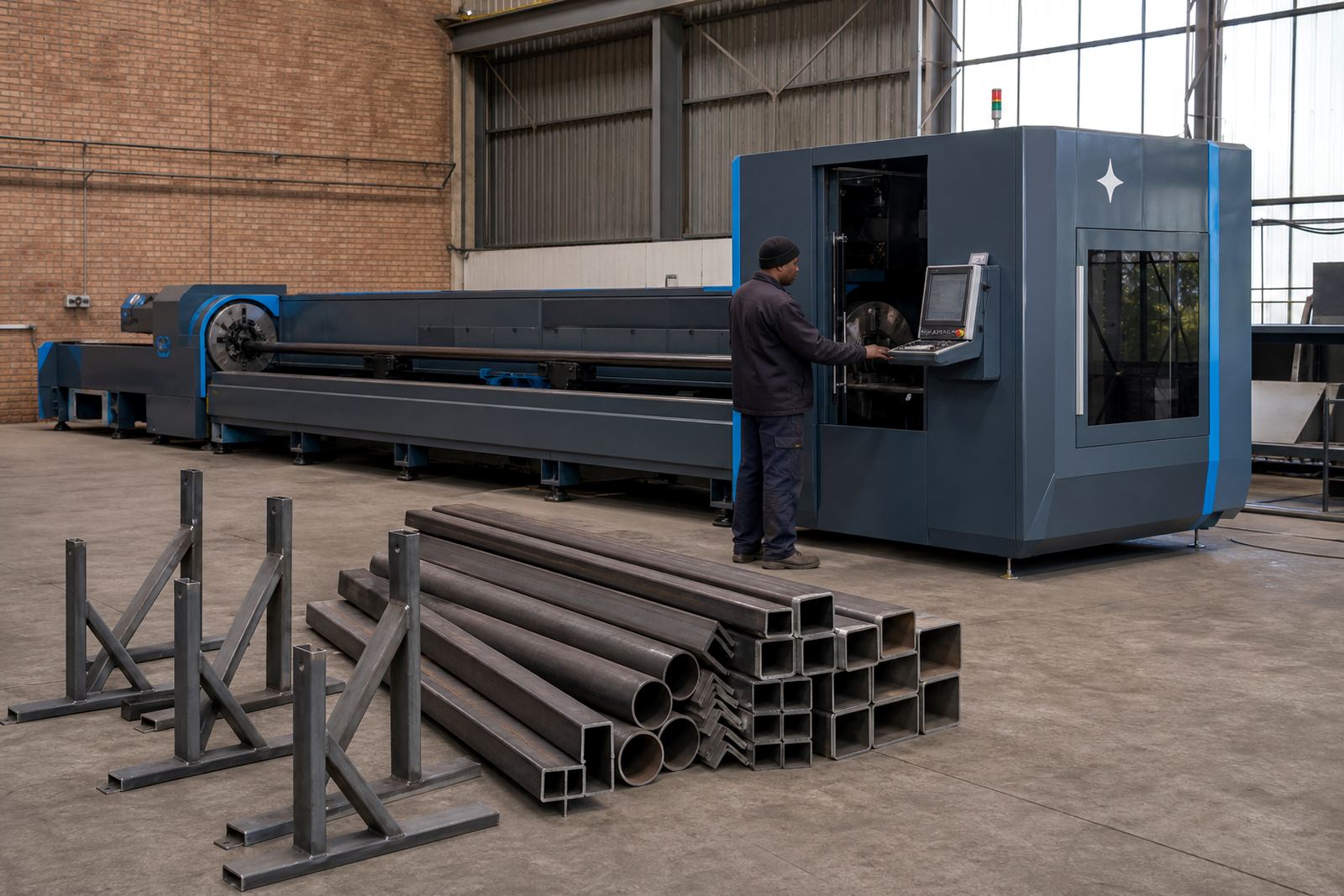
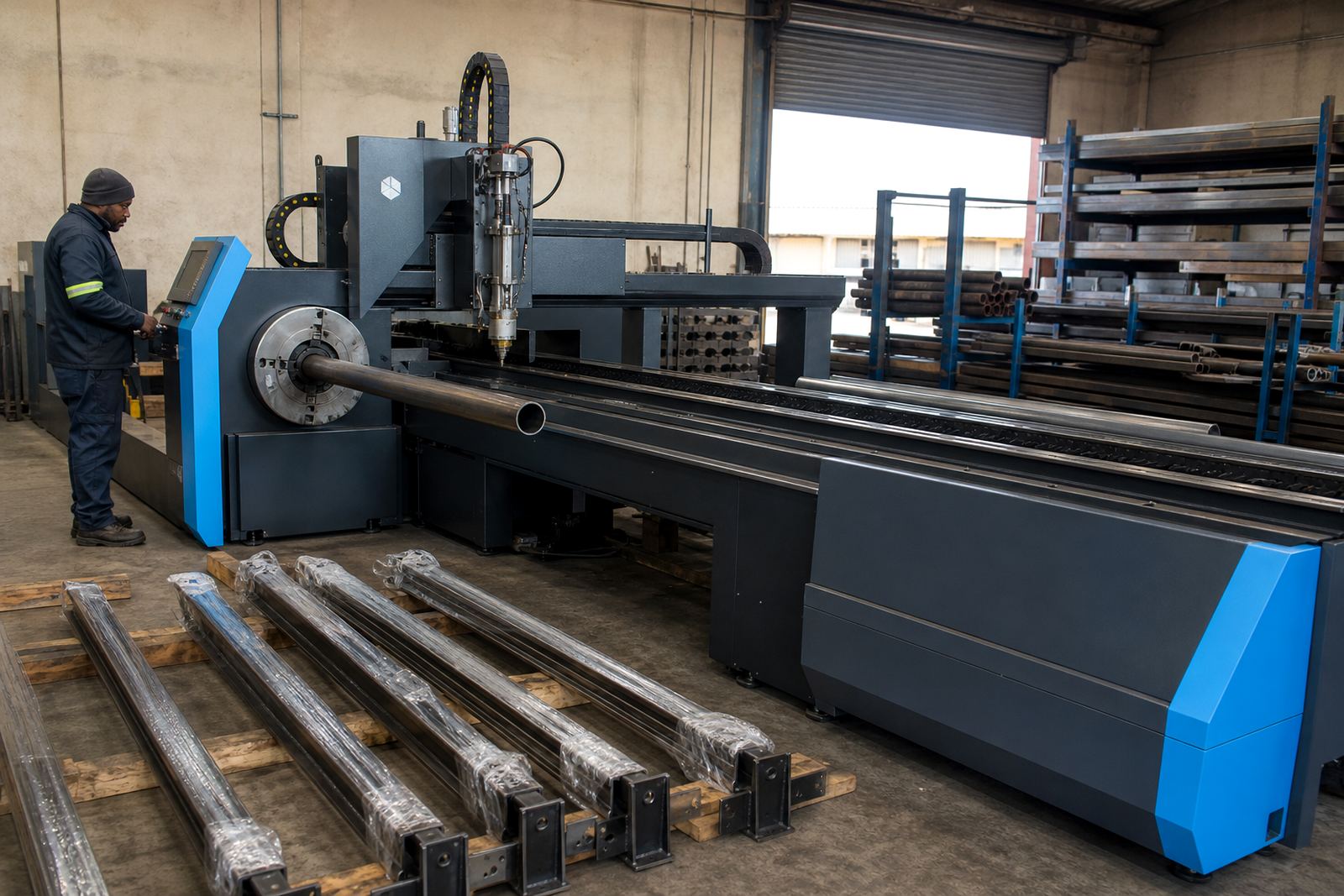
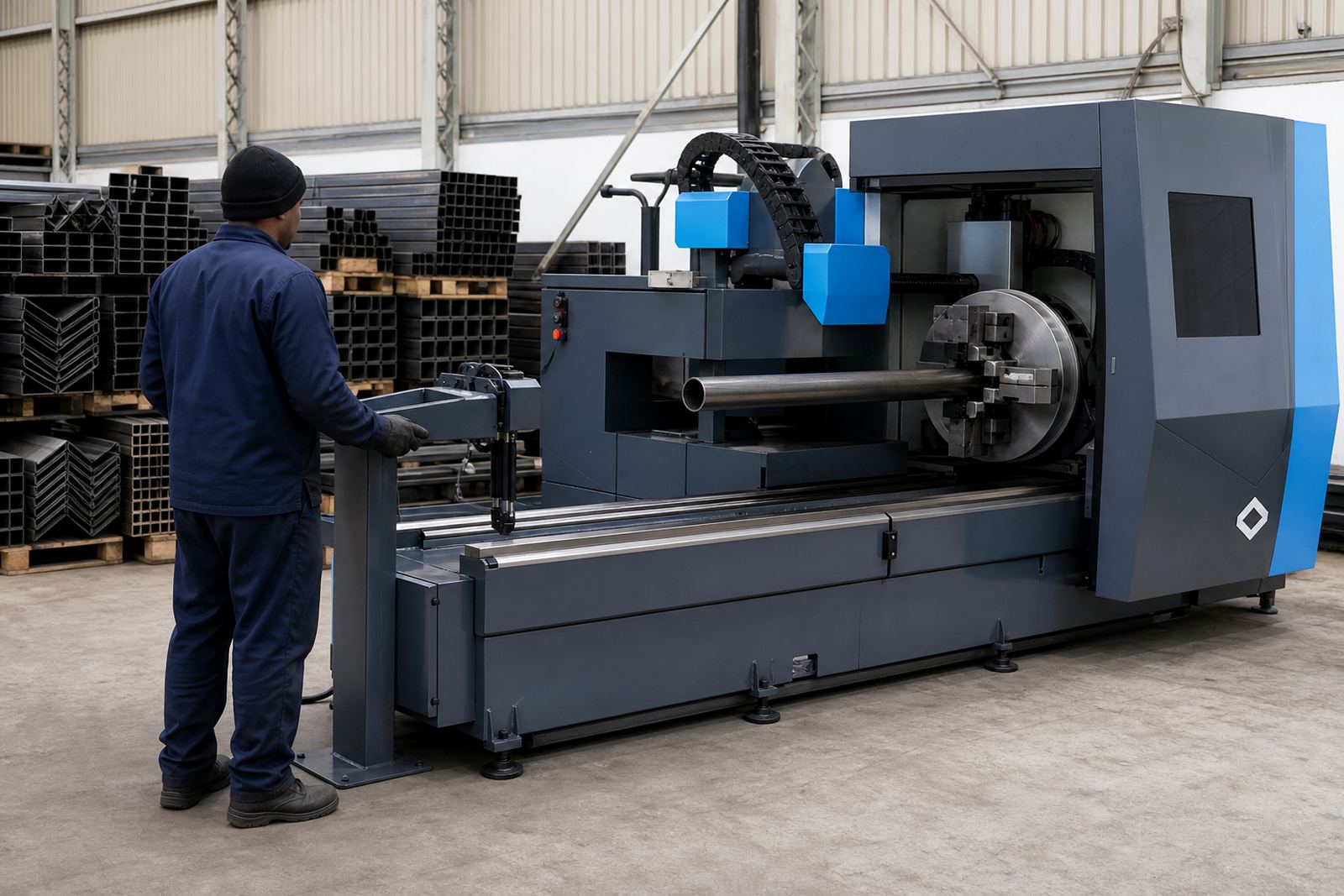
Workpieces that suit tube and profile cutting
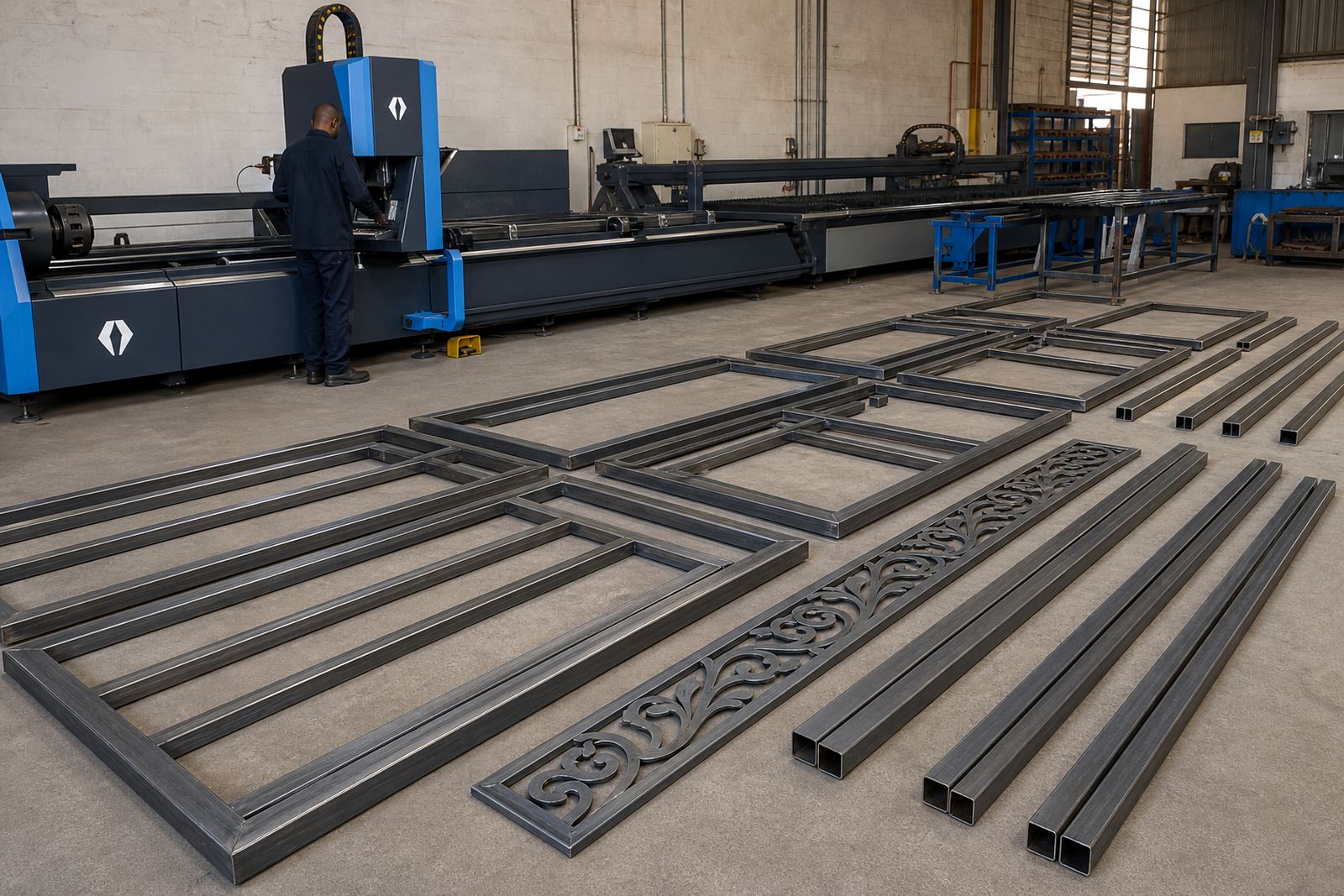
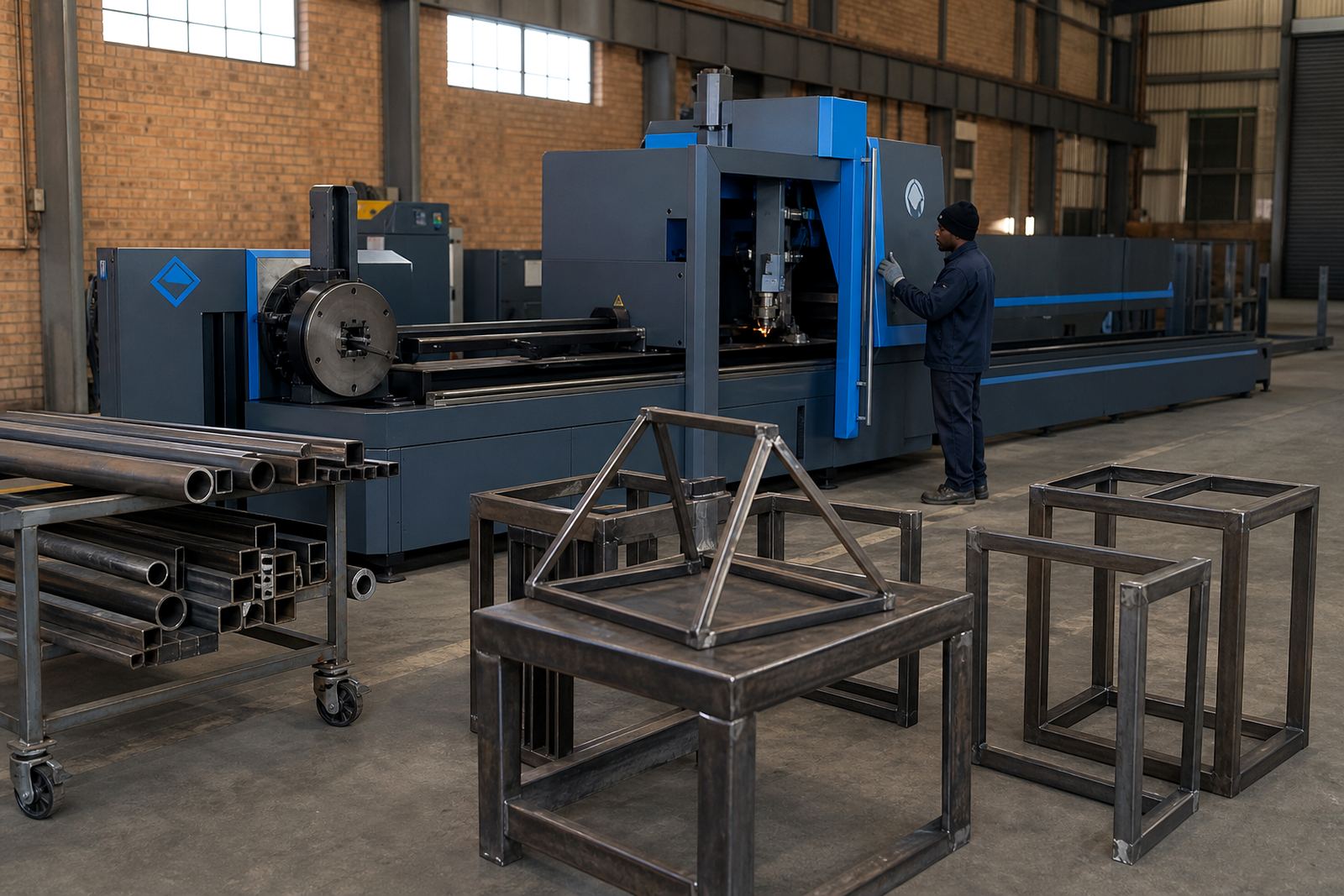
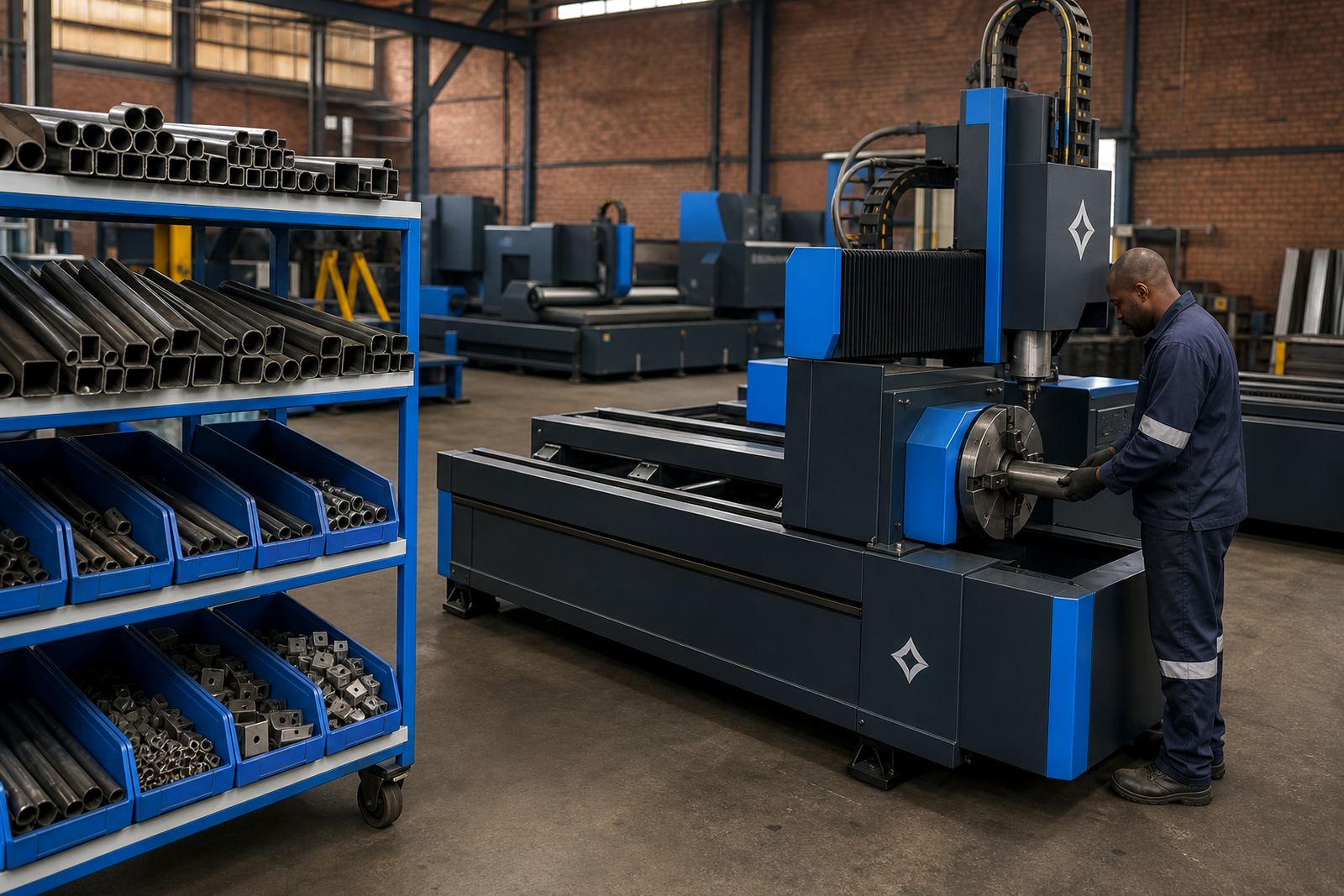
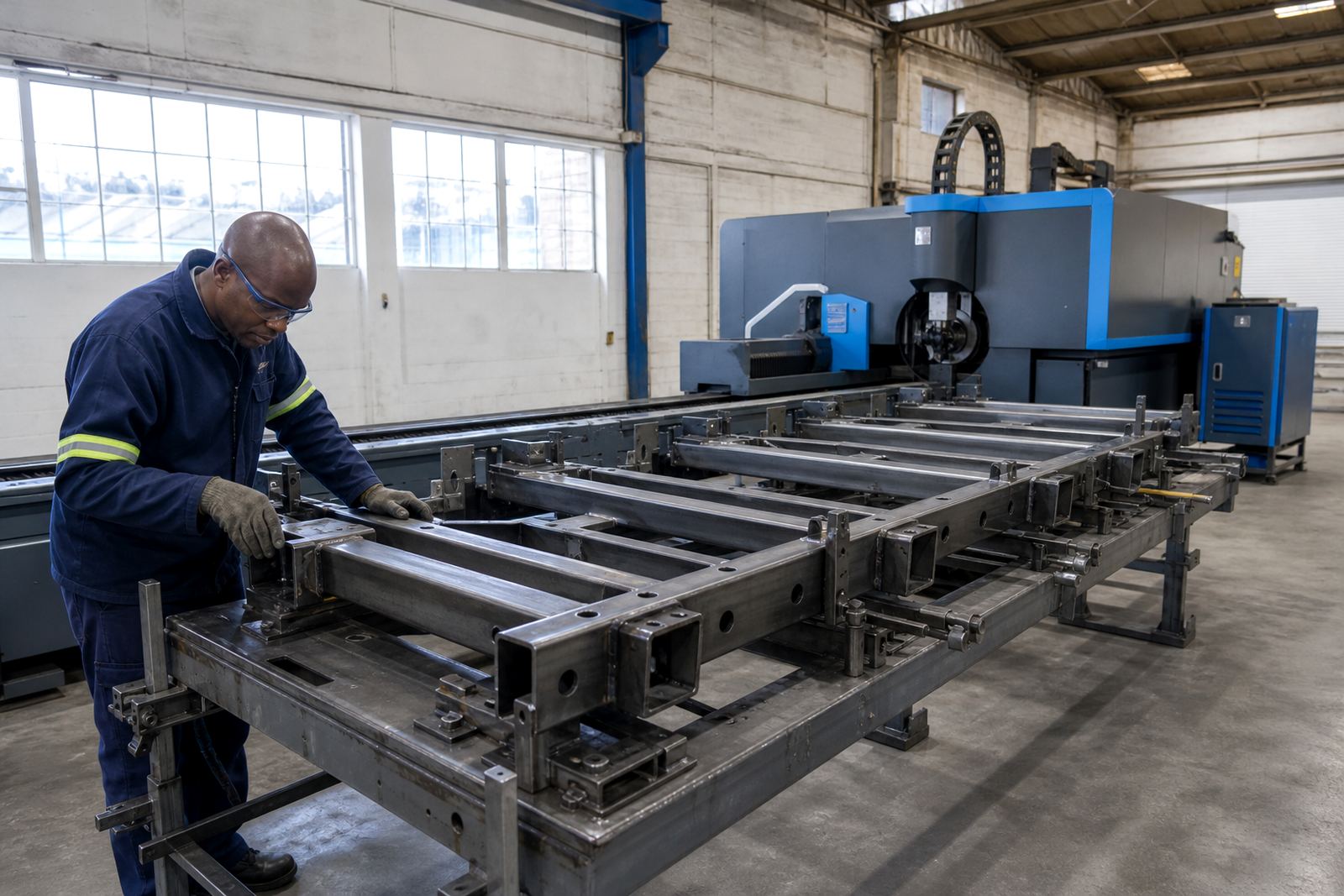
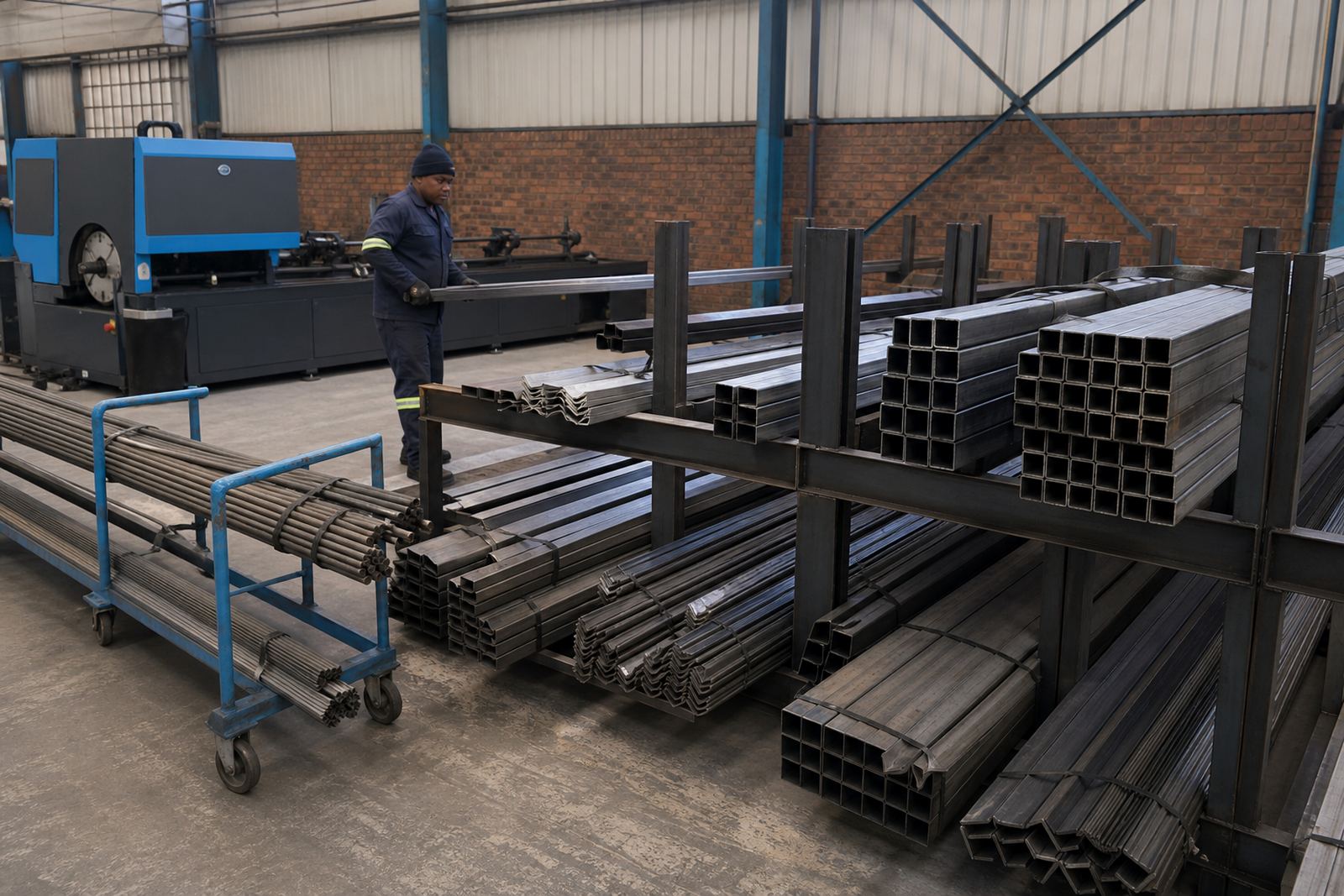
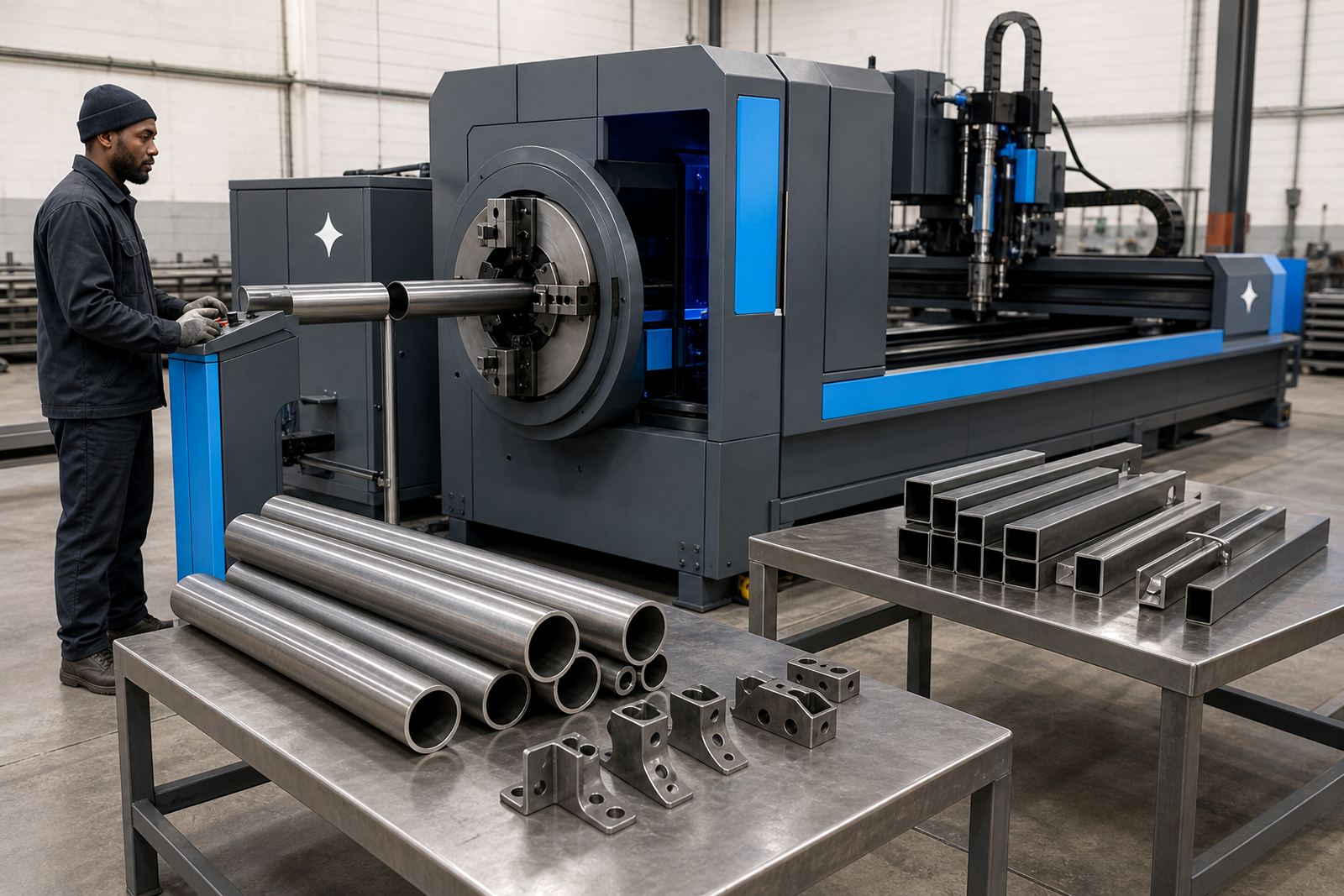
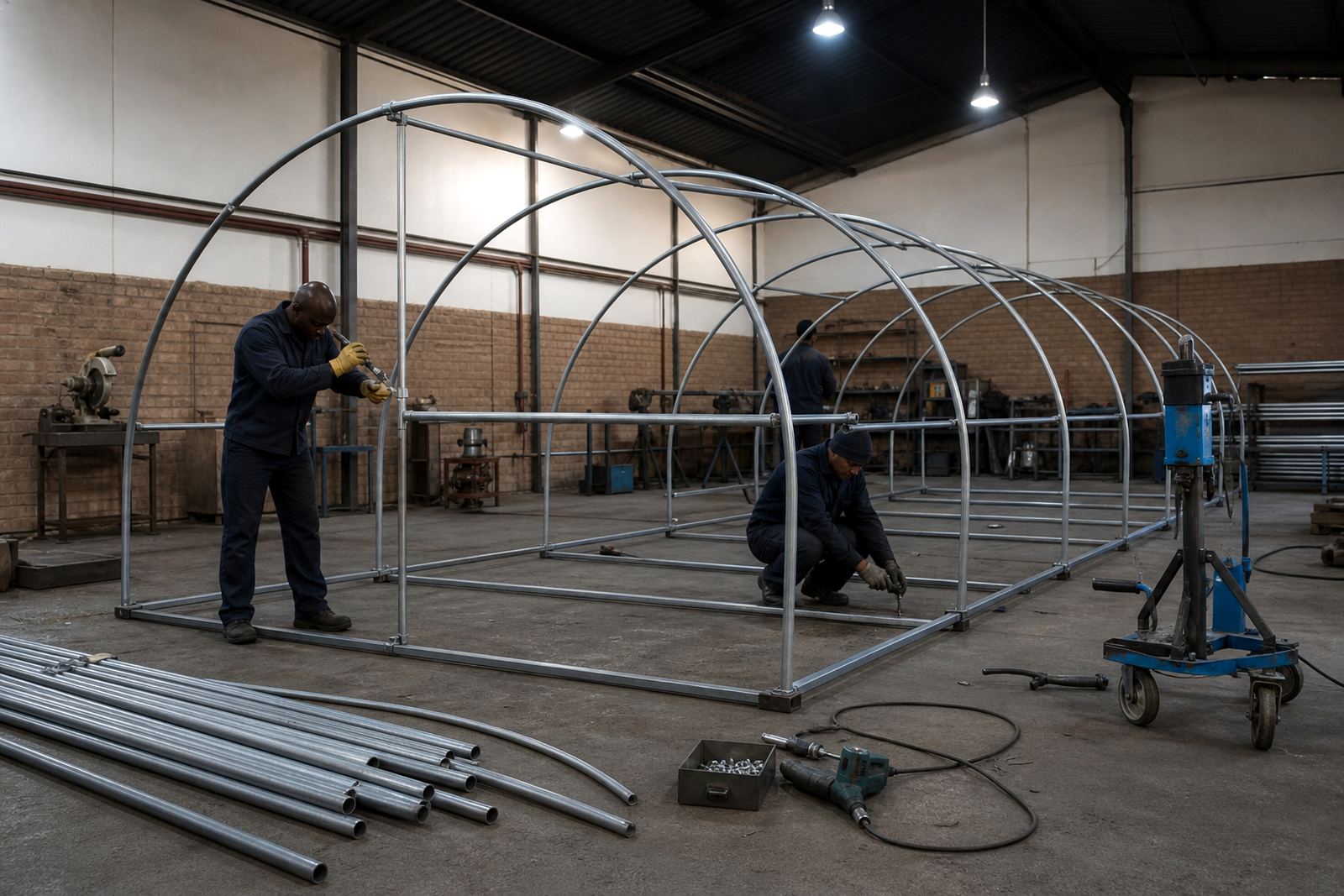
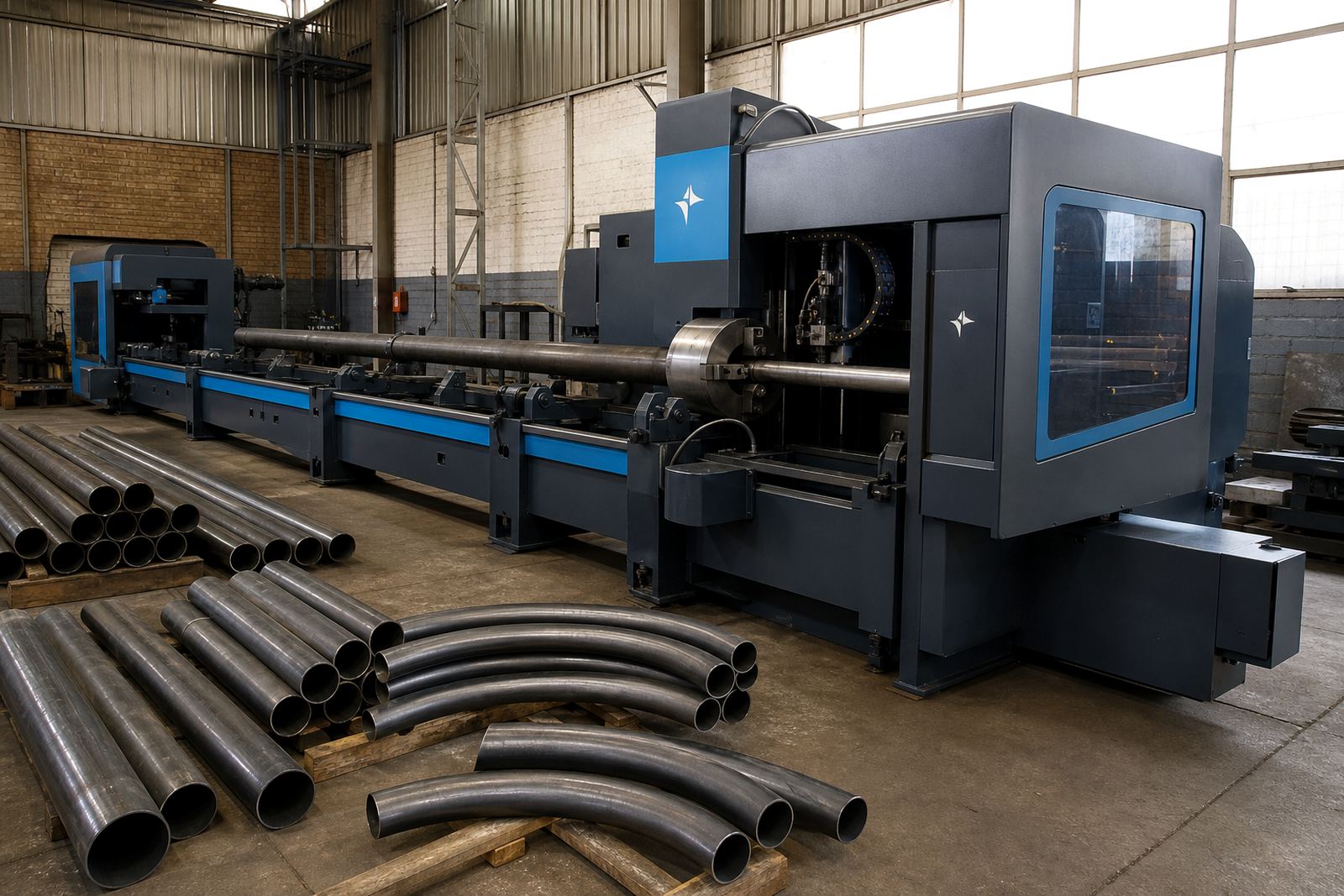
Round tube, square tube and rectangular tube are the most common parts in this range, but angle and channel also appear in real fabrication work. The machine holds the section, cuts the profile cleanly and keeps repeatable lengths for batches that need the same hole pattern, slot or fishmouth detail.
These jobs suit fabricators that build frames, guards, trailers, furniture, agricultural parts and support structures. In Wadeville, Germiston and across Johannesburg, Pretoria, Durban, Cape Town and Gqeberha, the same machine can move between short runs and steady production without changing the whole workshop setup.
Typical cut features
Jobs are grouped by the kind of part and the finish required. Some need plain square ends, others need mitres, coping cuts, slots or angled edges for welding and assembly.
- Handrails, balustrade parts and stair frames
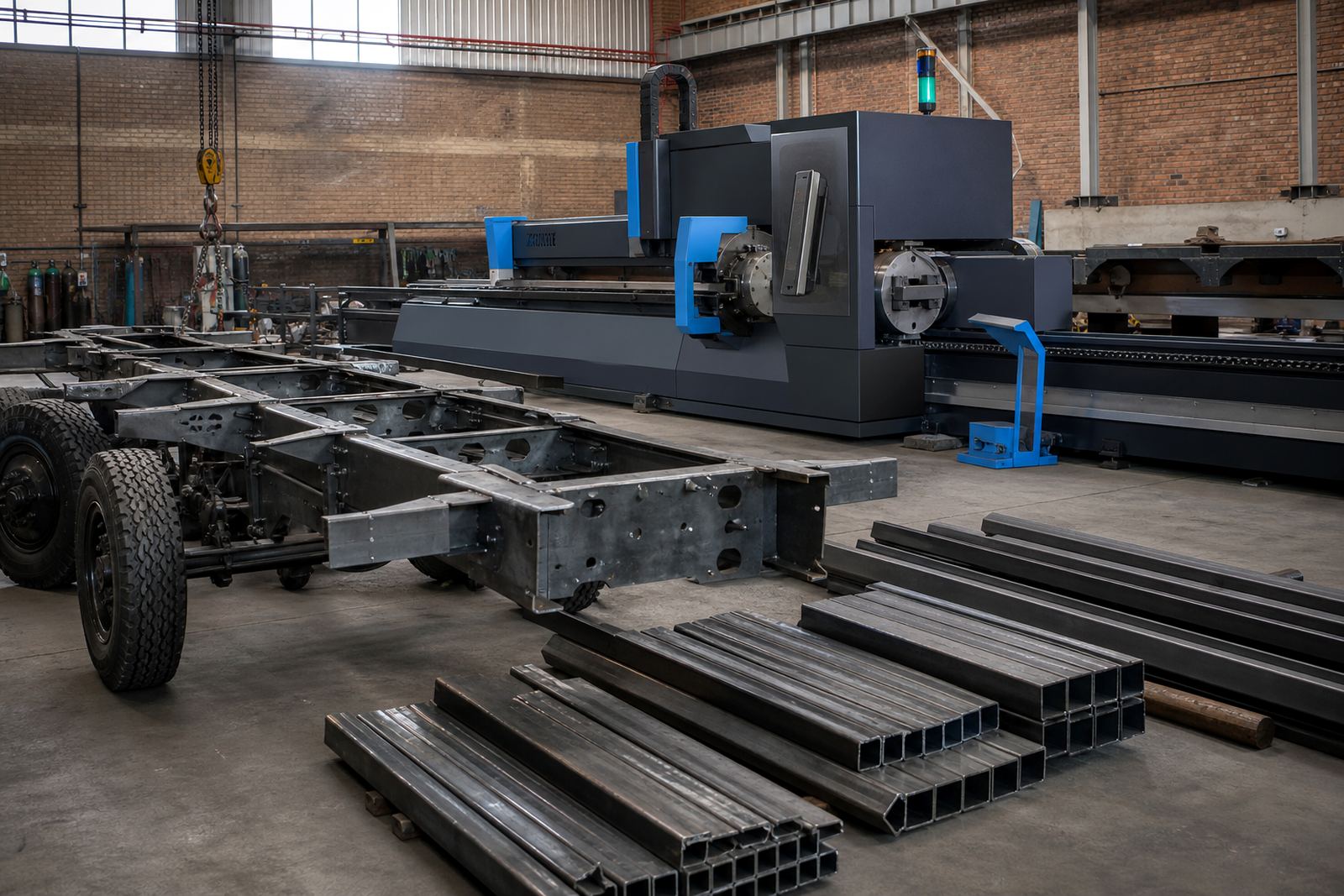
- Trailer rails, chassis members and support frames
- Machine guards, cabinets and utility frames
- Racks, trolleys and storage structures
- Agricultural brackets, pipe work and link pieces
- Architectural tube work for gates, screens and cladding supports
For jobs with thicker wall sections or compound angles, bevel heads can help prepare weld edges. That reduces hand grinding and keeps the fit-up neater before welding starts.
Choosing a machine for the work mix
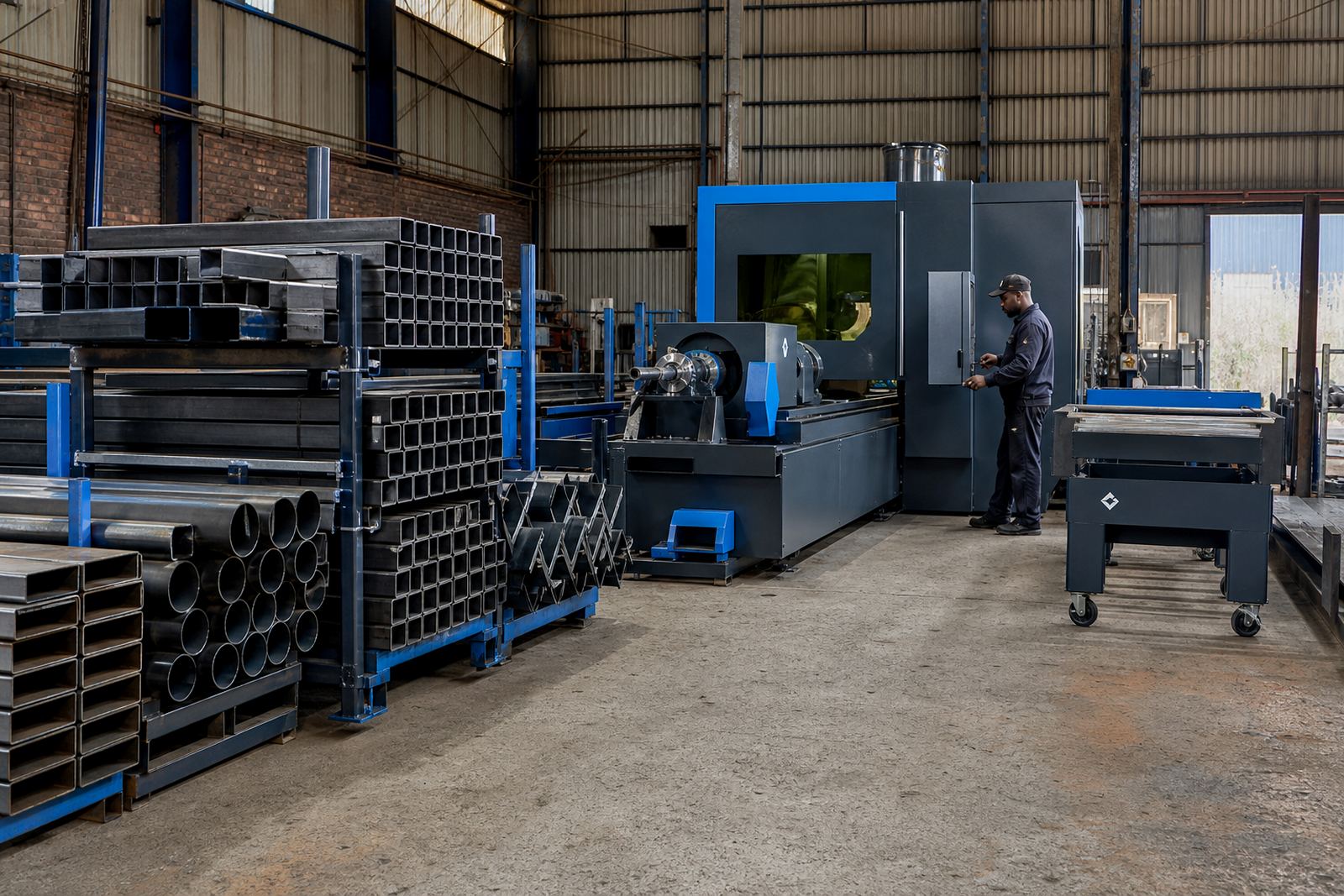
The right choice depends on tube diameter, section length, wall thickness and how much profile detail the workshop needs in a week. A small job shop may need a compact loader and straightforward nesting software, while a production plant may need longer infeed, stronger clamping and faster part changeovers.
- Check the longest stock length handled on site
- Match chuck size to the heaviest common section
- Decide if bevel cuts are part of regular work
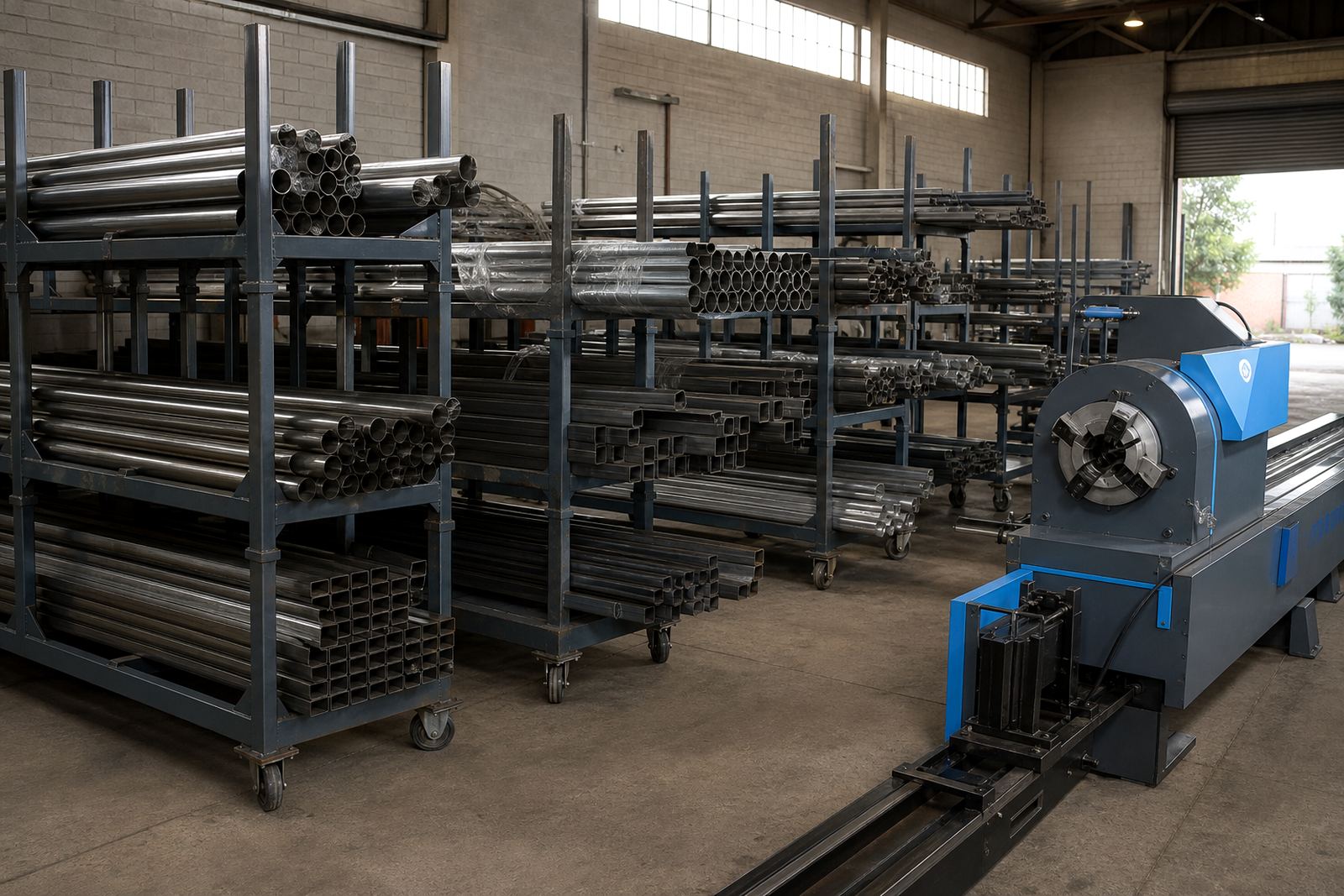
- Plan for bundle loading or manual loading
- Allow space for cut part sorting and offcut handling
Assist gas setup also matters, because different wall thicknesses and materials need the right cutting support for edge quality and slag control. Proper gas selection helps keep the cut consistent and the inside edge cleaner for later welding or coating.
How the machine sits inside the workshop
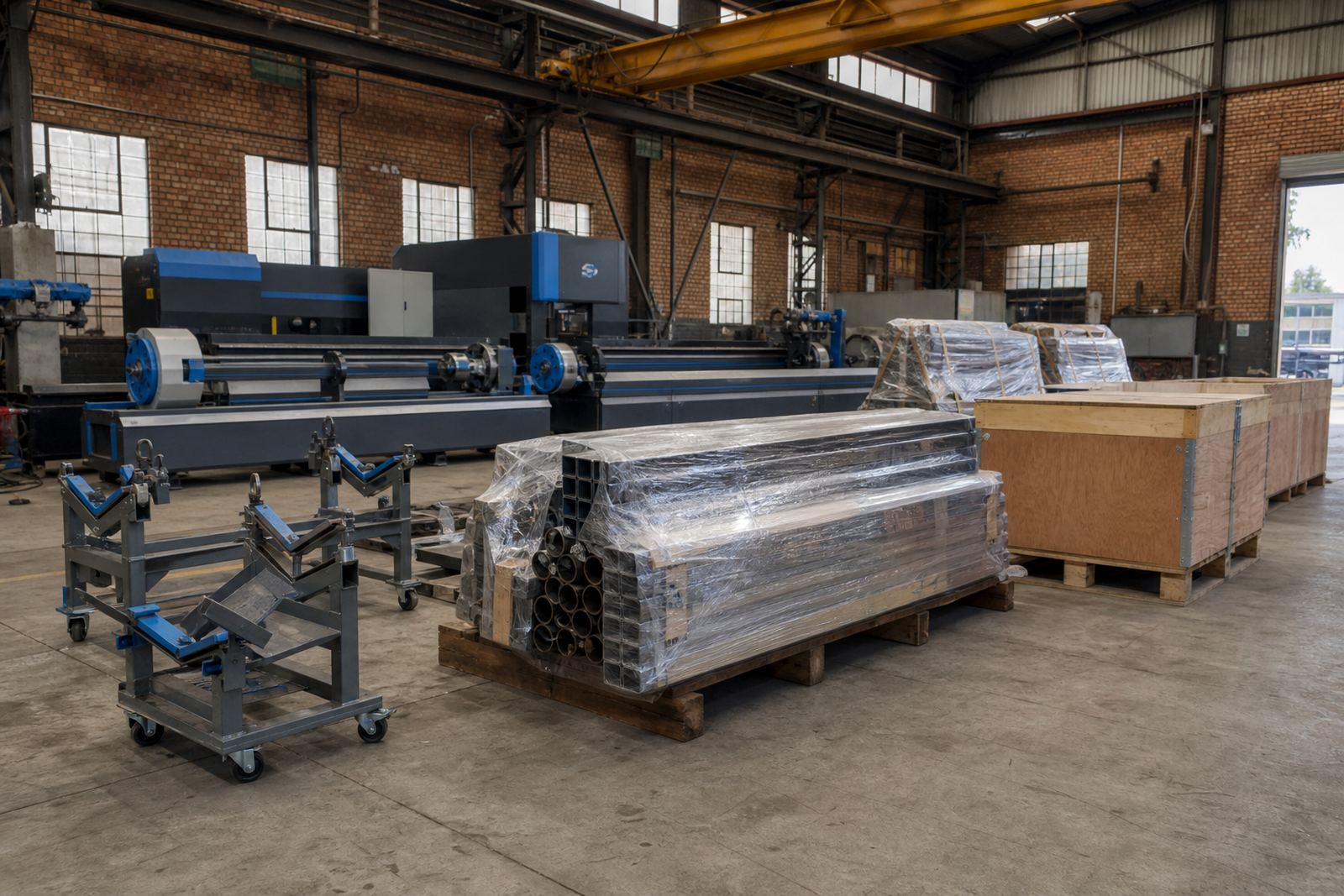
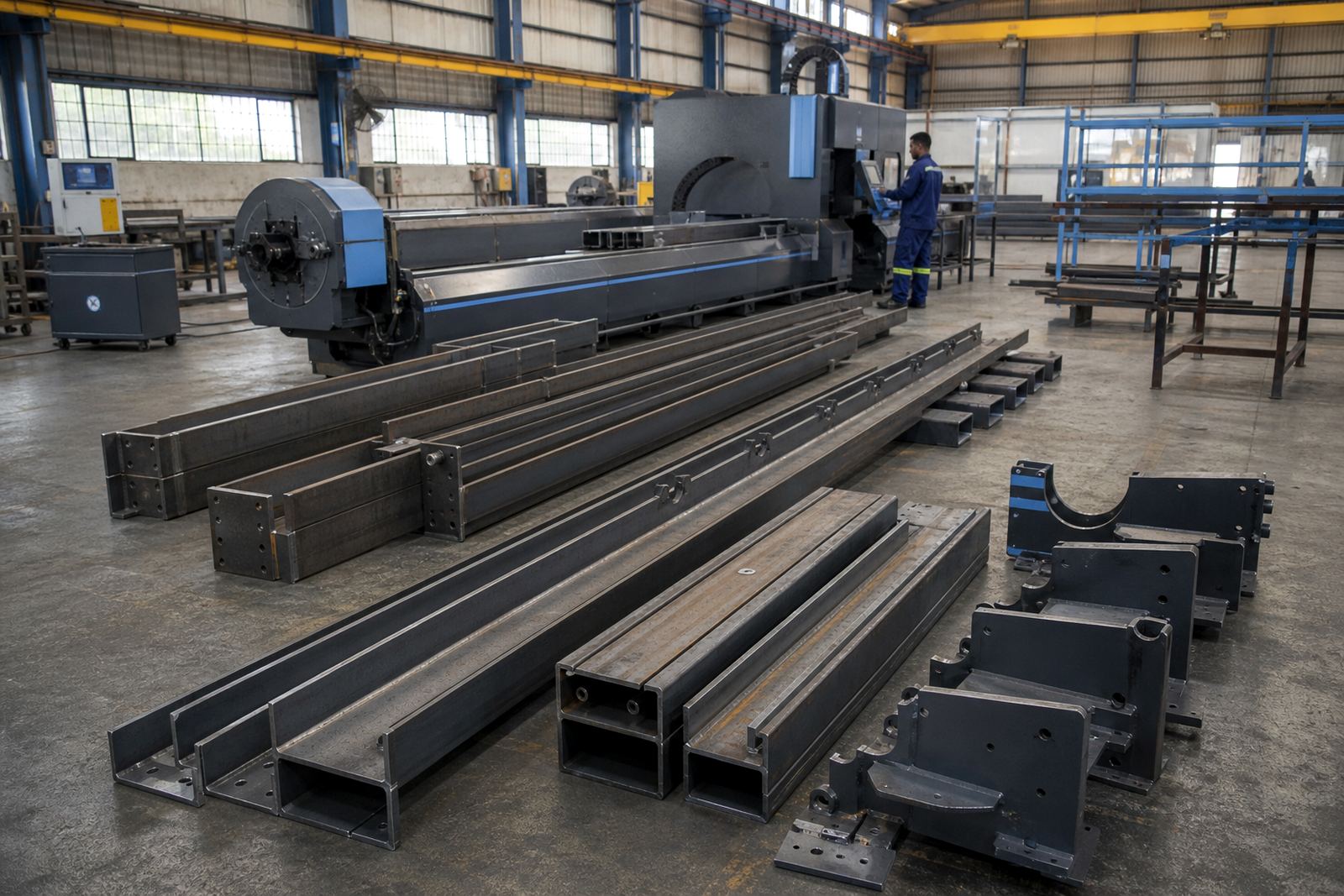
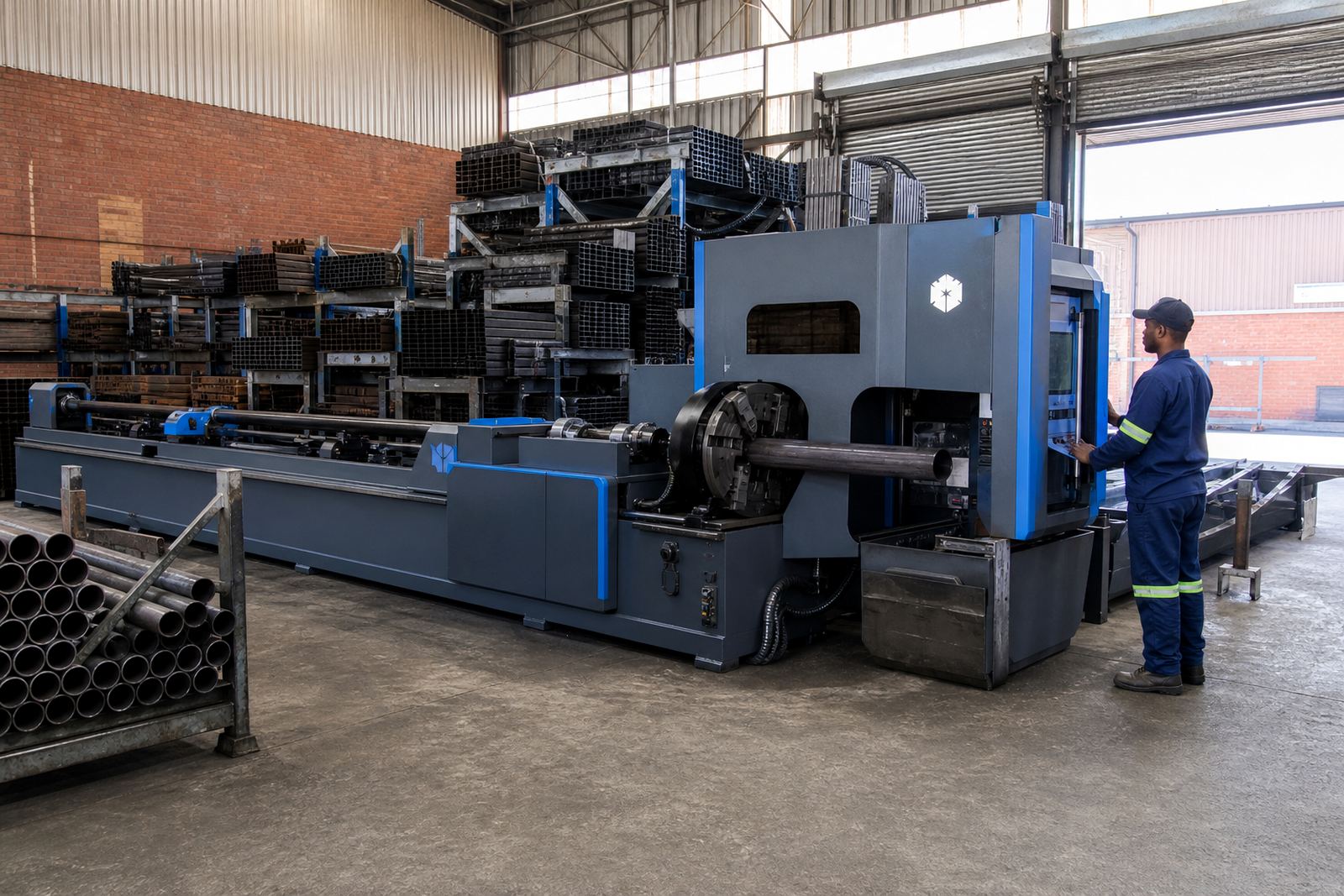
Tube and profile cutting works best when the flow from loading to unloading is tidy, because long sections need space and safe handling. Site assessment helps plan floor space, part movement, operator position and access for maintenance, rigging and delivery.
In coastal towns like Durban and Gqeberha, humidity can affect stored material and finished parts, so dry storage and sensible handling matter. In Gauteng workshops, the practical questions are usually floor loading, access for rigging equipment and where cut parts will move next.
Support that keeps the line accurate
Installation, commissioning and operator training shape how well the machine performs once it lands on the floor. Chuck alignment, bevel calibration and nesting training all affect cut quality, scrap levels and how easy the day runs for the team.
- Preventive maintenance for chucks, guides and motion components
- Remote diagnostics for fault checking and setting review
- Breakdown response when a machine stops mid-job
- Training on safe loading, unclamping and part removal
- Applications support for new tube sizes or new part families
A well-set machine should hold tube true, cut repeat parts cleanly and keep the workshop moving through the order book, which matters more than any single feature on a spec sheet.
Where these fabrication jobs appear
Some jobs are built for local contractors, some for factories and some for installers working on site structures. The same tube and profile machine can support workshop orders in Johannesburg and Pretoria, then move into maintenance work, farm equipment parts or commercial steel fabrication in Durban, Cape Town, Gqeberha, Bloemfontein and Nelspruit.
Town by town, the work mix shifts: Wadeville and Germiston lean to structural and gate work, Durban to marine and balustrade frames, Gqeberha to truck bodies. That mix decides the machine size and support plan.