

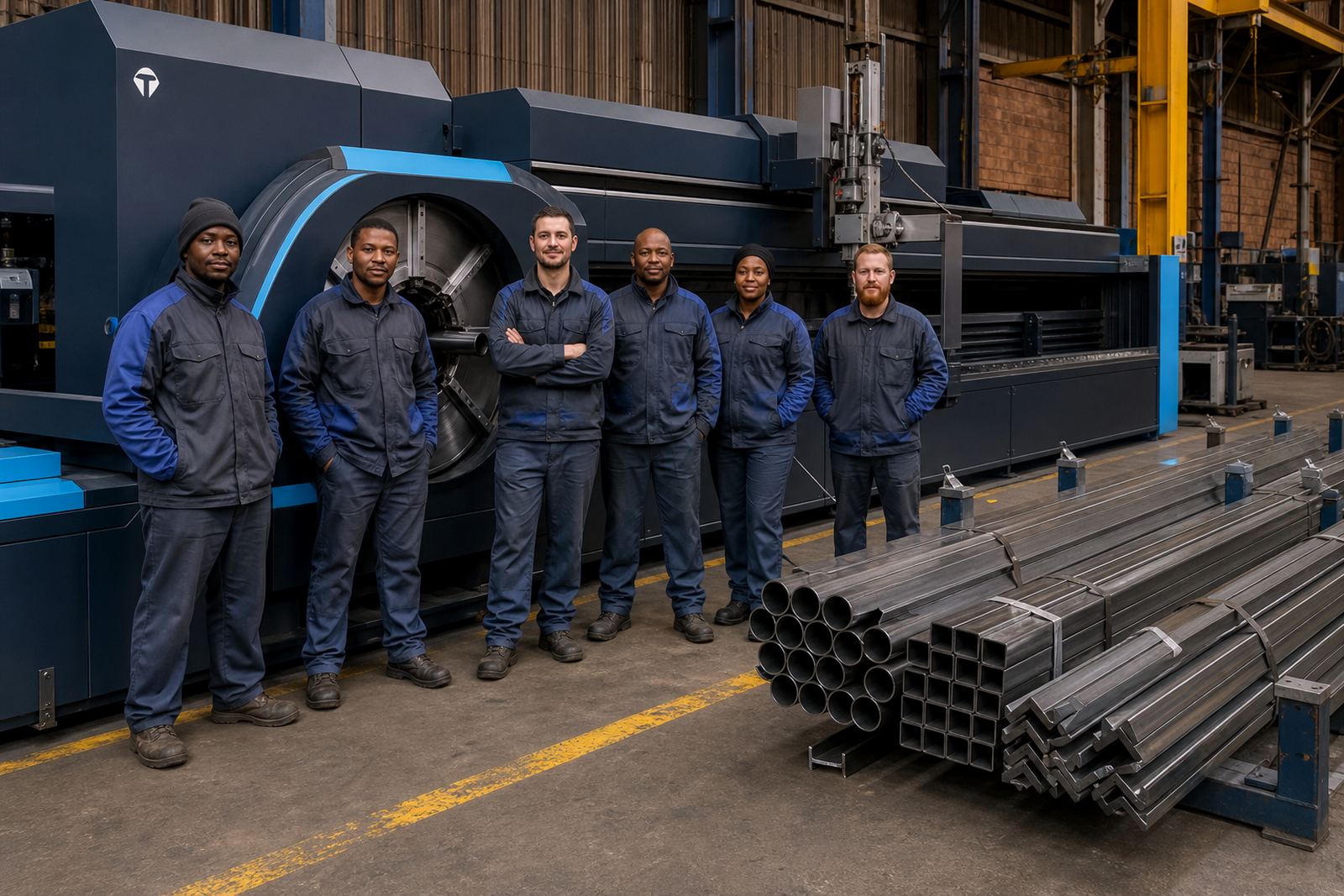
The people who carry the machine work
LaserTube is built around practical people who know the pressure of getting a new machine into a live workshop without wasting space, steel or time. The team handles site assessment, delivery rigging, installation, commissioning, training and aftercare for fibre laser tube and profile cutting machines used on round, square and rectangular tube, angle and channel.
Every role matters here. The sales side needs to understand the cut list and the workshop layout, while the installation and service side has to deal with chuck alignment, bevel head setup, nesting software, assist gases and safe operator access. That mix keeps the work grounded in what fabricators actually need.
Michael Dlamini sets the standard on the floor
Michael Dlamini, Managing Director, keeps the business tied to shop-floor reality. He works from the way a fabricator loads material, plans runs and manages changeovers, not from theory. In tube cutting, small setup mistakes can show up as poor fit-up or wasted material, so his oversight stays close to alignment, process control and long-term machine use.
He also keeps an eye on how each installation fits the site. That includes access for rigging, floor space, safety clearances and the way the machine will sit with the rest of the production line. Practical work like this relies on getting the small details right.
Sales, applications and the first machine fit
Anika Kajee, Sales Manager, works with fabricators that need the right cutting capacity for their mix of tube and profile work. She looks at material sizes, wall thickness, nesting needs and the mix between production runs and smaller jobs. That helps keep the machine choice tied to the job list rather than a vague spec sheet.
Ayanda Mashaba, Applications Specialist, handles the technical side of fitment and process use. He works through cut quality, nesting logic, assist gas setup and the way bevel cutting changes edge preparation for weld prep. His input is useful where the workshop needs more than a machine, and needs the process to make sense on the day shift.
- Tube, profile and bevel cutting discussions
- Assist gas setup for the material being processed
- Nesting plans that reduce waste on repeat jobs
- Cut path checks for angles, channels and tube packs
Installation and commissioning that stay close to detail
Sibusiso Bhengu, Installation Lead, handles the heavy part of the job. He manages delivery rigging, machine positioning, levelling, mechanical checks and commissioning so the machine is ready to cut under proper conditions. In a plant where floor space is tight and access can be awkward, that attention prevents headaches later.
Pieter Visser, Service Technician, stays focused on the working machine. His role covers preventive maintenance, chuck alignment, bevel calibration, fault finding and breakdown response. On fibre laser tube cutting equipment, a small wear issue can affect accuracy quickly, especially when the shop is running mixed section sizes and repeated nesting patterns.
Together they keep the machine honest once it is in service. That means cleaner starts, steadier cut quality and fewer surprises when production pressure rises.
Training that matches the operator and the job
Leanne Mabuza, Training Coordinator, works with operators and supervisors so the machine is used properly from the start. Training covers machine controls, loading routines, nesting software use, assist gas checks and the habits that keep parts consistent through a shift. The aim is not theory for its own sake, but operators who know how to work safely and keep the machine productive.
- Operator training for daily machine use
- Nesting training for repeat parts and cut planning
- Safety routines around loading, cutting and unloading
- Practical guidance for mixed tube and profile jobs
Her sessions are shaped to the people in front of the machine, whether they are learning the basics or tightening up an existing process. That keeps training useful on the workshop floor where the cuts happen.
Support for fabricators across South Africa
From Wadeville, Germiston to Johannesburg, Pretoria, Durban, Cape Town, Gqeberha, Bloemfontein and Nelspruit, the team supports fabricators that need steady machine performance and clear handover. The same group that helps with the first assessment also stays involved with maintenance planning, diagnostics and the technical side of keeping the line moving.
That continuity matters in metal fabrication. A tube laser is not just a purchase, it becomes part of how the shop delivers parts, manages tolerances and handles rush work. LaserTube’s team keeps that practical, with people who understand the machine, the material and the pressures on the workshop.