

Tube, section and profile jobs that fit the process
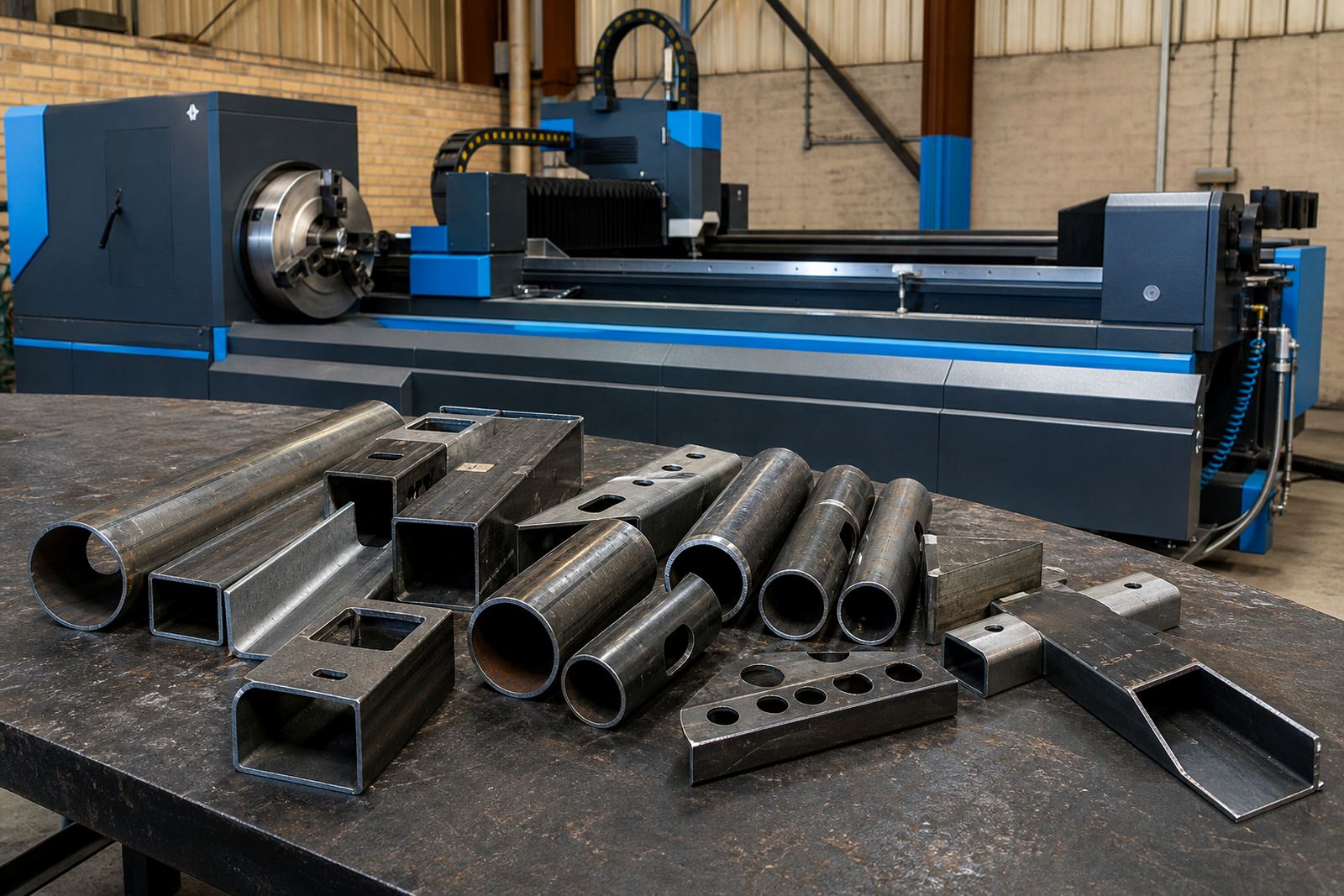
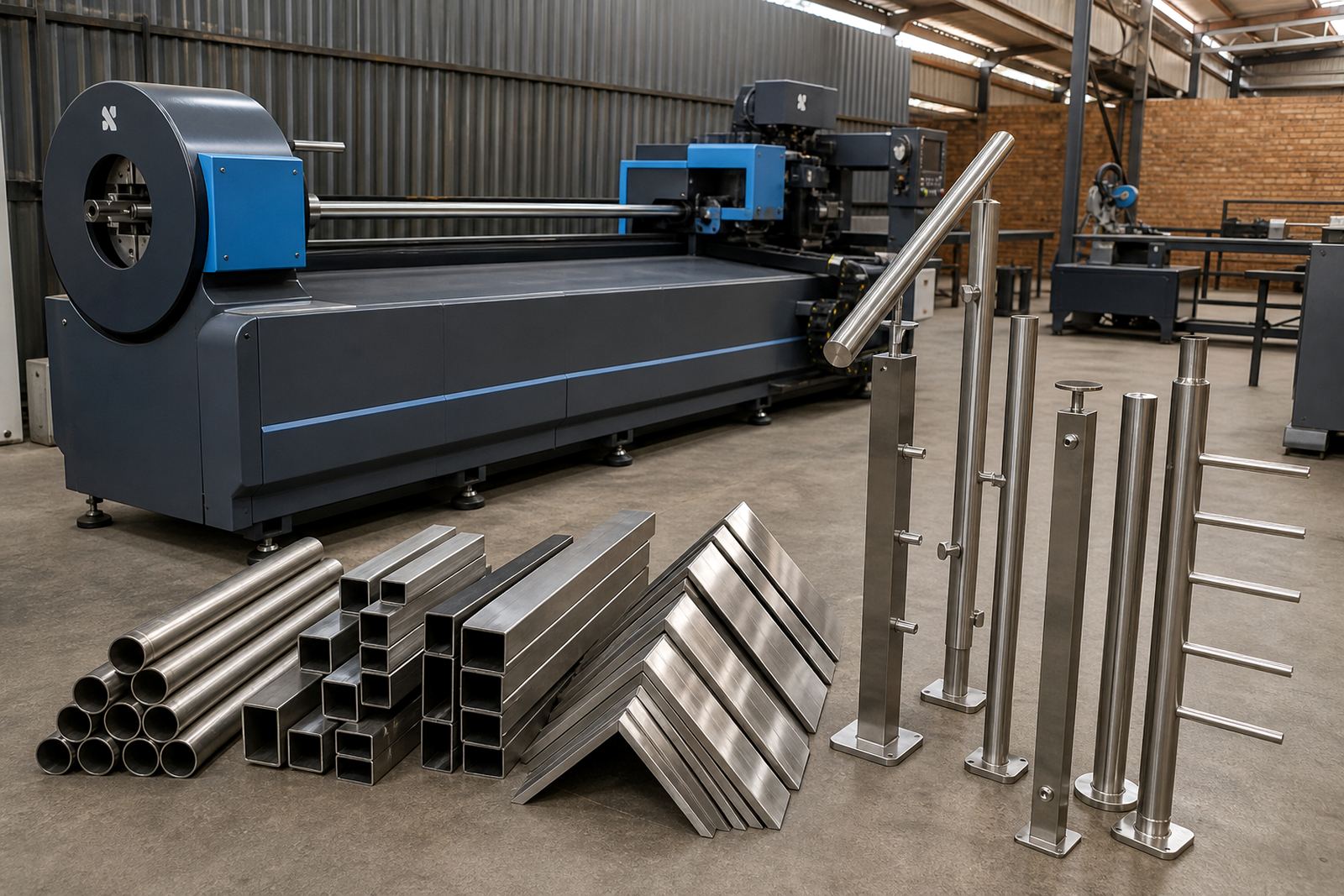
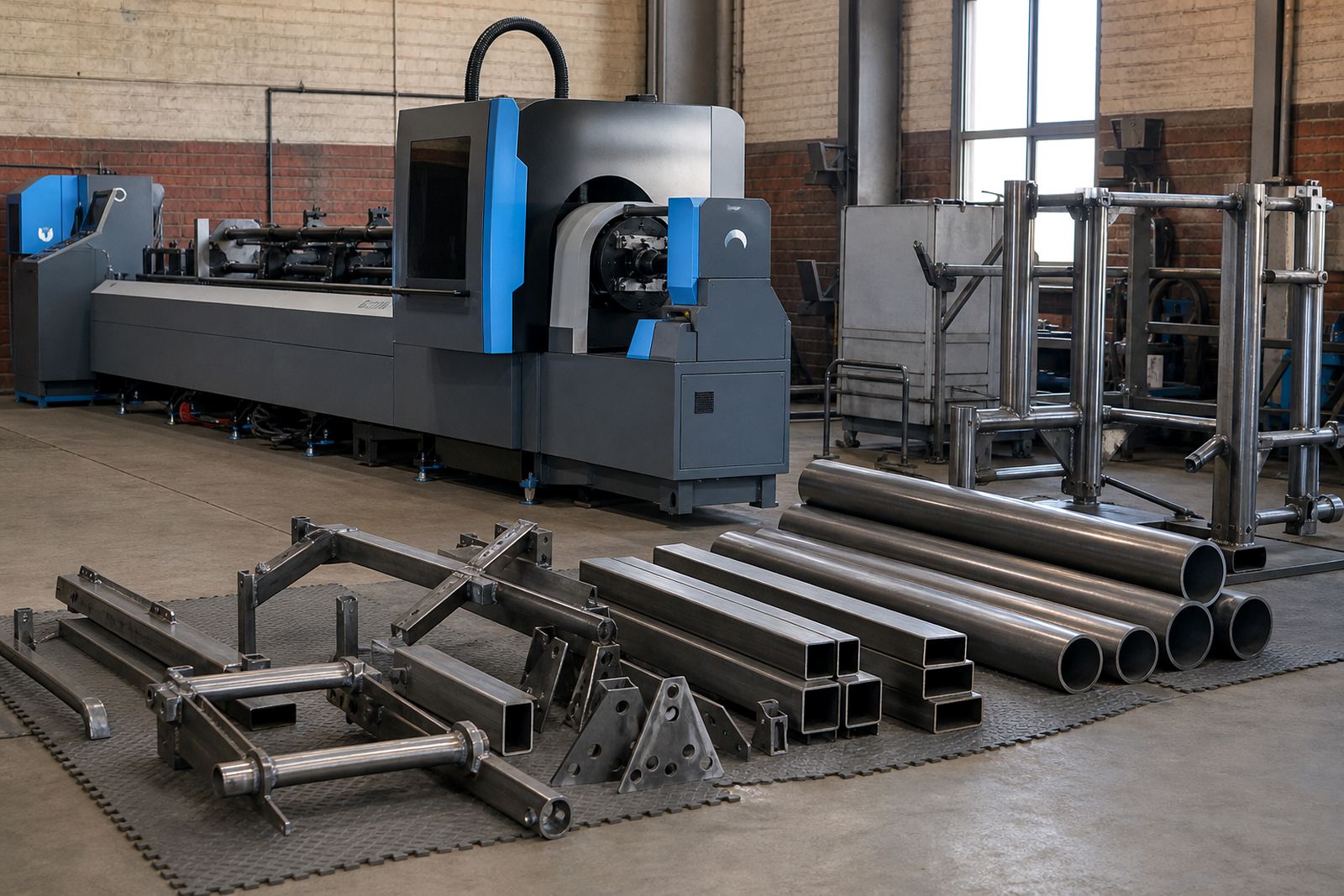
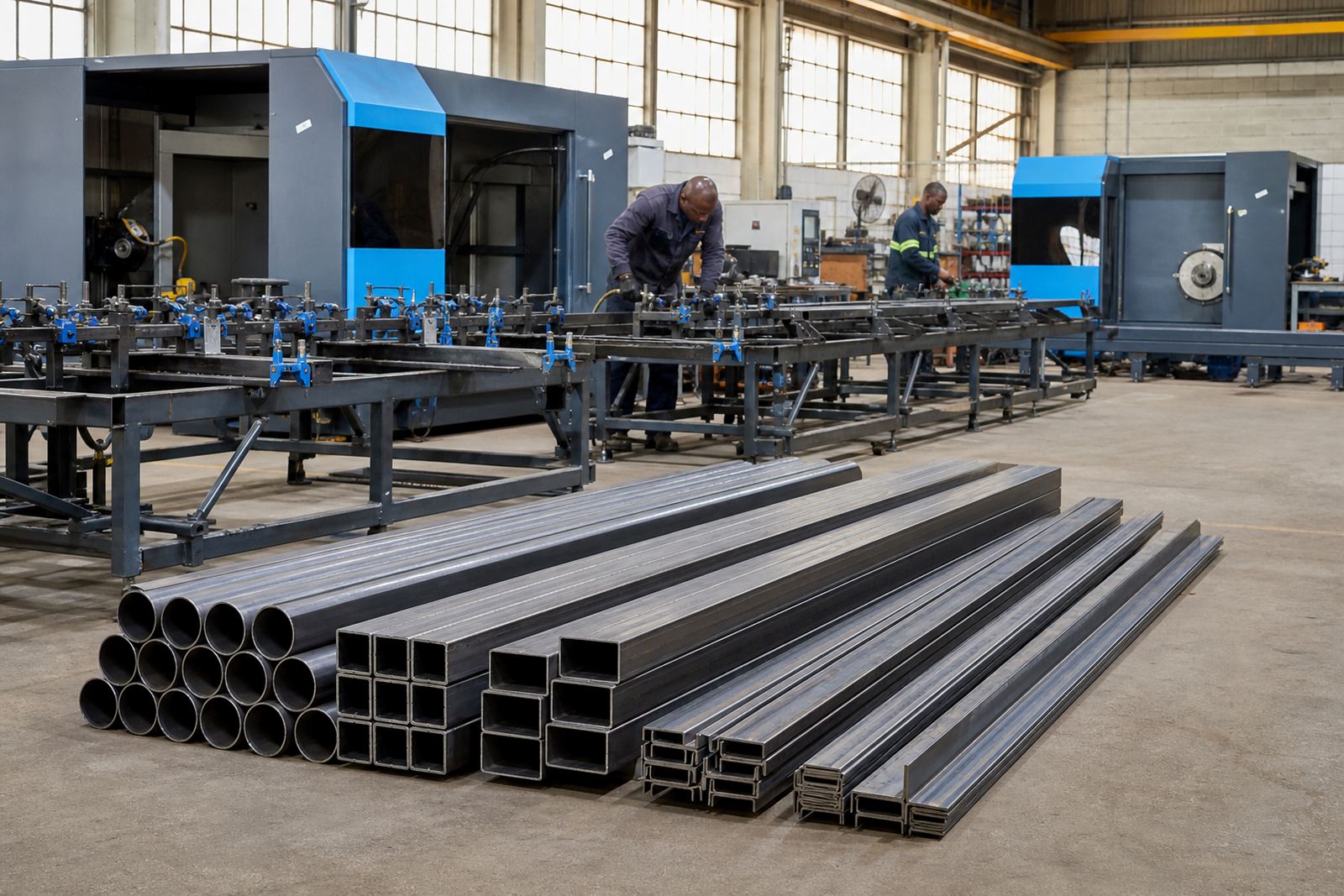
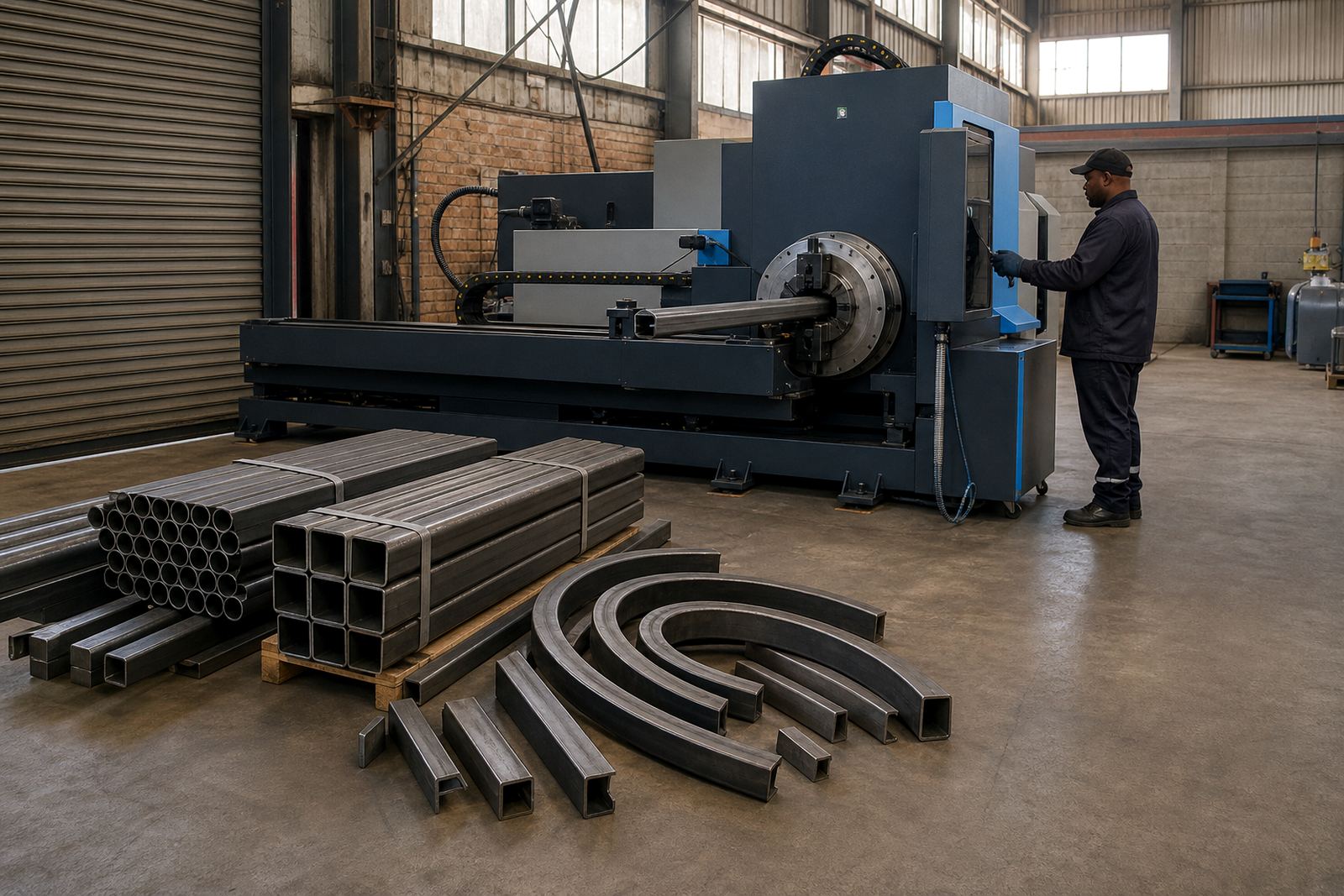
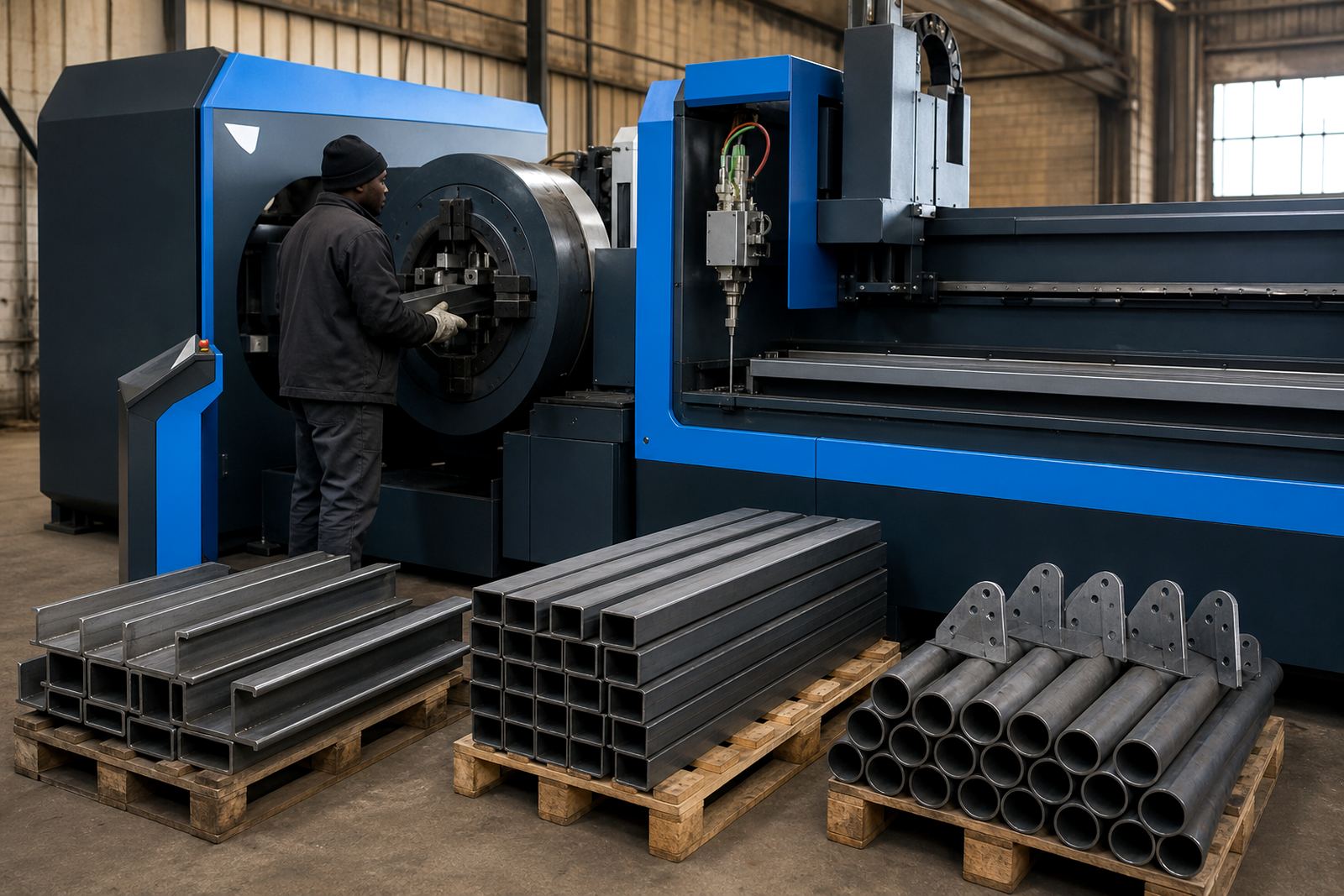
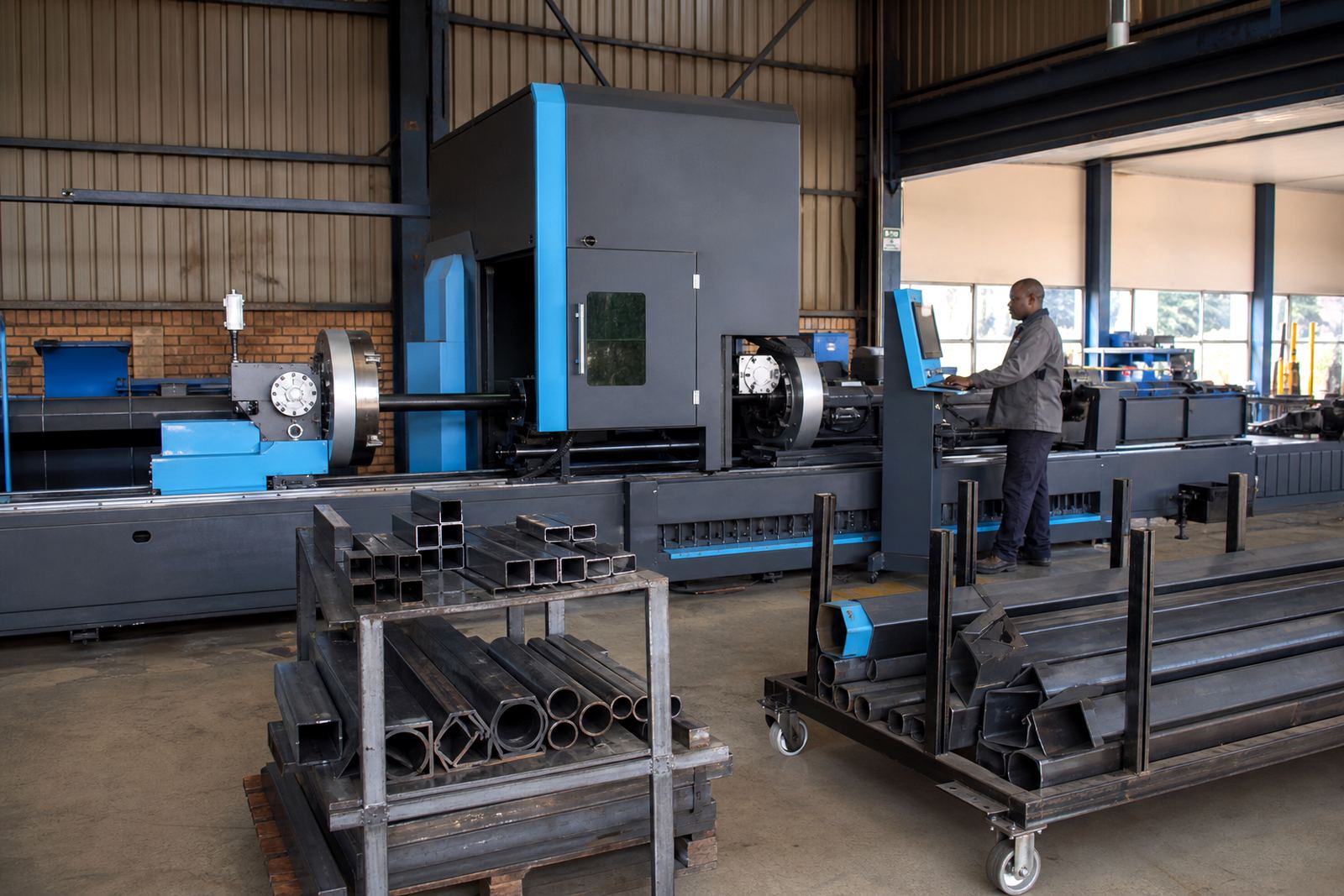
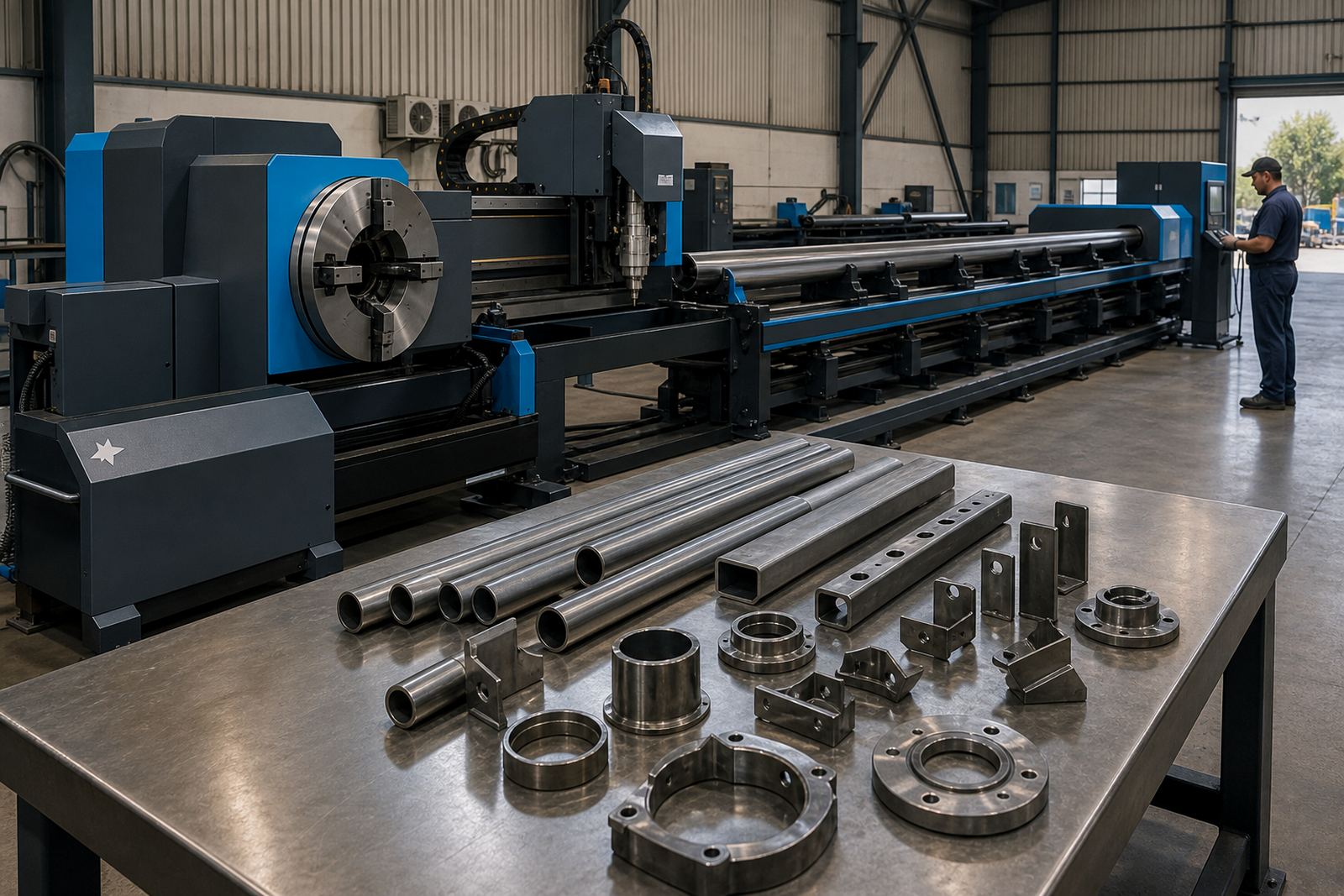
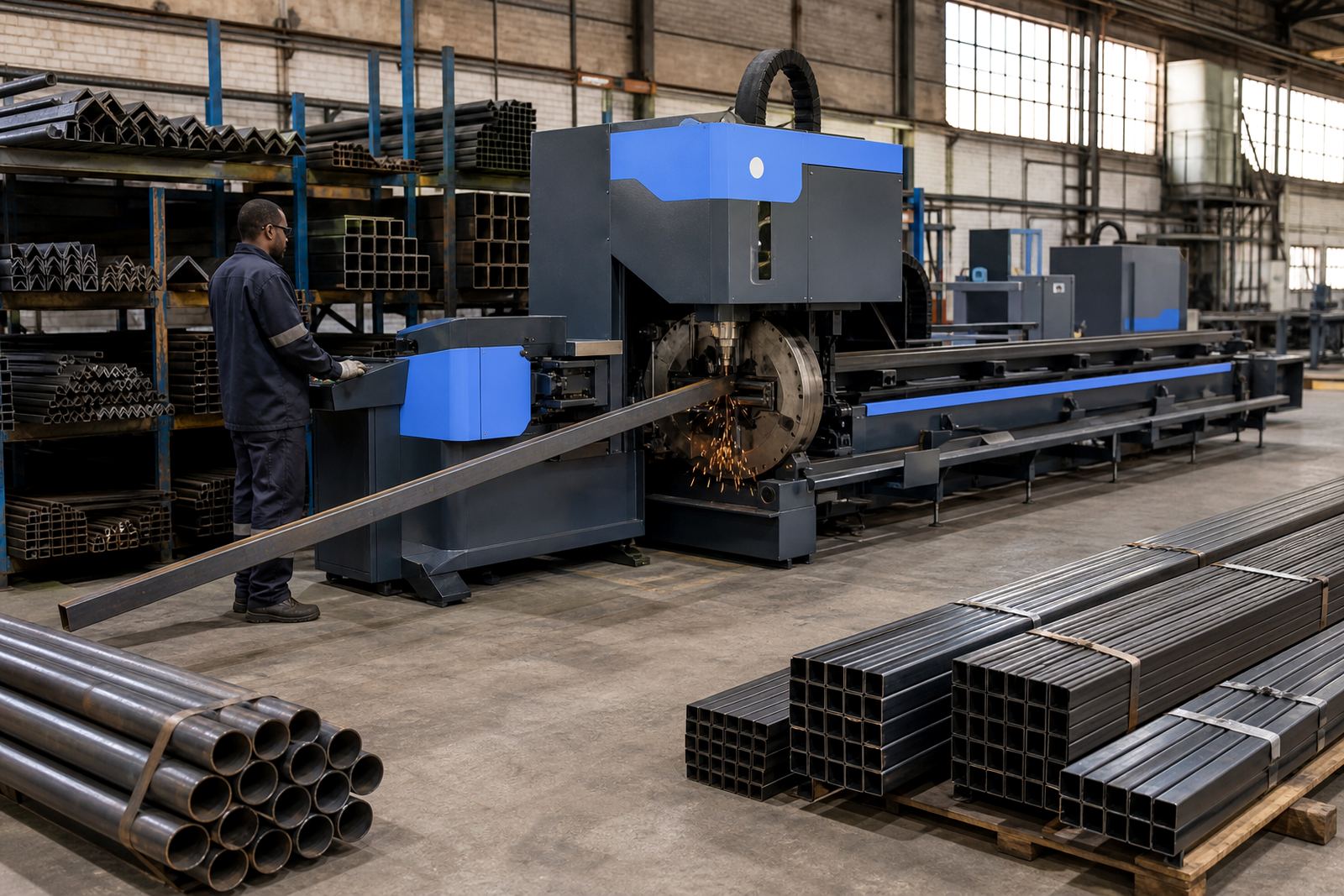
Tube and profile cutting is used where profiles need clean, repeatable features without heavy grinding after cut. Round, square and rectangular tube are the most common inputs, with angle and channel also suited to the process when the section stays within the machine envelope and clamping range.
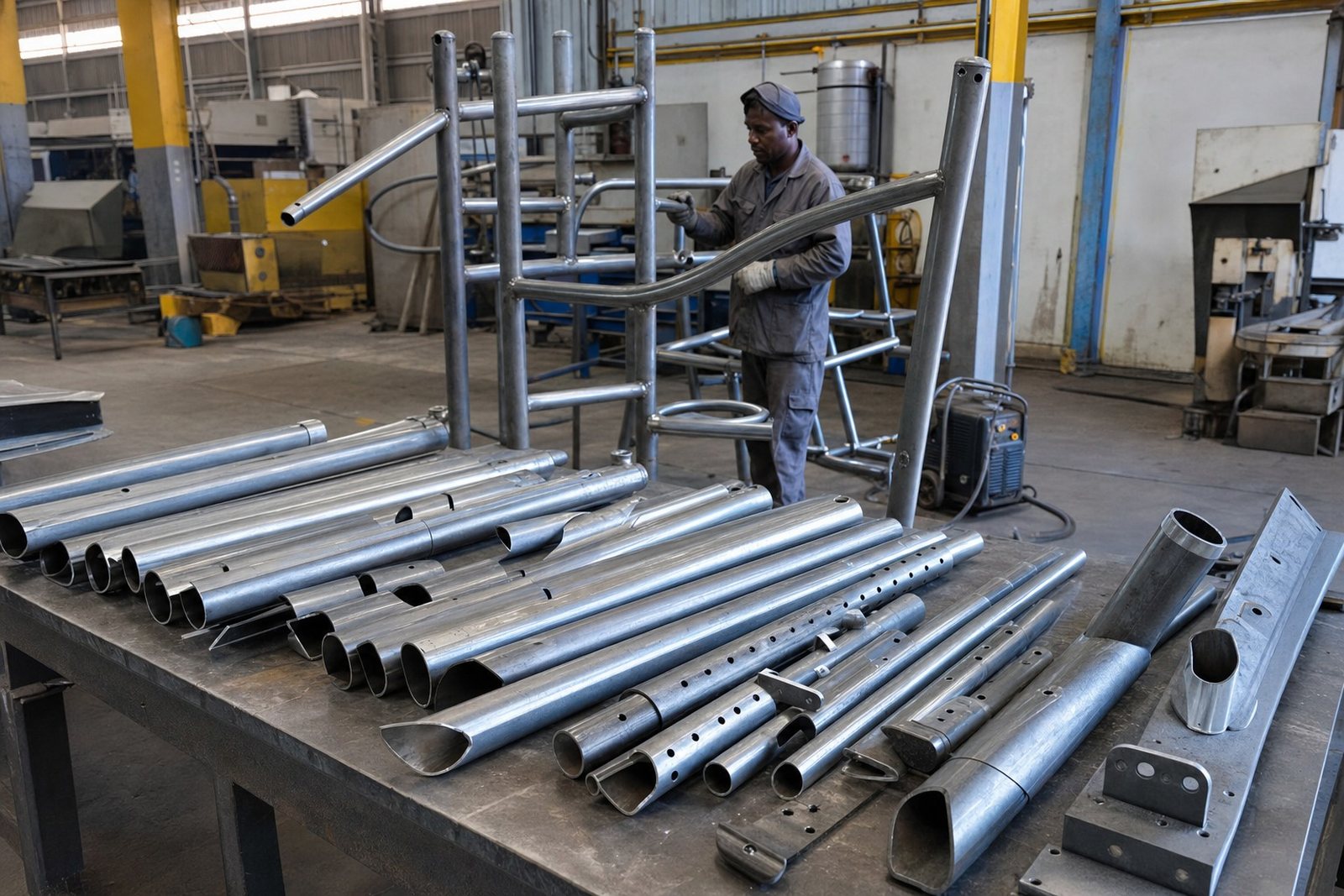
It works well for parts that need collars, fishmouth ends, mitres, fixing slots, bolt holes and nesting of multiple parts from one length. For fabricators in Wadeville, Germiston and wider Gauteng, that usually means shorter handling, tighter repeatability, and less time spent on manual marking.
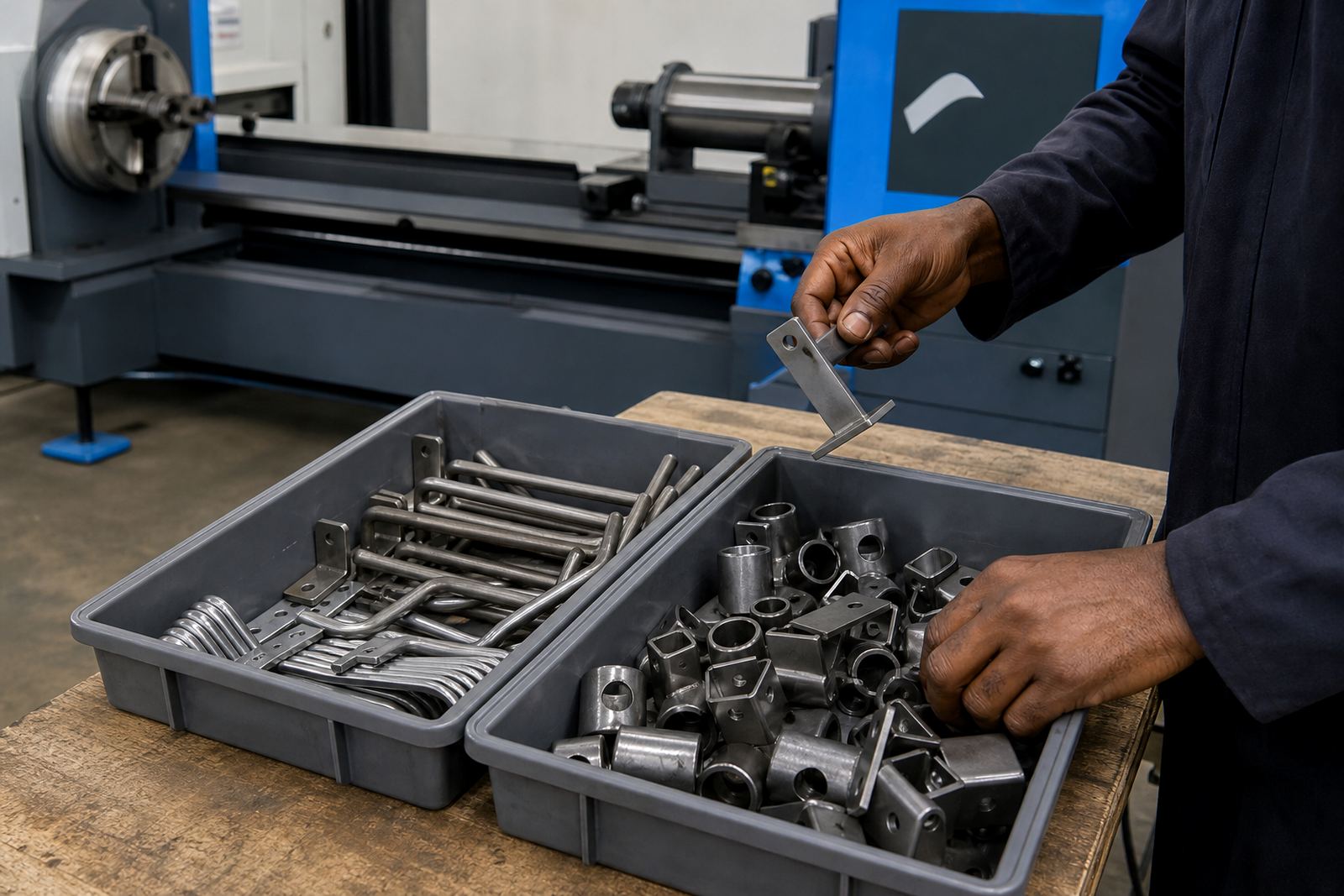
Parts that show the value in the workshop
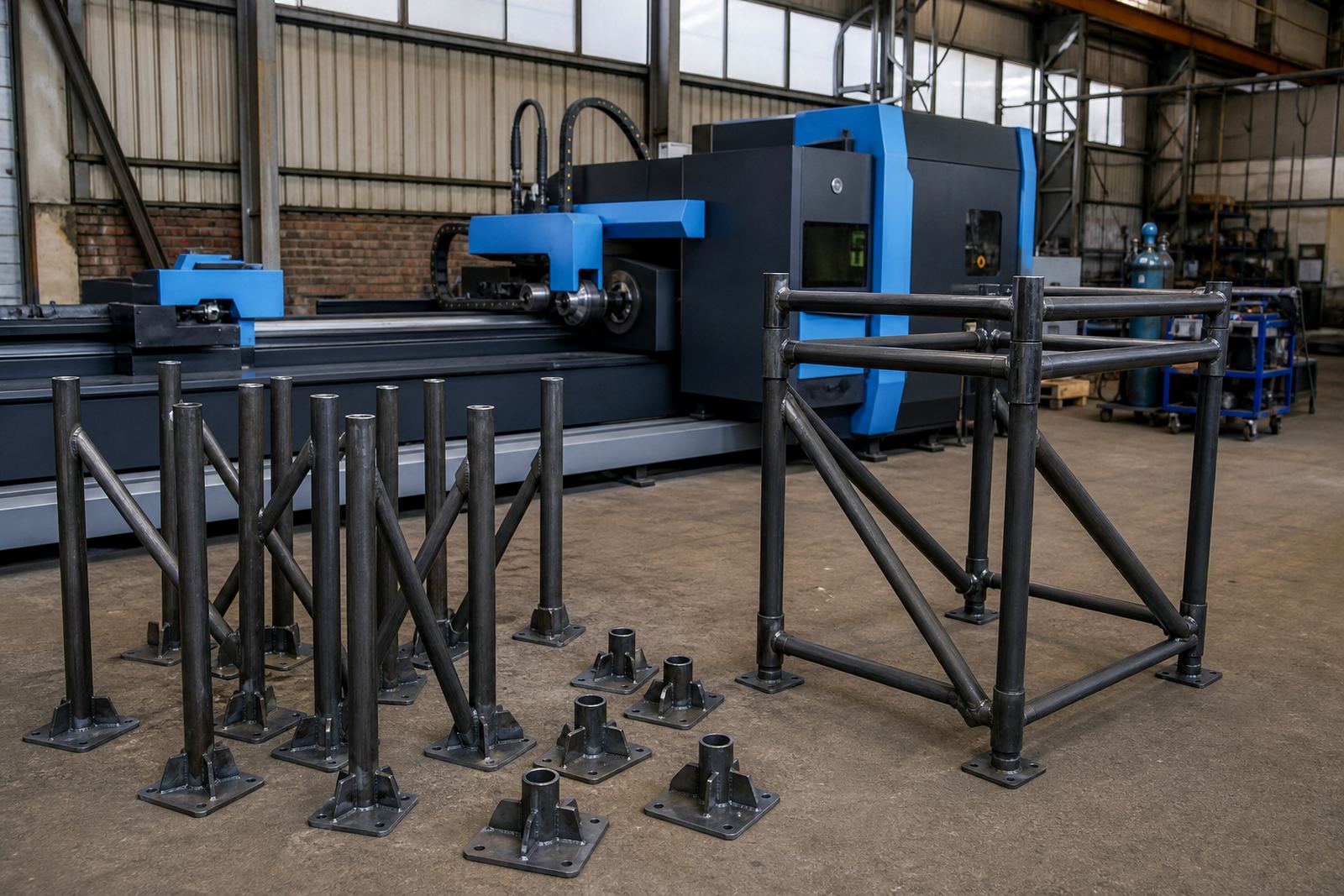
Many jobs are shaped by the same practical need: get the feature right once, then repeat it across a batch. A fibre laser tube machine is useful where a part must fit to a jig, meet up with another section, or land cleanly on a weld preparation.
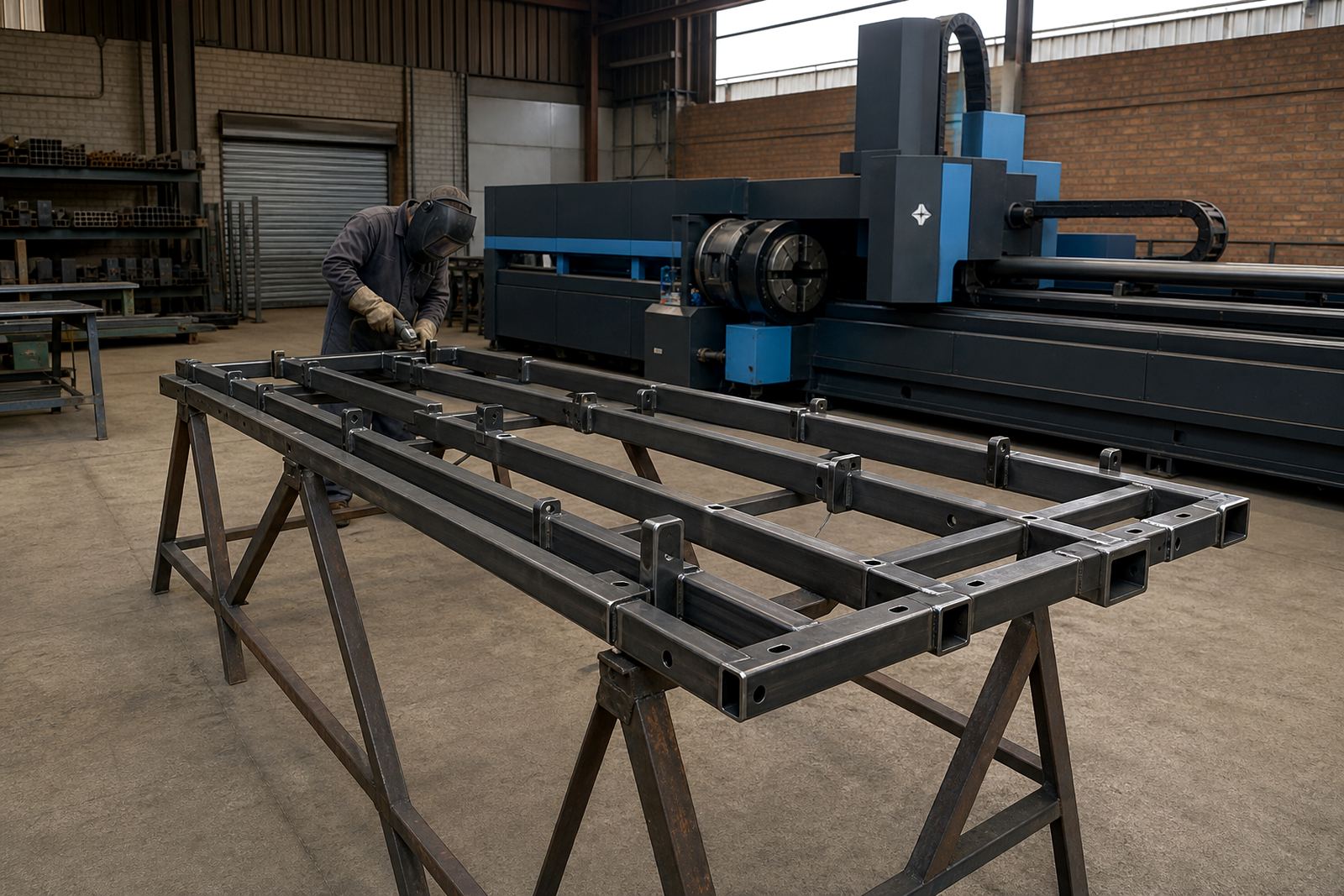
- Frames and support members with drilled hole patterns
- Handrails, balustrade sections and fixture brackets
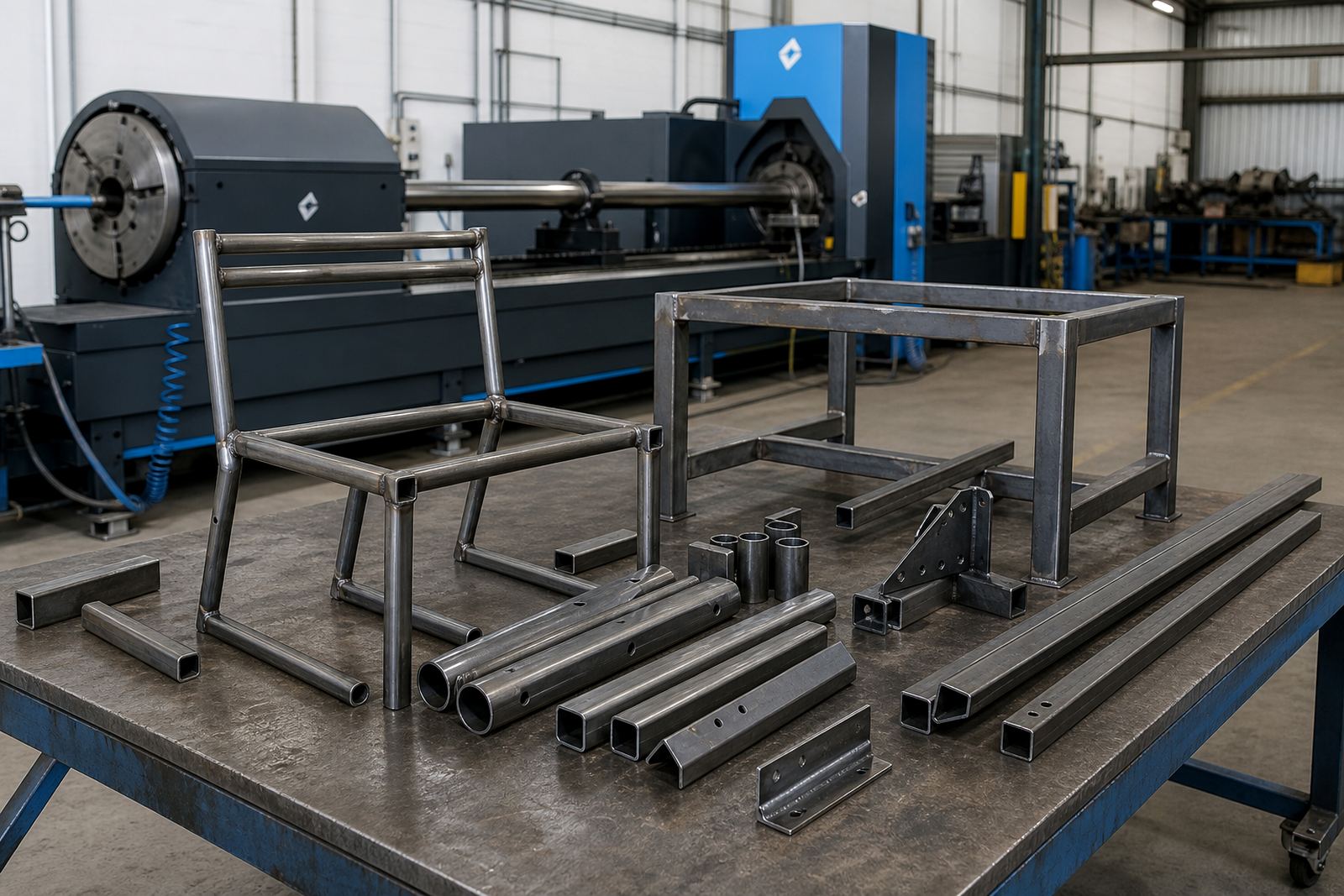
- Furniture frames, shelving and display structures
- Farm equipment members and trailer components
- Machine guards, enclosures and mounting rails
- Architectural tube work with visible joint quality
Where bevel cutting earns its place
Some parts need more than a straight 90 degree cut. A bevel head helps prepare weld edges on thicker wall sections, reduce fitting time, and improve joint access where a clean weld profile matters. It is useful on fabricated frames, structural members and parts that must be welded in sequence with less rework at the bench.
Bevel cutting is not for every job, though. Thin decorative work, light tube and simple slotting often do not need it. The value comes when the weld path or joint form benefits from a prepared edge instead of a square cut.
Chucks, clamping and the section you are feeding
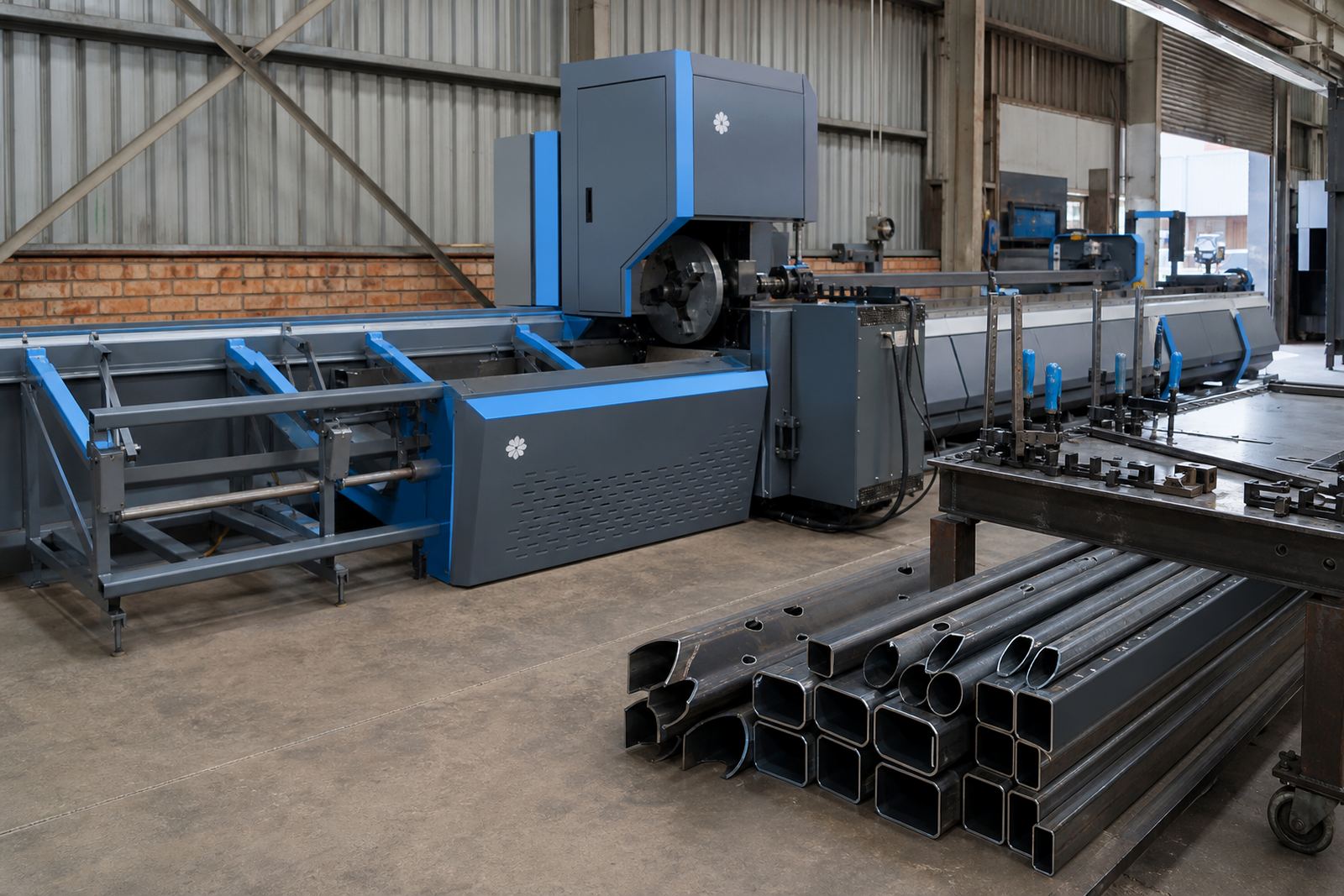
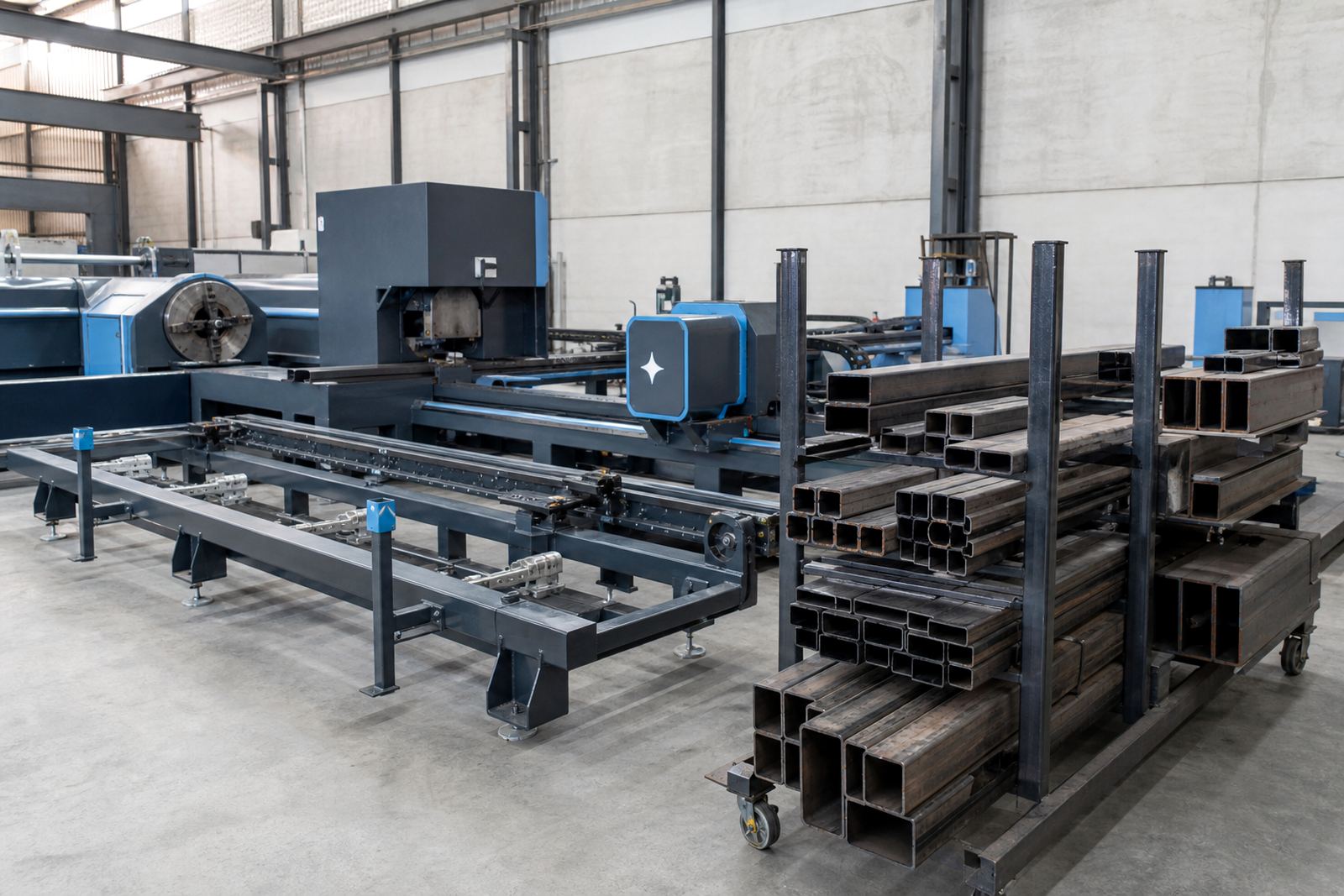
Correct clamping makes a real difference to finished accuracy. Tube machines use chucks to grip and rotate the section while cutting, and the setup must match the shape and size being run. Round tube behaves differently from square or rectangular section, and angle or channel need steady support so the profile stays aligned through the cut.
- Outer diameter and wall thickness affect grip and cut stability
- Longer sections need proper support through infeed and outfeed
- Short parts may need different nesting and drop management
- Heavier profiles place more demand on chuck alignment
That is why site assessment and installation planning matter before the machine lands in the shop. The machine has to suit the parts, the handling path and the way the team feeds material.
Nesting software for better yield from each length
Nesting software helps arrange parts on the tube or profile so the material is used with less waste. That matters in job shops as well as higher volume plants, especially when batches mix holes, slots and cut offs in one run.
The operator still needs judgement. Part spacing, remaining scrap, weld allowance and downstream assembly all affect the final nesting choice. Good training on the software helps the machine team read jobs properly and not just push a button and hope the layout suits the build.
Assist gas, edge condition and cut quality
Assist gas affects edge finish, cutting speed and dross control. Different materials and thicknesses need different gas choices and pressure settings, and the setup has to suit the section being cut. On mild steel, stainless steel and aluminium work, the gas plan changes with the finish target and the downstream fabrication method.
Clean cut edges save time at the next station. They also help when parts are welded, powder coated, painted or assembled against close tolerances. If the gas setup is poor, the job often shows it in extra cleanup and inconsistent edges.
Narrowing the machine fit
Start with the broad type of part, then narrow to the machine class. Small job shops may need compact tube cutting with straightforward loading and practical training, while production plants usually want higher throughput, stable alignment and stronger control over repeat batches.
LaserTube works from Wadeville, Germiston and supports installations, operator training and service across Johannesburg, Pretoria, Durban, Cape Town, Gqeberha, Bloemfontein and Nelspruit. When you get in touch, the useful details are the section types, wall thickness range, part sizes and the finishes you need on the job.