

From delivery bay to first clean cut
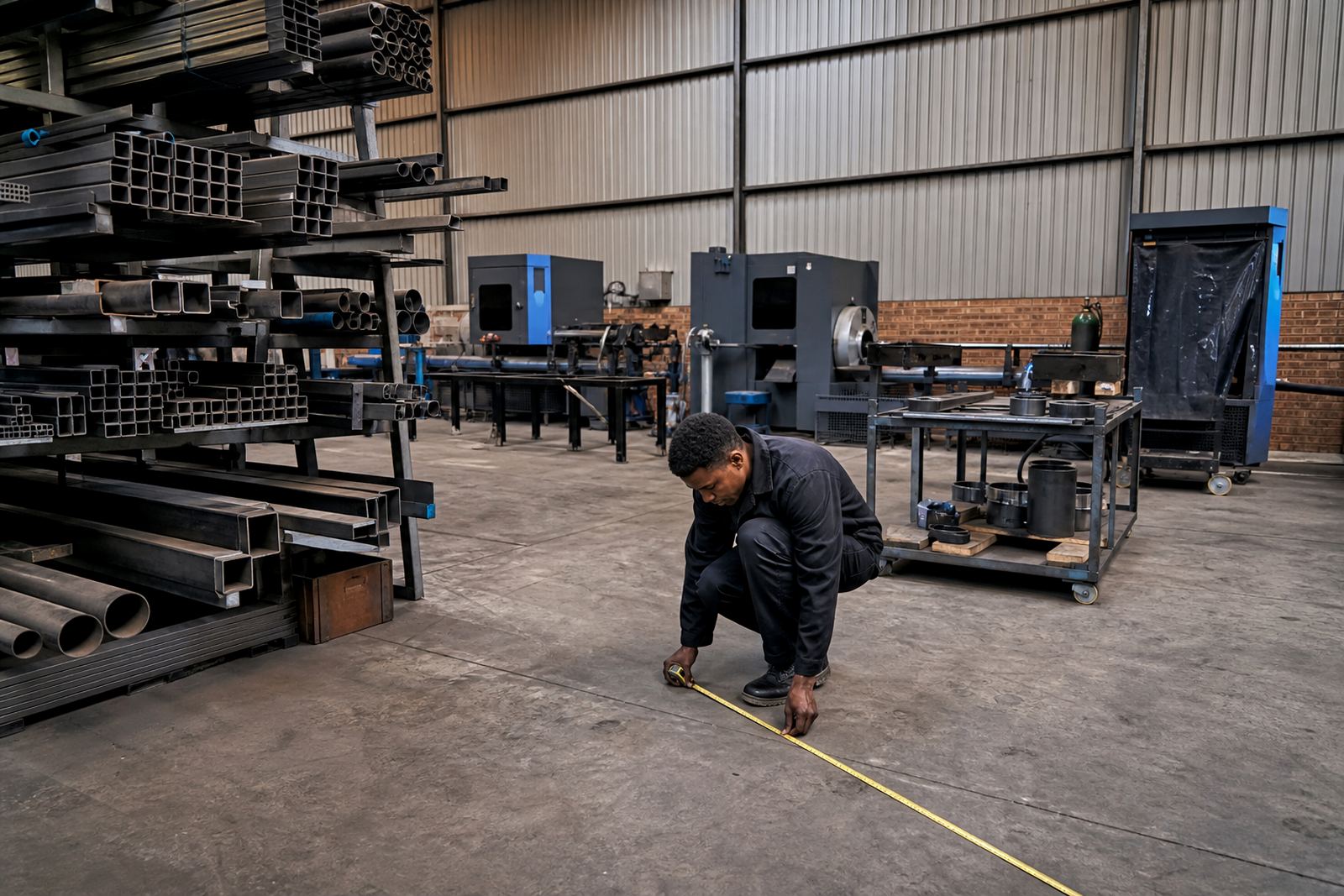
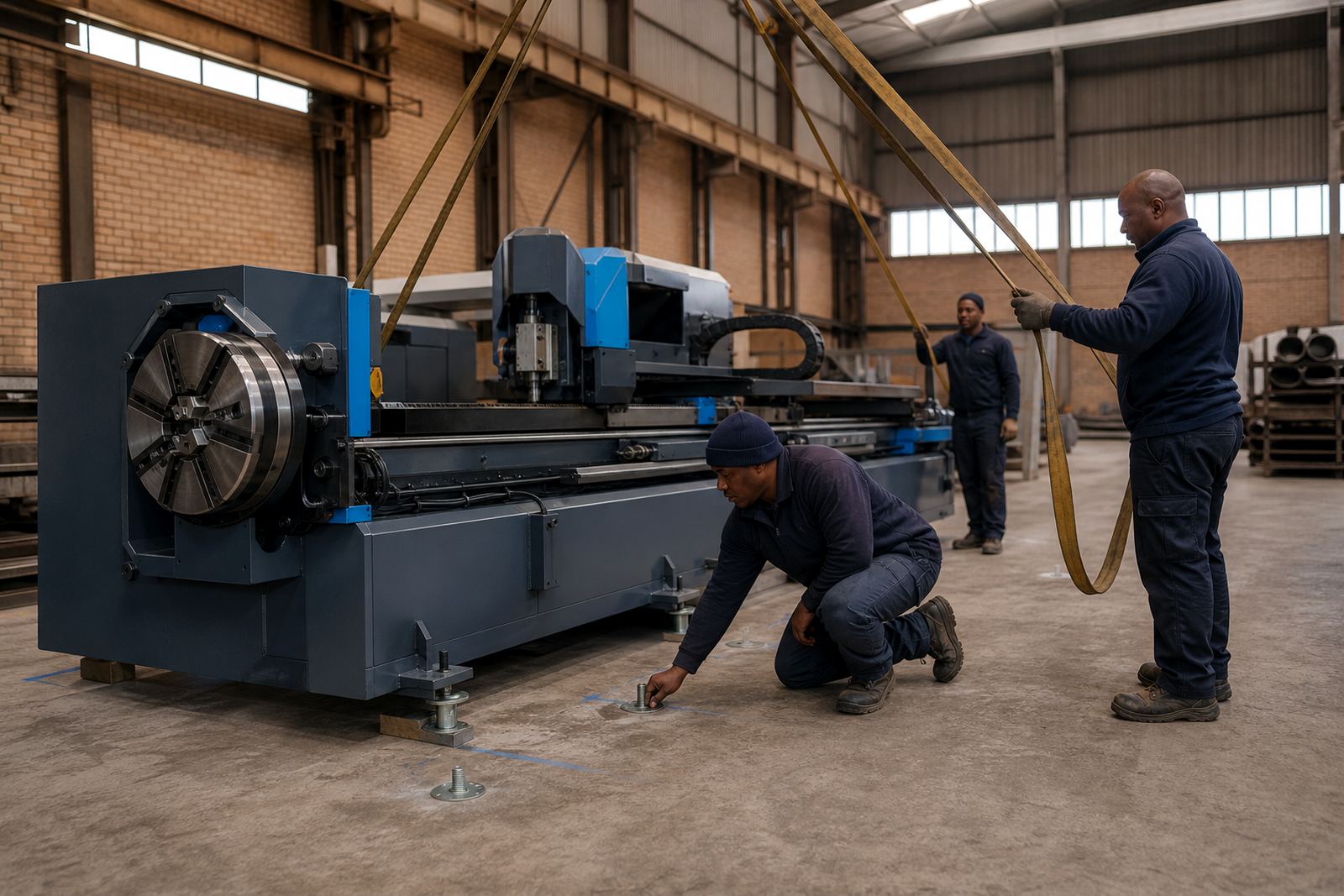
Installation involves more than moving the machine into position in the bay and powering it up. Tube and profile cutting lines need correct positioning, level floors, access for loading, clear service space and a sensible flow from raw material to finished parts. A poor start shows up later in misalignment, slower changeovers and avoidable wear on chucks, guides and drive parts.
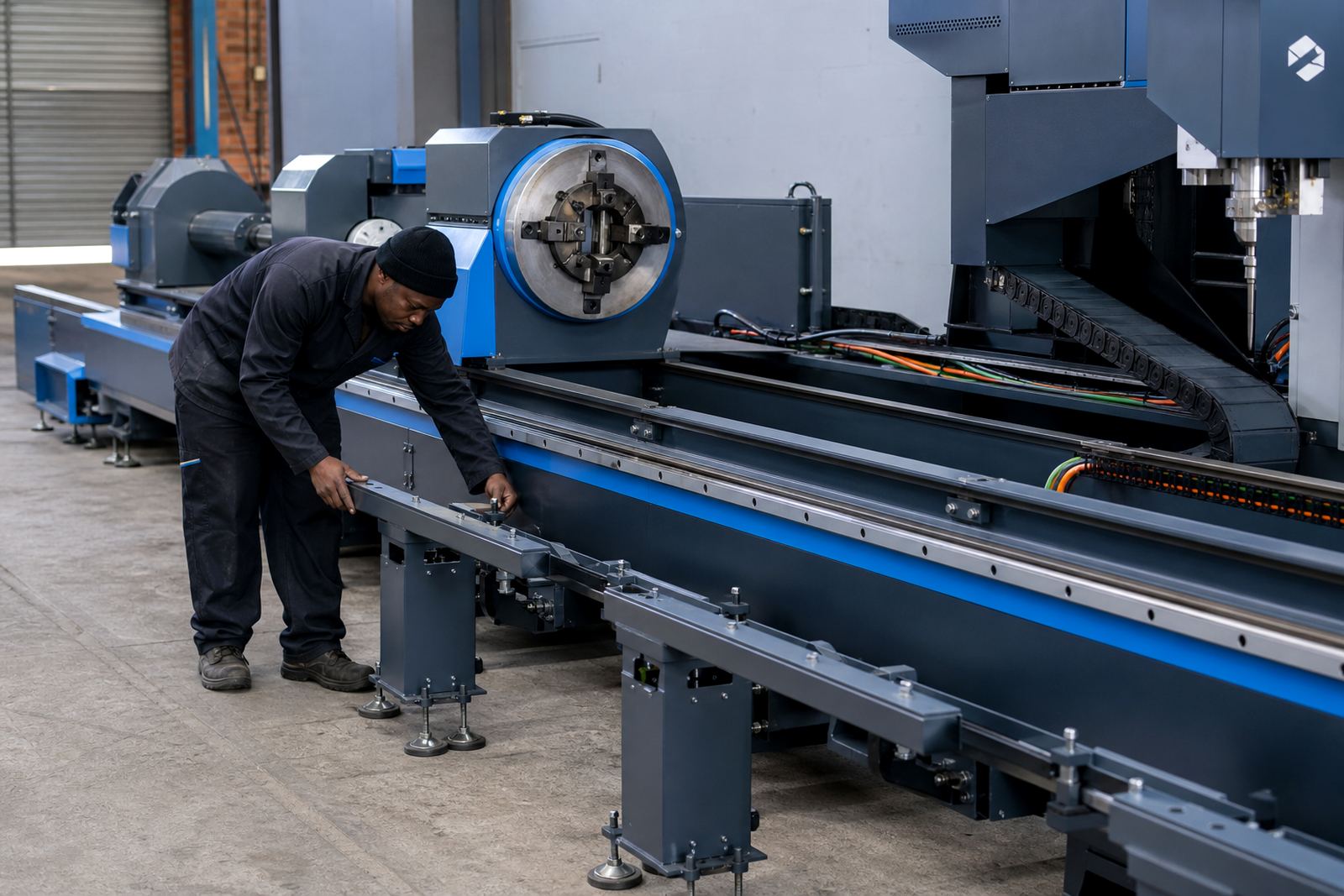
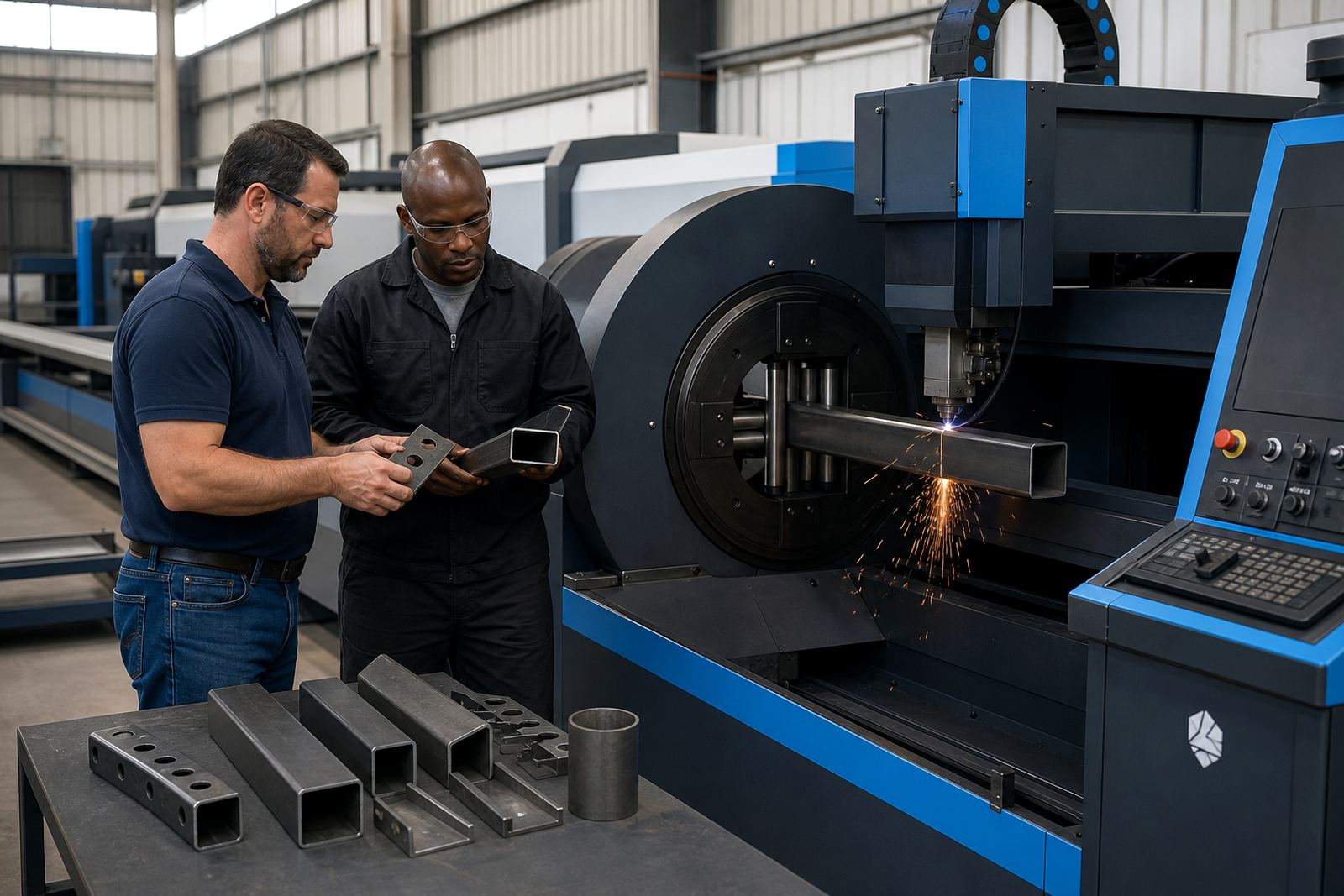
Our installation work covers rigging and placement through to commissioning and test cuts. We check the machine’s working position, confirm safe loading routes and set up the cutting cell so the operator can work with less guesswork. That is important for round, square and rectangular tube, and also for angle and channel where clamp control and cut path planning matter.
What shop floor training includes
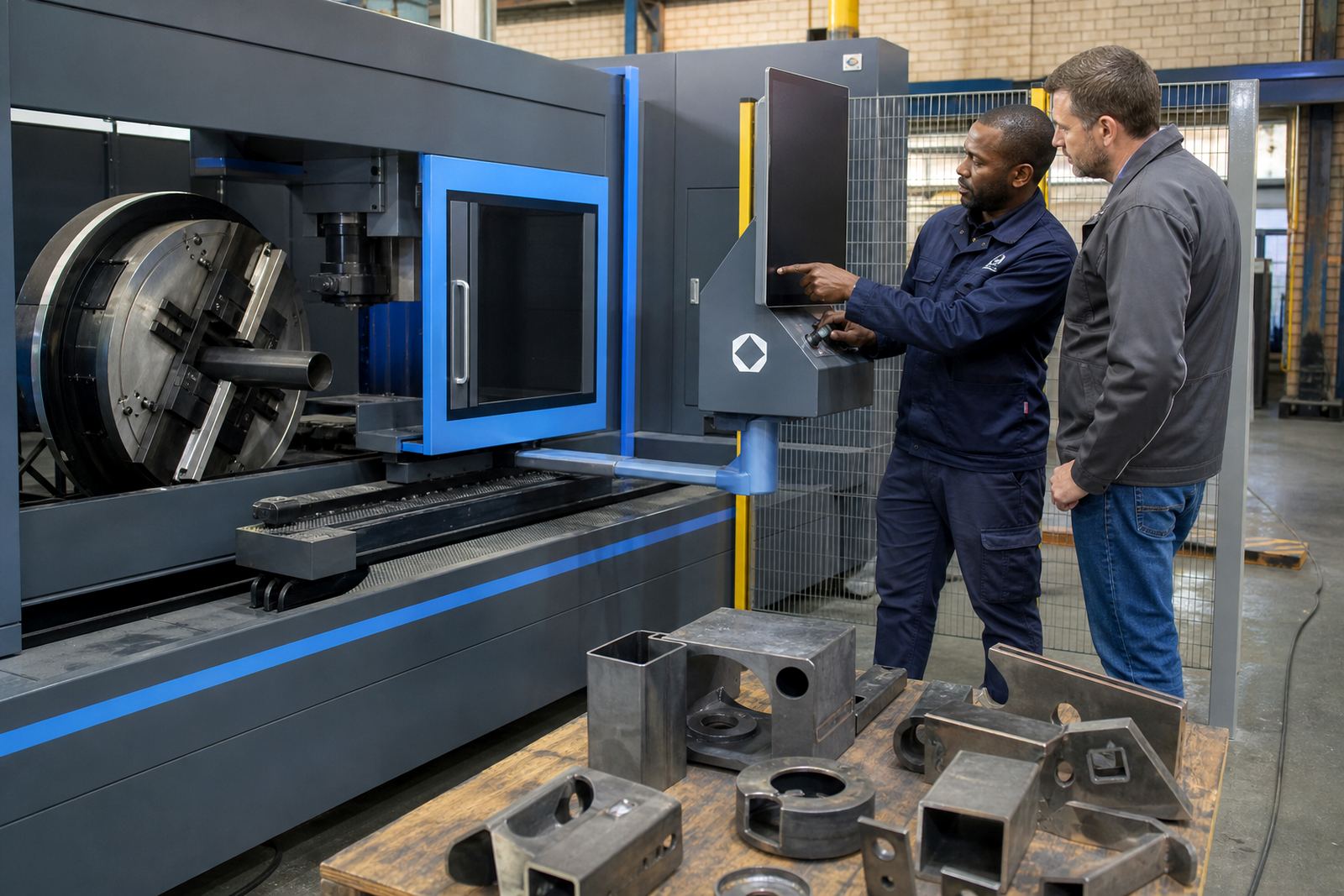
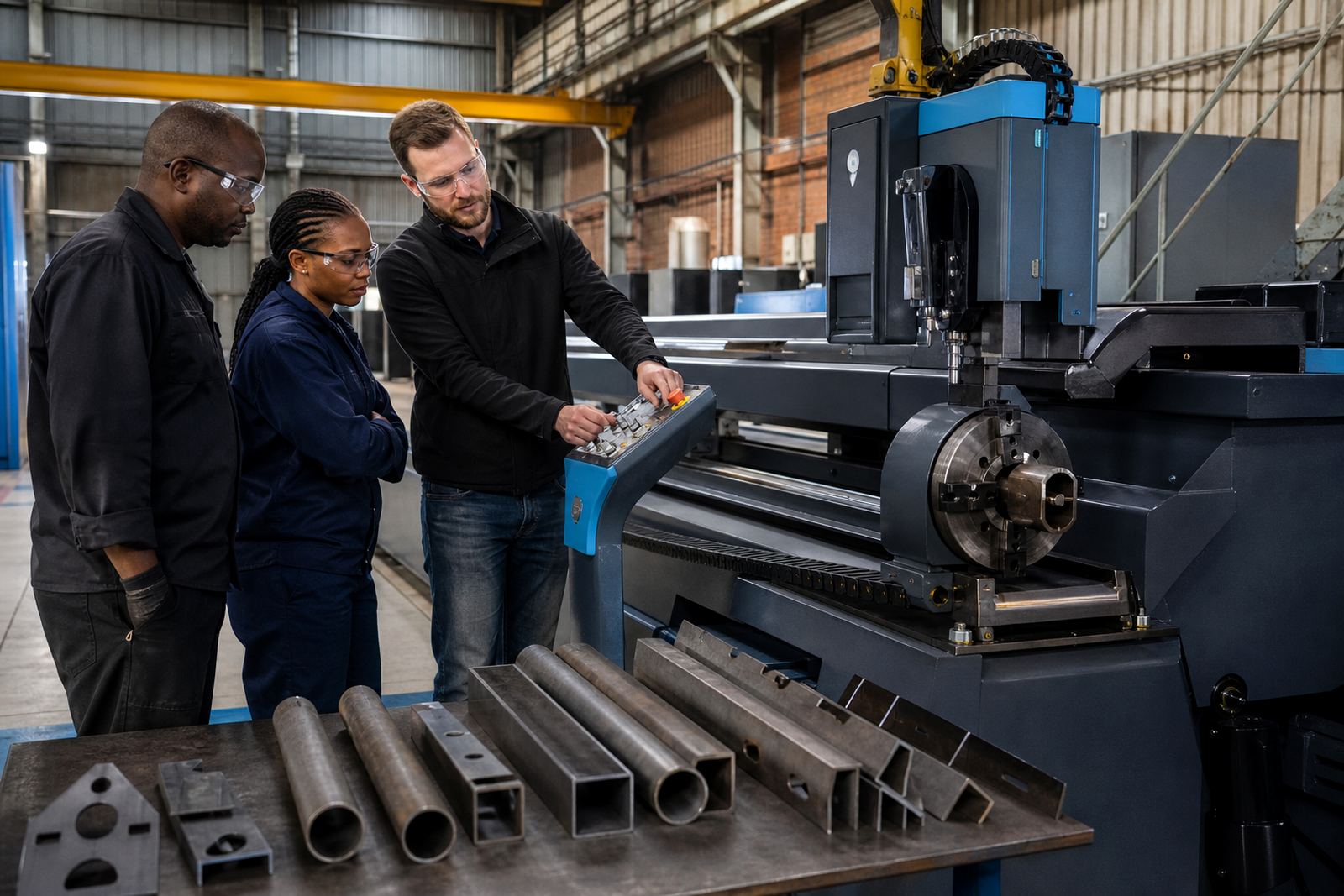
Training is built around the way your team actually works, not around a classroom version of the process. Operators learn how to load material, set up jobs, check clamping, handle cut libraries and keep an eye on edge quality and heat build-up. We also cover basic fault checks so small issues are spotted before they affect a full shift.
- Machine start-up, shutdown and daily checks
- Tube loading, clamping and part orientation
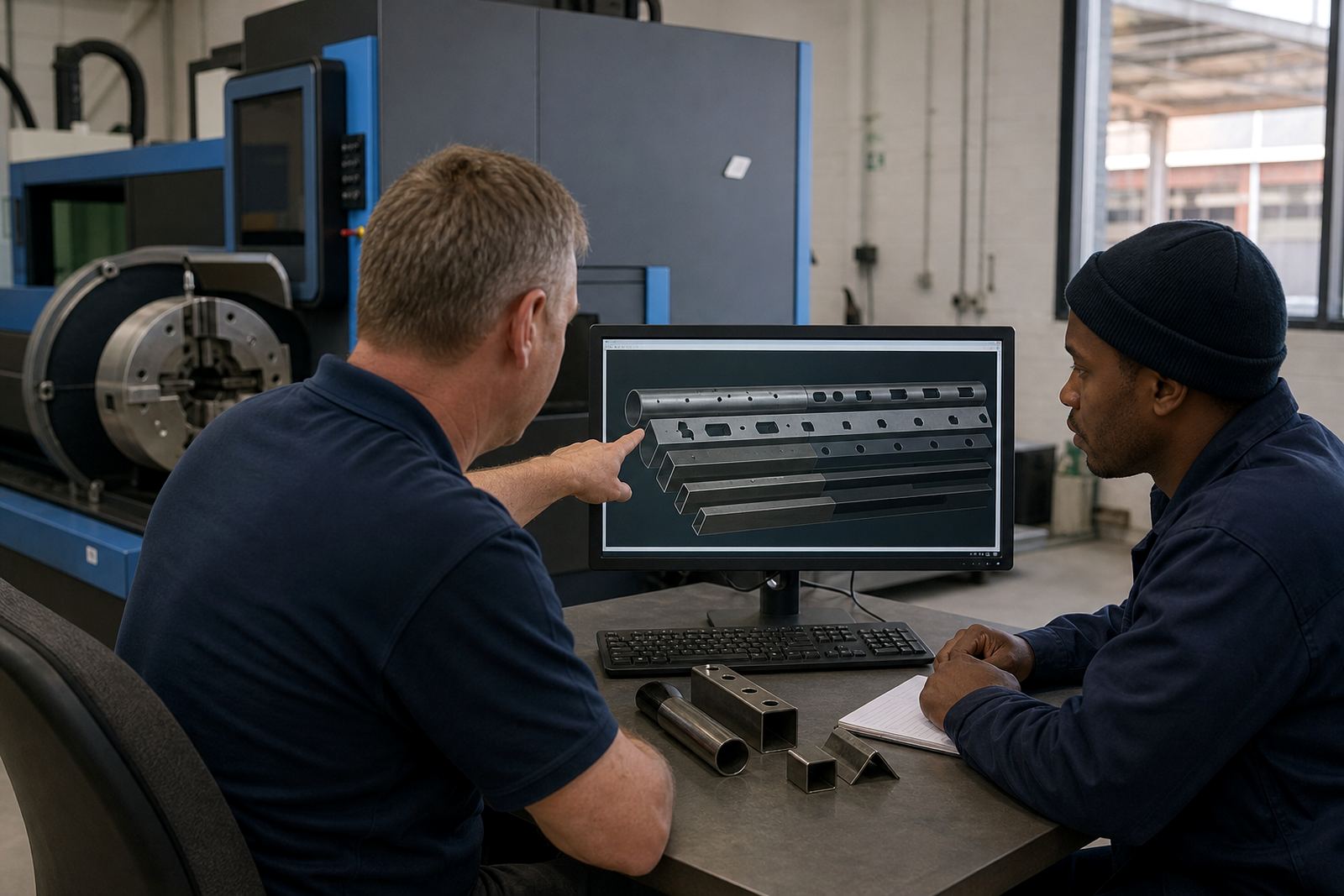
- Cut file use, nesting basics and job selection
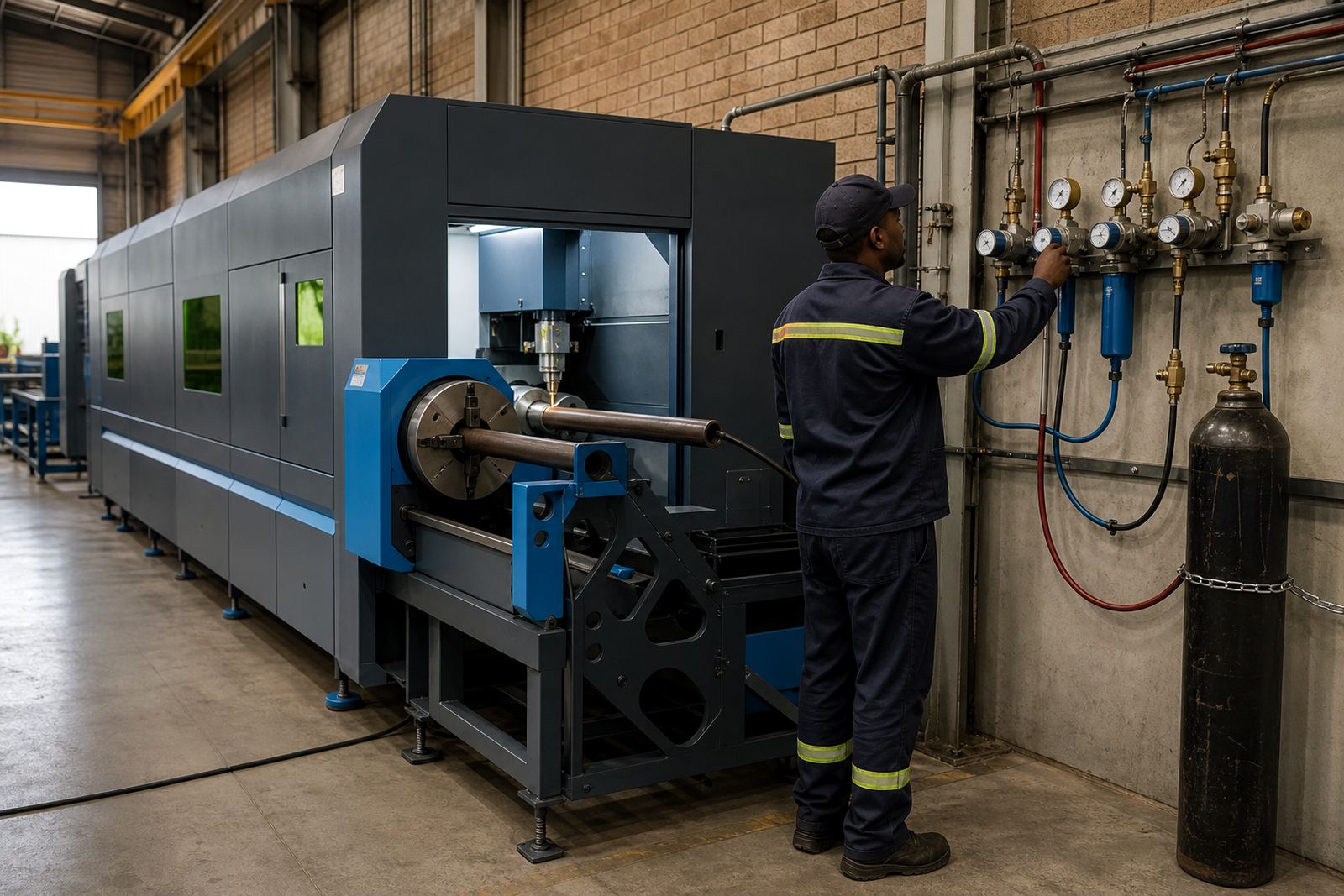
- Assist gas choice and pressure checks
- Safe handling around the cutting zone
- Basic quality checks on finished parts
Where bevel cutting is part of production, the team is shown how bevel heads affect angle, fit-up and downstream welding. That includes keeping an eye on the cut face, corner condition and joint preparation so the next process is not forced to correct avoidable errors.
Nesting, gas and cut quality all sit together
Accurate tube cutting takes more than the machine alone. Nesting software must place parts with care so material is used well and scrap is kept in check. Assist gases need the right setup for the material and thickness range, while the cutting head and chuck settings must match the job.
We help customers work through the links between file prep, tube type, clamping and cut finish. That matters on production runs where a small setup change can affect cycle time, kerf quality or part consistency. In a busy plant, that knowledge saves a lot of rework.
- Tube and profile nesting for mixed job lists
- Assist gas setup for cleaner cut edges
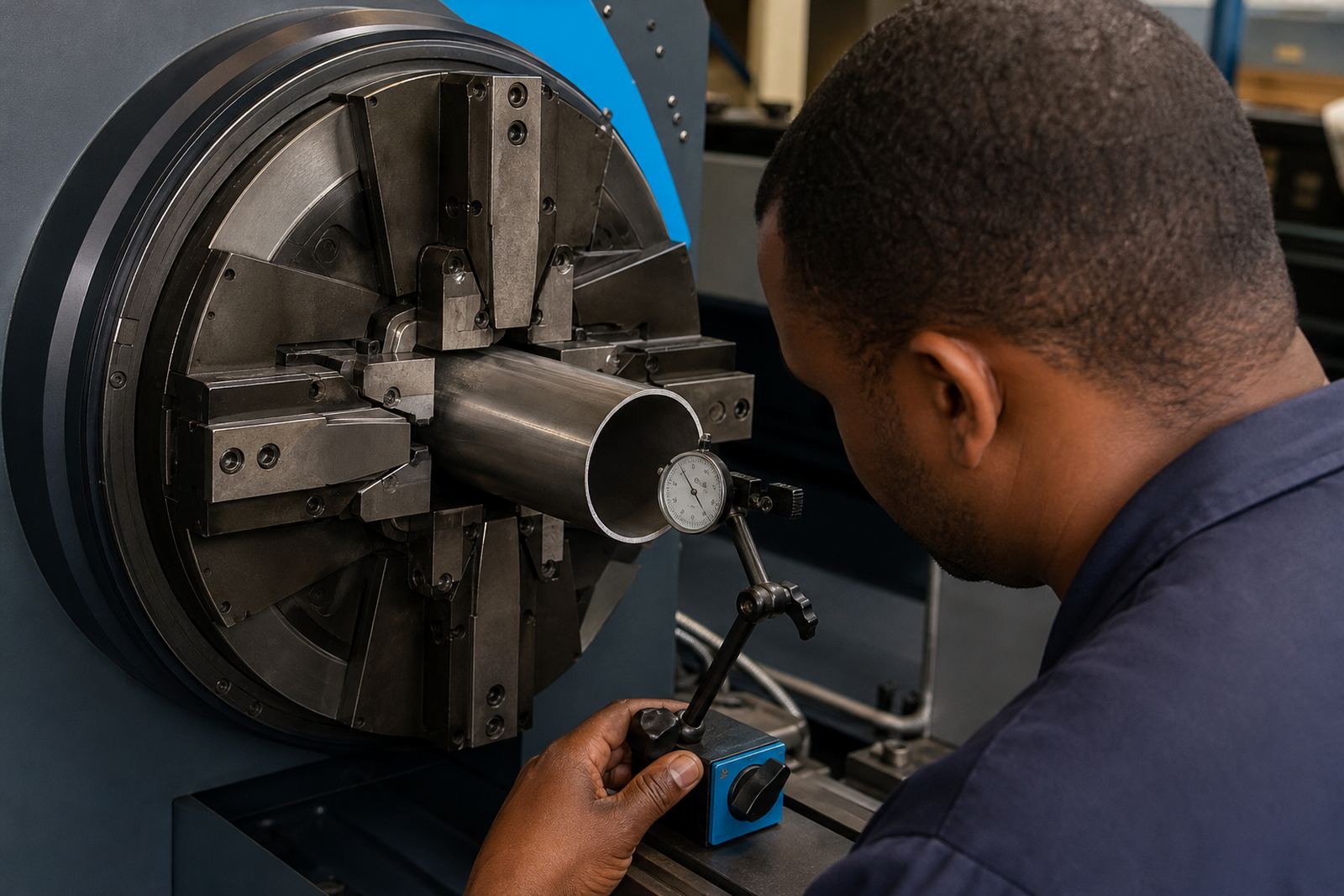
- Chuck alignment for straighter, steadier cutting
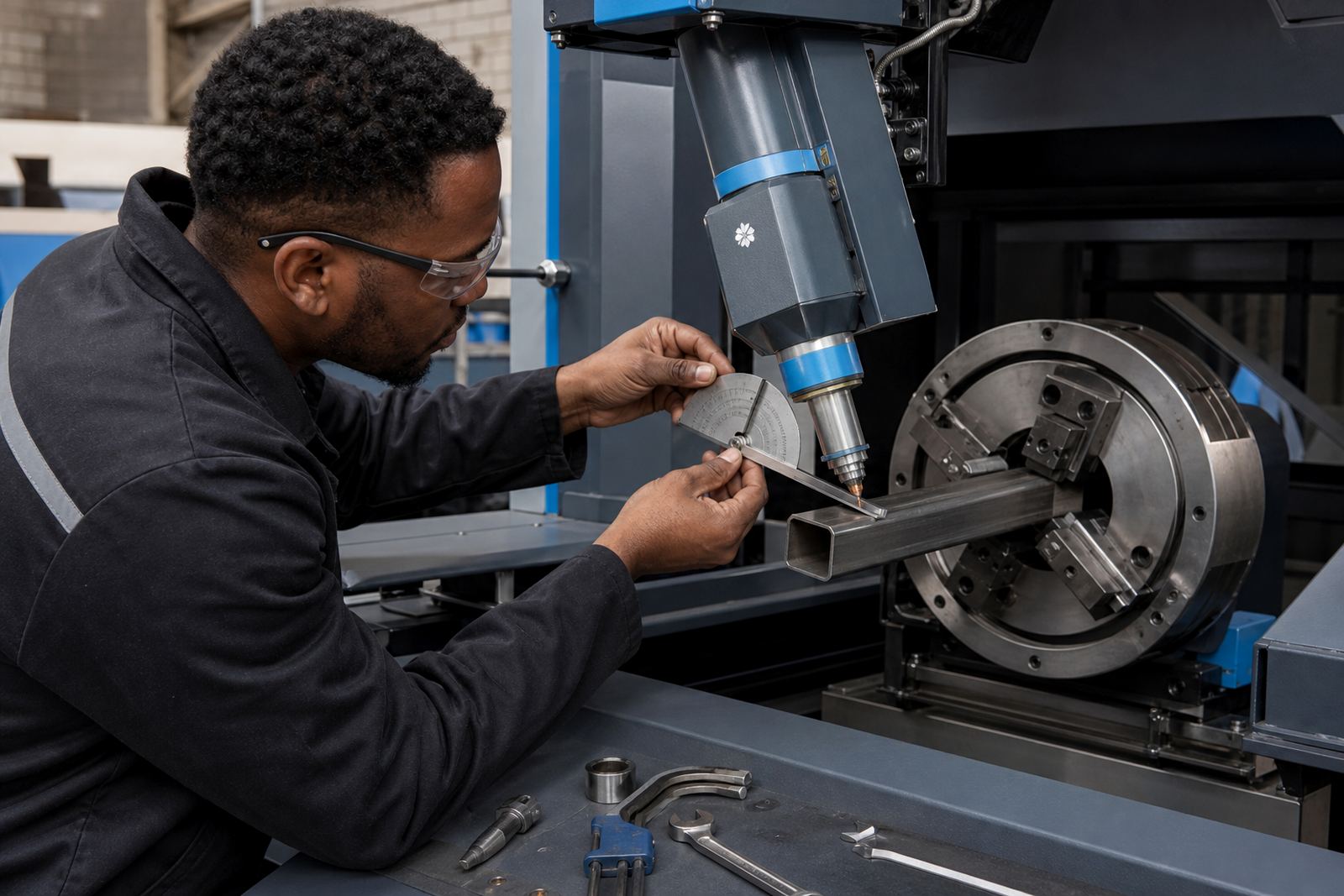
- Bevel calibration where angled cuts are required
Support that follows the machine into production
Once the machine is installed, the work does not stop at the commissioning sheet. Production teams often need help with job setup, process adjustments, routine checks and maintenance planning. That is where practical support matters, especially when a site is moving from manual cutting or older equipment into fibre laser tube cutting.
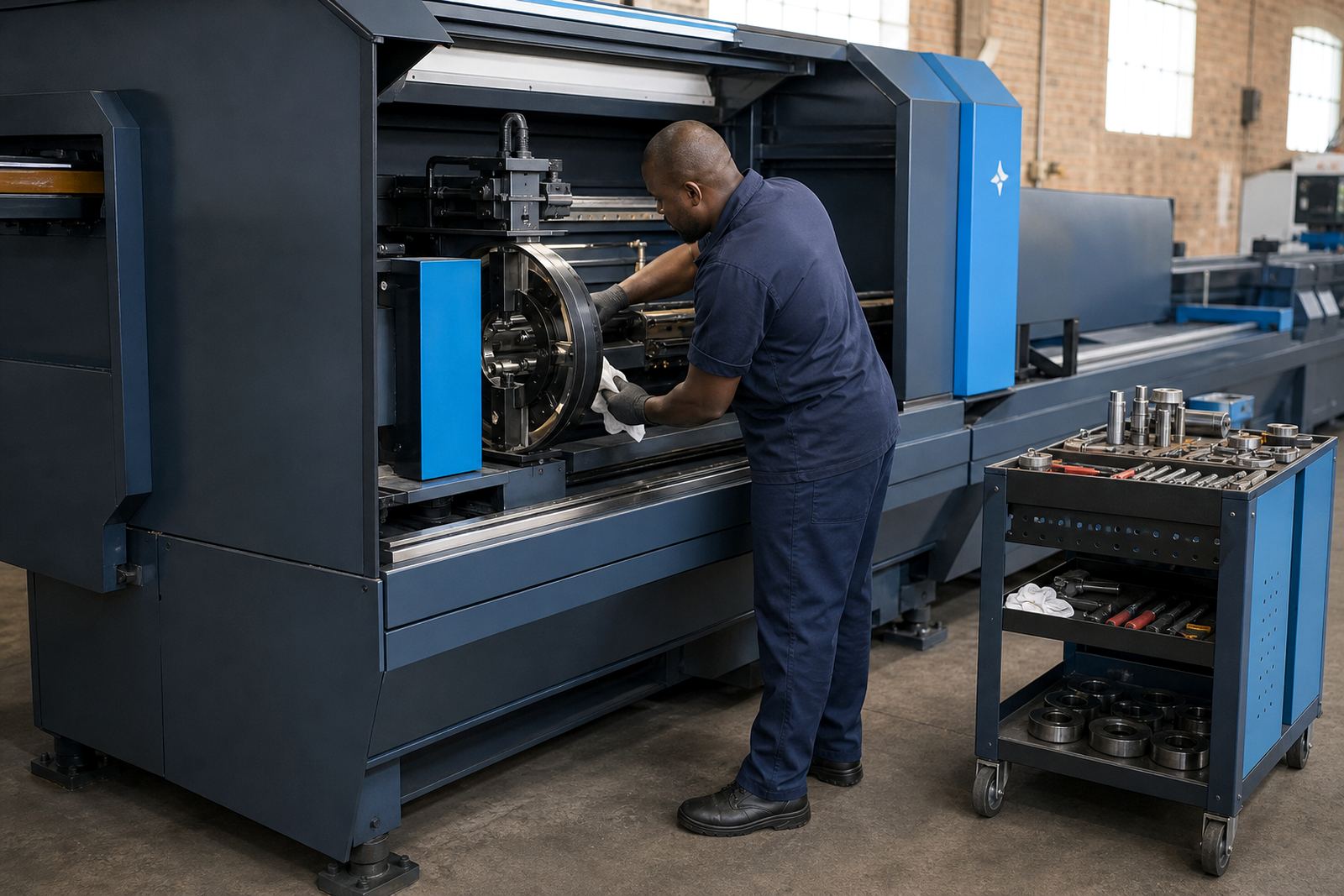
Preventive maintenance keeps the machine in better condition and reduces the kind of wear that shows up in clamps, head movement and alignment. If a fault does interrupt production, remote diagnostics can help narrow down the issue before a service visit is arranged. Some sites also need breakdown response and service planning tied to their shift pattern.
Sites we work with across South Africa
LaserTube supports metal fabricators in Wadeville, Johannesburg, Pretoria, Durban, Cape Town, Gqeberha, Bloemfontein and Nelspruit. We work with small job shops that need a reliable first machine, and with larger plants that want a cleaner process around tube and profile cutting. The installation scope shifts with the site, but the target stays the same: safer setup and steadier output.
Coastal humidity, tight factory space and mixed product sizes all affect how a cutting cell should be set up. A site in Durban may need different handling around storage and maintenance than a plant inland, while a busy Gauteng floor may need a sharper focus on loading flow and operator handover.
The people who stay close to the process
The team includes Michael Dlamini as Managing Director, Anika Kajee in Sales, Sibusiso Bhengu on installation, Leanne Mabuza on training, Pieter Visser on service and Ayanda Mashaba in applications. That mix matters because installation and training draw on different skills. A machine can be supplied well and still underperform if process setup is left vague.
For customers, the value is in having one group that understands the machine, the cutting process and the day-to-day realities of a fabrication floor. The goal is not only to get the machine into place, but to support the people who use it and the parts they need to make.