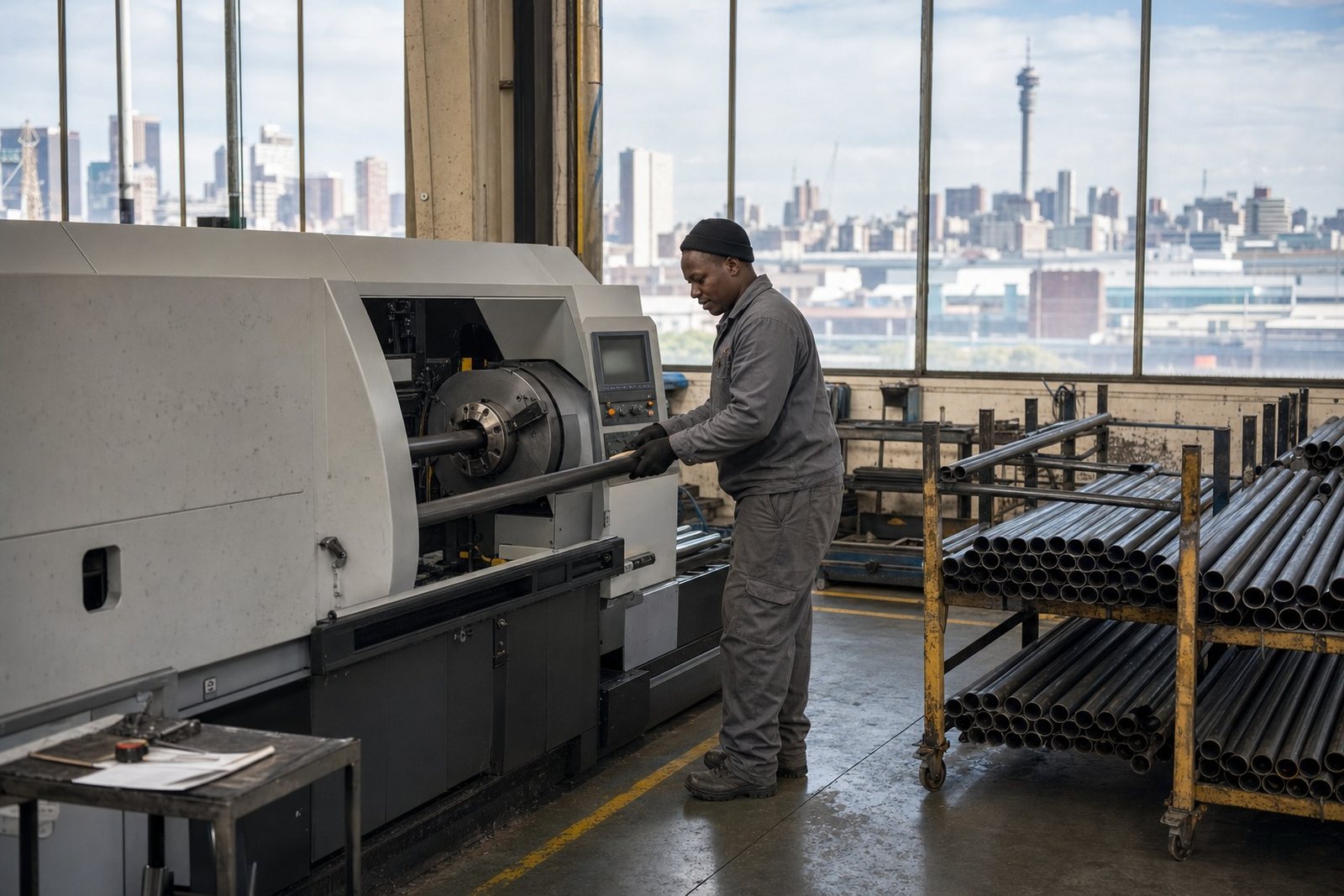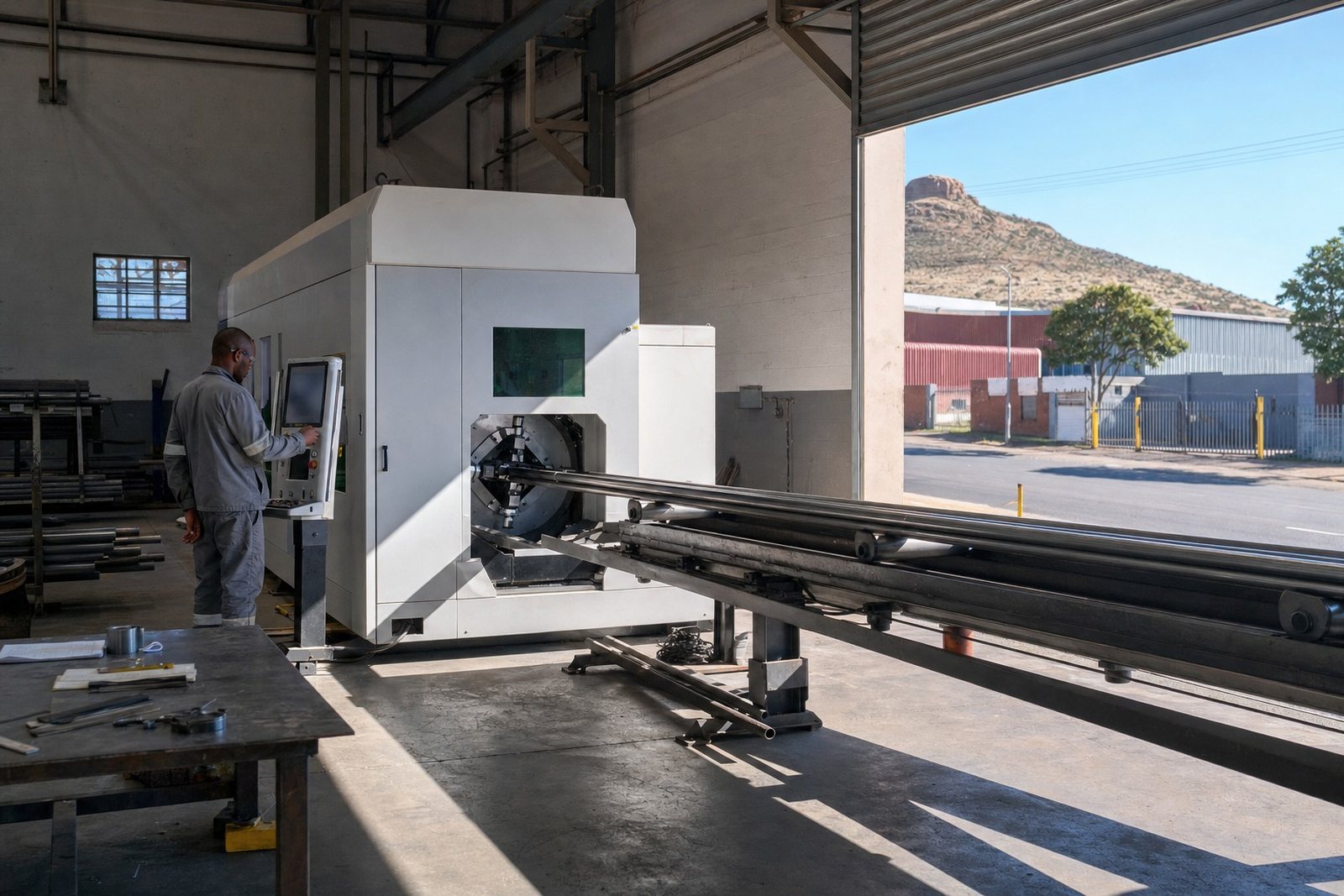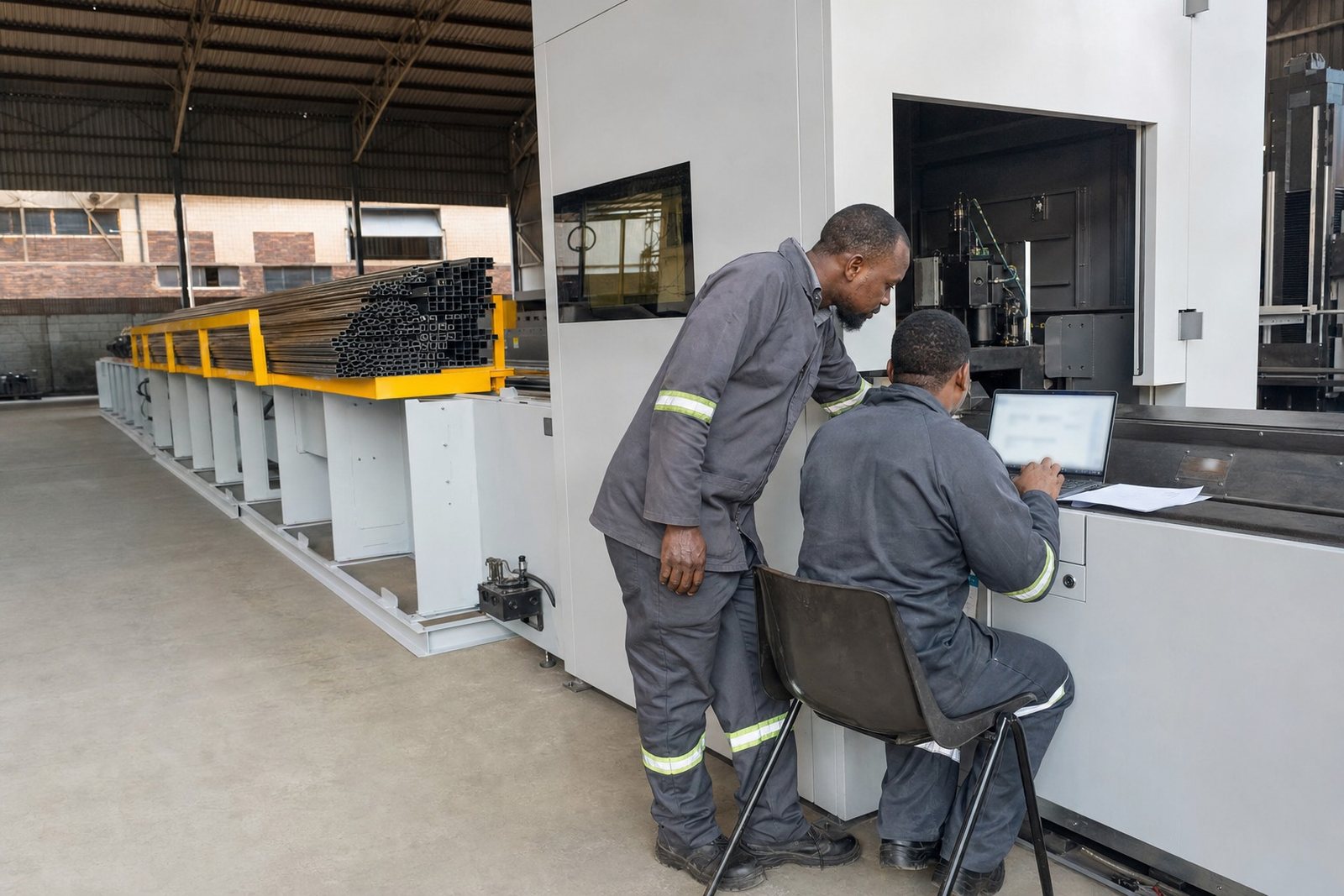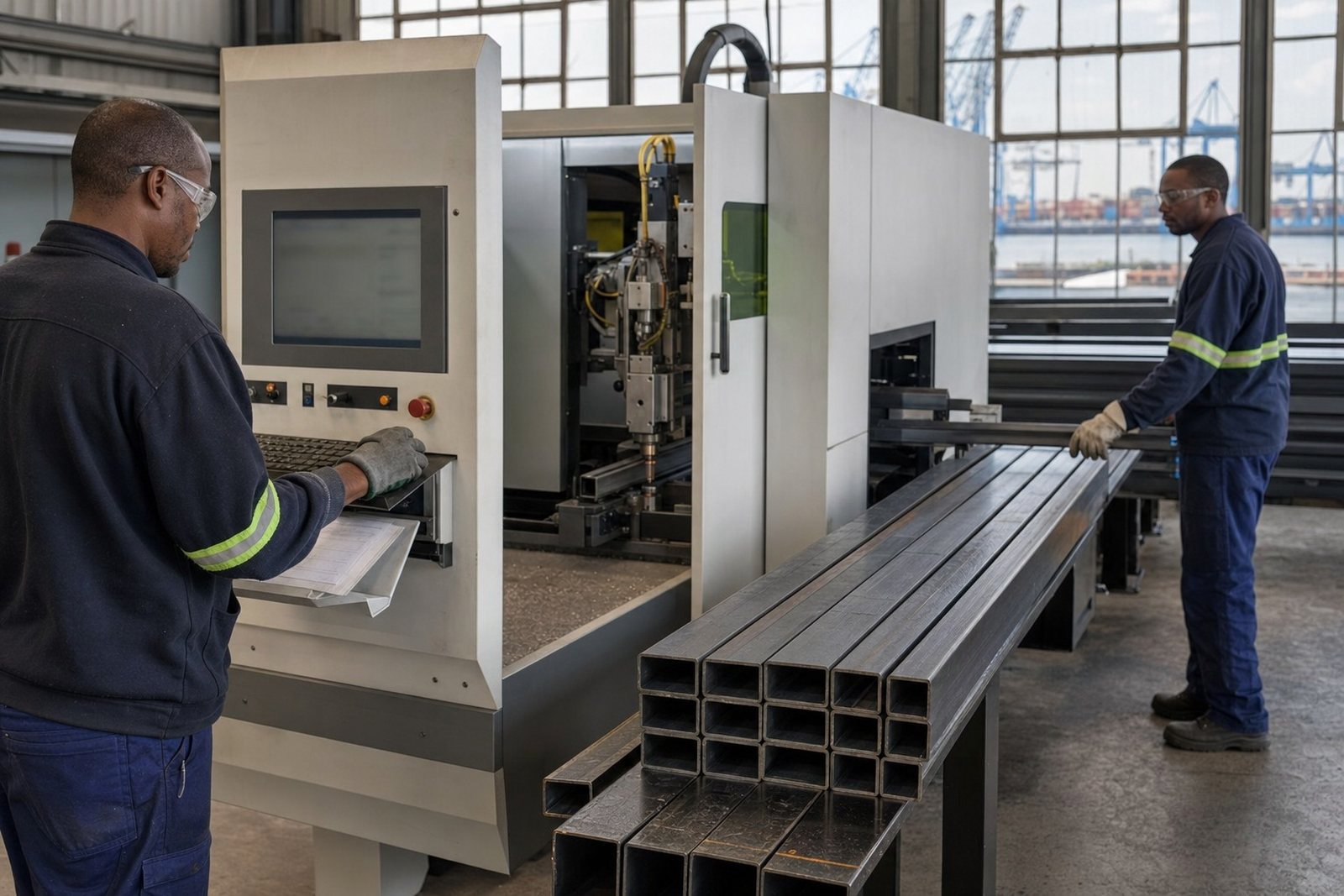
Tube and profile cutting work in Gqeberha
Many fabricators in Gqeberha work with mixed batches, from light structural parts to repeat production runs. That means the machine has to hold tube properly, feed cleanly, and cut consistently through changing section sizes. We support fibre laser tube and profile cutting machines used for round, square and rectangular tube, angle, channel and open sections where the job calls for it.
Coastal air brings extra attention to storage, machine care and material handling. Salt in the air can affect exposed surfaces, rails and clamps if the workshop stays open to the weather. We help set up practical routines around cleaning, lubrication, chuck care and safe gas handling so the machine stays ready for daily work.
For workshops in industrial areas, the work often includes furniture frames, trailer parts, security products, gate sections, racking, balustrade components and light fabrication. The machine setup has to suit the part length, wall thickness and cut quality needed on the floor. That is where setup, alignment and operator guidance matter most.
What we cover on site
Site work in Gqeberha can include delivery rigging, machine installation, commissioning, chuck alignment and bevel calibration. We also handle assist gas setup, so the machine is ready for the material range and edge quality required on the job. When a workshop is moving from manual cutting or a mixed process line, the first run needs careful checking on clamp position, pierce settings and nest layout.
- Machine placement and rigging for workshop access and floor loading
- Installation of fibre laser tube and profile cutting systems
- Commissioning with function checks and test cuts
- Chuck alignment for round, square and rectangular tube
- Bevel head calibration where angled cuts are required
- Assist gas setup for clean cutting and stable process control
- Operator handover with safe loading, unloading and cut checks
We work with jobs that need sensible planning around aisle space, material storage and fork access. In tighter shops, every metre counts. A machine may need a clear loading side, enough turning space for tube bundles, and a clean path for offcuts and finished parts.
Nesting software and the first production runs
Laser tube cutting depends on more than the machine itself. Nesting software helps place parts on the tube length, reduce waste and keep cut order sensible. In production work, this also helps with repeat jobs where the same profiles return in different batch sizes. We give nesting training that covers part layout, lead-ins, bridges and where to place common cuts for better efficiency.
Early-stage operator guidance is often the difference between a machine that just runs and one that fits the workshop flow. We show operators how to load the correct section, check clamping, read the program, spot edge issues and keep a clean part stack. Where bevel heads are part of the machine package, we also cover angle control and how to confirm the cut matches the drawing.
The aim is to leave the team with a workable process, not a pile of settings nobody understands. That matters when shifts change or a new operator steps in. Clean notes, clear part naming and sensible nests make the workshop easier to manage.
Travel across the coast and inland routes
From our Wadeville base in Germiston, we support Gqeberha and nearby production areas through planned site visits and service calls. Travel into the Eastern Cape needs proper coordination, so machine delivery, rigging and installation work is set around access, lifting requirements and the workshop schedule. For larger machines or installations with extra handling, the route and offload plan are checked before the move.
Gqeberha fabricators often balance local production with jobs that ship to other provinces. That puts pressure on cut accuracy, lead times and repeatability. We support that by checking machine condition, gas setup, nesting method and operator handling before the production run starts. If a shop has several profiles in play at once, the setup has to hold steady through the full batch.
- Support for workshops in industrial and coastal locations
- Planned travel for installation and commissioning work
- Suitable for small job shops and larger production plants
- Machine relocation support where the existing line changes
- Workforce guidance for shared-shift production teams
Typical fabricators we support in Gqeberha
The area includes job shops, light engineering firms, security product makers, structural fabricators and production plants that cut tube and profile sections every day. Some need a compact machine for mixed orders, while others need higher throughput and consistent nesting over longer production runs. We also support workshops that handle bevel cuts for joining work, where a clean edge finish helps downstream fabrication.
Different materials call for different habits. Thin-wall tube needs careful clamping and pierce control. Heavier sections may need stronger support and more attention to gas settings and cut sequence. Open profiles such as angle and channel can move differently to round tube, so the machine setup and the operator's loading method both matter. We work through those points on site rather than assuming one setting fits everything.
For workshops near the harbour or in exposed industrial zones, keeping the machine area clean and dry helps reduce wear. That includes practical storage for consumables, keeping swarf away from rails and checking the clamping surfaces often. Simple daily habits prevent many problems in the workshop.
Maintenance, diagnostics and support after handover
Once a machine is running, the work shifts to keeping it consistent. Preventive maintenance covers checks on chucks, alignment, motion components, gas delivery and general cutting condition. If a workshop starts seeing shifted cuts, poor edge quality or loading problems, the machine should be checked before the issue spreads through the batch.
Remote diagnostics can help with software settings, operator questions and fault tracing where the issue sits in the control side. For mechanical work, site support may be needed for chuck alignment, bevel calibration or a full inspection after a breakdown. We keep the process practical so the team knows what was adjusted and what still needs attention.
For Gqeberha fabricators, reliable output matters just as much as machine specification. Good support means the machine stays usable for the work at hand, whether that is short runs, repeated orders or mixed profile jobs across the week.