Bloemfontein Jobs That Need Clean Tube Cuts
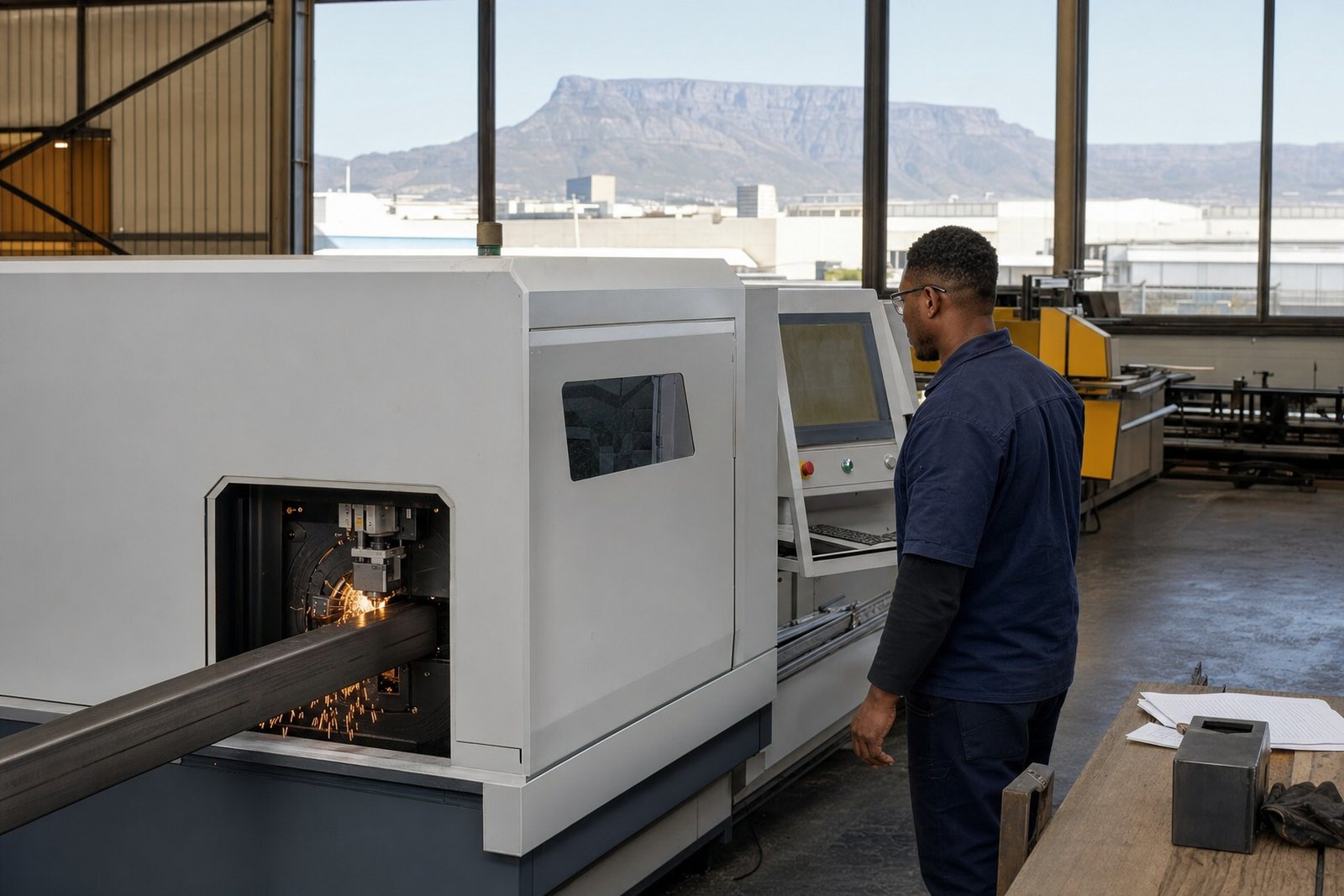
Bloemfontein fabricators work across workshop fit-outs, farm equipment, gates, handrails, trailers and structural work, so tube cutting has to hold dimensions without a lot of hand finishing. Fibre laser cutting suits round tube, square tube, rectangular tube, angle and channel where repeatable holes, mitres and slot patterns save time at assembly. For shops handling mixed work, the machine often replaces several slower cutting steps and keeps the edges neater for welding.
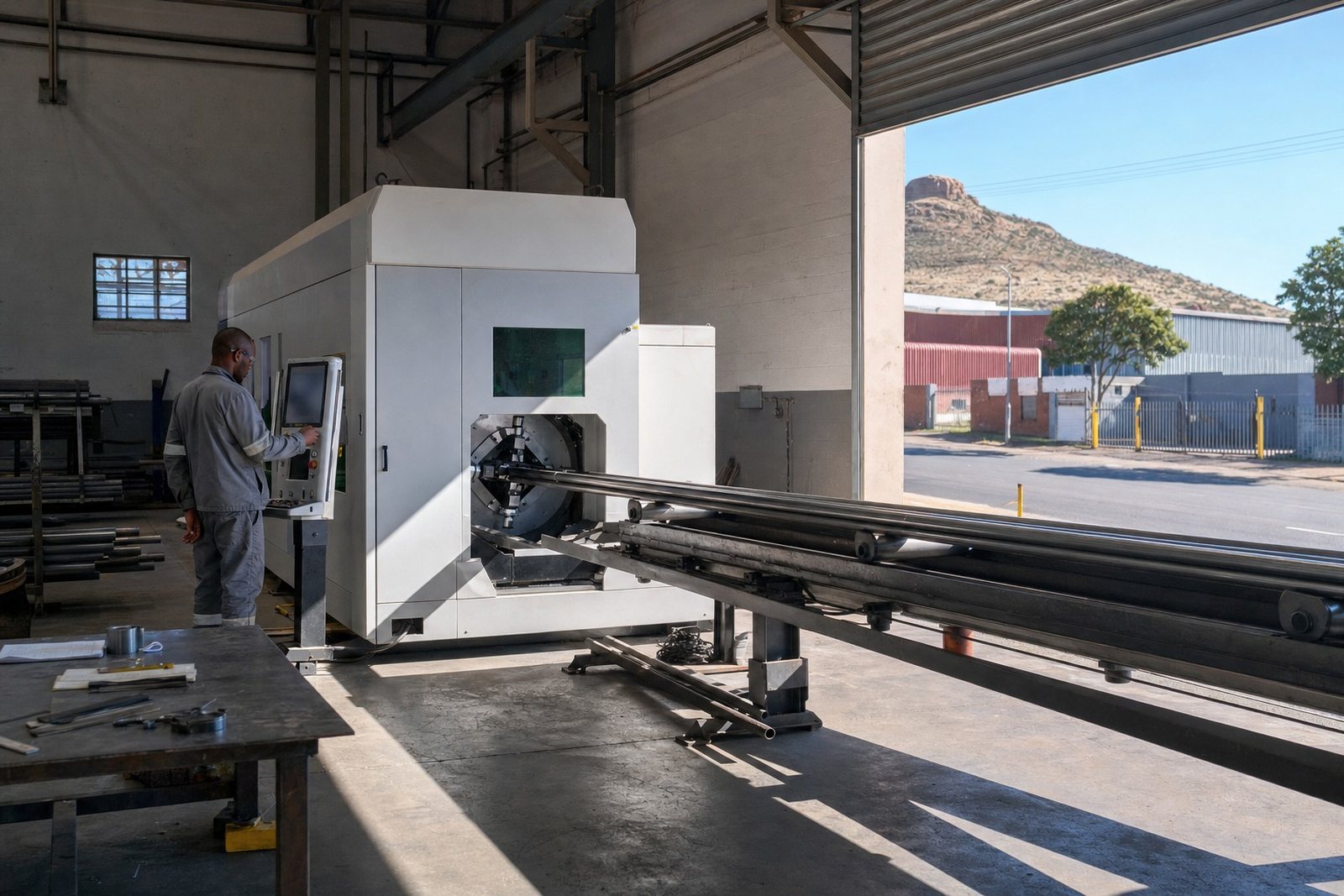
We work with small job shops, maintenance teams and production plants that need a practical machine layout, proper part handling and a cut quality that stays consistent across the batch. That usually means looking at tube lengths, bundle size, loading method, finished part size and the thickness range the shop actually runs. The aim is not only to buy a machine, but to match the machine to the work moving through the floor.
What We Cover From Wadeville Into the Free State
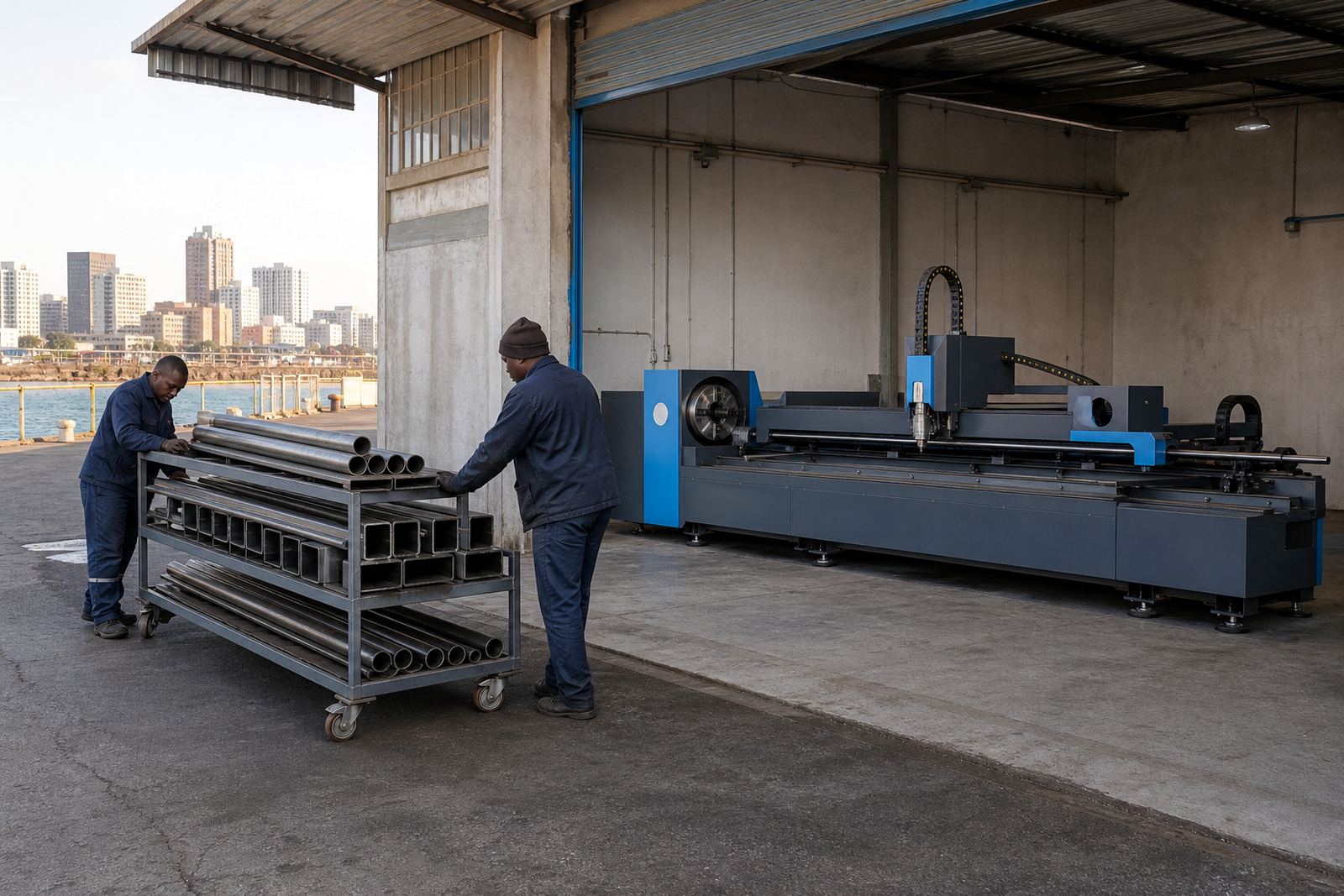
LaserTube operates from Wadeville, Germiston and supports Bloemfontein through delivery planning, site assessment and on-site setup. Travel planning matters on longer routes, because machine bases, chucks, beam alignment, accessories and rigging gear all have to arrive in the right order. We coordinate the move so the installation crew has the parts, lifting gear and space requirements needed for a clean handover.
- Site assessment for floor space, access and machine placement
- Delivery rigging for heavier cutting machines and related equipment
- Machine installation and commissioning on site
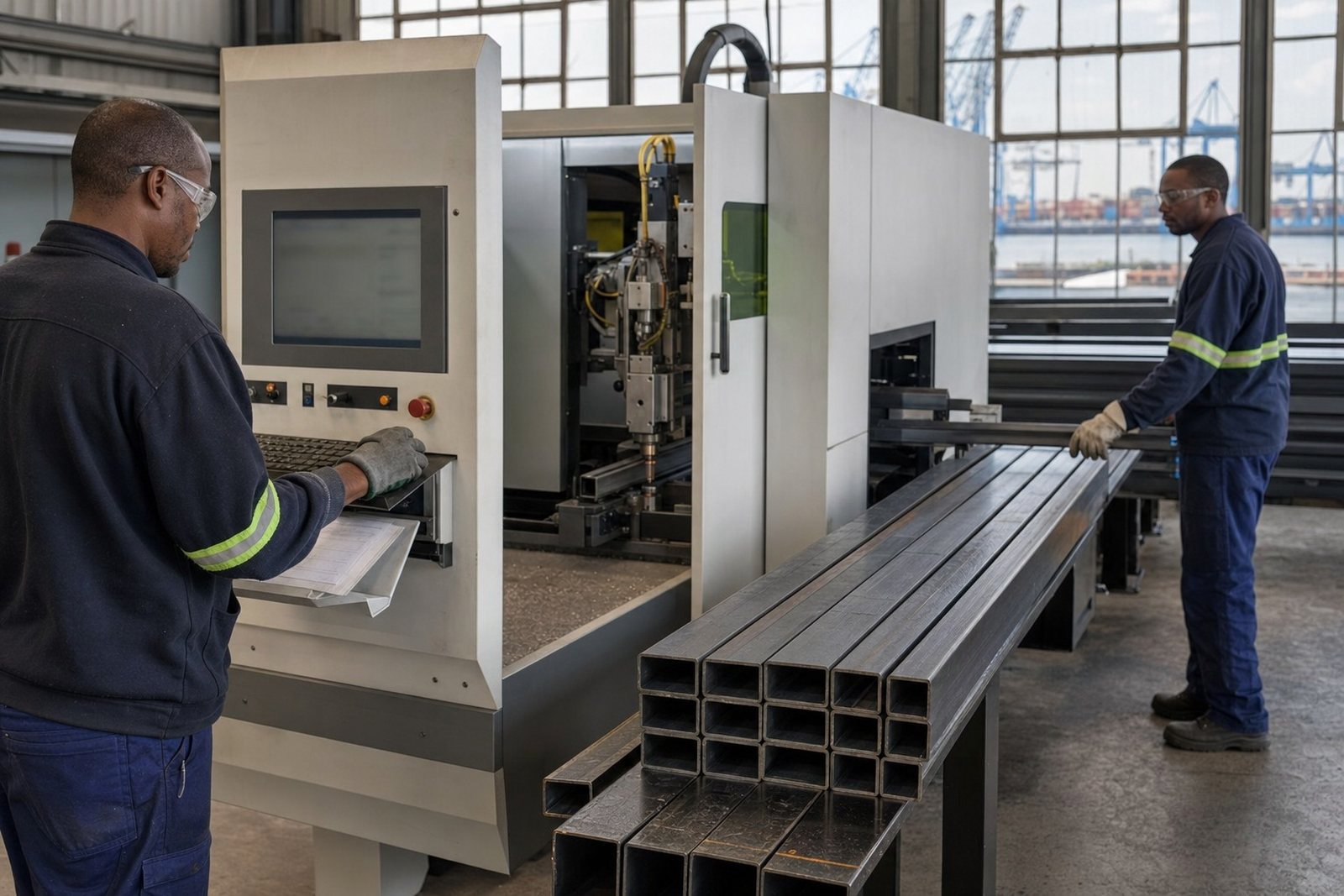
- Operator instruction for daily machine operation and safe part handling
- Nesting training for better material use and cleaner cut plans
Bloemfontein customers also use post-installation check-ins to settle the machine into normal production. That may include checking the first batches, reviewing cut settings and making sure the operator team is comfortable with the routine around loading, clamping and unloading.
Machine Features That Matter on Tube and Profile Work
Tube and profile cutting machines are judged on how well they hold the material, follow the cutting path and support repeat work without chasing the same fault over and over. Chucks need to grip securely without marking the tube more than necessary, while the support system must keep the workpiece stable through long cuts and multiple holes. For mixed-profile work, that stability becomes just as important as laser output.
Bevel heads are useful where weld prep is part of the job, because they can create angled edges for better joint fit-up. Nesting software also matters, especially in shops that want to reduce offcuts and keep production organised around real jobs rather than guesswork. Assist gases are part of the process too, with the gas choice influencing edge condition, cutting speed and the finish on different metals. Safety controls, enclosure design and clear operating procedures must sit alongside the cutting process, not after it.
Bloemfontein Workplaces We See Most Often
The Bloemfontein area has a practical mix of fabrication shops, repair businesses, steel fabricators and factories making components for agriculture, transport and general engineering. Many of these sites run a varied workload, so the tube machine must move between short custom pieces and repeated batches without a lot of reset time. That is where operator training and sensible nesting habits help the most.
- Job shops cutting custom gates, frames and brackets
- Engineering workshops handling tube, angle and channel sections
- Maintenance teams making replacement parts on demand
- Production plants needing repeatable profiles for assembly lines
- Fabricators working for agriculture, transport and structural steel
Some clients need a machine that handles long stock lengths cleanly, while others are focused on shorter parts with frequent design changes. We look at the real job pattern, not only the headline machine size, because that affects chuck configuration, loading method and the level of training needed on the floor.
Local Conditions That Shape the Setup
Bloemfontein is inland, dry and wide open in a way that changes how a workshop lays out its equipment. Dust control, floor cleanliness and material storage all matter when precision machines are cutting fine features and keeping moving parts free of grit. If a site handles trucked-in material or outdoor loading, the delivery path and rigging route need to be planned with the yard conditions in mind.
Room around the machine matters too. A tube line needs access for loading, unloading and maintenance, and the surrounding work area should keep operators clear of pinch points and moving supports. Where the machine is expected to run regular shift work, we also look at service access, consumables and inspection points so routine maintenance does not become awkward.
Support After the Machine Is Running
After installation, the support work shifts toward keeping cut quality steady and reducing avoidable downtime. Preventive maintenance covers the mechanical and optical systems, chuck alignment checks, bevel calibration where fitted, and assist gas setup so the machine keeps producing the parts it was bought for. When settings drift or a part pattern changes, applications support helps the team adjust the nesting plan and cutting parameters in a controlled way.
- Chuck alignment checks for stable tube rotation and grip
- Bevel calibration where weld-prep cuts are required
- Assist gas setup for the material being cut
- Preventive maintenance on moving and cutting components
- Remote diagnostics and breakdown response when faults arise
Bloemfontein customers also benefit from post-installation check-ins that look at how the machine is settling into daily work. That can include reviewing operator habits, material handling, part cleanup and the first service cycle. The point is to keep the machine aligned with the way the workshop actually runs, not the way a brochure imagines it.