Why small parts turn into a packing problem
On a fibre laser tube cutting machine, small parts move fast. That speed is useful, but it can leave a pile of mixed brackets, gussets, tabs and short sections that all look similar once they are off the machine. If the batch plan is weak, the team spends more time sorting than packing and the saving made on cutting is lost in the yard or packing area.
The issue is not only size. Small parts often share near identical hole patterns, edge profiles or lengths, so one tray can hold several jobs at once. Without a clear sequence, the operator and the packer both end up guessing. That is where labels, part grouping and a fixed handover point matter more than a few extra seconds of cutting speed.
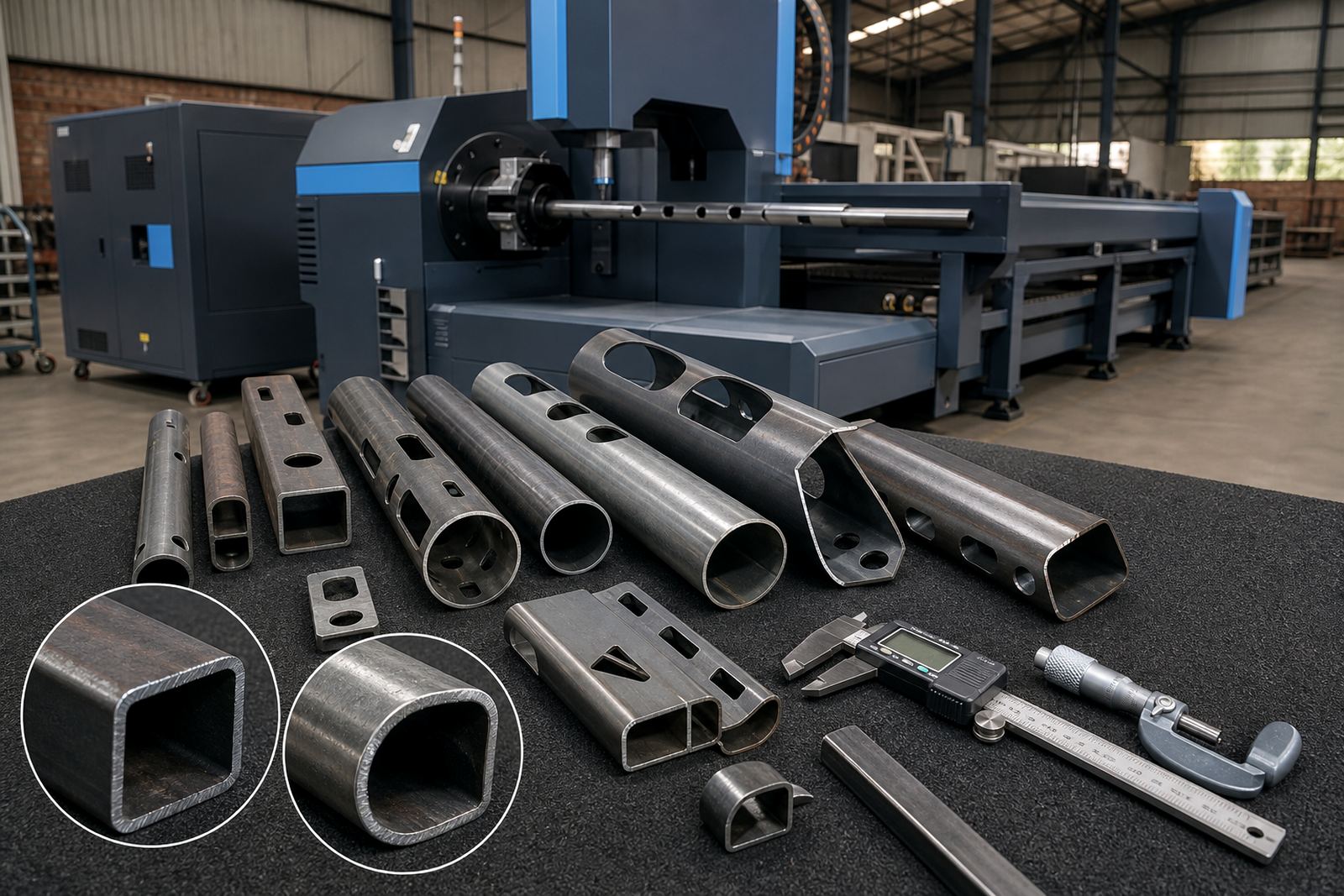
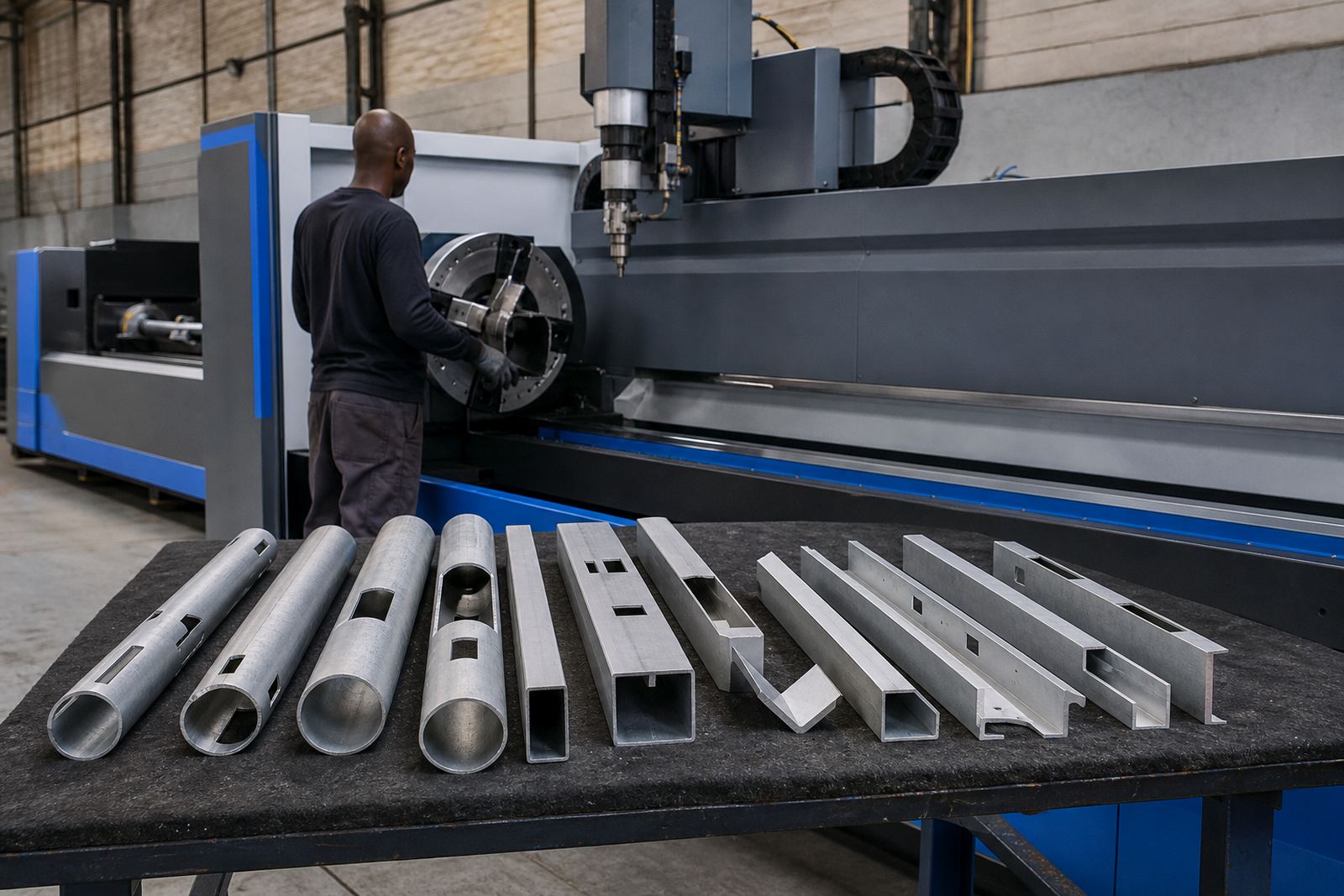
In tube work, the problem can show up on round, square and rectangular sections, plus angle and channel. Once the cutting head has moved through a nest, the finished pieces need to be separated in a way that matches the drawing pack and delivery list, not just the order they dropped onto the outfeed side.
The batch map starts before the laser fires
A good batch starts with sorting the drawing pack by material, thickness, profile type and end use. Small parts that share the same tube size can still need different handling if one is for welding, one for galvanising and one for direct fitting. Grouping them early reduces mix-ups and helps the operator set the nest with fewer interruptions.
When we set up tube and profile cutting work, we look at where the job will land after cutting. Parts that will be bundled together should sit together in the nest if the geometry allows it. Parts that need separate packing should be marked apart, even if that means a slightly longer nest. The extra planning is usually less costly than re-sorting a full day’s production.
- Sort by profile first, then by job number and quantity
- Keep small parts for welding separate from loose fit-up parts
- Mark repeat items clearly when lengths differ by only a few millimetres
- Plan the nest around the final pack order, not only cutting time
That discipline helps with both small job shop work and larger plant batches. A plant in Wadeville may want many short parts for assemblies going out in mixed cartons, while a fabrication shop in Pretoria may need each bundle tied to one frame set. The same machine can do both, but the batching method must match the dispatch method.
Nest layout can either help sorting or confuse it
Nesting software is useful for squeezing value out of material, but the layout needs to respect the pack-out sequence. Some small parts are best grouped by type, while others should be spaced so the packer can remove them in order without flipping through a mixed tray. If the nest only chases density, the shop may gain sheet or tube use but lose control of the finished batch.
On tube and profile cutting, lead-in points, bridges and part spacing all affect how easy the cut pieces are to separate. Small components with delicate tabs can be left unstable if the nest is too aggressive. That can lead to bent edges, nicked corners or parts falling into the wrong tray. A careful balance is needed between material use and handling practicalities.
For jobs with repeated short components, it often helps to build the nest in logical blocks. One block for left-hand pieces, one for right-hand pieces, or one block per assembly stage. That way the team can pack in sequence instead of doing a full sorting exercise after cutting.
Chucks, clamp points and the way tiny parts exit the machine
Small parts behave differently on tube machines with chucks and support systems. Short lengths can need more careful clamping, especially when the profile is light gauge or the cut pattern leaves little holding area. If the support spacing or chuck position is not set with the batch in mind, parts can shift or finish in an awkward order.
Bevel heads add another layer of planning. Once angled cuts or bevelled ends are part of the job, the packer needs to know which face is which and whether the part is handed. On small parts that are going to welding bays, one wrong flip can slow fit-up for the whole batch. Clear part marking and a clean handover table matter here.
- Check clamp placement before loading a run of short parts
- Keep handed parts separated at the machine, not only at packing
- Use part marks that survive handling and light cleaning
- Confirm which cut edges must face outward on assembly
In Durban, where coastal humidity can affect surface condition before dispatch, small parts also need a packing plan that limits long exposure on open racks. Even a well cut batch can pick up surface marks if it sits mixed on the floor too long. So the move from the machine to the packing area needs to be planned and handled as a production step.
One tray, four job families in Germiston
A shop in Wadeville can be cutting small brackets for handrails, frames, supports and machine guards in the same shift. Each family may use the same tube size but the parts are not interchangeable. Without a batching plan, the packer has to separate dozens of similar pieces by eye. With a better plan, each family gets its own nest block, its own label and its own pack pile.
That is where operator training and nesting training make a real difference. The operator learns how to read the production sequence, while the pack team gets a clear handover from the cutting table. A simple board with job numbers, counts and bundle notes can stop half the confusion before it starts. It does not need fancy language, just a repeatable habit that everyone follows.
When we assess a line, we look at the full flow from material loading to final packing. Delivery rigging, installation and commissioning are only part of the setup. The daily routine, the tray layout and the way small parts leave the machine matter just as much if the shop wants clean batches rather than a mixed pile of good parts.
Preventive maintenance keeps the batch plan accurate
A machine that cuts cleanly but drifts in position can create batch problems even when the nesting is good. Chuck alignment, bevel calibration and assist gas setup all affect part quality, hole size and edge finish. If the cut quality changes through a run, the sorter may find parts that look alike but no longer fit the same assembly tolerance.
Preventive maintenance helps keep the machine predictable. That matters for small parts because there is less room for correction. A bracket with a slightly off hole or a short tab can become scrap if the error is hidden inside a mixed batch. Regular checks keep the cutting path, clamping and gas delivery in line with the job list.
Where production is tight, remote diagnostics can help narrow down a fault before it spreads through a long run. If a problem affects part separation, cut edge quality or repeat accuracy, the batch plan should be paused and checked before more material goes through. That is cheaper than trying to rescue a full tray of mixed work after the fact.
Packing that keeps small parts sorted and traceable
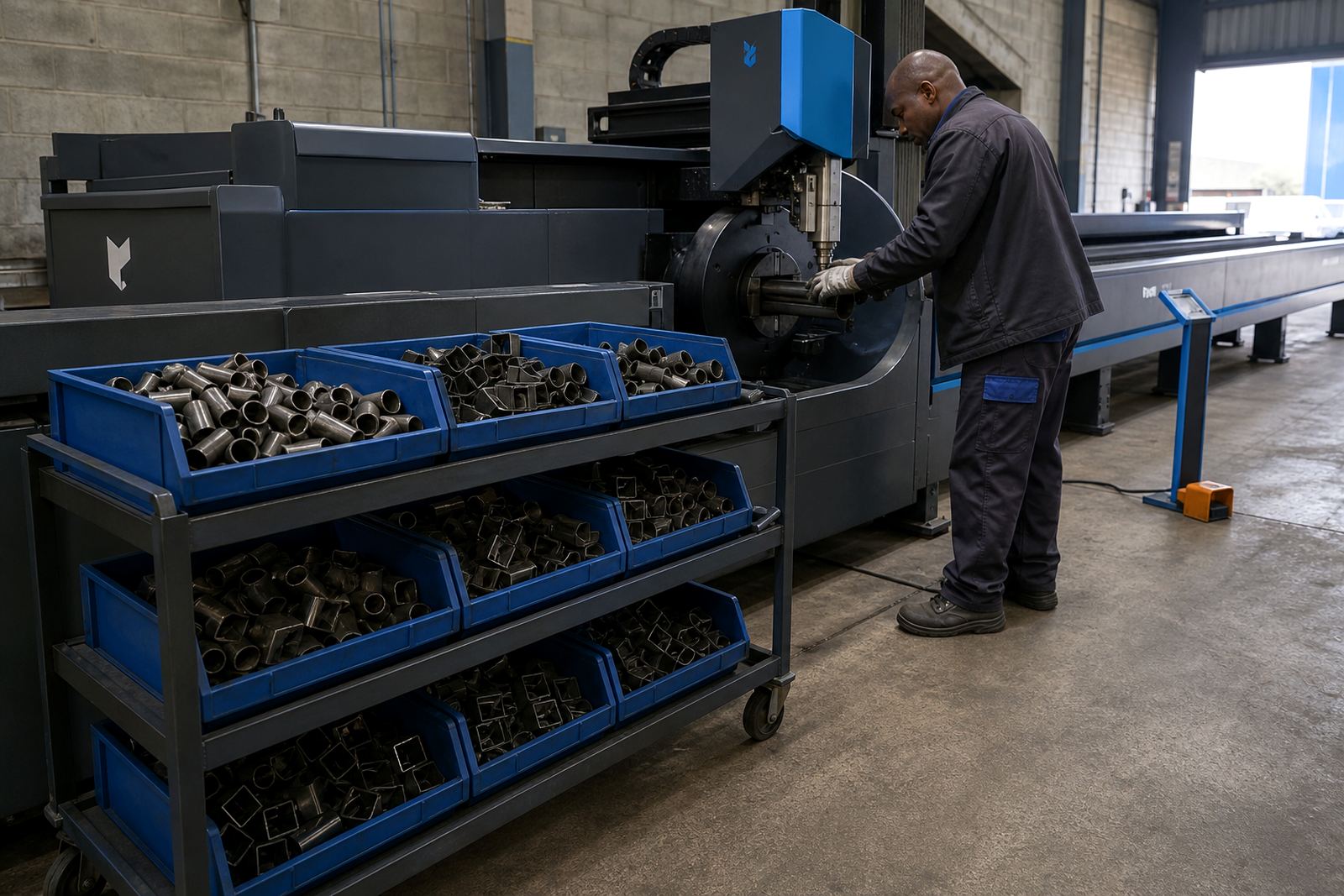
Small parts move quickly from raw material to finished stock, so the shop needs a packing rule that is as practical as the cutting rule. Bags, bins, bundle tags, cardboard separators or pallet zones all help, but only if the team uses them the same way every time. The best setup usually matches the way parts are loaded, cut and collected on site.
For fabricators working across Johannesburg, Pretoria, Cape Town, Gqeberha, Bloemfontein and Nelspruit, that means the batching method must travel with the machine and the people using it. The cut quality is only half the story. The other half is whether the right pieces end up in the right stack, ready for the next process without extra sorting.
When small parts are batch planned properly, the shop does not just cut faster. It moves cleaner, packs cleaner and hands over work with fewer surprises. That is the real gain from a good fibre laser tube cutting workflow, especially when repeat jobs and mixed profiles share the same day.