Why aluminium behaves differently on tube jobs
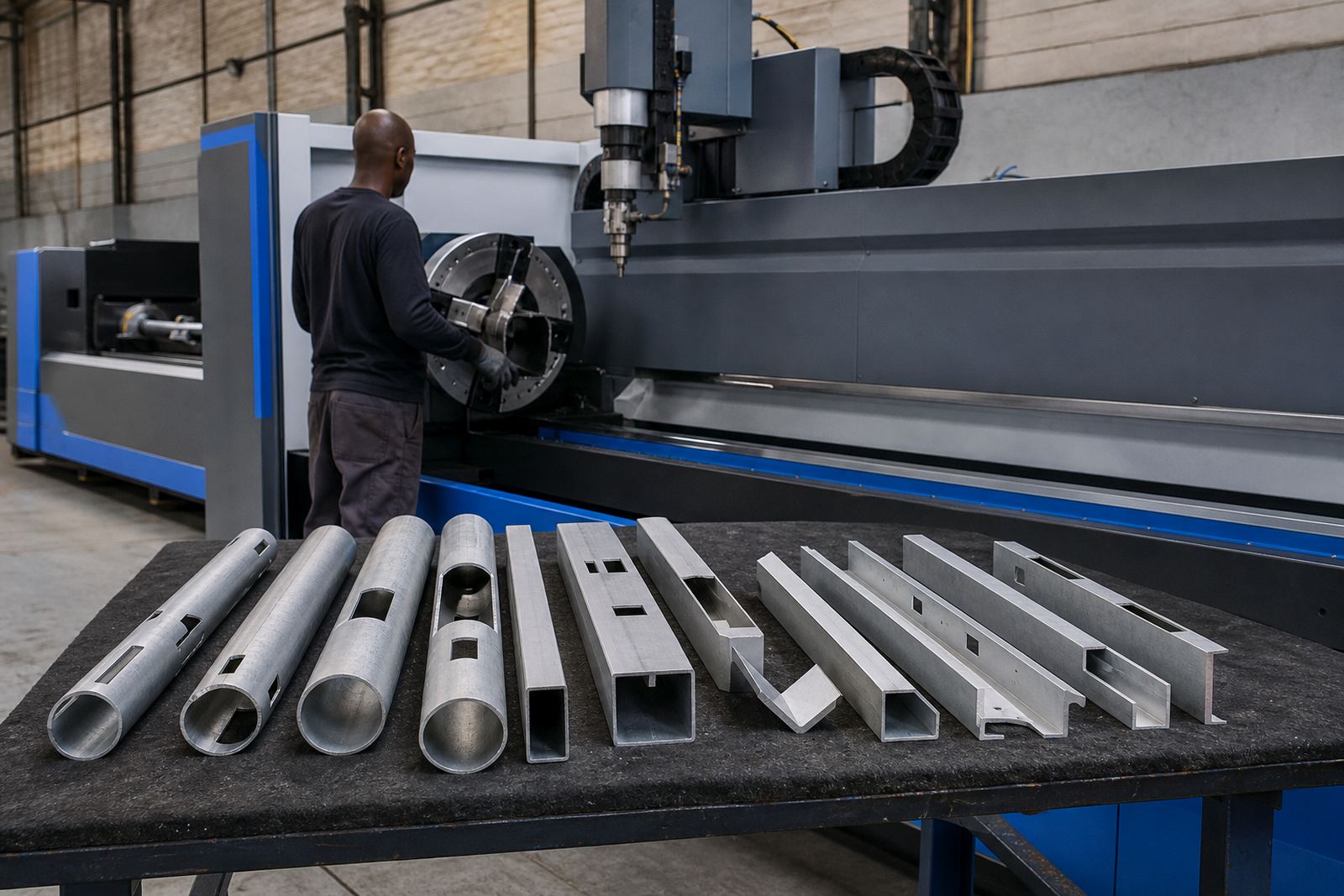
Aluminium reflects more light than mild steel and it moves heat quickly through the wall, so the cut window is tighter. On round, square and rectangular tube, plus angle and channel, that means the operator has less room for dirty stock, loose clamping or an untidy file setup. The cut can still be crisp, but only when the tube is clean, straight enough for the chuck to grip properly and the cutting path matches the material thickness.
In a Wadeville job shop handling light structural frames and brackets, the cleanest results usually come from simple discipline. Tubes are checked for oil, dust and transport marks before loading, and the bundle is kept off the floor where grit collects. Aluminium throws up a thin edge burr if the process slips, so the loader, operator and programmer need to treat each bundle as material that can contaminate the next job too.
Loading, clamping and the chuck conversation
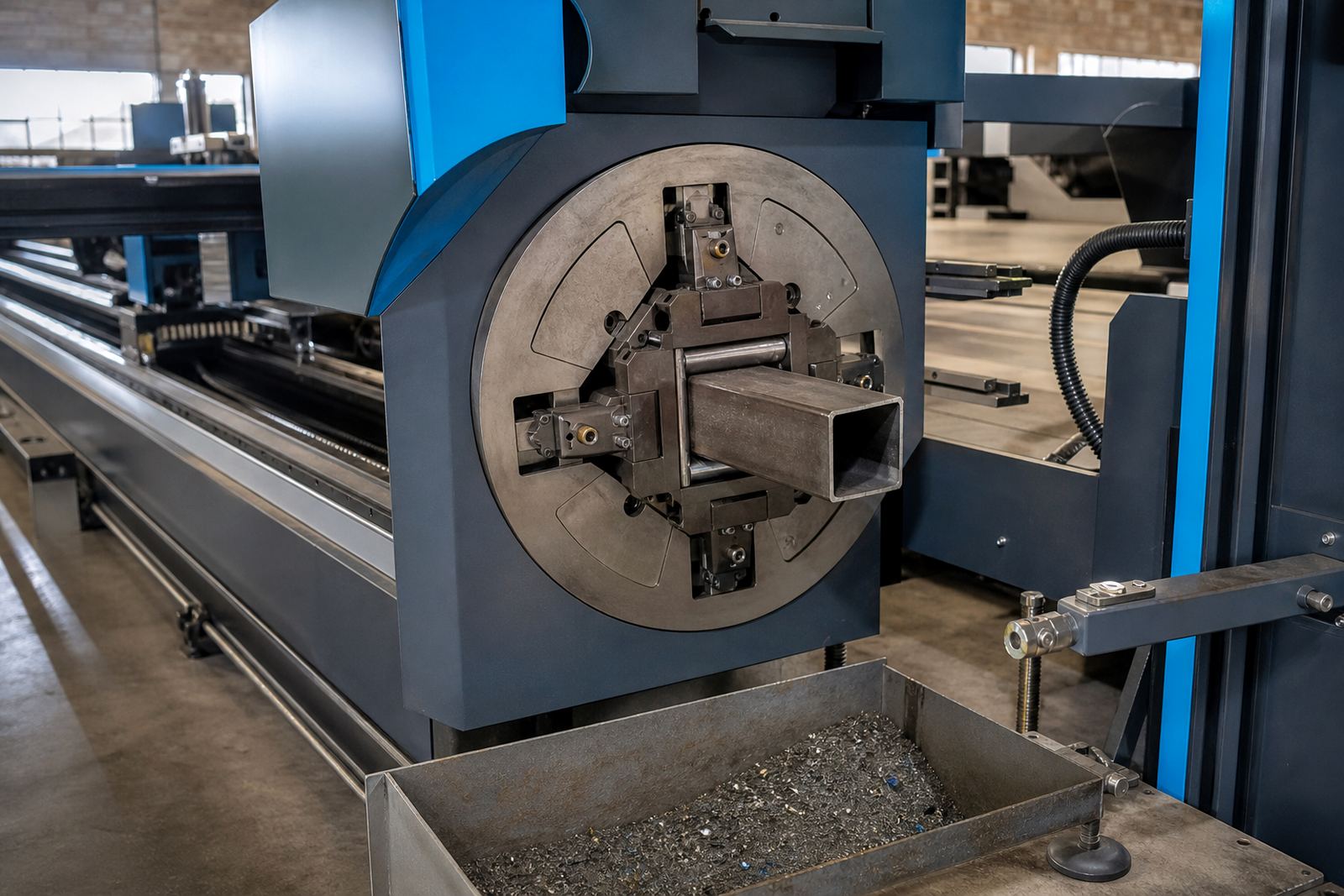
Tube cutting starts with how the machine holds the material. Aluminium walls can mark easily, so the chuck pressure must be high enough for control but not so heavy that it flats the profile. Good clamp alignment matters on long lengths, especially when the job includes mixed sections such as square tube, channel and angle in one nesting batch.
For local fabricators in Germiston and Johannesburg, the practical check is simple: if the tube slips, twists or leaves a witness mark in the clamp area, the setup needs attention. Chuck wear, jaw cleanliness and the loading table height all play a part. A machine can have a strong laser source, but if the tube is sitting off-centre the result is a poor cut on the first metre and a waste pile near the end.
- Keep jaws free of swarf and oxide build-up.
- Match clamp pressure to wall thickness and profile shape.
- Support long stock so it does not sag between infeed and cut zone.
- Inspect the first tube in the chuck before you process the rest of the batch.
Nesting software is not just a drawing screen
Aluminium nesting needs more than a quick arrangement of parts on a tube length. The software must account for tube size, wall thickness, cut sequence and the number of pierces needed on each job. On fibre laser tube machines, the wrong sequence can leave a sharp slug, a tilted end face or a part that shifts before the cut closes.
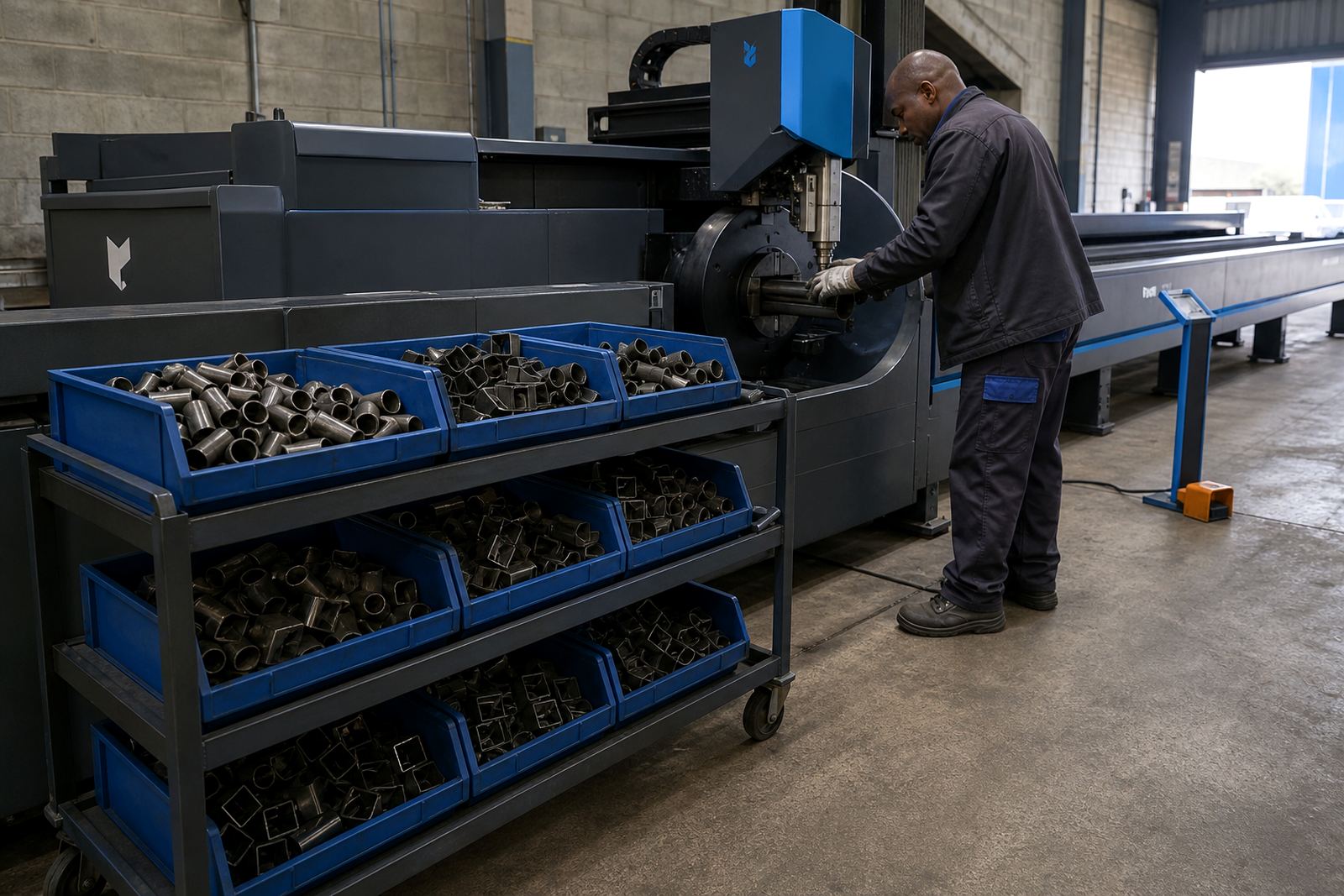
Offcuts matter too. Aluminium jobs often include short brackets, collars and spacers that can be lifted from leftovers if the nest is planned properly. That saves material, but only when the operator understands how the machine will behave at the ends of the tube. If the nesting pack is rushed, the machine may spend more time correcting itself than cutting.
- Use part order that protects the most visible edges first.
- Leave space for lead-ins where the section shape is tricky.
- Keep an eye on short pieces that can tip after release.
- Separate clean production nests from trial nests.
Assist gas and edge quality on aluminium
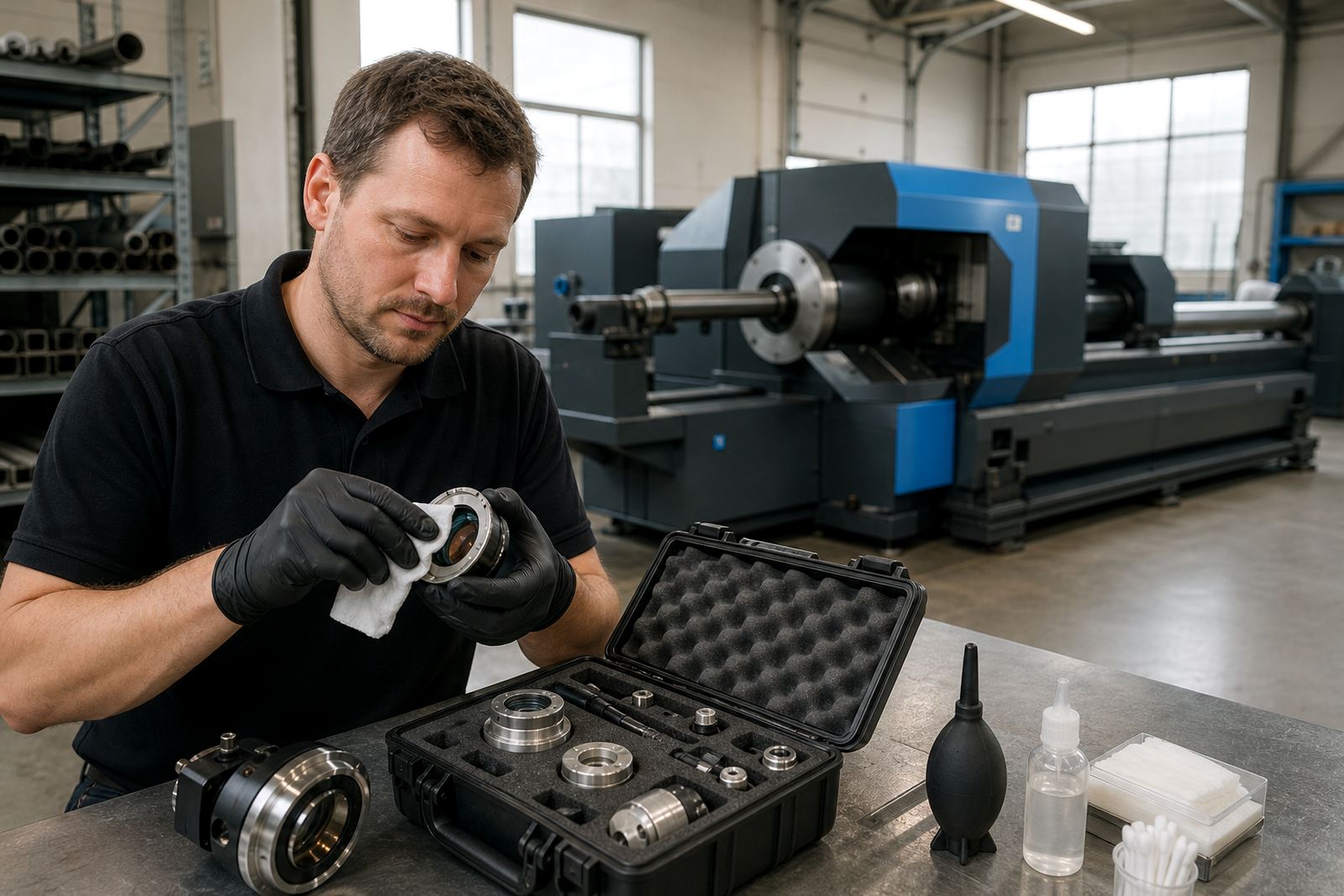
Assist gas choice shapes the cut edge more than many shops expect. On aluminium tube, clean gas flow helps remove molten material from the kerf and keeps dross from sticking to the lower edge. Pressure and nozzle condition must be set for the material thickness, and the beam focus has to suit the profile, not just the sheet settings a team may be used to.
A bevel head brings extra usefulness when the job calls for weld prep or angled joints, but it also asks for stricter setup. Bevel calibration has to be checked before production starts, because a small error at the head shows up as a gap at assembly. The gas, focus and bevel settings work as one process, not three separate adjustments. If one drifts the rest follow it very quickly.
Safety around aluminium dust, edges and scrap handling
Aluminium looks light and easy to handle, yet the cut edges can be sharp and the scrap can pile up fast. Clean removal of offcuts matters because narrow webs, pierced rings and small cut-outs can jam around the bed or fall where they should not. That creates a handling risk and it also affects the next batch if fragments sit in the loading area.
Safety discipline on these machines is not only about guarding. It also includes proper eye protection, clear scrap bins, cleaning routines and a setup that keeps hands away from the beam path. Where tube lengths are moved by rigging or manual loading, the path from bundle rack to infeed should stay open. In a busy plant, a tidy area does more for safety than posters on the wall.
- Remove loose scrap before the next load goes in.
- Keep the infeed zone clear of cords, straps and leftover packaging.
- Use marked storage for cut parts and rejects.
- Check that guards and doors are closed before starting a cycle.
Durban aluminium marks from coastal stock
In Durban, coastal humidity can leave a fine film on stored aluminium, especially when bundles sit near an open roller door. A fabricator making gate frames, display stands and light transport parts had repeat marks on the first few cuts, then inconsistent edge quality on later bundles. The issue was not the laser alone. The stock had surface contamination, the chucks had residue and the operator was reusing an older nesting pattern for a different wall thickness.
Once the team tightened storage, cleaned the clamp faces and reset the nest for the actual tube sizes, the cut quality settled. The same machine, the same workshop, but a better process. That is the point with aluminium tube work: the machine can only follow the discipline around it. Clean stock, proper gas setup and careful chuck alignment make the difference between a tidy batch and a pile of rework.
What a practical service visit usually covers
For fabricators across South Africa, a service visit is often most useful when it looks at the full chain from material loading to finished part. Site Assessment helps check the space, access and handling path. Delivery Rigging and Machine Installation set the machine in place, then Commissioning confirms the cutter, chucks and motion system are working in the real workshop layout. Training follows, because the operator has to know how aluminium behaves on that specific machine.
Preventive Maintenance, Chuck Alignment, Bevel Calibration, Assist Gas Setup and Remote Diagnostics all keep a production line from drifting. In places like Pretoria, Cape Town, Gqeberha and Bloemfontein, shops do not need theory, they need a machine that cuts the same way on Monday and Friday. That only happens when the process is checked in order, not guessed from the office.
- Match the machine settings to the tube type and wall thickness.
- Verify clamp contact before running a production batch.
- Keep the gas delivery clean and the nozzle in good condition.
- Train the operator on setup, nesting and part removal together.