Where rework usually starts on a tube job
In tube and profile cutting, rework often comes from small slips that compound across a batch. A tube that sat poorly in the chuck, a program imported with the wrong material thickness, or a bundle label that went missing during loading can all lead to parts that look right at first glance but fail during fit-up.
For South African fabricators, the pressure is not only on the laser bed. Parts still need to line up with weld prep, drilling, bracket placement and site installation, often across jobs made for different towns and end uses. A frame that works in Germiston may still need to fit a trailer build in Pretoria, a plant handrail in Durban, or a maintenance structure in Gqeberha, so tolerances matter from the first tube on the rack.
When the cut path, clamping and part marking are handled carefully, the workshop spends less time trimming ends, filing burrs or recutting holes. That means cleaner flow through fabrication, and fewer parts waiting for a fitter to rescue them at the bench.
Stable loading keeps the tube where the software expects it
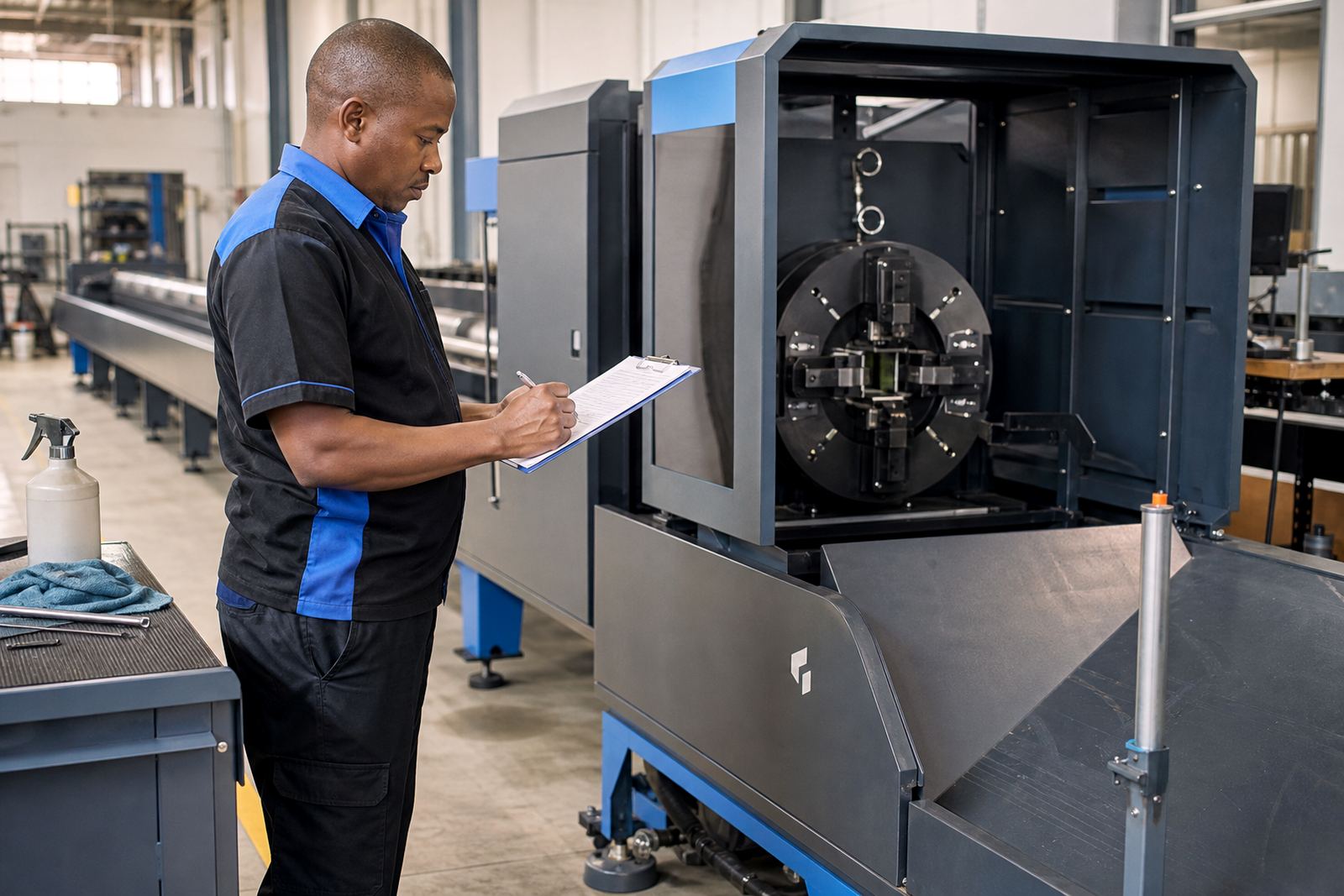
Fibre laser tube cutting depends on the machine holding the profile in the same position throughout the cycle. Round tube behaves differently from square and rectangular section, and angle or channel introduces its own handling issues. If the material twists, droops or shifts under the chuck, the software may still run the job but the result can be slightly off on hole location or end profile.
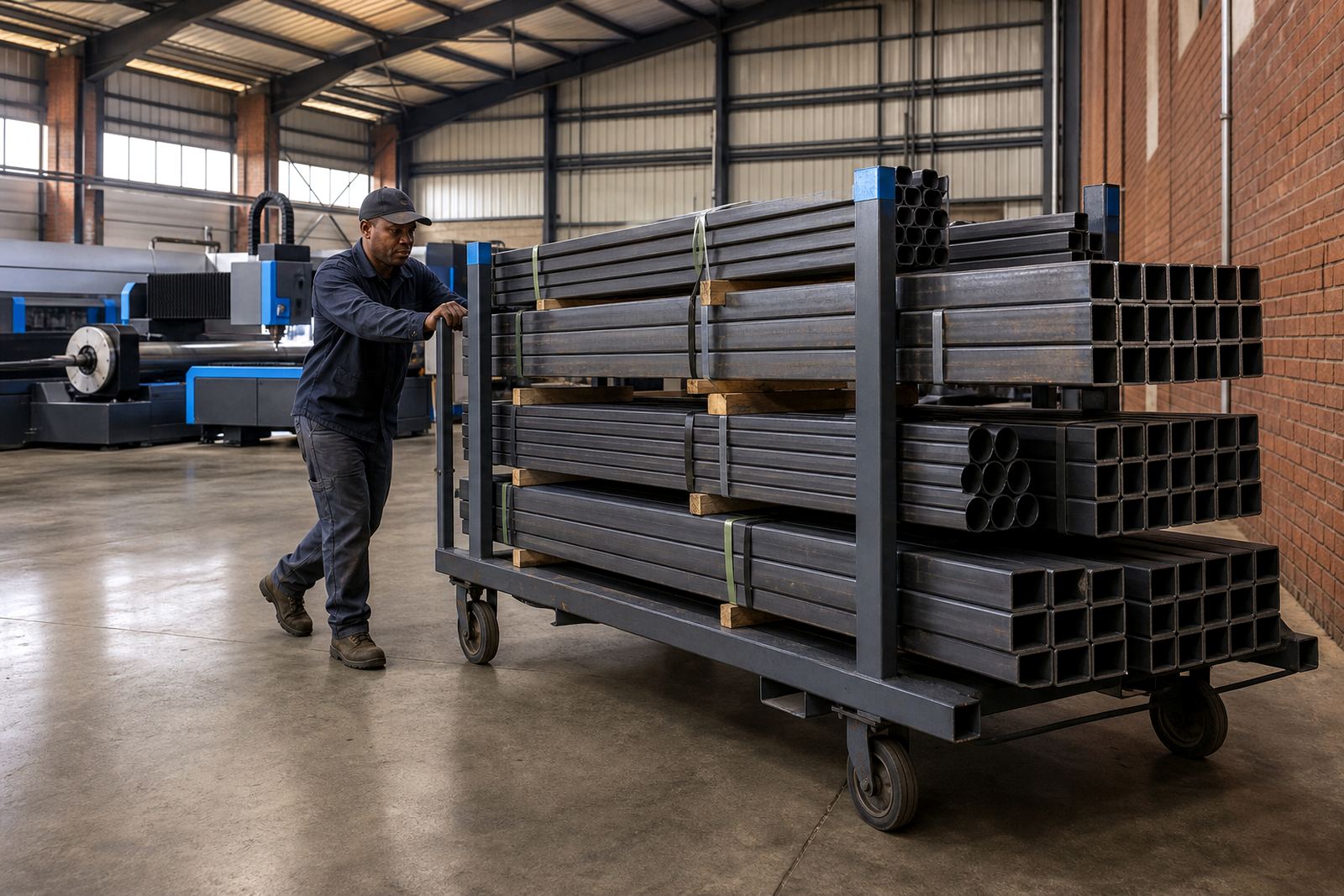
Good loading practice starts with straight, sorted stock and enough support for long lengths. The operator should know where the front clamp takes hold, where the tail support sits, and how the part will behave once the cut path starts opening sections out of the parent length. On longer runs, even a small change in how the tube sits can affect repeatability.
- Keep bundles sorted by section and wall thickness before loading.
- Check that the chuck grip suits the profile without crushing it.
- Support long lengths so the free end does not sag under weight.
- Remove bent or badly marked stock before it reaches the machine.
That kind of discipline sounds plain, yet it saves far more time than chasing bad parts later. It also helps operators recognise whether a fault came from setup, from material condition, or from a program that needs attention.
Clear part identification makes downstream work easier
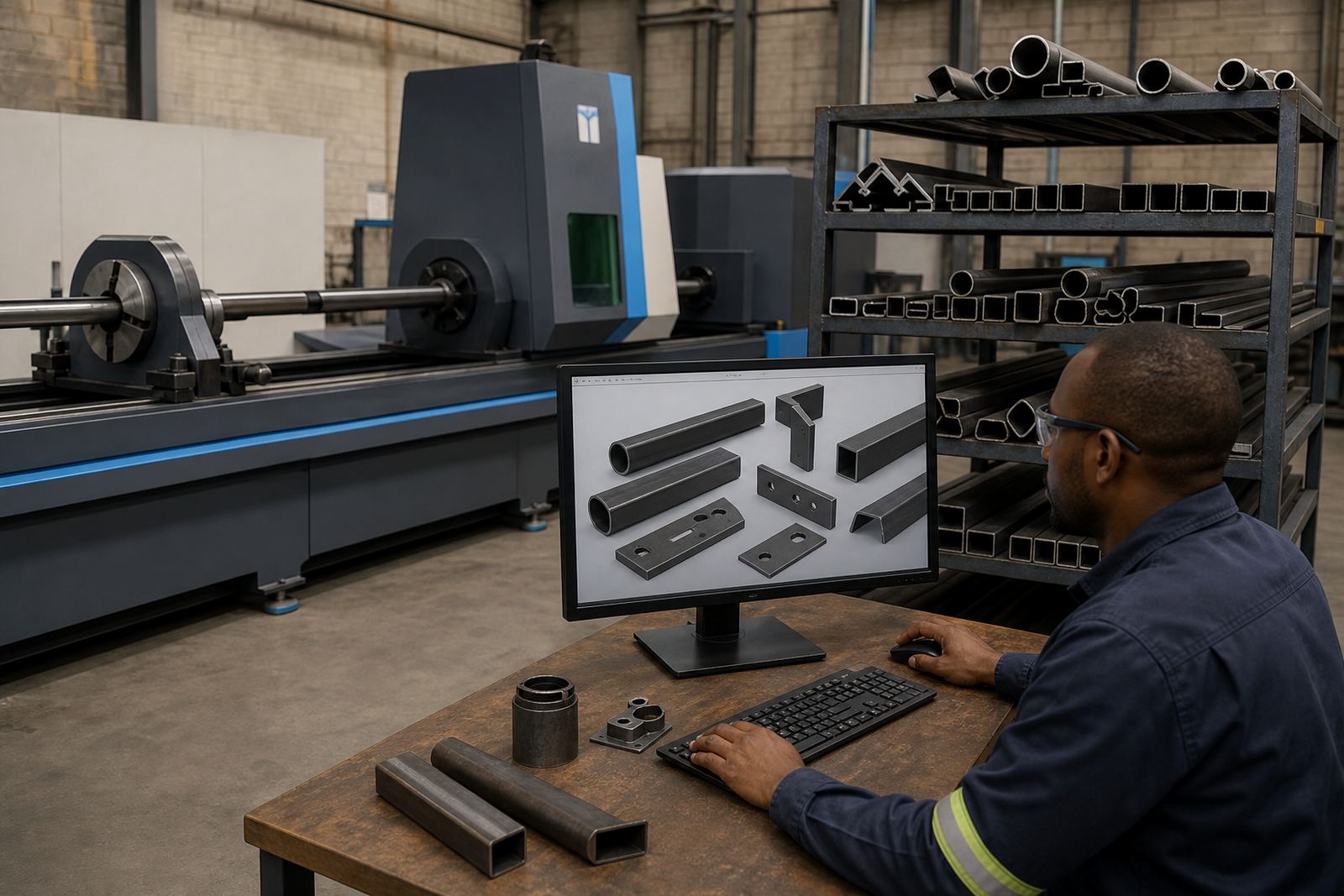
A good cut is only useful when the next person can identify it without guesswork. Rework rises when small brackets, mirrored parts and left-right pairs are not marked clearly enough for welding or assembly. A fitter then spends time measuring pieces that should already have been obvious.
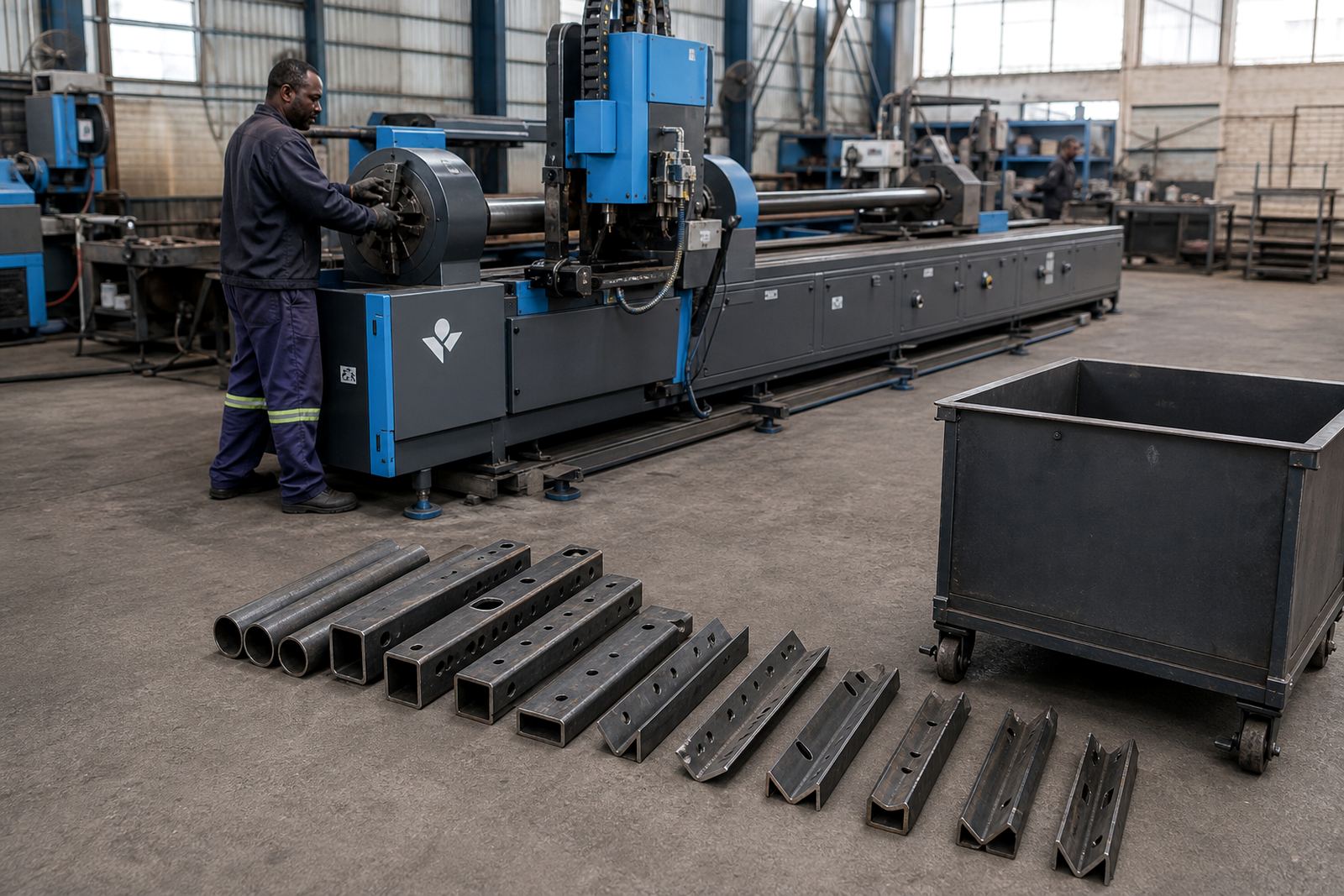
Laser systems can mark part numbers, bend references and job codes directly onto the tube or profile. That marking needs to stay legible through handling, stacking and transport to site. If the marks are too faint, or hidden under a clamp scar, the value drops quickly.
Organised sorting also matters after nesting. Parts from mixed batches should not be stacked together just because they came off the machine at the same time. A job for Bloemfontein can be perfectly cut and still cause rework if the wrong end plate gets bundled with the wrong frame set.
- Mark parts with a clear job code before they leave the machine.
- Separate mirrored parts into labelled trays or stillages.
- Keep short offcuts and finished parts apart from one another.
- Use a packing list that matches the cut list on the machine.
Nesting decisions affect fit-up more than many shops admit
Nesting software is often treated as a material-saving tool, but it also affects how easy a job is to assemble. If the arrangement places critical parts in awkward positions, or forces an operator to rotate sections in a rushed way, then the shop can save a little steel and lose more time later.
Practical nesting should protect features that matter during assembly. Hole orientation, grain direction where relevant, clamp clearance and part access all need to be considered before the first cut begins. A neat nest that ignores the next operation can create a pile of nearly finished parts that still need trimming, deburring or correction.
When the nesting logic matches the real build sequence, the assembly team sees the benefit straight away. Weld prep is cleaner, fixture setting is easier, and the fitter is not wasting time searching for the correct orientation of a profile with four similar corners.
Bevel cuts and holes need tighter control than straight profiles
Bevel heads can speed up downstream welding, but they also demand more careful calibration. If the angle is slightly off, the fitter may need to grind the joint to get the seam to close properly. That is not always visible on the machine floor, yet it shows up quickly in fabrication.
Holes in tube and profile sections need similar care. A hole may look acceptable on the cut edge, then prove too tight once coating, insertion or weld distortion is added. For parts that must align with brackets or flanges, that extra correction costs time and material.
Reducing rework here means checking the machine condition, the tool path and the assist gas setup together. Oxygen, nitrogen or air, depending on the material and finish required, each has its place. When gas delivery is unstable, edge quality can change just enough to create trouble at assembly, even if the cut appears acceptable at first glance.
Wadeville batch with a Johannesburg schedule
A fabricator in Wadeville was running a mixed order of square tube frames, angle supports and channel sections for a project moving toward Johannesburg and Pretoria. The first batch looked good on the bed, but the fitter reported trouble with hole alignment and mixed part identification during assembly. The issue was not one single fault. It came from loading variation, loose marking and a nest that prioritised material usage over sequence.
After the team tightened the loading routine, checked chuck alignment and improved part marking, the second batch moved more cleanly through assembly. The operator could see which parts belonged together, the fitter did not have to sort through mixed trays, and the installer spent less time adjusting fittings on site. That change did not require a dramatic overhaul, only clearer control at each stage.
Across South Africa, consistent results count for any work we supply. A job that leaves Wadeville for Durban, Cape Town or Gqeberha needs to arrive ready for the next step, not with extra holes to redrill or brackets to remake.
A short checklist for fewer corrections at the bench
Rework reduction is mostly discipline, not luck. The best shops keep the machine, the material flow and the marking system aligned so that the fitter is not doing the machine's job later.
- Keep tube and profile stock straight, sorted and clearly labelled.
- Confirm chuck grip, support position and part orientation before cutting.
- Check bevel angles and hole sizes against the assembly drawing.
- Mark parts in a way that survives handling and transport.
- Use nesting settings that suit the build sequence, not only material yield.
- Review gas setup and edge quality when a batch starts drifting.
LaserTube works with fabricators across Wadeville, Johannesburg, Pretoria, Durban, Cape Town, Gqeberha, Bloemfontein and Nelspruit on site assessment, machine installation, commissioning, operator training, nesting training, preventive maintenance, chuck alignment, bevel calibration, assist gas setup, remote diagnostics and breakdown response. That practical support helps keep tube and profile cutting steady, so fewer parts need to be touched twice.