Why laser tube cutting needs its own air plan
Tube and profile cutting makes a different mix of waste to plate work. Round tube, square tube, rectangular tube, angle and channel all trap residue in corners and along internal edges, so smoke can linger inside the part and around the cutting head.
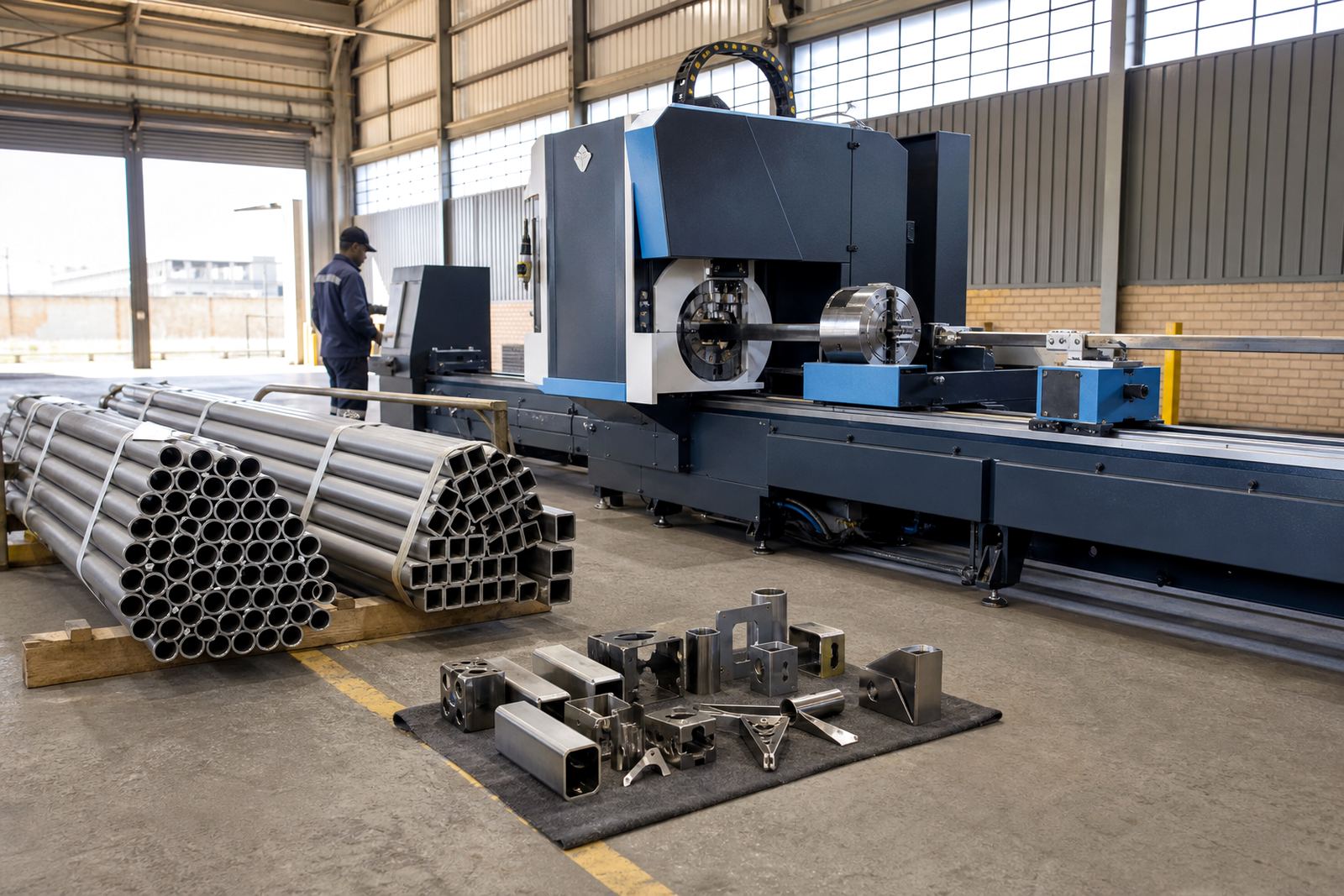
That matters in a shop where stainless, mild steel and coated material move through the same line. Fine dust can build up on rails, sensors, chuck faces and around the nest offload zone. If a workshop ignores that build-up, the machine area starts to feel dirty long before the shift ends, and operators spend more time cleaning than producing.
In practical terms, dust and fume control is not only about the machine room. It also affects the staging area, the scrap bins, the cut bundle stack and the floor route between material intake and finished parts.
What extraction should cover around the machine
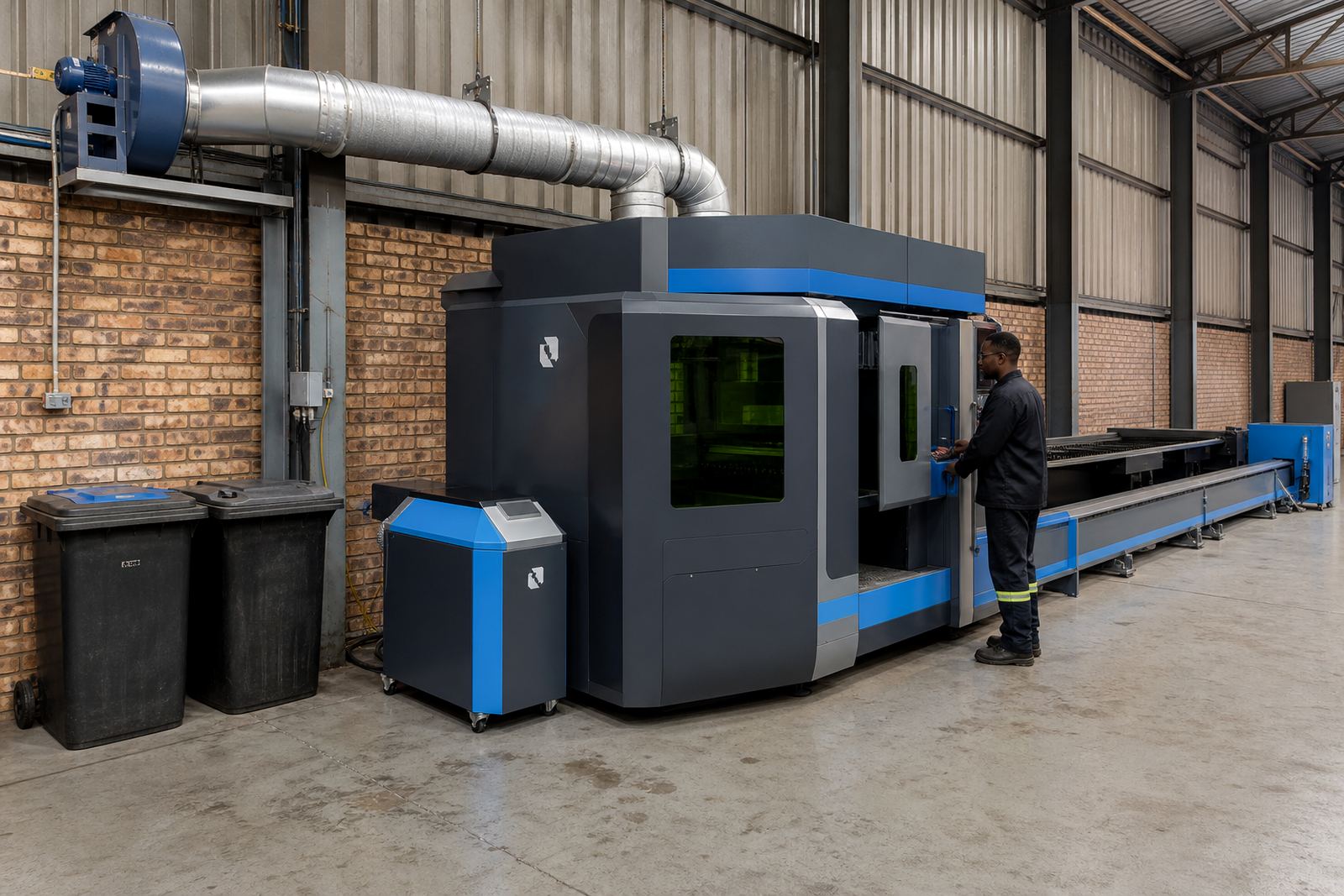
A useful setup starts at the source and follows the path of the fume. The cutting zone, the load and unload side, the scrap fall path and the maintenance access points all need attention. On tube and profile systems, the process is often open enough for fumes to escape in more than one direction, so one small extraction point is rarely enough.
Good airflow also helps when assist gases are in use. Oxygen, nitrogen and compressed air each affect the cut differently, and the by-products can change with material thickness and cut quality. The goal is not to overcomplicate the job, but to move smoke away before it hangs around the operator or drifts across the machine bed.
- Capture fumes close to the cutting point where practical.
- Keep ducting clear of offcuts, scale and loose packing material.
- Allow for easy access to filters, trays and inspection covers.
- Check that extraction suits the machine size and the size of the bay.
- Keep the area around the chuck and bevel head free from loose debris.
Housekeeping is part of machine performance
Laser tube cutting shops often think of housekeeping as a finishing task. In daily operation, housekeeping forms part of the normal production routine. Dust on the floor can be dragged into the machine area by boots, trolleys and offcuts. Fume residue settles on guides and covers, while small metal particles collect in corners where nobody sees them until a fault shows up.
A sensible cleaning pattern is straightforward. Sweep and vacuum after heavy cutting runs, clear the offload point, wipe down exposed surfaces and check the filters or extraction trays before the next batch starts. This is especially useful in coastal cities like Durban and Gqeberha, where moist air can make residue cling harder to surfaces and packaging.
- Use dry cleaning methods where they suit the residue type.
- Keep scrap bins empty enough to avoid overflow near the machine.
- Separate oily wipe-down material from dry metal dust.
- Inspect the nesting area for fines after each production run.
Training operators to spot the warning signs
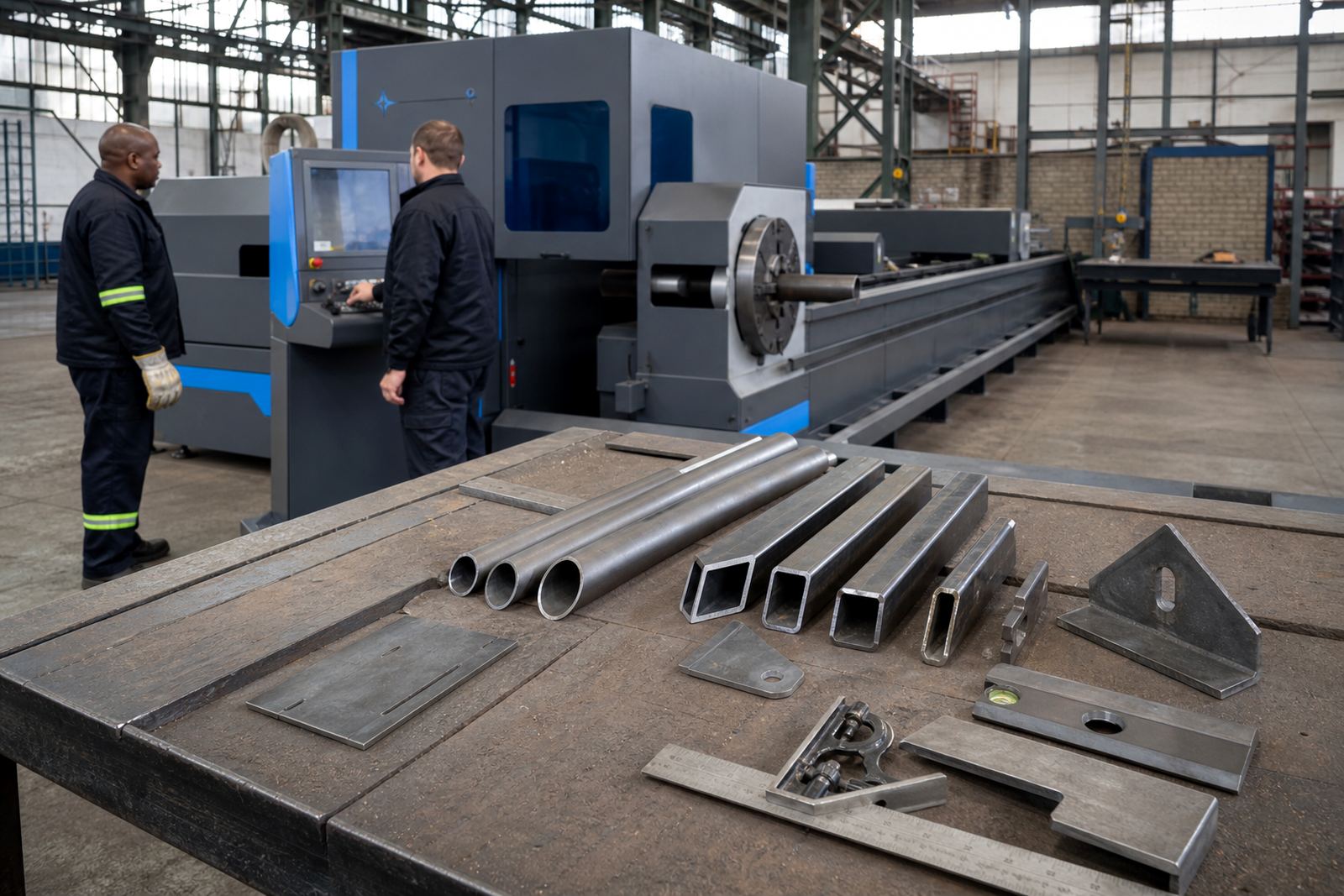
Operators usually see the first signs of poor extraction before maintenance does. A stronger smell in the bay, smoke hanging around the cut point, residue on the lens cover and more dust on the chuck faces all point to a system that needs attention. Training should include those signs, not only the cutting settings.
At a site in Wadeville, a tube line cutting mild steel and square hollow sections had clean cuts but a dirty work zone. The issue was not one single fault. The extraction path was partly blocked, housekeeping had slipped during a busy period and the offload table was collecting fines under the stackers. Once the team adjusted the airflow path, added a clear cleaning sequence and checked the nesting habits, the area stayed easier to manage and the operators spent less time fighting the mess.
That kind of result usually comes from routine, not from one big fix. A trained team knows what normal looks like and spots a change early.
How assist gases, chucks and bevel heads affect cleanliness
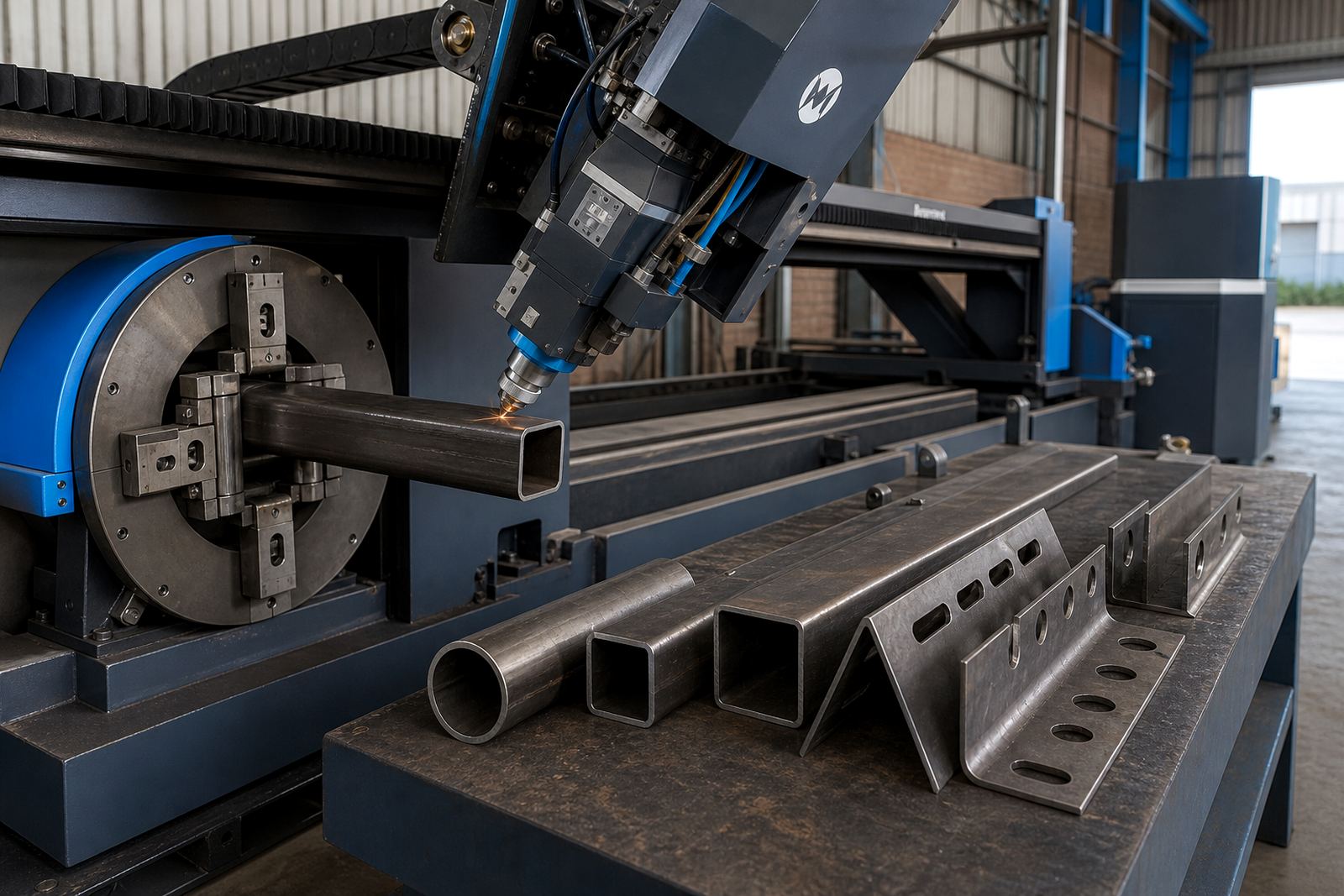
Different machine parts influence where waste lands. Chucks hold the tube and can collect dust at contact points if the area is not cleaned regularly. Bevel heads add another layer of movement and can leave more residue around the cutting zone when the machine is working hard on angled edges or thicker material.
Assist gas settings also matter. When the gas flow is correct, cutting is cleaner and there is less residue left hanging on the edge. If the setting is off, more smoke and dross can build up, which means more cleaning and more time spent checking the cut quality. The aim is to keep the process stable enough that housekeeping remains manageable from one job to the next.
- Check chuck faces for trapped fines and offcut burrs.
- Inspect bevel head covers and nearby surfaces during routine cleaning.
- Check that lines and nozzles stay free of residue build-up.
- Review cut quality when smoke marks or heavy dross begin to show.
A cleaner bay supports safer work and steadier output
Dust and fume control is not a side issue. It affects operator comfort, visibility, maintenance and the condition of the machine itself. In a production plant or a smaller job shop, the same rule holds true: if the air around the machine is dirty, the whole process becomes harder to manage.
For South African fabricators in Johannesburg, Pretoria, Durban, Cape Town, Gqeberha, Bloemfontein and Nelspruit, the best results come from pairing the right extraction approach with practical cleaning habits. That includes planning the site layout, setting up the machine properly, training operators to read the signs and maintaining the equipment before small problems spread.
A tube laser cell stays tidy when its floor area gets the same planning, cleaning and upkeep as every other station on the line. Cleaner surroundings make it easier to keep the machine aligned, the cut more consistent and the shift less strained for everyone on the floor.