
Clean Stainless Starts Before the Tube Enters the Chuck
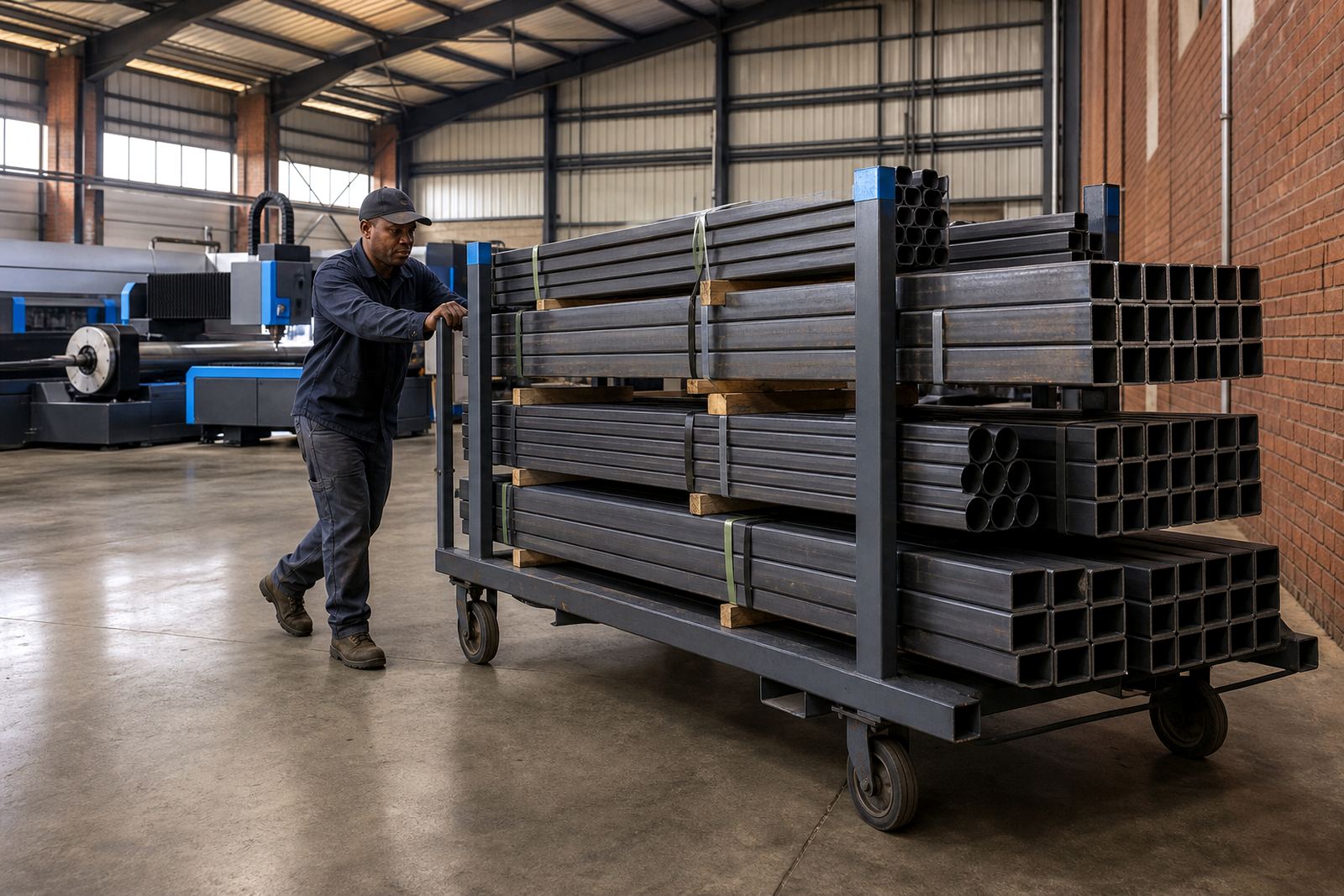
Stainless shows every mark. Fingerprints, grit, oily patches and shop dust can leave heat tint or patchy edges that mean extra cleaning later. On tube jobs, the handling area matters as much as the machine settings. Keep bundles separated from carbon steel offcuts, wipe down visible contamination and make sure tube ends are free of burrs before loading.
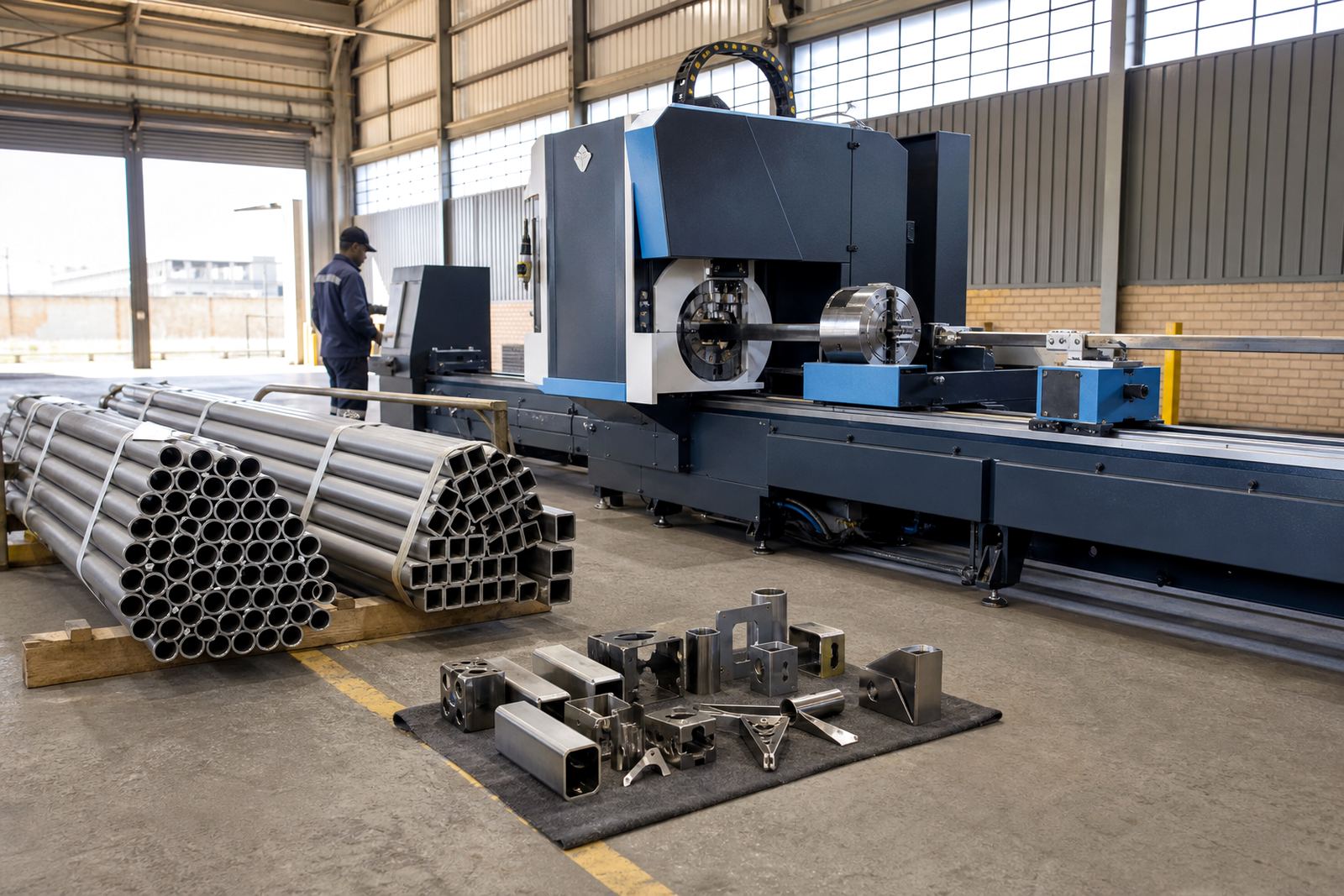
Round, square and rectangular tube all behave differently in the clamp, and angle or channel can shift if the support layout is lazy. A steady hold is part of the cut quality. If the material moves while the head is tracing a profile, even a good laser path can leave a poor fit at assembly.
Assist Gas Choices Change the Edge More Than Most Shops Expect
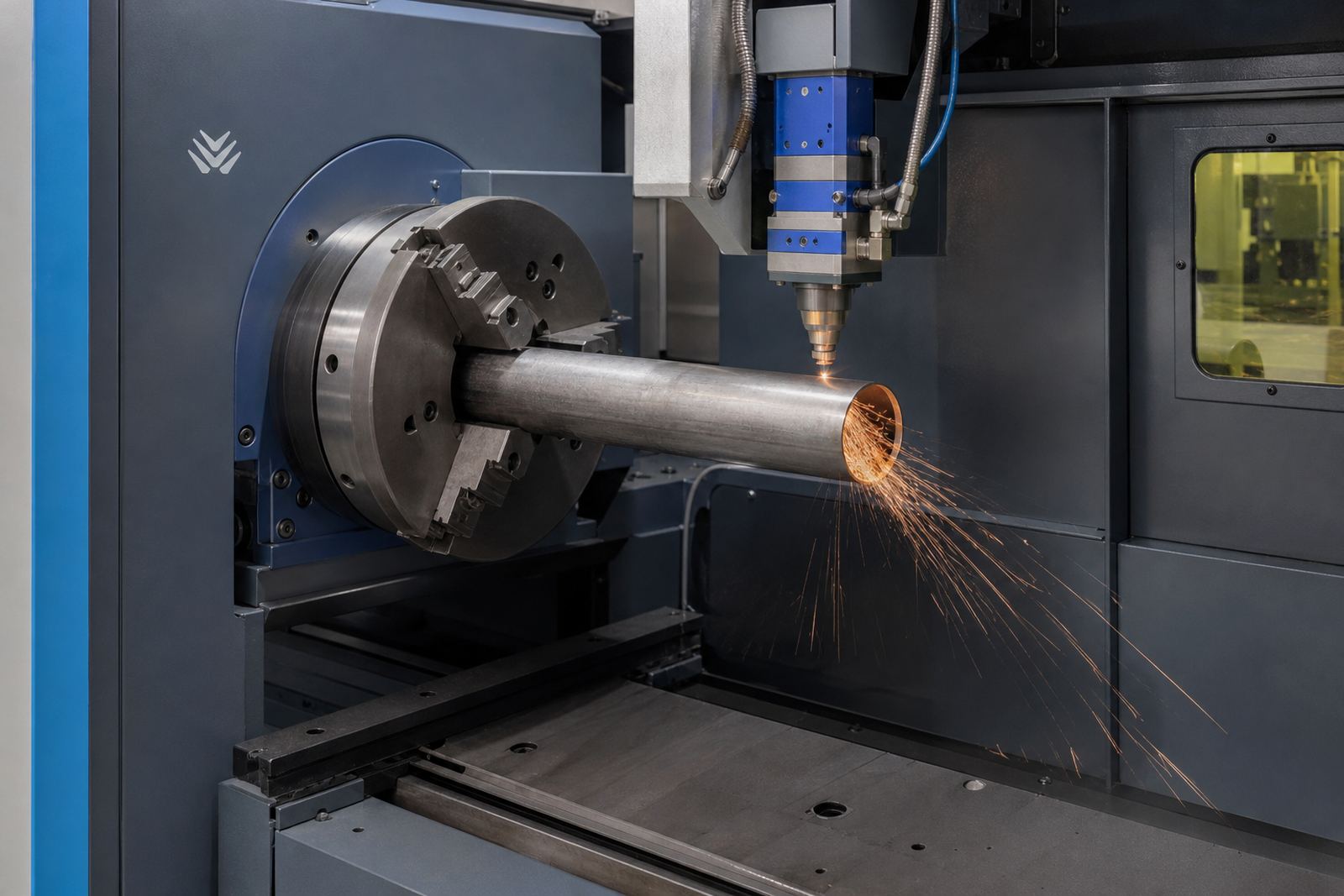
For stainless, the assist gas has a direct effect on edge finish, oxide colour and cleaning effort after cutting. Nitrogen is often used when a bright edge is needed, especially on visible parts or items that will be welded without heavy grinding. Oxygen may cut stainless in some cases, but it usually leaves a darker edge and more post work, so it needs to suit the job rather than default habit.
- Use clean lines and check for leaks at fittings and hose joints.
- Match pressure to material thickness and cut speed, not to guesswork.
- Keep the gas supply steady while the machine runs long nests.
- Check the nozzle and lens area for contamination before each shift.
In a Wadeville job shop handling decorative stainless frames, the difference between a clean nitrogen cut and a rougher edge can decide whether parts go straight to welding or spend time on the grinder.
Tube Support, Chucks and Rotation Need Proper Alignment
Tube cutting looks straightforward until the part starts to twist. A fibre laser tube machine depends on accurate chuck grip, centred rotation and support that carries the work without marking it. Misalignment shows up quickly on long sections, especially when cutting repeated slots, holes and end shapes across many lengths.
Bevel heads add another layer of control for fabricators who need welded joints with better edge preparation. When the head angle is not calibrated properly, bevel cuts can drift and joints land out. That is where a planned service routine helps. Chuck alignment, bevel calibration and preventive maintenance are not admin tasks, they are part of keeping stainless jobs on spec.
- Check jaw wear before it starts scuffing visible material.
- Verify tube support height for each section size.
- Inspect rotation tracking on long parts and repeat patterns.
- Keep bevel settings recorded for common material thicknesses.
Nesting Helps Stainless Stay Organised and Less Wasteful
Good nesting is not only about saving sheet and tube offcuts. On stainless work it also guides how parts move through the workshop. When components are grouped sensibly, they can pass from cutting to deburring, welding and assembly with fewer mix-ups. A nest that looks smart on screen but leaves awkward cut-outs on the floor can hold the whole job back.
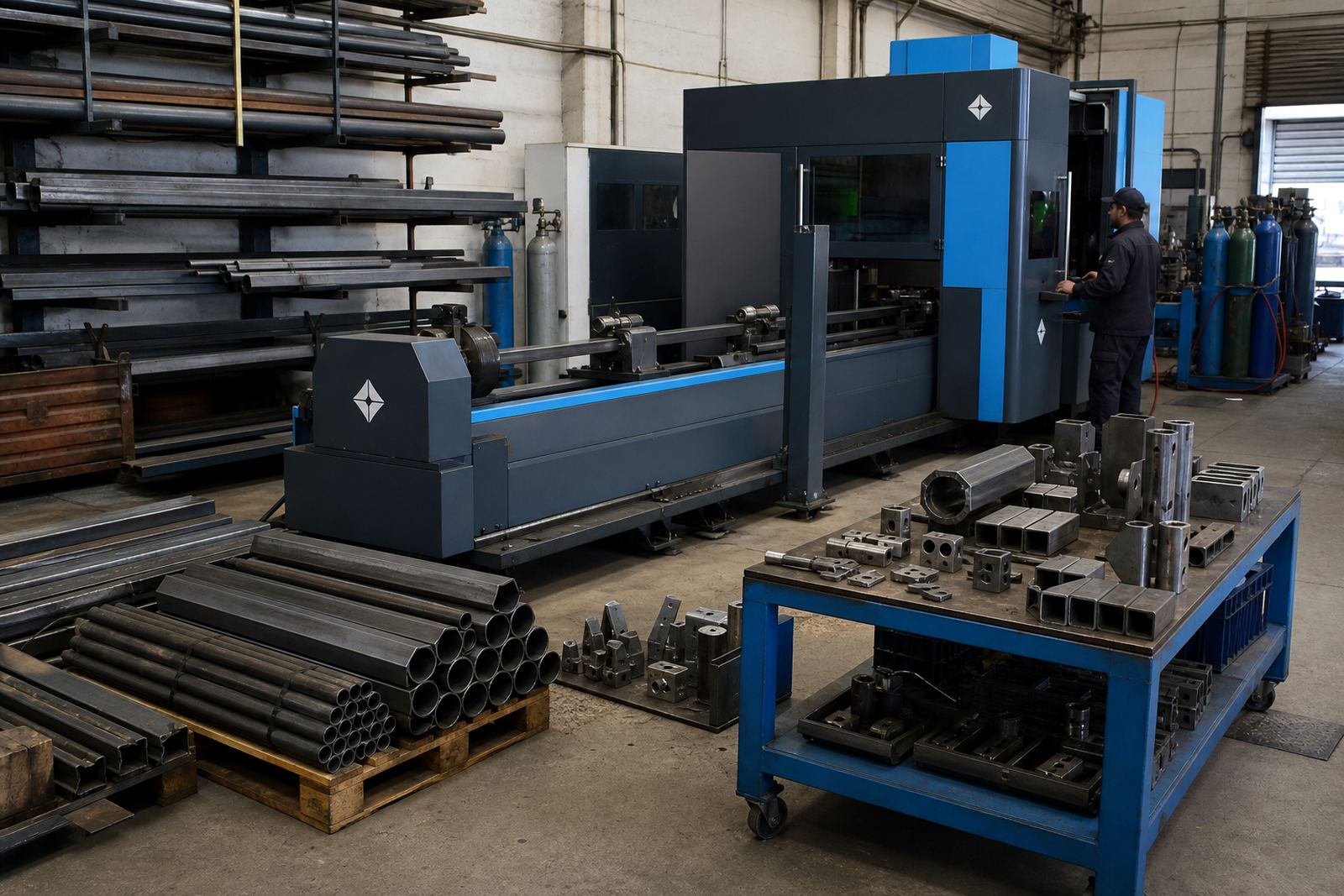
For profiles with mixed features, such as handrails, frames and equipment guards, the operator should think about part sequence as well as cutting path. Small tabs, shared edges and grouped batches reduce handling and keep similar parts together. That makes sorting easier, especially when several grades and thicknesses are running in the same week.
Local Stainless Jobs Need Practical Handling, Not Fancy Promises
In Gauteng, many fabricators work with stainless for food equipment, shop fittings, balustrades and plant guards. In Durban and along the coast, humidity makes clean storage and dry handling matter even more. In Cape Town and Gqeberha, salt air can sit on stock if tube is left exposed. Those conditions do not change the laser physics, but they do affect rust staining, surface marks and the time spent cleaning before assembly.
A local example: a Pretoria shop cutting rectangular tube for a stainless display frame may load the machine with mixed lengths in the morning and need fitted parts by afternoon. If the tubes are clean, the gas is steady and the operator has a clear nesting plan, the frame parts can move through the shop without unnecessary grinding. Attention to those details keeps stainless jobs neat and under control.
Training Notes That Help Operators Hold a Better Finish
Operators who understand stainless usually pick up the warning signs early. A dull edge can point to gas trouble, nozzle wear or a cut speed that is no longer suited to the batch. A wider heat mark may mean the parameters are drifting or the material surface was not clean enough for the run. These are small signals, but they save time when someone knows where to look.
- Teach operators to check cut quality before a full nest runs on.
- Build a short routine for lens, nozzle and gas checks.
- Record settings for common tube sizes and profile sections.
- Separate stainless handling from mild steel handling on the floor.
That kind of training is useful on small job shops and larger plants alike. It also helps new staff work with less supervision when the machine is used for tube, angle and channel in the same shift.
When Stainless Work Needs Service Discipline
Stainless cutting depends on machine condition more than many teams admit. If the chuck slips, the head drifts or the gas delivery becomes unstable, the finished edge shows it straight away. Preventive maintenance, breakdown response and remote diagnostics all have a place when a production schedule is tight.
LaserTube works from Wadeville, Germiston and supports fibre laser tube and profile cutting machines across South Africa, including Johannesburg, Pretoria, Durban, Cape Town, Gqeberha, Bloemfontein and Nelspruit. The team handles site assessment, delivery rigging, installation, commissioning, operator training, nesting training, assist gas setup, chuck alignment and bevel calibration, with Michael Dlamini leading the business, Anika Kajee on sales, Sibusiso Bhengu on installation, Leanne Mabuza on training, Pieter Visser on service and Ayanda Mashaba on applications.
Get in touch when you need stainless cutting equipment matched to the work on hand.