What a bevel head changes on the cut
A standard tube cut leaves the edge square to the material. A bevel head tilts the cutting beam so the edge leaves at a set angle, often for V, X or K groove preparation. That angle gives the welder more access to the joint and helps the weld penetrate properly on thicker wall tube, channel or angle.
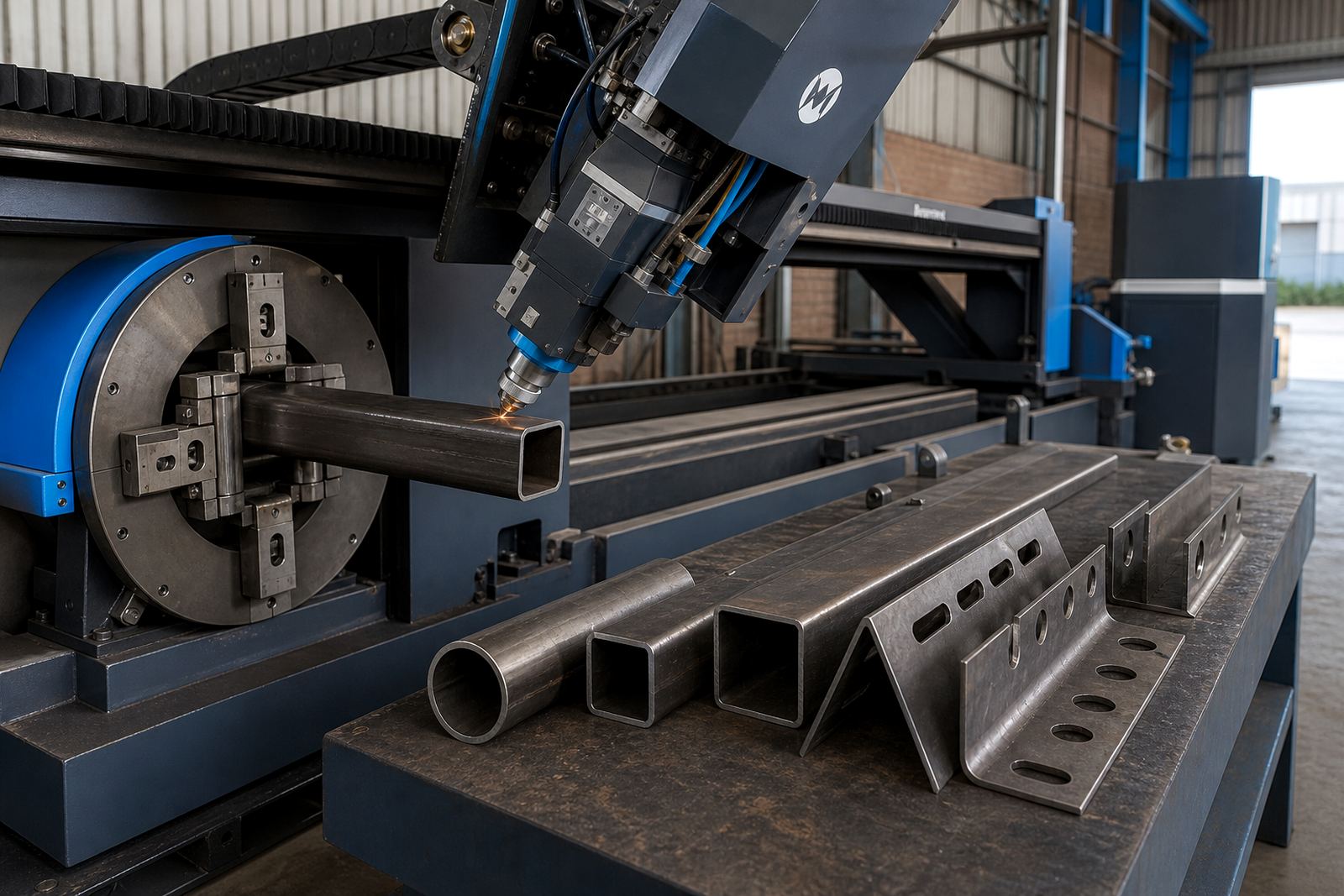
On a fibre laser tube and profile machine, the bevel head works with the chuck system and motion controls to keep the cut aligned as the part rotates or shifts through the cutting path. The operator still has to plan the job carefully. Wall thickness, material grade and joint design all affect the angle that will actually work on the floor.
Where bevel cuts earn their keep
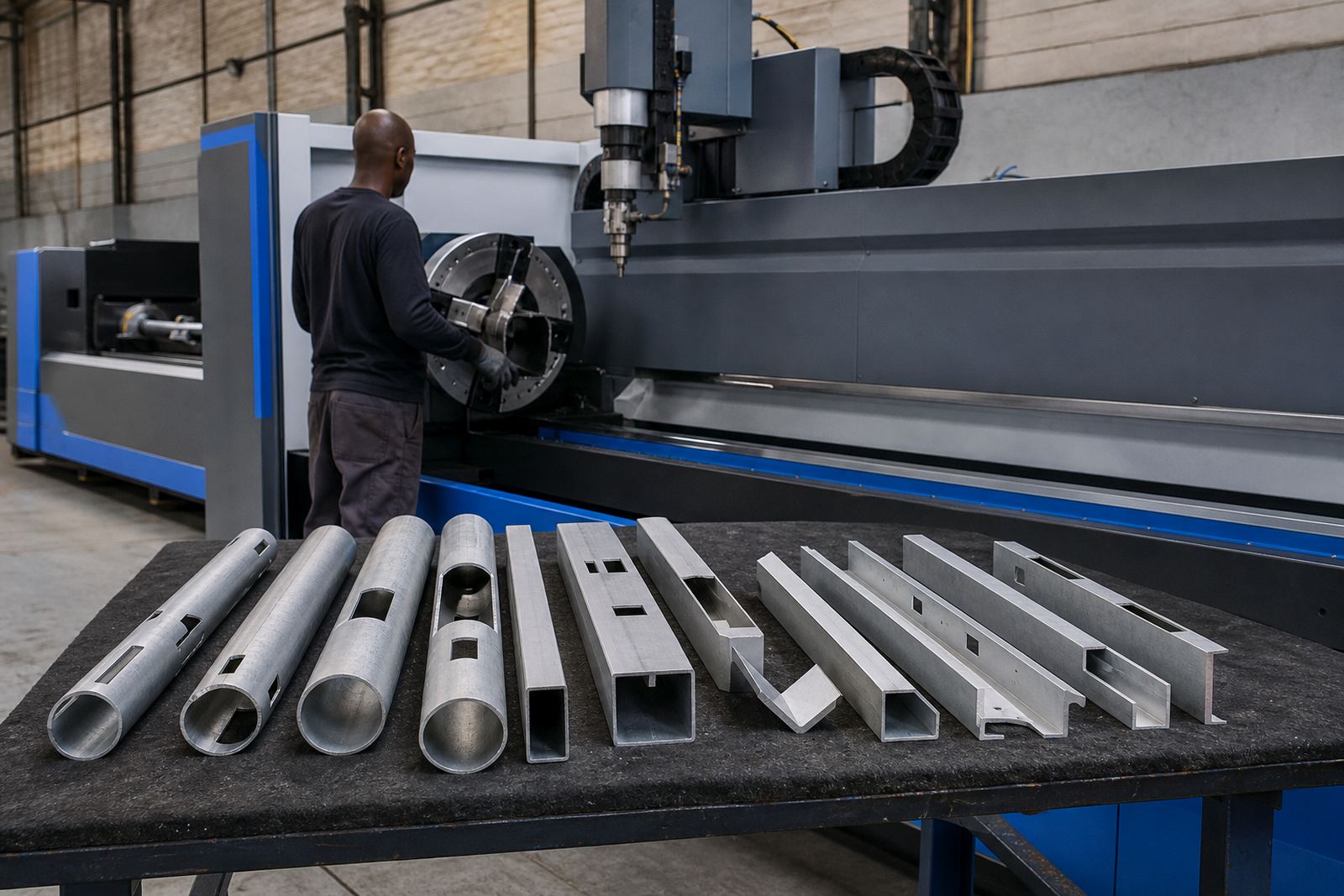
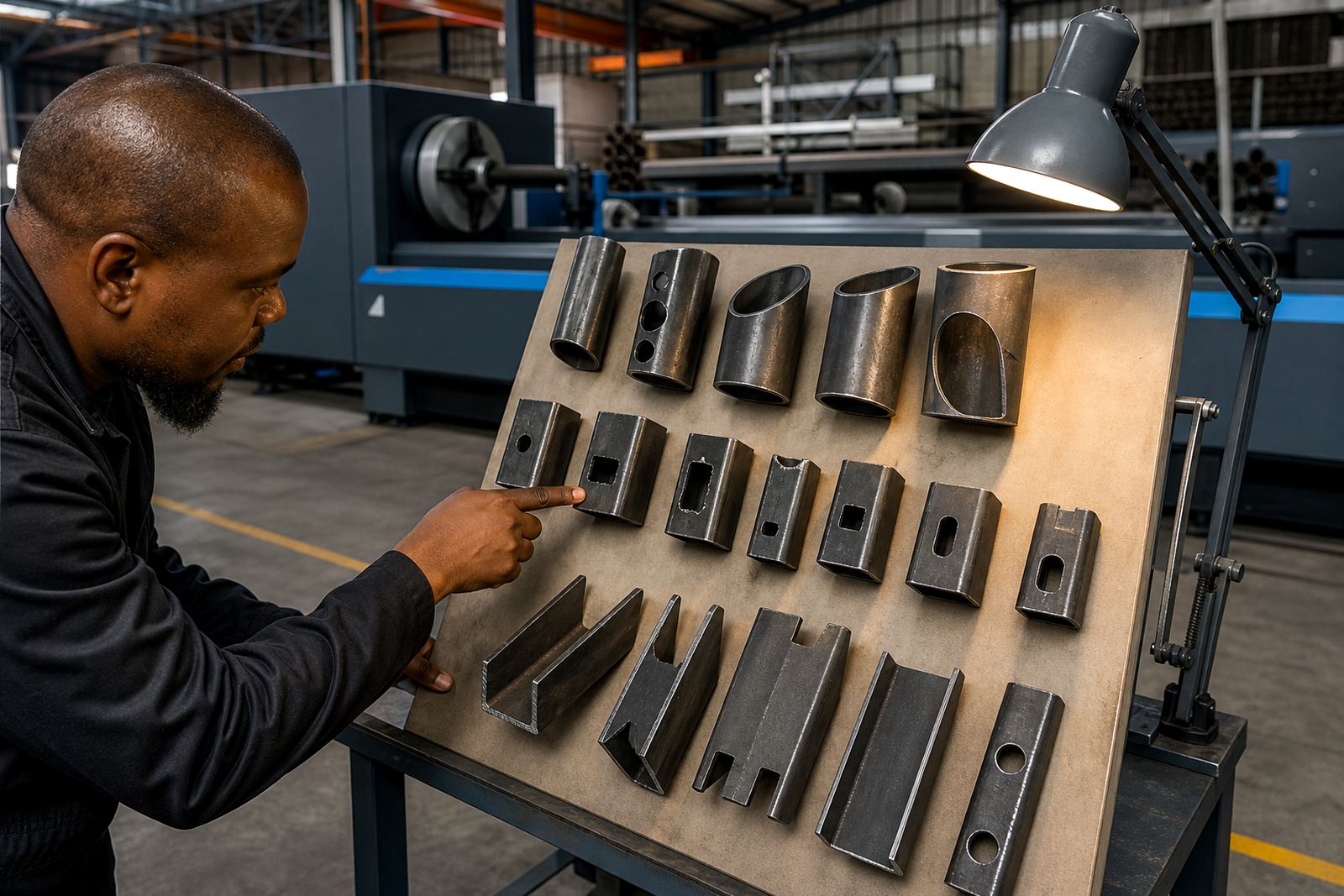
Bevel heads are useful where fabrication moves beyond plain saw cuts. Structural frames, transport parts, mining support work and general welding prep can all need a cut that opens the joint properly. Round tube, square tube, rectangular tube and open sections such as angle and channel each behave a bit differently, so the cut path must suit the material not just the drawing.
- Weld prep on thicker sections where full penetration matters
- Joint designs that need a clean included angle
- Parts that must fit without heavy grinding after cutting
- Production runs where repeatable angle control saves rework
The small setting mistakes that cause big scrap
Most bevel trouble comes from poor setup rather than the machine itself. If the chuck is not aligned, the cut angle can drift along the length of the tube. If the nesting file does not allow for the bevel geometry, the finished part may look fine from one side and wrong from the other. Even gas choice matters because the assist gas affects edge quality and dross, especially on thicker mild steel.
Operators also need to watch the cutting sequence. A bevel on one end can alter how the tube behaves in the fixture, and a long part may twist if the support layout is weak. That is why site assessment, machine installation and operator training matter together. The machine may be capable, but the process must be set up to suit the job.
How the operator sees the job on the screen
Modern nesting software does more than place parts close together. It must also account for the bevel angle, lead-in path, kerf and the rotation of the tube or profile. For a job shop in Wadeville cutting mixed orders, that can mean switching between a simple square end, a gusset-ready angle cut and a bevel for a welded frame in one shift.
- Check the angle callout against the drawing, not just the part name
- Confirm the cut direction before starting the batch
- Match the programme to the real wall thickness on site
- Keep a record of settings that produced clean edges
When the software, chuck alignment and bevel calibration work together, the operator spends less time fixing parts and more time cutting usable stock.
Germiston mixed structural batch cutting
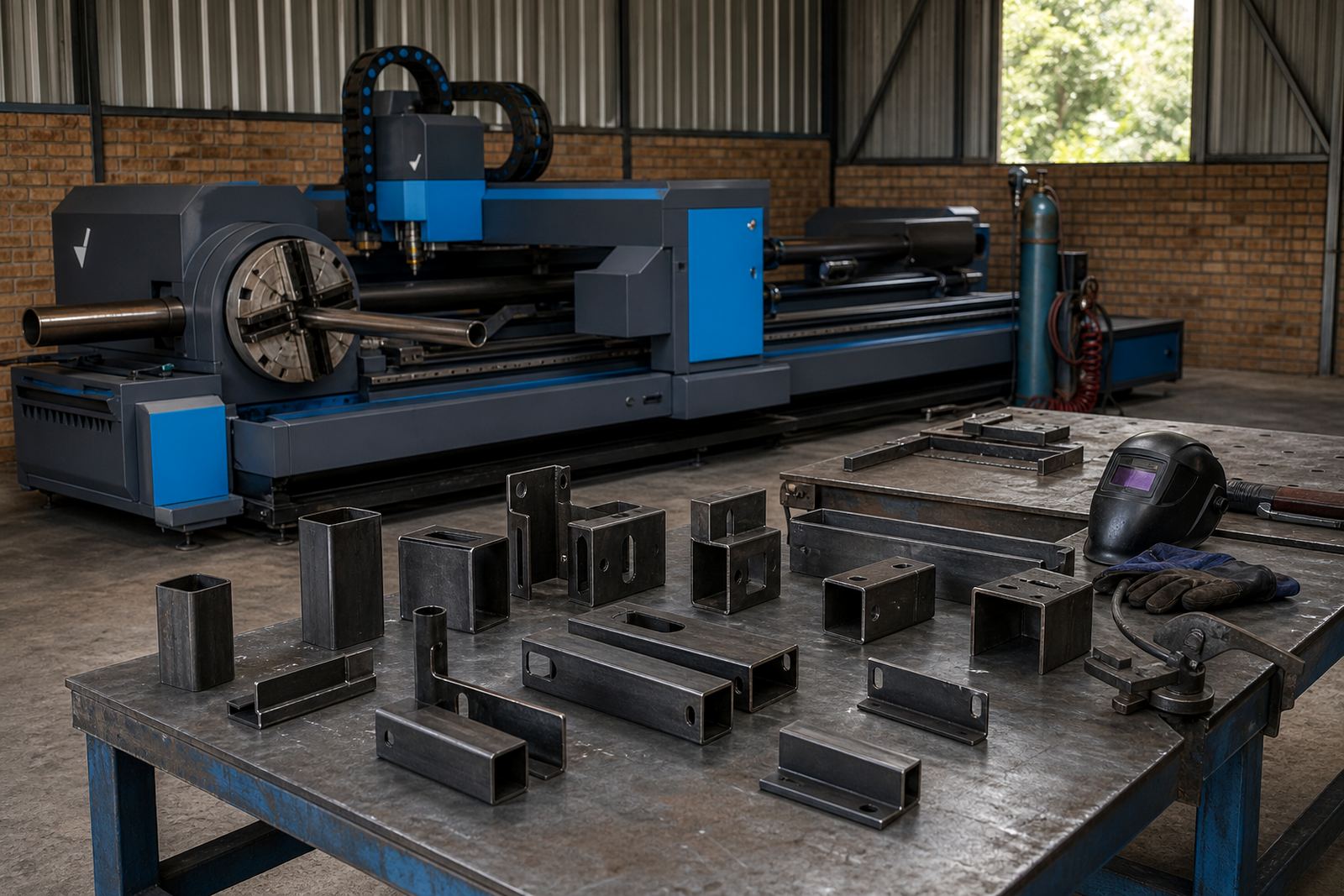
A fabrication team in Wadeville handling handrail sections and frame members may receive a batch that includes square tube, channel and light angle. The straight parts can be cut quickly, but the weld prep pieces need a bevel so the fitter can close the joint without forcing it. If the machine is installed and calibrated properly, the same shift can produce both types of work with less handling and fewer adjustments at the welding bench.
That kind of work is familiar in Johannesburg and Pretoria too, where fabricators balance short production runs, repair tasks and reissued jobs. In Durban and Cape Town, coastal moisture can affect stored stock and freshly cut edges, so careful handling and orderly workshop habits matter. The machine is only one part of the job, the rest is discipline on the floor.
Keeping bevel work steady over time
Bevel heads need routine checks if the cut quality is to stay consistent. That includes chuck alignment, bevel calibration, condition of the cutting optics and correct assist gas setup. Preventive maintenance is not a paper exercise on these machines. It keeps the angle accurate and the edge finish predictable.
For South African fabricators working across multiple sites, remote diagnostics can help isolate whether a fault sits in the programme, the motion system or the mechanical setup. If a head starts drifting or the bevel does not land where it should, the machine should be checked before a long run is lost. A few measured checks beat a bin full of wrong parts.
- Inspect alignment after heavy jobs or a machine move
- Keep nozzles, lenses and support surfaces clean
- Use the right gas and pressure for the material
- Train operators to spot a bad bevel before the batch grows