Where nozzle wear shows up first
On fibre laser tube cutting, the nozzle does more than direct gas. It helps shape the assist gas stream so the cut stays stable on round tube, square tube, rectangular tube, angle and channel. When the nozzle opening enlarges, becomes out of round, or picks up heat damage, the gas stream loses focus and the cut edge starts to drift.
The first signs are often small. A fabricator may notice a light burr on one side of the tube, a rougher edge at corner transitions, or a cut face that looks clean on one job and patchy on the next. If the machine is set correctly and the same material still gives mixed results, nozzle condition is worth checking before the fault gets blamed on nesting, gas pressure or the laser source.
- Edge striations become more visible
- Dross builds up on the lower edge
- Pierce marks spread wider than usual
- Thin wall tube shows heat distortion sooner
Why gas flow changes the cut line
Assist gas is supposed to move in a controlled column through the nozzle. If the nozzle is chipped, worn or not seated properly, the gas can swirl or spread before it reaches the cut zone. That changes how molten metal leaves the kerf, especially on stainless steel and mild steel where edge quality depends on consistent flow.
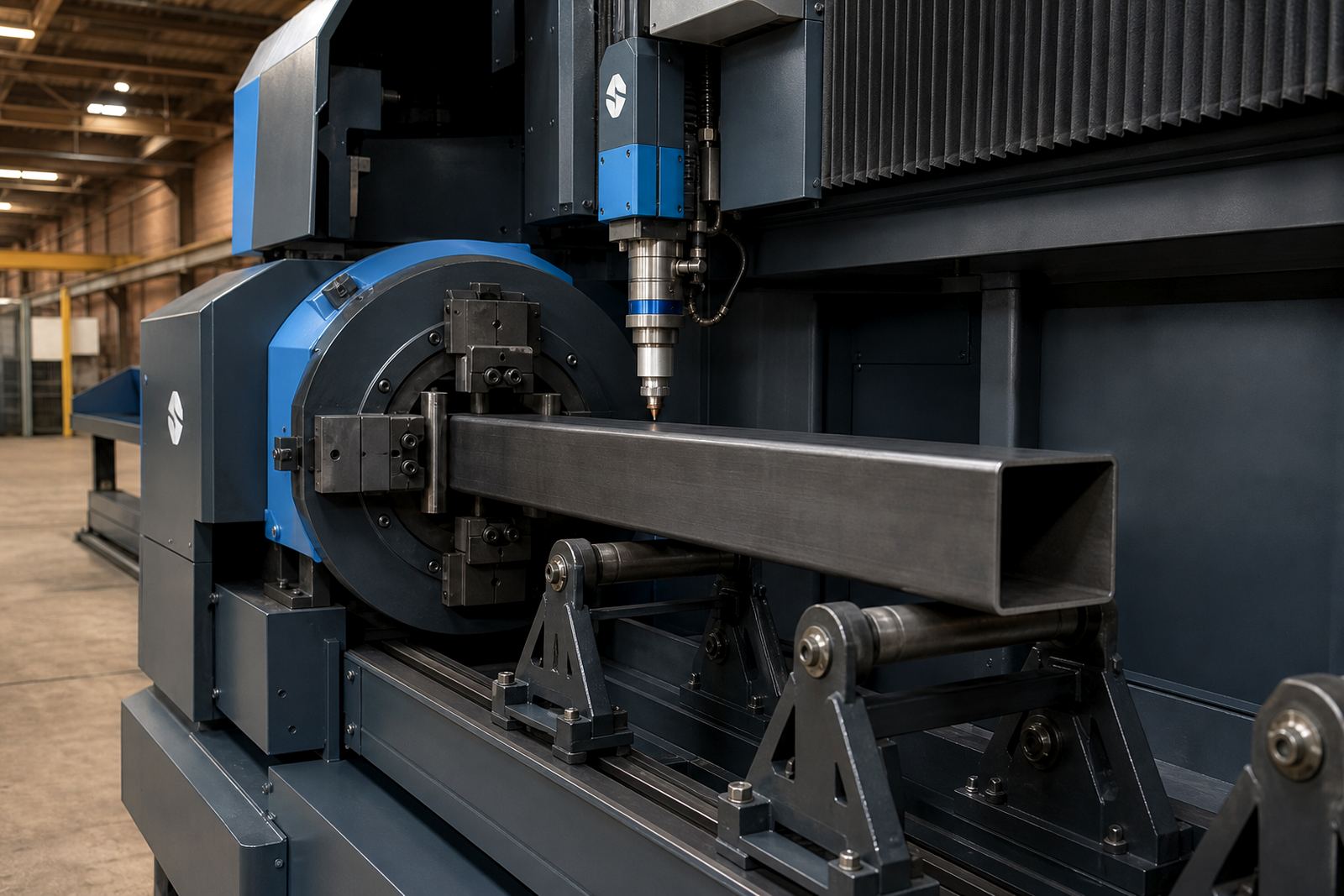
Tube work can expose nozzle faults more clearly than flat sheet work. On a long profile, the head moves through repeated pierce points, corners and lead in sections. Any small change in flow shows up across many cut features, not just one spot. That is why nozzle condition should be checked alongside chuck alignment, bevel calibration and gas setup during service work.
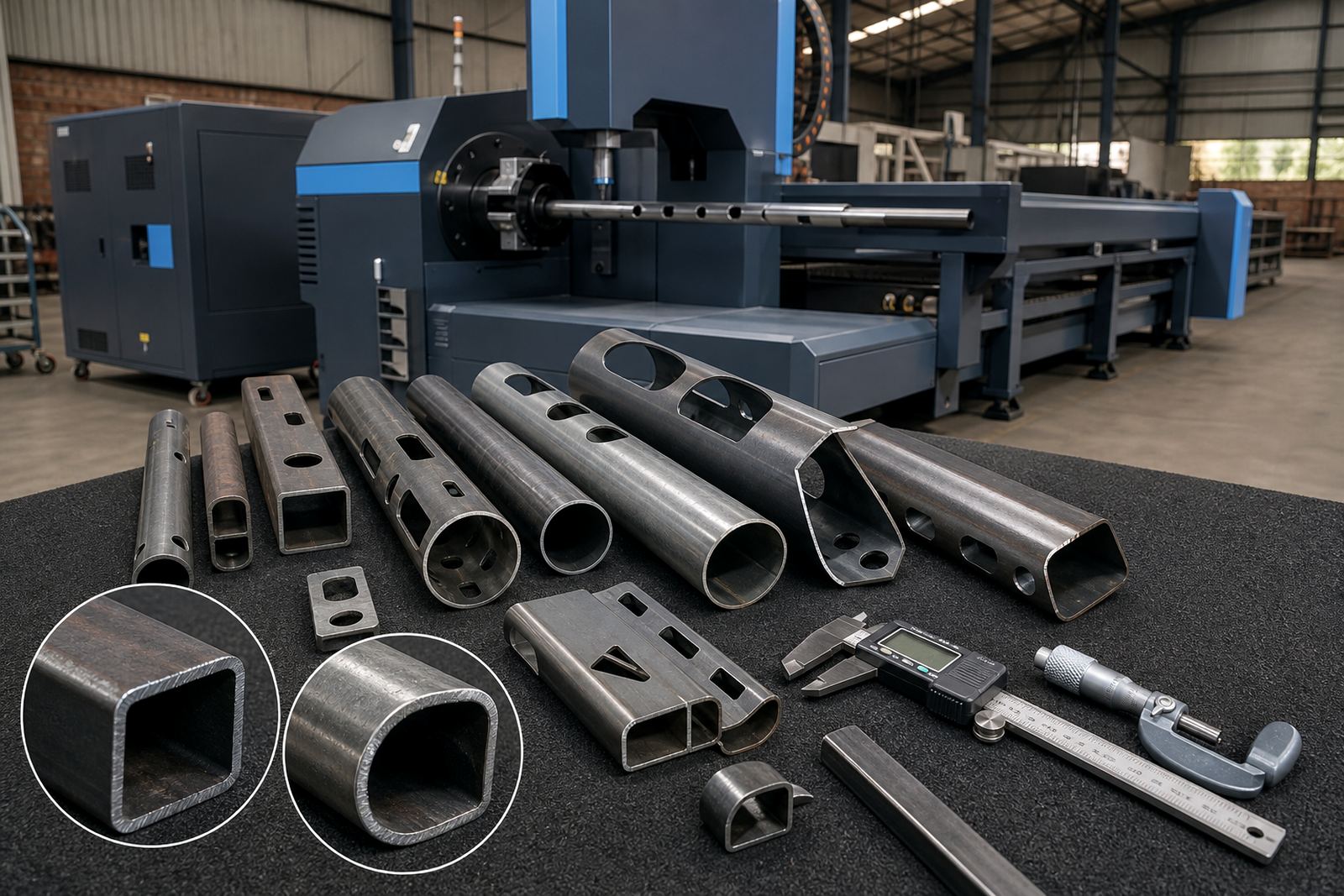
In Wadeville, one fabrication shop cutting gate frames and handrail parts had a pattern of rough edges on square tube, but only on certain lengths. The machine was sound, the nesting was tidy, and the material was consistent. The issue sat in the nozzle tip, which had picked up a tiny nick during cleaning. Replacing the nozzle restored the edge quality without changing the rest of the setup.
A quick inspection routine on the shop floor
Checking the nozzle can stay simple, provided it is done the same way each time. The best time is before a long production run, after any collision, or when edge quality starts to slip. Look for visible damage, heat staining, spatter on the inner face, and any sign that the nozzle hole is no longer perfectly round.
Clean handling matters. Nozzles should be stored where grit, swarf and oily rags will not touch the sealing surface. Even a small particle can affect seating and create a leak path. On tube cutting jobs, where the head may swing close to corners and cut-offs, a nozzle can also pick up impact marks from an unnoticed scrap piece.
- Check the nozzle edge under good light
- Confirm the seating face is clean
- Look for spatter around the opening
- Replace any nozzle with a visible nick
- Keep a record of nozzle changes per material type
How nozzle wear affects nesting and bevel work
Good nesting software helps the machine use material efficiently, but it cannot correct a bad gas stream. If the nozzle is worn, the cut path may still run where the software asked, yet the finished part may need dressing or re-cutting. That matters on production plants where a batch of tube parts has to fit cleanly into the next assembly stage.
Bevel cutting adds another layer. The angle of the cut depends on stable gas delivery and accurate head movement. A damaged nozzle can make bevel edges look uneven, especially on thicker wall sections. That can affect weld fit-up on structural work and change how cleanly corners meet on frames, bases and bracket assemblies.
For sites running mixed jobs, the nozzle condition should be read with the rest of the process, not in isolation. A clean nozzle, correct focal position, proper gas pressure and sound chuck alignment work together. When one part slips, the rest of the setup often looks guilty first.
Tube sizes and material types need different care
Round tube behaves differently from square and rectangular tube, and open profile sections behave differently again. A nozzle that works well on light wall round tube may show trouble sooner on heavier angle or channel, where the cut path and heat load can change more sharply. The part thickness, corner geometry and material finish all affect how the cut edge responds.
Stainless steel can show colour change and edge marking if gas flow is not steady. Mild steel may show more visible dross, while aluminium can be sensitive to any inconsistency at the pierce point. That is why operators need to watch the cut, not just the machine display. A head that sounds normal can still be working with a nozzle that is no longer right for the job.
Practical shops in Johannesburg, Pretoria, Durban, Cape Town and Gqeberha usually keep a small set of spare nozzles for the material and thicknesses they cut most often. That habit keeps changeovers orderly and helps the team spot patterns before they turn into scrap.
Training the eye to catch damage early
Operator training should include nozzle checks as part of the normal start-up routine. People often learn to look at the laser path, the assist gas pressure and the finished edge, but the nozzle itself can be overlooked because it is small and gets replaced only when failure becomes obvious. A steady inspection habit reduces guesswork on the line.
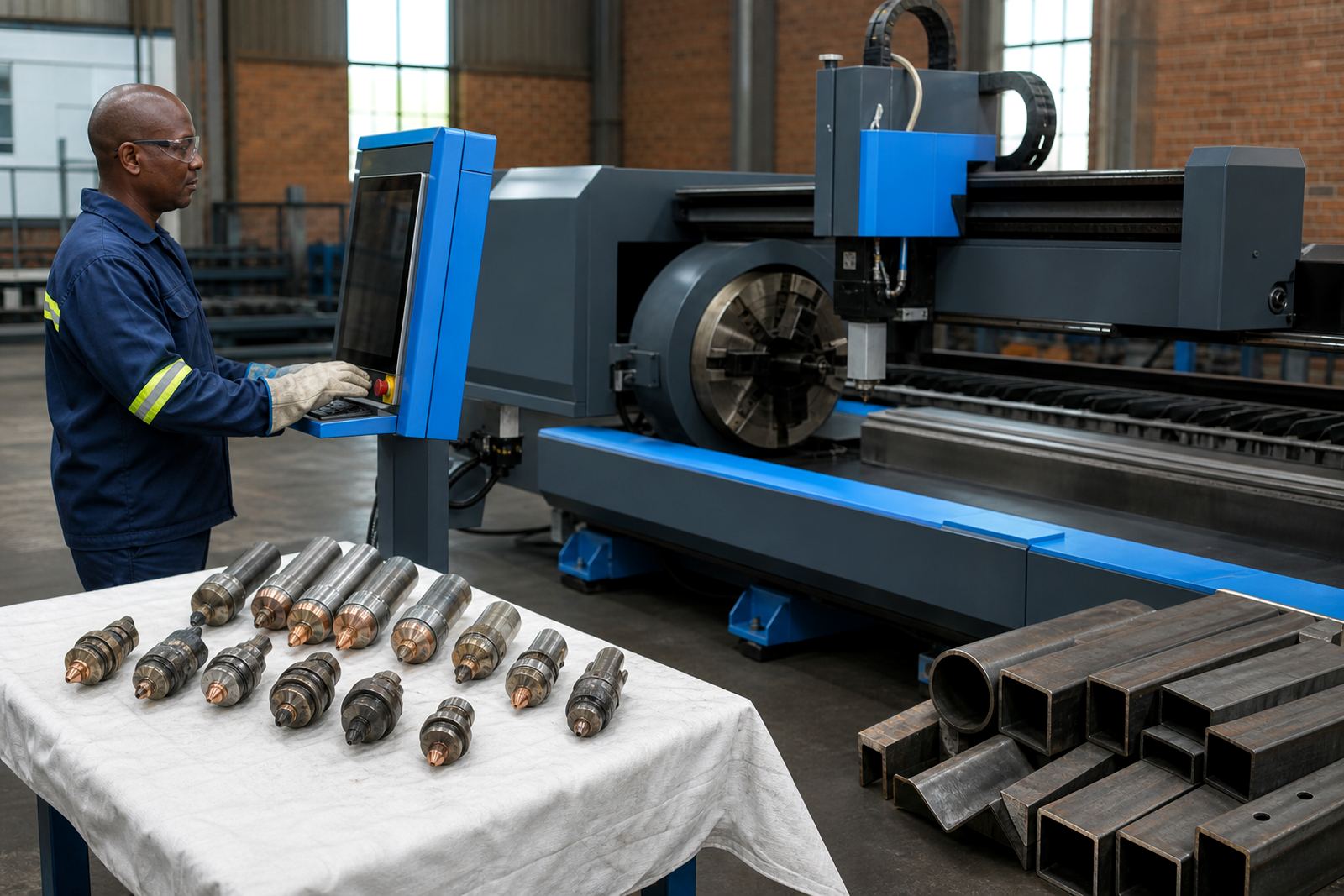
Training works best when the team sees real examples of worn and healthy nozzles side by side. Once operators know what a clean opening looks like, they are less likely to keep running a damaged part. That is especially useful on machines that cut both tube and profile, where the same head may handle a range of part shapes in one shift.
- Teach operators to compare a nozzle against a known good part
- Include nozzle checks in daily machine handover
- Keep spare nozzles labelled by size and use
- Record repeated damage and link it to handling or setup
Keeping the cut steady over long runs
Planned servicing should cover nozzles as well as optics, guides and lines. The cost of a nozzle is small compared with lost time, scrap material and rework. For machines that cut every day, regular nozzle checks protect output by reducing stoppages, scrap and rework.
LaserTube supports fibre laser tube and profile cutting machines with installation, commissioning, operator training, nesting training, preventive maintenance, chuck alignment, bevel calibration, assist gas setup, remote diagnostics and breakdown response. From Wadeville, Germiston, the team works with fabricators across South Africa, including Johannesburg, Pretoria, Durban, Cape Town, Gqeberha, Bloemfontein and Nelspruit. Michael Dlamini leads the business, with Anika Kajee, Sibusiso Bhengu, Leanne Mabuza, Pieter Visser and Ayanda Mashaba each covering the practical side of machine performance, service and training.
For a plant cutting handrail sections in coastal Durban, nozzle wear may show up faster because the team is working through long production runs with fine edge requirements. In that setting, a quick visual check at shift change can prevent a noisy pile of rejects later in the day. The same habit helps smaller job shops in Germiston, where one damaged nozzle can upset a small order that must fit straight into fabrication and welding.