Set the rectangular section before the first cut
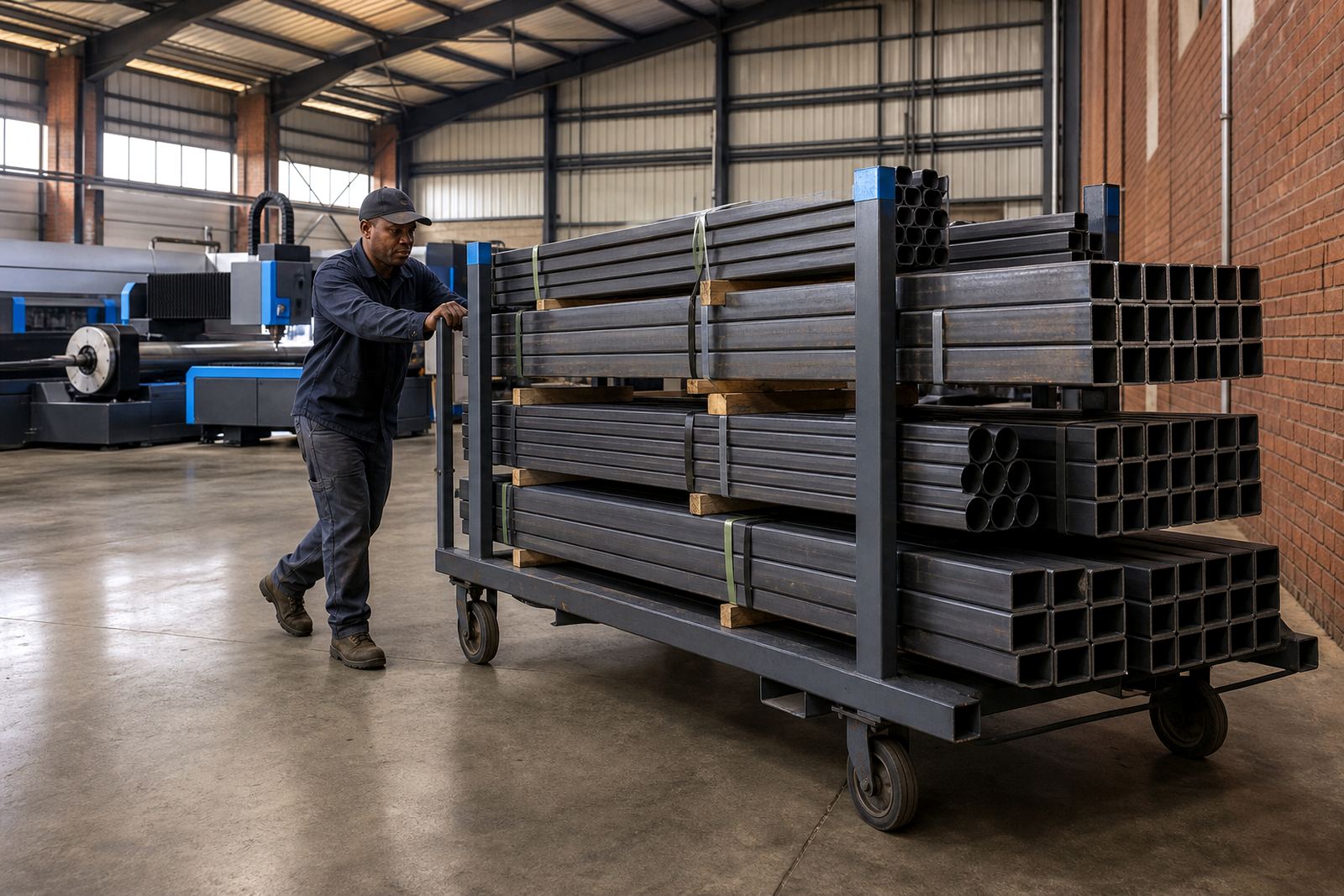
Rectangular tube behaves differently from round tube because the flat faces carry weight unevenly and the corners store stress. When a job shop loads mixed lengths from 40 x 20 mm to heavier structural section, the first step is to decide which face must run against the chuck and where the most stable contact points will sit.
On narrow wall sections, even a small overhang can create chatter near the free end. On larger profiles, the tube may sit happily in the chuck but bow between supports if the bed spacing is wrong. That is why the loading position matters as much as the cut file, especially when the same profile is used for holes, slots and mitres on one batch.
- Keep the reference face consistent from part to part.
- Check wall thickness before setting clamping force.
- Support long spans so the tube does not sag near the cut zone.
- Allow space for the head to clear corners and clamps.
Support points that stop twist and marking
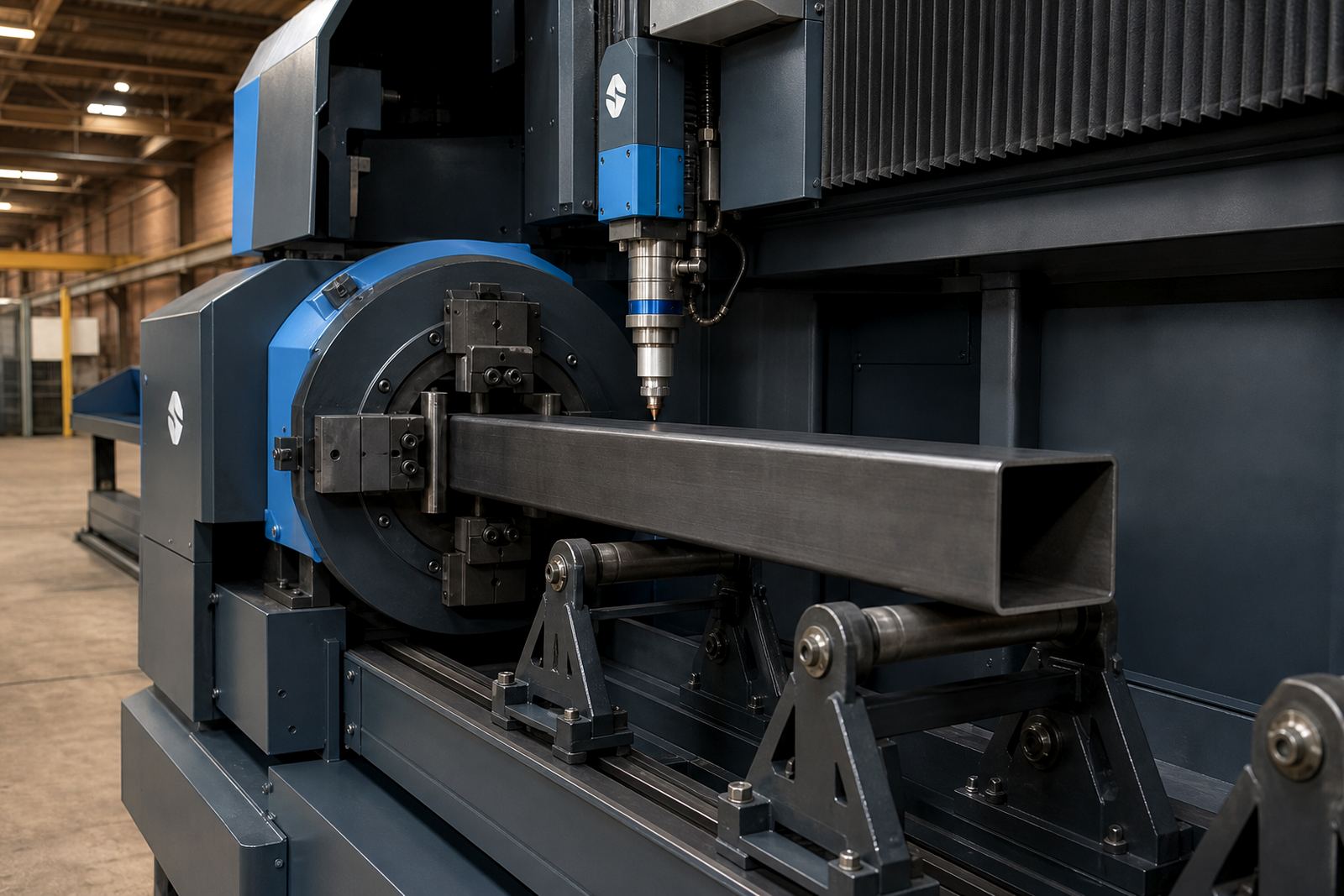
Good support is the difference between a straight cut and a part that arrives with bite marks or a slight twist. Rectangular tube wants stable contact under the broad faces, not random pressure on one corner. If the supports are too high or too far apart, the profile rocks when the chuck grips it and the laser path can drift where the cut starts and stops.
In Wadeville workshops handling light commercial frames, the better setups use rollers or adjustable supports placed to match the profile length and weight. Supports must carry the tube and keep its position consistent through each cycle. That matters when a bundle includes several lengths that look alike but vary in wall thickness or bend from storage.
- Place supports close enough to reduce sag, but not so close that they block the head path.
- Use clean contact surfaces to limit scuffing on coated or polished tube.
- Recheck support height after changing to a different section size.
- Watch the first few pieces for lift, roll or clamp witness marks.
Cut sequence on square and rectangular tube
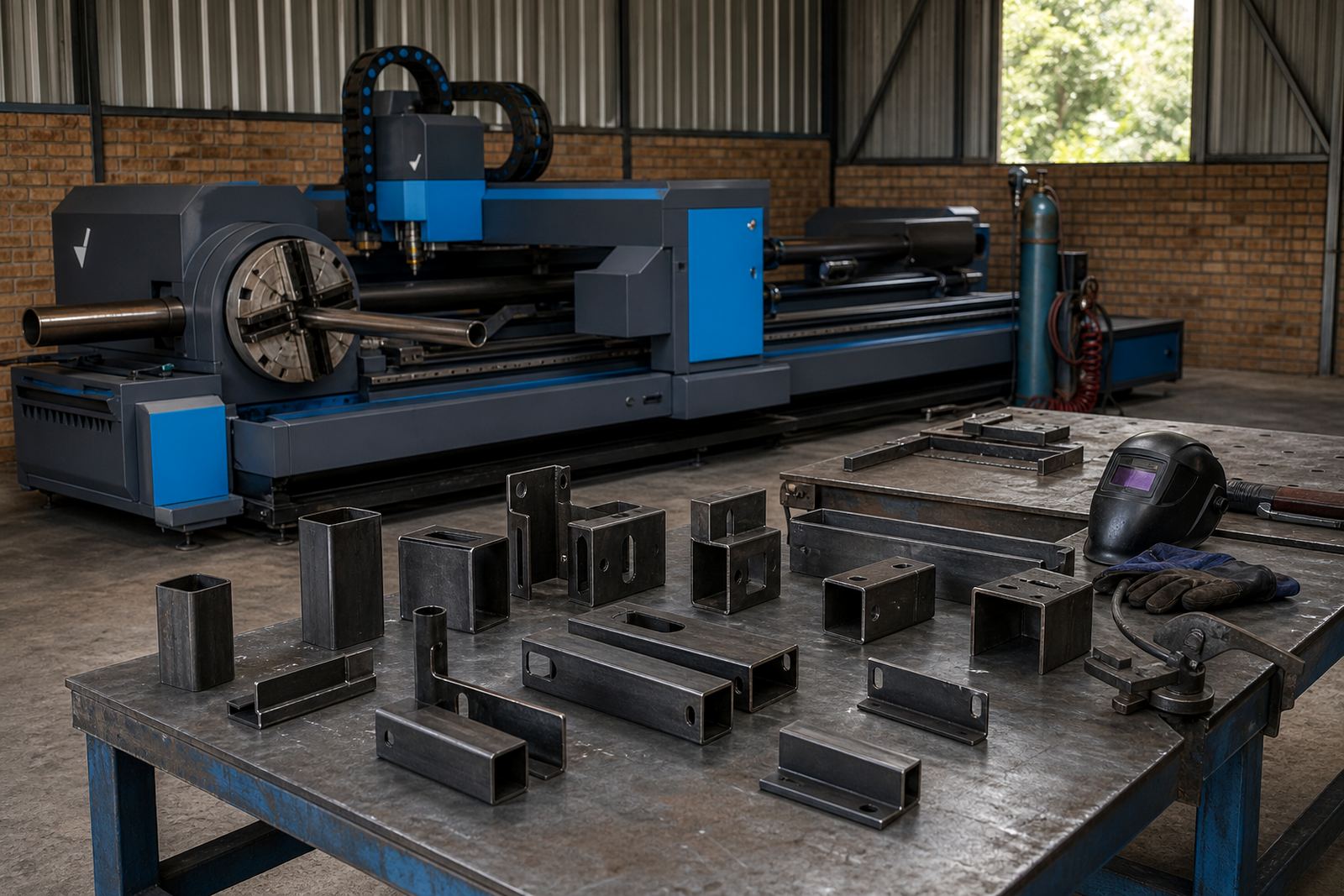
The order of cuts changes how the part moves. Start with pierces and relief cuts that release internal stress in a controlled way, then move to the feature cuts that need the best position. If the machine opens large windows or heavy slots too early, the remaining web can pull the section out of line before the profile is finished.
For square and rectangular tube, a sensible sequence often keeps the most demanding cuts away from the free end until the support is doing its work. On mitres and end-prep jobs, the cut path should also account for the direction of any burr or dross, because a poor sequence leaves more finishing on the fitting bench.
Operators in Durban and Gqeberha often deal with humid storage conditions, so surface condition also matters. Mild surface rust, oil residue and condensation can all alter pierce quality if the profile was stored poorly before loading.
Chucks, clamping and wall thickness balance
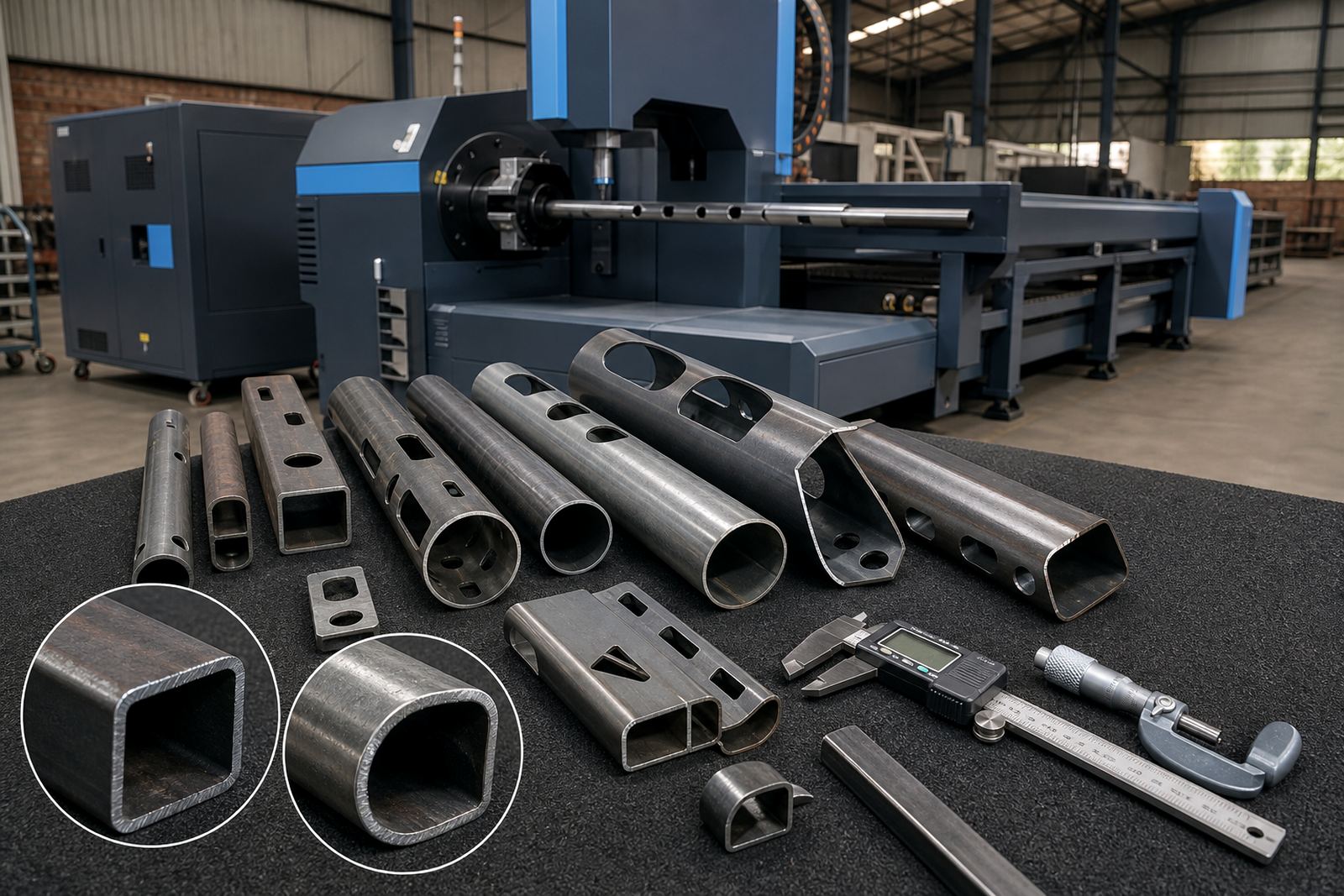
Chuck setup needs enough grip to stop slip, but not so much pressure that the tube is crushed or leaves a mark that spoils a later weld. Rectangular tube with thin walls is especially sensitive at the corners, where the section can deform before the operator notices it. The shape may still look square on the outside while the internal size has shifted.
A strong setup checks jaw position, alignment and tube centring before cutting starts. For longer production runs, a small change in clamping position can affect every piece that follows. That is one reason chuck alignment forms part of preventive maintenance, especially on mixed batches where one day’s work may include light enclosure tube and the next day heavier frames.
- Centre the profile so the beam path stays consistent along the length.
- Match clamp pressure to wall thickness and section size.
- Inspect jaws for wear that can leave repeatable marks.
- Confirm that the tube feeds smoothly before the first live part.
Bevel work, nesting and gas choices
When a job calls for angle joints or welded corners, bevel heads help the fit-up, but only if the angle is calibrated correctly and the section is held steady. A small error in bevel angle can leave gaps at the joint line, which means more grinder time and a weaker fit for the welder. The same goes for nesting software: if the part layout ignores grain direction, remnant length or the sequence of holes, the cut may be legal on screen but awkward on the floor.
Assist gas selection also affects edge quality. Oxygen, nitrogen or compressed air each suits different steels and different finish needs. The right setting depends on thickness, edge colour, burr control and whether the part will be painted, galvanised or welded soon after cutting. For South African fabricators supplying to site work, that choice is usually made with the next process in mind, not just the cut itself.
A Germiston job shop lesson on mixed tube orders
A small fabrication shop in Germiston may cut handrail frames in the morning and structural brackets by lunchtime. That sort of mix is where rectangular tube discipline pays off. One batch might use 50 x 25 mm light wall tube for enclosure work, while the next uses heavier 100 x 50 mm section for a support frame. If the support spacing, chuck grip and cut order are not adjusted between those jobs, the machine will still cut, but the parts may not fit first time.
On a mixed order, the best result usually comes from a short setup review before loading the next bundle. Check the section orientation, confirm the nesting file, clean the contact surfaces and test the first cut on a scrap length if the profile size changes sharply. That habit saves rework and keeps the machine ready for the next run.
For sites in Johannesburg, Pretoria, Durban, Cape Town and Gqeberha, LaserTube supports installation, operator training, nesting training, chuck alignment and bevel calibration, along with breakdown response and remote diagnostics when a line needs attention.