Begin with a clean machine
A tube cutting machine works hard with round, square and rectangular section, plus angle and channel on the right setup. Dust, offcut scale and oily residue collect around the chuck jaws, supports and cutting area, so the first check is usually a clean one.
Look at the bed, loading side and discharge side before the first job goes in. If swarf is left under a support roller or near a clamping point, the tube can sit off line and the cut may drift. On a busy shop floor in Wadeville or Germiston, that small miss can spoil a full bar before anyone notices.
- Clear loose offcuts from the loading and unloading path.
- Wipe grime from supports, guide surfaces and exposed moving parts.
- Check that the cutting area is free of loose tools and scrap ends.
- Make sure access doors and guards close properly before start-up.
Check Chucks, Clamps And Tube Support
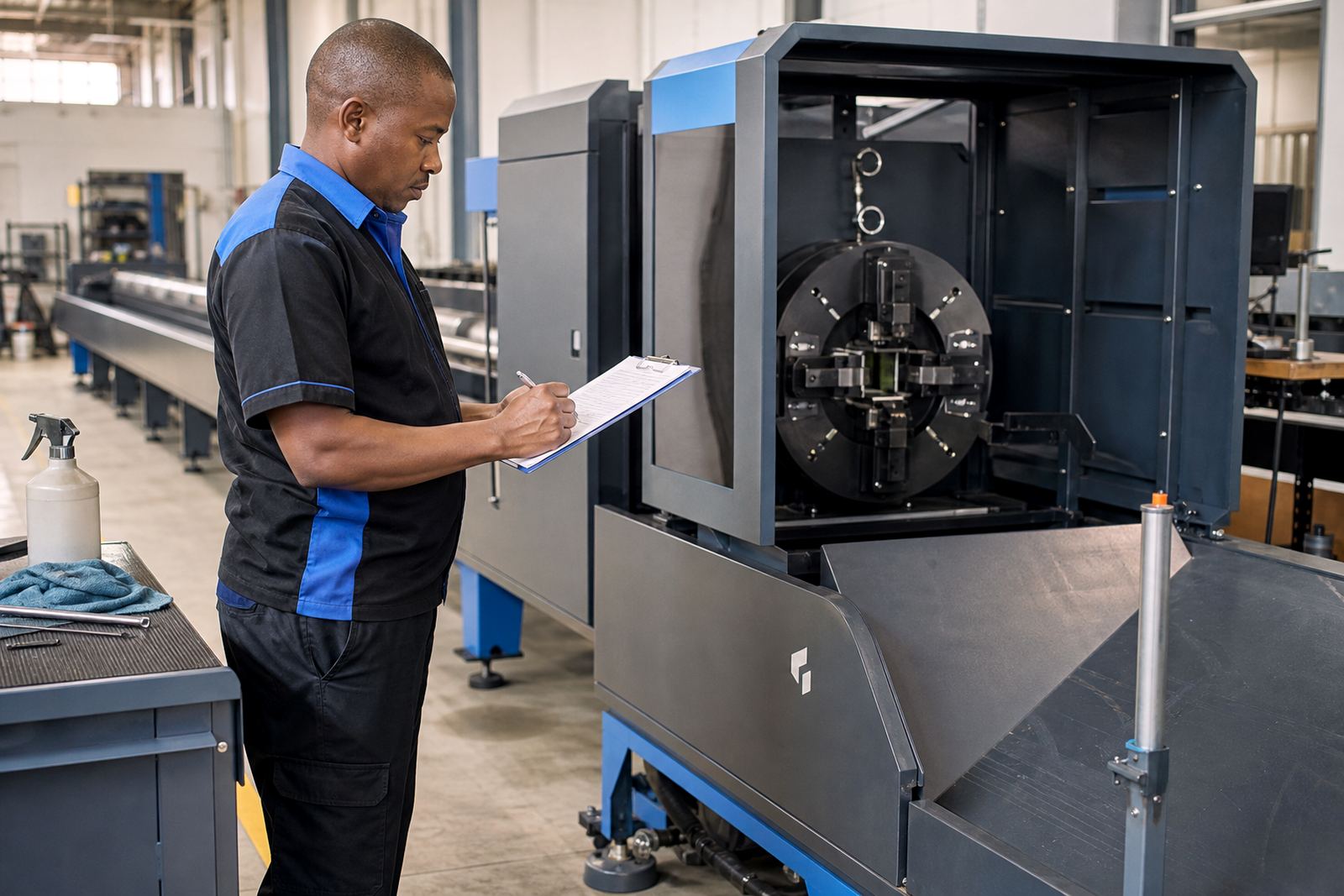
Chuck condition matters more than many crews think. If jaws are worn, dirty or set too loosely, the tube can twist during rotation and the cut edge will show it. A square tube can hold a long section well one moment, then move under load if the grip is uneven.
Operators should watch how the machine loads the material and how the clamps close. Listen for a sound that feels different from the usual cycle, and check for marking on the tube surface. That marking can point to over-tight clamping, poor jaw contact or a support that is not carrying its share of the weight.
- Inspect jaws for wear, build-up and damage to the gripping face.
- Check that tube supports lift and centre the workpiece correctly.
- Confirm the clamping action is even on both sides of the tube.
- Look for slip marks, crushed corners or fresh scarring on the tube.
For longer lengths, the feed side and discharge side need the same attention. If one side sags, the head has to work harder to keep the cut true, and bevel work becomes less predictable.
Keep The Assist Gas Set For The Job
Assist gas directly affects cut quality and needs to be set correctly for the job. The operator should know which gas the job calls for, how the supply is set and whether the lines are clean and stable. Pressure that is too low can leave dross and rough edges, while a poor setting can waste gas and still give a weak cut.
Daily checks should include the condition of hoses, fittings and regulators where fitted. In a South African workshop, leaks matter because they add cost and can upset the cut before the first tube even enters the machine. When a job moves from thin wall tube to heavier profile, the gas setup may need to change too.
For many fabrication shops, the best habit is to keep the operator close to the setup sheet and not rely on memory alone. Small differences in wall thickness, material finish and part nesting can change the result at the nozzle.
Watch The Software Before The First Cut
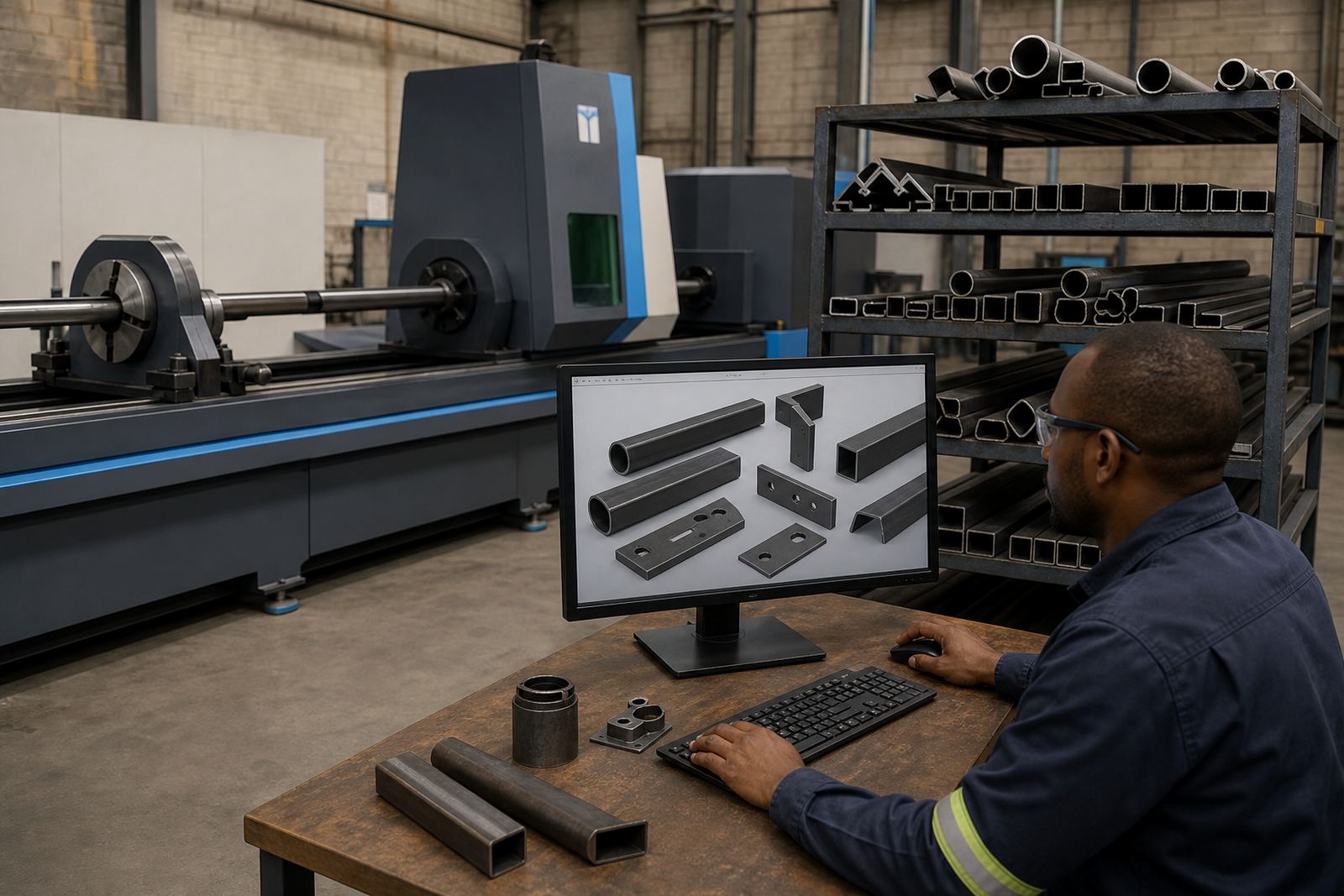
Nesting software does the planning, but the operator still has to verify the practical side. A part can look correct on screen and still be awkward on the machine if supports, clamp positions or sequence are not matched to the tube length. The check covers more than the drawing. It also asks how the machine will carry the job.
Before cutting starts, confirm that the part list, orientation and remnant use make sense for the material on the floor. A profile with multiple pierces or tight cut spacing needs extra care around heat build-up and part movement. If the sequence is rushed, scrap rises and secondary cleaning takes longer.
- Confirm the job file matches the tube or profile loaded on the machine.
- Check clamp position against the cutting path.
- Review remnant use so the next cut does not foul the last one.
- Make sure the operator can see the sequence and any warning prompts clearly.
Safety Checks That Protect The Shift
Safety on a laser cutting line is practical, not ceremonial. Eye protection, access control, extraction and guarding all need checking as part of the daily start-up. If a guard is left open or a panel is not seated properly, the machine should not be treated as ready.
Operators should also look at the extraction path and the area around the cut. Fumes, sparks and hot offcuts can build up fast, especially when a job runs with repeated pierces or heavy wall material. A tidy floor matters too, because a dropped tube end or loose clamp can cause a trip in a tight aisle.
In busy plants around Pretoria, Durban and Cape Town, the safest teams are the ones that treat each shift like a fresh setup. They do not assume the machine is fine because it worked yesterday.
Mixed tube loading checks in Wadeville
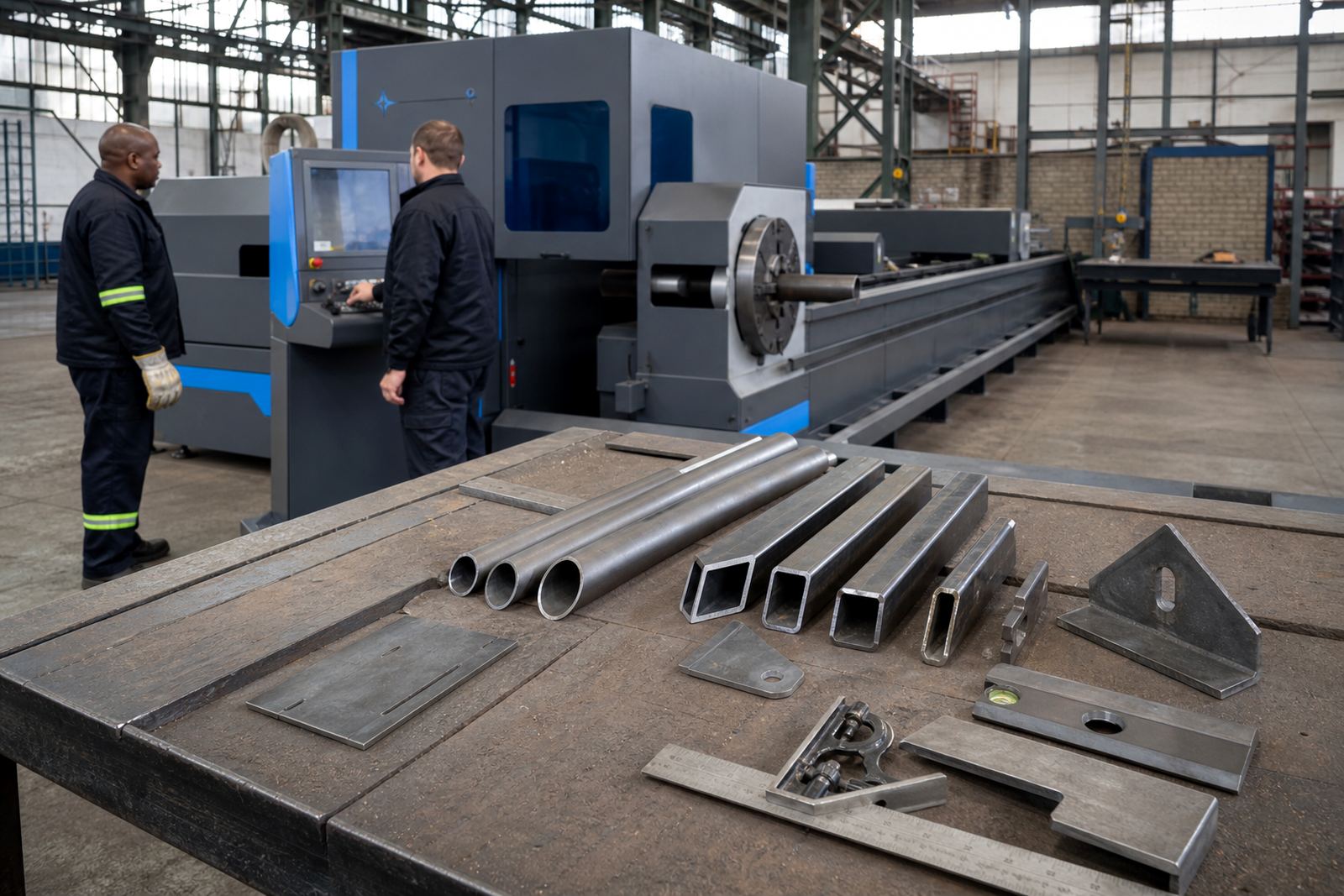
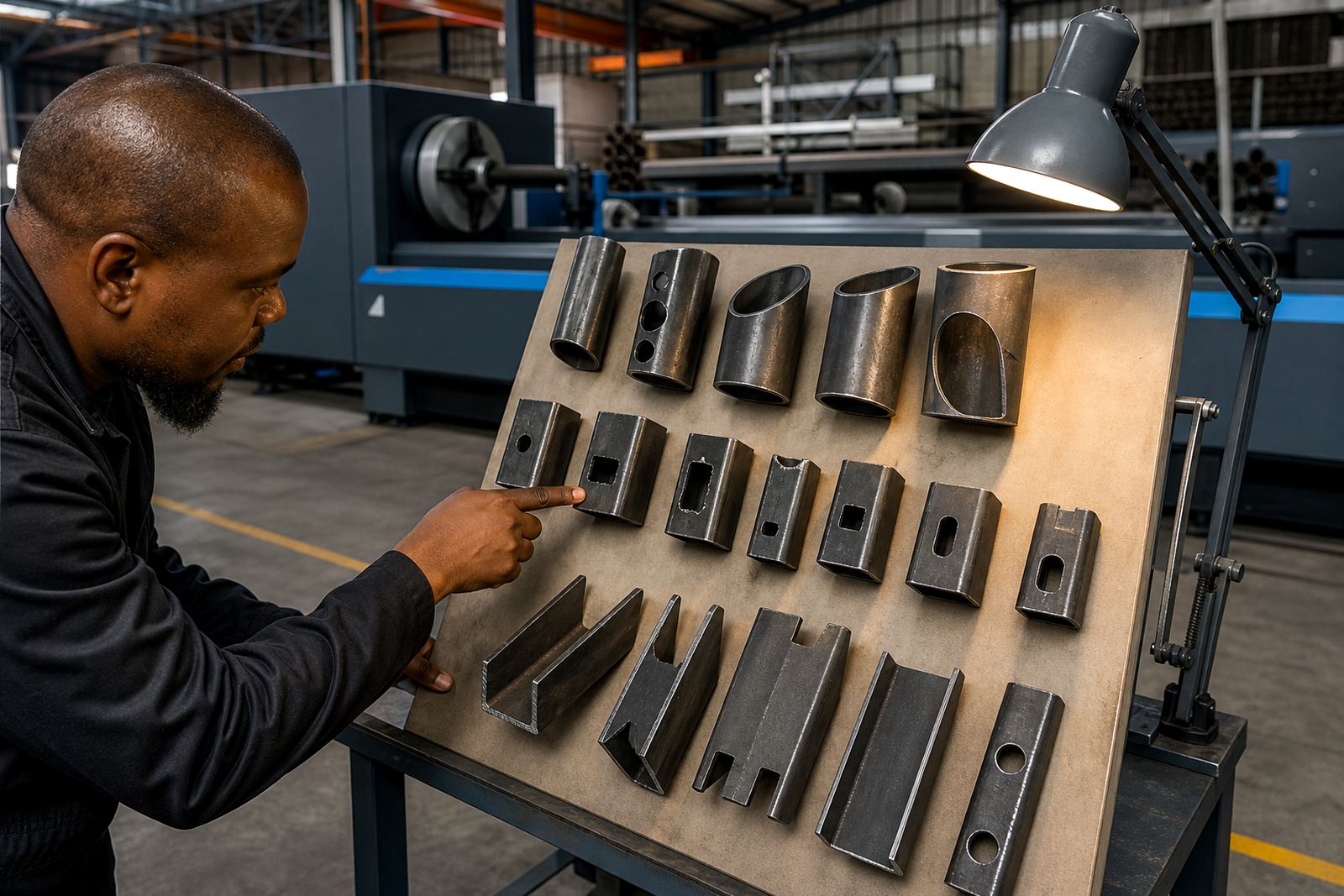
Picture a fabrication shop in Wadeville loading mixed tube work for the morning. The job includes short round tube parts, a batch of rectangular rails and a few angle sections for a frame order. The operator sees a slight build-up on one chuck jaw, and the support closest to the loading side is not lifting cleanly.
Those two checks take only a short while, but they save the shop from chasing crooked cuts and crushed corners later in the shift. The team clears the jaw, resets the support and verifies the gas pressure before the first part starts. That sort of routine is not dramatic, but it keeps a production plan moving without unnecessary scrap.
For plants serving Johannesburg, Bloemfontein, Nelspruit, Gqeberha and the wider inland route, the same habit pays off. A daily check list does not replace maintenance, yet it gives the operator a clear way to spot the small faults that often become the big ones.
- Inspect the chuck grip before the first tube is loaded.
- Check support height and alignment with the tube centre line.
- Verify gas settings against the material on the floor.
- Run the first part with extra attention to cut quality and movement.