Cutting tube is not the same as cutting flat plate
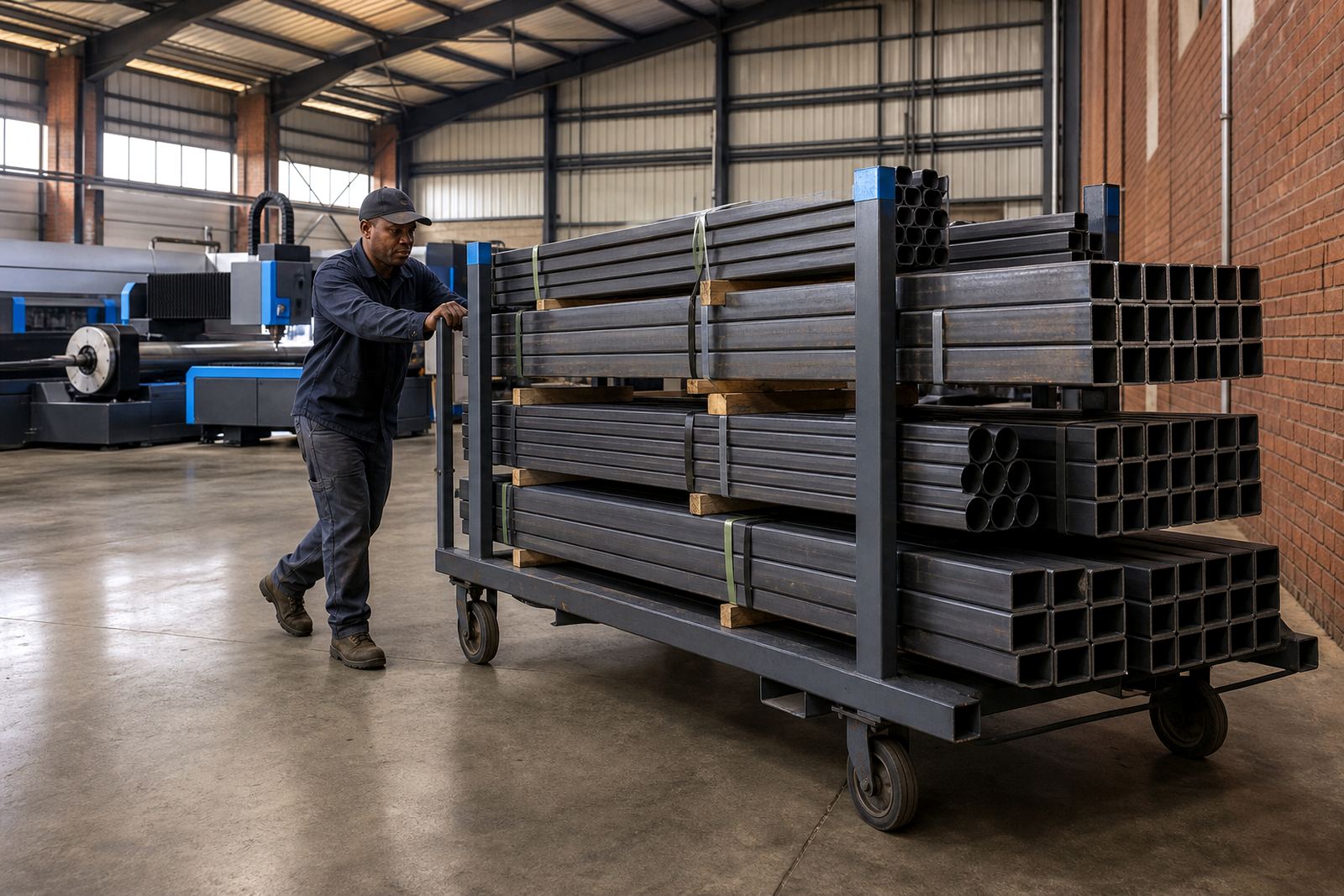
Round, square and rectangular tube behave differently on the machine bed. Angle, channel and other structural sections add their own spacing, clamping and rotation challenges. A nesting plan has to respect those shapes before any cutting path is set.
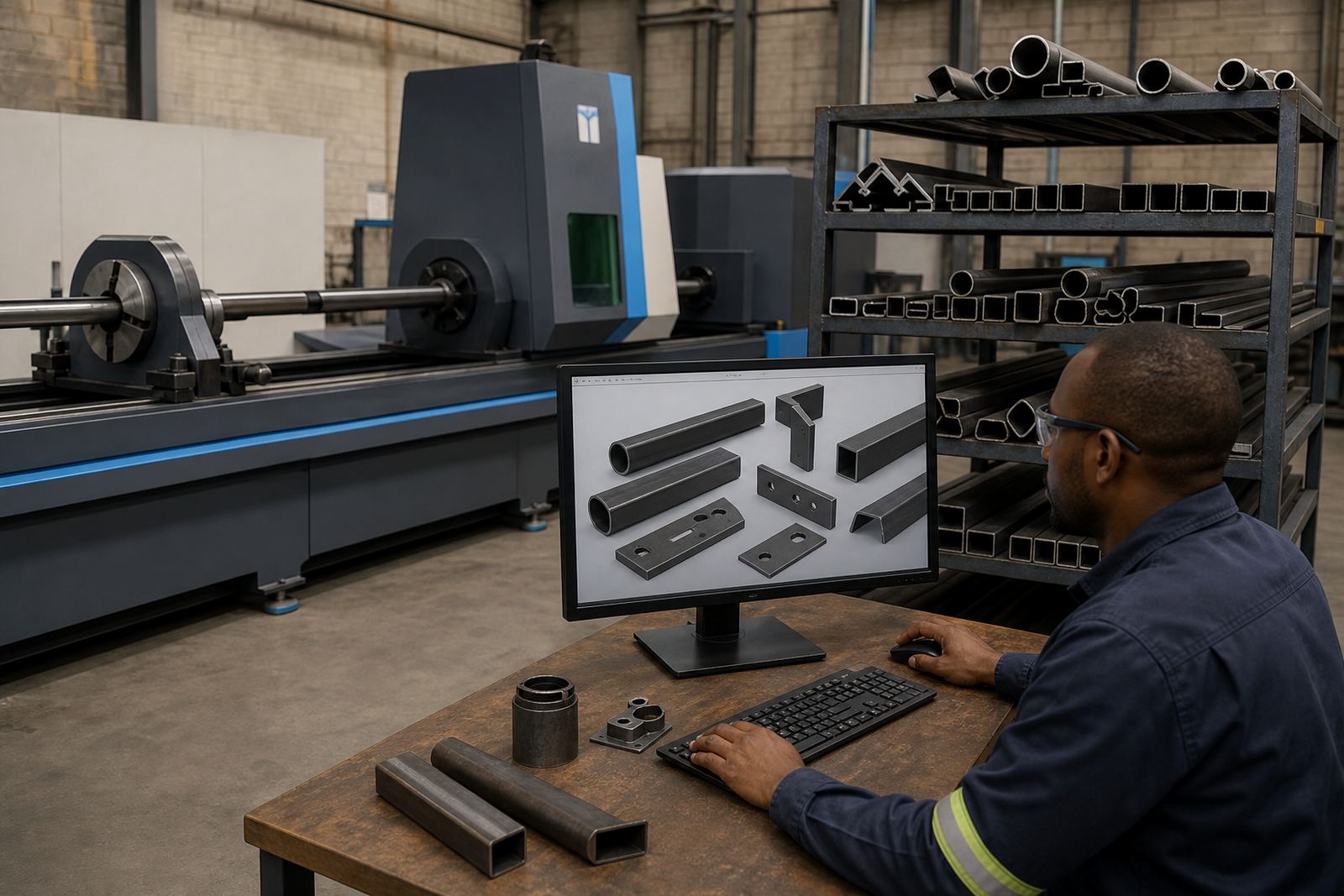
On a fibre laser tube machine, the nesting software decides how each part sits on a length, where the lead in starts, and how the machine moves from one cut to the next. That matters when you are working through mixed orders with different wall thicknesses and lengths, especially where the same bundle has to serve more than one job.
Where waste starts, and how nesting cuts it back
Waste is not only the last offcut on the floor. It also shows up when a full bar is used for a short part, when leftover lengths are not tracked, or when parts are nested without checking how many can fit from one tube. Good nesting keeps the cut list tied to stock on hand, so the operator is not guessing at the machine.
- Parts can be grouped by tube size and wall thickness.
- Shorter components can be placed into remnant lengths first.
- Common holes and slots can be shared across similar parts.
- Cut sequences can reduce unnecessary head movement.
That kind of planning helps a fabrication shop in Wadeville or Durban keep a steadier flow through the day. It also helps with invoice control, because the material used on each job is easier to trace back to the order.
Remnant lengths need a proper record, not a pile in the corner
Tube remnants are easy to lose track of in a busy shop. One length is too short for a main frame member but still useful for brackets, stiffeners or small support parts. If the remnants are not measured, labelled and entered into the nesting process, they stop being stock and become scrap.
A practical system is simple. Mark the remaining length clearly, store it by profile, and keep the nesting file linked to that stock list. When the next order lands, the programmer can see what is available before loading a fresh tube. That is where nesting software earns its place in the workflow, because it turns leftovers into planned material rather than a lucky find.
Chucks, clamps and bevel heads change the way a nest is built
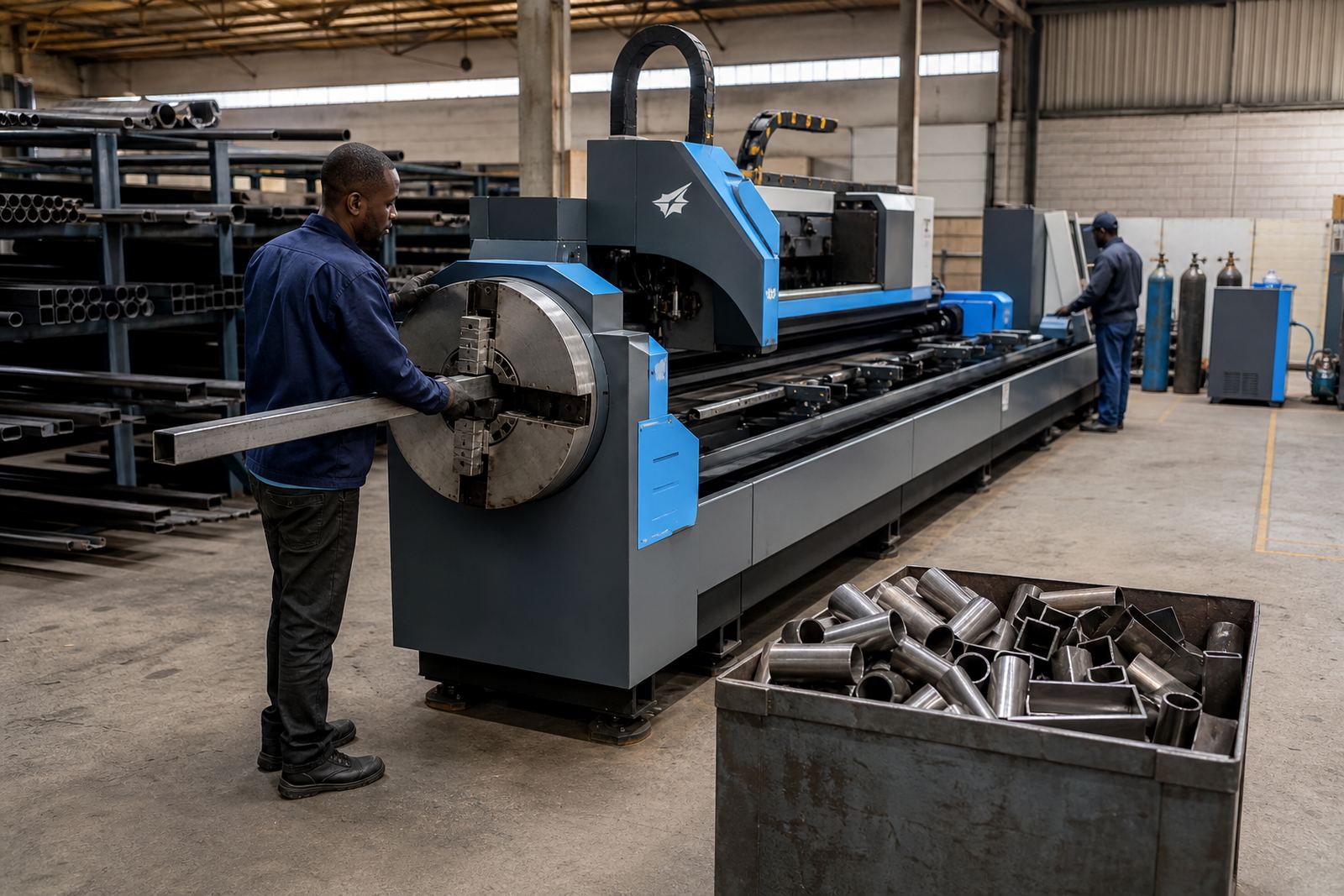
Tube machines use chucks and supports to hold the section steady while the laser head works around it. Some jobs also need bevel cutting for weld prep, which adds another layer to the nesting plan. A bevel cut changes the angle and the available cutting space, so it has to be placed with care.
When the nesting plan ignores machine geometry, the job may fit on paper but not on the tube. An experienced applications specialist will check grip points, part spacing, drop zones and the order of cuts before the run starts. That saves time at setup and helps the operator stay focused on the machine instead of adjusting the job mid cycle.
- Clamping zones must stay clear of cut features.
- Bevel sections need extra room around the cut path.
- Part spacing must suit the machine's chuck movement.
- Support points should not distort thin wall tube.
Assist gas and cut quality are part of the same conversation
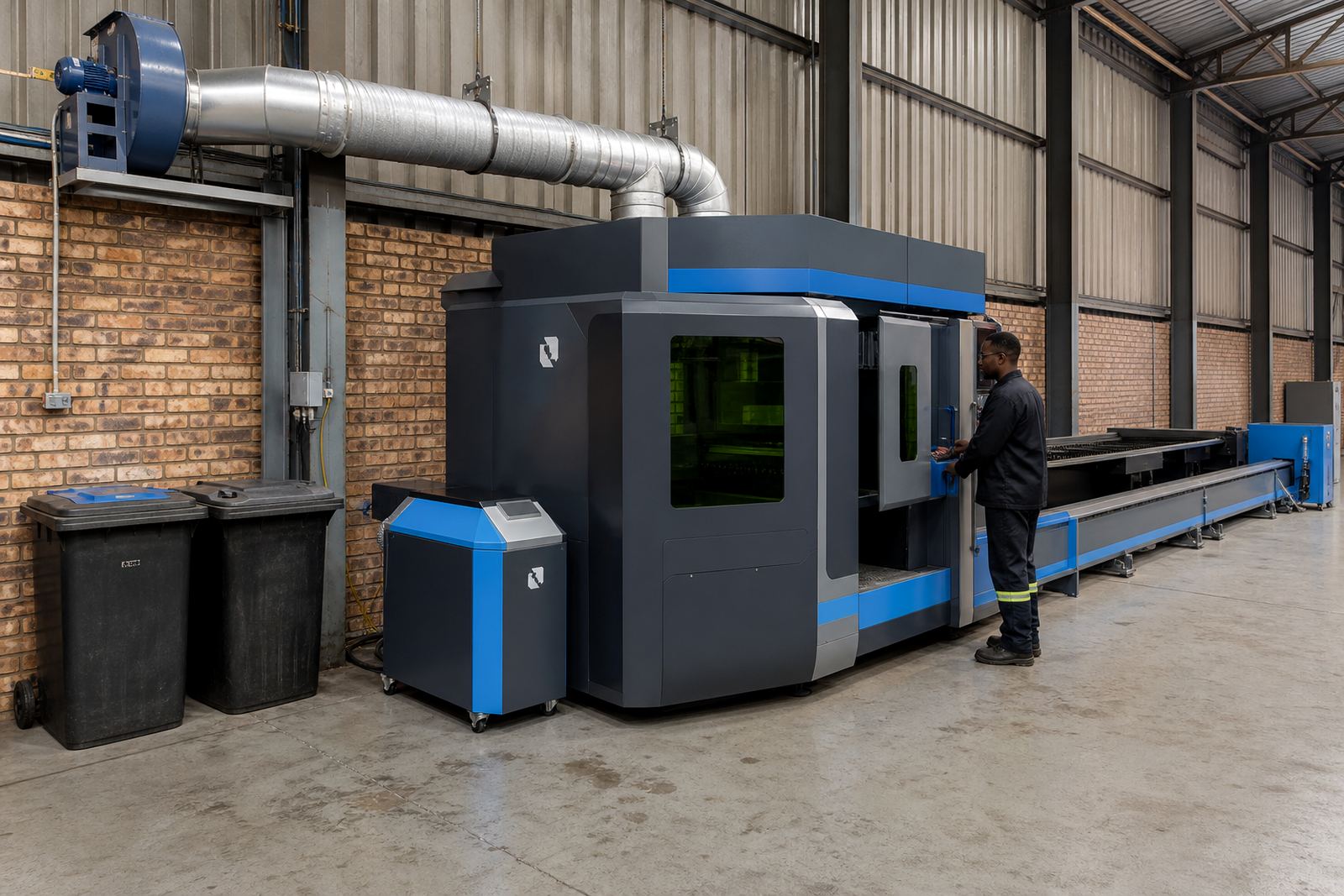
Assist gas affects cut quality, edge finish, dross levels and the clean-up needed at the bench. The right gas setup depends on the material, thickness and finish needed. If the cut plan ignores gas use, the job may still run but it can leave more secondary work than expected.
On stainless tube, carbon steel and aluminium sections, the cutting settings need to match the material mix. A nest that spaces parts well and keeps the head movement efficient will also help the gas use stay predictable. That is important in a plant where production is measured by completed assemblies, not by machine hours alone.
Mixed tube order in Germiston
A small shop in the Wadeville area may receive a mixed order for handrail frames, sign supports and machine guards. The order includes round tube, square tube and a few short channel sections. If the programmer nests each item separately, the job burns through more stock than needed and leaves awkward offcuts behind.
With a planned nest, the shorter items can be pulled into remnant lengths, longer members can be grouped together, and the operator can run the lengths in a cleaner sequence. The result is not magic. It is just better use of what is already in the store room, plus fewer interruptions while the machine is running.
Training turns nesting from a software feature into shop floor discipline
Nesting software only works well when the team knows how to feed it the right information. Tube sizes, wall thickness, part quantities, grain direction where relevant, and remnant lengths all need to be entered accurately. If that step is loose, the best software will still produce a poor plan.
That is why training matters after installation. Operators need to understand how the cut order affects stability, how to check that parts are nested with enough clearance, and when a remnant should be used or set aside. A good training session also covers alarm checks, safe loading, gas setup and the basic signs that a chuck alignment or bevel calibration needs attention.
- Keep remnant records current.
- Check tube dimensions before loading the nest.
- Separate production parts from repair or sample work.
- Review the cutting sequence before each run.
For fabricators in Pretoria, Cape Town, Gqeberha and beyond, that discipline is what keeps nesting useful after the machine has been commissioned and the first few jobs are done.