Mild steel is forgiving until the cut edge is not
Mild steel gives fabricators a wide working window, which is one reason it stays common in tube cutting. Round, square and rectangular tube, plus angle and channel, all behave differently once they reach the chuck and head, so the machine setup has to match the material, wall thickness and cut path. A light frame member may cut cleanly with very little fuss, while a heavier section can show dross, edge rounding or heat mark if the piercing and gas settings are off.
For shop work, the biggest trap is assuming all mild steel jobs will cut the same way. A flat plate program can look tidy on screen and still leave corner distortion on a tube if the clamping points are not checked properly. When the job includes mitres, slot features or repeated holes, the order of operations matters as much as the design itself.
- Check tube straightness before loading.
- Keep wall thickness grouped by cutting setup.
- Watch where clamps sit near short features.
- Allow space for heat on longer runs.
Chuck grip and alignment decide a lot more than people expect
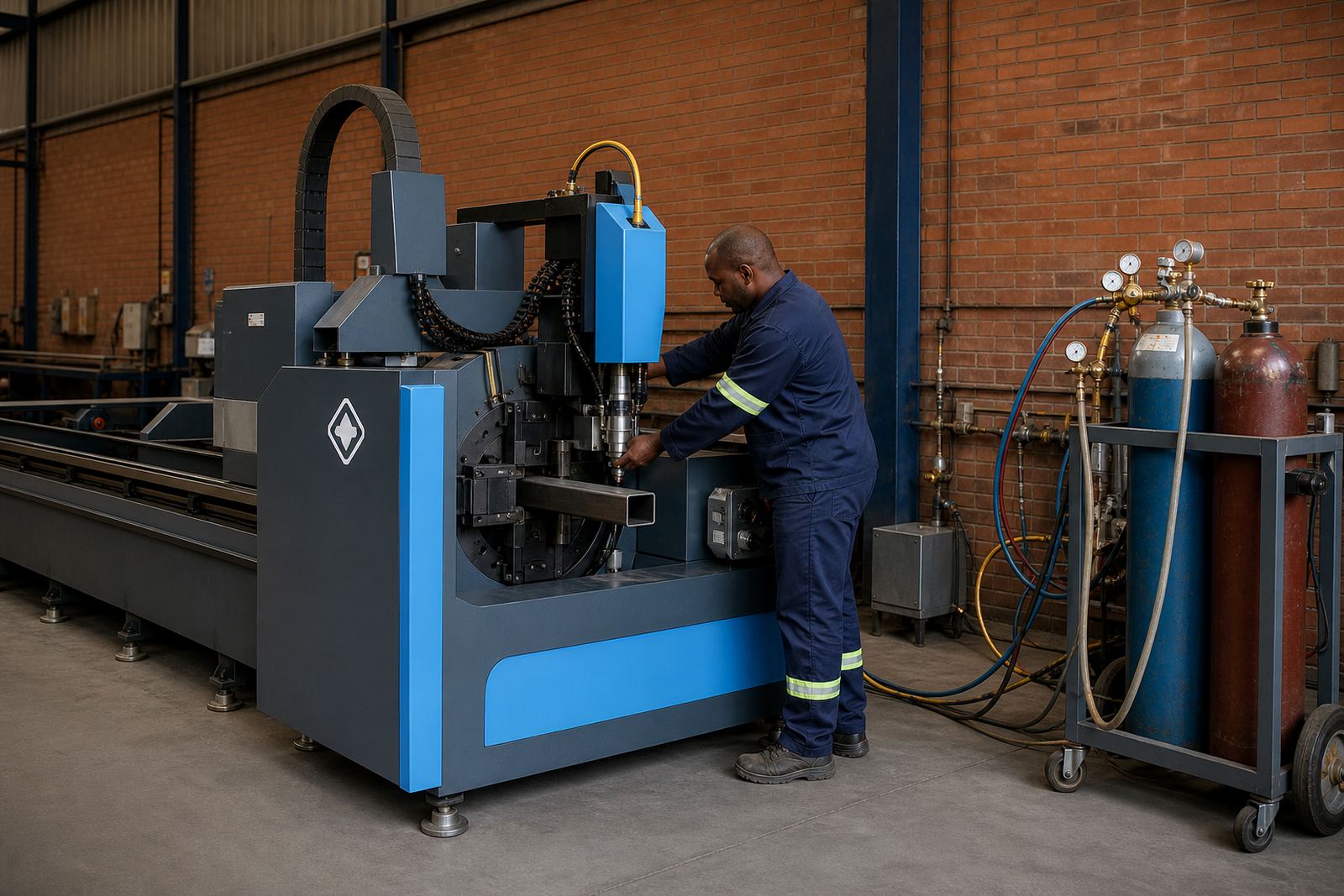
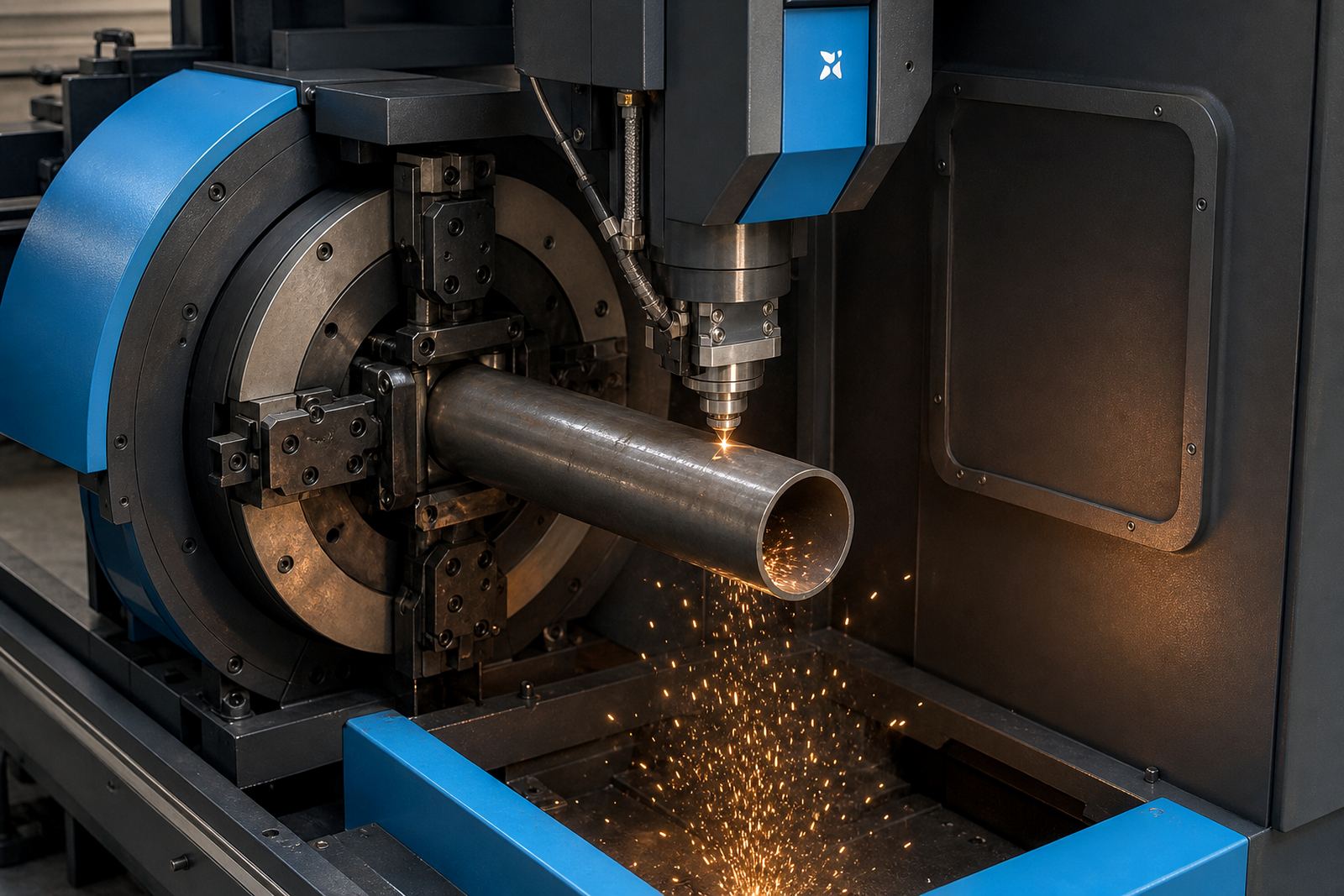
With fibre laser tube cutting, the chuck system does the heavy lifting before the beam even starts. If the grip is poor, the tube can shift, rotate out of true or leave a small witness mark that becomes a fit-up problem later. That matters on fabricated frames, gate sections, agricultural tubing and steelwork where holes and tabs must line up in the next workshop step.
Chuck alignment also affects repeatability. A slight offset on the first piece can turn into a full batch of parts that need hand finishing. In a Durban environment, where coastal humidity can sit on stored material and increase surface staining, careful loading and a dry storage area help keep mild steel consistent enough for clean work. Small habits around cleaning, support rollers and check points reduce trouble on the floor.
- Use supports that suit the tube length and weight.
- Inspect jaw faces for wear or debris.
- Recheck grip after material changes.
- Keep a note of any recurring clamping marks.
Nesting for mild steel should favour weldability, not only sheet saving
Good nesting on mild steel is not just about squeezing more parts onto the bar or tube. It also needs to leave sensible bridges, suitable lead-ins and enough room for heat to move without pulling the job out of square. On production runs, that becomes important when the cut parts must go straight to welding jigs or assembly tables.
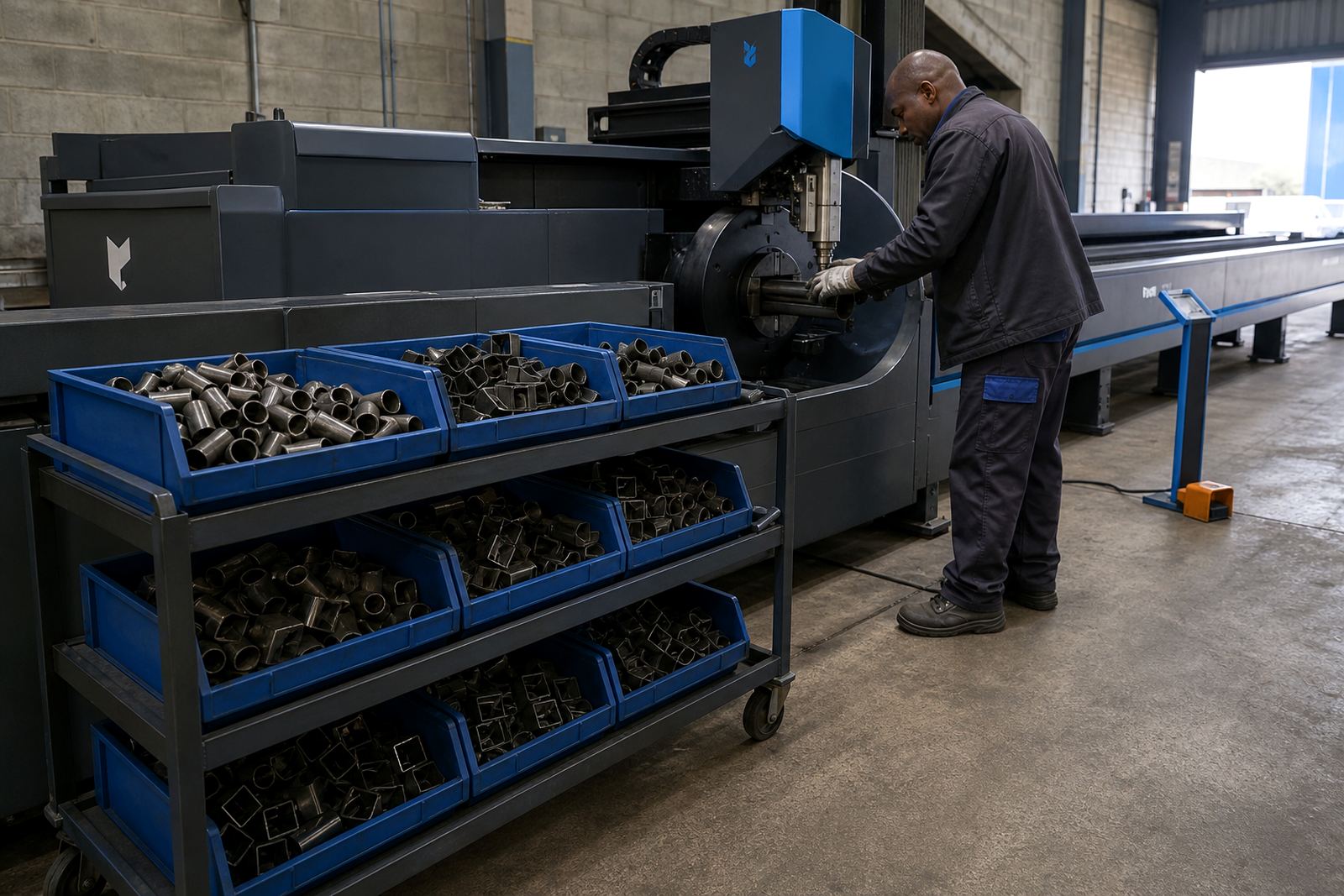
Nested patterns for tube and profile work often include slot tabs, registration holes and matching cut angles. If the nesting software is rushed, small savings in material can create larger losses in fitting time. A cleaner layout usually gives better edge quality and steadier output, especially when the batch includes mixed part sizes or different tube lengths.
- Group parts by wall thickness and section size.
- Keep heat-sensitive cuts away from long unsupported spans.
- Leave room for part marking and traceability.
- Balance material use against weld shop handling.
Assist gas choice changes the edge in plain sight
Mild steel reacts clearly to the assist gas used during cutting. Oxygen can support faster cutting on many jobs and may leave a different edge profile, while nitrogen is often chosen where a cleaner, oxidation-free edge is needed. The right choice depends on thickness, edge appearance, downstream welding and the finish expected by the fabricator.
Gas setup also affects pierce quality and the amount of cleanup after cutting. If pressure, flow and nozzle condition drift, the result can be rough striations or extra dross at the base of the cut. That shows up quickly on visible parts like furniture frames, access platforms and machine guards. On tube work, consistent gas delivery becomes even more important where internal corners and small openings trap debris.
For mild steel, the machine operator needs a practical routine, not guesswork. Check the gas route, keep consumables in order and treat the first few pieces as test pieces before the full batch runs.
Bevel heads and formed joints need more than a sharp beam
Some mild steel jobs call for bevel cuts so welded joints open properly. That can help with penetration on thicker tube or section, but bevel work is less forgiving than straight cutting. Angle, channel and rectangular tube may all need different approach angles depending on joint layout and final assembly method.
When a bevel head is in use, the machine setup must account for kerf, approach path and edge clean-up. If the calibration is off, the joint can close unevenly and leave a weld gap that forces extra grinding later. On site, this often shows up as a batch of parts that look acceptable at first glance but refuse to fit neatly on the weld bench.
A good operator watches the cut face, not only the drawing. Mild steel tells the story in the edge, and the edge tells the story of the settings.
A Germiston job can set the tone for the whole week
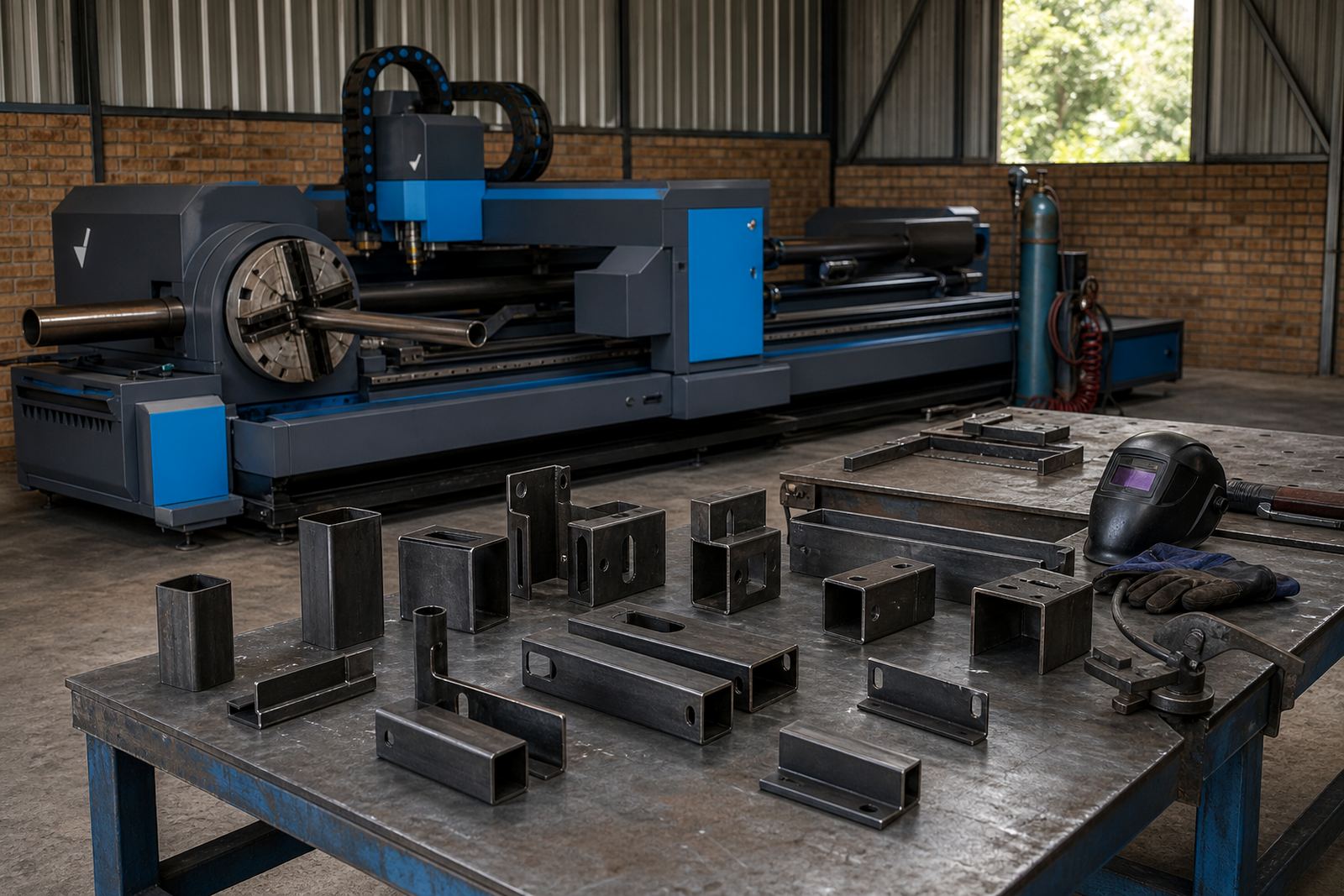
In Wadeville, it is common to see mild steel tube jobs running for local fabrication, then moving out to larger plants in Johannesburg, Pretoria or even coastal sites further afield. A typical order may include frame members, support brackets and cut tube sections for guards or racking. The machine has to keep shape, finish and batch consistency together from the first part to the last.
Installation, operator training and scheduled servicing are what keep the machine performing properly on mild steel work. A laser tube machine is only as useful as the people loading material, checking chucks and setting up the cut programme. When the service routine includes chuck alignment, bevel calibration, assist gas setup and nesting training, the shop gets more control over mild steel work and fewer surprise corrections at the welding stage.
- Train operators to spot clamp marks early.
- Keep a maintenance log for nozzles and jaws.
- Use sample cuts after major material changes.
- Match the cut sequence to the weld sequence.