Start With The Shapes That Fill Your Order Book
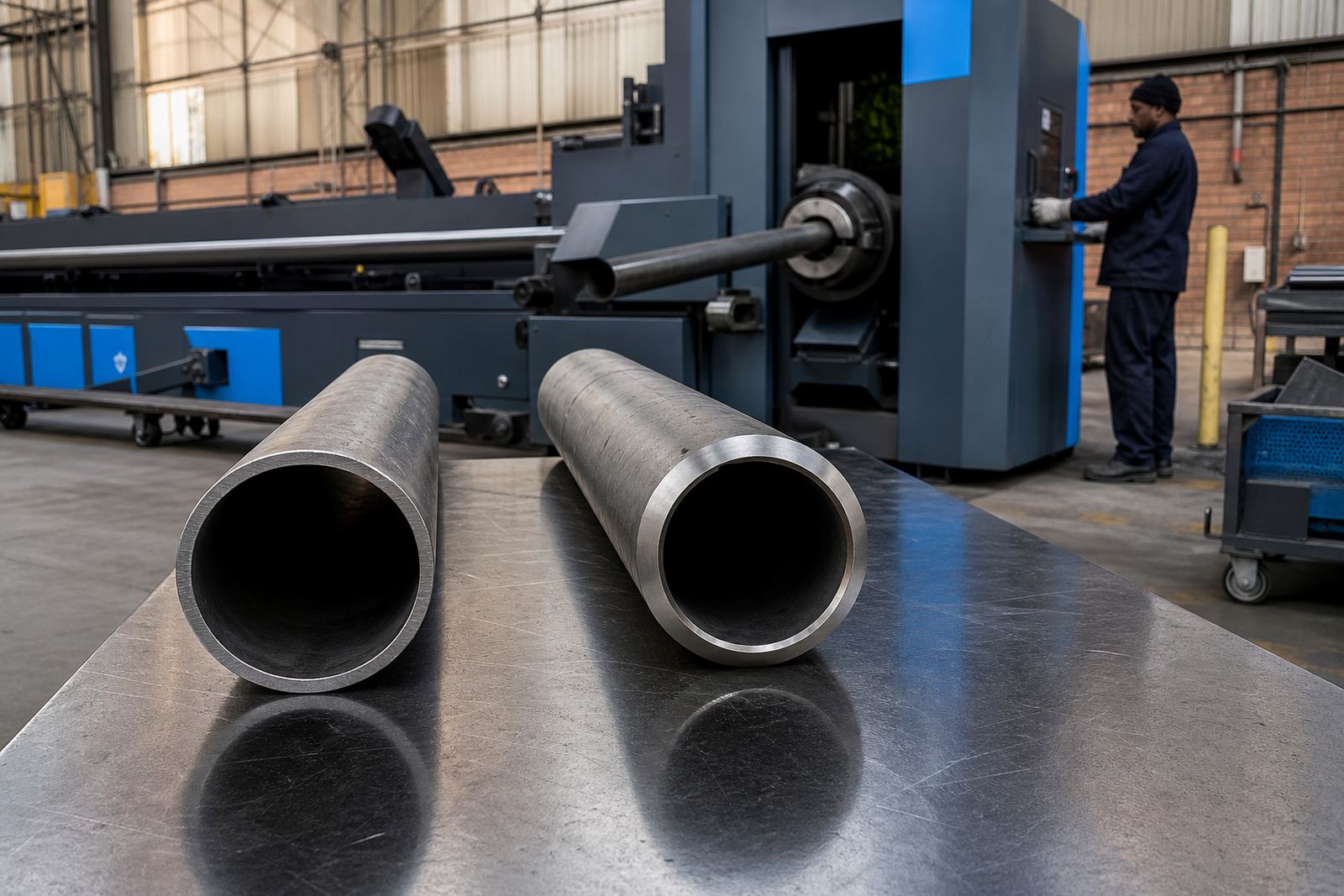
Round tube is usually the cleanest place to begin because it is easier to feed, clamp and rotate. If your work is mostly handrails, frames, exhaust parts, poles or agricultural tubes, a round-focused machine can be the tighter fit. It gives you the parts you use most often without paying for extra complexity that may sit idle.
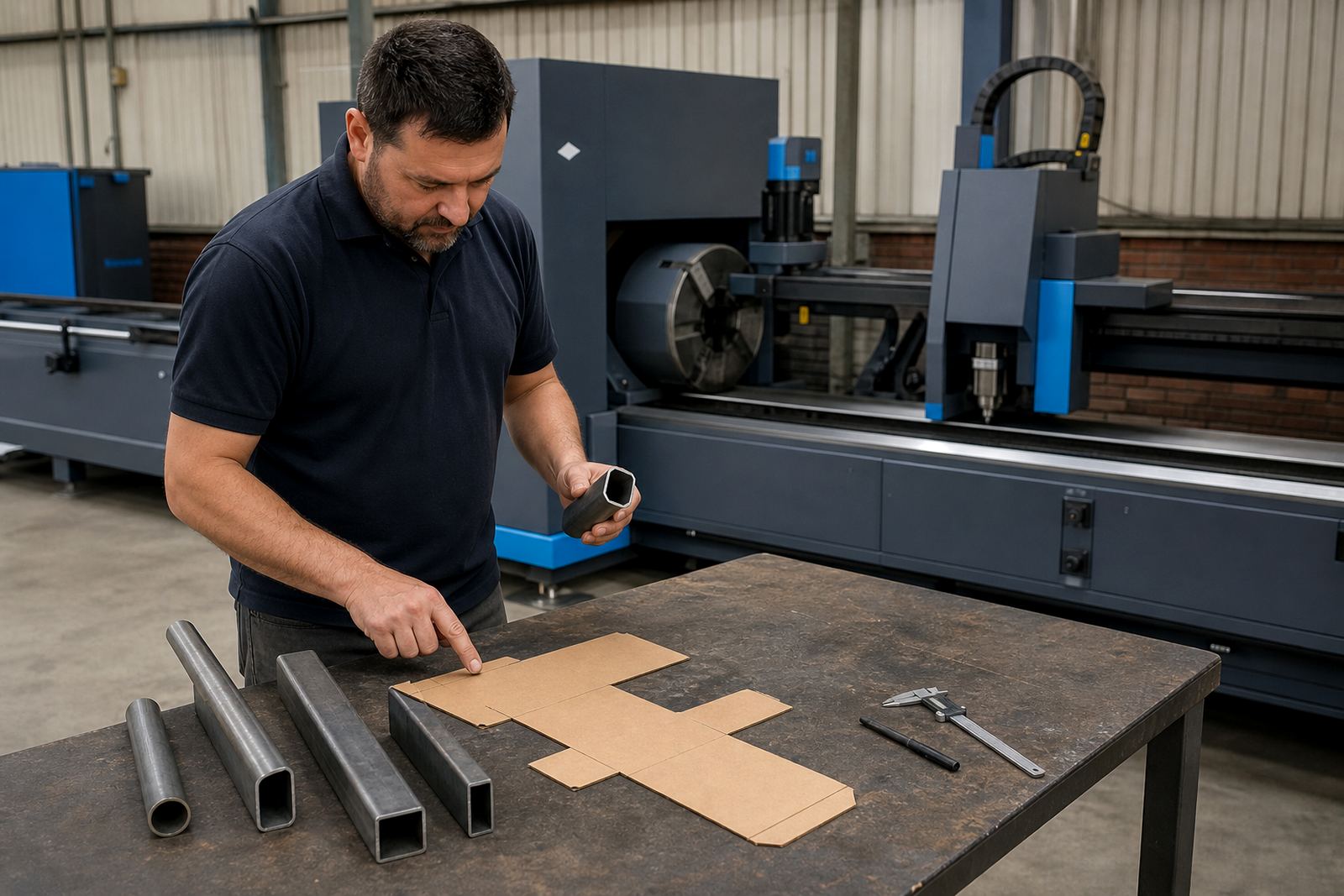
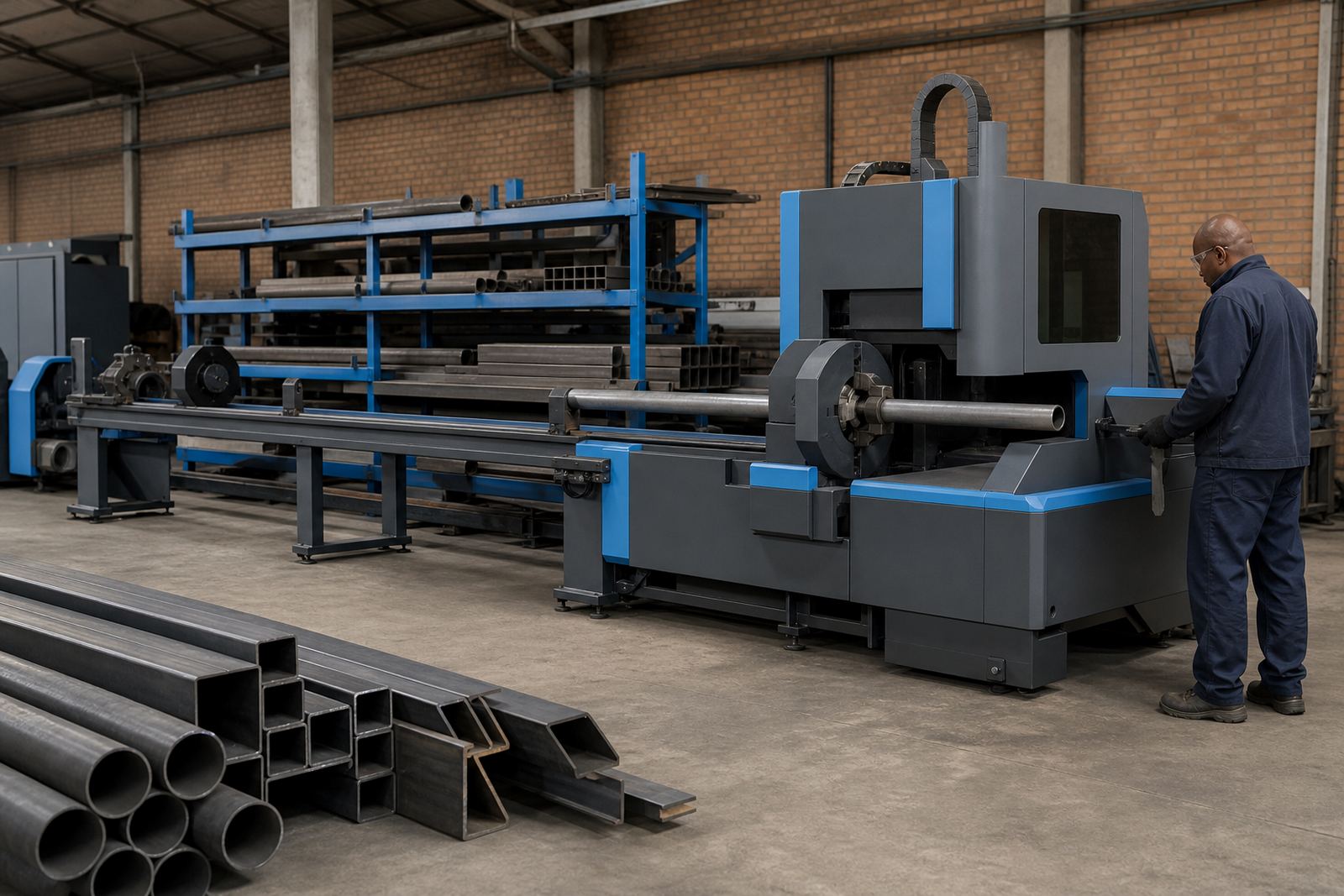
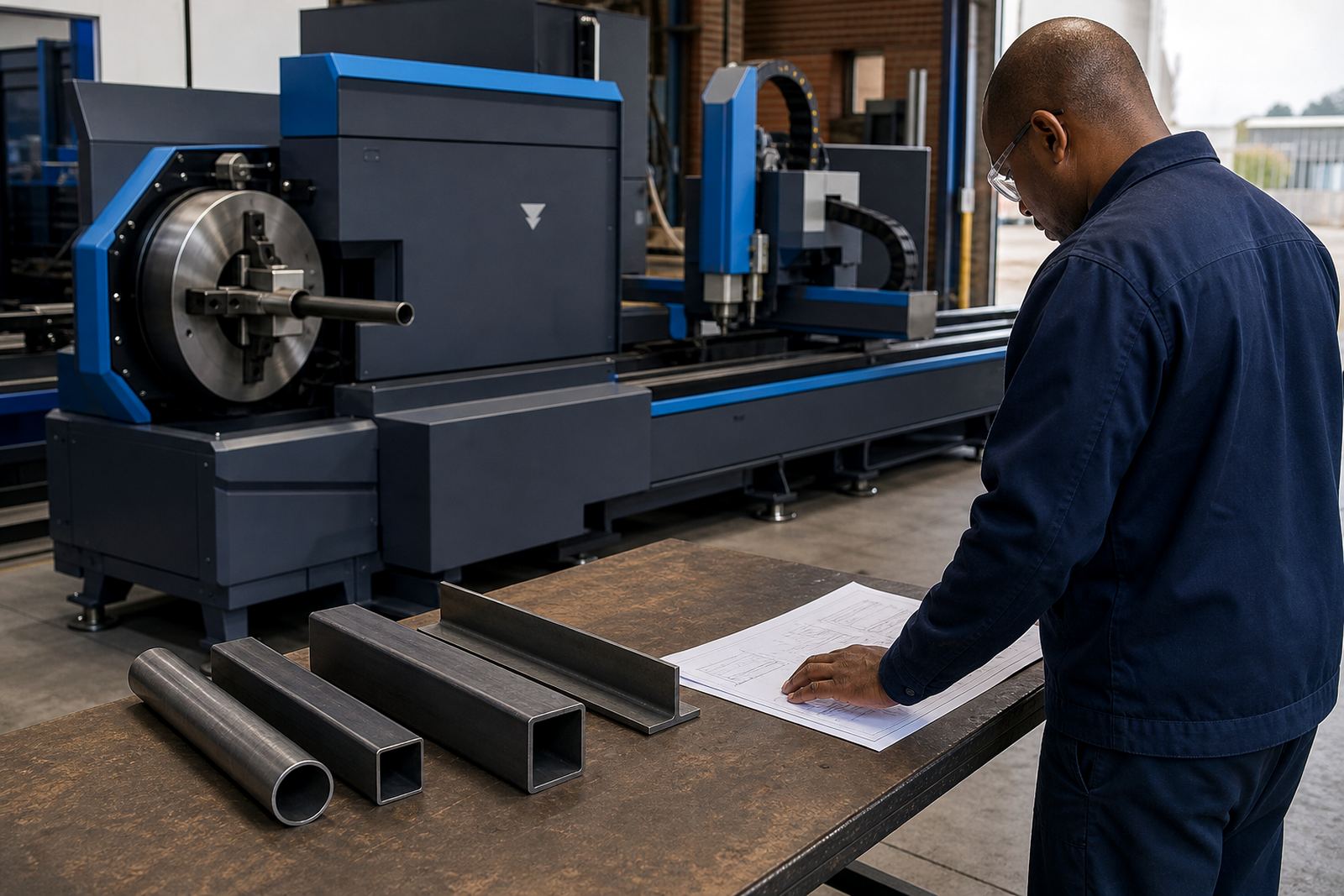
Mixed-profile machines are built for shops that cut round tube one hour, then square, rectangular, angle or channel the next. That range matters when a fabricator serves many clients or handles contract work with changing drawings. On those jobs, the machine must keep its grip on different section shapes and still hold cut quality when the profile changes through the day.
- Round-focused suits repetitive round tube production
- Mixed-profile suits varied structural and fabrication work
- More profile types usually mean more setup steps
- Higher mix can justify extra machine flexibility
How The Clamping And Rotation System Changes The Job
The chuck system does more than hold the tube. It keeps the part centred, supports rotation and helps the cut follow the line accurately from one end to the other. On round tube, the clamping can be straightforward. On mixed sections, the machine needs to handle flats, corners and offset weight without letting the part twist under feed pressure.
A mixed-profile machine proves its value in this kind of work. The chuck design, support rollers and software settings have to work together so the operator can move from a round part to a square or rectangular section with fewer stops. Angle and channel add another layer, because open sections can flex differently and need careful support during loading and cutting.
At LaserTube in Wadeville, Germiston, the installation team looks at how parts are loaded, where the cut pieces land and how the operator moves around the machine. That matters just as much as the cutter itself, especially in busy plants where a poor layout slows the whole line.
- Check how the machine grips round and open sections
- Look at support for long tubes and lighter wall thicknesses
- Confirm the loading path suits your workshop space
- Plan for offcuts and finished parts to clear safely
Bevel Heads, Nesting Software And Cut Planning
If your product mix includes joints that need better fit-up, a bevel head can save finishing time. It allows angled preparation on the tube end, which helps where parts must weld cleanly or meet another section at a controlled angle. Mixed-profile work often benefits more from bevel capability because the drawings are less repetitive and the joint types vary more.
Nesting software also matters. A round-focused shop may use a straightforward nesting pattern with repeatable tube lengths and fewer part types. A mixed-profile shop usually needs smarter part grouping, better use of remnants and clearer control over which profile is cut next. Good nesting keeps the machine busy and helps reduce waste, but only if the operator understands how to load the job properly.
Assist gas choice forms part of the same decision. Oxygen, nitrogen or air may be used depending on material, finish and edge quality requirements. The setup must suit the steel grade, wall thickness and the look you need off the machine.
A Practical Decision Check For Your Workshop
The best way to decide is to map what you cut now, not what you hope to cut one day. Look at the last few months of jobs and ask how many were round tube only, how many mixed profiles, and how often the drawings changed mid-run. If the answer shows stable round work with little variation, a round-focused machine can be enough. If the work mix shifts often, mixed-profile flexibility starts to carry more value.
Also weigh changeover time against operator skill. A highly mixed workshop needs a machine that is easy to teach and easy to repeat. A simpler round line may suit a shop with steady production and a smaller crew. Installation, operator training and nesting training all help the team use the machine properly, but the machine must still match the way your floor works.
- Count how many jobs need only round tube
- List the other sections you cut each month
- Measure typical tube length and wall thickness
- Note whether bevel cuts are routine or occasional
- Check if your operators handle frequent changeovers
Safety, Assist Gases And Workshop Controls
Tube cutting brings sparks, moving parts and compressed gas into the same working area, so safe layout is not a side issue. Guards, extraction, clear walkways and marked loading zones all help, and the machine should be placed so operators can see the cut area without leaning into danger. Mixed-profile machines often need a little more attention here because the loading pattern changes more often and the part shapes can be less predictable.
Assist gas setup should be checked during commissioning and again after any major process change. If the gas flow, pressure or delivery path is wrong, cut quality drops and the operator starts compensating at the machine. That leads to inconsistent edges, more rework and extra wear on the process.
For fabricators in Johannesburg, Pretoria, Durban, Cape Town and Gqeberha, the right setup also has to suit the workshop environment. Coastal humidity, dust and daily handling all affect maintenance habits, so preventive checks matter whether you run a round line or a mixed-profile line.
When round-only is enough, and when mixed profiles pay off
A round machine is often the right answer for a shop that makes the same families of parts month after month. It is easier to explain, easier to run and usually easier to keep productive when the workload is predictable. If your main output is round tube, and square or rectangular sections only appear now and then, paying for wider profile handling may not be the best use of budget.
Mixed-profile equipment makes more sense when the market pulls you in several directions. Structural fabrication, equipment frames, access systems and general metalwork often need round, square, rectangular, angle and channel in the same week. In that setting, a machine that handles all of it with proper chuck control, good nesting and optional bevel work can reduce bottlenecks and keep the team moving.
LaserTube supplies fibre laser tube and profile cutting machines from Wadeville, Germiston to fabricators across South Africa, with site assessment, delivery rigging, machine installation, commissioning, operator training, nesting training and preventive maintenance. Michael Dlamini leads the business with Anika Kajee, Sibusiso Bhengu, Leanne Mabuza, Pieter Visser and Ayanda Mashaba working across support, installation and applications.