Start with the work your shop actually cuts
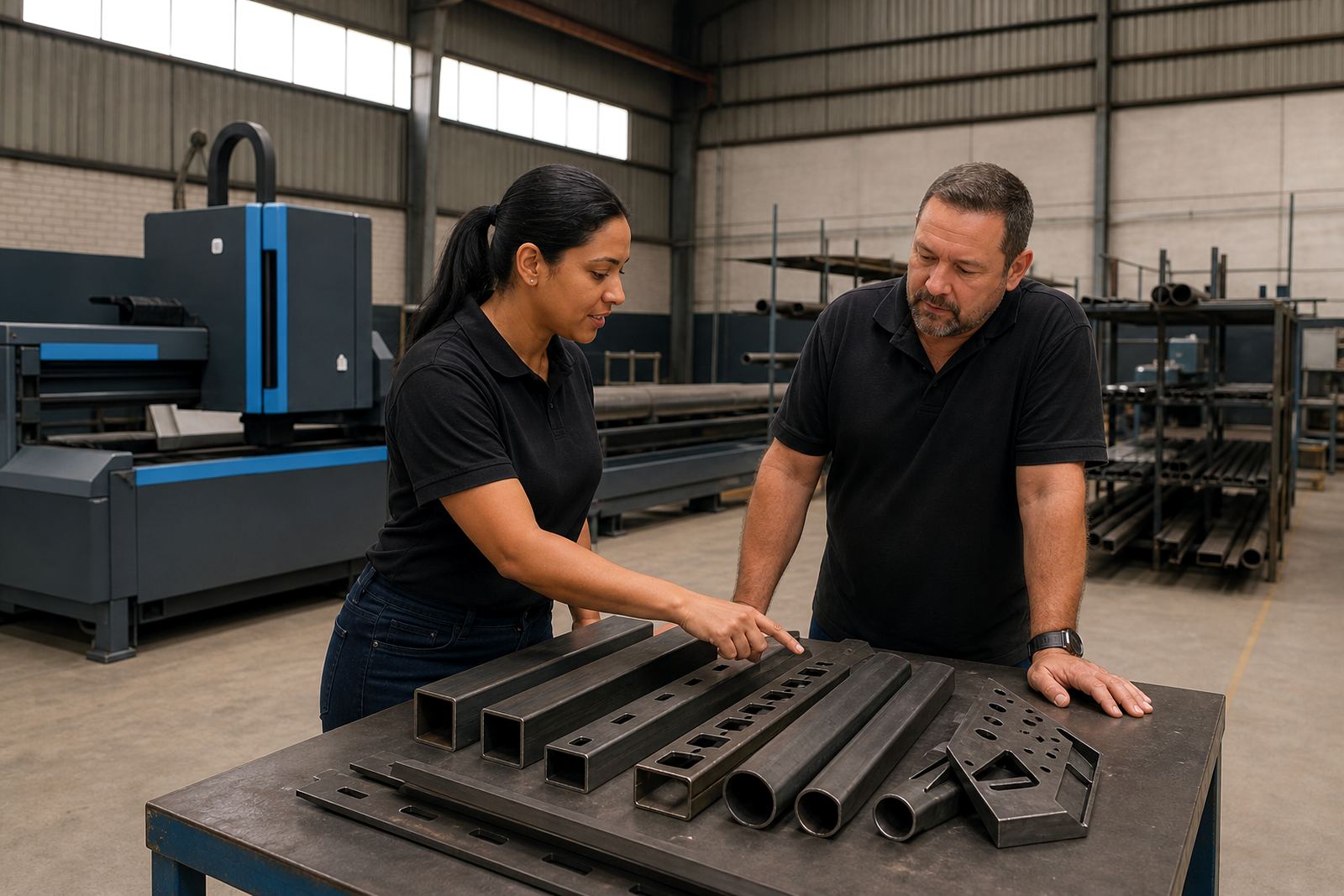
Before looking at machine size, list the parts that leave your floor every week. A workshop that mostly cuts handrail tubes, light brackets and short lengths has a different need from a plant feeding frames, furniture parts or structural sections. The machine should suit the largest common section, the usual wall thicknesses, and the longest stock length you plan to load.
For first-time buyers, it helps to group jobs into three buckets: repeat work, occasional oversized work and problem jobs that are slow on manual saws or drills. A fibre laser tube cutter earns its place when those jobs are common enough to justify setup time, operator training and nesting. If the work is mostly flat plate, a profile machine may be more useful than a tube-only model, while mixed production often calls for a system that handles both tube and profile cutting.
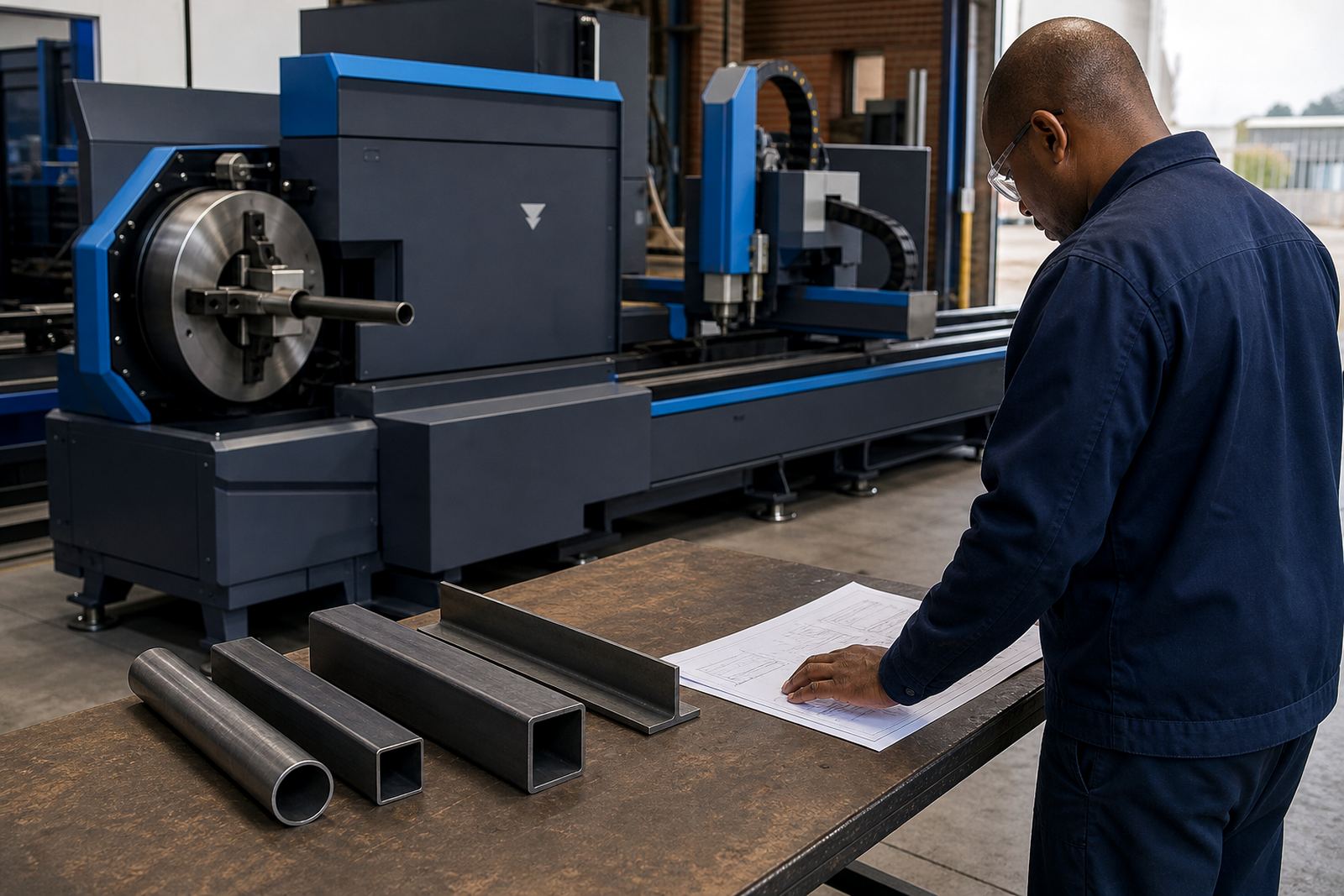
Write down the materials you cut most often, the finish required at the end of the cut, and whether you need mitres, slots, holes or notches in one operation. That list gives the supplier a proper starting point, rather than a broad request for a machine that can do everything.
Match the chuck and loading style to your tube sizes
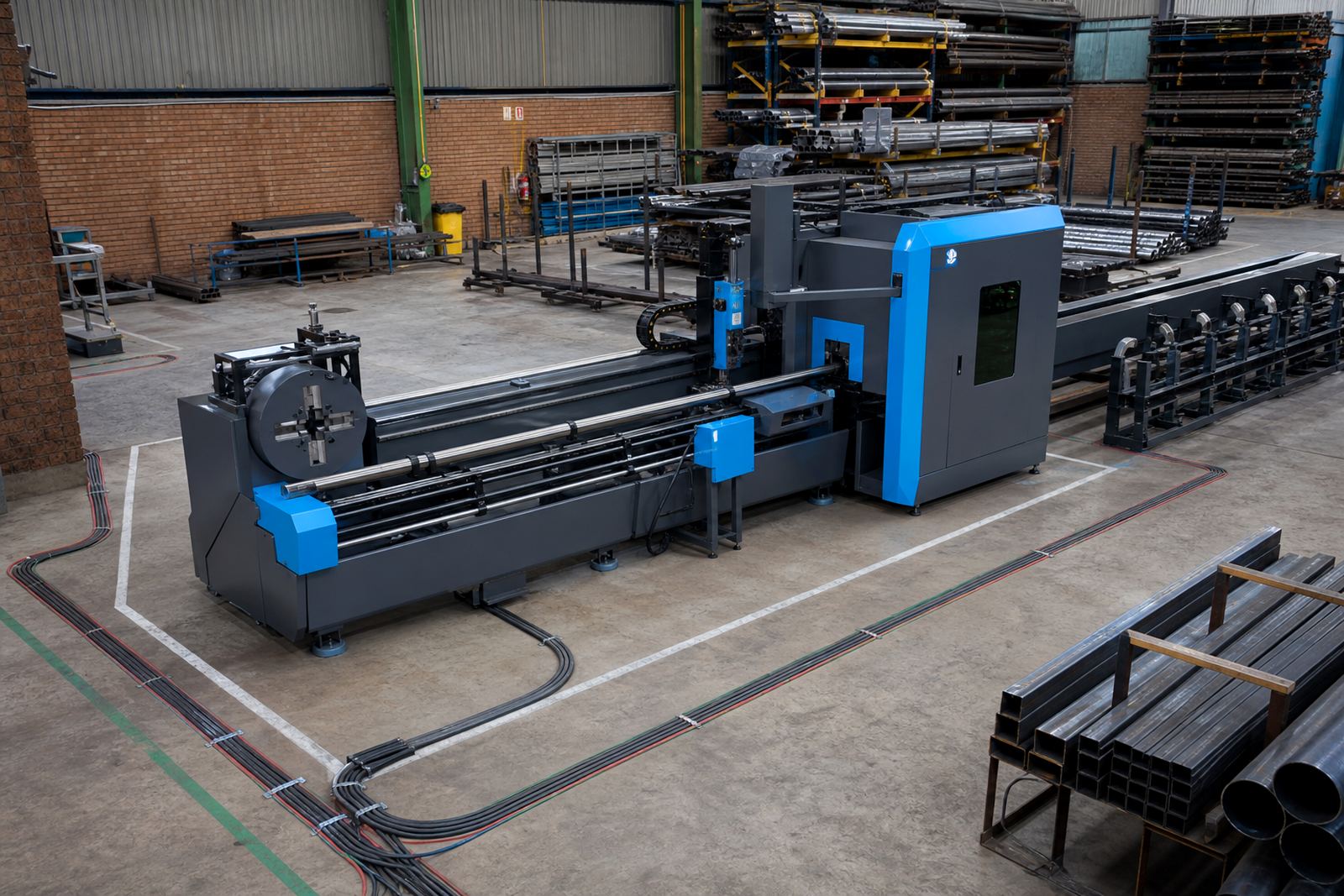
The chuck system controls how the tube is held, rotated and fed through the machine. For small workshops, the question is not just how much the machine can cut, but how quickly operators can load, clamp and change between jobs. A stable chuck is important on round tube, square tube and rectangular tube, while angle and channel need extra attention to support and clamping.
Look at the shortest cutoff length you need to keep, the heaviest section you plan to load, and how often the shape changes during the day. Twin chuck systems suit many fabricators because they support longer material and help hold accuracy over the full cut path. A first machine should feel manageable for the people using it, not awkward or over-specified.
- Check the tube size range you use most often.
- Ask how the chuck grips thin wall sections without marking them.
- Confirm how easily operators can load and unload longer lengths.
- Make sure the support system suits angle and channel, not only tube.
- Confirm the minimum remnant length that still stays usable in your workflow.
Bevel heads, cut quality and the joints you want to make
Some workshops need straight cuts only. Others need bevels for weld prep, fishmouth joints or better fit-up on fabrication work. A bevel head adds capability, but it also adds setup discipline. If your team does not need angled edges, a simpler machine can be easier to run and maintain. If you do need bevels, the machine should handle calibration clearly and repeat the angle without constant correction.
Cut quality also depends on how the machine handles edge finish, hole size and profile distortion on thinner material. A first-time buyer should ask to see sample parts from the same type of tube they use, not only polished examples. It is worth checking how the machine performs on short parts, repeated holes near bends, and sections with tight spacing between features.
Bevel work on tube and profile often needs a careful fit between software, mechanical alignment and the way the operator loads material. That is where training matters. A machine can have the right head, but without the right setup the cuts drift and the joint fit suffers.
Software should fit the person nesting the work
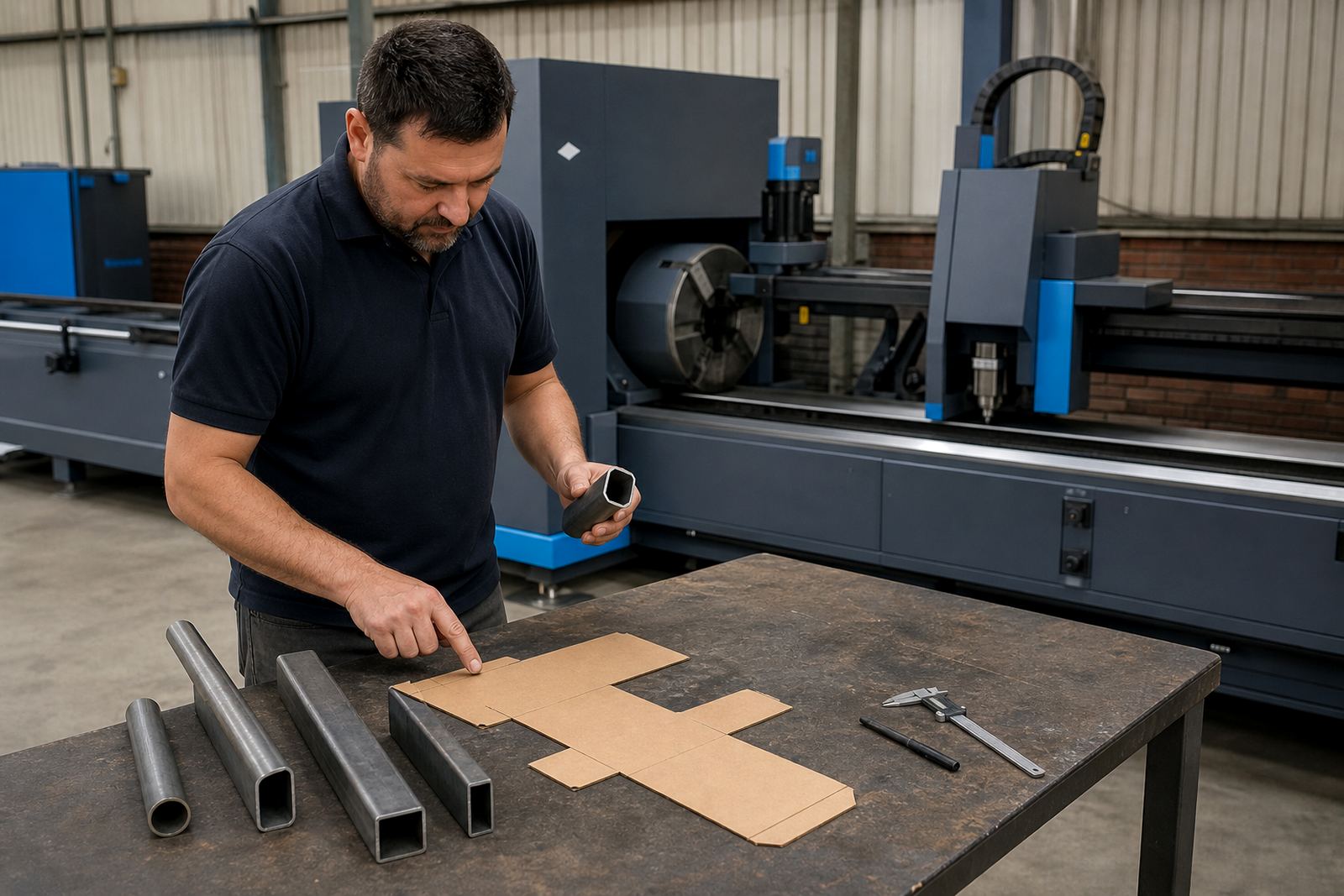
First machines often change the way jobs are planned. Good nesting software helps the operator place parts on the raw tube or profile with less waste and fewer clashes. For a new workshop, the software must be readable, practical and suited to the parts you make most. It should help with part rotation, common cut libraries and material use, not just look impressive in a demo.
If the same team member who quotes or plans the job also handles the cutting, software clarity matters even more. Ask how part files are loaded, how nests are changed, and whether the operator can make small corrections without upsetting the whole job. Remote diagnostics can help with service issues, but the day-to-day goal is straightforward part preparation and repeatable cutting.
- Confirm how part files are created and imported.
- Ask whether nesting supports tube, profile and mixed job lists.
- Check how scrap offcuts are tracked and reused.
- Look at how the machine stores repeat jobs for later runs.
- Make sure the screen layout suits operators under workshop conditions.
Assist gases and safety need proper planning, not guesswork
Assist gas affects cut edge quality, slag, speed and surface condition. Different materials and thicknesses need different gas settings, and the setup should be planned with the machine supplier before installation. Gas delivery, pressure control and safe storage all matter, especially where the workshop is already busy and floor space is tight. A first machine needs a setup that your team can keep consistent.
Machine safety includes more than the enclosure. It also covers guarding, interlocks, extraction, marking out the loading area and clear habits around tube handling. Workshops in Wadeville, Germiston and across Gauteng often work close to other moving equipment, so the machine layout should protect operators and keep walkways clear. If the job site is in a coastal area like Durban or Gqeberha, moisture and salt air also call for sensible care of exposed parts and routine maintenance.
Ask for a layout that makes maintenance access practical, with enough space for loading, cleaning and service checks. That reduces frustration later and helps the machine stay accurate through daily use.
Include installation, operator training and maintenance in the purchase
A first fibre laser tube cutter should be bought with the full setup in mind. Delivery rigging, installation, commissioning and operator training all affect the first months of use. If the machine arrives but nobody knows how to align the chuck, set the gas, or load the first nest properly, production slows down. That is where a structured handover matters.
For workshops in Johannesburg, Pretoria, Durban, Cape Town, Gqeberha, Bloemfontein and Nelspruit, the site conditions can differ a lot. Floor level, access doors, lifting space and storage for consumables all shape the install. Discuss preventive maintenance, chuck alignment, bevel calibration and breakdown support upfront, before installation starts, so they are planned properly from the beginning.
LaserTube works with fabricators from small job shops to production plants across South Africa, from the base in Wadeville, Germiston. The team includes Michael Dlamini, Anika Kajee, Sibusiso Bhengu, Leanne Mabuza, Pieter Visser and Ayanda Mashaba, each focused on a different part of the setup, training or service path. That matters when a first machine has to move from delivery to real production without wasted time.
A first-machine checklist for your shortlist
Confirm each of these before settling on a machine size or layout. It keeps the decision tied to your real work and avoids buying capability you will not use in the first year.
- Largest tube, profile and wall thickness you cut most often.
- Whether you need straight cuts only, or bevel capability too.
- How many operators will load and run the machine.
- Whether the floor space allows safe loading and service access.
- How much nesting work must happen in-house.
- Which assist gases you plan to use and how they will be supplied.
- What maintenance tasks your team can handle and what needs service support.
When those answers are clear, the first machine choice becomes far easier. The right setup should fit your parts, your floor and your operators, not force the workshop to reshape itself around the machine.