When bevel capability earns its place
Bevel cutting is useful when your parts need welding preparation straight off the machine. On round tube, square tube, rectangular tube, angle and channel, a bevel head can put the edge where the fitter needs it instead of leaving that work for grinding or flame prep. That matters on frames, handrailing nodes, structural members and any job where the weld has to sit neatly into the joint.
Bevel cutting brings added setup time, more programming, tighter chuck alignment and closer attention to material condition. If your work is mostly end trims, saddle cuts, slotting or simple notches, straight cutting may still be the better fit. The right answer depends on the parts you make most often, the way they are welded, and how much finishing labour is sitting after the laser table.
Cases where straight cutting usually stays enough
Many fabrication shops can run a long way with straight tube cutting only. If your main work is shelving frames, conveyor guards, support members, machine frames or cut-to-length tube packs, a bevel head can sit idle more than it works. In those cases, a solid tube machine with good chucks, nesting software and stable assist gas setup usually gives better value.
- Parts are joined with square butt welds and no bevel prep is needed.
- The shop wants fast repeat cutting on standard sections.
- Most drawings call for slots, holes, fish mouths and mitres.
- Operators need a simpler setup for mixed day-to-day work.
For these jobs, the gain comes from repeatability, clean edge quality and steady material handling not from adding another axis that may never be used.
What bevel cutting changes on the machine
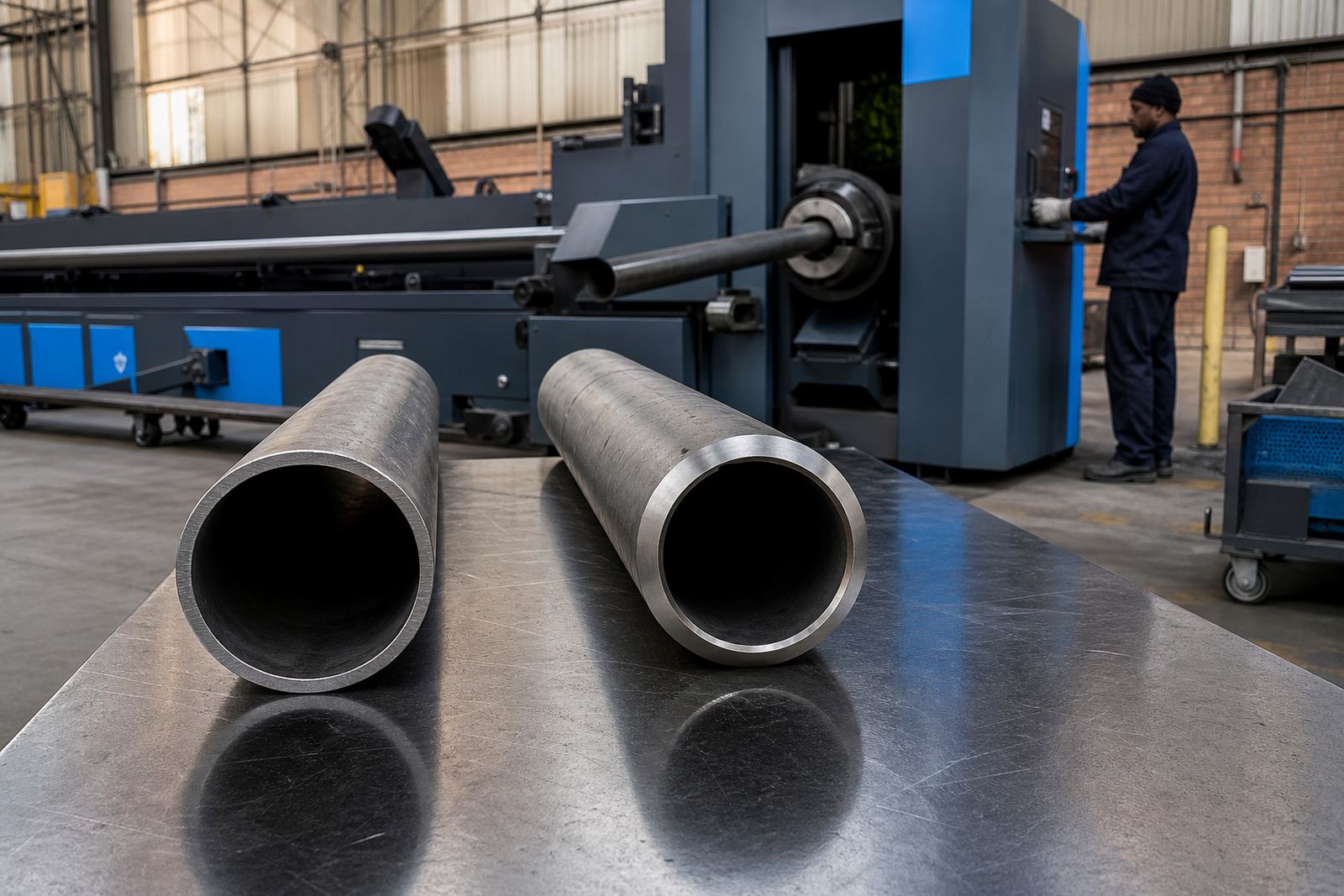
A bevel head changes both the cutting path and the way the machine is set up. The software must handle angle, direction, pierce points and part orientation so the bevel lands on the correct face. Chuck alignment matters more, because a tube that sits slightly off can throw the angle off along the full length of the part. On profile cutting, the same care applies when working with angle and channel sections that need a defined weld edge.
Assist gas choice also becomes more noticeable. Oxygen, nitrogen or compressed air each influence edge quality and heat input in different ways, and the best choice depends on material thickness, finish requirements and downstream welding. Safety checks matter as well because bevel cutting can throw sparks and dross in different directions from a straight cut, so guards, extraction and housekeeping need proper attention.
A practical check before adding bevel work
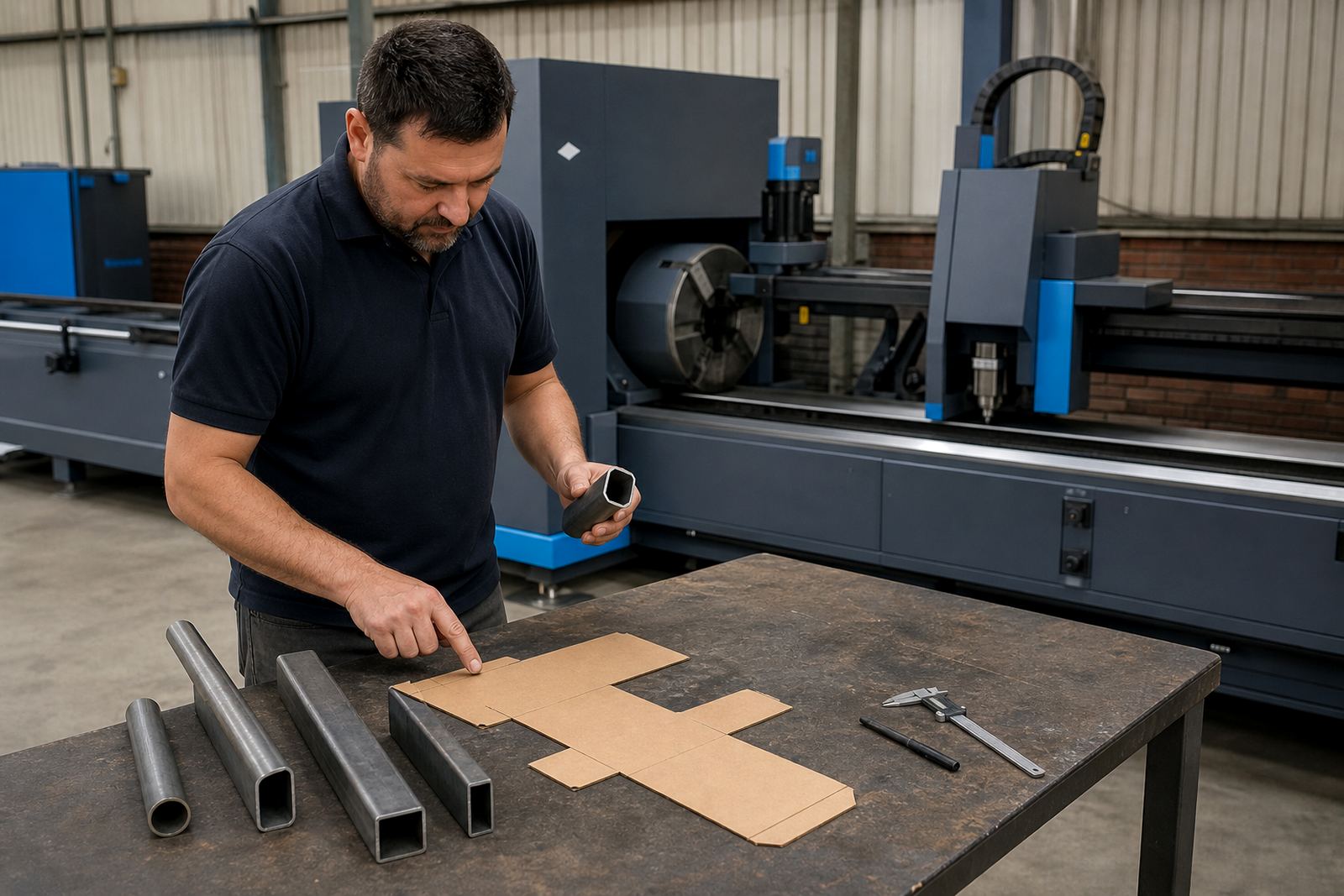
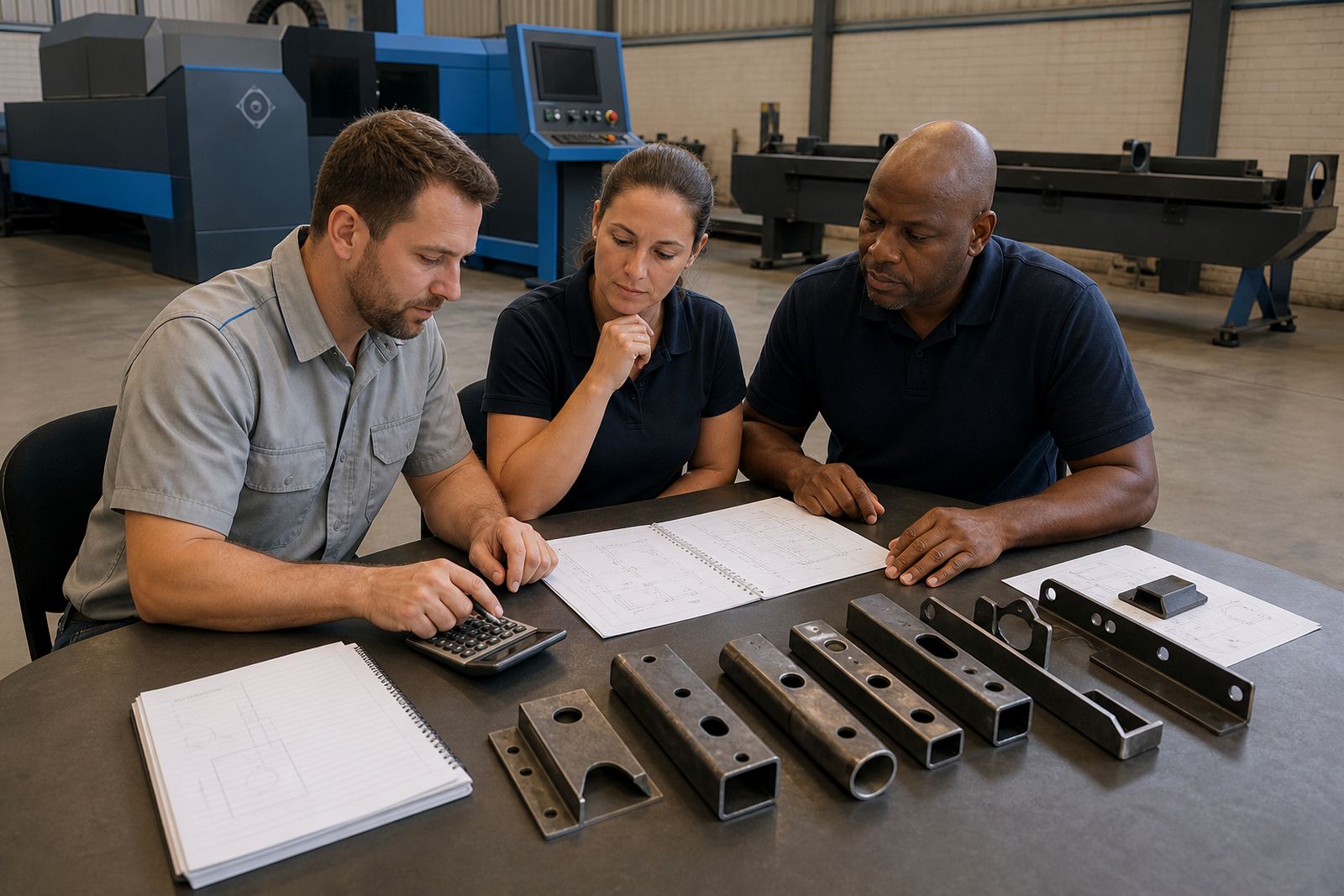
Before you specify bevel capability, look at the parts that actually leave the workshop. If a large share of your drawings needs weld prep, the extra axis can reduce handwork and improve fit-up. If only a few special jobs need it, the machine may spend too much time on features that do not earn their keep.
- Count how many parts need a V prep, Y prep or edge angle.
- Check whether welders are grinding edges before assembly.
- Look at the tube sizes, wall thicknesses and section shapes used most often.
- Review whether nesting software can place bevelled parts without wasting material.
- Confirm that operators can be trained to set angle, offset and sequence properly.
This review should happen on the real work list, not on the most unusual drawing in the folder. The parts that show up every week matter more than the one-off special.
How installation and training keep bevel jobs under control
Bevel capability only pays off when the machine is commissioned carefully and the team knows how to use it. Installation must cover chuck alignment, machine levelling, gas setup and the first test cuts on the materials you normally buy. If the bevel angle is not calibrated properly, the machine can still cut, but the weld prep may be inconsistent and the fit-up will suffer.
Training needs to be practical. Operators should know how to read the drawing, choose the correct bevel direction, set the nest, check the first piece and spot when a worn clamp or poor material finish is affecting the cut. That is where preventive maintenance helps too, because bevel heads, clamps and guide parts need checking before small issues become scrap.
What to look for in the quote and the floor plan
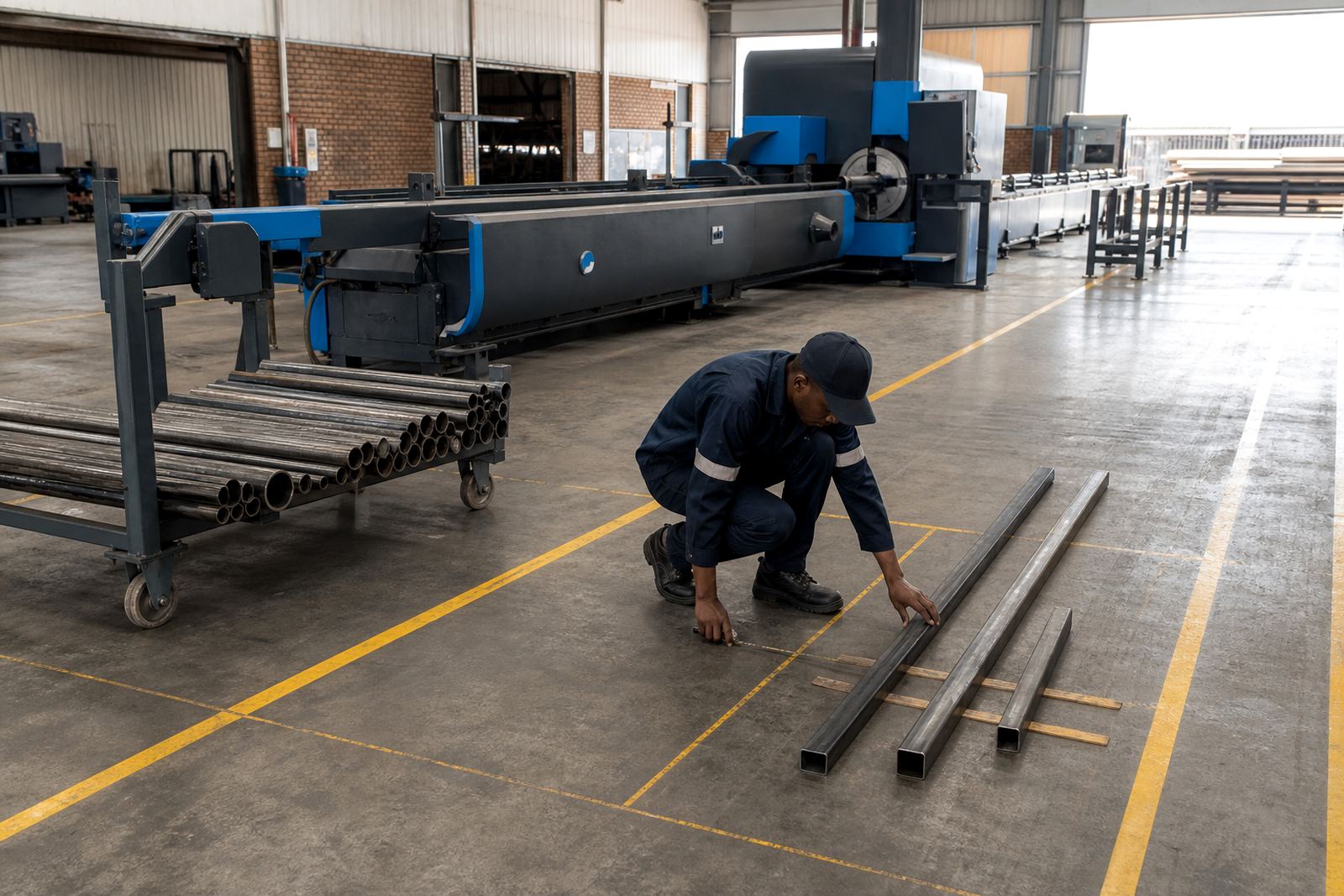
Ask for a clear machine layout before the equipment arrives. Tube infeed, output space, gas cylinders or bulk gas points, extraction routes and maintenance access all need to fit the floor. In Wadeville, Germiston and other busy industrial areas, access for delivery rigging matters as much as the machine footprint. Tight aisles and low headroom can slow installation if they are not planned early.
- Check the available length for loading and unloading tube.
- Allow space for finished parts that still need sorting or welding.
- Confirm where operators stand during loading, cutting and unloading.
- Make room for safe access to the chuck area and bevel head.
- Keep a clear route for service work and routine cleaning.
When the floor plan works, bevel cutting feels like part of the process. When it does not, the machine can become awkward to use even if the hardware is capable.