Start with the stock lengths in your yard
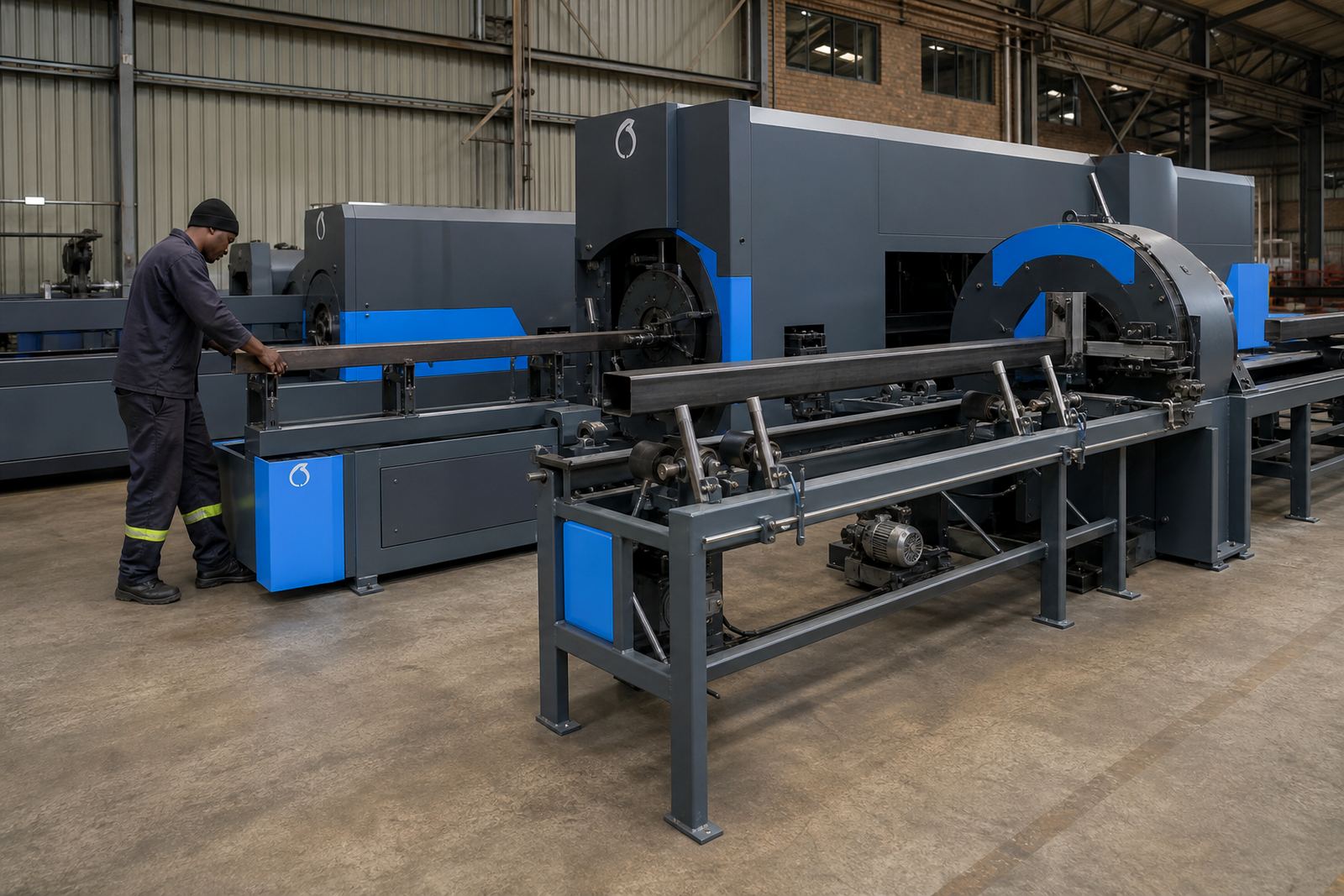
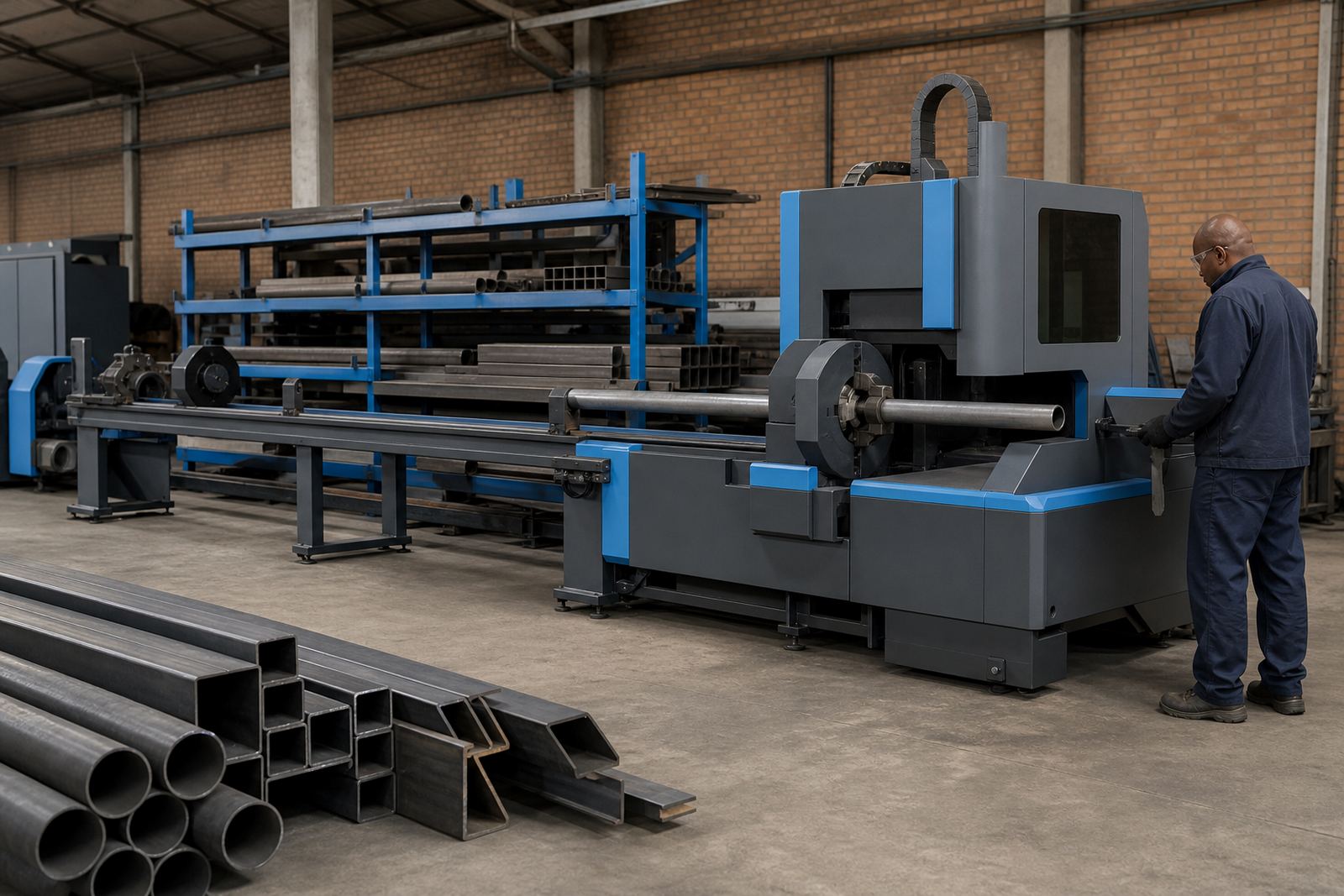
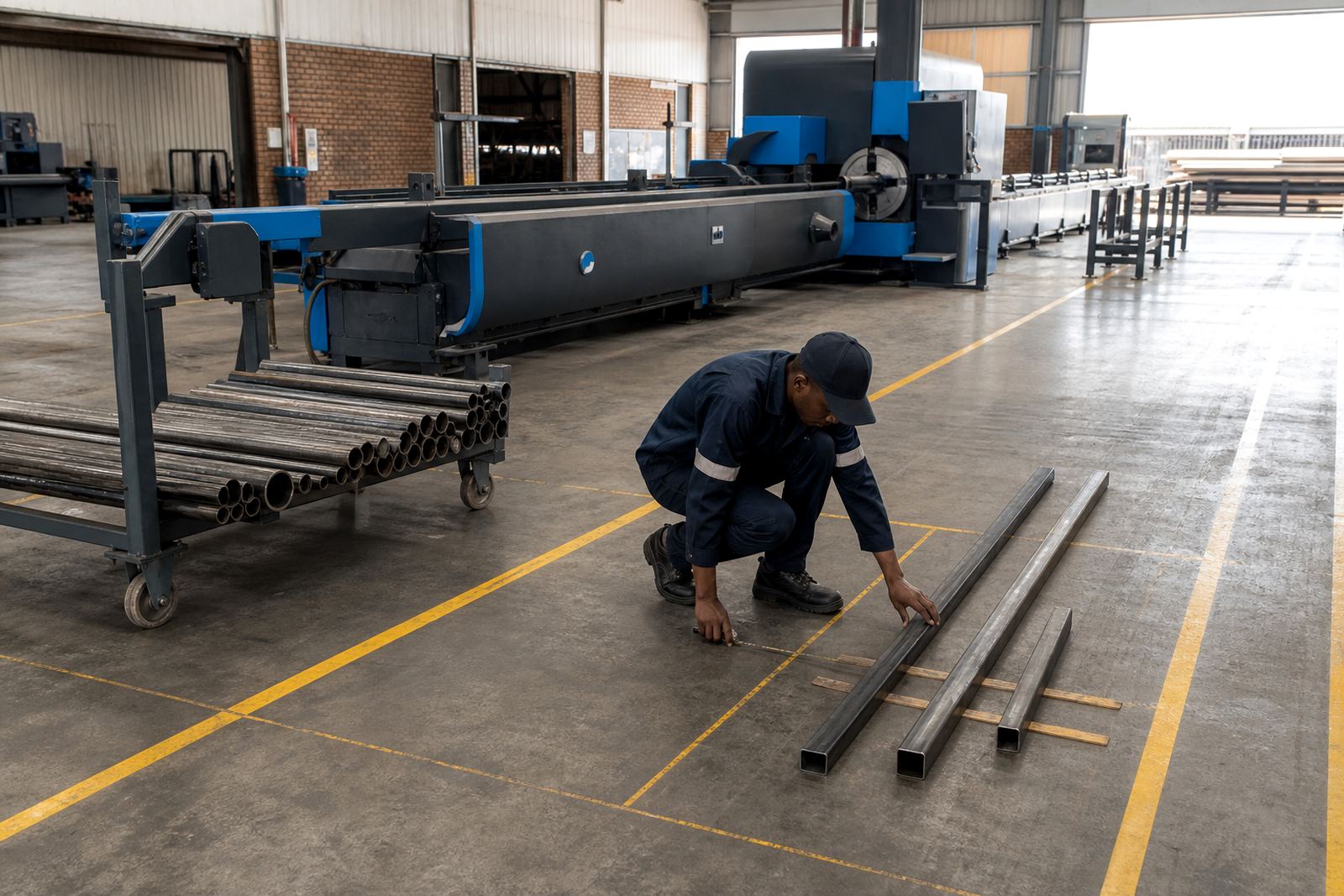
Measure the materials you actually receive and store, not the lengths listed on a supplier sheet. Many South African fabricators work with commercial stock that arrives in 6 metre lengths, while some heavier sections are handled in shorter drops because of transport and lifting limits. If the machine bed is too short, every load becomes a manual handling problem and offcuts start eating floor space.
Write down the longest tube, pipe or open section you cut in a normal week. Include round, square and rectangular tube, plus angle and channel if those jobs sit on the same machine. A machine that handles the longest stock with enough clamping travel gives you cleaner loading, fewer changeovers and less risk of bowing on thin wall material.
Match chuck size to the section range
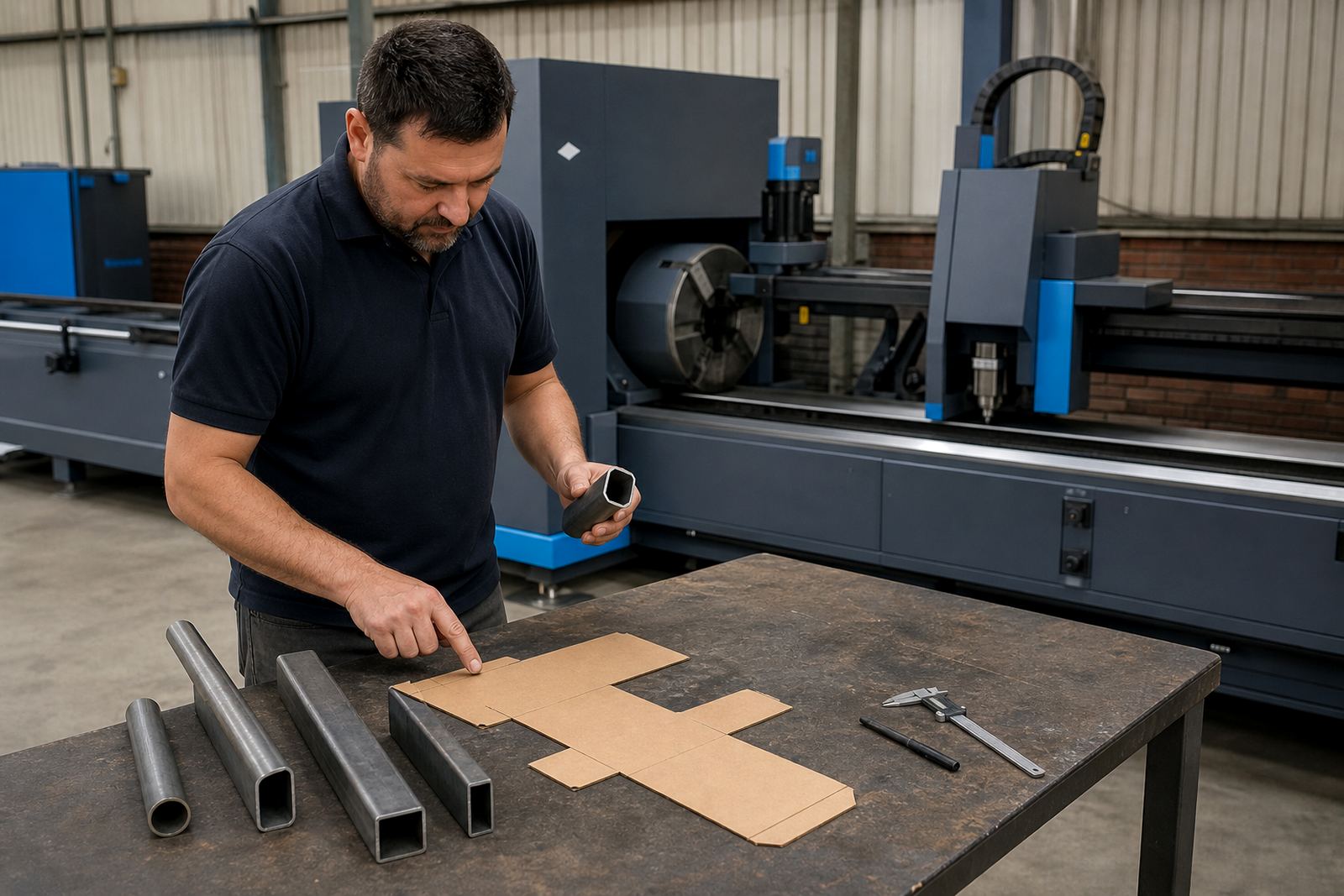
Chuck capacity decides how far your machine can go on diameter and section size. Small job shops sometimes only need light tube work, while plant fabricators may need larger diameters, heavier wall thicknesses and mixed profiles in one shift. Check the smallest and largest outside dimensions you expect to run, then allow room for the real world, not just the neatest part number.
- Round tube and pipe: confirm outside diameter range and clamping grip on thin walls.
- Square and rectangular tube: check support against corner twist and long spans.
- Angle and channel: confirm whether the machine can hold open sections without slipping.
- Short offcuts: ask how the chuck handles short remnants and nested parts close to the grip zone.
For mixed work, a wider chuck range gives more flexibility but it must still clamp securely. If the grip is marginal, the machine can mark the material or lose positional control during rotation.
Use daily workload to size the bed and automation
Your daily workload should guide the bed length, loading side and degree of automation. A shop cutting a few orders per day can work differently from a production line feeding structural assemblies, furniture frames or farm equipment. If you queue long bundles and short parts on the same machine, loading time often matters as much as cutting speed.
Think through the shift pattern before you choose. A longer bed can reduce reloads, while a compact machine may suit smaller bays in Wadeville or Germiston where floor area is tight and stock must move through the shop in a straight line.
- Low volume: shorter bed, simpler loading and a narrower section mix.
- Mixed batch work: longer bed, stable support and good nesting control.
- Higher output: faster loading, stronger material handling and clear operator access.
- Heavy sections: look for bed stiffness, guide support and safe loading space.
Choose bevel capability only when the job needs it
Bevel heads are useful when your work includes weld prep, mitred joints or parts that need a prepared edge straight off the machine. They are not needed on every tube line. If most of your jobs are straight cuts, a bevel unit can add cost and setup time without much value.
Where bevel cutting does matter, check the angle range, the thicknesses you use, and how often the machine will switch between straight and bevel work. On South African fabrication floors, that decision is often shaped by whether the machine feeds one project family or handles a wide mix of local contract work.
Set nesting and assist gas around the real material mix
Nesting software is there to reduce waste, keep remnants useful and place parts in a way that suits the machine and the fitter downstream. For tube and profile work, the software should handle cutting paths, part spacing, common lines where allowed, and part orientation on round, square and rectangular sections. If your work changes often, the software must be easy for operators to learn and consistent from one file to the next.
Assist gas choice also shapes machine sizing. Oxygen, nitrogen and compressed air each serve different jobs depending on material type, edge quality and speed. The machine should support the gas setup that suits your stainless, mild steel or mixed production without making the floor crew fight for usable cut quality.
- Ask how the software handles remnant use and mixed section layouts.
- Check gas routing, pressure stability and changeover discipline.
- Confirm the machine can hold edge quality on the material grades you buy.
- Make sure part marking and traceability fit your workshop routine.
Plan the installation path before the machine arrives
Installation starts long before the crate lands in your yard. Delivery rigging, door widths, slab condition, ceiling clearance and operator movement all affect what size machine can work safely in the building. A machine that fits on paper can still fail the practical test if the loading side is cramped or stock has to turn too sharply inside the workshop.
Leave room for service access, gas bottles or gas lines if they are used on site, and a clear route for finished parts. After commissioning, operator training should cover chuck alignment, bevel calibration if fitted, nesting settings, assist gas setup and routine safety checks. That is what keeps the machine productive after the first week, not only when it has just been installed.
A sizing checklist for South African fabricators
Tick off these points before the machine size is fixed. It helps keep the decision tied to your actual work rather than the biggest brochure number.
- Longest stock length you receive and store.
- Smallest and largest tube, pipe or profile you cut.
- Daily part count and batch size by product family.
- Need for straight cuts only, or bevel work as well.
- Floor space, loading access and service clearance in the workshop.
- Material grades, wall thicknesses and assist gas setup.
- Need for nesting training, preventive maintenance and breakdown support.
LaserTube works with fabricators from small job shops to production plants across Wadeville, Johannesburg, Pretoria, Durban, Cape Town and Gqeberha. The right machine size should suit the stock you buy, the sections you cut and the output your team must keep moving.