
Where the loading choice changes the whole shift
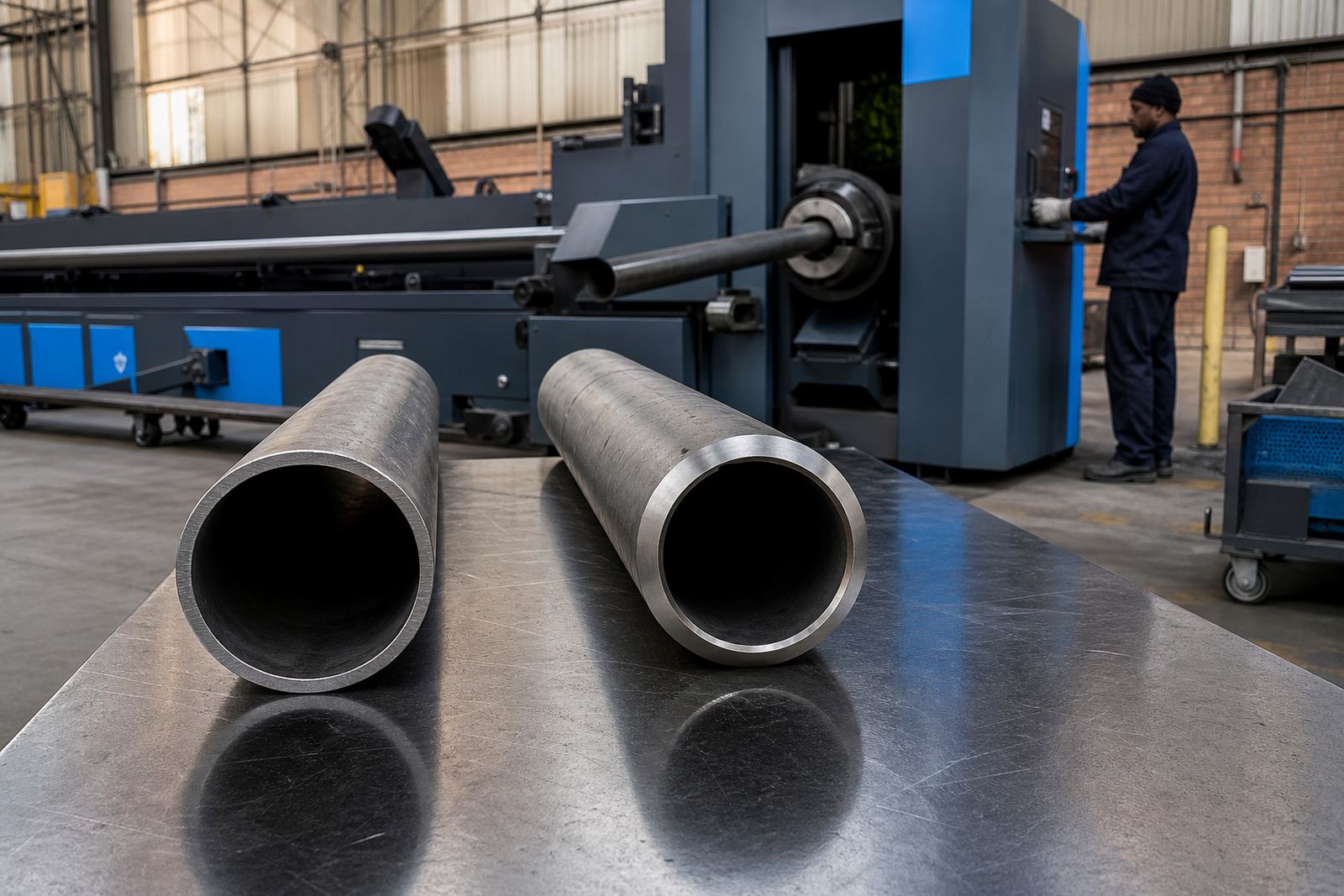
On a fibre laser tube machine, loading is not only about lifting material onto the bed. It affects how many people stand at the machine, how long changeovers take, how neatly bundles are staged and how safely long stock moves through the shop. A round tube job with mixed lengths behaves very differently from a steady run of square tube or channel.
Manual handling works when volumes are low and the range of section sizes changes often. Semi-auto loading suits shops that want a stronger rhythm without fully automating the yard-to-machine flow. Automatic loading starts to make sense where the same profiles move through day after day and the machine needs a steadier feed.
Manual loading: hands-on control for smaller batches
Manual loading means operators or riggers place each tube or profile into position by hand, usually with the help of rollers, lift aids or a crane. It gives close control over odd lengths, short offcuts and mixed work, which is useful in job shops that cut angle, channel and custom tube packs for fabrication.
This method asks for good lifting practice and a tidy staging area. Long stock needs stable support, clear walkways and enough room to rotate material without nicking the chucks or bed guides.
- Best for short runs, urgent repairs and mixed profile work
- Useful where bundle sizes change from order to order
- Needs fewer moving parts, but more operator handling
- Works well when floor space is tight and material flow is simple
Semi-auto loading: a middle ground for growing output
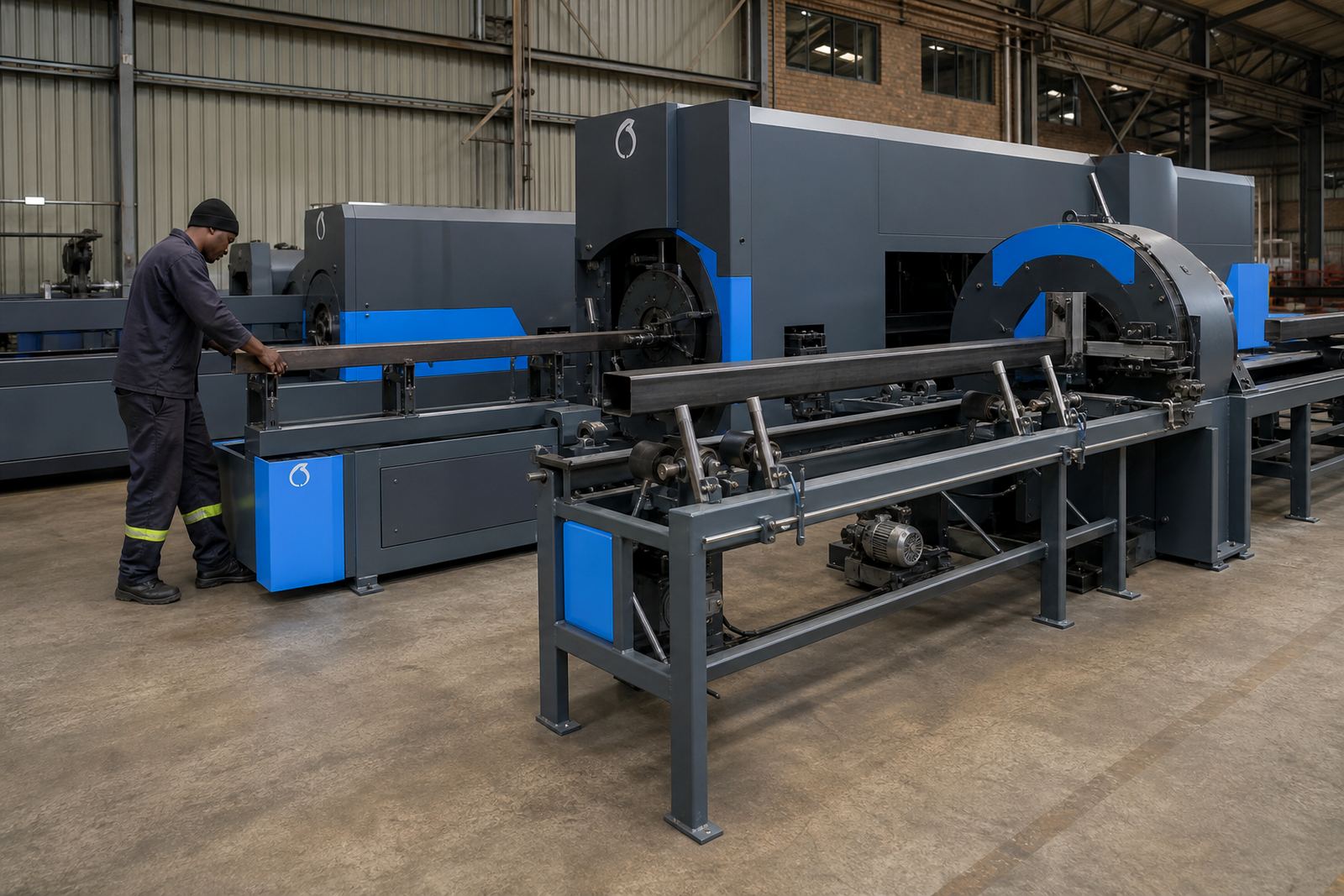
Semi-auto loading reduces some of the hand work by using powered feed or assisted positioning, while operators still manage staging and changeovers. It suits fabricators that cut enough tube to justify faster handling, but still need flexibility for different diameters, wall thicknesses and profile sections.
In many South African workshops, this is the step that improves consistency without demanding a full redesign of the bay. The machine can spend less time waiting for the next bundle, while the team keeps enough control to deal with varied stock and custom jobs.
- Reduces the strain of repeated manual lifts
- Improves flow when orders arrive in medium batches
- Needs clear rules for staging, stacking and bundle identification
- Often fits shops moving from mixed jobbing into steadier production
Automatic loading: steady feeding for higher-volume cutting
Automatic loading suits production plants that want a repeatable feed of round tube, square tube and rectangular tube, plus selected profiles such as angle or channel. The loader can stage bundles, separate pieces and present stock for cutting with less stop-start handling. That helps when the machine is part of a wider line that depends on predictable output.
It is not only about speed. Automatic loading can reduce handling damage, keep tube aligned more consistently and cut down on the daily pressure placed on the loading crew. The trade-off is a higher need for planning, space and disciplined bundle preparation.
- Best where the same profiles run in longer batches
- Supports a more controlled material feed into the machine
- Needs proper bundle prep and stock identification
- Works best when the production schedule is stable
A practical way to compare the three options
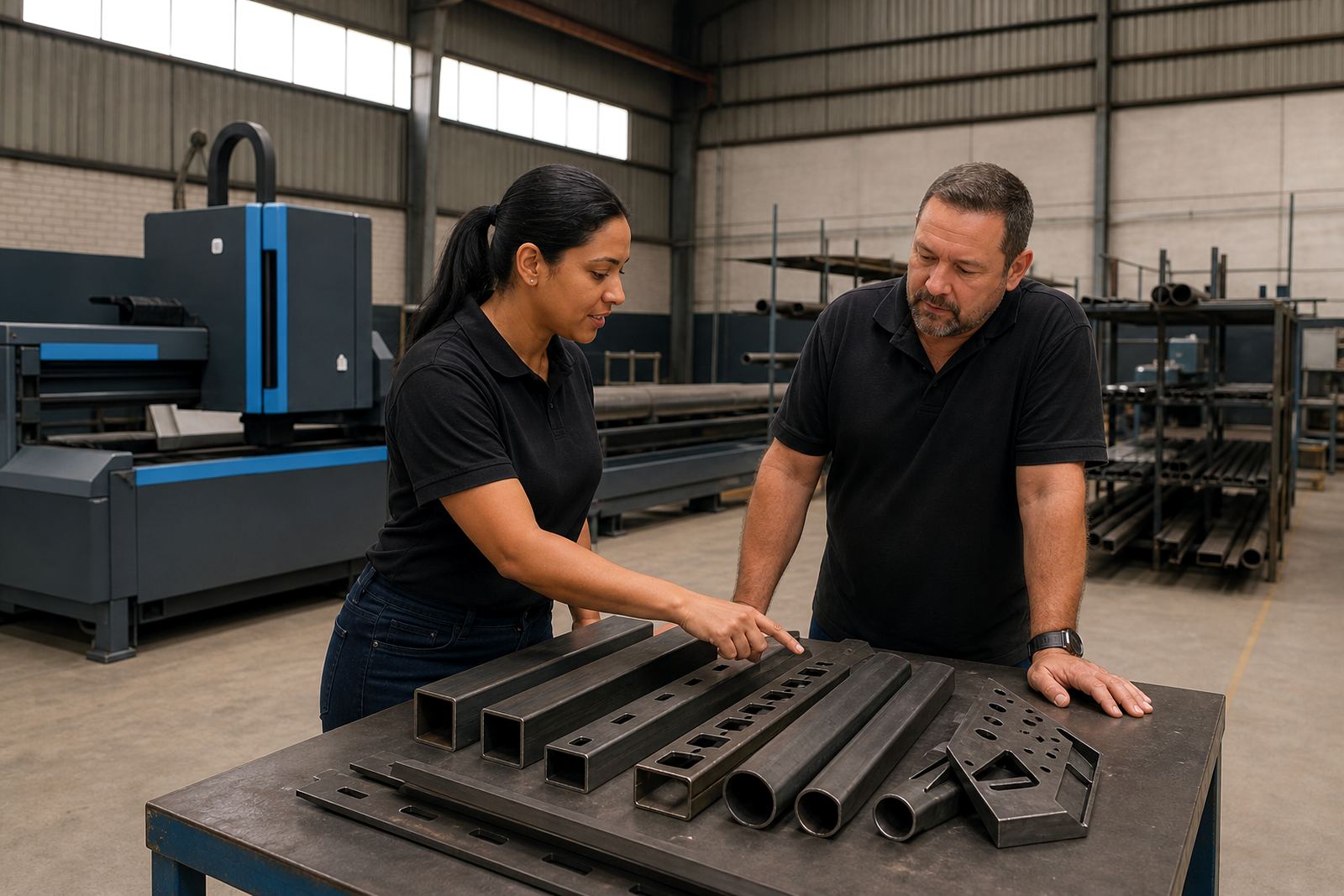
A good comparison starts with the work in front of you. Count how often the machine changes from one profile size to another, how many people are involved in loading, and how much time is lost while stock is moved, checked or re-stacked. The right system should match your daily pattern, not just the biggest job you hope to land.
Think through the following points before you decide:
- What tube and profile sizes run most often
- How long each bundle stays in the queue before cutting
- How many operators are tied up in loading each shift
- Whether your cutting jobs are repetitive or highly varied
- How much room is there around the machine on your factory floor
- Whether the shop already has lifting aids, cranes or rollers
What to check before matching loader and machine
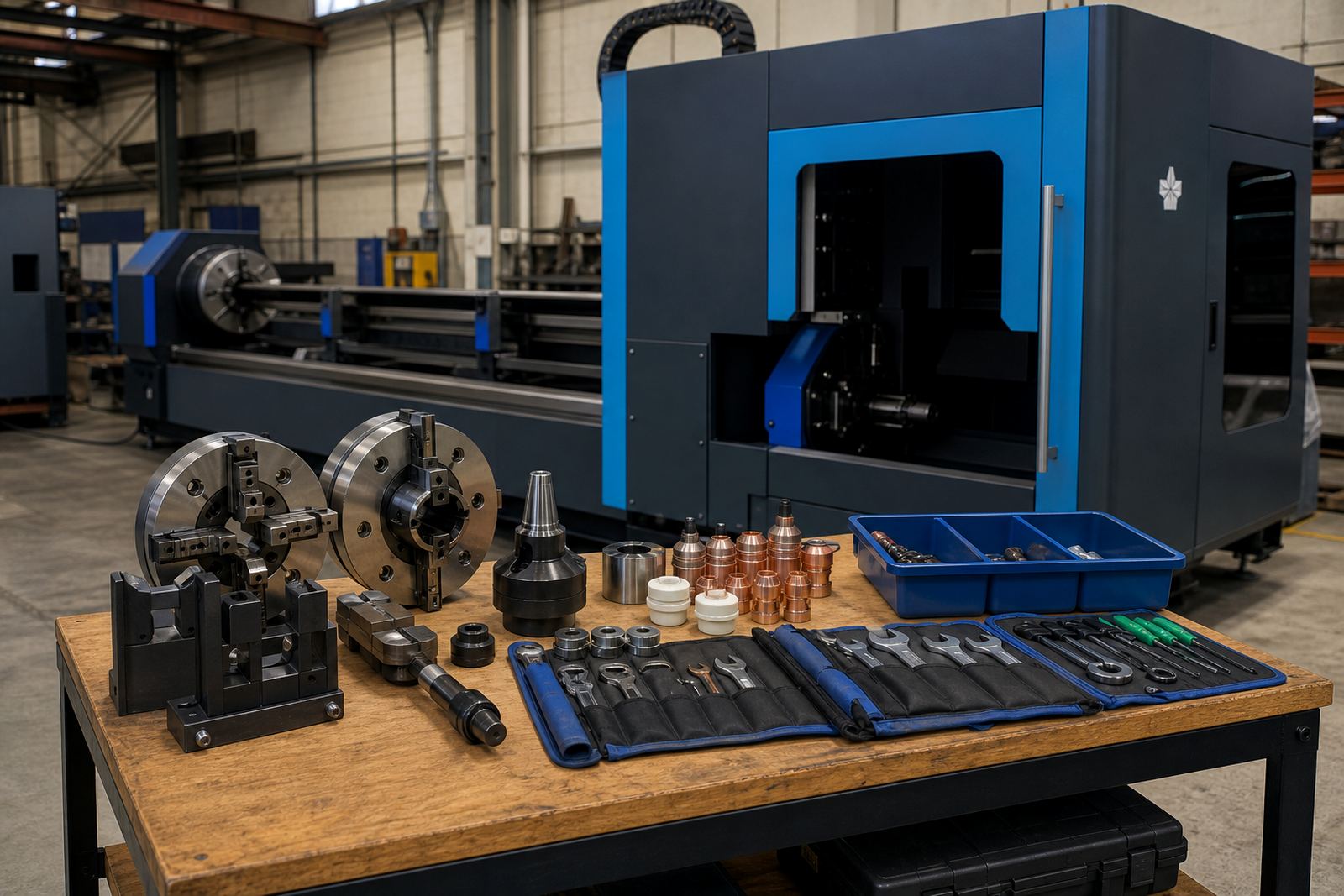
Loader choice must work with the rest of the machine setup. Chuck style, beam length, tube support, bevel head movement and nesting software all affect how smoothly stock enters the cut cycle. A machine that handles long profiles well still needs a loading method that suits the actual floor layout and the size of the bundles arriving from stores.
Safety also matters. Clear access points, marked loading zones, stable stock racks and practical training all reduce the chance of crushed ends, dropped lengths or poor alignment. In coastal towns, stored material and moving parts also need sensible protection from humidity and surface rust, especially where stock sits before processing.
- Check that chucks and supports suit the tube range you cut
- Confirm that bevel work will not slow the loading cycle too much
- Set a clear routine for assist gases and purge checks
- Keep nesting training tied to the loader method in use
- Review maintenance access for rollers, sensors and guides
What LaserTube sets up around the loading decision
LaserTube works with fabricators across Wadeville, Johannesburg, Pretoria, Durban, Cape Town, Gqeberha, Bloemfontein and Nelspruit on the full machine setup, not only the loader itself. That includes site assessment, delivery rigging, installation, commissioning, operator training, nesting training, chuck alignment, bevel calibration, assist gas setup and preventive maintenance.
For a small shop, manual handling may be the practical start. For a plant with steady demand, semi-auto or automatic loading can support better flow and less bottlenecking at the machine. The right answer depends on your mix of tube, your available floor space and how your team works around the cut line.
Get in touch to talk through the layout, the stock mix and the machine behaviour around real work. Michael Dlamini leads the business from Wadeville, Germiston with Anika Kajee, Sibusiso Bhengu, Leanne Mabuza, Pieter Visser and Ayanda Mashaba covering sales, installation, training, service and applications support.