What this non ferrous laser setup is built to cut
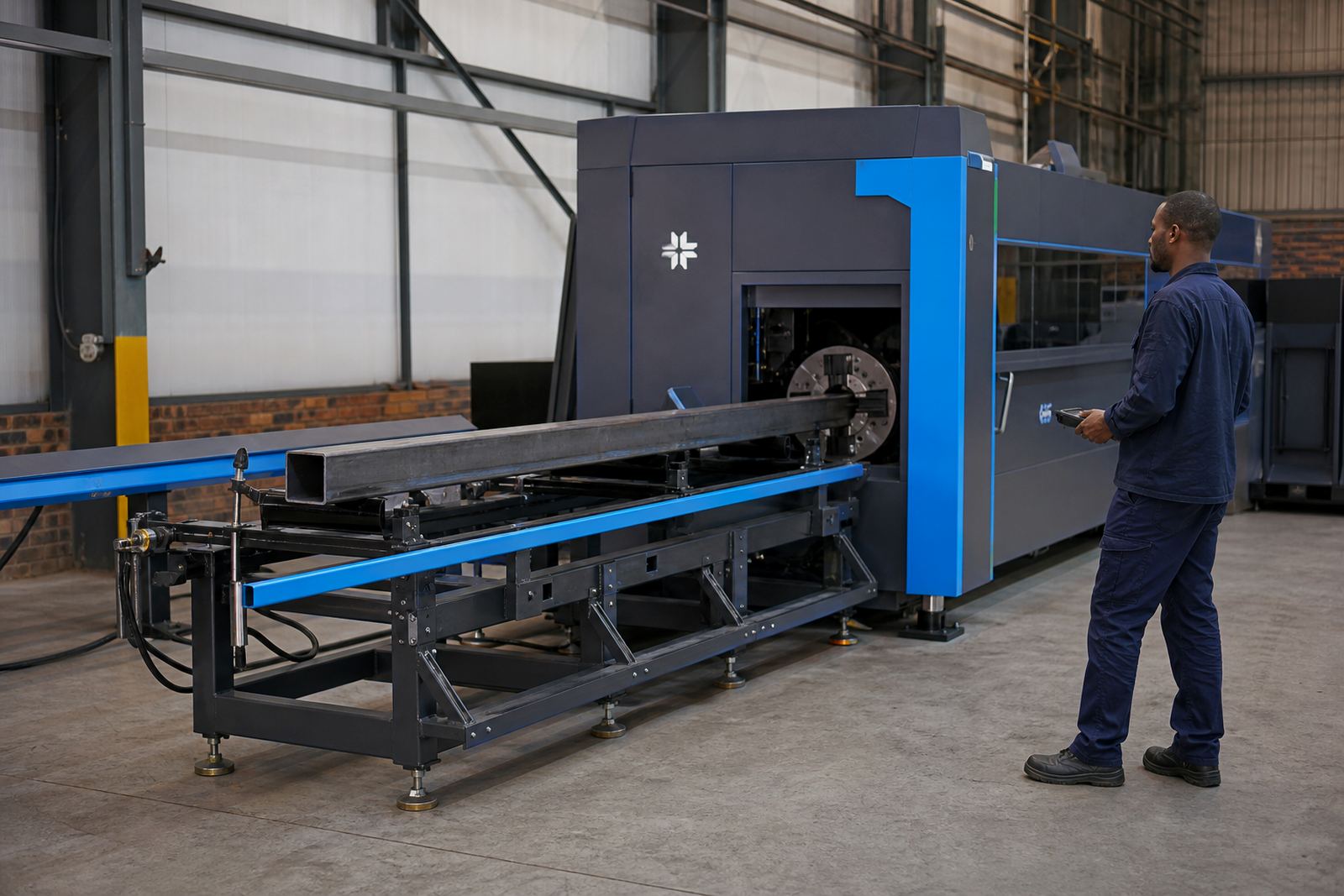
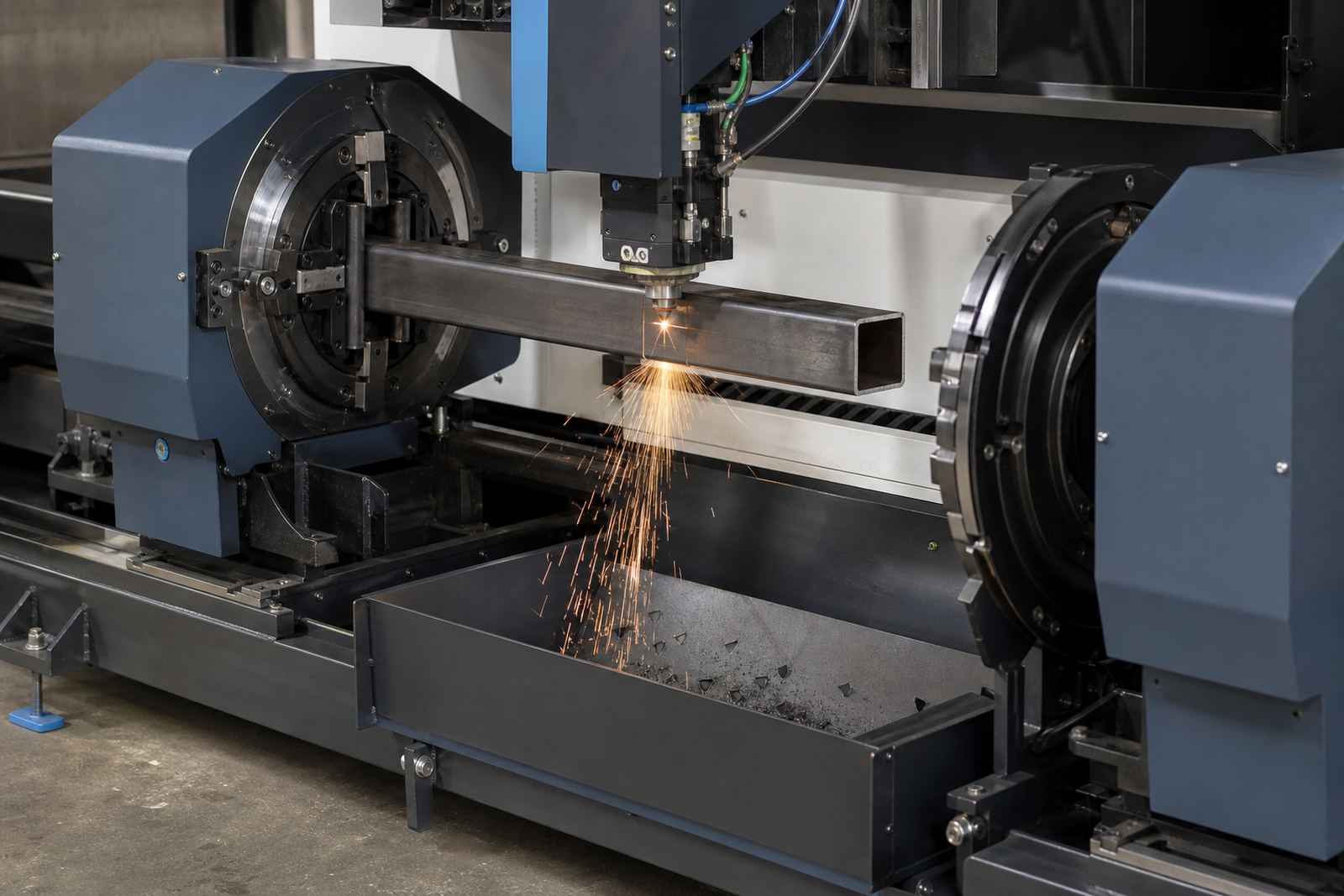
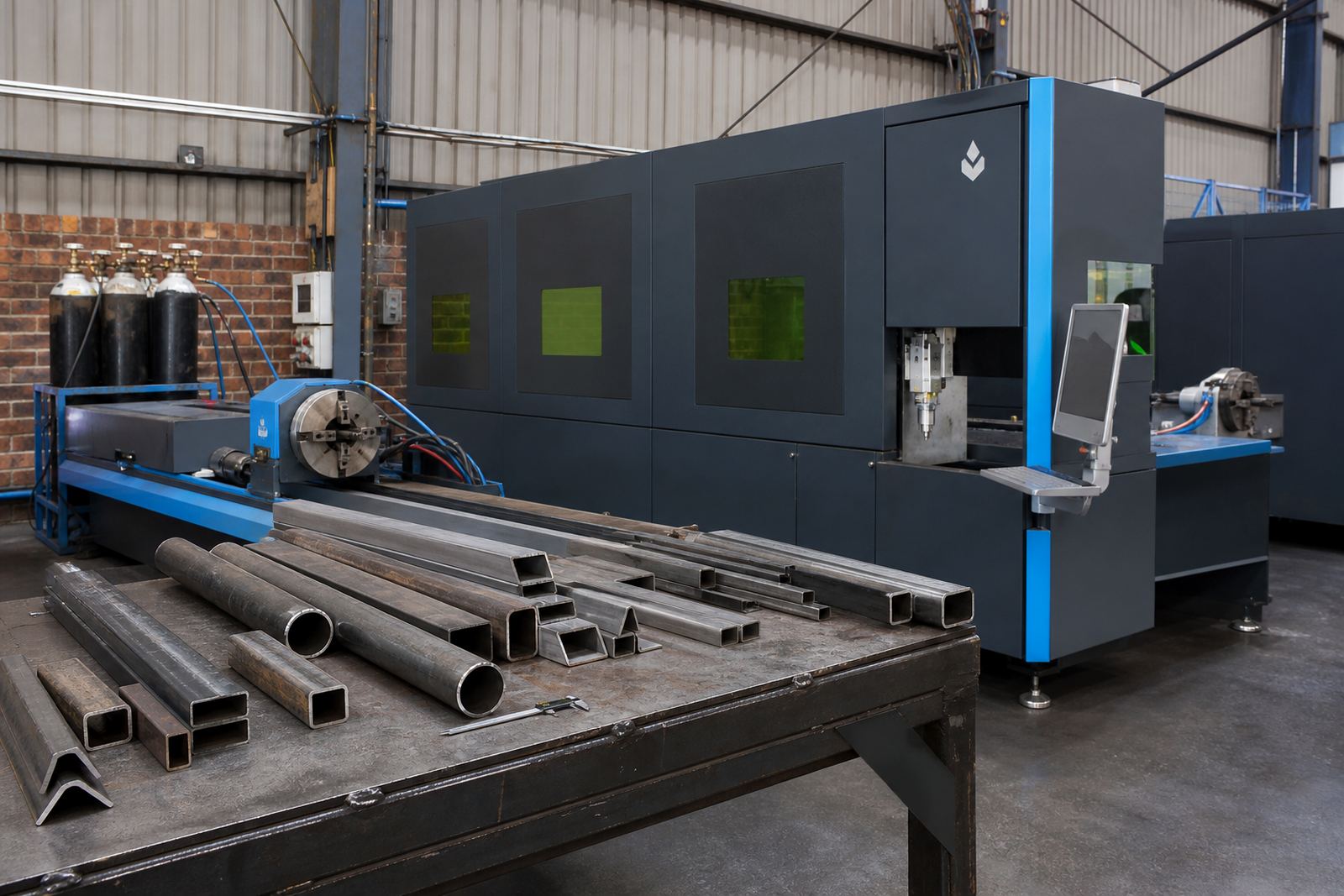
This machine option is set up for profile work on non ferrous sections where the process needs tighter control than standard carbon steel jobs. It is used on round tube, square tube, rectangular tube, angle and channel, with the cutting path, chuck grip and assist gas matched to the material and wall thickness.
For aluminium and other softer alloys, the workholding and cutting data matter as much as the beam itself. Thin walls can distort if the clamping is too hard, while thicker sections need stable rotation, accurate centring and clean pierce control. On copper based profiles, reflectivity and heat behaviour need careful setup, so the machine, software and operator training all need to work together.
Machine sizes and options for local production floors
We supply fibre laser tube and profile cutting machines in sizes suited to smaller job shops and heavier production lines. Common options include manual loading beds for lighter duty work, automatic bundle loading for higher throughput, single and dual chuck arrangements, and long bed machines for extended tube lengths.
- Tube capacity options from lighter profile work through to larger diameter sections
- Lengths suitable for standard stock bars and extended production lengths
- Single or dual chuck configurations for better support and part control
- Bevel head options where angled edge preparation is part of the job
- Nested part output for batch cutting and repeat runs
- Enclosed cutting areas with viewing protection and interlocked safety access
Where the work includes mixed sizes, nesting software helps the operator place parts with less waste and fewer manual corrections. That matters on jobs with short offcuts, mixed quantities and repeat tube patterns for frames, brackets and fabrication assemblies.
Where this machine suits non ferrous work
This setup suits fabricators making components for architectural work, transport fittings, racking parts, light industrial frames and custom assemblies where aluminium is part of the spec. It is also used where the profile shape itself matters, such as slotted tube, mitred corners, coped ends and parts that need clean fit-up for welding or assembly.
In Gauteng, KwaZulu-Natal and the coastal metros, humidity and stored material condition can affect surface quality and handling. Tube that has been standing in a yard or under cover for weeks may carry oxidation or surface marks, so feed condition and storage habits should be checked before the machine is set for production. A good setup reduces rework, but it does not replace disciplined material control.
- Short-run custom fabrication
- Repeat production of tube frames and supports
- Profiles that need precise notching and hole placement
- Jobs where a bevel edge saves secondary machining
- Work that mixes round, square and rectangular sections
Installation, utilities and fitting needs on site
These machines need proper floor space, clean access for rigging and a planned machine position before installation starts. Delivery rigging must allow for doors, turning space and final placement, especially in busy industrial yards around Wadeville, Johannesburg, Pretoria, Durban, Cape Town and Gqeberha.
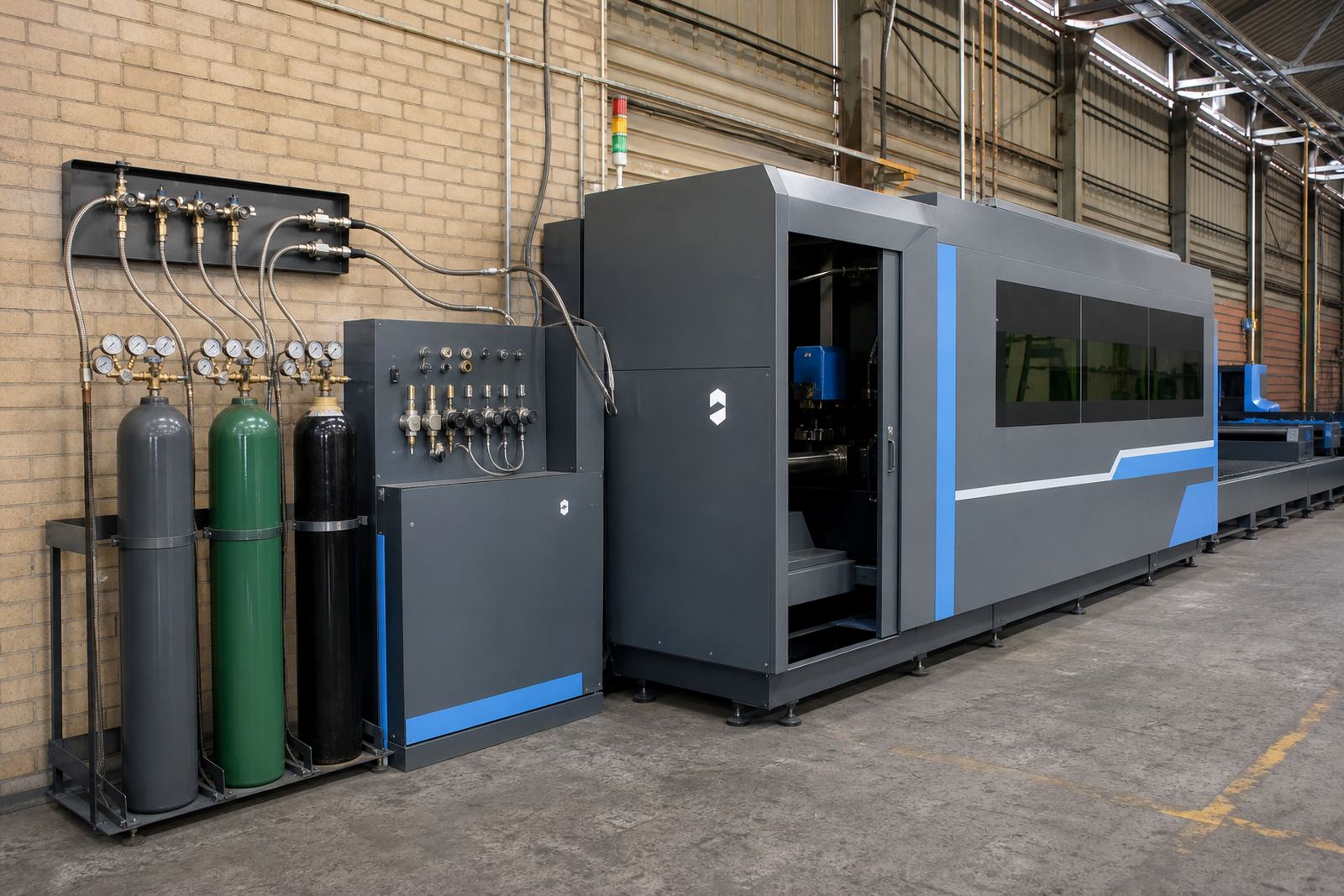
Power supply, extraction and assist gas must be planned around the exact machine build. Fibre laser tube machines typically use an electrical supply matched to the installed configuration, while assist gases are selected for the material and cut quality required. The gas train, regulators and pipework should be set out neatly so pressure stays stable during production, and safety valves are easy to inspect.
We handle site assessment, delivery rigging, machine installation, commissioning and operator handover. For non ferrous work, beam path alignment, chuck alignment and bevel calibration are checked carefully before production parts are released. That saves time later when the first batch must fit the rest of the fabrication sequence.
Training that matches the material and the job
Operator training covers loading, part setup, nesting use, gas selection basics, alarm checks and safe start-up routines. For non ferrous cutting, the operator also needs to understand how wall thickness, profile shape and surface condition change the cut result. A good program does more than show buttons, it teaches the process behind the settings.
Ayanda Mashaba works on applications support, while Leanne Mabuza coordinates training so the crew can work through practical settings on real parts. The aim is to help staff set up jobs with fewer trial pieces and cleaner first-offs. On mixed production floors, that training carries more weight than a quick handover from the machine sheet.
- Machine controls and job setup
- Nesting software use for tube and profile parts
- Cut order, lead-in placement and scrap control
- Assist gas changes for different metals
- Safe loading, unloading and part handling
- Basic fault recognition and escalation
Care that keeps cut quality steady
Non ferrous work asks for regular checks on optics, chucks, guides and gas delivery. Copper and aluminium dust behave differently from carbon steel fines, so cleaning routines should be disciplined and suited to the machine enclosure. Chuck faces, jaws and support points need inspection for wear or build-up, especially where short parts are run all day.
Preventive maintenance can include chuck alignment, bevel calibration, gas flow checks and general machine condition inspections. Pieter Visser handles service support, while Sibusiso Bhengu takes lead on installations that need proper mechanical alignment from the outset. If the machine is used heavily on small diameter parts, jaw condition and centring become even more important because small errors show up fast in the cut.
Remote diagnostics can assist with control alarms and setup checks, while breakdown response is available when a machine is under pressure and production cannot sit idle for long. Regular care does not only protect the machine, it protects part fit-up and downstream welding time too.
Order details to confirm before the machine is specified
Before a non ferrous laser machine is specified, the profile mix, wall thickness range, part lengths and finishing requirements must be clear. That includes whether the work is mostly round tube, square tube, rectangular tube, angle or channel, and whether the parts need straight cuts only or bevel edges as well.
It also helps to confirm the feed length, chuck style, loading method, gas supply arrangement and whether the job includes repeated batches or varied one-off work. If the machine will run aluminium regularly, say so early, because the setup and the support data should be planned around that material from the start.
- Material type and thickness range
- Profile shapes and standard lengths
- Required cut quality and edge finish
- Need for bevel cutting or only square cuts
- Throughput target and batch size pattern
- Floor area on hand and access into the premises for installation
Send the alloy, section sizes and finish needed on the contact form. Michael Dlamini leads the business from Wadeville, Germiston, with support across Johannesburg, Pretoria, Durban, Cape Town, Gqeberha, Bloemfontein and Nelspruit.
Key facts
| Laser type | Fibre laser tube and profile cutting system |
|---|---|
| Materials | Selected non ferrous profiles including aluminium and copper based work |
| Profile shapes | Round tube, square tube, rectangular tube, angle and channel |
| Cutting options | Straight cut, nested part cutting, bevel head option |
| Workholding | Single or dual chuck configurations with alignment control |
| Support services | On-site planning, machine setup, commissioning, operator training, servicing and fault diagnostics |