Controlled feed for tube and section stock
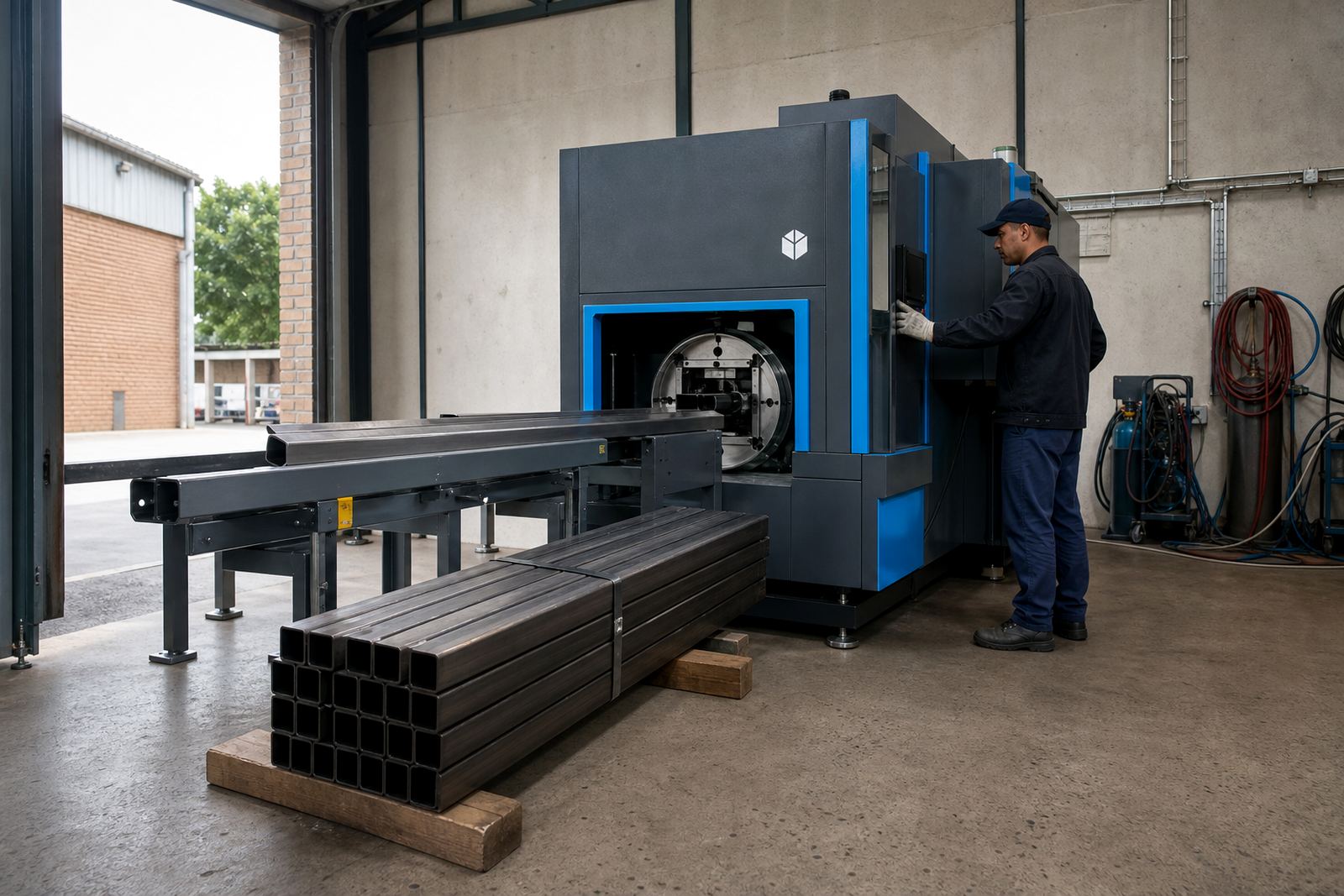
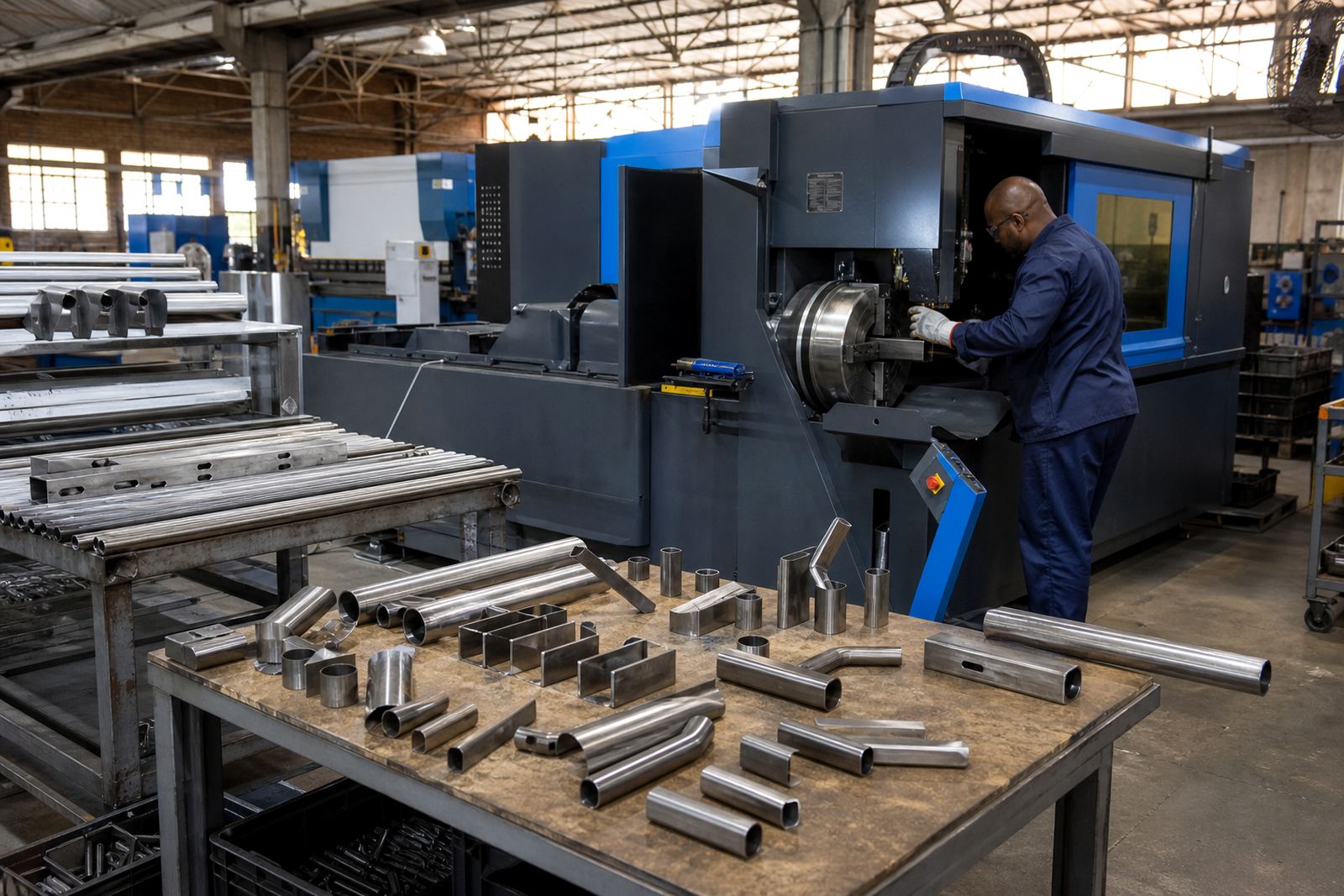
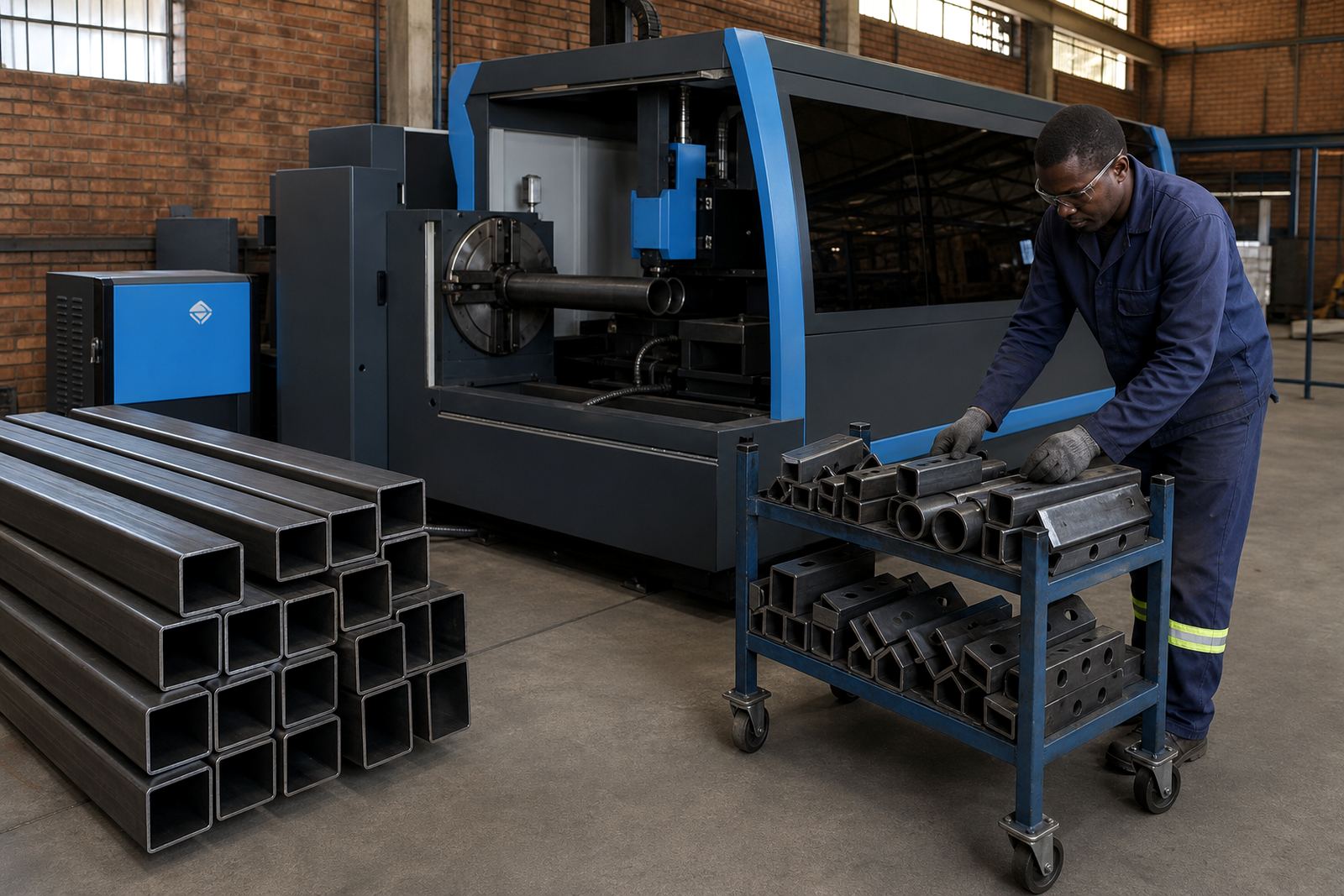
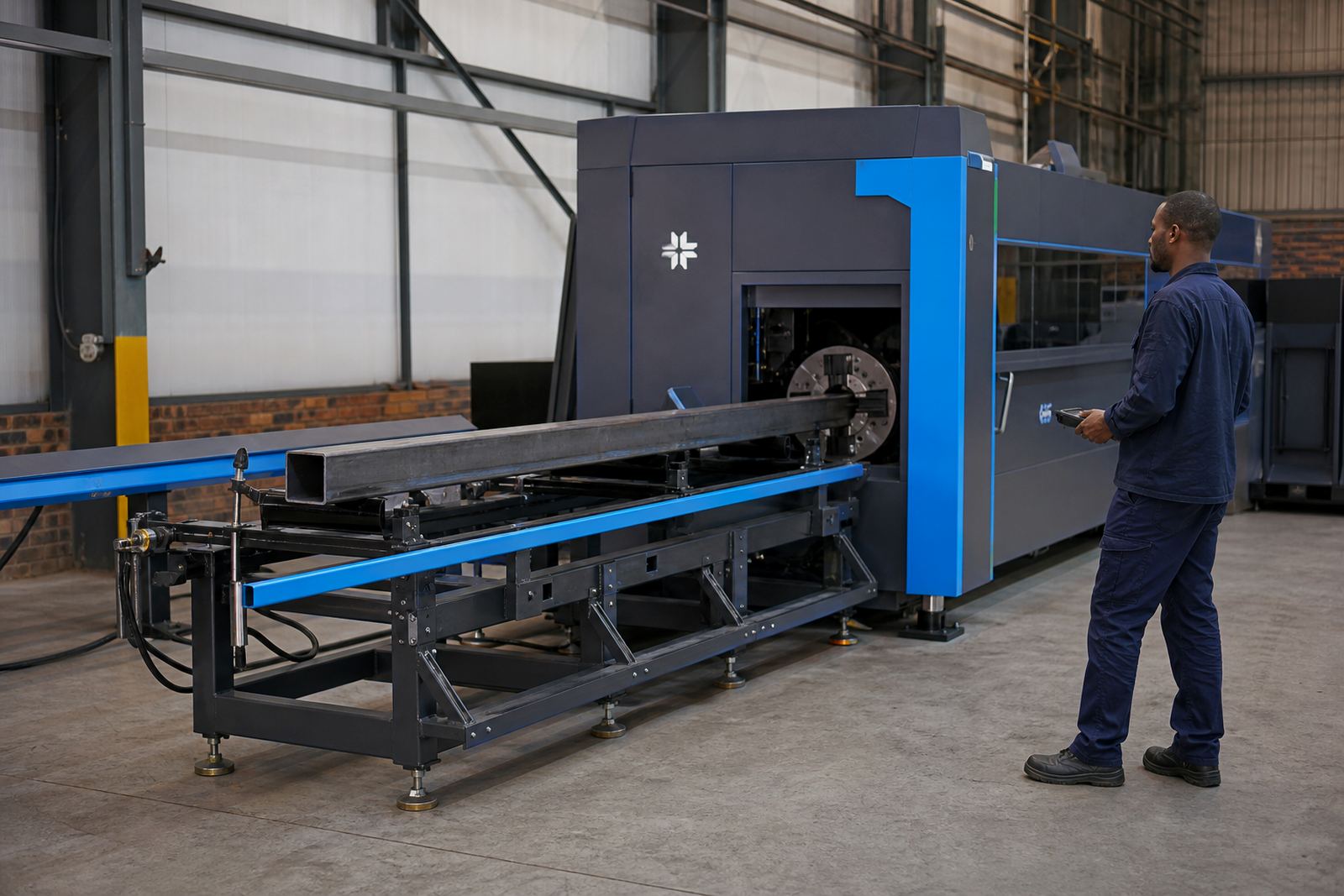
A shuttle infeed is a handling option that brings the next length of material into position while the machine works on the current part. On fibre laser tube and profile cutting machines, that controlled movement matters when you are handling round tube, square tube, rectangular tube, angle and channel in repeat production. It reduces the stop start handling that often slows a busy shop floor.
In practice, the infeed sits on the loading side of the machine and presents stock to the chuck area in a measured way. The operator loads the bundle or single length, the shuttle supports the material, then advances it to the cutting zone in line with the machine cycle. On longer profiles the support path helps limit sag, twist and scuffing, especially where the material finish matters after cutting.
For shops in Wadeville, Johannesburg or Pretoria, this suits jobbing work with mixed lengths and short runs. In Durban or Cape Town, where coastal humidity can leave light surface film on stored stock, a controlled feed path also helps keep handling cleaner and more predictable.
Shuttle sizes, stroke lengths and support options
The right shuttle infeed depends on the stock you cut most often and the bed length of the machine. A compact unit may suit shorter tube and mixed profile work, while a longer stroke helps with extended lengths and heavier sections. Support rollers, side guides and hold down points can be arranged to suit the way your material enters the machine.
- Typical stock handled: round, square and rectangular tube, angle, channel and light structural section.
- Common material length range: single lengths up to 6 m, with longer handling arrangements available for special layouts.
- Support choice: roller support, guide rails or transfer arms depending on stock weight and surface condition.
- Control method: manual advance, semi automatic feed or linked cycle control tied to the machine programme.
- Work area fit: single machine loading bay or shared feed lane where space is tight.
Where the profile range changes through the week, the infeed can be set up to suit the heaviest normal load rather than a one size fits all arrangement. That matters in plants cutting fence parts, frames, racking components and tubular fabrications under the same roof.
Where the shuttle infeed earns its place
This handling option suits fabricators that load tube often and want a cleaner rhythm at the machine. It is a practical addition where operators need to keep material lined up for repeated cuts, batch work or production orders with close part spacing. If your parts flow through a nesting programme and the tube lengths are counted out in advance, the shuttle makes the handover more orderly.
It is useful in steel service centres, contract fabricators, municipal supply work, agricultural equipment shops and general metalwork plants. The same applies where the machine is expected to process mixed section sizes through the day and stock movement must stay tidy around the loading side. On sites with tight aisles or forklift traffic, the defined feed path helps keep loading movement in one controlled lane.
- Best suited to repeat tube cutting and mixed section production.
- Helpful where one operator manages loading and unloading.
- Useful on lines that depend on nesting software and organised batch flow.
- Works well with machines fitted for chuck rotation and long stock support.
Fitting, alignment and commissioning details
Shuttle infeed installation needs proper measurement at the machine line, clear floor space and a checked approach for the stock path. The feed axis must line up with the chuck centreline, and the shuttle travel must suit the longest practical length you plan to load. If the loading bay sits on an uneven slab or shared production floor, the support feet and transfer points need setting before commissioning starts.
Where the infeed links to the machine control, cabling and safety interlocks are part of the fitting work. Guards, emergency stops and operator access points must be set so the loading area remains safe during normal use. If the machine is paired with a bevel head, the approach and transfer need extra attention because stock movement and rotation must stay consistent before the cut starts.
Our installation and commissioning work covers the practical side of the fit, from checking clearances to proving the feed cycle with actual material. That includes chuck alignment where needed, test loading and handover to the operator team so the loading pattern is clear before production begins.
Care that keeps the feed path steady
A shuttle infeed needs regular attention to stay accurate. Rollers, guide surfaces and transfer points should be kept free of swarf, dust and oil build up. Any grit trapped in the feed path can mark the tube surface and can also affect the consistency of movement into the machine.
Daily checks are straightforward: look for loose fasteners, uneven roller wear, damaged cables and any sign of misalignment at the feed edge. Where the infeed runs near cutting fumes or coolant mist from the process area, keep exposed surfaces clean and dry. In coastal sites, a light corrosion film can appear on stored support parts, so wipe down and inspect them as part of normal workshop housekeeping.
- Keep rollers clean and turning freely.
- Inspect cable runs, guards and stop buttons.
- Check that the shuttle still meets the chuck centreline.
- Grease moving points only where the design calls for it.
- Review the feed stroke after any floor move or machine relocation.
Order details that need to be pinned down
Before a shuttle infeed is specified, the key details are the machine model, loading side, stock length, heaviest section size and the way material is brought onto the floor. It also helps to know whether you are loading single lengths, bundles or mixed profiles. The layout at Wadeville is not the same as a production bay in Bloemfontein or Nelspruit, so the floor footprint and transfer route need real measurements.
For a sound fit, confirm the chuck type on the machine, the expected loading sequence, available floor length, and whether the infeed must work with bevel cutting or long tube support. The loading system should also leave clear access for servicing and material handling. For plants running across South Africa, transport access and rigging path matter as much as the feed stroke itself.
LaserTube supplies shuttle infeed solutions with site assessment, delivery rigging, installation, commissioning, operator training and support from Wadeville, Germiston. The team handles machine line integration for shops in Johannesburg, Pretoria, Durban, Cape Town, Gqeberha and other South African production areas.
Key facts
| Function | Controlled loading and feed support for tube and profile cutting |
|---|---|
| Compatible stock | Round tube, square tube, rectangular tube, angle and channel |
| Typical length handling | Up to 6 m as a common working range, longer layouts on request |
| Support method | Roller support, guide rails or transfer arms |
| Integration | Can link to machine cycle control and safety interlocks |
| Primary use | Steadier stock presentation for fibre laser tube cutting |