How a dual chuck machine works in day-to-day production
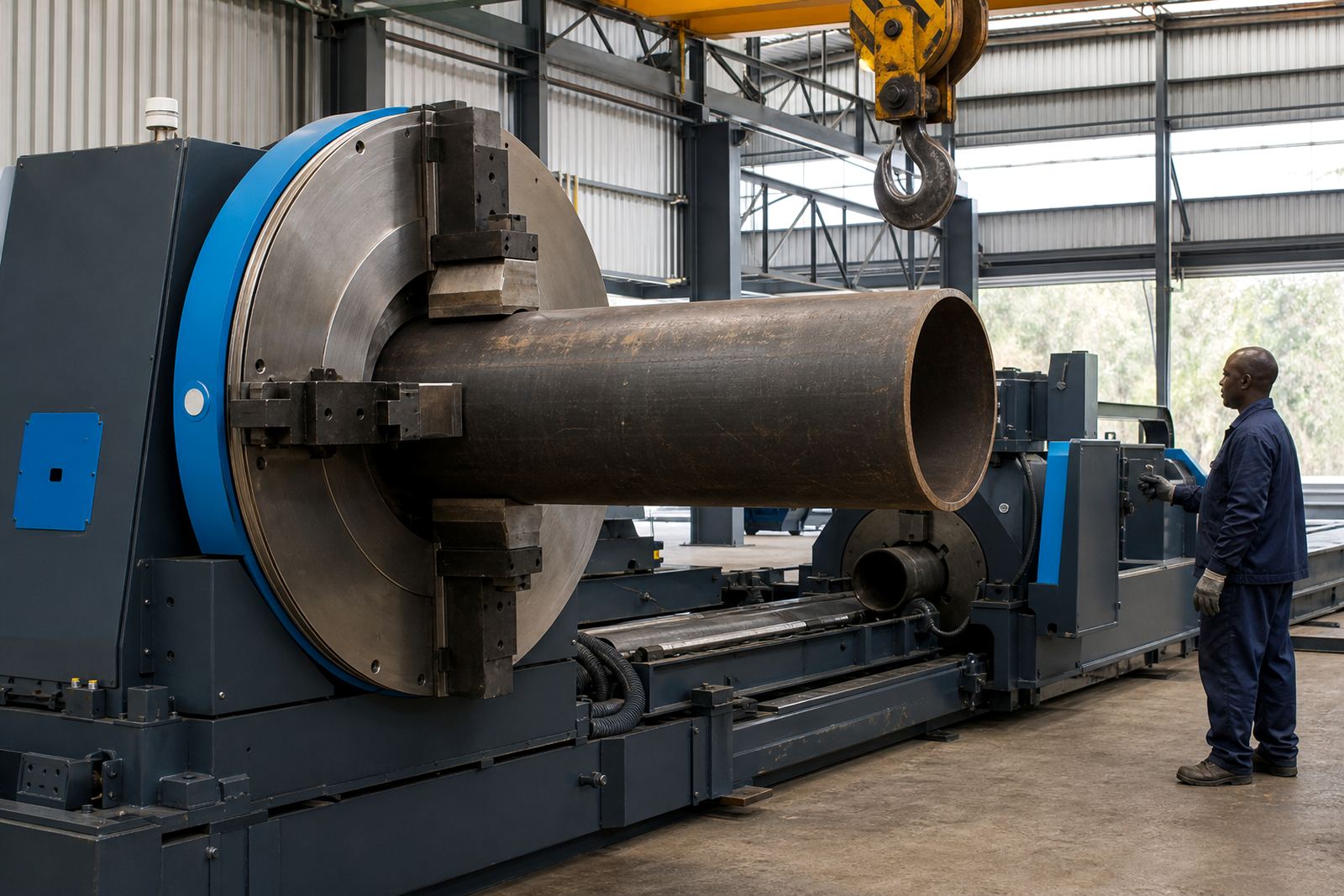
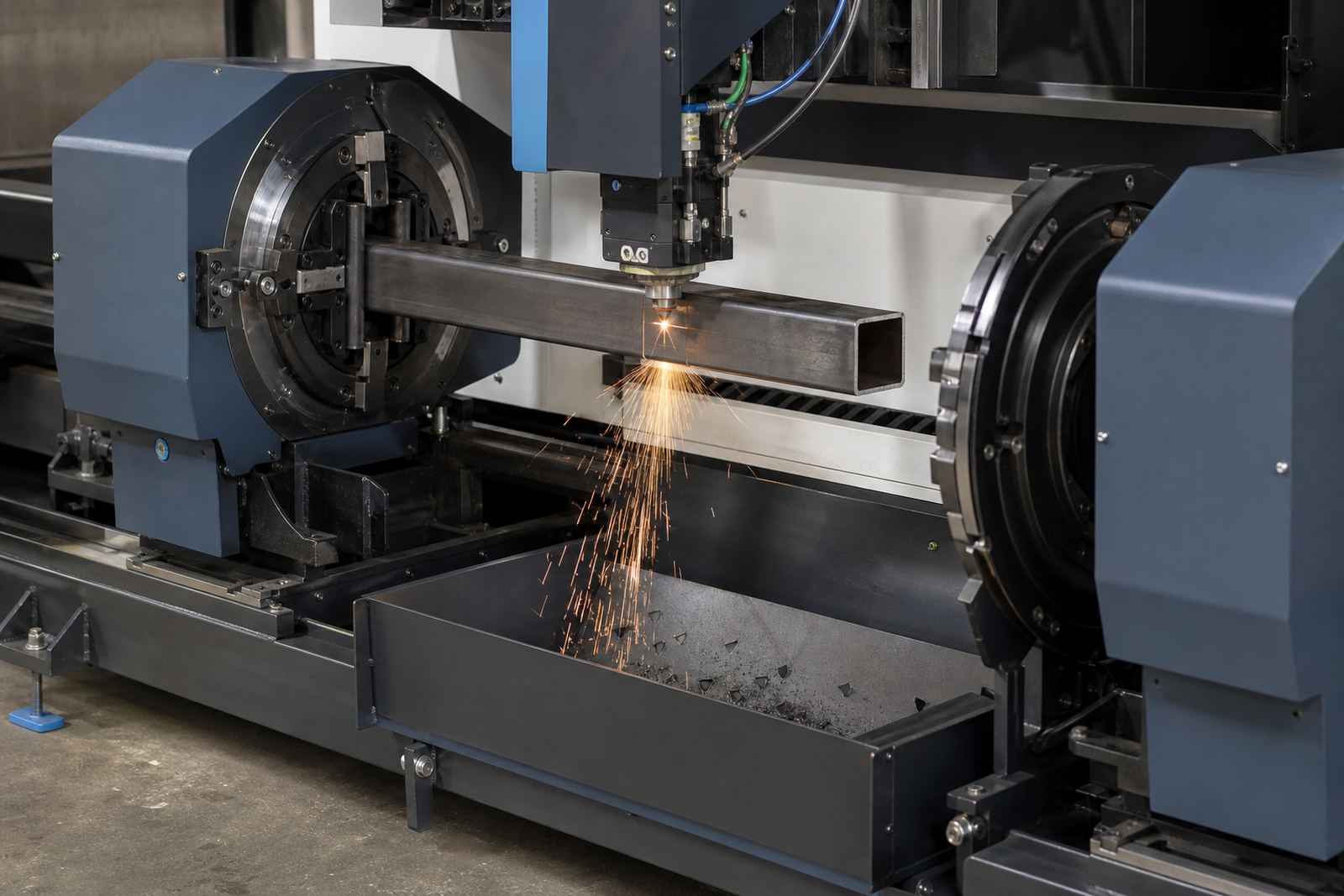
A dual chuck laser tube machine uses two gripping points to support the workpiece through the cut. One chuck drives rotation while the second chuck holds the far end aligned, so the tube does not whip or sag when the bed length changes or when the part is long and narrow. That matters on straight cutting jobs, especially where holes, slots and profile profiles need to line up from one end to the other.
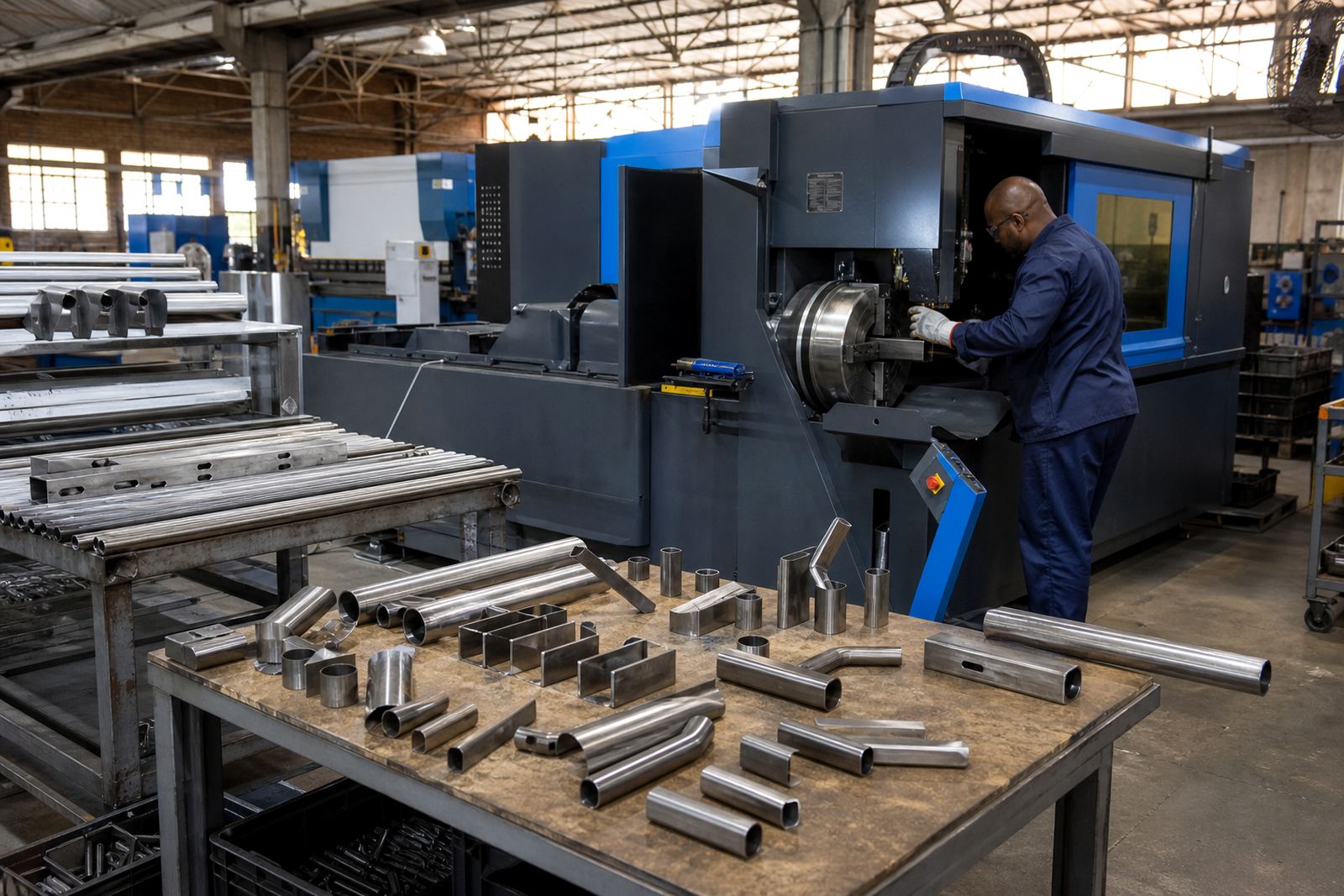
This setup is used for round tube, square tube, rectangular tube, angle and channel, depending on the clamping range and the material wall thickness. For many South African fabricators it is the practical choice when repeat cuts, tighter lengths and cleaner end faces are required across batches of structural and general fabrication work.
On a well set machine the chuck grip is balanced, the axis movement stays true, and the cut head can track without fighting the tube. That gives the operator better control over cut quality, especially on longer lengths where even a small twist can show up in the finished part.
Tube sizes, chuck range and head options
Dual chuck systems are commonly set up for short to medium production runs and for heavier fabrication jobs where stable rotation is more important than open-bed flexibility. The exact capacity depends on the frame, chuck size, loading layout and the tube profile being processed. Some plants need compact footprint machines for tighter bays, while others need longer bed options for 6 m stock and mixed batch work.
- Round tube, square tube and rectangular tube handling
- Angle and channel support for structural fabrication
- Single or double layer chuck clamping, depending on stock profile
- Cutting envelope matched to the tube length and shop handling plan
- Optional bevel cutting head for angled joints and weld prep
- Automated loading and unloading support on selected layouts
Bevel heads are used where the job needs weld preparation, cope work or angled joins on end cuts. They add useful flexibility, but they also need correct calibration and a clear plan for nesting, kerf allowance and part spacing. Where the work is mainly straight section cutting, a standard head with a dependable chuck setup is often the more direct choice.
Jobs that suit a dual chuck setup
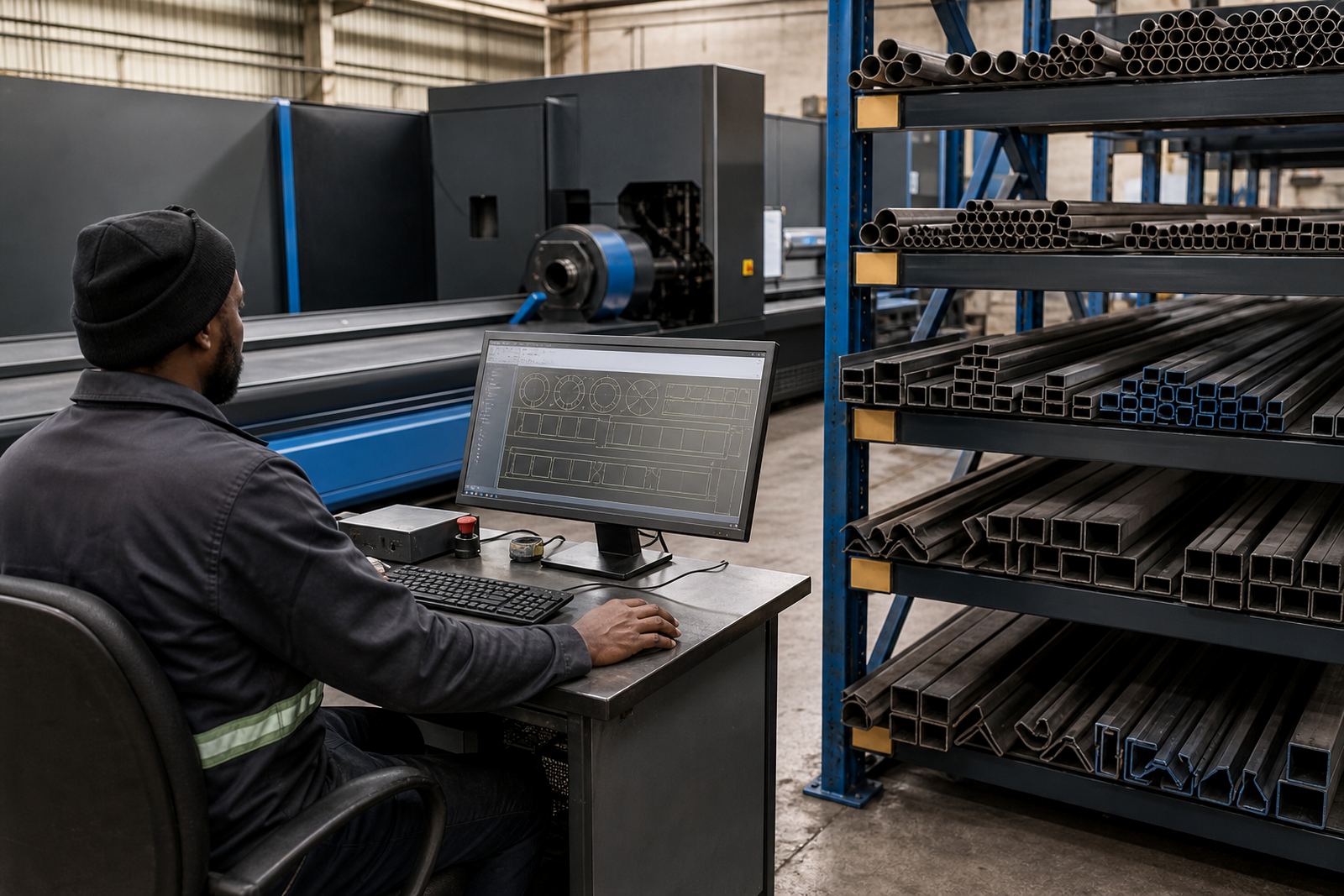
Dual chuck laser cutting suits fabricators that work with handrail sections, frame parts, trailer parts, conveyor frames, agricultural tubing and general steelwork. It is also used in plants that need a cleaner route from drawing to cut part, with less manual marking and less time spent chasing cut length errors on planned batches.
The machine is useful where tube length consistency matters and the cut sequence must stay stable from first part to last. A job shop in Johannesburg might use it for mixed structural work. A Durban fabricator may need it for coastal jobs where sections must be cut cleanly before galvanising or welding. In Cape Town and Gqeberha, it often suits fabrication that mixes tube, angle and channel in the same weekly workflow.
- Structural steel fabricators
- Job shops handling mixed section sizes
- Production plants with repeat tube batches
- Contractors making frames, rails and support assemblies
- Workshops needing cleaner fit-up before welding
Installation, gas setup and operator handover
Installation begins with a proper site assessment, a check on floor space and a handling plan for the machine base, chiller, gas lines and tube loading access. The rigging crew needs clear movement paths, level placement and enough room around the chucks, beam path and control cabinet for service access. If the machine includes bevel cutting or automatic loading, the layout needs extra space for safe movement and part transfer.
Assist gas setup forms part of the commissioning work because cut quality depends on the right gas choice, correct pressure and clean supply lines. Oxygen, nitrogen or air may be used depending on the material, thickness and finish requirement. Operators also need training on clamp position, cut sequence, nesting layout, pierce control and safe tube handling around moving parts. On steel tube jobs, good gas discipline and chuck alignment are as important as the cutting program itself.
- Site assessment and layout planning
- Delivery rigging and machine positioning
- Commissioning and function checks
- Operator training and nesting training
- Assist gas setup and pressure checks
- Chuck alignment and bevel calibration
Care, alignment and the parts that wear first
Dual chuck machines need regular attention to the chuck jaws, guide surfaces, linear motion parts and rotary drive system. Tube clamping faces pick up dust and scale, while the sealing points and moving parts need cleaning to keep grip even. If the jaws wear unevenly, the tube can mark, shift or rotate slightly out of line. That is where routine chuck alignment pays off.
Preventive maintenance should cover the chuck mechanism, lubrication points, filter checks, gas lines and head calibration. On bevel machines, the head angle and zero point should be checked after heavy use or after any knock during loading. A workshop that keeps the machine clean and watches for early wear gets better repeatability and fewer avoidable stoppages.
- Daily cleaning of jaws, bed and cut zone
- Weekly checks on clamp grip and alignment
- Routine inspection of gas delivery and filters
- Head lens and nozzle condition checks
- Scheduled preventive maintenance on moving parts
Order details to confirm before a machine is sized
The right dual chuck machine starts with the material mix, tube lengths and part shapes the workshop handles most often. The team should confirm the biggest round, square or rectangular section, the heaviest wall thickness, whether bevel cuts are needed, and if the job set includes angle or channel. It also helps to know how stock enters the shop and whether manual loading or assisted loading is the better fit.
Clear information on electrical supply, compressed air or gas arrangement, floor loading and available bay length makes the installation smoother. In many cases the useful details are less about general machine talk and more about what leaves the saw bench, what must be cut faster and what needs cleaner fit-up. Michael Dlamini, Anika Kajee, Sibusiso Bhengu, Leanne Mabuza, Pieter Visser and Ayanda Mashaba each cover a different part of that process, from applications through training and service.
- Largest tube size and wall thickness
- Round, square, rectangular, angle or channel mix
- Need for bevel cutting or straight cutting only
- Stock length and loading method
- Power supply, gas supply and floor space
- Target production flow and part count by batch
Key facts
| Machine type | Dual chuck fibre laser tube and profile cutter |
|---|---|
| Supported sections | Round tube, square tube, rectangular tube, angle and channel |
| Holding system | Two-chuck drive and support arrangement for controlled rotation |
| Cut options | Straight cutting, with bevel head option on selected setups |
| Services | Site assessment, installation, commissioning, training and maintenance |
| Coverage | Wadeville, Johannesburg, Pretoria, Durban, Cape Town, Gqeberha, Bloemfontein and Nelspruit, with South African delivery and support |