Oval tube cutting that keeps the profile indexed
Oval profile laser cutting asks more from the machine than a round tube job. The tube has to stay indexed through the full cut path, with the chuck holding shape and orientation so slots, holes and end cuts land where the drawing says they should. That matters on handrails, bus bars, furniture frames, trailers, gym equipment and decorative steel work where the oval section sits in a fixed direction. The machine bed, chucking system and nesting file all work together, so the tube does not twist under acceleration or during lead in moves.
For fabricators in Wadeville, Johannesburg or Pretoria, the big difference is repeatability. An oval profile can look right from a distance yet still be out by a few degrees if the clamp grip or rotation control is weak. On longer sections the cut path also needs to account for distortion at the ends and any slight oval variation from the mill. That is where proper setup saves rework and keeps parts ready for welding, bending or assembly.
Machine options for oval and special section work
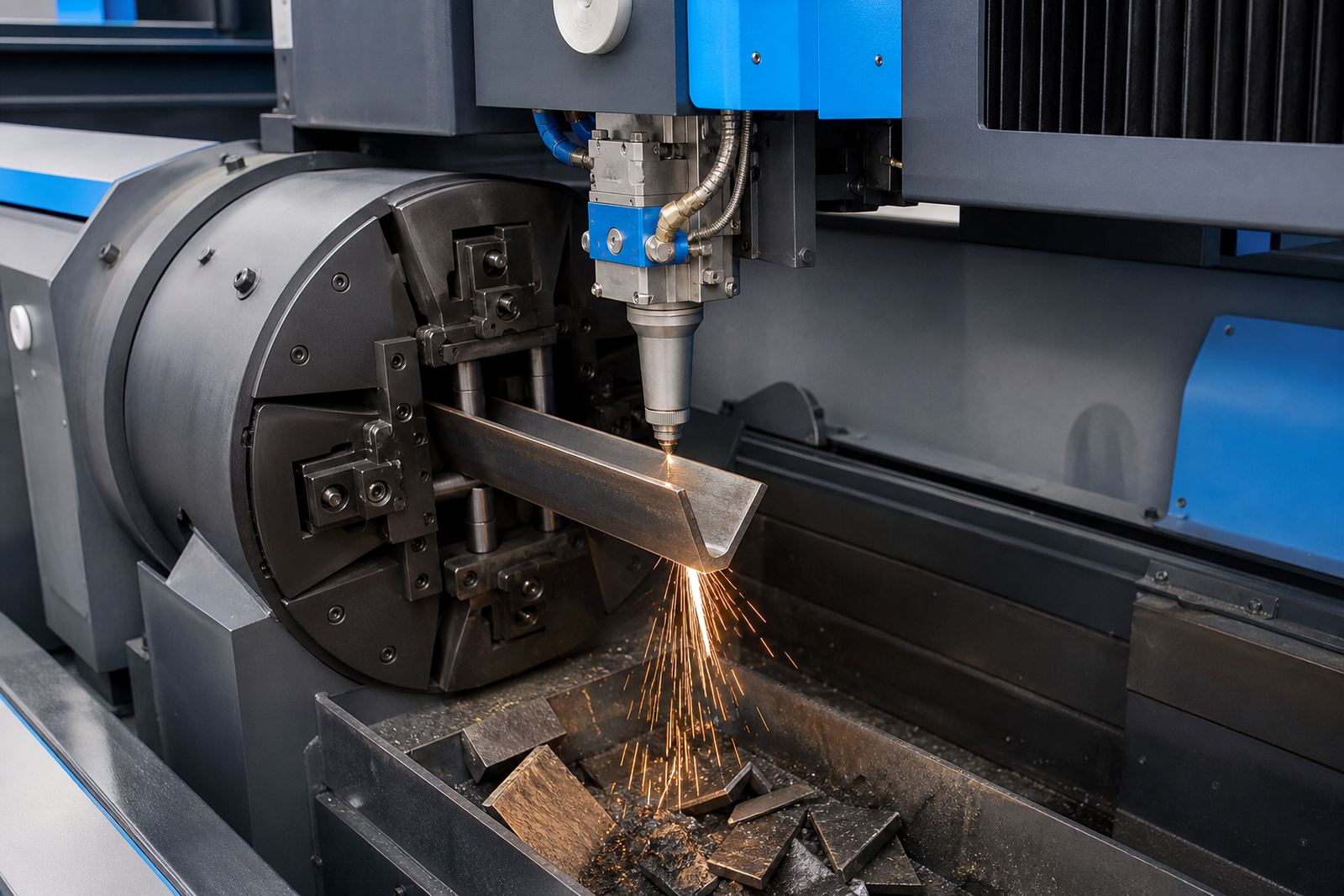
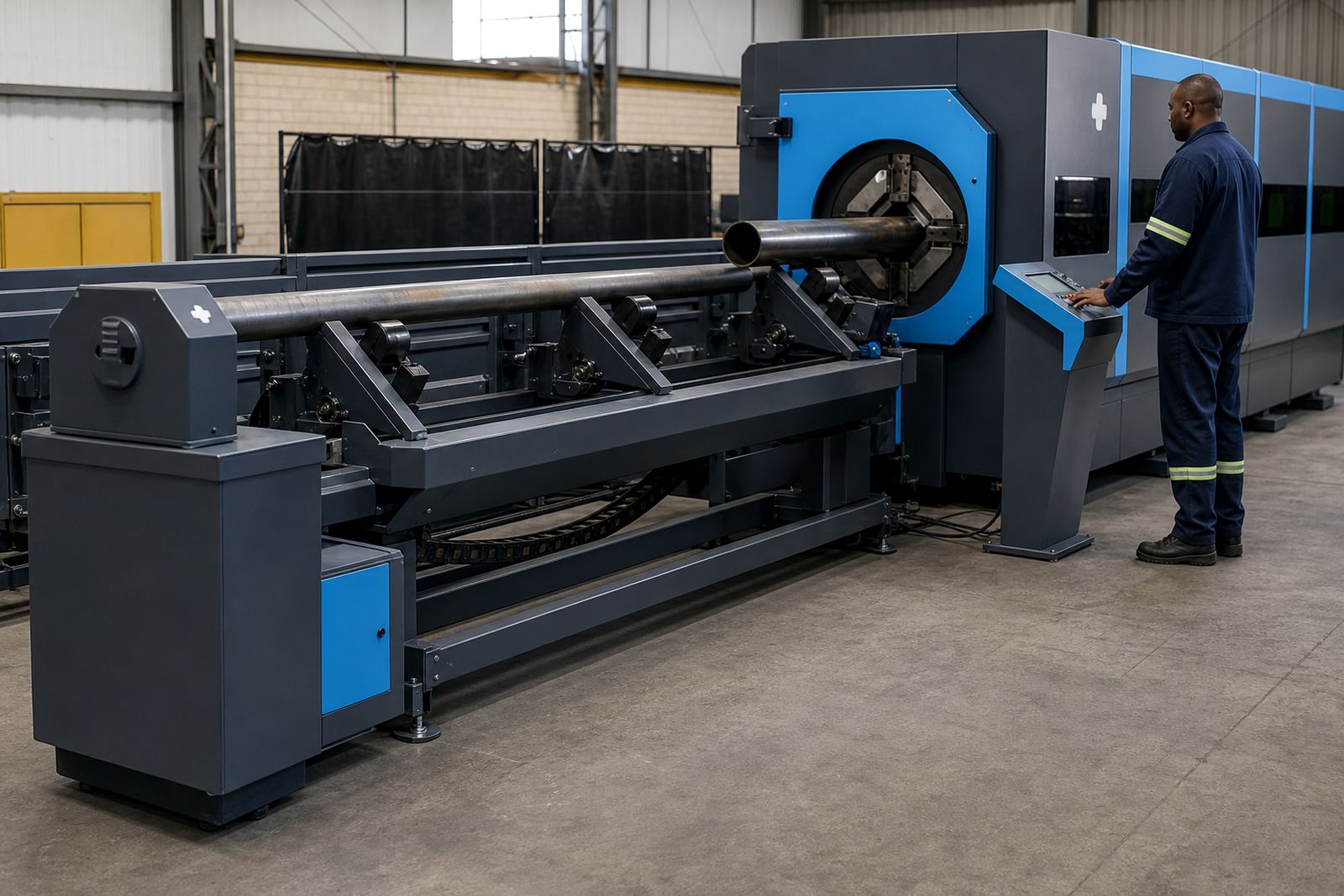
These machines are usually specified with a tube chuck system, a profile support arrangement and a cutting head suited to round, square and rectangular tube as well as oval or irregular section. Depending on the job mix, the machine may be fitted with one or more chucks, a tail support, a bevel head for angled edges, and nesting software that can place parts across the tube length with sensible scrap control. For some workshops the same line also handles angle iron, channel and open profile work with the right clamping and programming.
- Cutting range commonly starts around 20 mm and can reach larger oval sections depending on the machine build.
- Wall thickness capability is usually defined by mild steel, stainless steel and aluminium requirements.
- Tube length handling can include standard 6 metre lengths and extended beds for longer members.
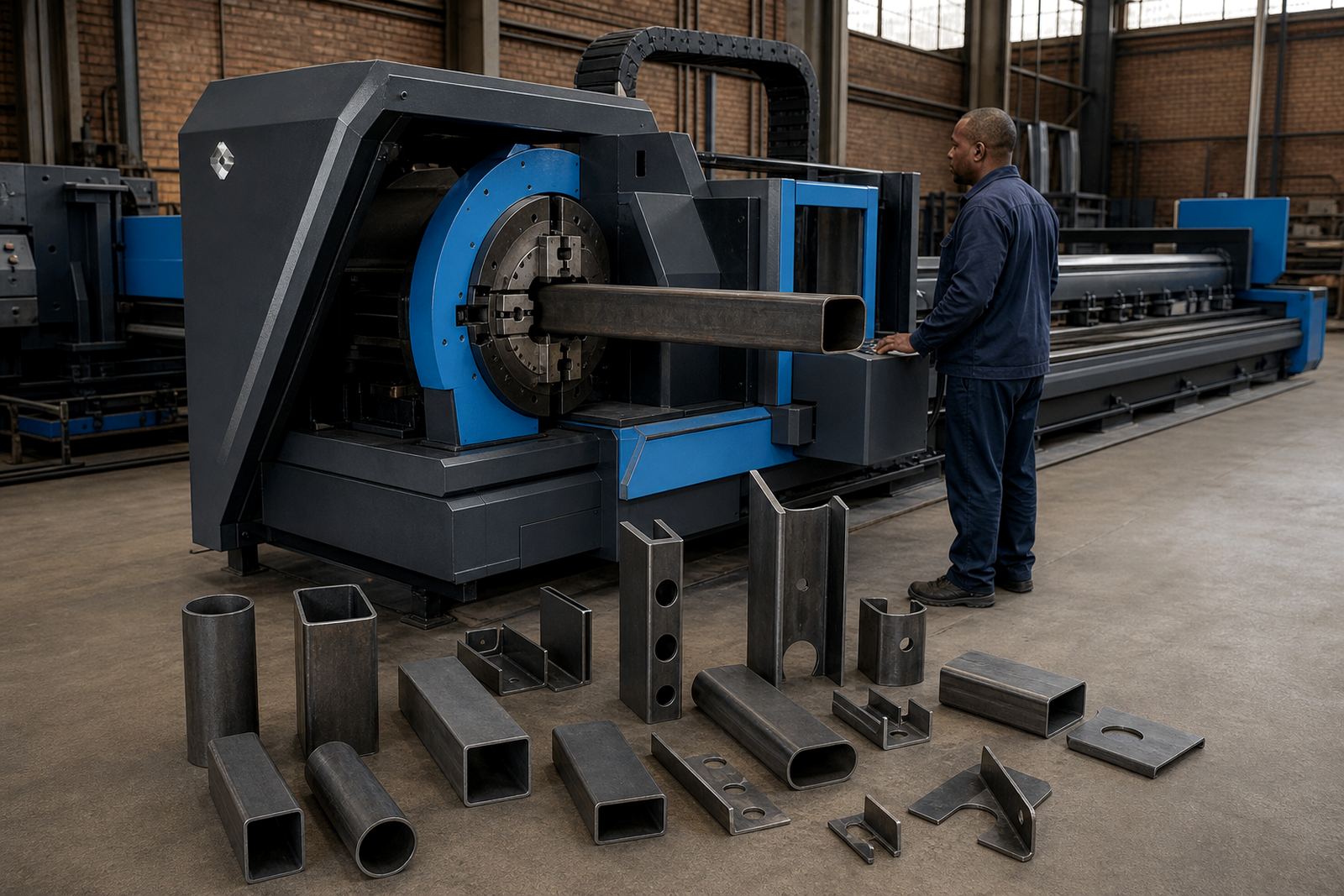
- Round, square, rectangular, oval, angle and channel profiles can be programmed where the chucking allows it.
- Bevel cutting is useful on parts that need cleaner weld prep or angled joints.
For sites in Durban or Cape Town, stainless and coated material work may need cleaner cutting settings and careful gas selection, especially where the finished part will show fingerprints, weld marks or heat tint if the setup is wrong.
Where oval profile cutting earns its place
This product suits fabricators that handle jobs with a visible face and a fixed orientation. Oval rail sections, machine guards, display frames, architectural steel, transport fittings and light structural assemblies all benefit from a cutter that places the slot, notch or branch cut in the right direction every time. The same applies to production plants that need batches of matching parts rather than one off manual marking.
It also suits shops that are moving from manual marking and band saw prep to programmed cutting. In Bloemfontein or Gqeberha, where transport to site can add cost and delay, being able to cut accurate profiles in house reduces fitter time and shortens the handover between design and fabrication. The machine is most useful when the job list includes different shapes on the same shift and the operator needs a clear setup path.
Special profile work is also common in repair and replacement jobs. Older handrails, agricultural equipment and transport frames often use oval or formed tube that does not sit squarely in a standard clamp. With the right fixture and software setup, the machine can hold the part without chasing it across the bed.
Installation, rigging and workshop fitting
Oval profile lasers need careful placement before the first cut is made. The base must be level, the delivery path clear and the rigging planned so the bed, control cabinet and ancillary equipment reach the workshop safely. After installation, the chuck alignment, laser head position and nesting settings are checked against the material and the tube shapes you plan to cut. If bevel work is included, the head calibration has to match the angle range you will use on real jobs.
- Rigging and final positioning for the machine bed and support sections.
- Power connection and clean earthing to suit the machine specification.
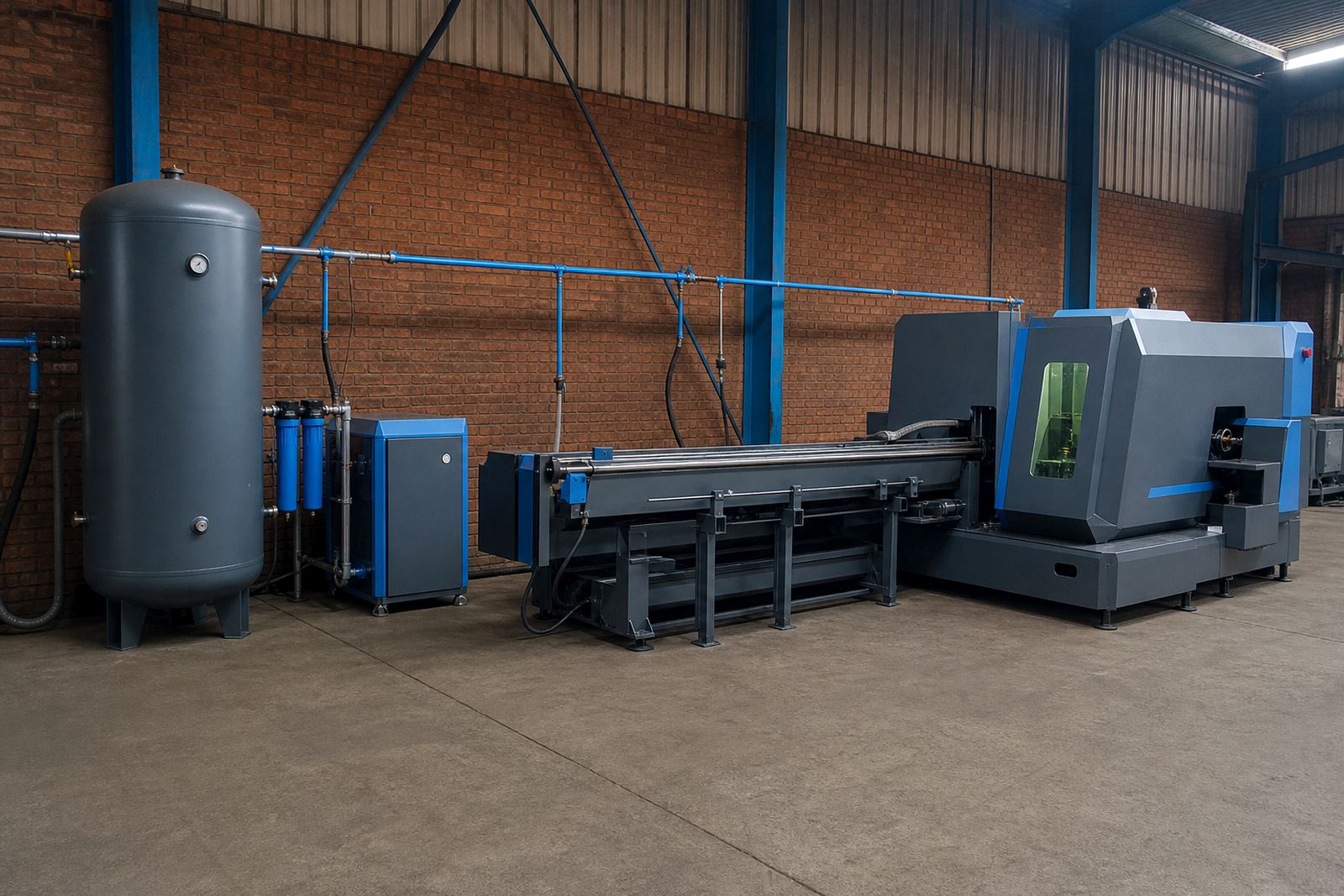
- Assist gas setup for oxygen, nitrogen or air cutting where the material and finish call for it.
- Chuck alignment for oval, round and special profile holding.
- Software setup for nesting, part libraries and material thickness tables.
- Operator handover for loading, clamping, cut trials and safe unloading.
Across South Africa, workshop conditions vary from compact job shops in Wadeville to larger production floors in Cape Town and Durban, so the layout has to fit the real space not just the drawing. When access is tight, delivery rigging and machine placement need to be planned around doors, forklifts and floor loading.
Care, wear points and day to day checks
Oval profile machines stay accurate when the chuck jaws, guide surfaces and cutting head are kept clean. Fine dust, scale and offcut fragments can build up around the clamp area and affect how the tube sits. On coated or oily stock, the contact points need extra attention because slip marks can show up as a slight misalignment in the finished part. Regular checks on optics, nozzles and support rollers help prevent poor edge quality and wasted tube.
The operator should watch for oval stock that varies slightly from piece to piece. Even a small change in section height can affect the hold in the chuck and the rotation settings. That is why preventive maintenance, chuck alignment and bevel calibration are part of a sensible workshop routine. On heavier production runs, it pays to track wear on the jaws and replace consumables before the grip becomes inconsistent.
When the machine is used for stainless or aluminium, gas quality and nozzle condition matter more than many shops expect. Poor assist gas settings can leave dross, rough edges or heat marks that slow the next stage of fabrication. A clean cut saves time at the grinder and keeps welded joints tidier.
Ordering details to pin down before the machine is specified
Before a machine is sized for oval profile work, the key points are the tube shape mix, the longest section you plan to cut and the wall thickness range. It also helps to list whether the work includes angle, channel, round tube, square tube or rectangular tube alongside the oval sections. Some workshops need straight cut only parts, while others need bevel edges, notches, coping cuts and branch openings.
- Minimum and maximum oval dimensions, including outside width and height.
- Common materials for your work, including aluminium, stainless steel and mild steel.
- Maximum wall thickness for the jobs you expect to run.
- Tube length handling, including standard and extended lengths.
- Need for bevel cutting, nested batches or mixed profile production.
- Workshop space, lifting access and power supply arrangement.
For South African metal fabricators, that information helps match the machine to the actual work rather than a guessed specification. LaserTube supports site assessment, installation, operator training, nesting training and preventive maintenance from Wadeville, Germiston, with service across Johannesburg, Pretoria, Durban, Cape Town, Gqeberha, Bloemfontein and Nelspruit.
Key facts
| Product type | Fibre laser tube and profile cutting machine for oval and special profile work |
|---|---|
| Profile range | Oval, round, square, rectangular, angle and channel sections |
| Typical tube length | Standard 6 metre lengths, longer beds available by specification |
| Cutting options | Straight cut, slotting, notching and bevel cutting where fitted |
| Assist gases | Oxygen, nitrogen or air depending on material and finish |
| Services | We assess your site, install and commission the machine, train your operators, and provide maintenance and ongoing support. |