Built for angle iron, coping and connection prep
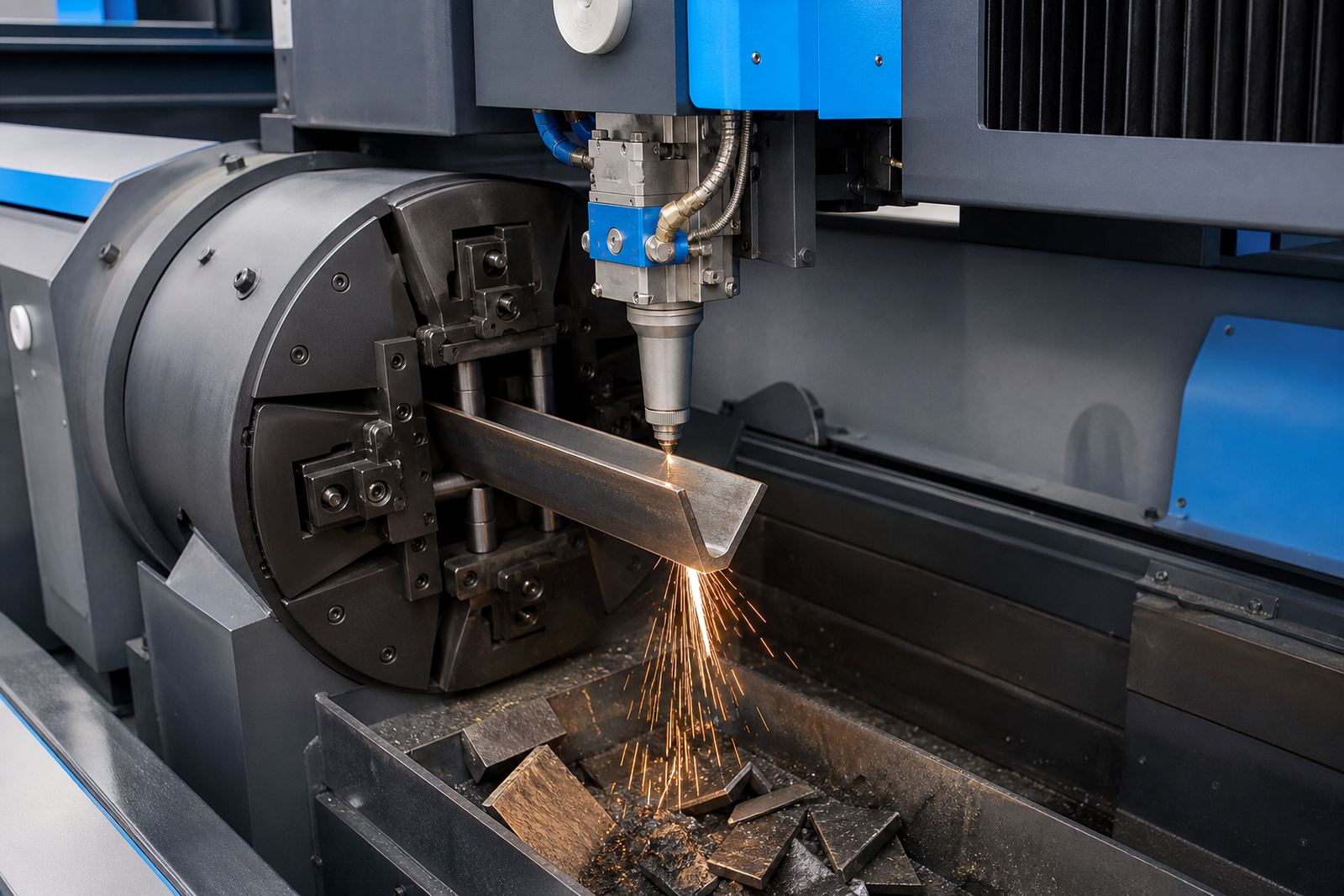
An angle cutting machine is set up for steel angle work where joint prep must be accurate and repeatable. It handles cut offs, slotting, coping, mitres and connection details on structural members used in frames, supports, brackets and fabricated assemblies. In a fibre laser setup, the cutting head follows the profile with tight control, so the finished edge is cleaner than flame or manual grinding work.
On angle stock, the value is in keeping the leg geometry true through the cut. That matters when the part has to match a mating face, land on a gusset or fit through a connection plate without extra dressing. The same style of machine can often be configured for tube and open profile work, so the shop is not locked into one part family.
- Suitable for mild steel angle and similar structural profiles
- Useful for slots, cope cuts, fishmouth style ends and mitred joints
- Designed for batch work and repeat production on fixed sizes
Machine layout, chucking and cutting head options
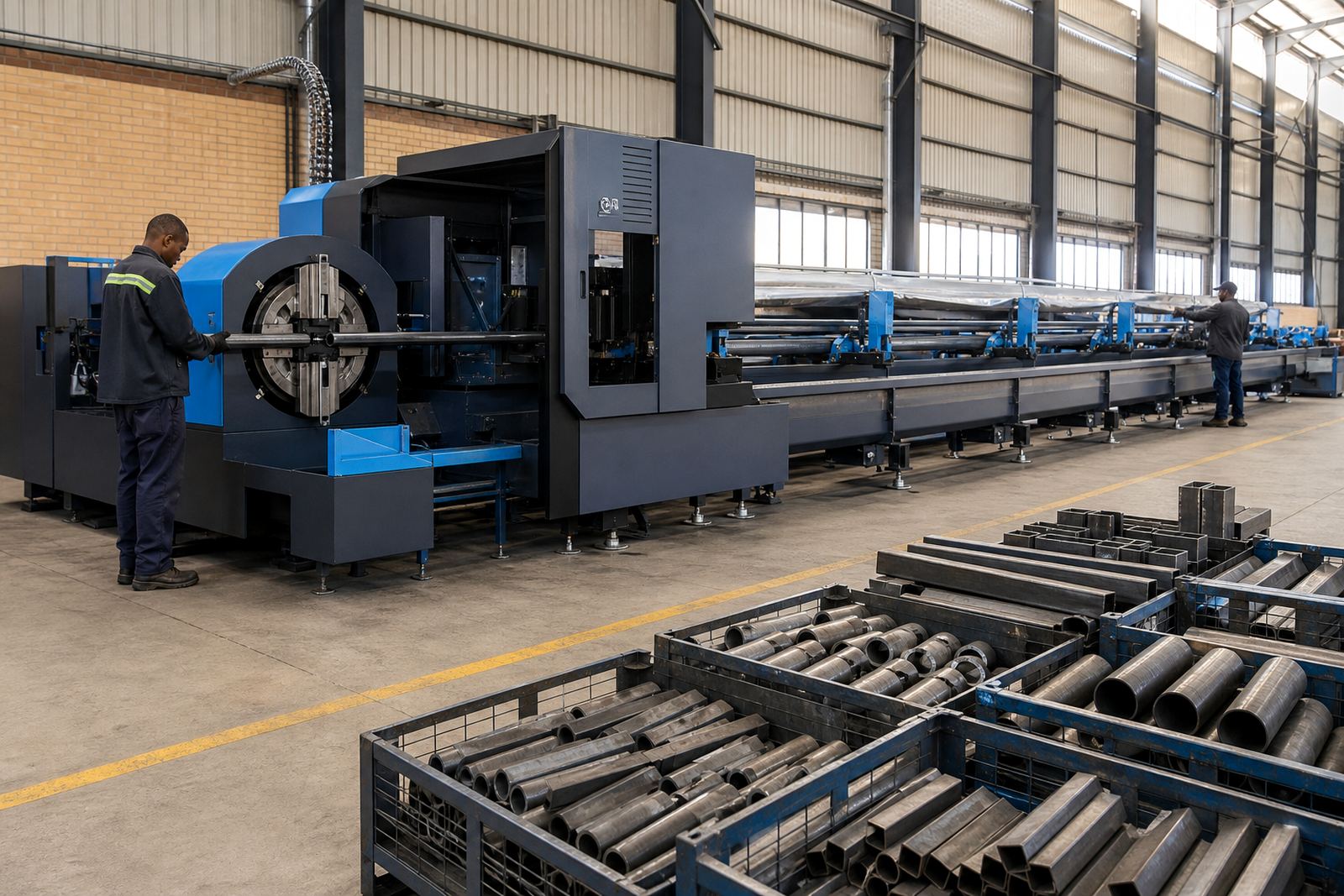
Most angle cutting jobs need stable material holding and reliable indexing. On fibre laser tube and profile machines, that starts with the chuck system. A chuck grips the section while the machine rotates and advances the profile through the cutting zone. For angle work, the setup must hold the legs firmly so the beam stays on the intended line and the cut face remains consistent from part to part.
Depending on the work mix, the machine can be specified with a standard cutting head or a bevel head where the job calls for angled edges or edge prep. Bevel control is useful when the part has to meet a weld requirement or a fit up angle that is not a straight square edge. The nesting software is part of the setup too, because the cut pattern has to use material efficiently and keep parts spaced for stable handling.
- Chuck size matched to the longest and heaviest profile in the range
- Single or twin chuck layouts depending on job length and support needs
- Bevel head option where connection prep or weld access is needed
- Software driven nesting for angle, tube and open profile layouts
Sizes and specs used on South African fabrication floors
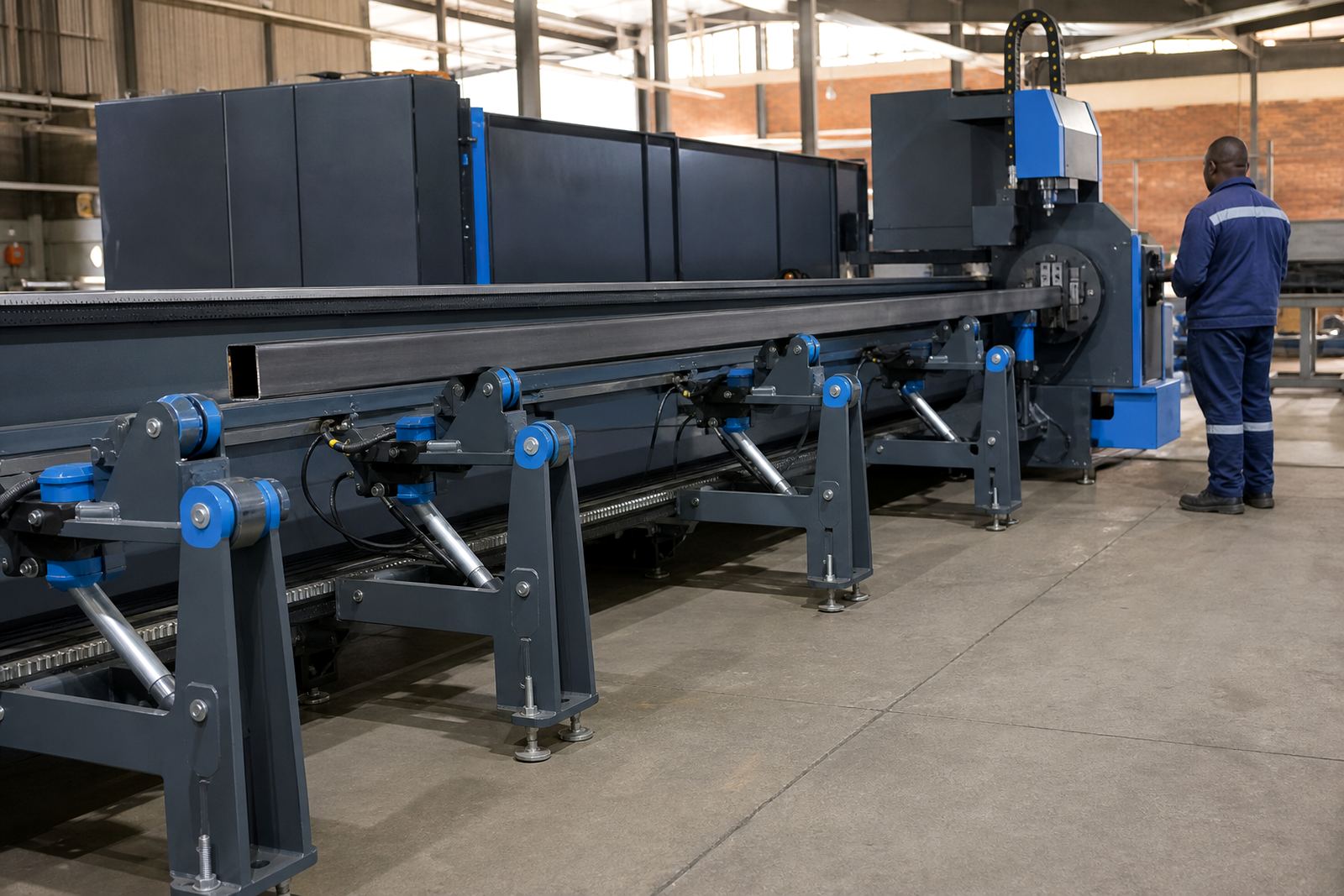
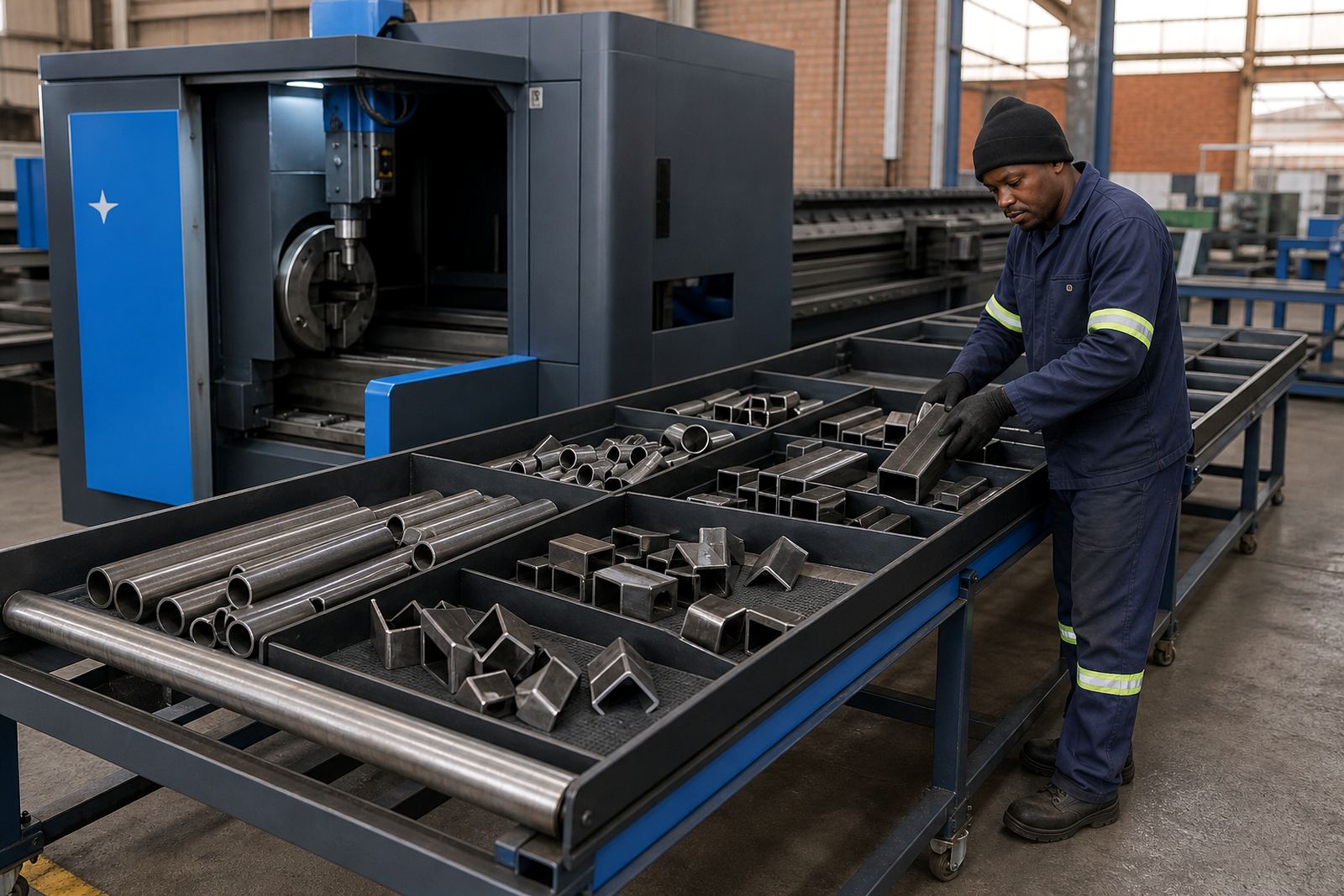
Angle cutting machines are chosen around the section sizes that leave the yard most often. In local fabrication shops, that usually means a spread of light to medium structural angle, with the machine sized to suit the normal bar length and the heaviest section that must be processed. A practical installation also allows for infeed and outfeed space, because long lengths need room for stable loading and finished part sorting.
For fibre laser cutting, assist gas selection is part of the specification. Oxygen is common for steel when edge speed and cut quality need to be balanced, while nitrogen may be used on certain work where a cleaner edge is required. The gas train, regulators and line routing must match the machine duty and the cutting schedule. Safety guarding, extraction and controlled access around the cutting zone are also part of the specification, especially where operators work near moving chucks and part handling areas.
- Typical angle range is set by the chuck and support design
- Common lengths are based on bar stock and production flow
- Support rollers or beds help manage longer profiles
- Gas and extraction setup should match the steel grade and cut programme
Where angle cutting pays off in real production
This machine suits structural fabricators, steel stockholders, gate and frame shops, plant maintenance teams and contractors making connection parts in volume. It is useful wherever angle must be trimmed to fit brackets, gussets, frames, outriggers or support details without heavy hand finishing. Shops in Johannesburg, Pretoria, Durban, Cape Town and Gqeberha use this type of equipment when part fit-up matters and the same size keeps returning to the bench.
For a small job shop, the machine helps reduce the time spent on manual marking and grinding. For a larger plant, it supports repeat production where the same angle details must be cut across multiple orders. The layout also helps when tube and angle work are mixed on the same shift, because the operator can use nesting software to sequence parts and reduce scrap from the bar.
- Structural steel fabricators
- Maintenance and repair shops
- Frame and bracket production
- Gate, security and support structure work
Installation, site fit and operator handover
An angle cutting machine needs a proper site assessment before delivery. The floor should be level, the rigging route clear and the machine position planned around loading space, gas storage and part offload. In Wadeville, Germiston and other industrial areas, the final placement often needs enough room for long stock handling and safe movement around the cutting bay. Installation includes aligning the machine, checking the chuck travel, setting the cutting head and confirming the gas setup and extraction points.
Operator training covers loading, zeroing, nesting, basic cut setting and safe part removal. If the machine has a bevel head, the team must also understand calibration and the effect of angle changes on the finished edge. Good setup work at the start reduces waste and keeps the machine useful when the order mix changes from short parts to long structural runs.
- Site assessment for floor space, access and handling route
- Delivery rigging and machine positioning
- Commissioning of chucks, cutting head and gas supply
- Operator training and nesting training for production staff
Maintenance, inspection and ordering points to confirm
Routine daily care is simple, provided it is done consistently. Keep the chuck faces clean, clear cutting residue from the bed and inspect the gas line work for leaks or wear. The cutting head needs lens care and routine inspection, while the support rollers and guides should be checked for build up that can mark the profile. If the machine is worked hard on steel angle, a preventive maintenance plan is worth keeping on the calendar so wear on motion parts, sensors and alignment points does not creep up on the shift.
When ordering, confirm the angle size range, material grade, part length, bevel requirement, gas preference and whether the machine must also handle tube or channel. It helps to state the smallest slot or cope detail, the longest bar length, the daily part mix and the finish expected at weld prep. That lets the machine be set up for the work it will actually see, not only the catalogue photo version.
- Angle size range and wall thickness or section weight
- Bar length, infeed space and offload arrangement
- Need for bevel cuts, slots or cope details
- Steel grade, gas preference and edge finish target
Key facts
| Cutting method | Fibre laser profile cutting for steel angle and related sections |
|---|---|
| Profile types | Angle, round tube, square tube, rectangular tube, channel |
| Holding system | Motorised chuck arrangement with profile support |
| Cut options | Straight cut, mitre, slot, cope and optional bevel |
| Assist gas | Oxygen or nitrogen depending on material and finish target |
| Services included | Installation, commissioning, operator training and maintenance support |