Automatic loading for tube and profile runs
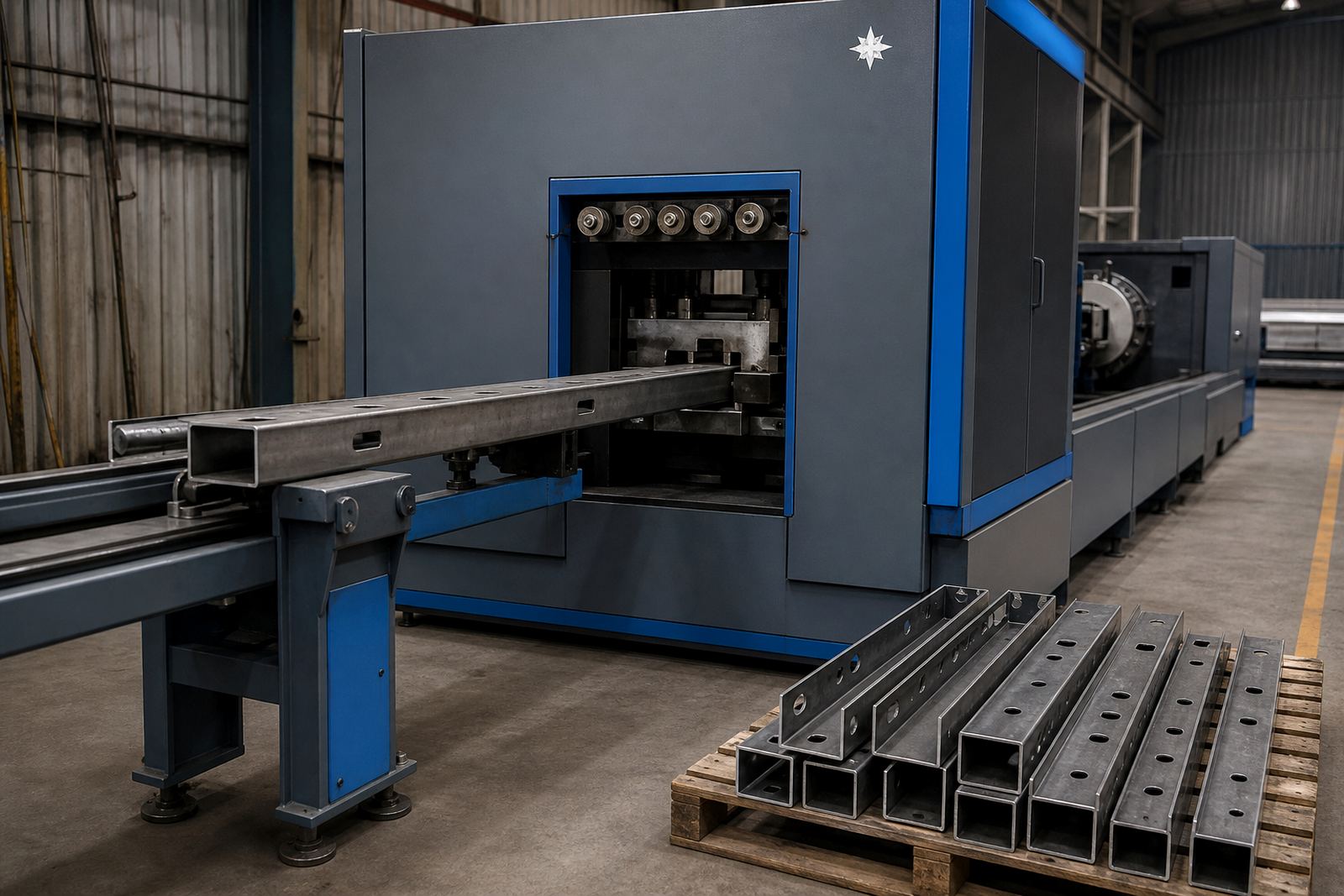
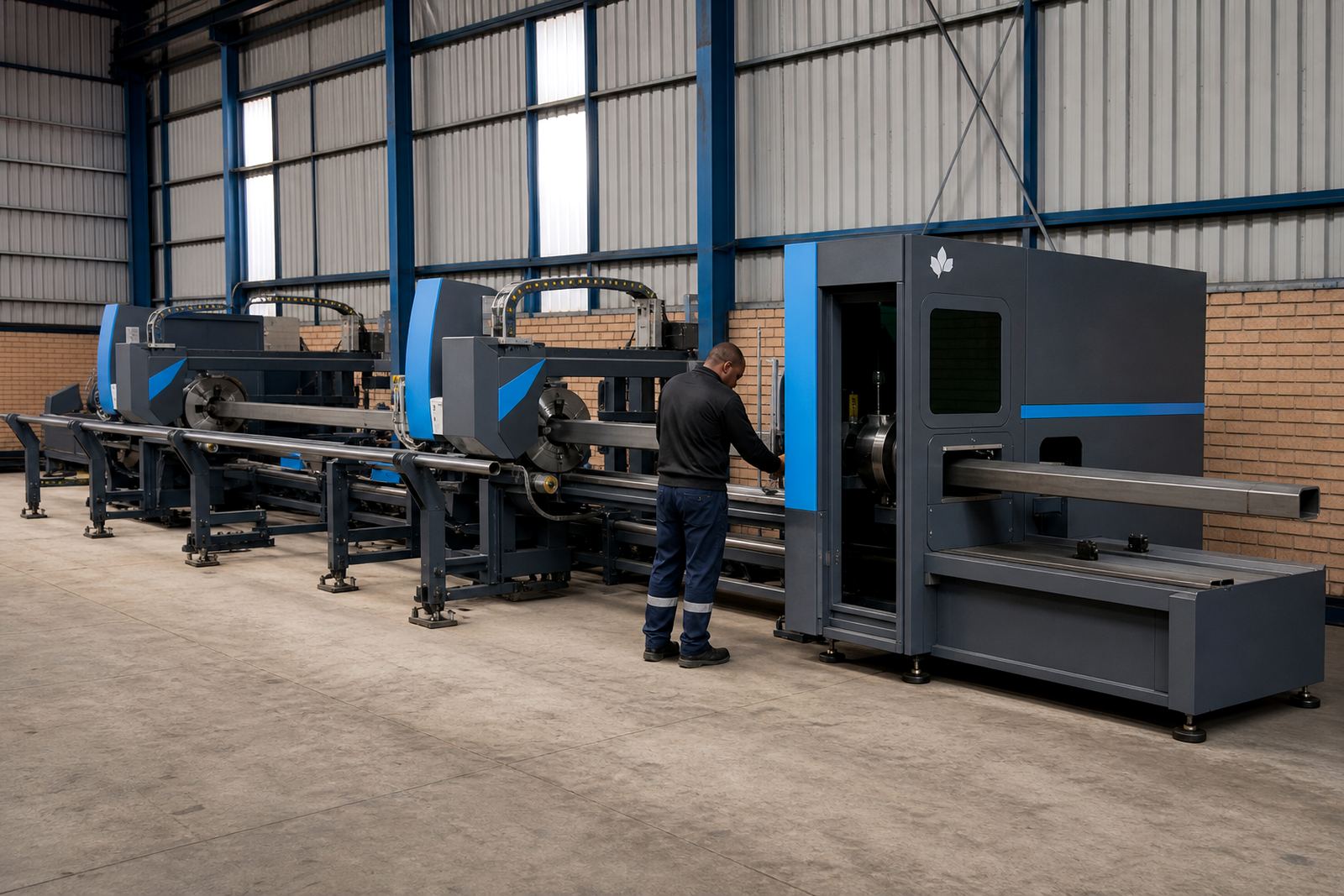
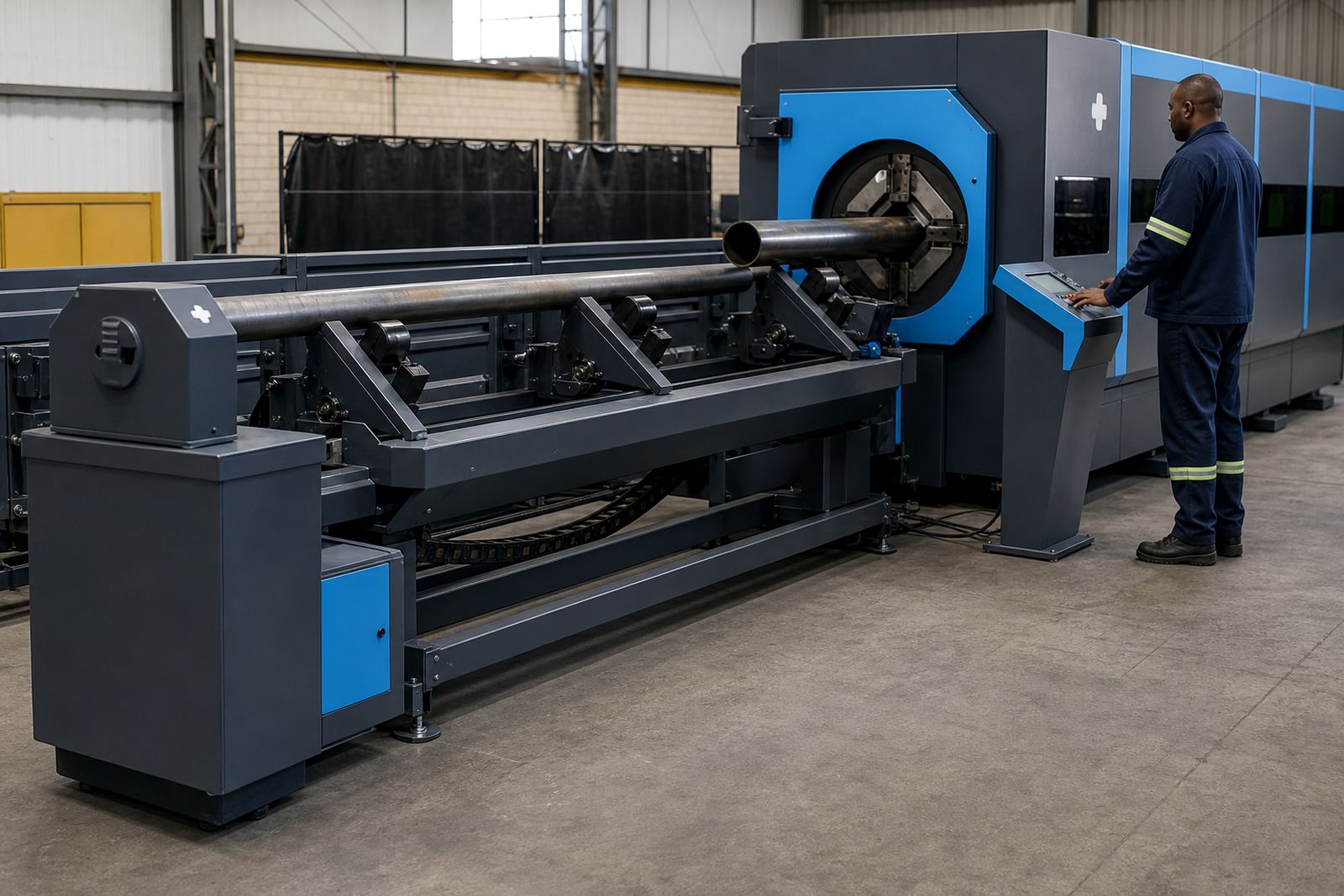
An auto loader laser is a fibre tube cutting system fitted with a loading magazine, transfer arms and support stations that move stock into the cutting zone without hand feeding each length. It is used for round tube, square tube, rectangular tube, angle and channel, with the machine gripping the workpiece through chucks while the laser head cuts the required holes, slots and mitres.
In a South African fabrication shop, that loading method matters when you are working through planned batches of handrail parts, truck fitments, rack frames or structural parts with many identical lengths. The machine keeps the cut sequence organised and helps reduce handling marks, dropped material and awkward lifting around the bed.
- Automatic loading for single lengths and repeated batches
- Suitable for tube, open sections and mixed profile work
- Supports high repeatability on drilled and cut features
- Works with nesting software to reduce offcut waste
Tube sizes, chucks and cutting head choices
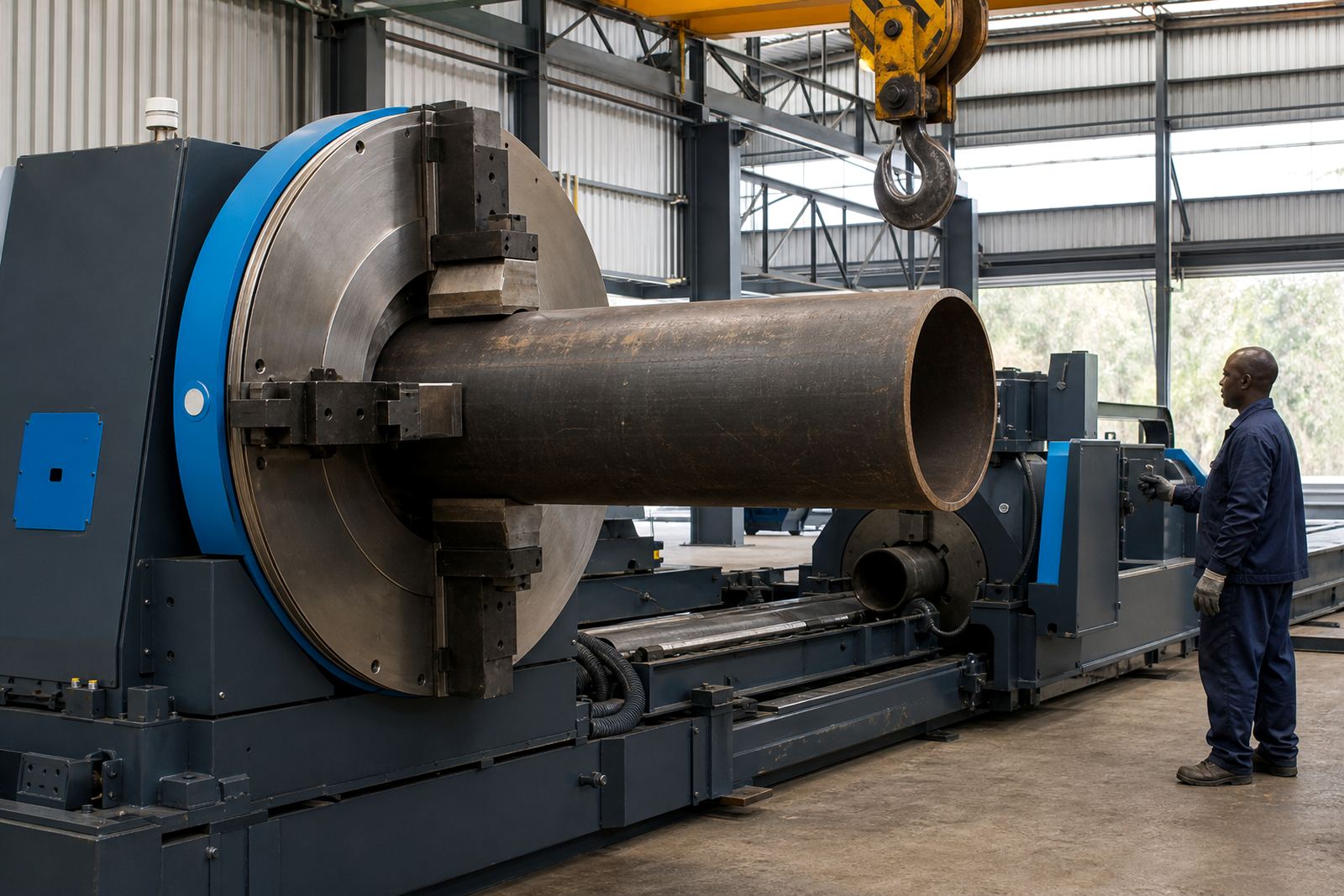
Most auto loader laser systems for tube work are specified by the maximum round diameter, square size, rectangle size and raw length that can be accepted by the loader and clamped in the chucks. The right machine depends on the section mix, wall thickness, finished part length and how often short remnants need to be handled.
Where bevel cutting is required, a bevel head can be added to prepare weld edges for fabrication, and that is useful on brackets, frames and pipework that need cleaner fit-up. Chuck size and clamping style matter because thin-wall tube can distort if it is not supported properly, while heavier sections need firm grip and stable rotation through the cut cycle.
- Round tube from small diameter work up to larger structural sizes
- Square and rectangular tube for frames, gates and furniture parts
- Angle and channel for support members and fabricated assemblies
- Bevel head options for weld prep on selected jobs
- Chuck support for steady rotation and cleaner cut edges
Where the loader earns its place
This machine suits fabricators that move through long production runs, mixed jobbing work or recurring part lists where manual loading slows the pattern. It is a strong fit for gate and fencing shops, racking makers, vehicle body builders, farm implement work, steel furniture production and general metal shops handling repeat tube parts.
For Gauteng plants in Wadeville, Germiston, Johannesburg and Pretoria, the loader can help keep one operator focused on set-up and part checking while the machine handles feeding. In Durban, Cape Town and Gqeberha, shops often value the steadier handling of longer tube lengths in humid coastal conditions, where clean storage and dry material staging matter for surface finish and consistent loading.
- Job shops with repeating cuts across many small orders
- Production plants that need steadier throughput
- Builders of gates, frames, racking and transport fittings
- Shops that want less manual handling between parts
Installation, rigging and machine set-up
An auto loader laser needs proper site assessment before delivery, because the loading side, infeed space, power feed and cut-off discharge all need clear access. Rigging must suit the machine mass and the available route into the building, especially where narrow doors, floor changes or overhead obstructions are part of the workshop layout.
Our installation scope includes delivery rigging, machine positioning, levelling, commissioning and operator training. For fibre laser tube systems, we also configure the cutting set-up, verify chuck alignment, confirm bevel calibration where fitted, and load the machine routines so the loader, clamps and cutting head follow the right sequence.
- Site assessment for floor space, access and service positions
- Delivery rigging and machine installation on site
- Commissioning with chuck alignment and beam path checks
- Assist gas setup for cutting quality and edge finish
- Operator instruction and nesting setup training for everyday production
Operating details that keep the cut steady
Our loader is one unit within the full system. Stable running depends on clean material, correct nest setup, support for long lengths and regular checks on clamps, rollers and transfer points. If tube arrives with heavy scale, rust or oil, the loading sequence can still run, but part quality and consistency are harder to hold.
For servicing, the machine needs regular cleaning around the loading magazine, guides and chucks, plus inspection of wear surfaces, gas lines and cutting optics. Preventive service helps keep the loader feeding evenly, while remote diagnostics can assist when a fault appears on the control system or loading cycle and the machine needs support without guesswork.
- Keep material straight and consistent before loading
- Clear the loader area of swarf and cut-offs
- Inspect chucks, rollers and guides for wear
- Check gas delivery and beam components on schedule
- Use preventive maintenance to protect cut quality
Checks to make before placing the order
Before ordering, it helps to confirm the tube mix, section sizes, length range, wall thickness and whether the work includes bevels or open-profile cutting. The loader capacity must match the lengths you want to run, and the machine bed needs to suit the longest stock you plan to load and process without awkward handling.
It also helps to confirm the power supply available in the workshop, the assist gas arrangement, the floor loading, and whether your team needs nesting training for nested tube layouts. If the machine will run in a busy production area, think about infeed and outfeed space, safe walkways, tube storage, and how finished parts will be sorted after cutting.
- Maximum tube length and section mix to be loaded
- Need for bevel cutting, profile cutting or both
- Assist gas arrangement and service access points
- Workshop space for infeed, outfeed and part handling
- Operator training needs for loading and nesting
Key facts
| Machine type | Fibre laser tube and profile cutting machine with automatic loading |
|---|---|
| Material range | Round tube, square tube, rectangular tube, angle and channel |
| Loading system | Automatic magazine loading with transfer into the cutting zone |
| Cutting options | Straight cutting, hole cutting, mitres and selected bevel work |
| Core controls | Chuck clamping, nesting software and assist gas setup |
| Support | Installation, commissioning, operator training and preventive maintenance |