Cutting tube and profile work at production pace
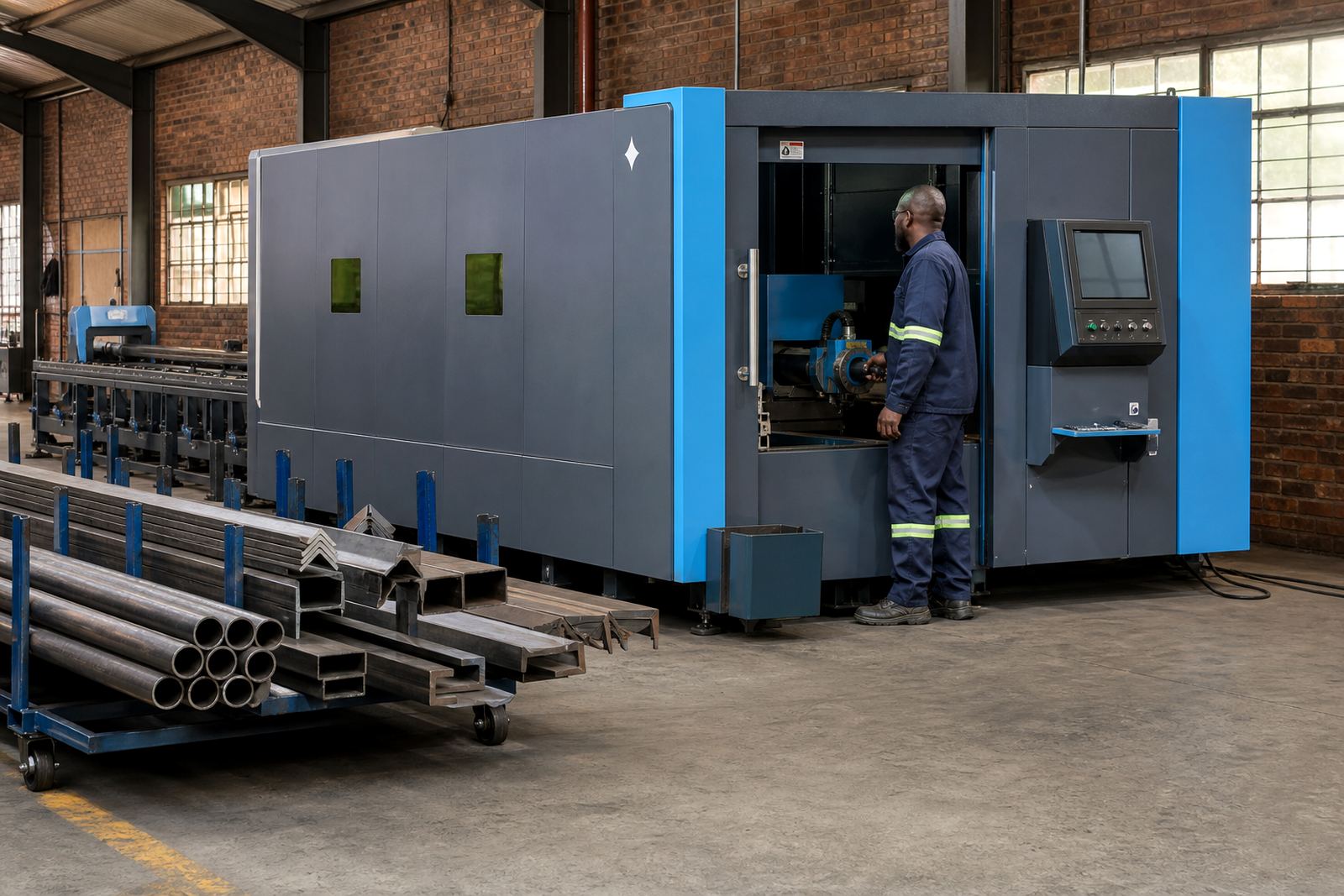
This machine is made for fabricators that need a steady cutting rhythm on recurring parts. It handles round, square and rectangular tube, plus angle and channel, with the sort of repeatability needed for racks, frames, furniture parts, trailer work, balustrade sections and general steel fabrication. The cut path is controlled by CNC, so the job stays tied to the drawing instead of relying on manual marking and hand cutting.
For longer runs, the value sits in the consistency of the clamping, feed control and nesting. Parts can be arranged to reduce offcuts and keep material use sensible, especially on standard stock lengths where every metre counts. With the right setup, the machine supports clean edges, accurate hole placement and a better fit for welding and assembly.
- Suited to repetitive production work and mixed batch jobs
- Handles common tube sizes and open profile sections
- Supports accurate coping, slotting, drilling and cut-outs
- Helps reduce rework on weld prep and assembly fit-up
Machine layout, chucks and bevel control
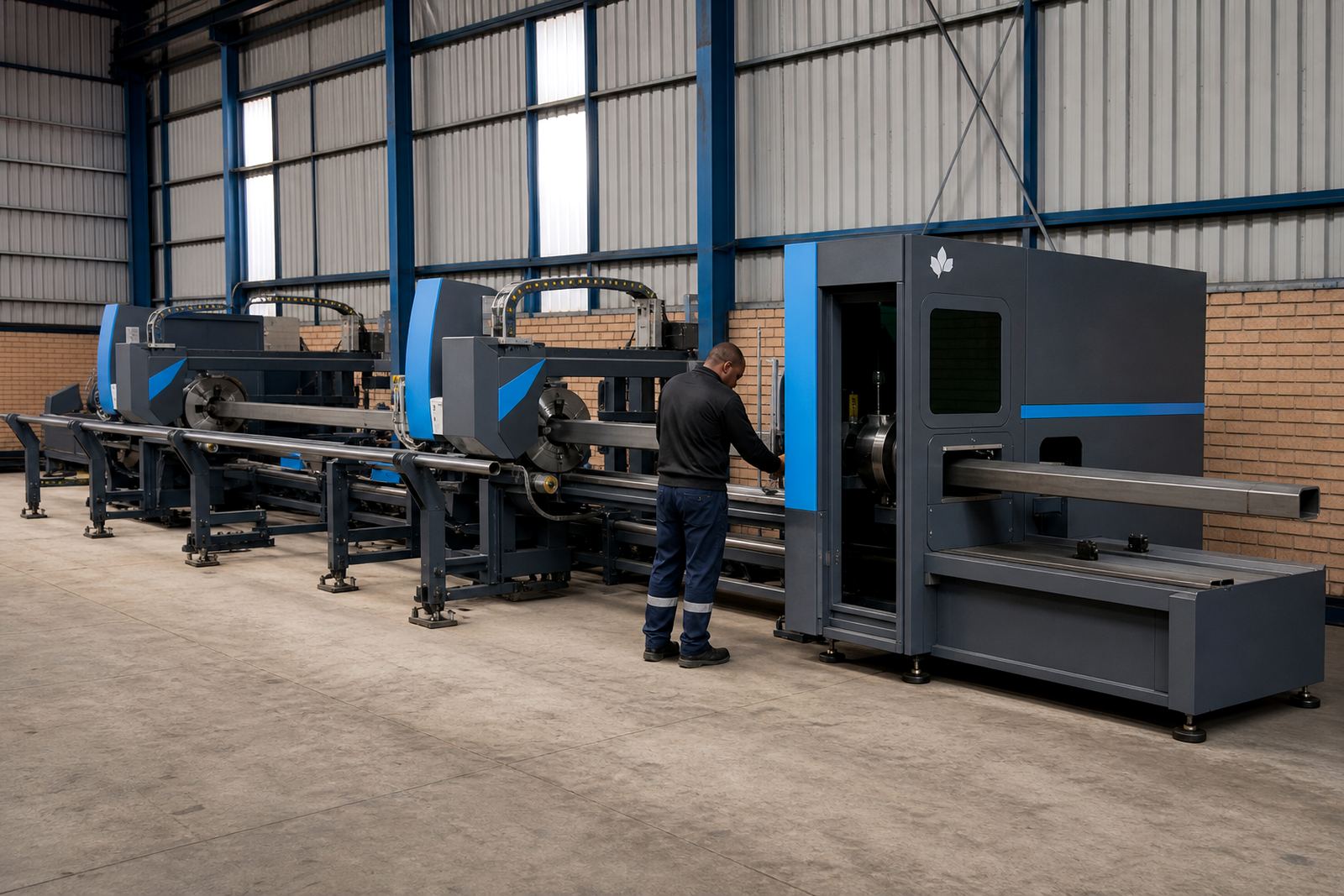
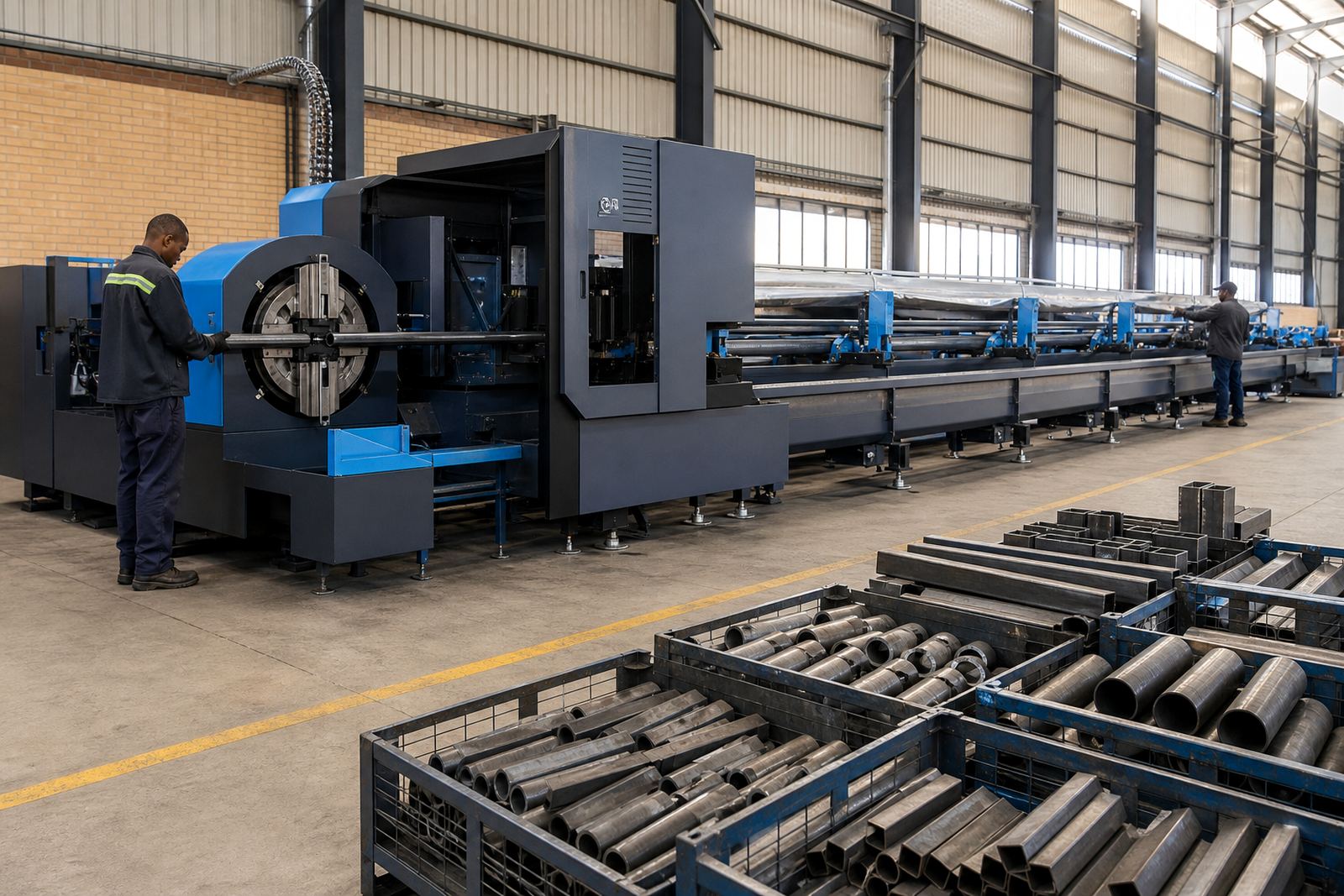
Production tube lasers are built around stable workholding. Most use rotary chucks to grip and turn tube while the cutting head moves along the programmed path. Dual-chuck layouts help with longer sections, while supported loading and unloading keep heavy lengths under control. On some jobs, a bevel head is useful for edge preparation, especially where weld penetration or assembly angles matter.
The cutting head, beam path and motion system must work together with the chuck setup. If the chuck alignment is out, round tube can spin off centre and the cut will drift. That is why setup, calibration and test parts matter before full production starts. On profile work, the clamp points and part support need to suit the section shape so the material stays stable during the cut.
- Single or dual chuck arrangements, depending on length and throughput
- Bevel heads available for selected edge preparation work
- Support systems help with long tube handling and stability
- Alignment checks are part of commissioning and service work
Where this machine suits South African shops
This product suits job shops and production plants in Johannesburg, Pretoria, Durban, Cape Town and Gqeberha where tube work is regular and schedules are tight. It also suits fabricators in Bloemfontein and Nelspruit who want to move from hand cutting or slower profiling methods into a cleaner CNC process. In coastal areas, the machine room should be kept dry and the material feed area should be planned with corrosion in mind.
For contract fabricators, the machine helps with mixed jobs where one week holds structural tube, the next brings furniture frames, gates, or agricultural components. It is also a practical fit for plants that want to standardise cut quality across shifts. The machine works best where drawings are controlled, operators are trained and production flow is planned around the cutting cell.
- Useful for repetitive batch work and mixed order schedules
- Fits structural, architectural and light industrial fabrication
- Works well where cut accuracy affects downstream welding
- Suitable for inland and coastal production environments
Power, assist gas and safety around the cutting cell
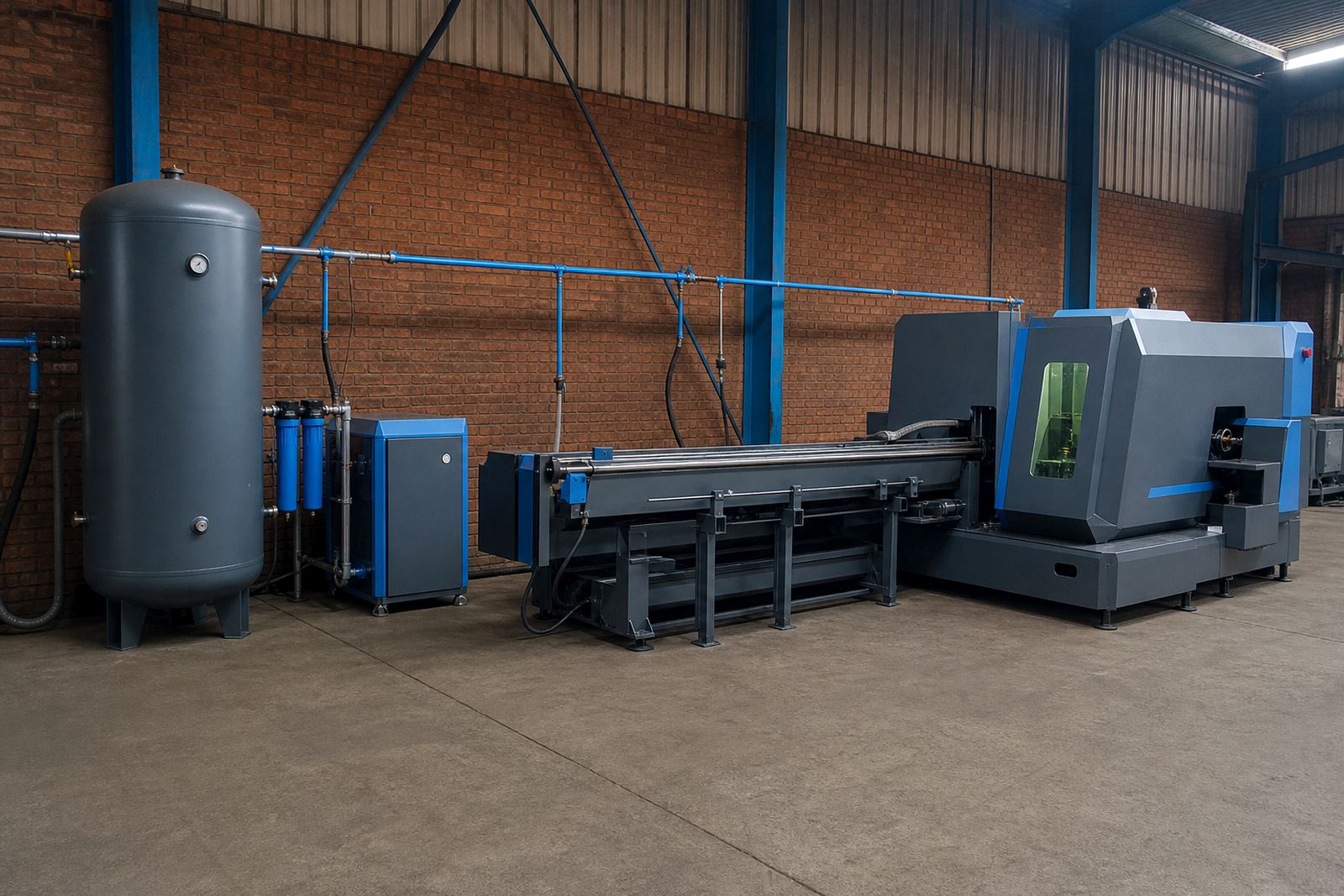
A production tube laser is a mains-powered machine that needs a proper site assessment before installation. Supply quality, earthing, floor condition and cable routing all matter. Assist gas setup is part of the process too, because the machine may use oxygen, nitrogen or compressed air depending on material type, thickness and cut finish requirements. Gas quality and pressure affect edge finish, dross and speed.
Safety has to be designed into the cell. Guards, interlocks, extraction, laser-safe enclosures and clear loading zones all matter. Operators need to understand the beam path, the nesting file, the material schedule and the handling of cut parts, especially when small offcuts or sharp edges are involved. A good setup also considers housekeeping around swarf, dust and scrap drop zones.
- Our site assessment checks available power supply, floor load capacity and machine access routes.
- Assist gas setup depends on material and finish requirements
- Extraction and guarding should match the machine layout
- Safe loading and unloading space reduces handling risk
Installation, training and support from Wadeville
LaserTube handles delivery rigging, machine installation, commissioning and operator training from Wadeville, Germiston, with work carried into Johannesburg, Pretoria, Durban, Cape Town and Gqeberha. The installation team sets the machine, checks the chuck alignment, calibrates bevel functions where fitted and confirms the assist gas setup before production starts.
Training covers machine operation, nesting software, safe loading, programme checks and basic fault finding. For shops that run long shifts, preventive maintenance and service planning help keep the cutting cell steady. Support can also include remote diagnostics, breakdown response, chuck alignment checks and practical applications work for new part families or changed material sizes.
- Installation and commissioning for new production cells
- Operator and nesting training for day-to-day use
- Preventive maintenance and alignment work for production uptime
- Applications support for changing tube and profile jobs
Details to lock down before the machine lands
When ordering a Production Tube Laser, the key details are the tube size range, profile types, material thickness, cutting length and the parts you plan to run most often. It also helps to confirm whether bevel cutting is needed, what loading and unloading method fits the plant, and how material will move into and out of the machine cell. Those points affect the machine layout and the support equipment around it.
It is also worth setting out the software workflow, operator access and gas requirements for the work you actually do. If the machine will run both round tube and open profiles, the clamping and support arrangement should suit both. For repeat production, the nesting plan should be built around the common parts first, then the odd jobs can be slotted in around that pattern.
- Tube diameters, wall thicknesses and section shapes
- Cut length, material types and typical batch sizes
- Need for bevel work, loading support and part sorting
- Software workflow, gas setup and plant access planning
Key facts
| Machine type | Fibre laser tube and profile cutting machine |
|---|---|
| Cutting range | Round, square and rectangular tube plus angle and channel |
| Workholding | Rotary chuck system with single or dual chuck layouts |
| Options | Bevel head, nesting software and part support systems |
| Installation | Site assessment, rigging, commissioning and training |
| Support area | Production plants from Gauteng to the coast, plus Bloemfontein and Nelspruit, supported out of Wadeville |