A single work cell for tube and open section cutting
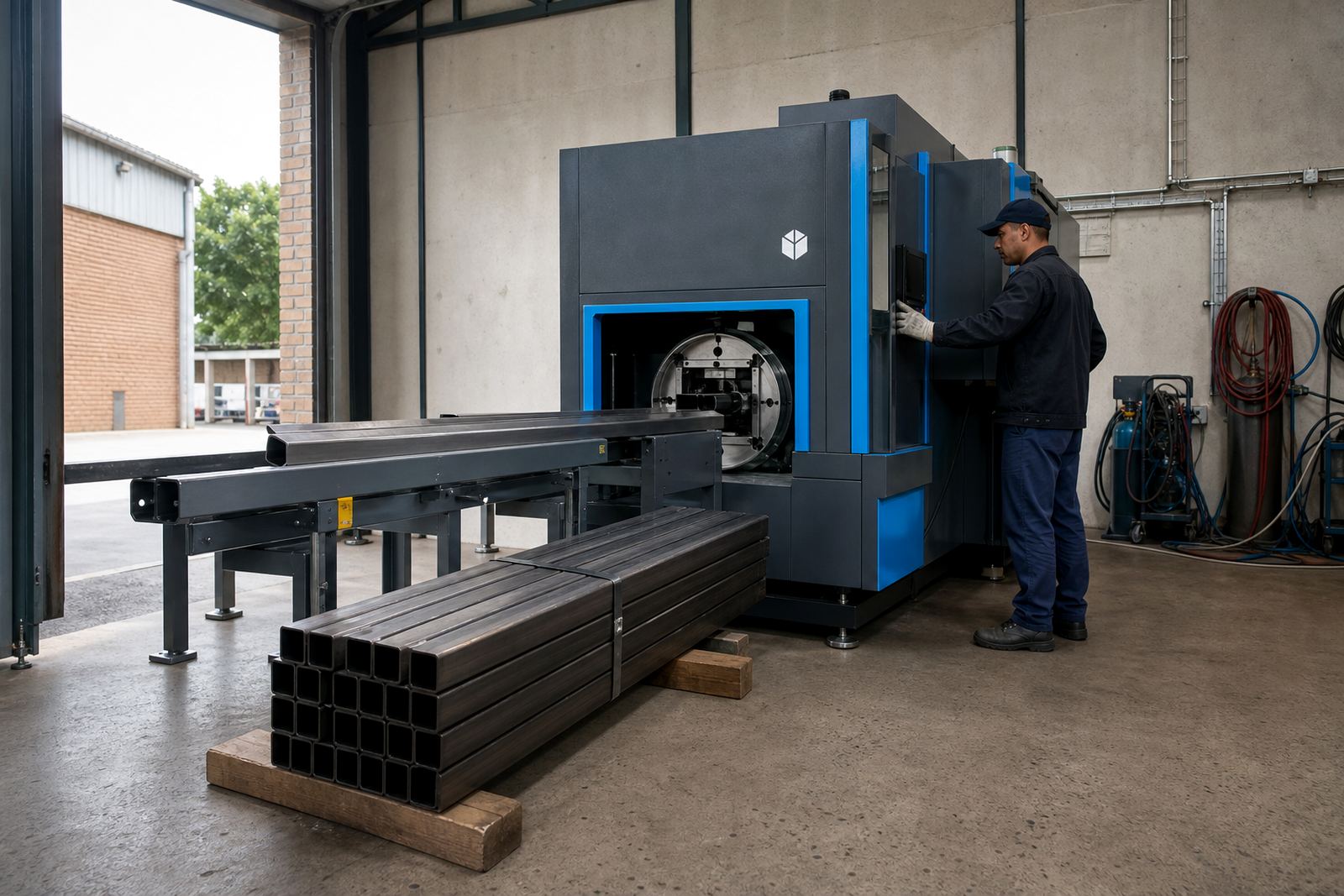
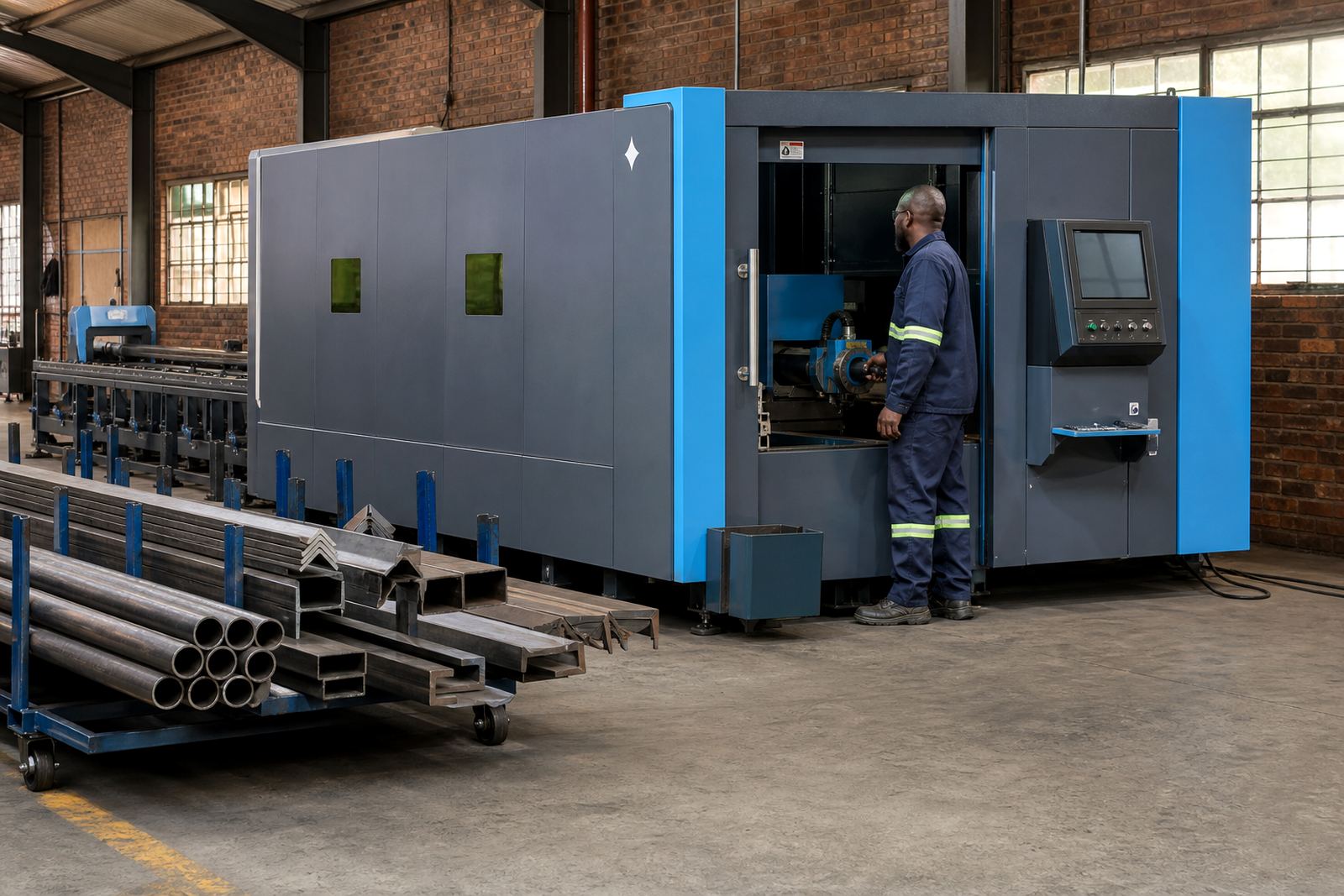
This cell is arranged for fibre laser cutting of round tube, square tube, rectangular tube, angle and channel in one fenced area. The layout keeps loading, cutting, unloading and offcut handling close together, so parts move through the job with less handling and fewer crossed paths.
For many metal fabricators in Gauteng, KZN and the Cape, that matters when the work mix changes through the week. One run may be handrail posts and brackets, the next may be frames, supports or welded assemblies that need accurate mitres, holes and slots cut before fabrication starts.
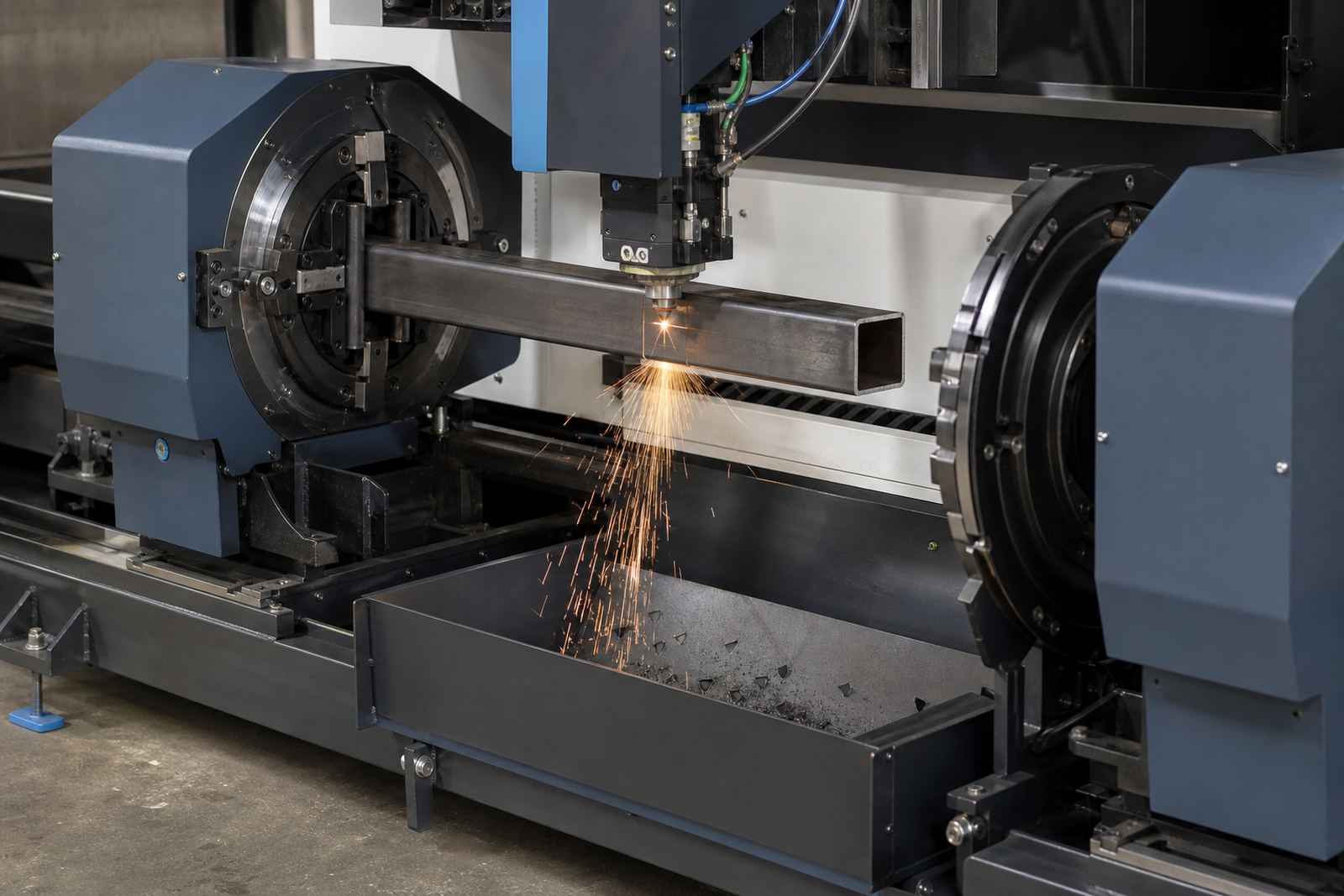
The cell can be arranged around a tube cutting machine with powered chucking, a servo-driven axis set and software that nests parts along the full length of tube or section. Depending on the model, it can also include a bevel head for angled edge prep, which is useful where weld access or fit-up needs more than a straight cut.
Tube sizes, section lengths and cutting options
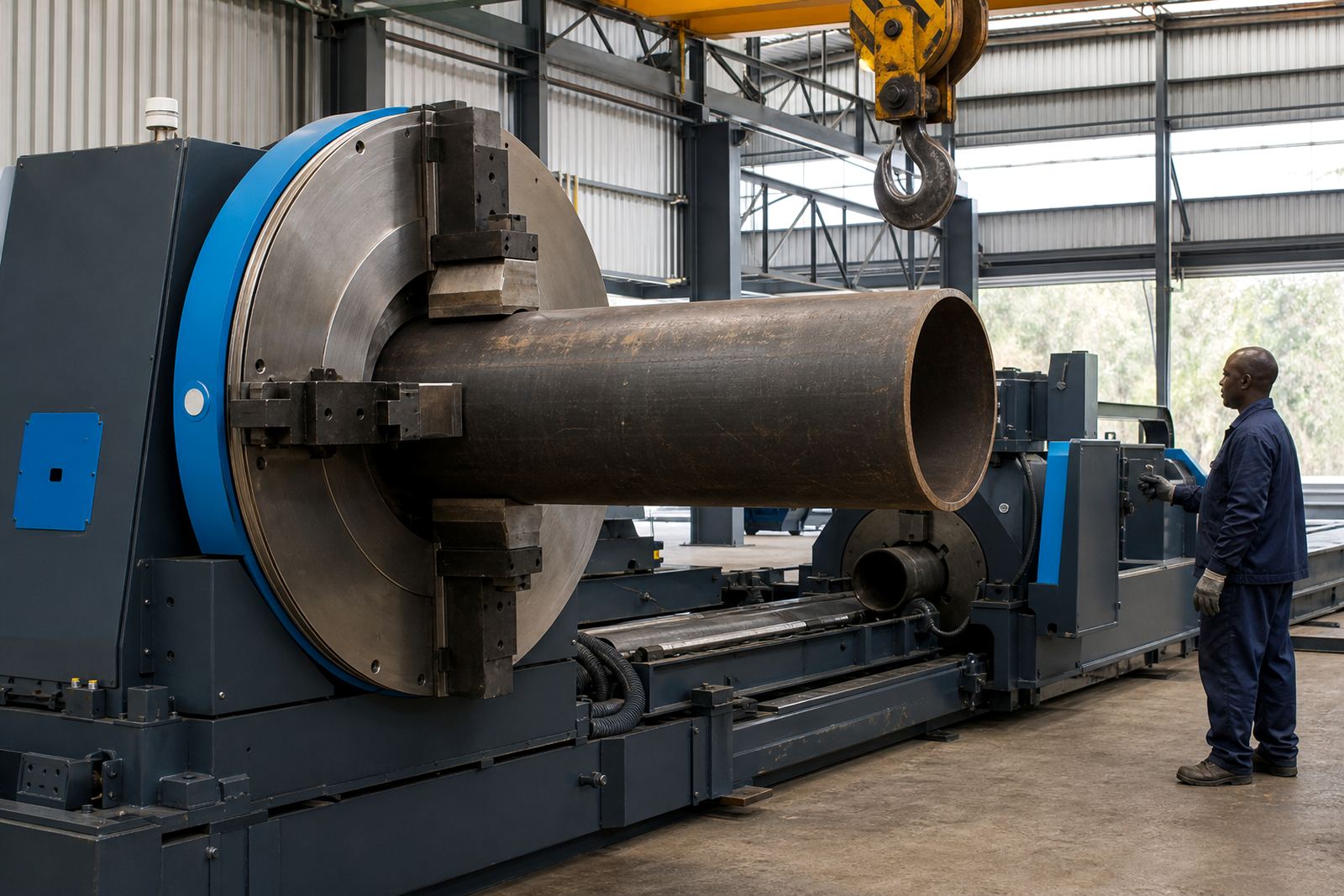
Profile cutting cells are usually selected around the largest section you expect to process, the wall thickness range and the length of stock that must be loaded safely. Common setups handle a spread of small-diameter tube through to larger structural sections, with bed length chosen for practical loading and material flow in the plant.
- Round tube for frames, handrails, cages and fabricated assemblies
- Square and rectangular tube for structural work and machine guards
- Angle and channel for brackets, bases and support members
- Open section processing where the chuck and support system can carry the profile correctly
- Bevel cutting where a welded joint needs edge preparation
Options often include automatic bundle loading support, part catcher systems, scrap drop zones and support arms for longer stock. Where high mix work is common, the nesting package should manage shared cuts, remnant use and part spacing in a way that suits your actual production pattern, not just a drawing on paper.
What the cell needs on site
These machines need a planned floor area, safe access for deliveries and a clear route for material movement. A proper site assessment checks slab condition, lifting access, aisle width, ventilation, gas storage position and where finished parts will be stacked before they move to welding or dispatch.
The cell will also need correct electrical supply, assist gases and machine services set out to suit the selected cutting head and material range. Oxygen, nitrogen and compressed air may all play a role depending on the cut quality, edge finish and material type. Safety fencing, interlocks, extraction and sign-off for the work area also matter, especially where other fabrication processes run nearby.
- Level floor space with room for loading and maintenance access
- Power supply matched to the machine and support equipment
- Assist gas supply arranged for cutting requirements and cylinder or bulk storage
- Ventilation or extraction suitable for cutting fumes and dust
- Safe storage for raw tube, cut parts and remnant material
Where this setup suits real production
A profile cutting cell suits shops that want to cut more parts in-house instead of sending tube work out. It is a strong fit for metal fabricators making handrails, balustrades, frames, racking, machine covers, farm equipment, transport fittings and building metalwork.
In Johannesburg and Pretoria, it often supports steady contract work where repeatability matters. In Durban, Cape Town and Gqeberha, the same cell is useful where coastal humidity and mixed material flow call for clean cutting, proper storage and regular care of the machine bed, chucks and exposed surfaces.
For plants with welding, assembly and dispatch all on one floor, the value is in flow. Parts come off the machine ready for the next step with less marking out, fewer fit-up corrections and fewer delays caused by manual measuring.
Installation, alignment and operator handover
Fitting the cell properly starts with delivery rigging and a clear install plan. The machine frame, cutting head, chucks, guarding and tube feed path all need to be set and aligned so the machine runs square to the work and the tube seats correctly through the chuck system.
Commissioning usually includes chuck alignment, bevel calibration where fitted, gas setup, axis checks, software setup and test cuts on the material range you intend to use. Operator training covers loading, clamping, nesting preparation, cut monitoring, safe unloading and routine checks before production starts.
LaserTube supports installations across South Africa, with work carried through Wadeville and into Johannesburg, Pretoria, Durban, Cape Town, Gqeberha, Bloemfontein and Nelspruit. Sibusiso Bhengu leads installation work, Leanne Mabuza handles training, and Ayanda Mashaba supports applications where part geometry or nesting needs a closer look.
Care that keeps cut quality steady
Routine care matters on a profile cutting cell because tube work places moving parts, clamps and support points under constant use. Daily checks usually cover lens condition, nozzle wear, chuck grip, lubrication points, gas pressure, filtration and the state of the cutting bed around the drop zone.
Preventive maintenance should include alignment checks, jaw wear inspection, software updates where relevant and cleaning around the extraction path. On coastal sites, a little extra attention is worth it for corrosion control, especially on exposed fixtures, tool surfaces and any stock that waits near the machine for a day or two.
- Inspect chucks and jaws for wear or build-up
- Check beam path components and protective glass regularly
- Keep filters and regulators in working order
- Clear the scrap area so offcuts do not build up under the cell
- Review nesting patterns when tube remnants are being reused
Details to confirm before ordering the cell
Before a cell is sized and supplied, the key points are the largest profile size, longest stock length, wall thickness range and the material grades you cut most often. It also helps to know whether your job mix needs straight cutting only or bevel work as well.
You should confirm the available floor space, delivery access, power supply, gas arrangement, extraction path and where the finished parts will move after cutting. If the machine must handle special profile shapes, hole patterns close to corners or frequent remnant use, that should be listed clearly so the chucking and software package can be matched to the job.
Michael Dlamini and the LaserTube team work from Wadeville, Germiston, and the machine cell can be planned to suit a small job shop or a larger production floor. The goal is a layout that fits the workshop, the work mix and the way your material actually moves through the plant.
Key facts
| Cell type | Fibre laser profile cutting cell for tube and open section work |
|---|---|
| Profiles | Round tube, square tube, rectangular tube, angle and channel |
| Cutting options | Straight cut and bevel cutting where specified |
| Material handling | Chuck support, loading area, unloading zone and scrap drop arrangement |
| Installation scope | Site assessment, delivery rigging, machine installation and commissioning |
| Training and support | Operator training, nesting training, preventive maintenance and remote diagnostics |