Three points of support for longer cut runs
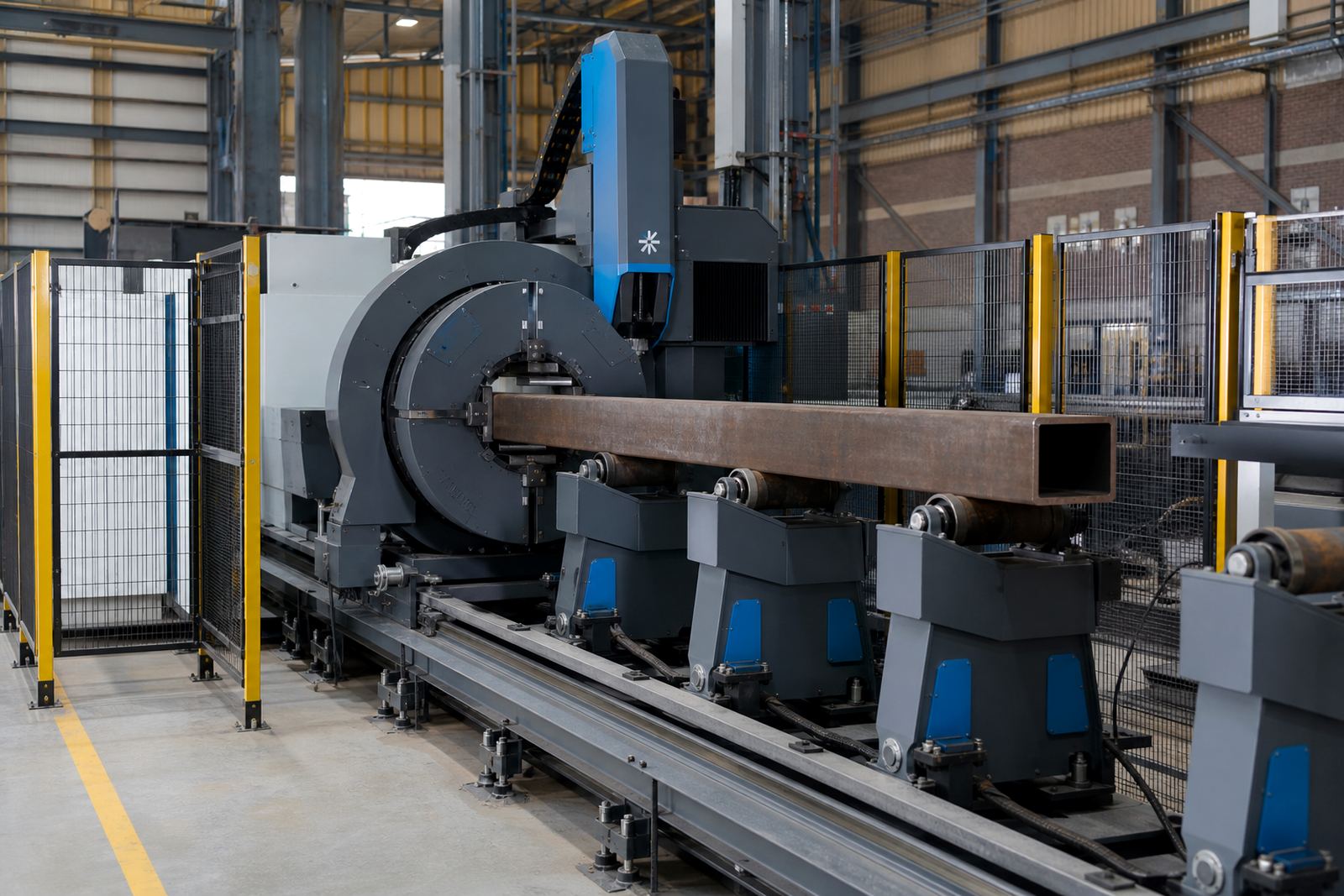
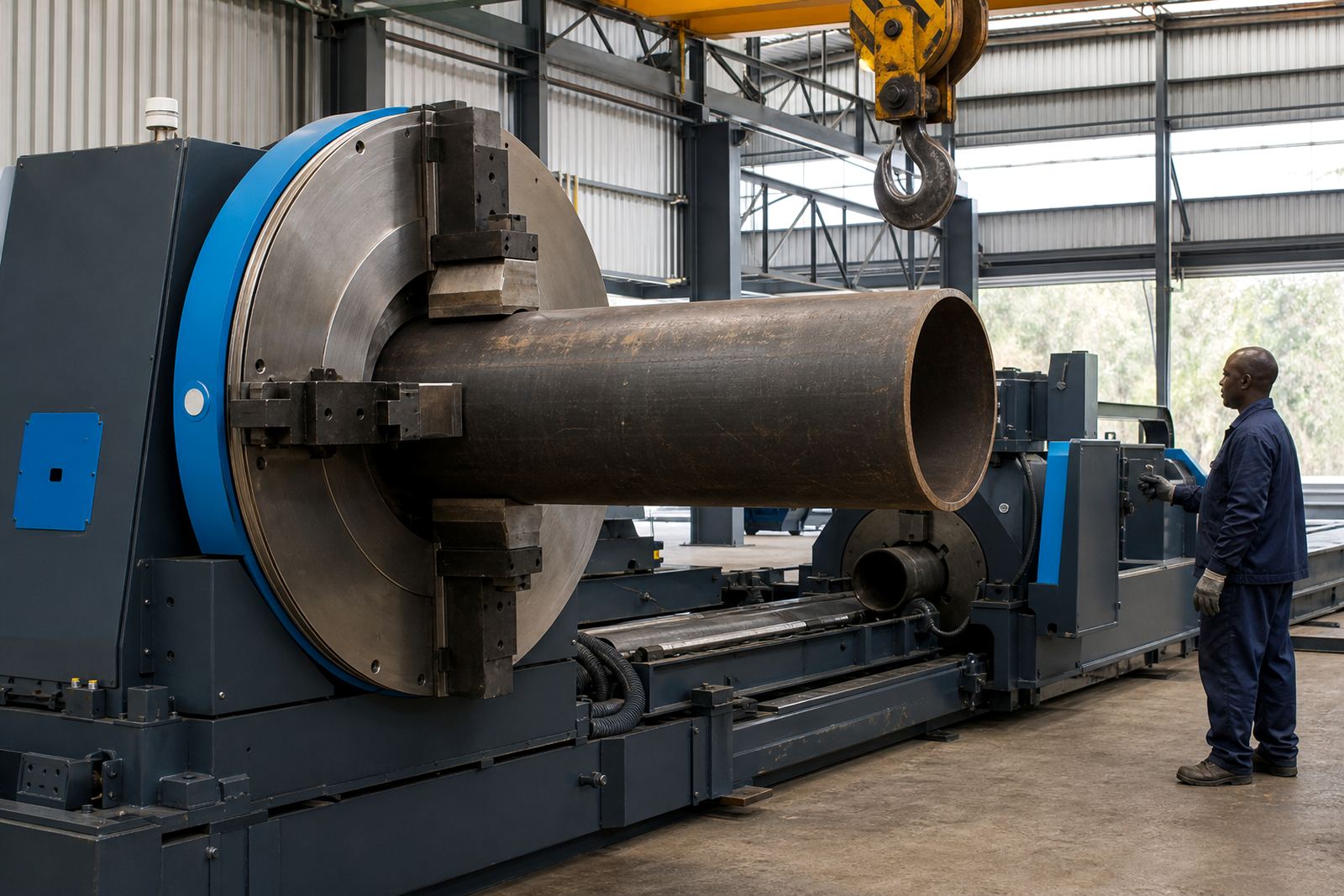
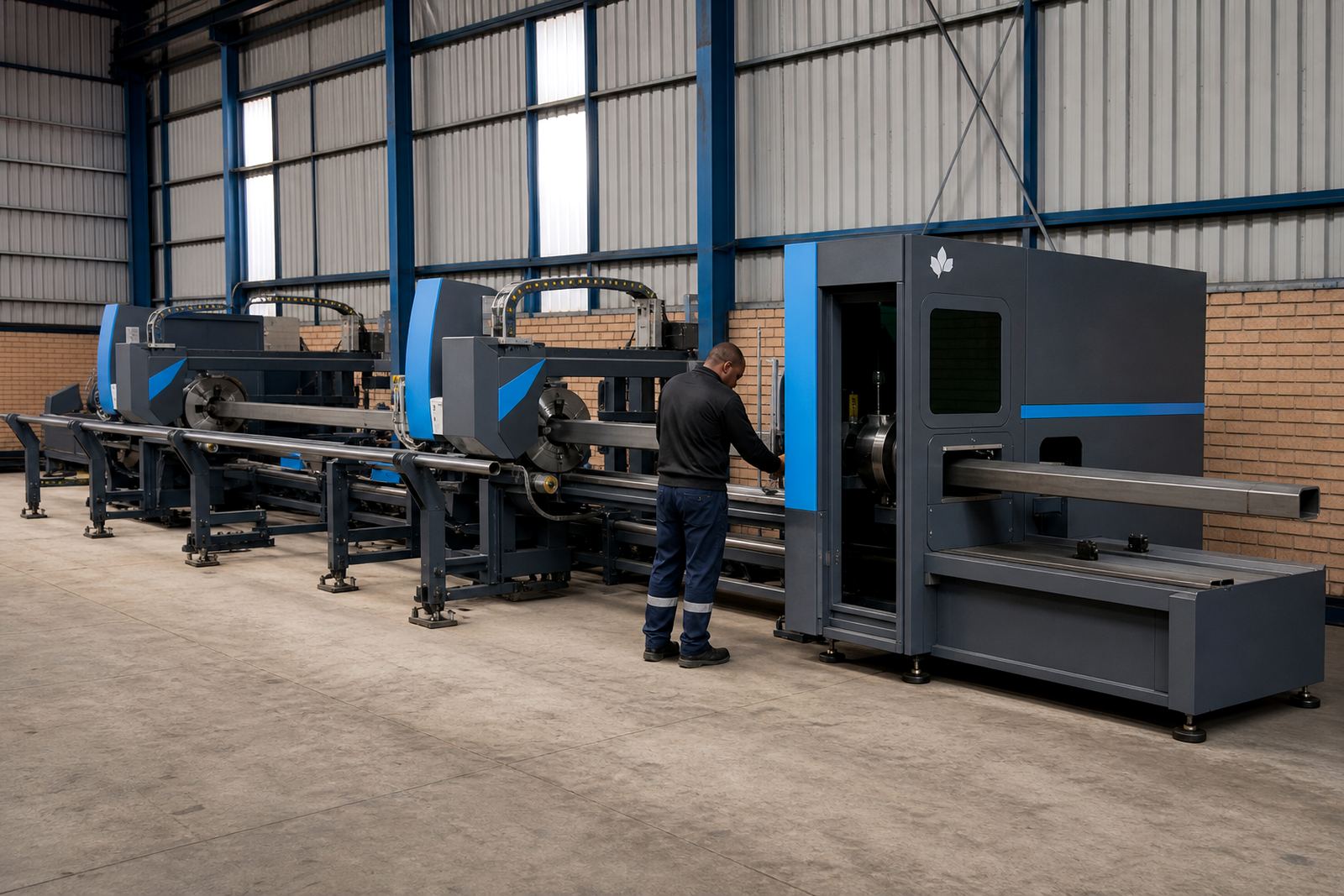
A three chuck laser machine uses three holding stations instead of the usual two, so longer stock stays controlled while the head moves through cutting, bevel work and part separation. On extended tube lengths, that extra support helps reduce droop, vibration and awkward remnant movement near the end of a job.
It is commonly specified for fabricators cutting structural tube, transport parts, gate frames, racking members and longer profiles where the final offcut still needs to be handled cleanly. The layout also helps when the job includes short parts nested along a long length, because the tube stays more stable through the full cycle.
- Used for round, square and rectangular tube
- Also used on angle, channel and some open profiles
- Helpful where remnant length is valuable for later jobs
- Can be paired with bevel heads for prepared joints
Common machine sizes and build options
Three chuck systems are set up in different bed lengths and loading arrangements, depending on the material lengths a shop handles. A fabricator in Wadeville may want one arrangement for mixed short and long batches, while a production plant in Durban may prefer a longer loading bed with more automation around the feed zone.
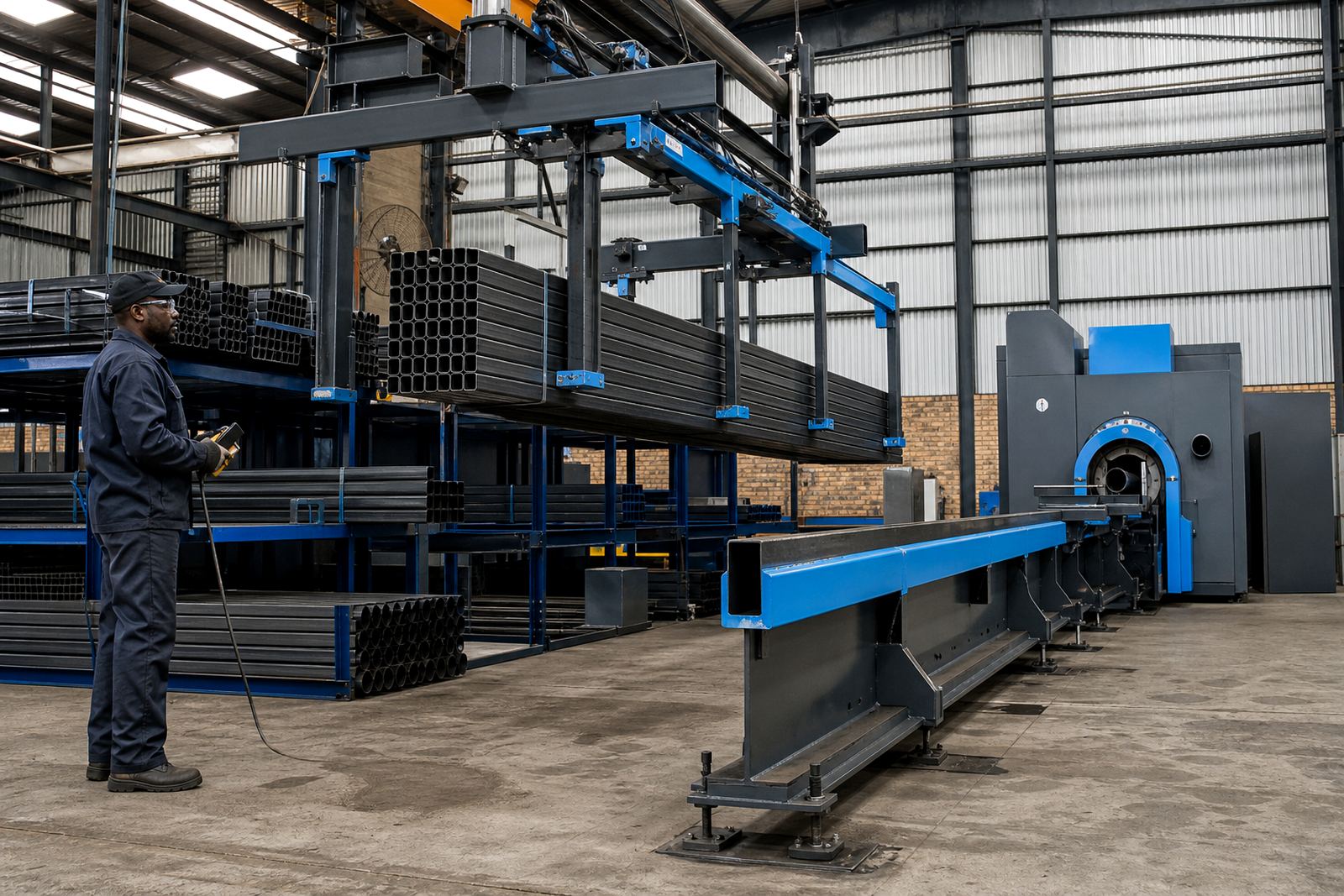
Typical options include powered loading and unloading, automatic chuck movement, tube rotation control, and a cutting enclosure matched to the profile sizes in the workshop. Some machines are specified for standard straight cuts only, while others include bevel heads for mitred or joint-ready edges on selected jobs.
- Working lengths commonly from 6 metres to 12 metres and longer
- Tube capacity set by outer diameter, square section size and wall thickness
- Optional automatic loading support for repeat production runs
- Closed cutting enclosure with safety interlocks and viewing panels
Where this layout earns its place
This layout suits shops that process longer tube in batches, especially where one job mixes full lengths, offcuts and many small parts. It is practical for structural fabricators, agricultural equipment work, truck fitment parts, racking, shopfitting frames and general steel work with repeat tube sizes.
In coastal towns such as Durban, humidity can influence storage and surface condition, so the machine setup should sit inside a controlled workshop with sensible material handling. In Pretoria, Johannesburg and Gqeberha, the same machine is often used for mixed commercial and industrial work where faster setup changes and repeatable cutting matter more than manual marking.
- Longer batches where remnant tracking matters
- Mixed profiles with repeated cut patterns
- Shops moving from manual saw and drill work
- Plants wanting cleaner repeatability on structural parts
Installation, gases and calibration on site
A three chuck machine needs proper placement, level checking, rigging and commissioning before it starts earning its keep. We check the chucks, rail travel, head movement and clamping sequence against the material range the shop will actually run, not the brochure figures.
Where the process uses assist gases, the setup must match the material and finish requirement. Oxygen is often used for thicker carbon steel cutting, while nitrogen is chosen where a cleaner edge is needed on stainless or aluminium. Gas routing, pressure control and leak checks form part of the handover, along with chuck alignment and bevel calibration where fitted.
- Site assessment and delivery rigging
- Machine installation and commissioning
- Assist gas setup and pressure checks
- Chuck alignment and bevel calibration
Care that keeps the cut path honest
Daily care is mostly about keeping the clamps, rails, lenses and cutting zone clean, then checking that the tube feed path stays true. A machine that works on long profiles will show wear quickly if swarf, scale or misaligned stock is left to build up around the holding points.
Preventive maintenance should include lubrication checks, inspection of chuck grip surfaces, guide alignment, gas delivery checks and software backup of nesting files. On production floors, operators should watch for slipping stock, damaged profile ends and poor clamping on bent or oval tube, because those faults can spoil the cut and waste material.
- Clean chuck jaws and support rollers often
- Check lens condition and cutting head alignment
- Back up nesting libraries and job files
- Check line routing, filters and pressure settings
The details to fix before ordering
Before a three chuck machine is specified, the tube range, working length and material mix need to be clear. Round tube, square tube and rectangular tube each place different demands on clamping, and open sections such as angle or channel may call for a different chucking strategy or support arrangement.
It also helps to confirm whether the workshop needs only straight cuts or a bevel head for joint prep, whether loading will be manual or assisted, and whether nesting software must handle mixed batch work and remnant tracking. The machine room layout matters too, because space for loading, unloading, gas bottles or bulk supply, and finished part movement affects the final setup.
- Tube sizes, wall thickness and stock lengths
- Profile types, including angle and channel
- Need for bevel cutting or straight cut only
- Material mix, nesting method and remnant handling
Key facts
| Machine type | Three chuck fibre laser tube and profile cutting system |
|---|---|
| Supported sections | Round tube, square tube, rectangular tube, angle and channel |
| Typical working lengths | 6 metres to 12 metres and longer, depending on build |
| Cutting options | Straight cut, nesting, remnant control and optional bevel cutting |
| Process setup | Assist gas configuration for carbon steel, stainless steel and aluminium |
| South African coverage | Wadeville-based support reaching Nelspruit, Bloemfontein, the Gauteng metros and the coastal cities |