Grip That Holds Its Line
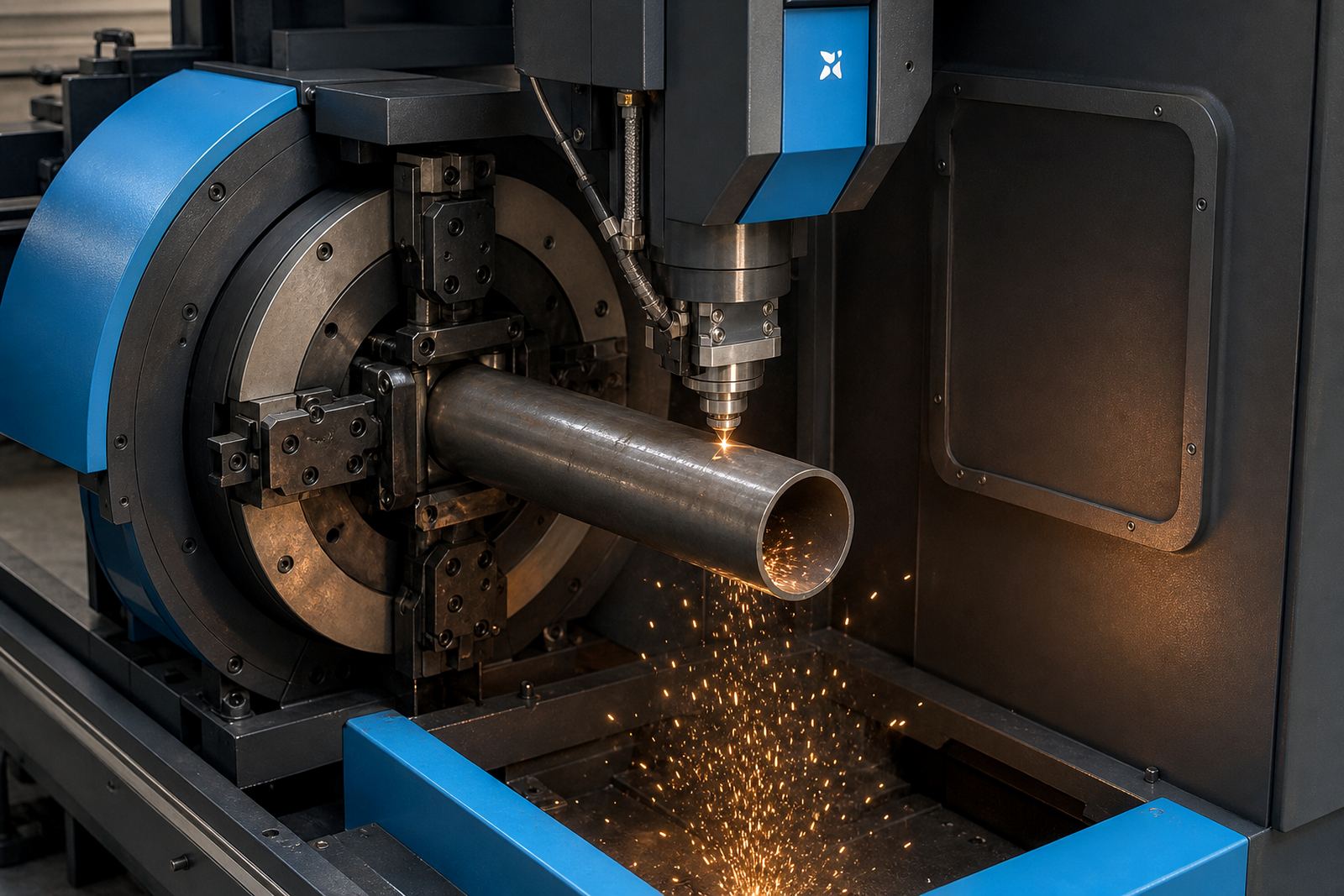
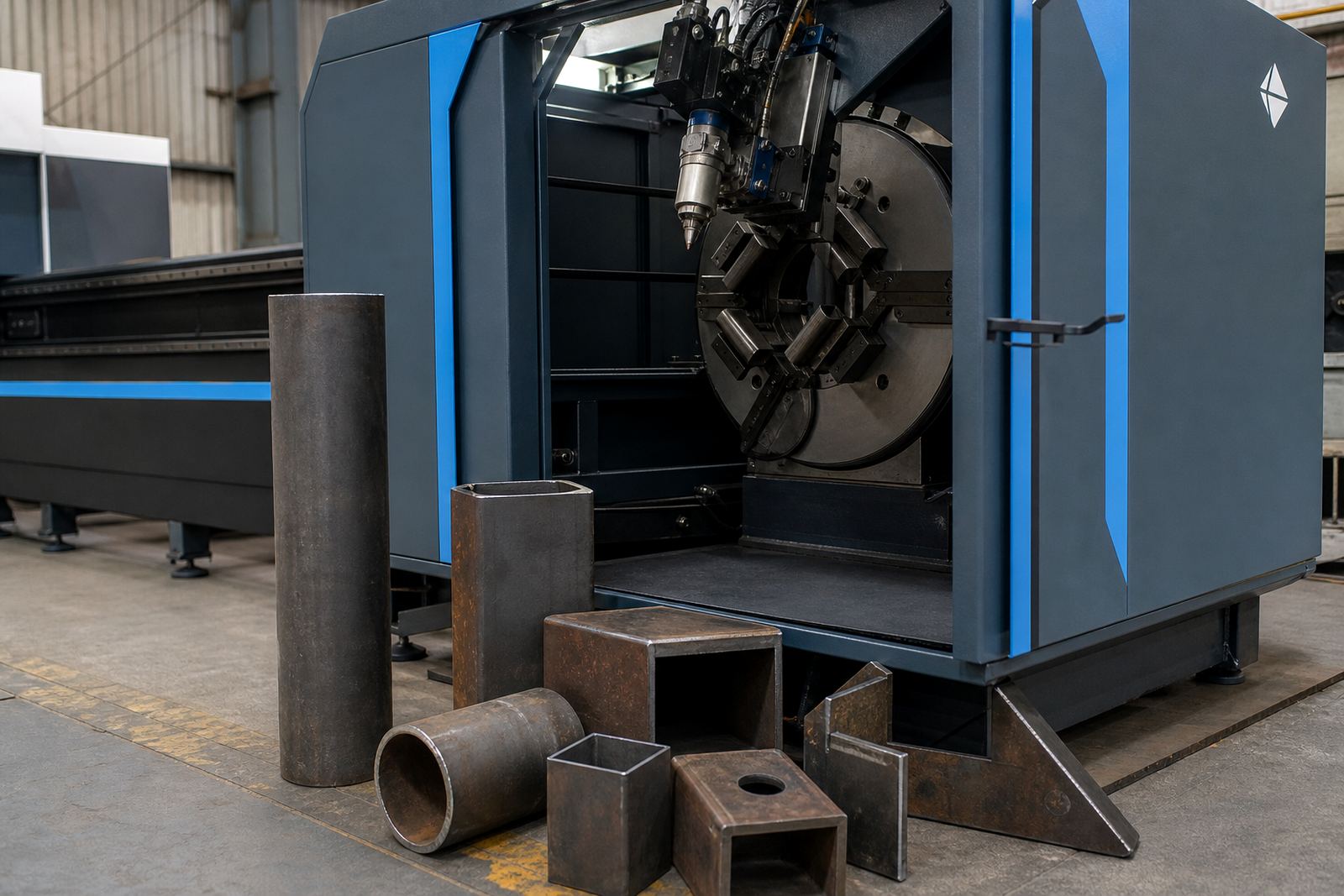
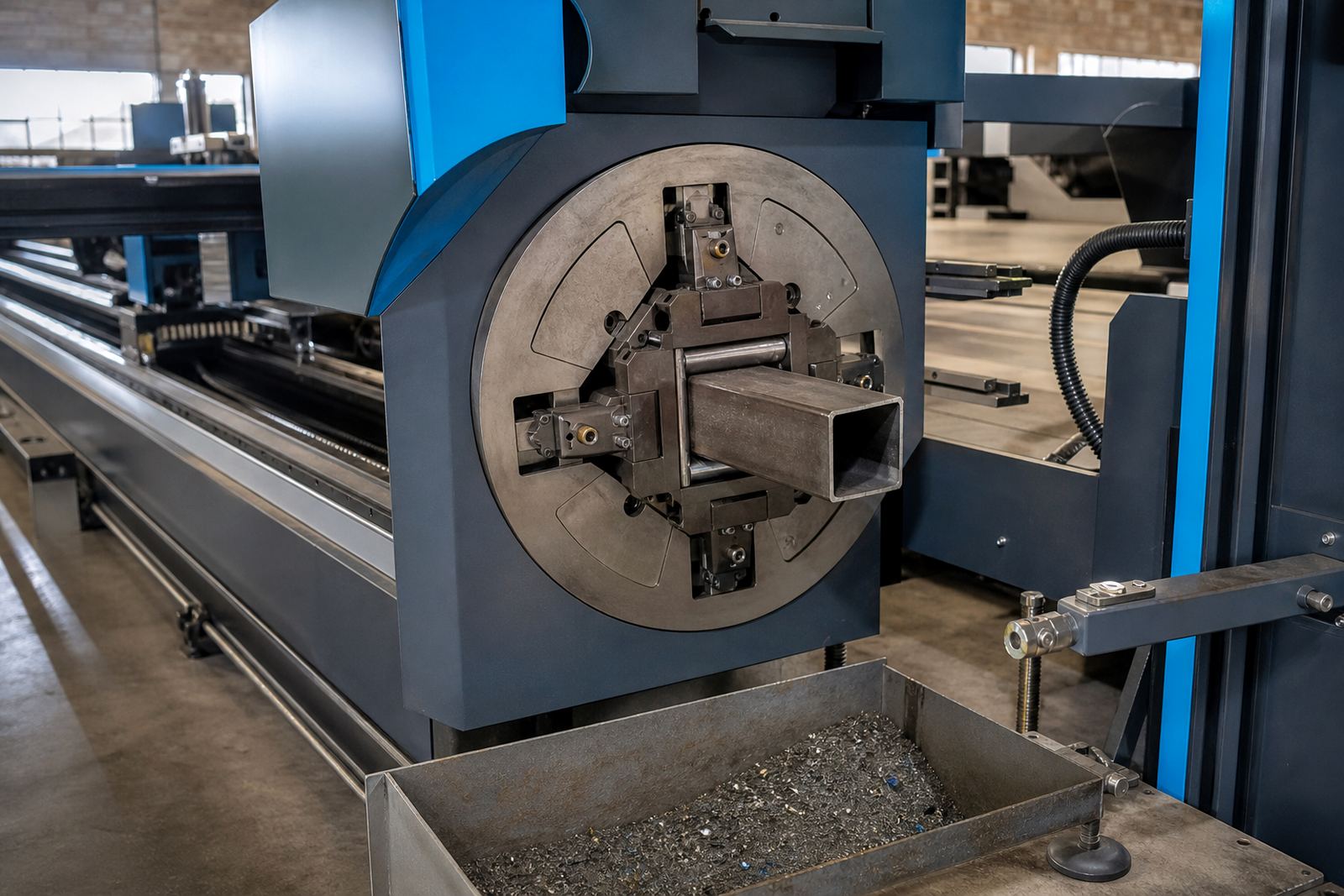
On a fibre laser tube machine, the chuck is the part that keeps the material under control while the cutting head works through a program. It clamps the tube or profile, keeps the axis true, and turns the stock in step with the cut path. That matters on straight sections, mitres, slotting and end prep where a small shift can show up in the finished fit-up.
In a Wadeville job shop, for example, the same machine may handle short runs of rectangular tube in the morning and longer lengths of angle or channel later in the day. A well set chuck lets the operator load, align and run those jobs without fighting the material. When the grip is uneven, the cut can wander, edges can taper, and parts may need extra grinding before welding.
- Round tube needs even clamping so it does not slip under rotation.
- Square and rectangular tube need accurate centring to keep corners square.
- Angle and channel need support that stops twisting as the head moves.
- Thin wall stock needs firm grip without crushing the profile.
Rotation That Matches The Program
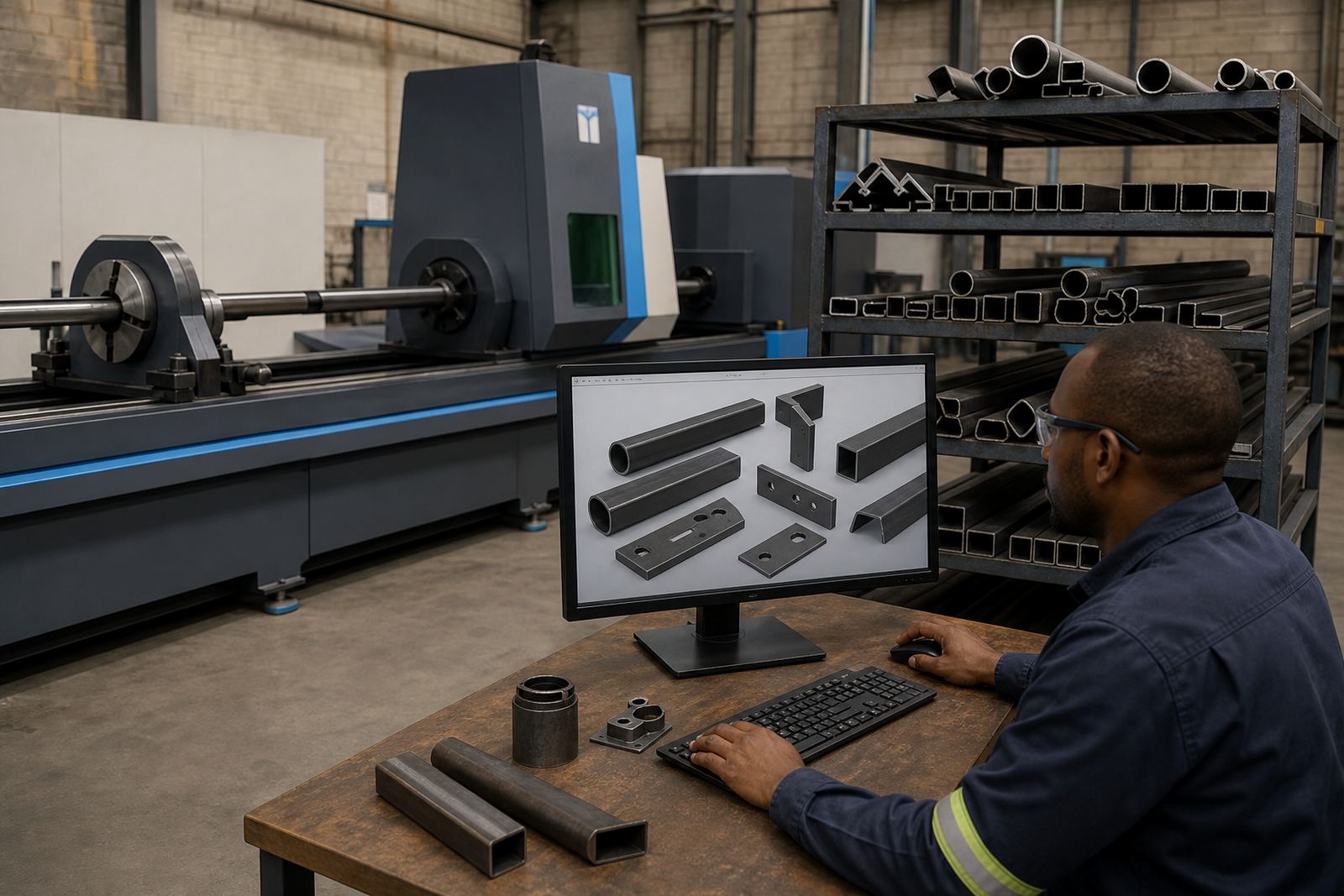
The chuck and the motion system work together. The nesting software tells the machine where each hole, cut-out and bevel should land. The chuck then rotates the stock at the right pace while the laser head moves along the programmed path. If the rotation is not smooth, the final part can drift out of tolerance, especially on repeated openings or complex ends.
Good setup is not only about speed. It is about repeatability across a batch, and about getting parts that fit the next process without rework. On a production plant cutting handrail tubes, furniture sections or frame members, the chuck must hold the same reference on every length. That is where alignment and calibration matter, not just the machine spec sheet.
- Check the clamping faces for wear and build-up.
- Keep the centreline true to the cutting path.
- Match rotation settings to the tube size and wall thickness.
- Confirm that the part length support is stable before a run.
Bevel Cuts Need Tight Control
When a machine has a bevel head, the chuck has even more work to do. The tube must stay steady while the head changes angle and the profile rotates. That combination allows preparation for weld joints, branch connections and shaped ends, but only if the stock remains centred and secure through the full cut.
Bevel calibration and chuck alignment go together. If one is out, the joint face can end up uneven, and the welder spends time correcting it by hand. On thicker wall material, that can slow the whole job. In practice, a clean bevel starts with the chuck gripping the section where the load is balanced and the machine knows exactly where the tube sits.
Operators in Durban or Cape Town also have to think about coastal humidity. Metal that is stored poorly can carry surface moisture or light corrosion, which affects handling and clamping. Clean stock and a properly set chuck reduce surprises when the first cut starts.
The Extras Around The Chuck Matter Too
The chuck does not work alone. Assist gas setup, part supports, nesting software, and safety systems all shape the result. Oxygen, nitrogen or compressed air may be used depending on the material and finish required, and the correct flow helps the cut edge stay clean while the machine runs. If the gas setup is wrong, the best chuck in the world will not rescue the job.
Safety also sits close to the chuck area. Tube can move hard if it is not secured properly, and offcuts may shift as the machine releases a finished part. Guards, interlocks, clear load zones and trained operators all matter on a live floor where several lengths are handled in one shift.
- Set the assist gas for the material and thickness in use.
- Keep loading zones clear so the stock enters squarely.
- Train operators to read clamp pressure and alignment marks.
- Use support tables and rollers for longer lengths.
What South African Fabricators Notice First
Most fabricators notice chuck problems in the parts themselves. Ends that do not meet cleanly, holes that drift off position, and repeated minor corrections are common signs. If the machine is cutting tube for shopfitting, balustrades, vehicle frames or structural work, that extra rework becomes costly fast.
A Pretoria fabricator working on mixed tube sizes may need the machine to switch between short production batches and custom jobs. In that setting, chuck condition becomes part of day-to-day discipline. Regular chuck alignment, basic cleaning and operator checks are usually less disruptive than waiting until parts start failing on the bench.
For sites in Johannesburg, Gqeberha or Bloemfontein, the practical question is the same: does the machine hold the profile true from the first part to the last? If it does, cutting and welding flow better. If it does not, the impact runs through the full production line.
Installation And Support Around The Chuck System
Chuck performance begins at installation. The machine must be level, the support rollers must line up, and the clamp travel must suit the tube range the business wants to cut. During commissioning, the team should test standard sizes, verify centring on round and square stock, and check how the machine behaves with angle and channel.
LaserTube works with fabricators from small shops to production plants across Wadeville, Johannesburg, Pretoria, Durban, Cape Town, Gqeberha, Bloemfontein and Nelspruit. That includes site assessment, delivery rigging, machine installation, operator training, nesting training, preventive maintenance, remote diagnostics and breakdown response. The same discipline applies whether the machine is running short decorative parts or long structural lengths.
Michael Dlamini leads the business, with Anika Kajee on sales, Sibusiso Bhengu on installation, Leanne Mabuza on training, Pieter Visser on service and Ayanda Mashaba on applications. Each role touches a different part of the machine set-up, and the chuck sits at the centre of many of those checks.