A clean lens does more than protect a part
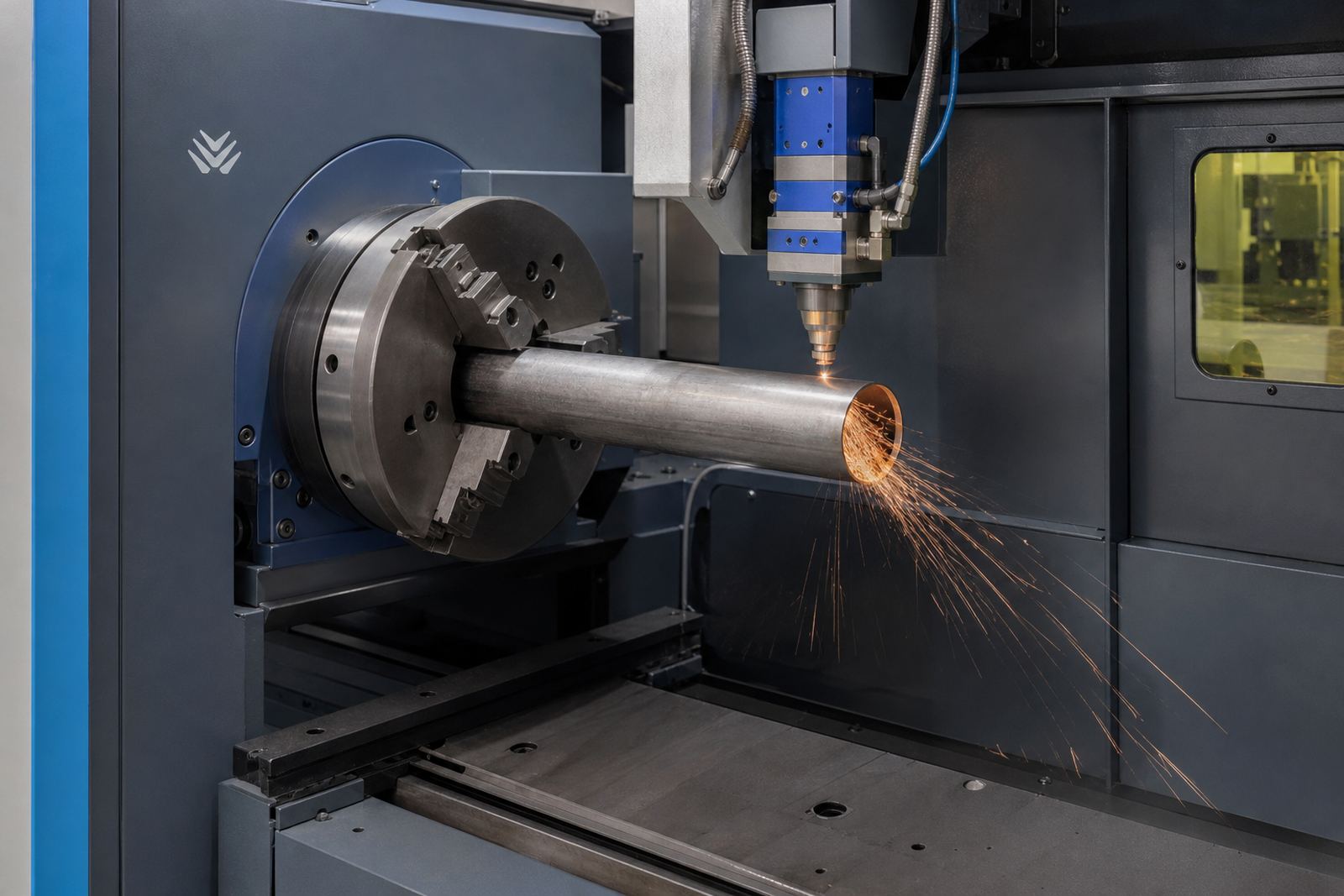
Every beam pass goes through the lens set, so a smear or speck on it shows up straight away as a rough or wandering tube edge. Dust, oil mist, spatter and fine metallic residue can interrupt the beam and change the way a cut behaves on round tube, square tube, rectangular tube, angle iron and channel.
That change shows up in the workshop before it shows up on paper. Edges may need more dressing, pierce quality can vary, and a job that should run neatly starts asking for extra checks. Clean optics help the machine hold its settings more closely, especially when the same nest includes thin wall tube one moment and heavier section work the next.
On a busy floor in Wadeville or Germiston, the difference is easy to spot. One machine may be running structural tube in the morning and lighter profile work later in the day, so small contamination on the lens stack can affect more than one product family.
What usually marks the optics before anyone notices
Optics rarely fail without warning. More often, the machine gives small clues first. A slight haze on the glass, a shift in cut edge finish, or more frequent check-ins during a run can point to contamination building up inside the head.
- Fine dust from tube cutting can settle near the protective window.
- Carryover in the line can leave a light film on parts.
- Back spatter from piercing can mark the lower glass surface.
- Handling marks from careless swaps can leave a weak point in the coating.
- Moisture in the gas path can leave residue that is easy to miss at first.
None of these issues need dramatic damage to become a production nuisance. A small stain in the wrong place can be enough to disturb the beam shape, especially where the job calls for tight corner quality or repeatable holes through thicker tube walls.
Handling the glass without turning a small job into a bigger one
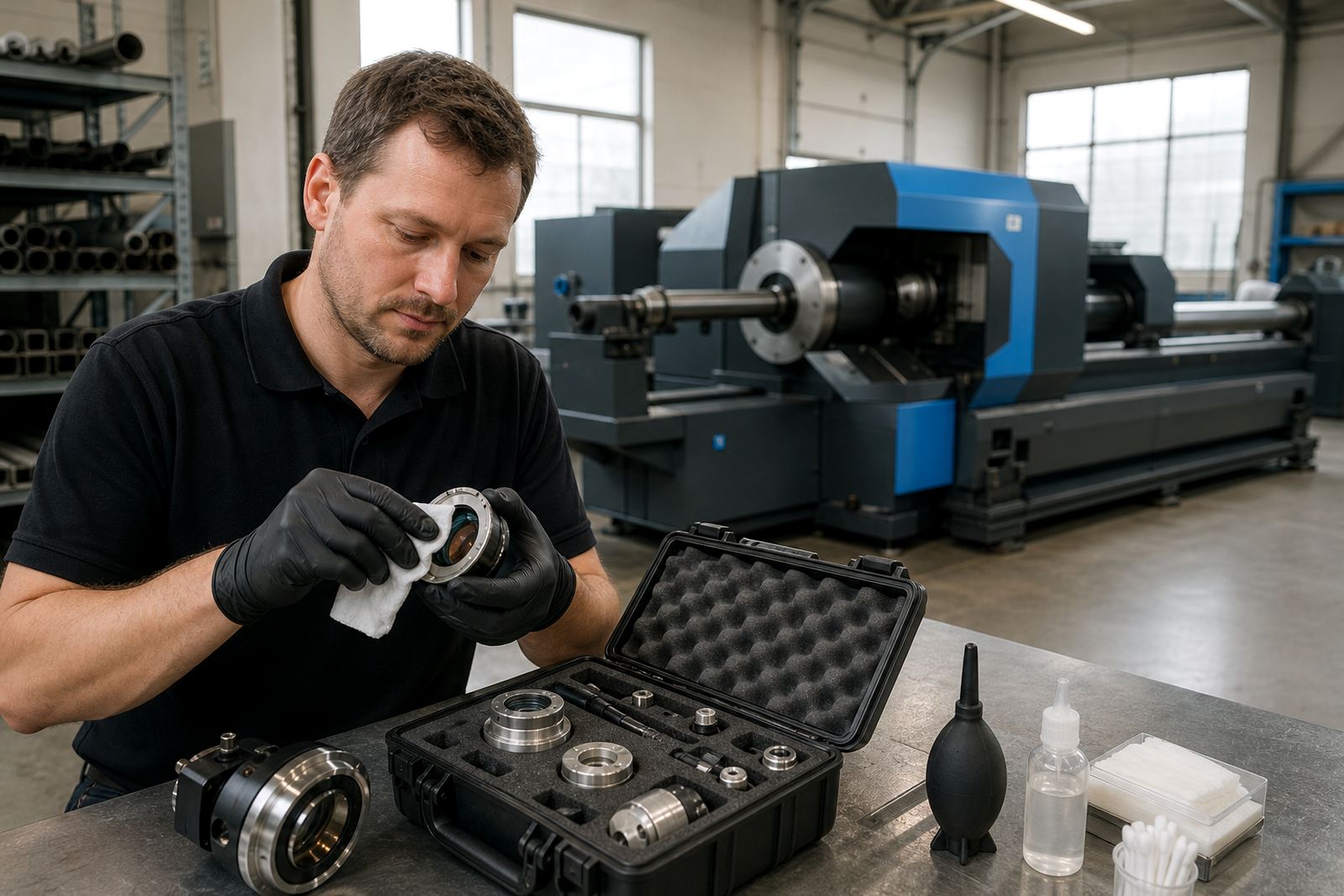
Optics cleaning is not a wipe-and-go task. The components are sensitive and should be handled with the same care used during chuck alignment or bevel calibration. Fingerprints, rough cloths and the wrong solvents can cause more harm than the dust itself.
A practical routine starts with isolation and inspection. The head should be left safe and cool enough for careful work, then the glass surfaces checked under good light. Only approved cleaning materials should touch the optics, and each piece should be held by the edge rather than the face. If a part is scratched or pitted, cleaning will not restore it.
In a plant cutting mixed bundles near Johannesburg, the cleaner the handling routine, the less chance there is of needing a rushed replacement because someone used the wrong cloth or opened the head in a dirty area. Clean benches, capped parts and a steady method matter more than speed.
Gas quality, humidity and workshop habits all leave a trace
Lens care is tied to the wider condition of the machine. Assist gas setup, air filtration and workshop cleanliness all influence what reaches the cutting head. In coastal areas such as Durban or Gqeberha, humidity can add another layer of trouble if water vapour or residue is not controlled properly.
Dry, clean lines help reduce film on optics and keep the cutting process steadier. The same applies to the area around the machine. Loose grinding dust, metal offcuts near the head, and poor housekeeping near the loading zone all raise the risk of contamination entering the system.
- Check filters and dryers as part of routine maintenance.
- Keep cutting, grinding and cleaning areas separated where possible.
- Store spare optics in sealed packaging until needed.
- Use lint free materials only, and replace them before they shed.
- Keep the machine enclosure and viewing windows clean enough for regular inspection.
These are small habits, but they support the machine every shift. They also make it easier to spot a real issue before it becomes a production stoppage.
Training helps operators recognise trouble early
Operators do not need to strip the whole head to protect optics. They do need to know what normal looks like, what contamination looks like and when to call for maintenance support. That is where operator training and nesting training both matter. When the team understands how the machine behaves, they are less likely to push through a job with poor cut conditions.
Useful training covers more than the glass itself. It should include safe opening procedures, correct cleaning materials, visual inspection points, and the signs that point to gas problems, alignment issues or a damaged lens. On a tube line, that knowledge protects both the machine and the schedule.
For shops running multiple shifts, a short handover note on lens condition can save time during the next setup. It is a small detail, but it helps the team work from the same facts instead of starting over each time.
Mixed tube work in Wadeville
A metal fabricator in the Wadeville area may run a mix of round tube frames, square section supports and channel parts in the same week. If the protective glass is left unchecked, one dull cut can lead to unnecessary operator adjustments, and the issue can travel from one job to the next.
With the right maintenance routine, the machine stays more predictable. The service technician checks the head, verifies gas quality, confirms alignment and inspects the condition of the optics before the machine is put back into regular work. If a lens needs replacement, that decision is made on the evidence, not on guesswork.
That sort of discipline suits plants across South Africa, from Pretoria fabrication rooms to Durban and Cape Town production floors. Clean optics support a cleaner cut, and cleaner cuts are easier to keep within spec.
Keeping the routine practical instead of fussy
Lens care works best when it is built into normal machine habits. It should sit beside chuck checks, preventive maintenance and assist gas setup, not live as a separate chore that only gets attention after a fault.
- Inspect visible optics during planned maintenance stops.
- Keep cleaning materials sealed and clearly labelled.
- Replace damaged protective glass rather than trying to stretch it.
- Log repeated haze or marking, so patterns are easier to spot.
- Use service support when the cut quality changes without a clear cause.
For LaserTube customers working on fibre laser tube and profile cutting machines, that steady routine keeps the head cleaner and the process more stable. It does not remove every fault, but it reduces avoidable ones and gives the team a better chance of holding quality through the day.