What the gas is doing at the cut line
When a fibre laser cuts tube, the beam melts a narrow path and the assist gas pushes the molten material out of that kerf. That sounds straightforward, yet the result depends on how the gas behaves inside the tube, at the nozzle and around the cut edge. A clean cut is not only about laser power. It is also about gas choice, pressure, nozzle condition and how the machine holds the workpiece.
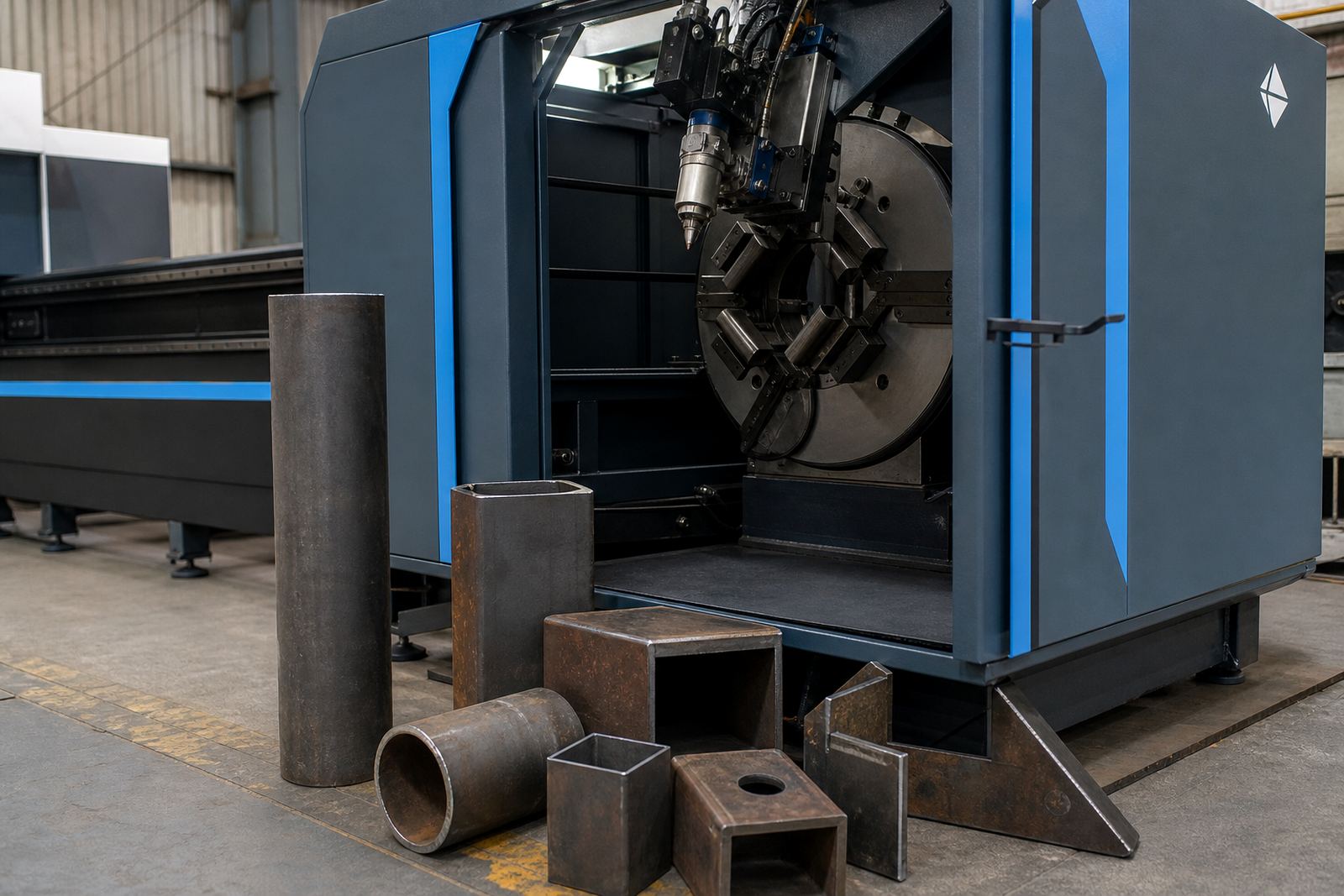
For round tube, square tube, rectangular tube, angle and channel, the gas must clear the cut without disturbing the part. If pressure is too low, dross builds up and the edge needs extra finishing. If pressure is too high, thin wall material can flare or move, especially on light gauge sections. The right setting keeps the cut stable enough for downstream welding, drilling or assembly.
On many production floors in Germiston, Wadeville and Johannesburg, the best setting changes with material thickness and finish requirements. Mild steel, stainless steel and aluminium each behave differently, so one gas recipe does not suit every job.
Gas choice follows the material, not habit
Material type usually guides the gas choice first. Oxygen is often used on carbon steel when a faster cut and a cleaner lower edge are needed, while nitrogen is used where a bright, oxide-light edge matters more, especially on stainless steel and aluminium. Air can work on lighter jobs and general fabrication, though edge finish and downstream weld prep may need more attention.
The workshop should set the gas choice during process planning, because material, wall thickness, cut speed and final part use all affect the correct setting. A profile with multiple slots may need a different balance from a tube rack with long straight cuts and mitred ends.
- Oxygen suits many carbon steel cuts where edge chemistry is less critical.
- Nitrogen is common where a cleaner, low-oxidation edge is needed.
- Air can be useful on lighter fabrication work and short runs.
- Pressure and flow must match the nozzle and cut programme.
Inside tube work, pressure control matters
Tube cutting brings one extra challenge: the gas has to move through an enclosed section. That means internal pressure can change the way molten material exits the cut. In round tube, the gas often escapes more evenly. In square and rectangular tube, corners can trap heat and debris. Angle and channel profiles can reflect gas differently again, which is why the nozzle position and cut sequence matter just as much as the gas itself.
Good nesting software helps here. It sets lead-ins, pierce points and cut order so the machine does not fight itself. On a tube with multiple openings, the programme should avoid creating movement that affects the next cut. That matters on long sections where even a small wobble can throw off hole alignment.
At a fabrication plant in Durban, for example, a run of rectangular tube frames for coastal equipment may cut well on paper but still need adjustment on the floor. Salt air, longer part handling and a busy weld bay can expose rough edges that were missed in the first test pieces. The practical answer is to check the gas finish on real parts, not only on sample coupons.
Nozzles, chucks and bevel heads all influence the gas result
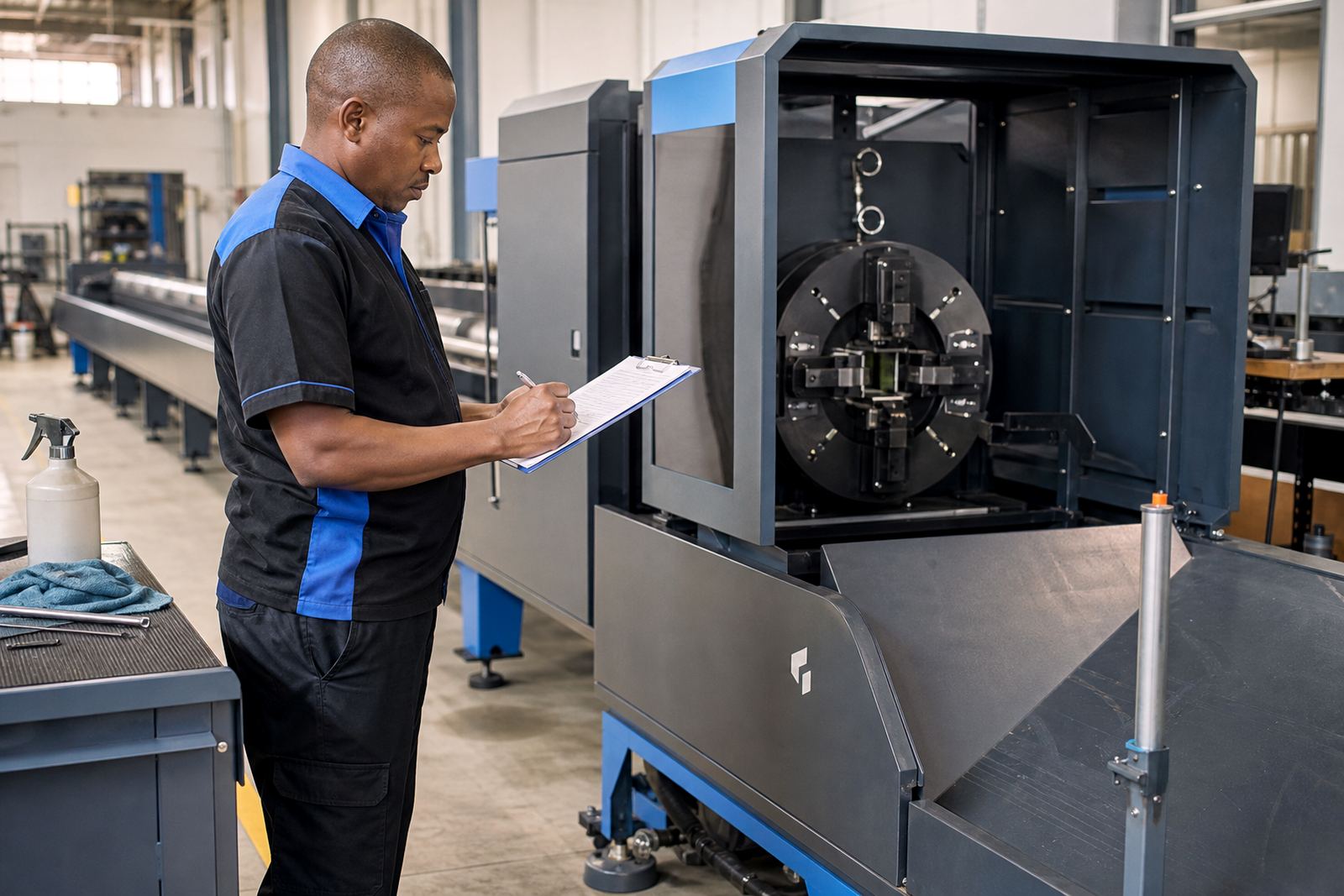
Assist gas performance is not isolated from the rest of the machine. The chuck must grip the tube securely, or the cut gap and angle can drift. If the alignment is off, the gas cannot compensate for a moving part. Bevel heads add another layer, because the gas must support an angled cut without tearing the edge or leaving heavy burrs on the exit side.
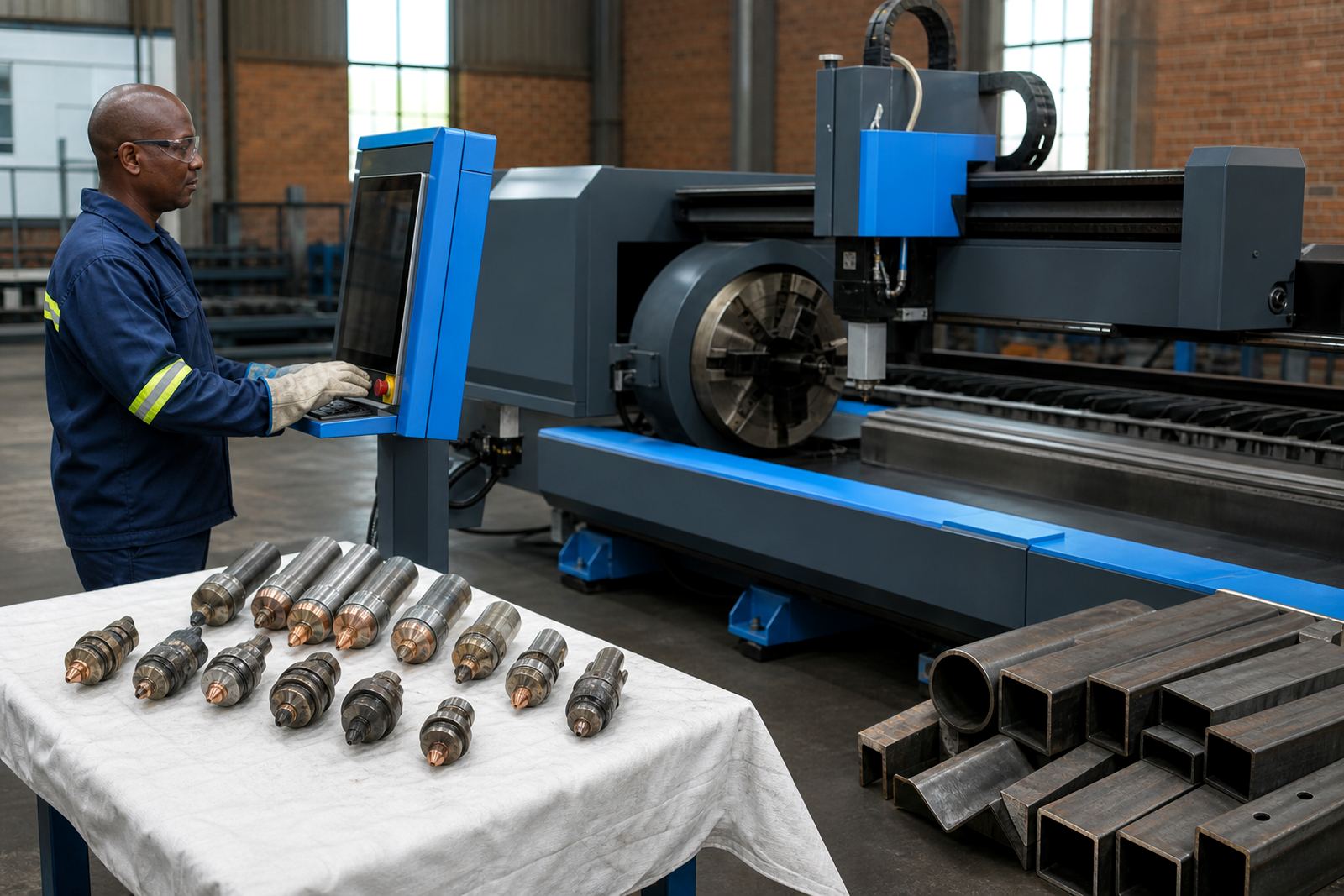
Operators should watch for worn nozzles, soot build-up and inconsistent cut marks. Small faults in the gas path can show up as rough edges, heavy dross or narrow areas that need extra grinding. On tube and profile machines, a clean lens and stable focus help, but the gas still has to do its part at the cut face.
- Check chuck grip before running long tube batches.
- Keep nozzle condition consistent across shifts.
- Confirm bevel settings before angled cuts.
- Watch for changing edge colour or burr shape.
Safety and workshop handling are part of the same system
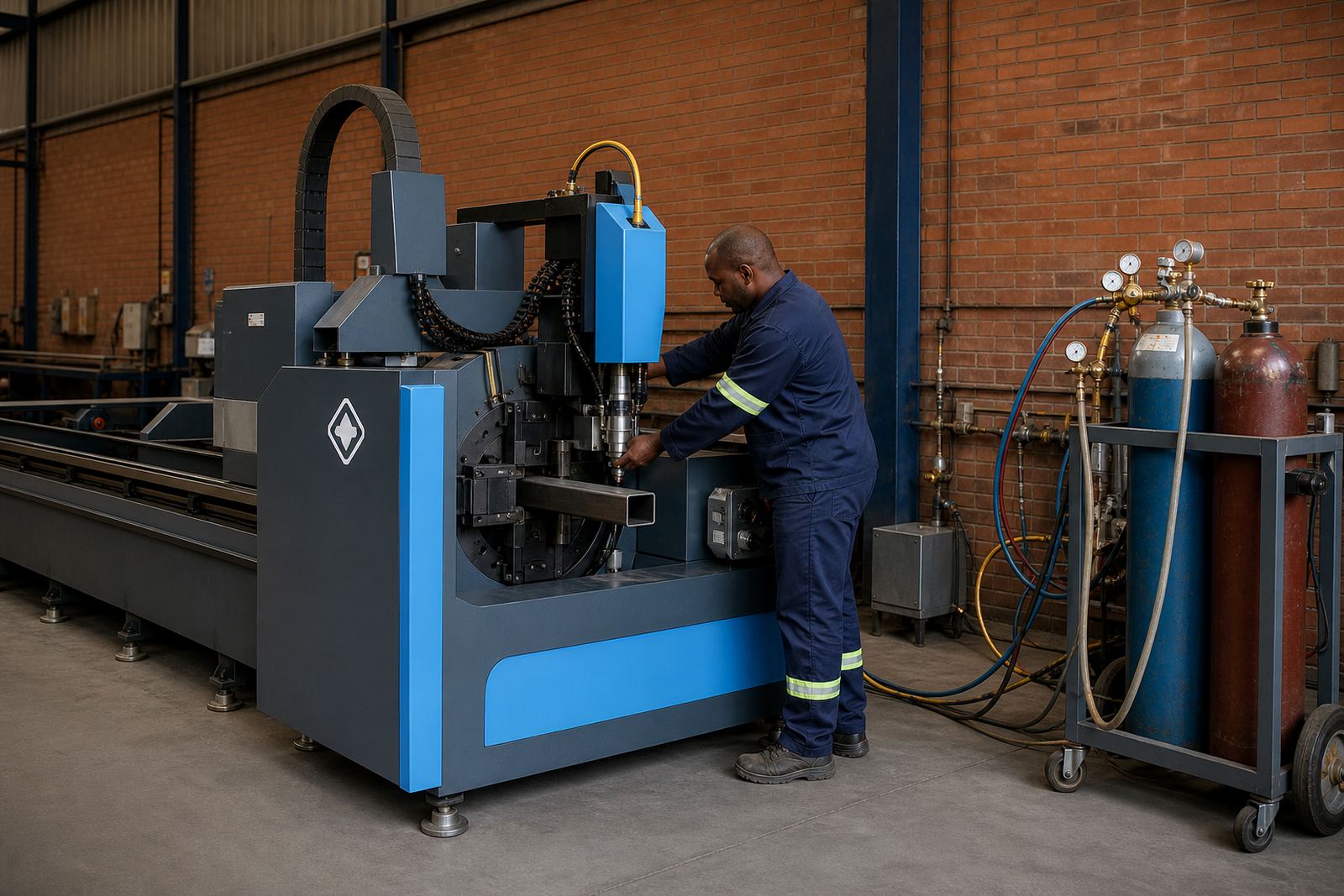
Gas handling needs proper storage, correct regulators and clear workshop routines. Cylinders must be secured, hoses checked and connections kept free from leaks. In a metal fabrication shop, a small leak can waste gas, alter cut quality and create avoidable hazards near hot work areas. Ventilation also matters, especially where cutting fumes collect around enclosed bays or long shift runs.
Operators should know the difference between a cut problem caused by gas flow and one caused by material, alignment or programme settings. That saves time and stops unnecessary changes to the machine. Training should cover gas setup, pressure checks and the signs of unsafe handling, not only the buttons on the control screen.
In South African workshops, this practical discipline pays off because teams often run mixed jobs in one day. A machine might handle thin stainless tube in the morning and heavier carbon steel profile later on. The gas setup must be understood well enough to change with the work, without guesswork.
What LaserTube looks for during setup and training
LaserTube works with fabricators that need tube and profile cutting machines to hold quality on real production work. Our site assessment looks at the material mix, tube sizes, part volumes and the gas arrangements already in place. From there, installation, commissioning and operator training can cover the gas settings that suit the actual workload, not a generic setting copied from another shop.
Training also includes nesting practice, chuck alignment, bevel calibration and assist gas setup. That helps operators understand how the cut behaves on round tube, square tube, rectangular tube, angle and channel. Where a job needs a cleaner edge for welding or fit-up, the team can adjust the process with more confidence.
For fabricators in Wadeville, Pretoria, Cape Town, Gqeberha, Bloemfontein and Nelspruit, the goal is the same: a machine that cuts consistently, with gas settings that match the job and keep the edge usable for the next step in production.
- Site Assessment for plant layout and gas planning.
- Machine Installation and Commissioning for stable cut setup.
- Operator Training and Nesting Training for daily use.
- Preventive Maintenance, Chuck Alignment and Bevel Calibration.