Open sections behave differently on the bed
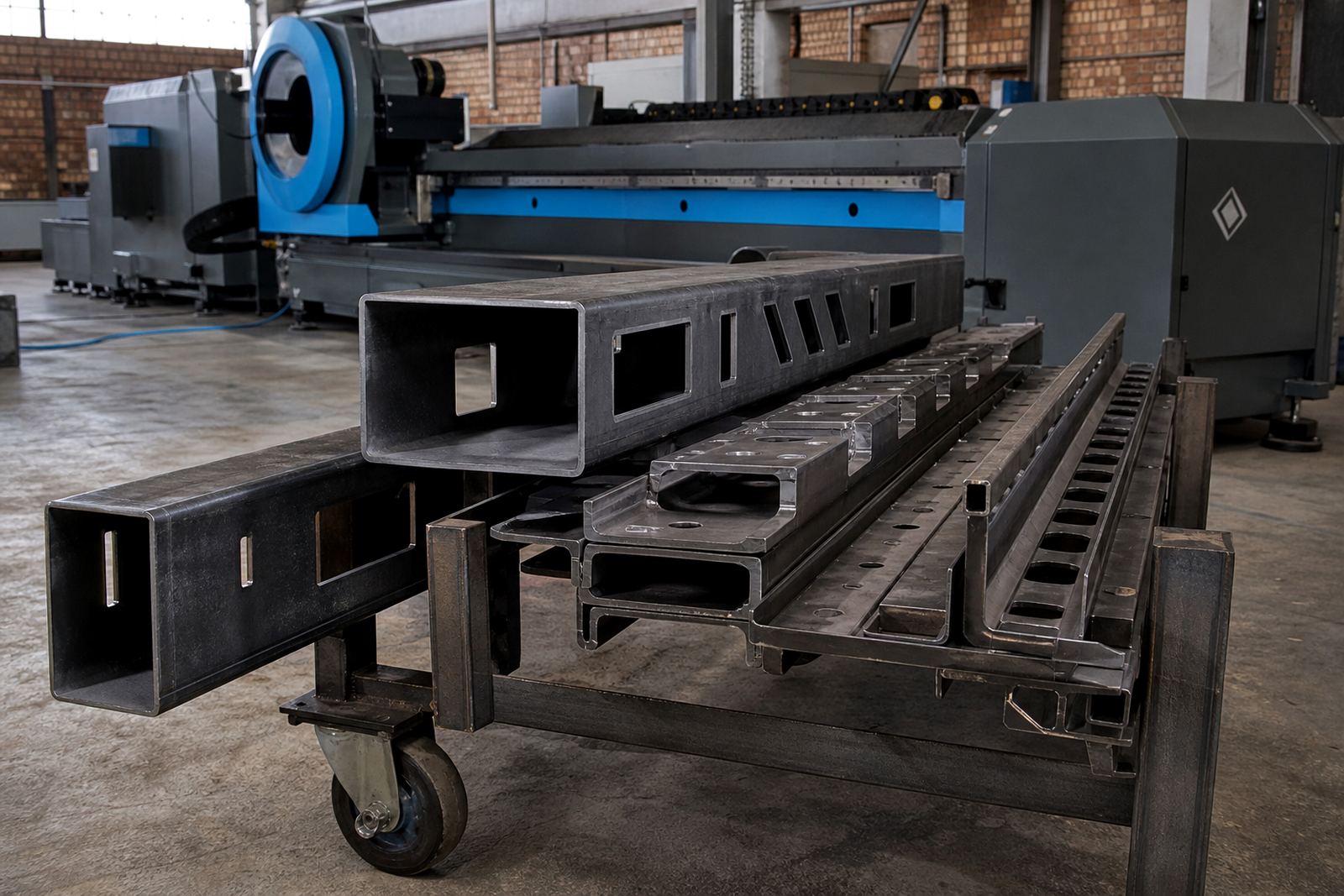
Angle, channel and other open profiles do not behave like round or square tube. Once the cut starts, the section can relax, spring or shift, especially on longer lengths and thinner wall material. That change in shape affects edge quality, hole position and the way the part releases from the skeleton.
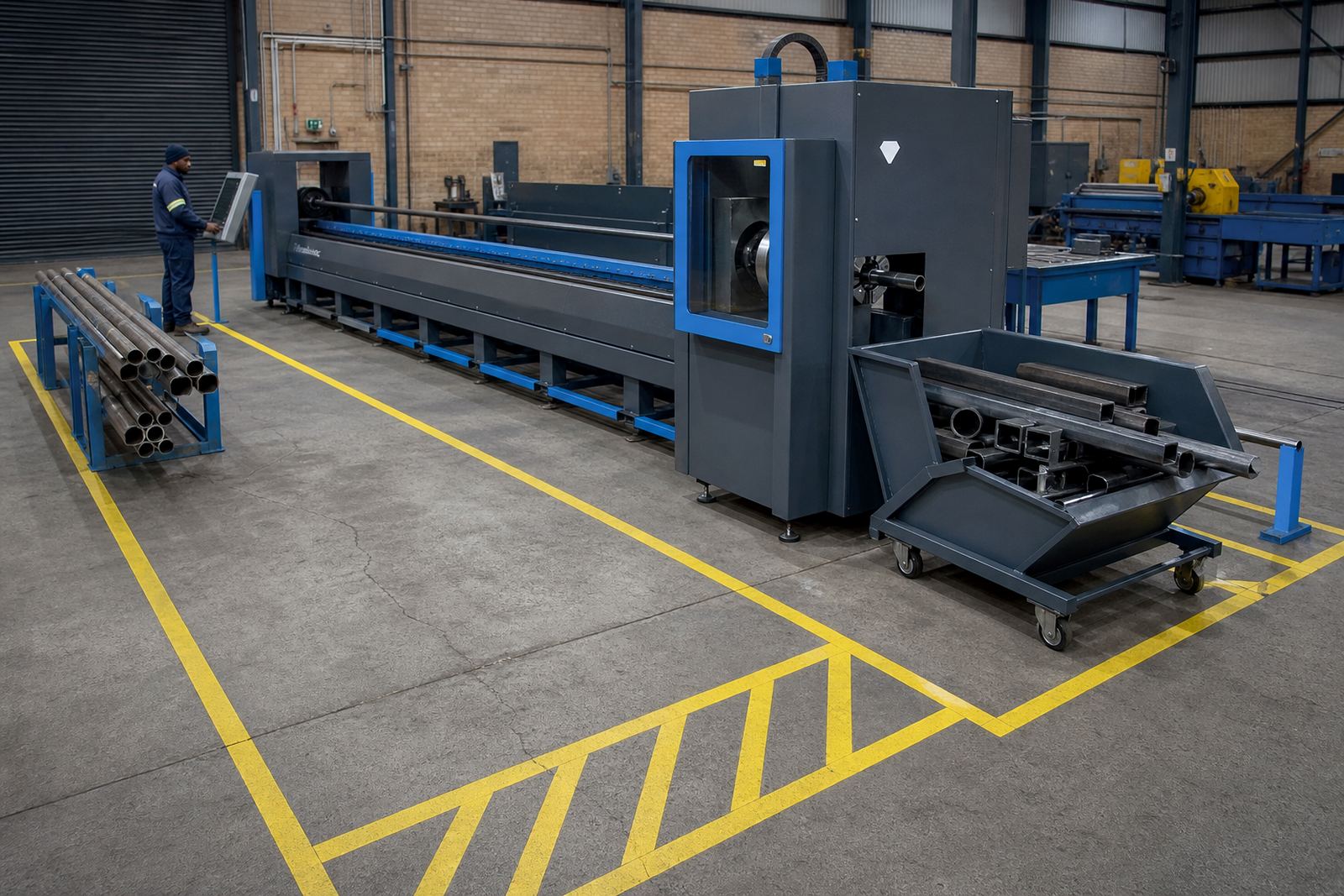
For channel profile cutting, the machine setup has to hold the work steady without bruising the faces that matter for assembly. Chucks, supports and roller positions should suit the profile width, web height and wall thickness. A good setup keeps the section centred and reduces chatter at the cut edge, which matters when the part has to land straight in a welded frame or rack.
In practice, the operator needs to think about more than the drawing. Where the part will drop, how the web sits, and which side will show after fabrication all affect the cut order. A profile that looks simple on paper can move in awkward ways once the laser opens the section.
Chuck handling and the first cut matter most
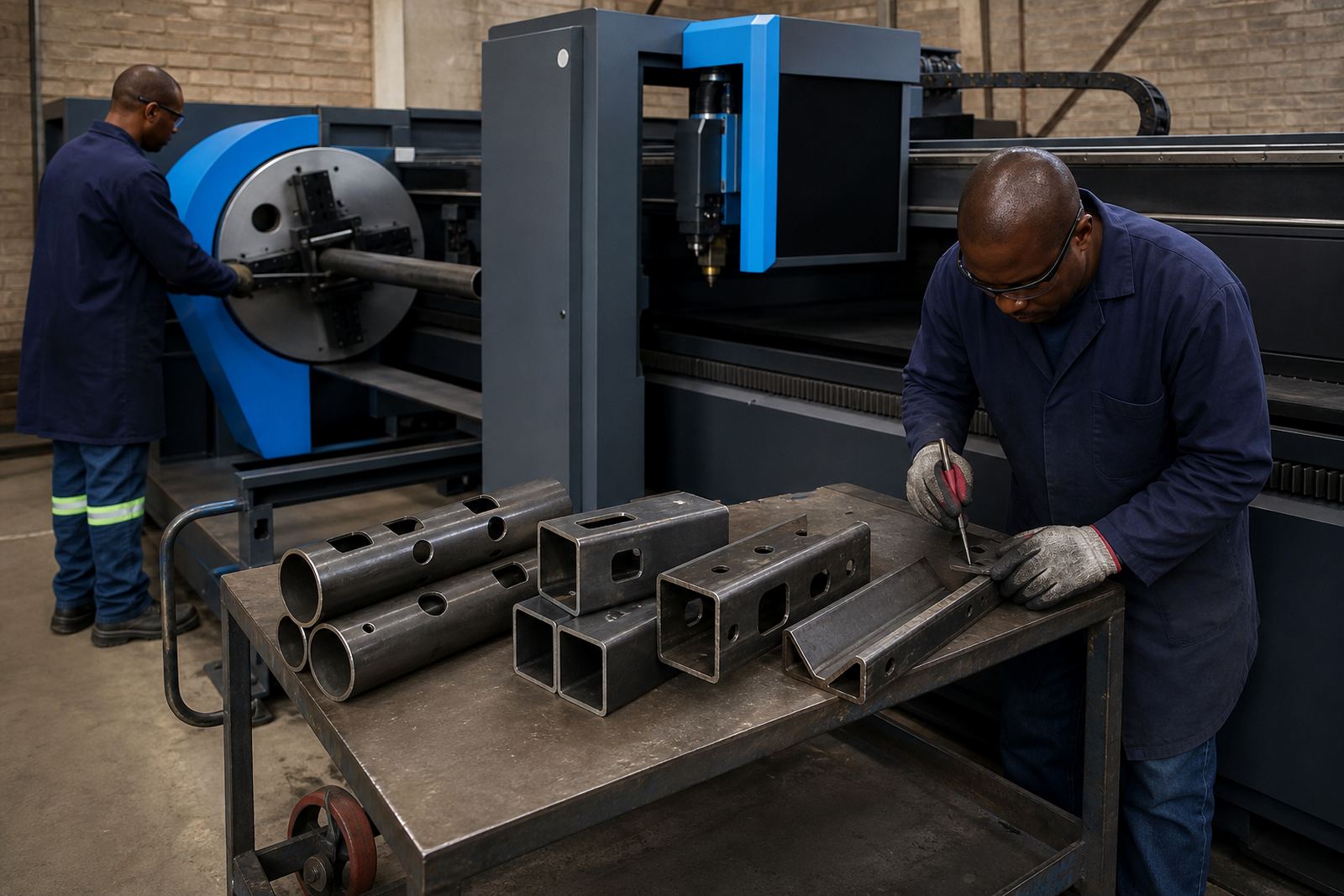
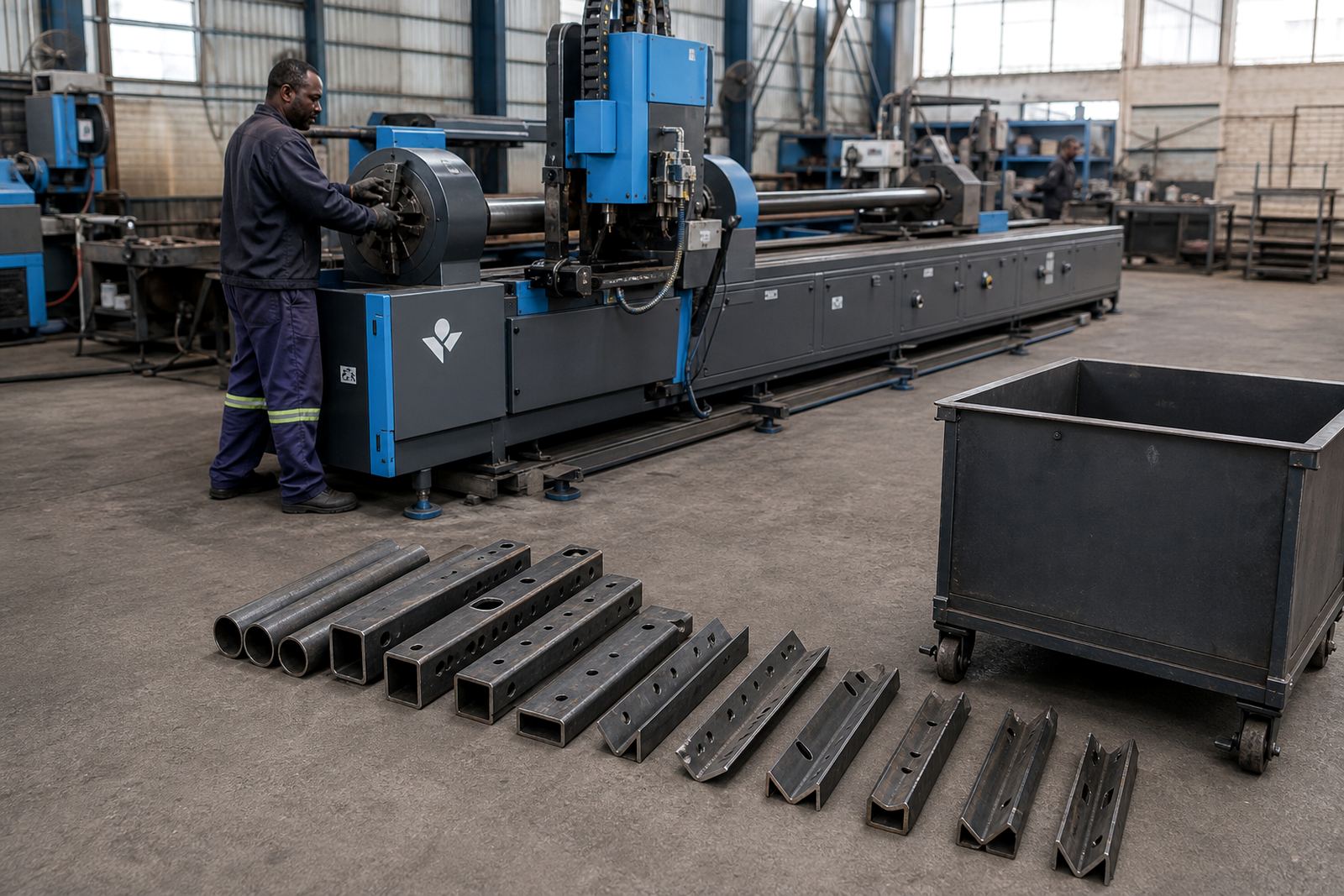
Tube and profile machines with chucks are built to grip the section and keep it aligned through rotation and feed. For channel, the grip must be firm enough to hold position, but not so hard that it marks the material or distorts the open flange. That balance is usually set during installation and refined during operator training.
The first cut is often where problems show. If the profile is not centred properly, the machine may cut one flange cleanly while the opposite side sees a slight offset. That can lead to mismatched holes, poor fit-up or a part that needs hand correction before assembly. The same applies when cutting repeated parts in a batch, because small errors tend to build up.
On jobs with mixed material sizes, the chuck jaws, back supports and clamping order should be checked before production starts. A Wadeville shop cutting structural channel for local steelwork will not use the same setup as a plant producing light frames, and that difference shows up in the finish.
Nesting for channel is not just drawing parts close together
Nesting software helps arrange parts along the length of the profile, but channel needs more than simple spacing. Open sections can deform as the machine cuts, so the order of cuts should protect the remaining material and leave enough structure for the part to stay stable until release. That is especially important when the job includes slots, fixing holes and multiple cut lines on one side of the section.
A practical nesting plan looks at the sequence of holes, tabs and end cuts. If the software places too many openings on one face too early, the profile can lose stiffness before the part is finished. The cleaner approach is to keep support where it is needed for as long as possible, then release the part in a controlled way.
Good nesting also reduces scrap. On a mixed order from Pretoria or Durban, one profile might carry short brackets, while another carries longer members with repeated cut-outs. The operator should still group the work in a way that keeps the machine stable and the skeleton usable where possible.
Bevel heads, edge quality and the job at the weld bench
Some channel work needs bevels, especially where the cut edge must open for welding or fit into a heavier structure. A bevel head lets the machine shape the edge at an angle, but the operator still has to account for the open section. The tilt of the cut can change how the arc of the profile behaves, and that affects fit-up on the bench.
Edge quality matters because many channel parts are not just decorative pieces. They become brackets, gates, trailer frames, machine guards or support members. If the cut edge carries dross, burrs or a slight taper where the part should sit flush, the fitter loses time correcting it. We calibrate the bevel and carry out routine checkups because channel cutting needs both to keep the edge accurate and the part sitting properly at fit-up.
A clean bevel on channel also helps when the weld sequence is tight. The fabricator wants the part to seat with minimal pushing and rework. The machine can help, but only if the setup is right and the path is chosen with the open shape in mind.
Assist gases and the cut path on open profiles
Assist gas choice affects cut quality, dross formation and the speed at which the cut edge clears slag. On channel, the gas flow has to do its work without disturbing the lighter parts of the section. If the flow is too aggressive for the material thickness, it can leave a rough edge or move fine features during the cut.
Different jobs call for different settings. Mild steel channel for structural work, thinner profile for furniture frames, and heavier members for industrial supports will not behave the same way. The operator should set pressure, nozzle condition and cut speed around the material, then confirm the result on the first part before continuing.
Where safety is concerned, gas handling and enclosure discipline matter just as much as cut quality. Protective guarding, interlocks and sensible housekeeping around the bed keep the job area under control. In a working plant, people are moving material in and out all day, so the machine area needs clear rules and steady habits.
Wadeville channel for a steelwork order
A local fabricator in Wadeville may receive an order for channel sections that will become support frames for a site in Johannesburg. The drawings look straightforward, but the open profile brings handling issues that closed tube does not. One side wants to fall open after the first cut, and the skeleton starts to lose shape if the nesting is too aggressive.
In that sort of job, the site assessment matters before production starts. The machine team checks material lengths, loading space, clamping approach and the part mix. During installation and commissioning, the machine is set to suit the shop layout and the way the material will be moved. Training then covers the real details, including chuck alignment, cut order and the effect of gas settings on edge finish.
When the job is running well, the fabricator gets parts that fit the weld bench with less hand work. That is the point of using a fibre laser tube and profile machine for channel, not just tube. The machine has to respect the shape of the section, and the operator has to work with that shape instead of fighting it.
Maintenance that keeps open-section cutting steady
Channel cutting is sensitive to alignment drift, worn jaws and small changes in support position. Preventive maintenance keeps those issues from building up. Chuck alignment, bevel calibration and regular checks on guides and consumables help the machine hold the profile where it should be, job after job.
For plants running repeated channel work, a service routine also protects uptime. The machine should be inspected for clamping wear, support wear and any movement in the feed path. Where the work includes both tube and open profiles, the setup needs to stay consistent across the different section types, which is where trained operators and applications support make a practical difference.
Channel profile cutting rewards careful habits. The cut may look small on the screen, but the profile can move a long way once the laser opens it. Control the grip, plan the nest and keep the gas and cut path in step with the section, and the parts will fit the job they were meant for.