Three zones that stop the floor from crossing itself
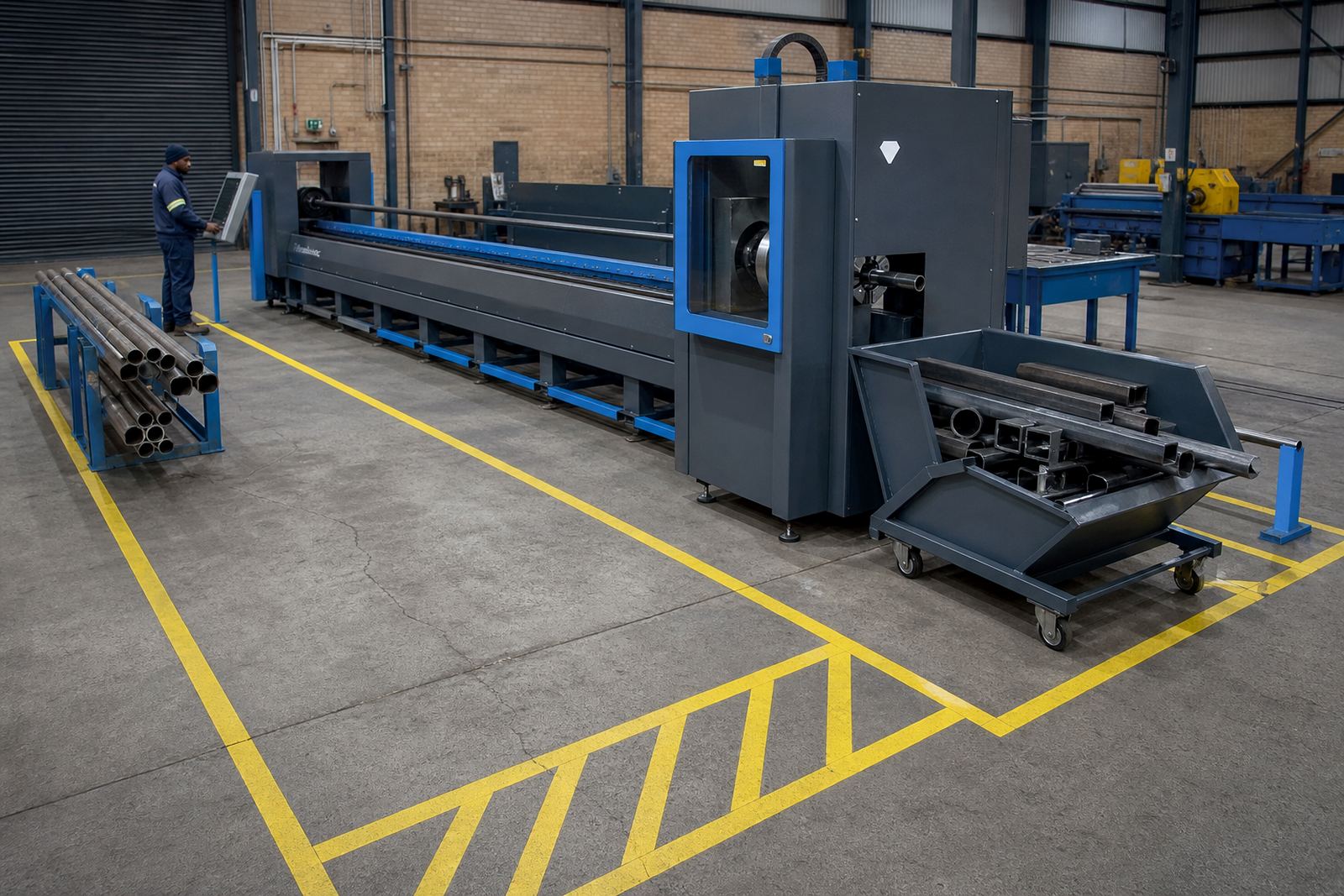
A tube cutting line works best when the floor is split into three clear areas. One zone is for incoming material and bundle breaks, one is for machine operation and one is for finished parts, offcuts and scrap. If those tasks overlap, people step around each other, tube gets damaged and the operator has less space to work safely.
In smaller job shops around Wadeville or Germiston, space is often tight. That does not remove the need for zones, it just means the lines on the floor and the storage positions must be more disciplined. Even a compact layout can keep raw tube away from the discharge side and keep collected parts clear of the operator path.
- Keep raw tube racks beside the loading side, not behind the machine.
- Mark a clear walking path that stays free of drop-offs and straps.
- Separate finished parts from scrap so each can move to the next step without confusion.
- Leave room for a trolley or pallet truck to turn without brushing the machine frame.
Loading space must suit the length of the tube
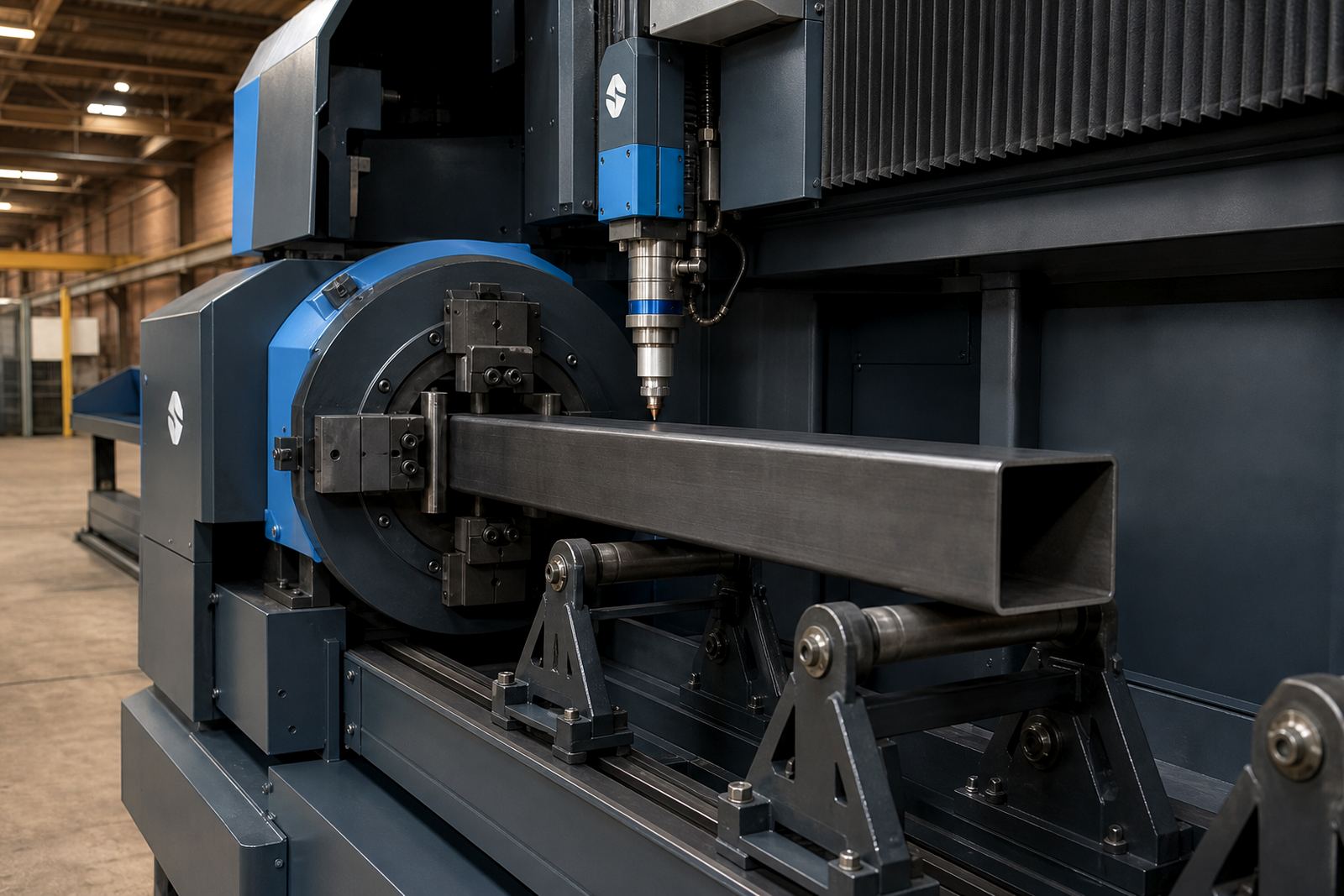
Safe zones start with the material length you handle. Round, square and rectangular tube usually arrive in long bundles, while angle and channel need their own storage position so profiles do not snag each other. A proper loading side gives the operator room to check the bundle, align the first length and feed it without walking into the discharge area.
When the entry side is too narrow, teams start leaning long material across walkways and that is where knocks and pinched fingers happen. It also makes it harder to keep chucks aligned and to keep the tube straight during loading. A good layout lets the material stay supported from the start.
- Store the longest stock where it can be lifted without twisting.
- Use level supports so the tube does not roll unexpectedly.
- Keep clamp and chuck access open for checks and cleaning.
- Allow enough space for a second person during heavier loads or awkward profiles.
Where the operator stands and where no one else should stand
The operator zone should be obvious from the moment the machine is switched on. Controls, viewing points and access doors belong on one side of the machine and that side should stay free of casual traffic. In workshops with visitors, fitters and forklift movement, a marked boundary stops people from drifting into the wrong space while a cut is running.
Do not let anyone stand where tube can swing, where a chuck is opening or closing, or where ejected offcuts may fall. Safety glasses, gloves where appropriate and fitted workwear all help, but the floor layout does the real work. If the operator has to keep calling people aside, the zone is already too loose.
Part collection needs its own path
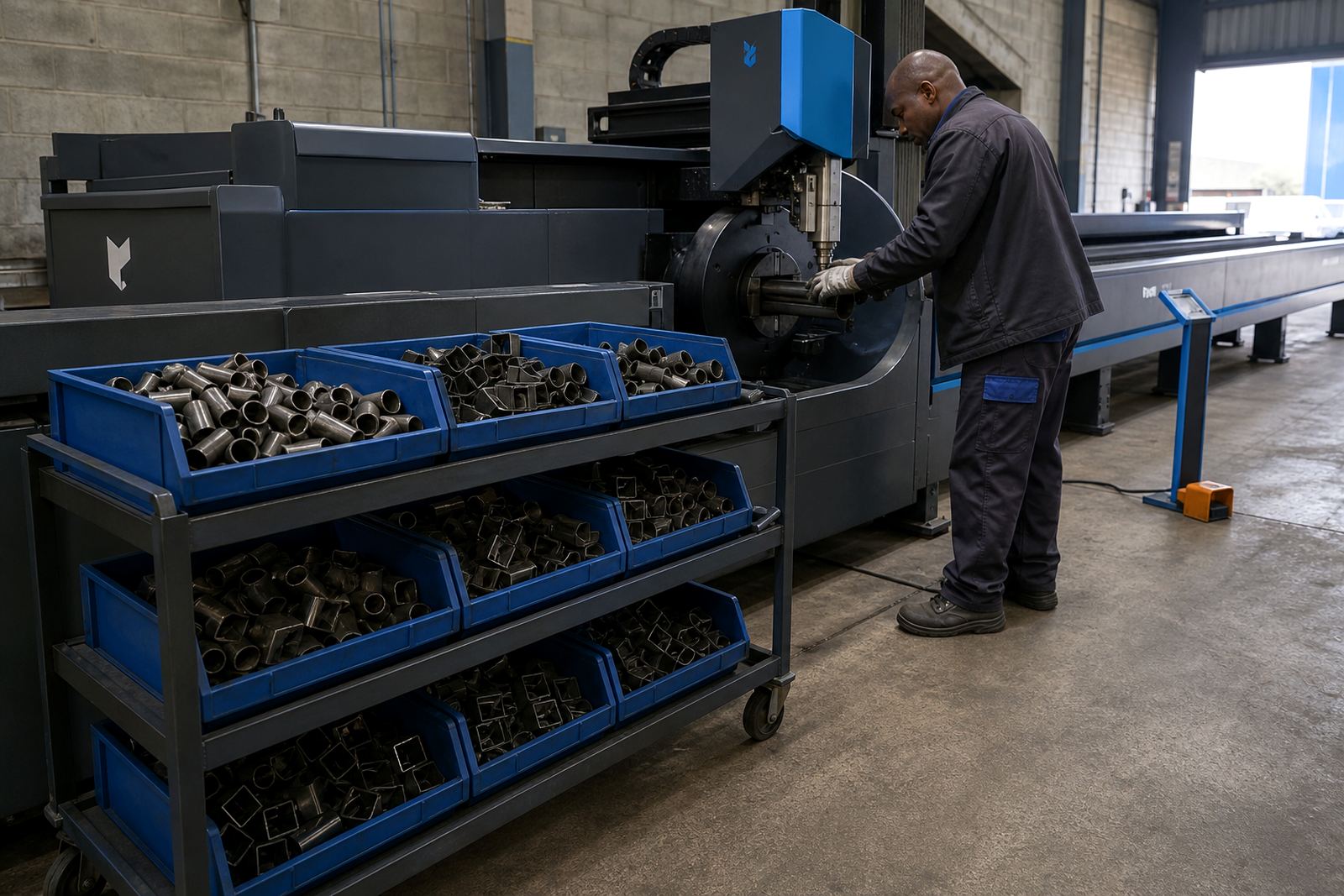
Tube and profile machines produce cut parts, skeleton sections and offcuts that need sorting quickly. If the collection side is not planned, these pieces end up stacked near the machine and that creates trip hazards. It also slows down nesting and makes it harder to spot parts that still need tagging, deburring or inspection.
For South African fabricators working in Johannesburg, Pretoria or Durban, mixed jobs often run through the same shift. A clear collection zone keeps order even when the work list changes. It should be wide enough for trays, trolleys or bins and it should never block the door used for the next bundle.
- Give each bin or tray a fixed place.
- Keep scrap metal separate from parts meant for assembly.
- Mark a route for moving finished work out of the cell.
- Leave clear access for cleaning swarf and fine dust from the floor.
Bevel heads, chucks and lines need breathing room
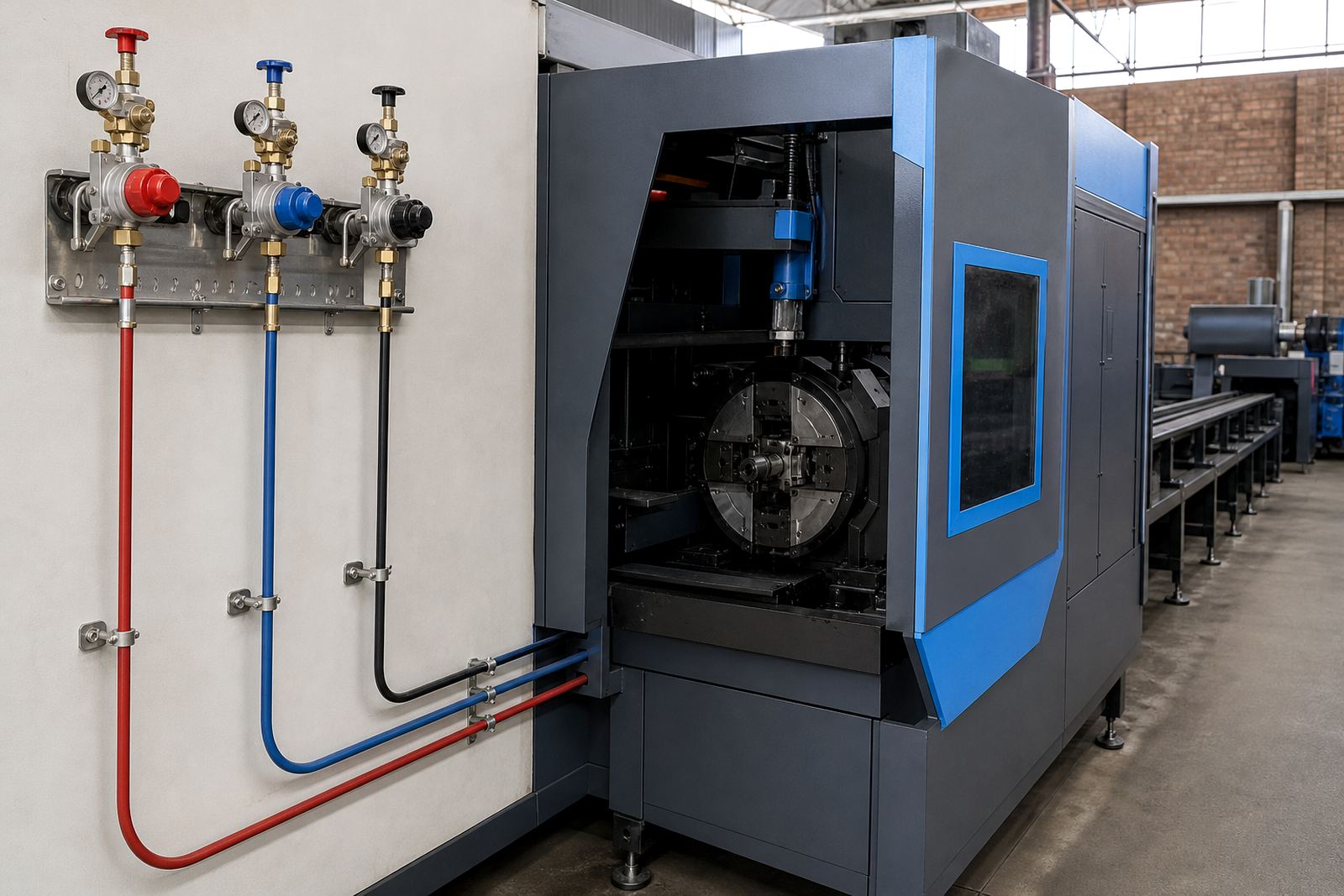
Machines with bevel heads and multiple chucks need extra space for movement, checks and servicing. The area around the head must stay open so the operator and service technician can inspect the cut path, clean the nozzle area and confirm the setup without working around clutter. If assist lines are in the wrong place, they become trip points and can also suffer damage from moving stock.
Assist gases are part of the cutting process, so the bottles, bulk supply or manifold arrangement must sit where they can be managed safely and kept upright. The same goes for hoses and lines feeding the machine. A neat route is not only tidier, it makes leaks, wear and poor routing easier to spot before they turn into a stoppage.