When square tube is asked to fit first time
Square tube cutting looks straightforward until the job needs repeatable slots, matching hole sets and frame pieces that land square after welding. The cut edge is only part of the job, because tube distortion, mill tolerances and clamp position all affect the final fit.
For job shops handling mixed orders, the value of fibre laser tube cutting is consistency across short runs and repeat batches. A good setup lets the operator move from 25 mm light wall tube to heavier structural sections without losing hole position or coping quality at the corners.
In practice, the drawing must respect the real tube size, not only the nominal size. A profile that measures a few tenths over or under can shift slot engagement and make a frame twist once the welds pull it.
The tube features that change the cut
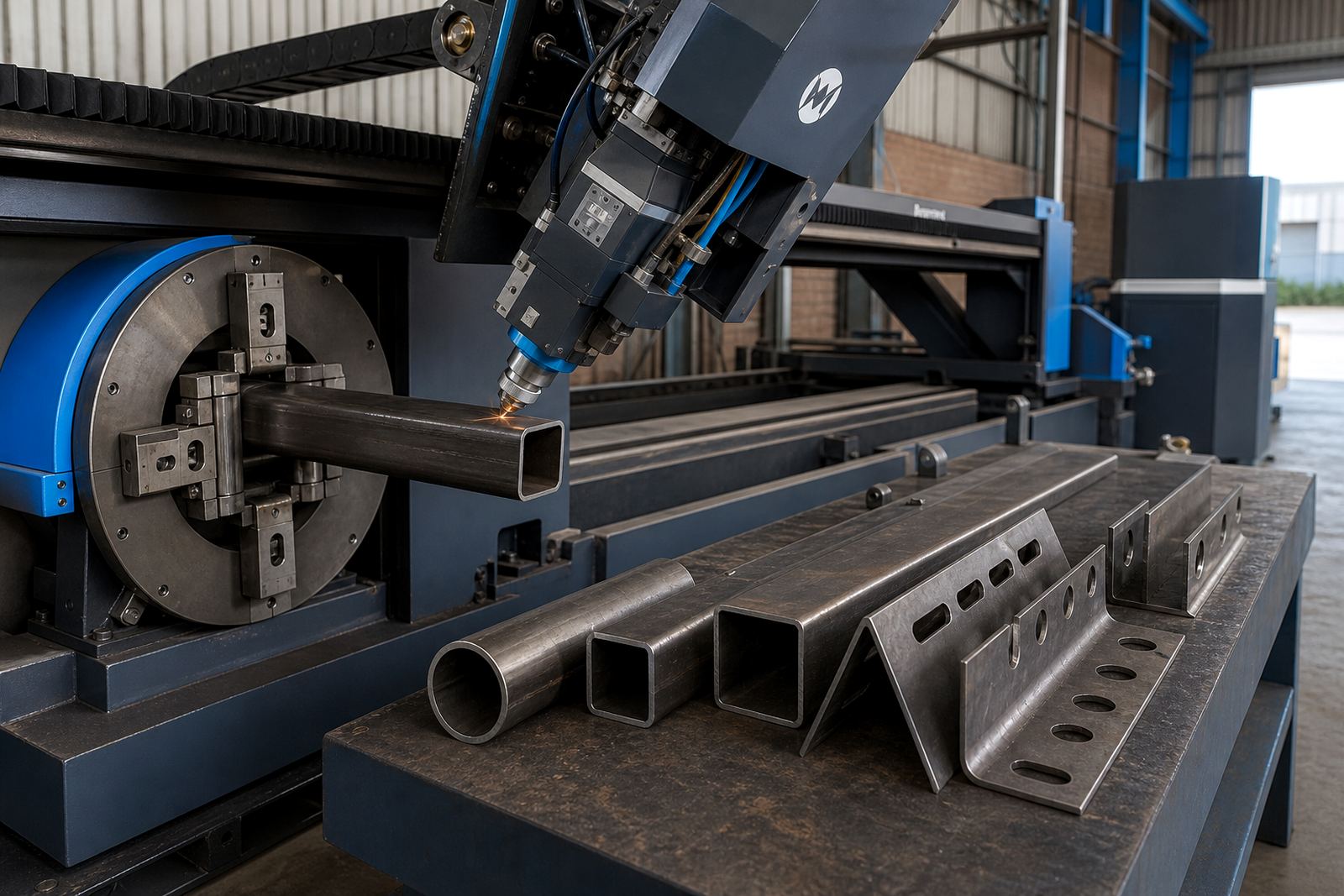
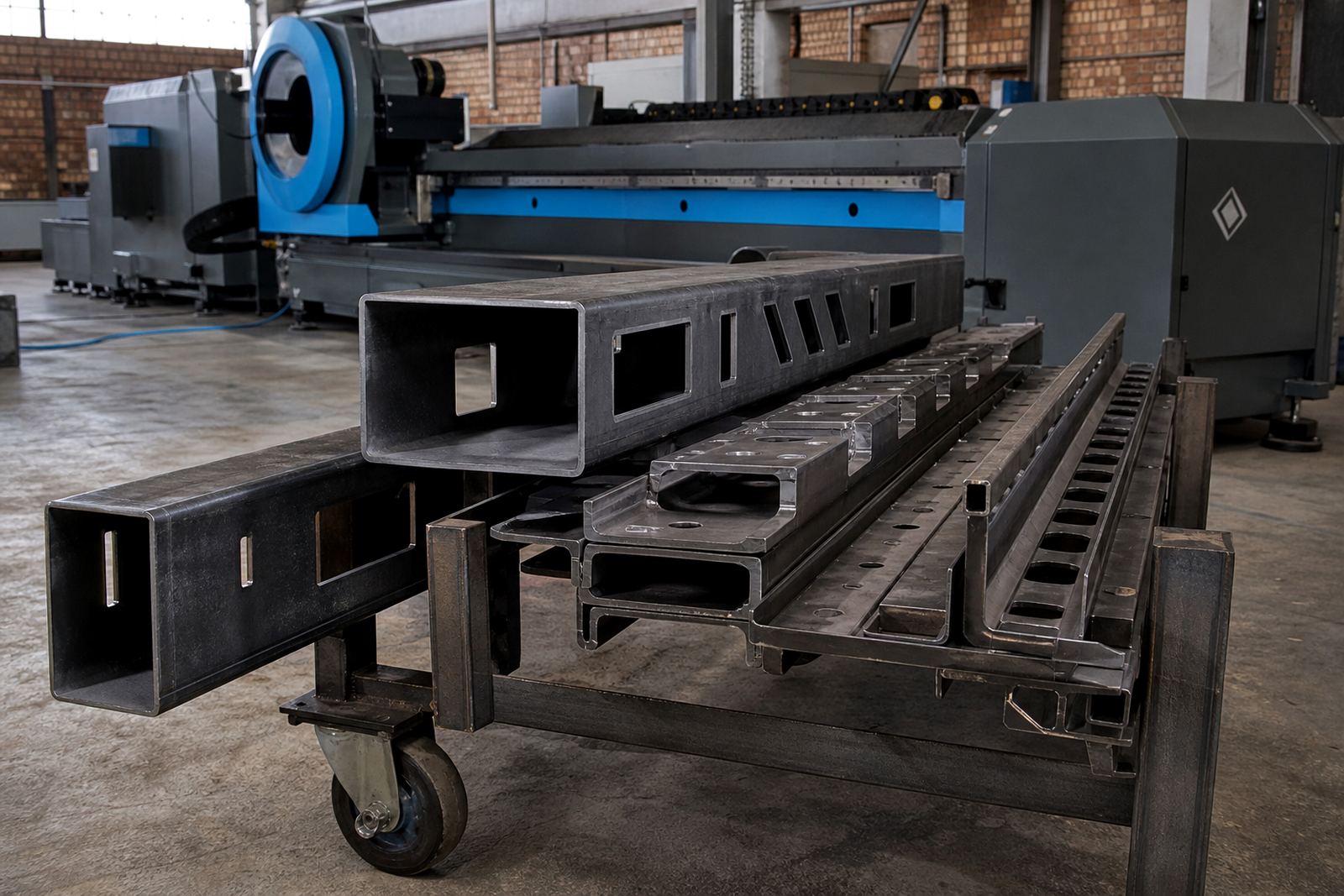
Square tube behaves differently from round tube because every face can carry holes, cut-outs and end details. The seam position matters, the wall thickness matters, and so does the way the material sits in the chuck and support system.
- Slots need clean lead-ins so tabs do not tear during assembly.
- Corner holes must avoid breaking into the radius where the faces meet.
- Repeat frame parts need the same datum on every length.
- Seam location should be considered on visible or loaded faces.
- Thin wall tube needs careful heat control to limit edge movement.
When the machine uses proper tube support and stable chucks, the profile stays aligned while the head moves around the part. That helps on long members for gates, shop fittings, racking and transport frames.
How chucks and supports hold the line
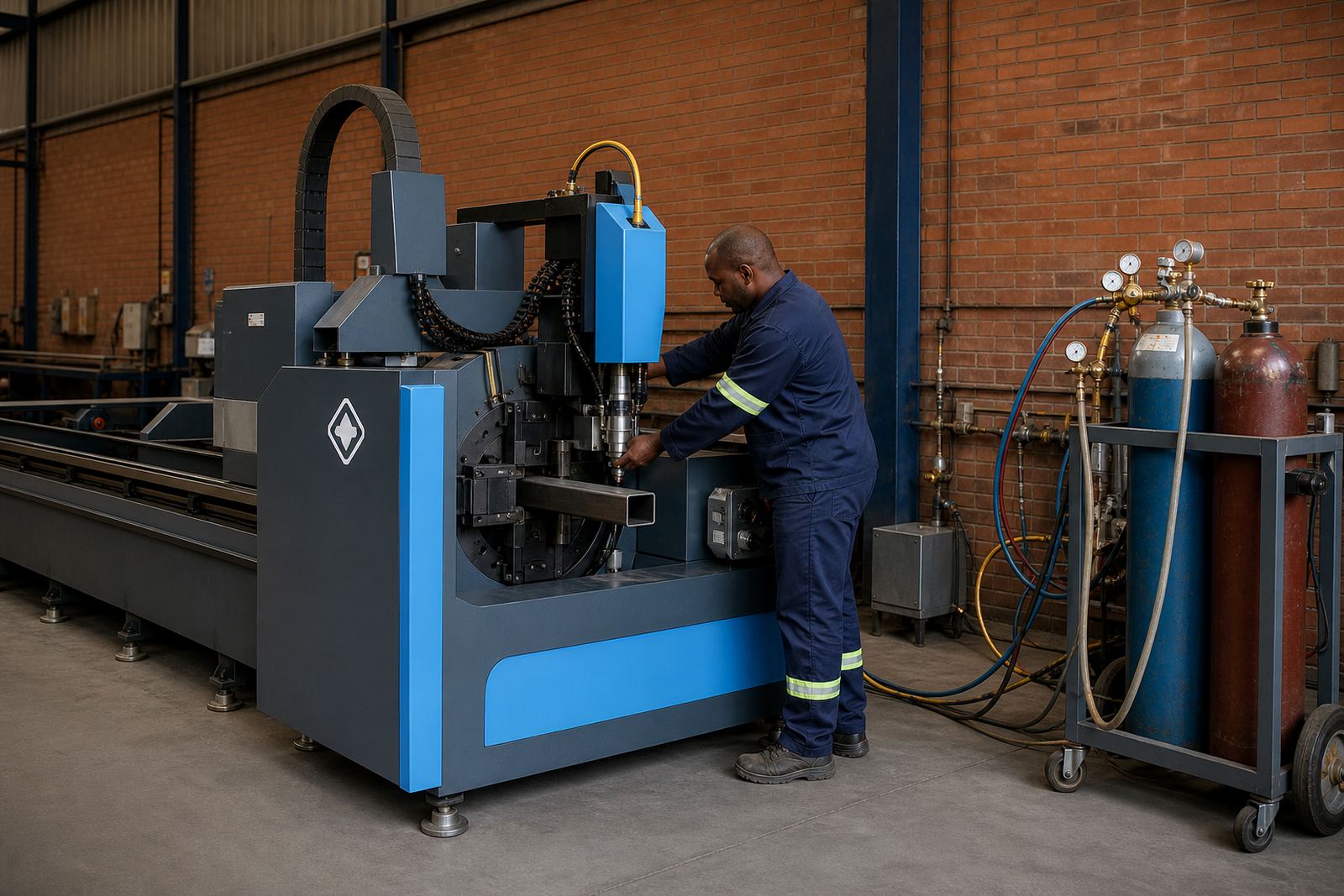
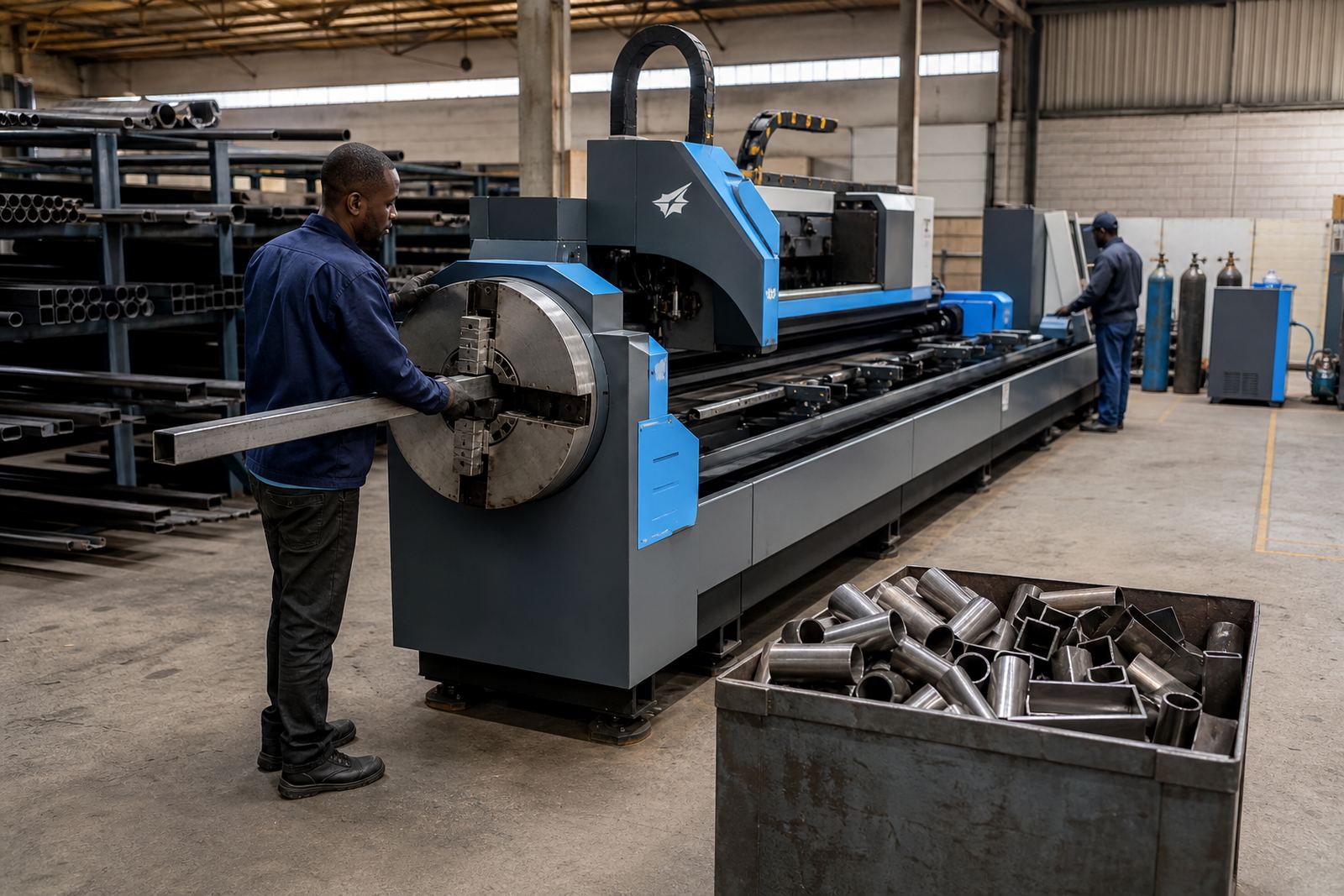
Tube cutting depends on how the machine grips the profile. Chucks must hold square tube without crushing the wall, yet they still need enough force to stop slip during rotation and feed movement.
On longer jobs, support systems keep the tube from sagging as the cut path moves down the length. If the material droops, the hole pattern can shift and the last parts in the nest may no longer line up with the first.
For production work in Germiston or a fabrication shop in Pretoria, the setup often starts with a site assessment and an honest look at the profile mix. Some plants run one size all day, while others need fast changeovers between light and medium sections, and the chuck system must suit that rhythm.
Slots, holes and weld preparation on repeat frames
Frames that repeat across a batch benefit from cut features that help welding and assembly. A square tube part may need slots for cross-members, hole pairs for brackets, or coping details where one profile meets another.
- Use hole spacing that matches the weld fixture, not guesswork on the floor.
- Keep end cuts clean enough for direct fit-up, with no heavy grinding.
- Allow for weld shrinkage on long rectangular assemblies.
- Place part marks where they stay visible after handling and stacking.
Repeat work is where nesting software earns its place. The operator can place multiple parts on the same stock length, cut shared features where sensible and reduce offcut waste, while still keeping the parts in the correct order for assembly.
Bevel heads, gas choice and edge finish
Not every square tube job needs bevel cutting, but some assemblies do need angled edges for full contact at the joint. A bevel head helps when the weld prep must support strength or reduce fill on thicker sections.
Assist gas setup also matters. Oxygen, nitrogen or air may be used depending on material, thickness and finish requirements, and the wrong choice can leave heavy dross or a surface that needs extra clean-up. The machine must match gas flow, cut speed and pierce settings to the tube wall being processed.
For mild steel tube in structural work, the cut edge can be serviceable straight off the machine when the focus is on fit. For visible parts, the finish must stay cleaner and the operator needs tighter control of heat and kerf width.
Wadeville square tube batch setup
A fabrication shop in Wadeville may load a batch of 50 mm square tube for handrail frames, shelves and support brackets on the same shift. The parts look ordinary on paper, but the fit depends on hole position, slot width and the way each length is clamped before cutting.
When the first run is checked carefully, the team can spot whether the seam is landing on a visible face, whether the corner holes need a slight offset, and whether the offcuts can be used in another frame size. That kind of practical checking saves time later, especially where the assembly team works from fixed jigs and expects every member to line up.
LaserTube supports that kind of work with installation, operator training, nesting training and preventive maintenance. Michael Dlamini leads the business from Wadeville, with Anika Kajee, Sibusiso Bhengu, Leanne Mabuza, Pieter Visser and Ayanda Mashaba covering sales, installation, training, service and applications support across Johannesburg, Pretoria, Durban, Cape Town, Gqeberha, Bloemfontein and Nelspruit.
What helps a square tube line run cleanly
The best results come from a machine setup that respects the material before the program starts. A good square tube line keeps the profile stable, the cut path clear and the operator confident about what the machine will do next.
- Use accurate tube measurement before releasing the nesting file.
- Check clamp pressure against the wall thickness in use.
- Set the support height for the longest profile in the batch.
- Keep chuck alignment under regular inspection.
- Match gas settings to the actual material grade and thickness.
For South African fabricators, that discipline matters whether the job is a small repeat bracket run or a full production order for frames. Square tube cutting looks simple only when the machine, the drawing and the handling all work together.