What a clean tube edge really shows
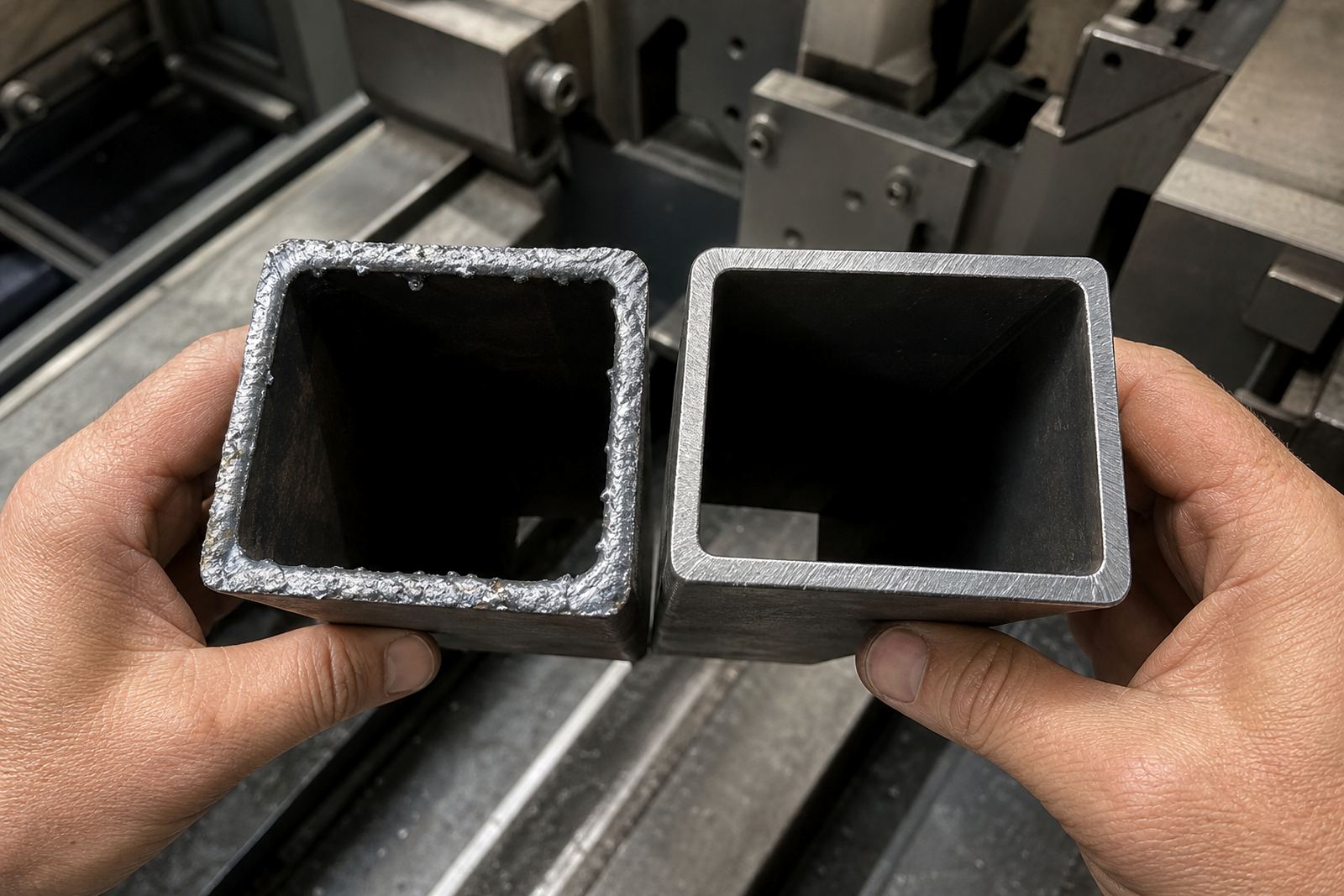
A good edge is smooth, square where it should be, and free of heavy dross, burrs or heat tint that slows fit-up. On round tube, square tube, rectangular tube, angle and channel, the cut face tells you whether the machine is holding focus, the chuck is gripping correctly, and the assist gas is doing its job.
In a busy workshop, poor edge quality can hide in plain sight until parts reach welding or assembly. A cut that looks acceptable from a distance may still leave a bevel that is too sharp, a rounded lower edge, or a hard slag line that needs grinding before the fitter can move on.
Settings that change the edge before the spark settles
Cut speed, power, focus position and pierce settings all influence the finish. If the feed is too fast, the beam can leave striations and a rough lower edge. If it is too slow, heat builds up and the tube wall can lose shape, especially on lighter-wall product.
- Keep focus consistent for the wall thickness being cut.
- Use the right pierce height for the tube wall and profile shape.
- Match speed to material grade, thickness and corner geometry.
- Check that nesting avoids cramped lead-ins near small features.
Profiles with tight corners or repeated holes often need more care than straight cuts. A neat program on screen still needs practical tuning on the machine bed.
How material condition shows up in the cut
Rust, mill scale, oil and surface dents all affect the cut face. Tube that has sat in a coastal yard near Durban or Gqeberha can carry surface moisture and fine corrosion that changes how the beam enters the wall. That does not always stop production, but it does change the finish and the amount of cleaning required later.
Twisted tube, bowed lengths and inconsistent wall thickness also make the edge harder to keep uniform. When the raw material arrives uneven, the cutting head and chuck system have less room to hide those faults, so the cut quality becomes less predictable.
- Sort damaged stock before it reaches the cutting queue.
- Keep oily packs separate from clean tube bundles.
- Store material off the floor where moisture can gather.
- Inspect tube ends for impact marks before loading.
Gas flow decides how clean the lower edge stays
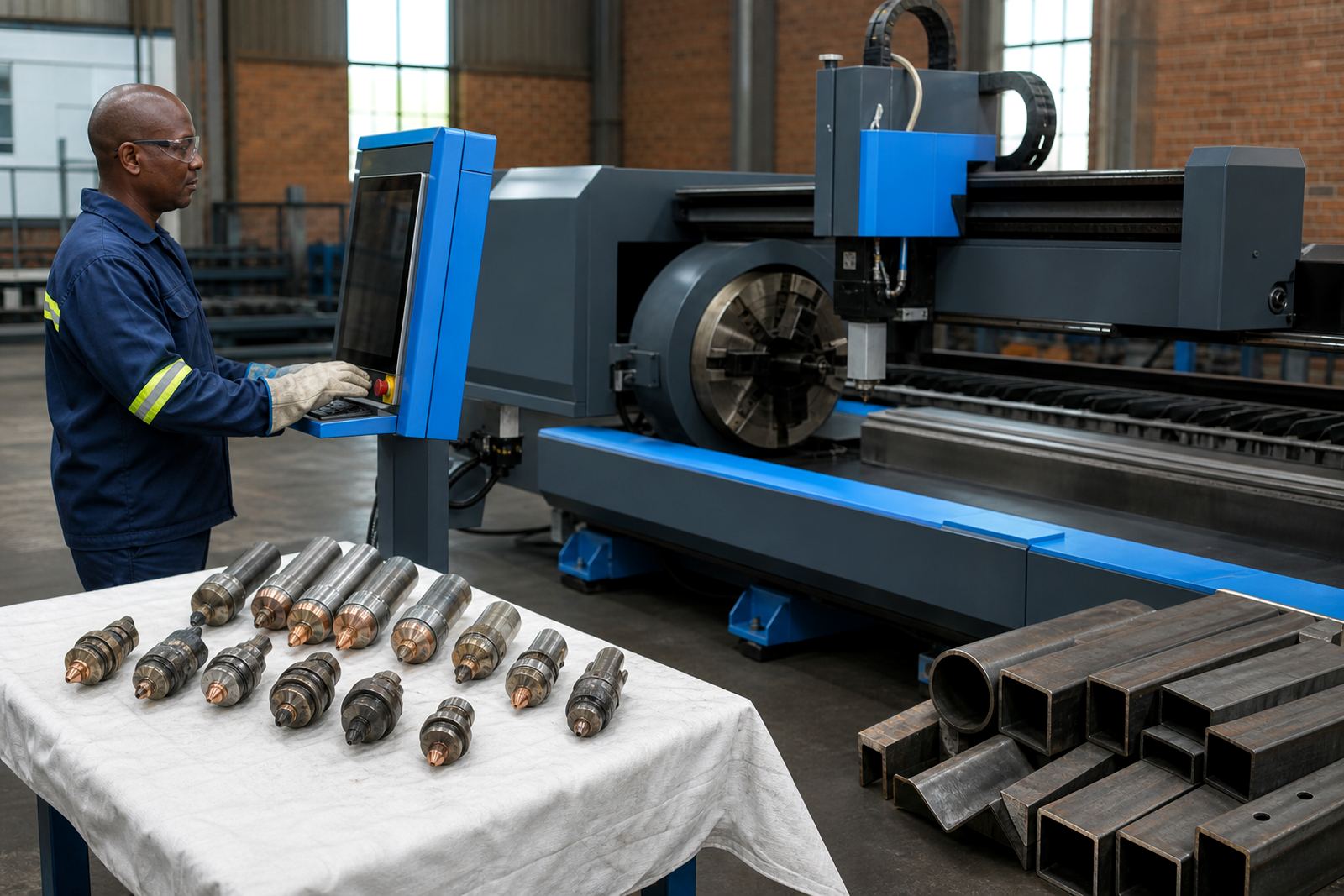
Assist gas is one of the main reasons a laser cut looks clean rather than scorched. Nitrogen can leave a brighter edge on many stainless and mild steel jobs, while oxygen may suit certain thicknesses where speed matters more than appearance. The key is not only the gas type, but also the pressure, purity and nozzle condition.
If the nozzle is worn, if the flow is uneven, or if contamination gets into the line, the cut can pick up extra dross and colour. The issue often shows first on the underside of the tube where debris gathers and hardens during the cut.
A stable gas setup also supports repeat work across long shifts. When settings drift, operators may start adjusting by feel instead of data, and the edge quality becomes harder to repeat from one job to the next.
Chucks, stability and bevel control
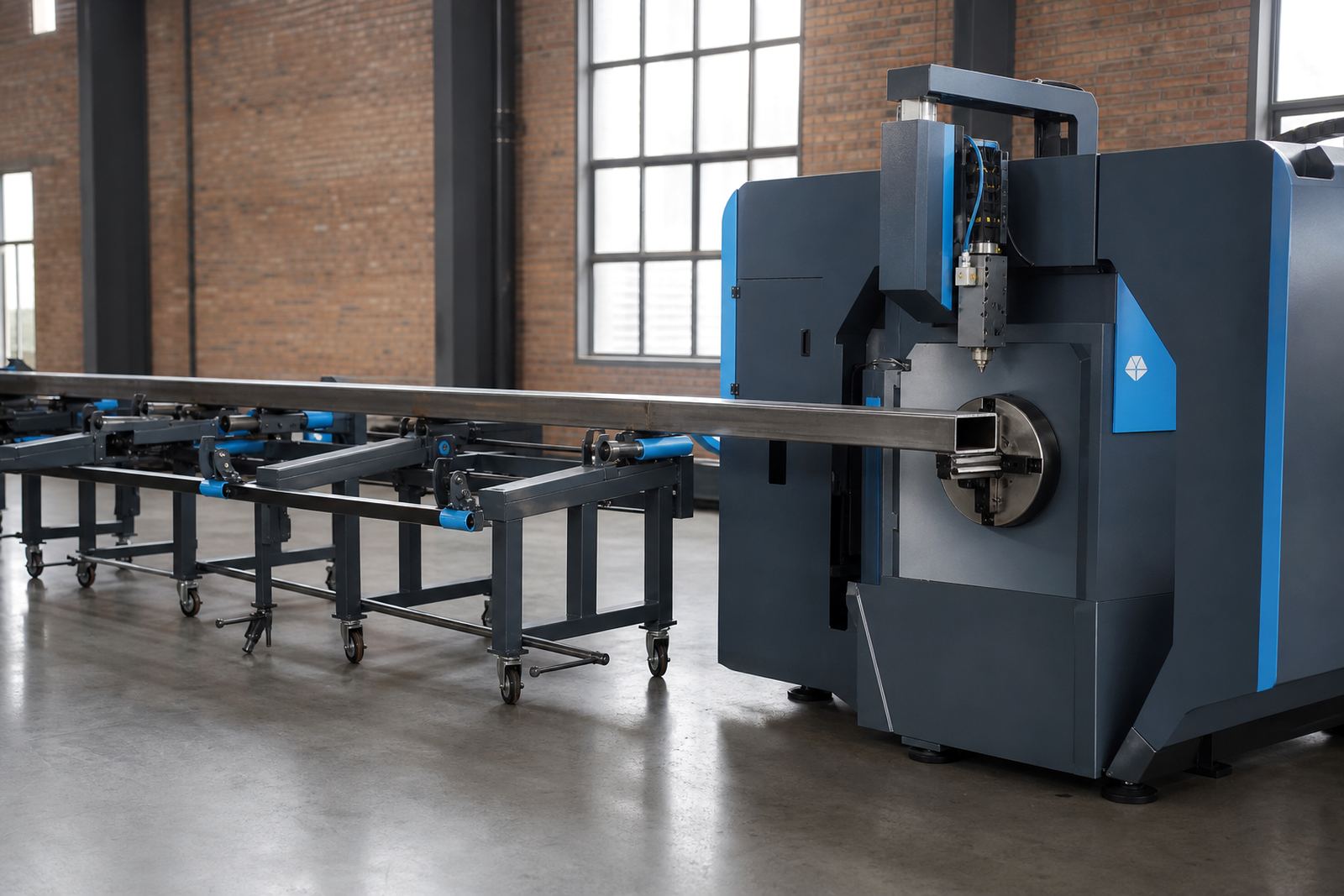
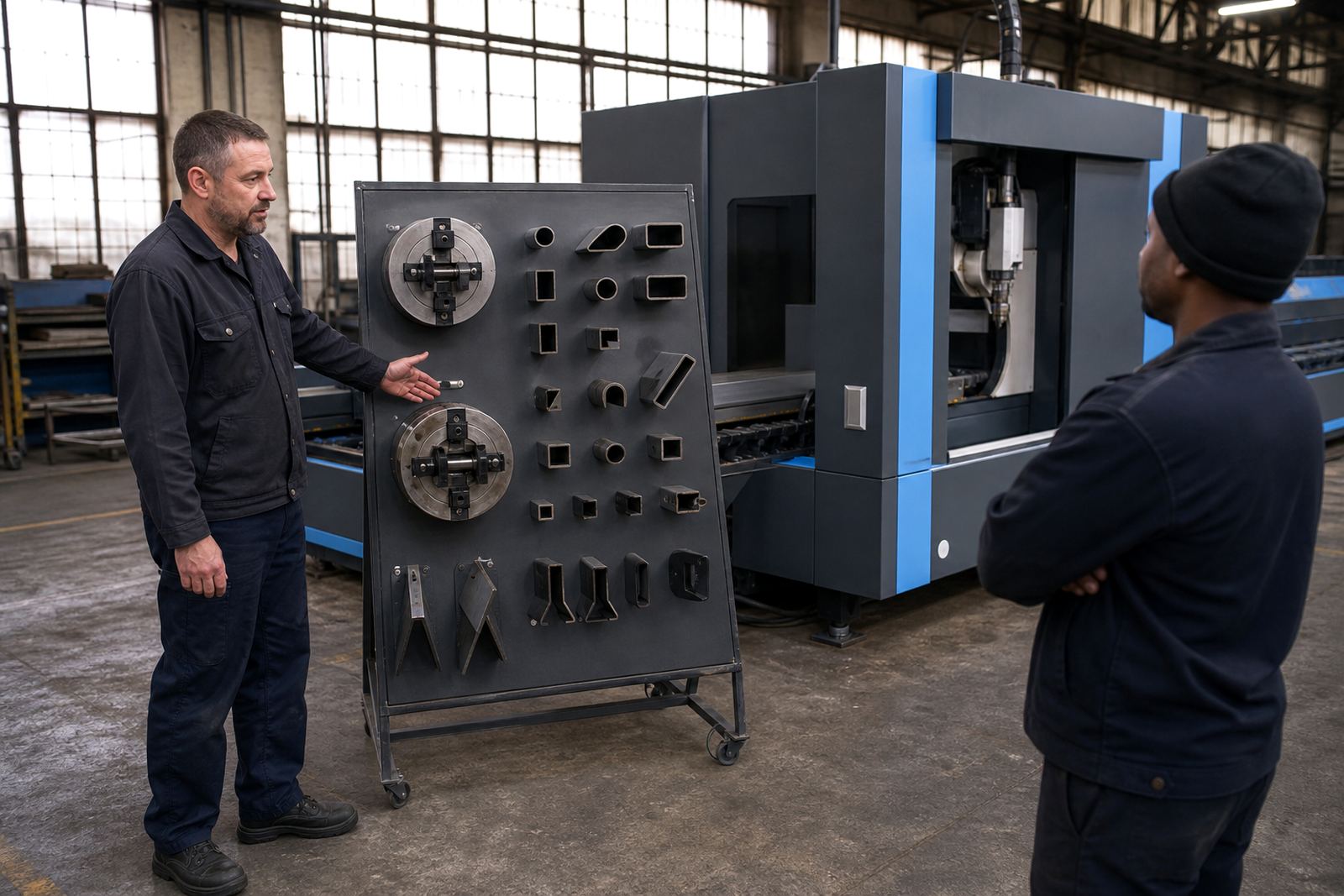
Tube cutting depends heavily on how firmly the workpiece is held. Chucks that grip unevenly can let the tube move under acceleration, and that movement shows up as chatter marks or a slight step on the cut face. On long lengths, poor support can also allow sagging that changes the kerf through the job.
Bevel heads add another layer of control. When a bevel is required for welding preparation, the angle needs to be set and calibrated properly or the joint face will not seat as expected. The same applies to complex intersections on channel or angle, where the cut path must remain true through the full profile.
- Check chuck alignment before production runs with many repeats.
- Support long tube lengths so they do not droop during cutting.
- Confirm bevel angle with test pieces before full output.
- Watch for vibration at corners and near open ends.
A Wadeville job that needed a steadier edge
A metal fabricator in Wadeville was cutting mixed tube sections for gate frames and brackets, with some pieces headed for welding and others for direct assembly. The machine was producing usable parts, but the lower edge on several tubes still needed hand cleaning. After checking the nesting pattern, chuck alignment and gas flow, the cut face settled down and the cleaning time dropped.
Nothing dramatic changed, only the discipline around setup and checks. That is usually how edge quality improves in real production: one correction at a time, with the operator watching the material rather than guessing at the fault.
For plants serving Johannesburg, Pretoria, Durban, Cape Town and Gqeberha, the same principle holds. The machine can be technically capable, yet edge quality still depends on how carefully the job is prepared and maintained from the first tube to the last.
Training keeps the finish repeatable
Operator training matters because edge quality is not a one-setting answer. A trained operator knows how to read the cut, listen to the machine, and recognise when a change is needed in focus, gas, clamping or program layout. Nesting training helps too, because poor placement can crowd the part and create avoidable heat build-up on the sheet or tube frame.
Preventive maintenance also plays a practical role. Dirty rails, worn consumables, loose supports and drifting calibration all show up on the edge before they become larger faults. For a fabricator moving between small runs and larger production batches, those checks protect both finish and throughput.
LaserTube works from Wadeville, Germiston with site assessment, installation, commissioning, operator training and maintenance support for tube and profile cutting work across South Africa.