Long stock does not forgive weak support
When a tube or profile gets longer, the machine has to fight gravity as well as cutting forces. A 6 metre length of round tube behaves very differently to a short offcut, especially when the wall is light and the material has a slight bow from storage or transport.
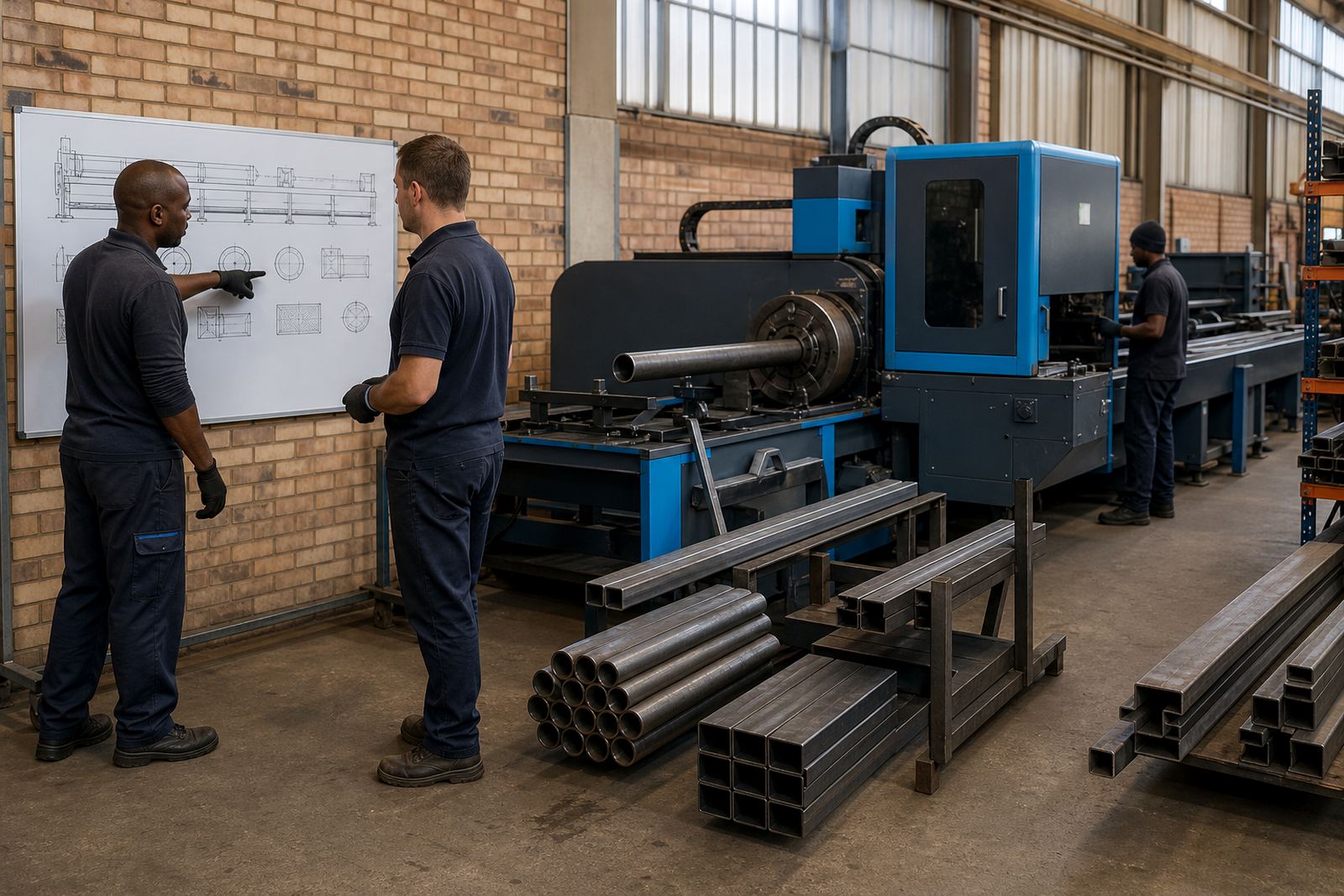
That is where support matters. Good support keeps the workpiece running true through the chuck, across the cutting zone and into the tail end. It also reduces chatter, which helps the edge stay cleaner and keeps the cut face more consistent from one end to the other. In Wadeville we see this most often on jobs where long mild steel tube is being processed in batches for gates, fencing, handrails and frames.
If the stock droops between supports, the tube can rub, twist or lift at the wrong moment. The machine may still cut, but the cut line can wander, the bevel can shift and the last section may finish with a rougher edge than the rest.
Where sag starts and why it spreads
Sag usually begins where the material is least supported, but the effect travels. A small drop in the middle of a long length can load the chuck unevenly, and that extra load may show up as rotation slip or a mark on the outside face. On square and rectangular tube, the flat sides can rock if the support height is not set carefully.
Angle and channel need their own attention because the open section can flex in a different way to closed tube. If the support points are too far apart, the profile may twist slightly under its own weight. That is enough to alter the cut path on a bevel head or disturb the nesting sequence on a long batch.
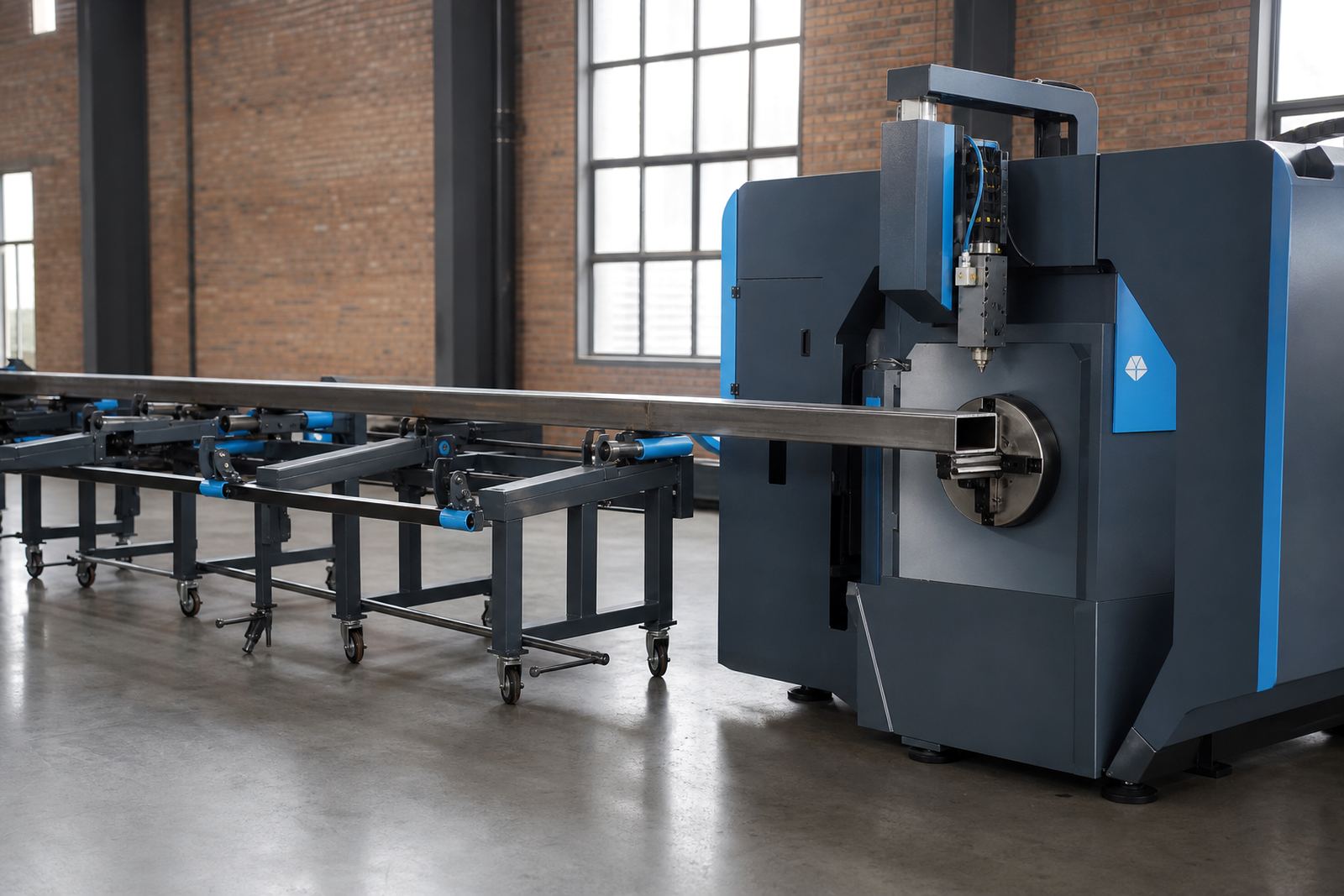
Good practice is to think in sections, not just in one line. Support at the infeed, near the cutting area and at the outfeed helps, but the spacing and height must suit the profile and wall thickness. The workpiece should move smoothly without bouncing or binding.
Chucks, rollers and the way tube actually moves
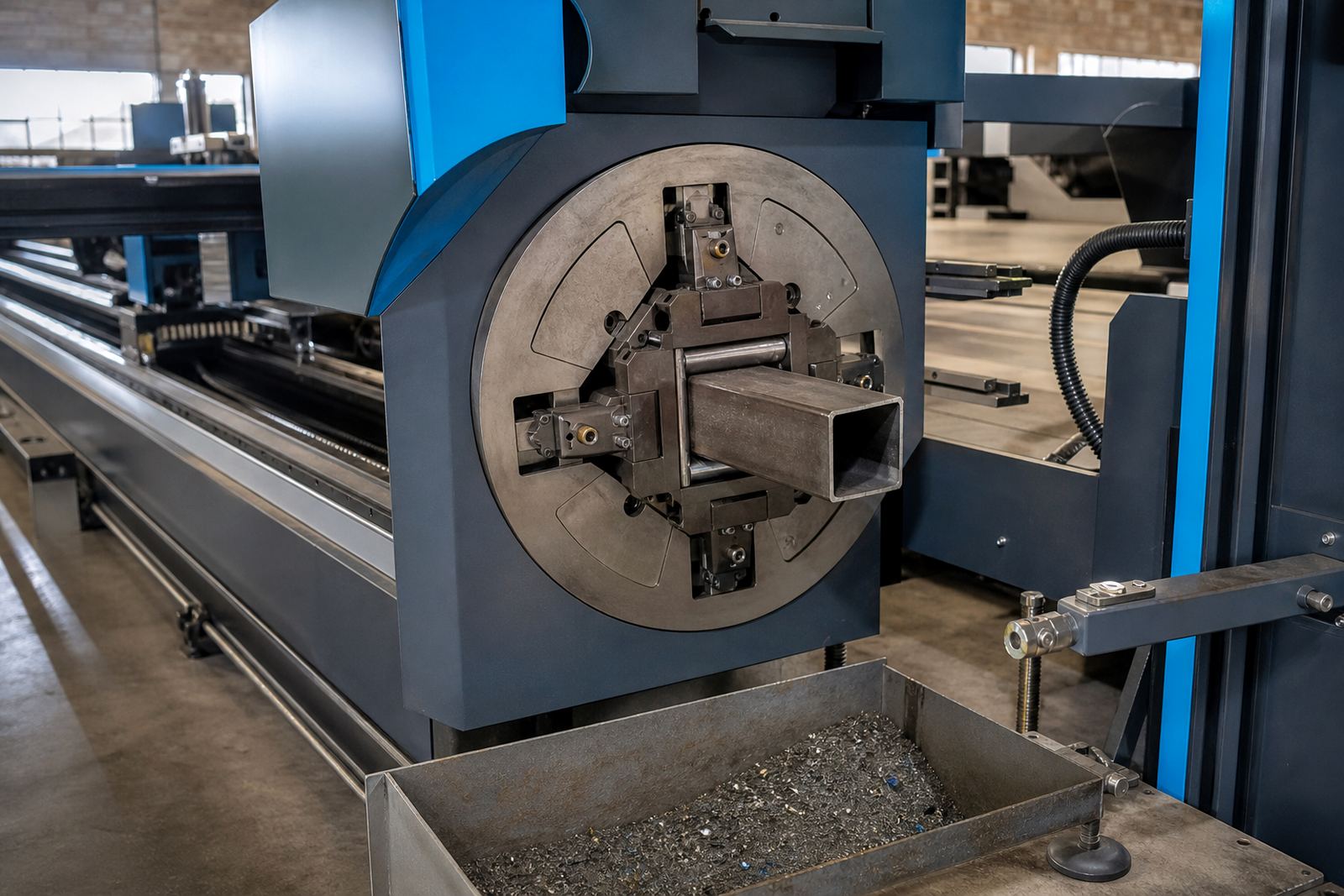
Long stock behaves better when the machine grips and guides it in a controlled way. Chucks need clean contact and proper alignment so the tube rotates without wobble. If the gripping pressure is too light, the tube can slip; if it is too heavy, thin wall material may deform and create a bad reference for the next step.
Support rollers or rests should match the material size closely enough to keep the centreline stable. On large diameter tube, the contact points must be broad enough to carry weight without marking the surface. On smaller tube, the support needs to stop the stock from bouncing as the head moves along the length.
- Check that the chuck grips evenly before loading a full length.
- Set roller height so the tube enters without a step or a drop.
- Watch for scuff marks, they often show where a support point is wrong.
- Keep the load path straight from infeed to cutting zone to outfeed.
Nesting and support have to speak to each other
Nesting software decides where the cuts land, but the support layout affects how the program runs in practice. A tight nest can be efficient on paper and awkward on the machine if several cut points land where the tube is least stable. That is a common issue on long production runs where the team wants to get maximum yield from each length.
The best results usually come from setting the support plan before the final nest is approved. If a cluster of holes, slots or bevel cuts is concentrated in one section, that part of the tube needs steadier control. The operator should also consider where the drop sections will fall once the cut is complete, because a long free end can swing if it is not caught properly.
At LaserTube, this is part of the setup conversation during commissioning and nesting training. The aim is not only to place parts efficiently, but to place them in a way that the machine can hold consistently through the full cycle.
Assist gas and cut quality on longer lengths
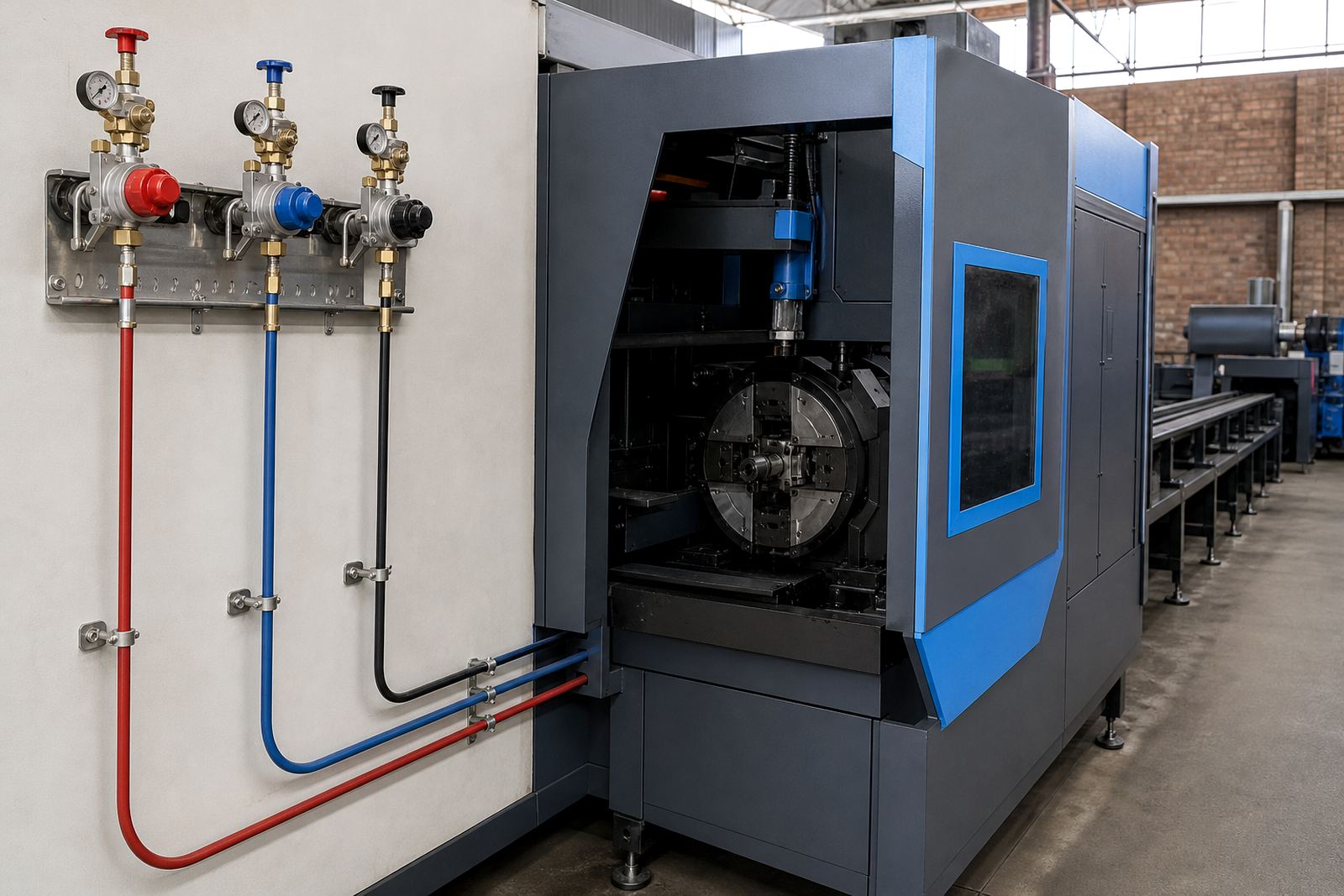
Assist gas helps clear the kerf and manage the cut edge, but it cannot fix poor support. If the tube is vibrating or lifting, gas flow alone will not stop edge roughness or thermal variation. On long stock, the more stable the material, the easier it is to keep the cut consistent from the first feature to the last.
That matters on thicker wall tube and on profiles where bevel cutting is part of the job. A stable workpiece helps the head hold angle more accurately and makes it easier to keep the cut face ready for welding or fitting. When support is poor, the operator may need to slow the process, which affects throughput and can increase handling time.
Support also matters for safety. A long moving length of tube can swing or drop if the end is not controlled, so the outfeed side should be planned with the same care as the infeed side. Clear space, sensible loading flow and proper lifting gear all help reduce the chance of damage or injury.
Wadeville tube support issue
A fabrication shop in Wadeville was processing long rectangular tube for structural frames. The team had a good machine and the programs were correct, but the last metre of each length was finishing with uneven edges. The problem was not the cut settings, it was support. The outfeed side was dropping slightly and the tube was rocking just enough to disturb the cut.
After a site assessment, the support points were reset, the chuck alignment was checked and the loading sequence was changed so the tube entered flatter and stayed level longer. The operator training also covered where to watch for movement during the cycle. The result was steadier handling and less rework at the end of each length.
This kind of issue is common across Johannesburg, Pretoria, Durban, Cape Town and Gqeberha, especially where long stock is handled every day. The machine may be in top condition, but support still has to suit the job on that floor.
Practical checks before a long run starts
A few checks before loading a batch can save a lot of trouble later. They are not complicated, but they need to be done every time the stock length changes or the profile type changes.
- Measure the real tube length and confirm the support spacing suits it.
- Look for bow, twist or surface damage before loading.
- Confirm that the chuck, rollers and rests are clean and correctly set.
- Make sure the drop area is clear for the cut pieces and tail end.
- Check whether the nest places heavy cutting in one unstable section.
For plants and job shops alike, the pattern is the same. Long stock needs steady support, correct loading and a team that watches the material as closely as the program. That is where installation, operator training, nesting training and service work support the whole process, from the first tube in the rack to the last finished cut.