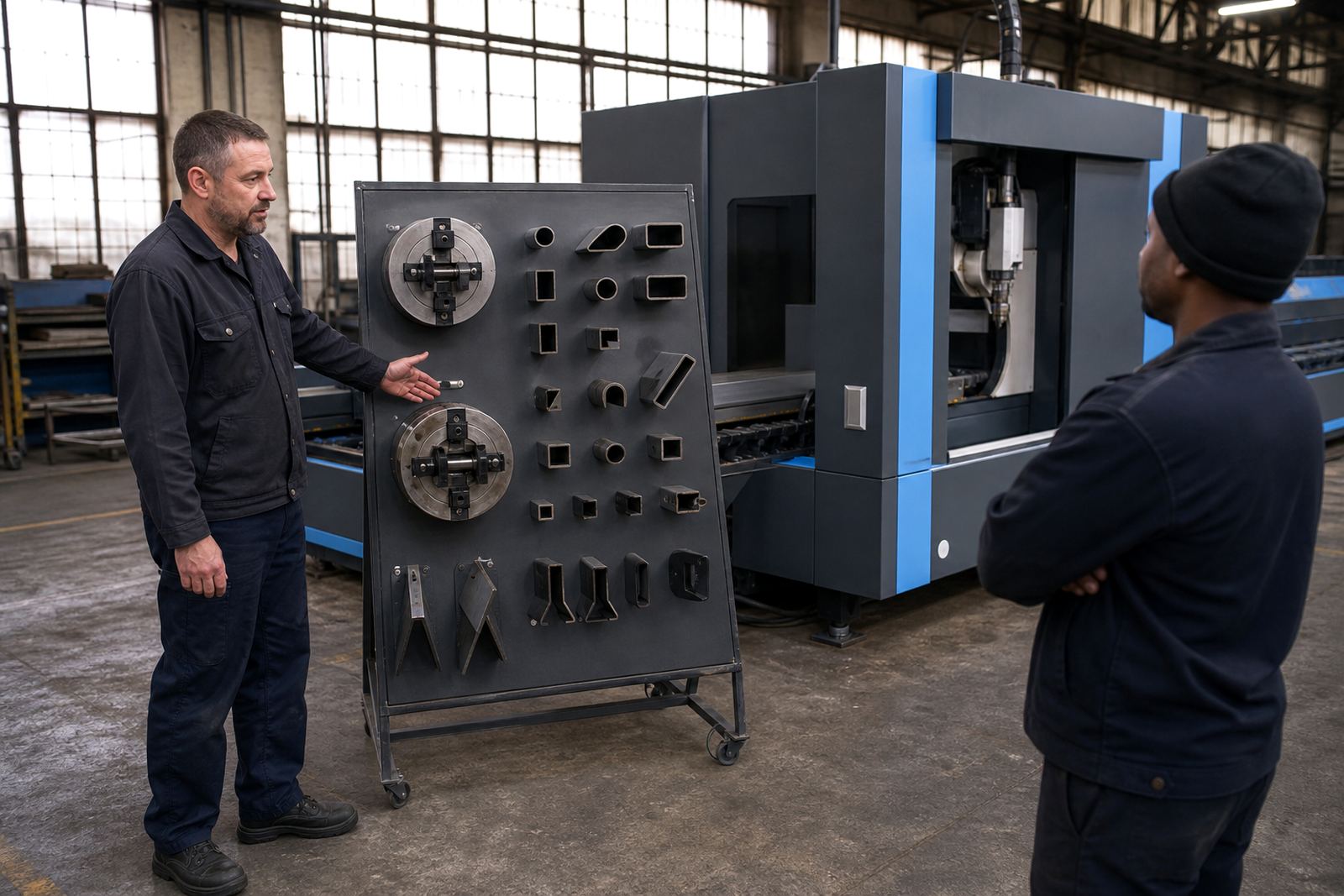
What the third chuck changes on the floor
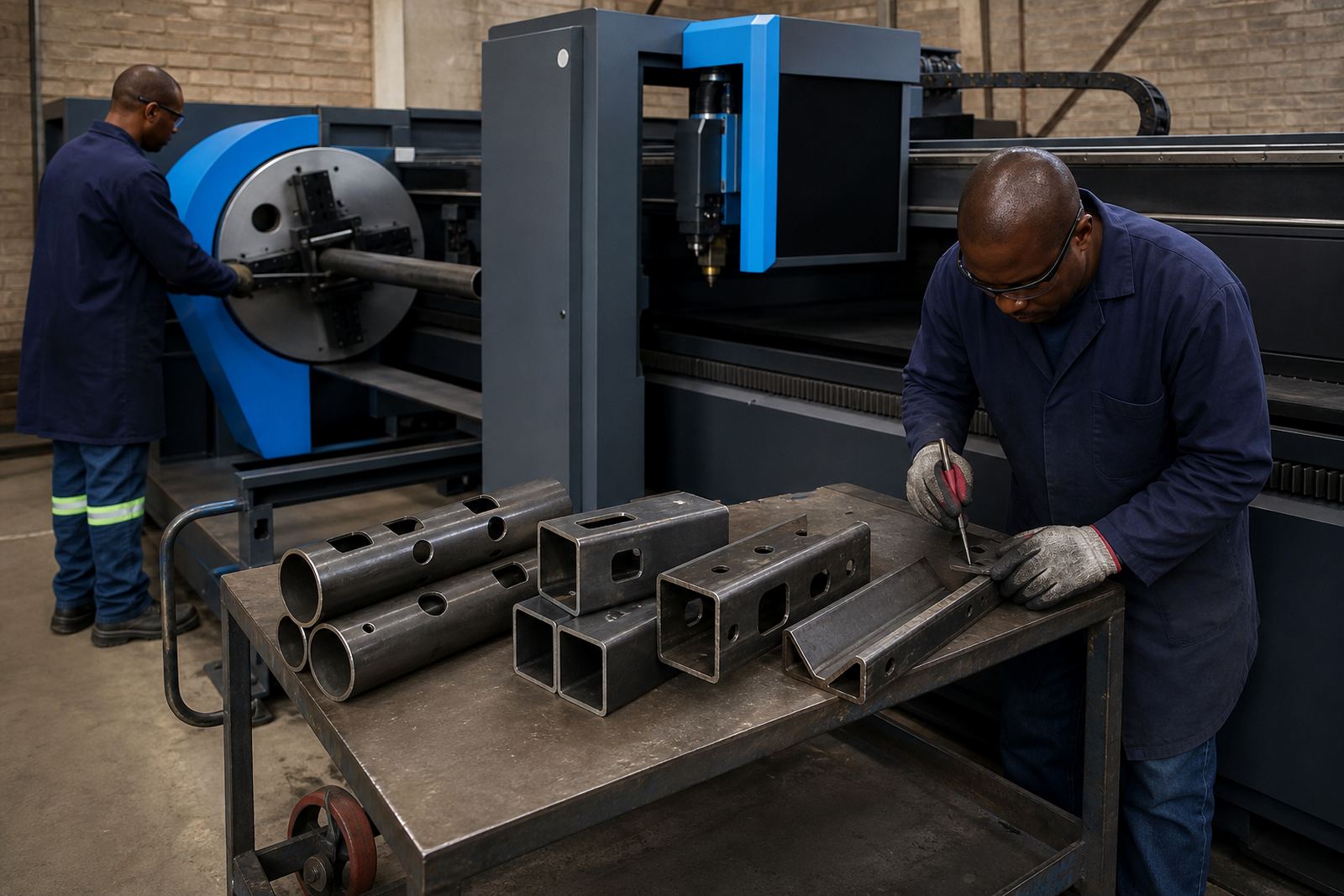
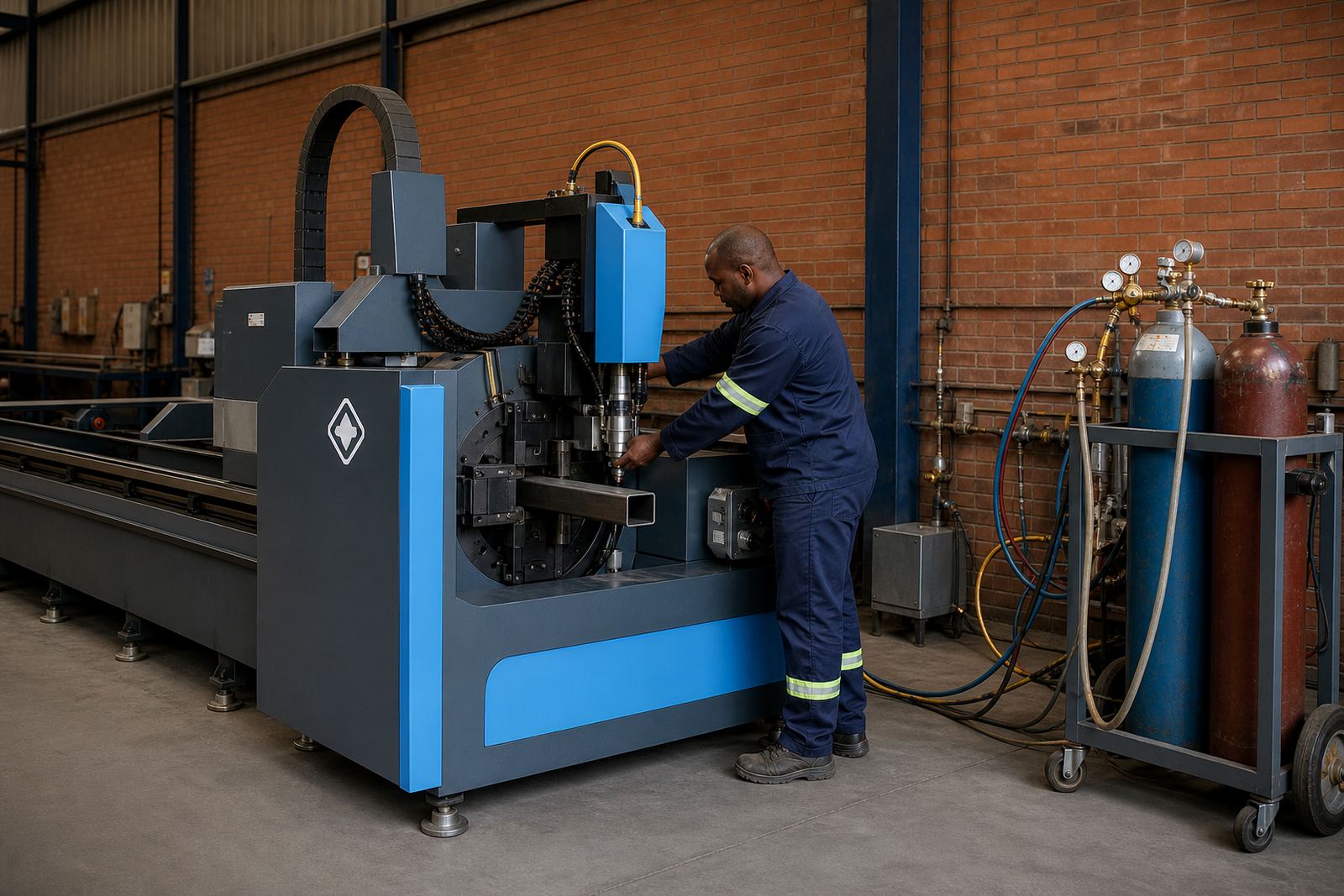
A two chuck machine grips the tube at both ends, which suits many workshop jobs where the section is straight, the lengths are moderate and the parts do not need extra support in the middle. A three chuck machine adds a centre grip, which helps when longer tubes, heavy sections or less rigid profiles start to sag under their own weight.
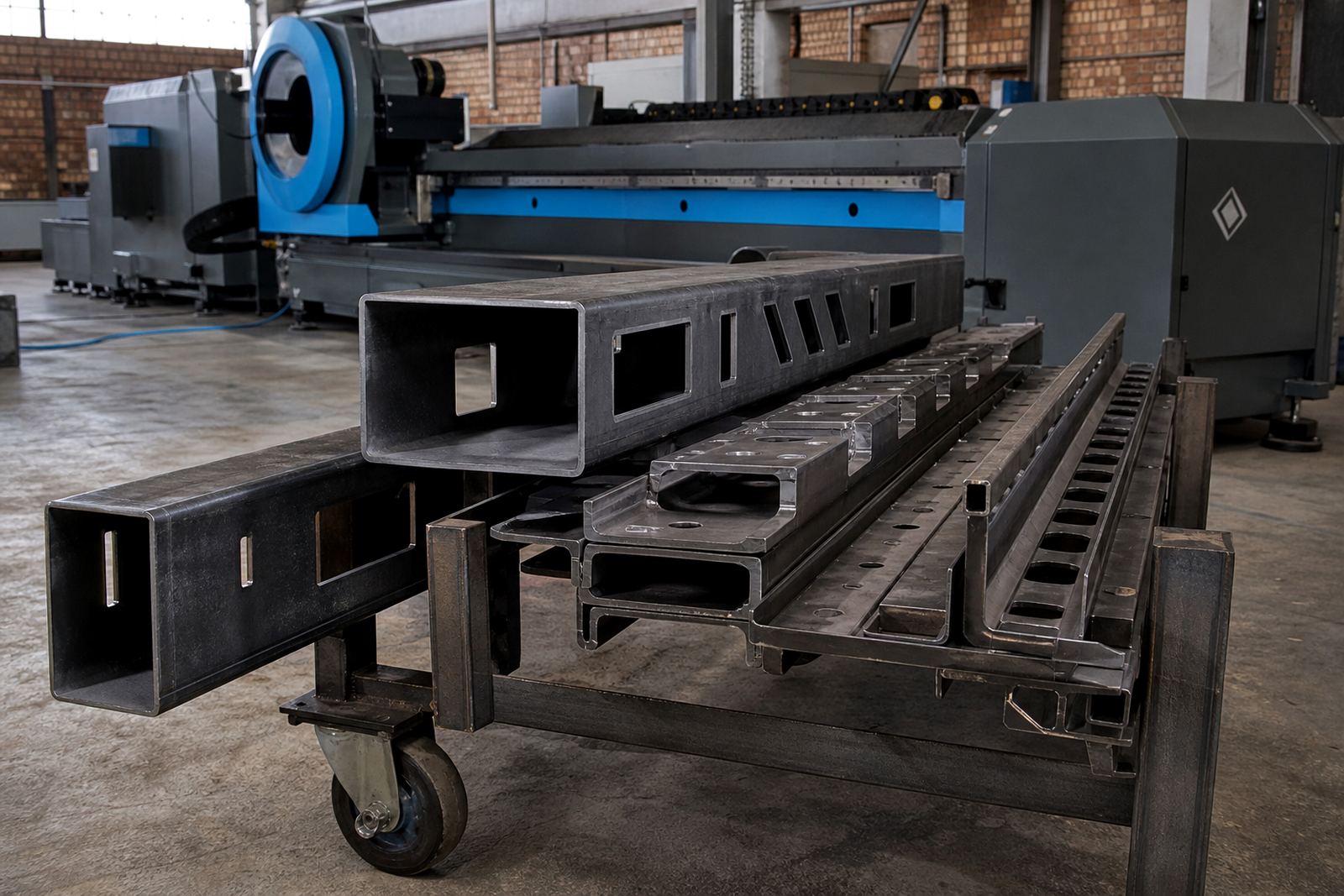
That middle grip is useful on round tube, square tube and rectangular tube, and it also helps when cutting angle or channel. Those sections can twist as the head moves, especially on longer lengths. In practice, the third chuck gives the operator more control over the part and keeps the cut path steadier.
Where two chucks still make solid sense
Not every shop needs the extra hardware. A two chuck machine can be a better fit when the work is shorter, the range of tube sizes is narrower, and the job mix leans toward repeat work with predictable loading. It is often easier to set up, easier to maintain and less demanding on the floor layout.
- Shorter tubes and lighter sections
- High repeat work with the same profiles
- Space that must stay open around the loader and discharge area
- Fewer changeovers between odd shapes and sizes
For a fabricator in Wadeville cutting handrail sections and light frame parts, a two chuck machine may handle the brief without adding complexity that does not earn its keep.
When three chucks earn their place
The extra chuck starts to matter when the material is long, the wall thickness is uneven, or the profile is hard to keep straight through the cut zone. A three chuck setup can reduce vibration and allow better control near the middle of the tube, where sag often starts to show.
That matters on production work where cut quality has to stay steady across a shift, not only on the first few parts. With the right software nesting and an operator who understands clamp positions, the machine can handle more demanding profiles without constant manual correction.
- Long spans that need middle support
- Heavier sections that droop during rotation
- Angle and channel with awkward mass distribution
- Jobs where consistent cut position matters across batches
Bevel heads, nesting and chuck choice work together
Chuck count should never be judged on its own. A bevel head introduces another layer of movement, and the machine has to keep the part stable while the head changes angle. The same goes for nesting software, which needs enough room for clamps, drop zones and the real travel of the tube through the machine.
If the chuck layout is wrong, the operator will spend time fighting the machine instead of running the job. Good planning keeps the clamp positions clear, sets the assist gas correctly for the material, and allows the cutting path to stay clean where the tube walls meet at corners or along a bevel.
Longer tube control in Germiston
A fabrication shop in Wadeville took on longer rectangular tube for site fencing and structural frames, with some angle and channel mixed into the order. The earlier machine handled the shorter pieces well, but the longer lengths started to show lift and slight movement near the middle. The cut was still possible, yet the operator had to slow down and watch the support points closely.
After the layout was assessed, the team moved to a three chuck setup for the heavier work and kept the shorter repeat jobs on the same line. That change gave the shop better control on the long sections, especially where the material came from mixed stock and the wall thickness varied from bundle to bundle.
What matters before you decide between two and three
The right answer depends on the tube sizes, the longest part you expect to cut, how often the profile changes and how much floor space is available around loading and offload. It also depends on who will run the machine. A confident operator can work well on either layout, but the training needs to cover clamping, nesting, gas flow and basic safety around the cutting enclosure.
- Longest tube length in regular production
- Mix of round, square, rectangular, angle and channel
- Need for bevel cutting on the same machine
- Space for delivery rigging and daily access
- Maintenance access for chuck alignment and calibration
From our Wadeville base, we work with fabricators in Johannesburg, Pretoria, Durban, Cape Town and Gqeberha, and the layout question usually comes down to the parts list rather than the brochure picture.
Support after installation is part of the decision
Choosing the machine is where the process starts. Installation, commissioning, operator training, nesting training and preventive maintenance all affect how well the chuck system performs over time. Chuck alignment and bevel calibration need real attention, especially after long production runs or when the shop changes material grades.
If the machine is running on a tight production schedule, breakdown response and remote diagnostics help keep small faults from turning into a longer stoppage. That matters just as much in Bloemfontein or Nelspruit as it does in the metro plants, because tube work tends to stack up quickly once cutting falls behind.