Clean cuts set the tone on the welding bay
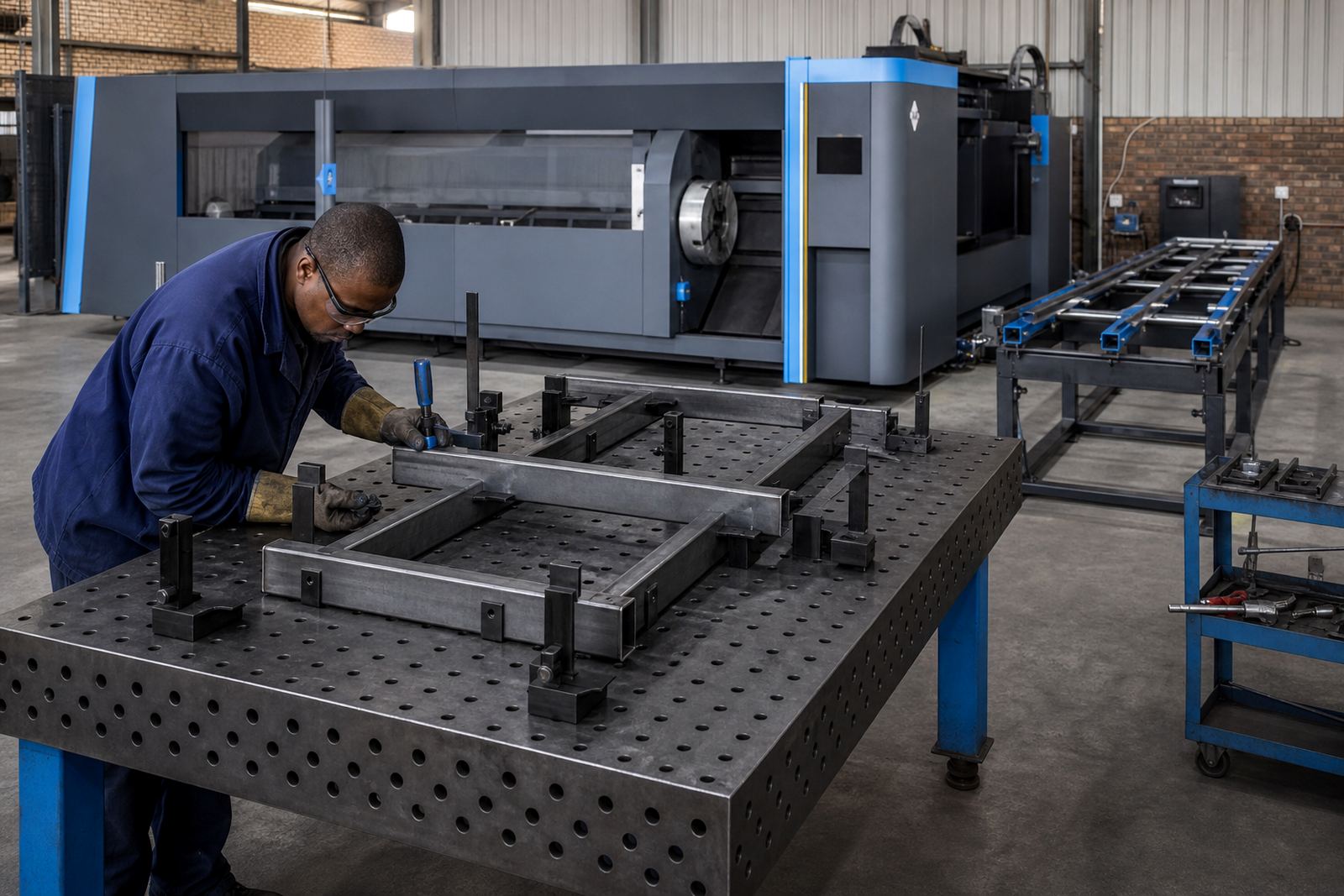
Fit-up starts at the cut, not at the jig. If the end of a tube is square, the profile sits in the fixture with less twisting, less pack-up and fewer gaps for the welder to chase. That matters on handrails, frames, trailers, racking and structural assemblies where every small error gets carried into the next station.
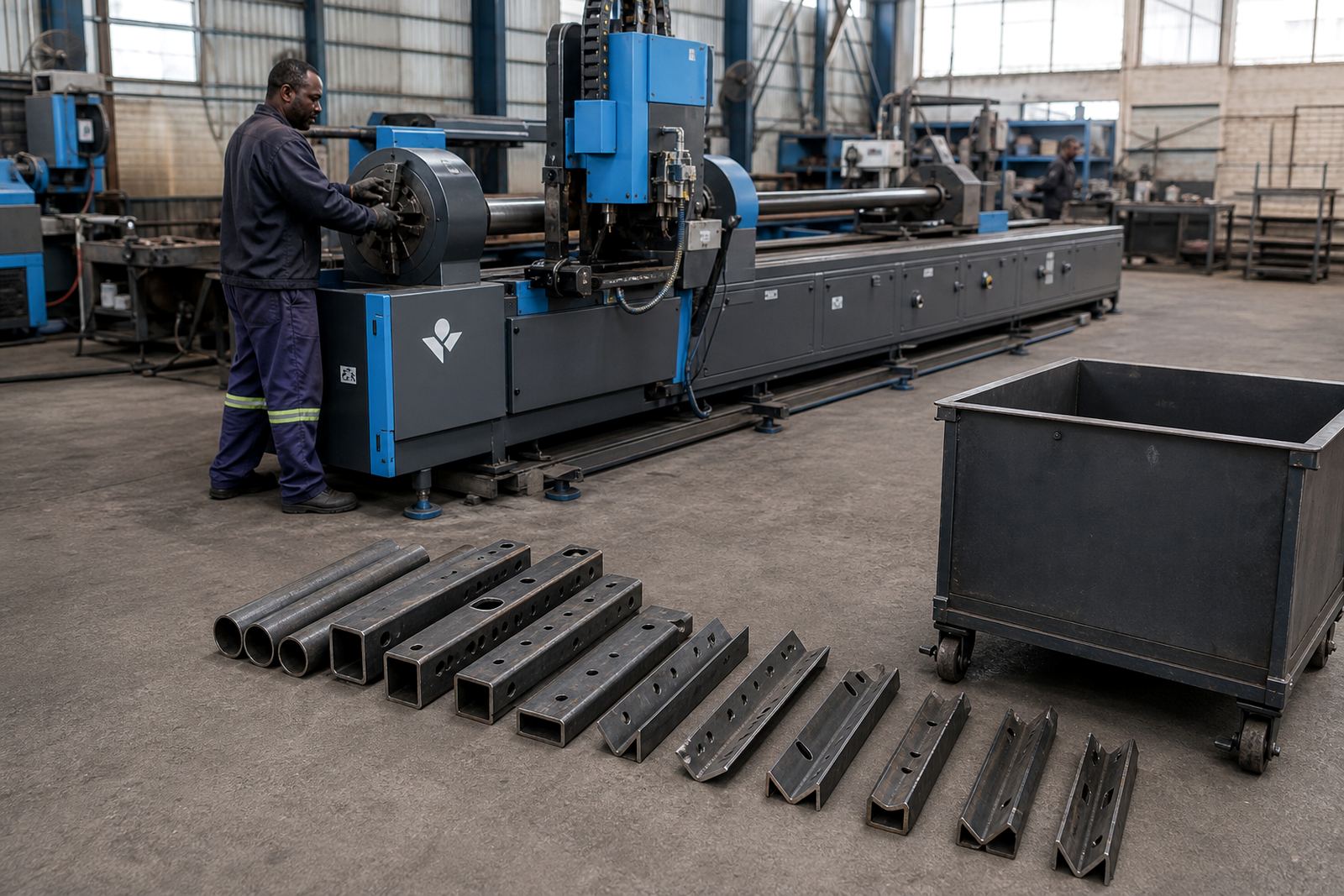
Fibre laser tube cutting gives fabricators a cleaner edge on round, square and rectangular tube, plus angle and channel. Openings can be placed accurately so tabs, slots and mating faces line up with the next part. The result is less time spent grinding burrs, dressing corners and reworking parts that should have mated first time.
Where laser cutting helps most on welded assemblies
Not every job needs the same cut detail, but certain features show the difference straight away. Coping, mitres, weld prep bevels and hole placement all affect how a frame pulls together on the bench. On longer members, even a small error at one end can move a bracket enough to create a visible step in the finished assembly.
- Round tube joints fit tighter when the fishmouth is cut accurately.
- Square tube corners align better when the cut face stays true.
- Slots and tabs help with repeat parts and consistent assembly.
- Bevel cuts can support welding where thicker sections need better penetration.
- Clean edges reduce grinding before tacking and final welding.
For shops handling mixed work, nesting software helps place parts with less waste and more consistent yield. That matters when offcuts are being reused for smaller brackets, cleats or short lengths that still need neat fit-up.
Chucks, support and beam control on tube work
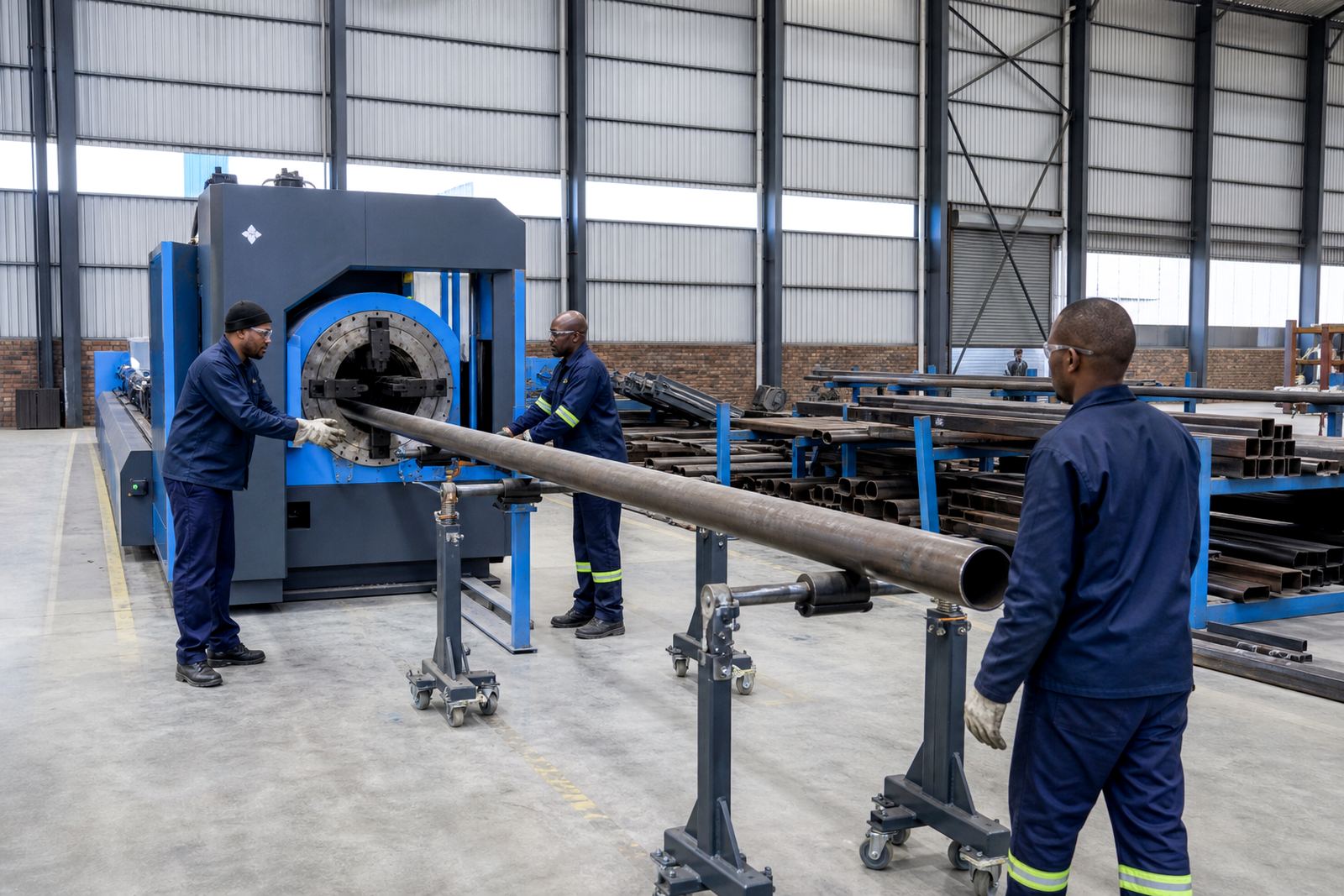
Tube cutting is only as accurate as the way the tube is held. Chucks grip and rotate the section while support systems keep long lengths from sagging or shifting. If the tube moves during cutting, the hole position and end geometry can drift, and that shows up later as a stubborn fit on the welding table.
Good setup also covers the cut order. A profile that is cut cleanly but collapses under its own weight can distort the opening or leave a burr where the welder wants a smooth landing face. That is why machine setup, clamping and part support need to match the material size and the weight of the finished section.
- Check the tube size range before loading a job sheet.
- Match chuck grip to the wall thickness and section shape.
- Use support for longer spans so the part stays level.
- Review part orientation before cutting nested batches.
Bevel heads and welded joints that need less forcing
Bevel heads are useful when a weld needs a prepared edge instead of a square cut only. On heavier wall tube, a well-cut bevel can reduce the amount of hand prep at the bench and give the welder a more usable groove. That helps when parts have to hold alignment under heat and there is little room for correction after tack-up.
In practice, bevel calibration must be checked carefully. A shallow angle can leave too much material in the joint, while an aggressive angle may weaken the edge or create extra cleanup. The right setting depends on material thickness, weld method and how the assembly will be loaded once installed.
On a structural job in Wadeville, for example, a fabricator making gate frames and support members might run the tube ends with accurate mitres and selective bevels so the assembly lands flat on the fixture. Less grinding means the team spends more time assembling, not rescuing the cut edge.
Assist gas, edge quality and what the welder sees
Assist gas affects the cut face and the amount of dross left behind. Oxygen, nitrogen or compressed air are selected according to the material, thickness and finish required. For welded assemblies, the point is not only speed, but how much cleanup the edge needs before the part can be handled by the next person.
When gas setup is poor, the lower edge may carry slag, the hole may need chasing and the fit between mating parts becomes more stubborn. A cleaner cut helps the assembler hold the position while the welder closes the joint, especially on repetitive work where the same error keeps showing up across a batch.
- Match gas choice to the material and surface finish required.
- Keep nozzles and consumables in good condition.
- Watch for burrs that point to alignment or gas issues.
- Confirm the edge quality before parts move to welding.
South African fabrication floors need repeatable parts
Across Johannesburg, Pretoria, Durban, Cape Town and Gqeberha, fabricators work with different alloys, section sizes and shop layouts. Some are running short batches of handrails and brackets, while others are cutting for larger production runs. Fit-up for welding stays the same problem in every region: parts need to land where the fixture expects them.
That is why installation, operator training and nesting training matter alongside the machine itself. A machine can cut the profile, but the team still has to load it correctly, verify the cut sequence, set up assist gas and understand how a small change in nesting can affect the welding bench later on.
For shops in Germiston, Bloemfontein or Nelspruit, the value is practical. Better cut consistency means less bench rework, cleaner assembly and fewer parts heading back for trimming because a hole walked or an end did not close properly.
Preparing the machine for the next batch
Preventive maintenance is part of fit-up quality too. Chuck alignment, bevel calibration and gas setup all drift over time if they are not checked. A machine that is clean, square and mechanically sound gives the operator a better starting point before the first tube is loaded.
When a fault does appear, remote diagnostics and breakdown response help the team isolate whether the issue sits in the process, the setup or the machine itself. That matters on a busy floor where a missed cut can affect the welding sequence, the assembly order and the delivery plan for the week.
For fabricators who want less grinding and better alignment, the answer usually starts long before the first weld. It starts with the cut, and with the discipline to keep that cut repeatable.