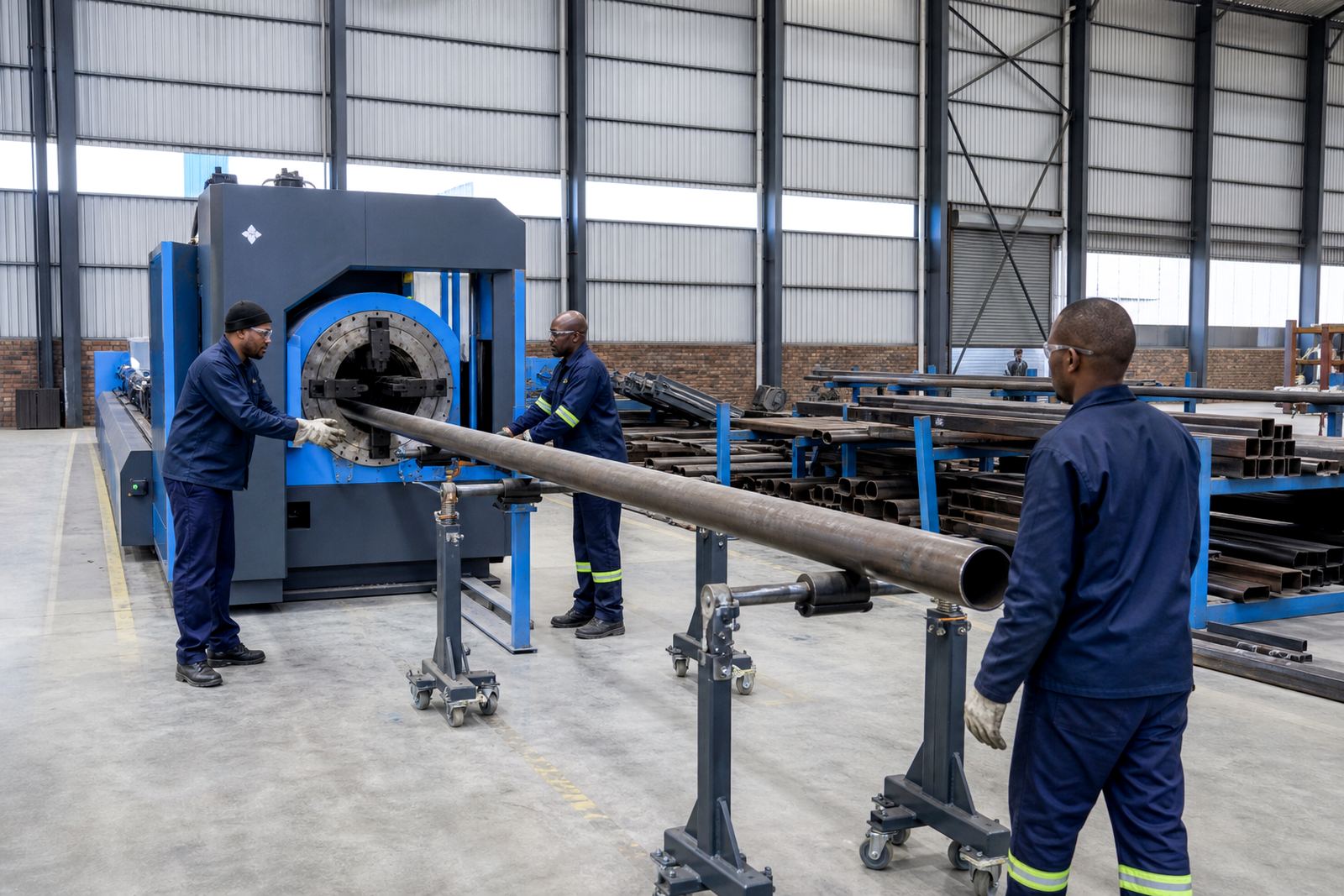
Start with the stock shape, not the lift
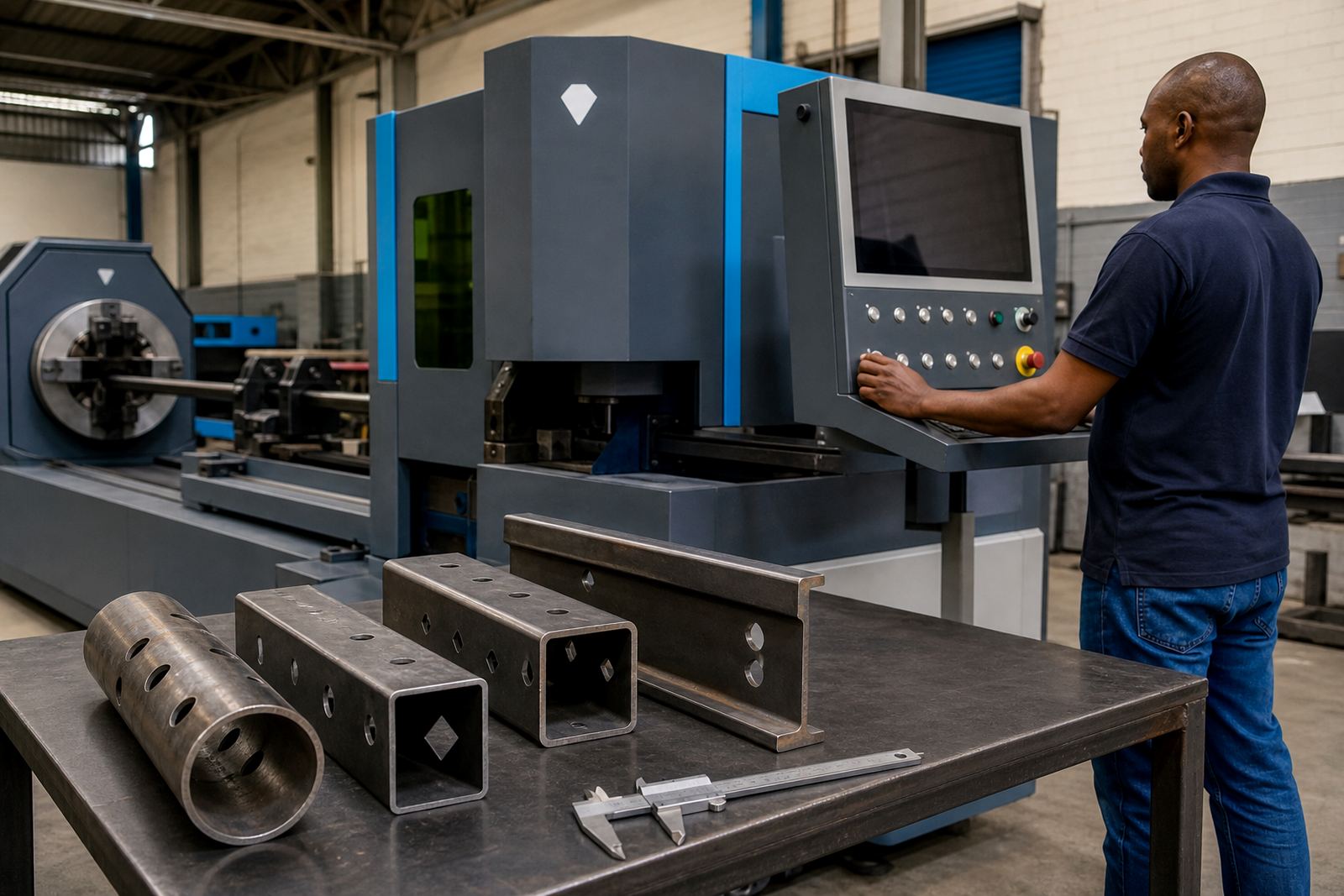
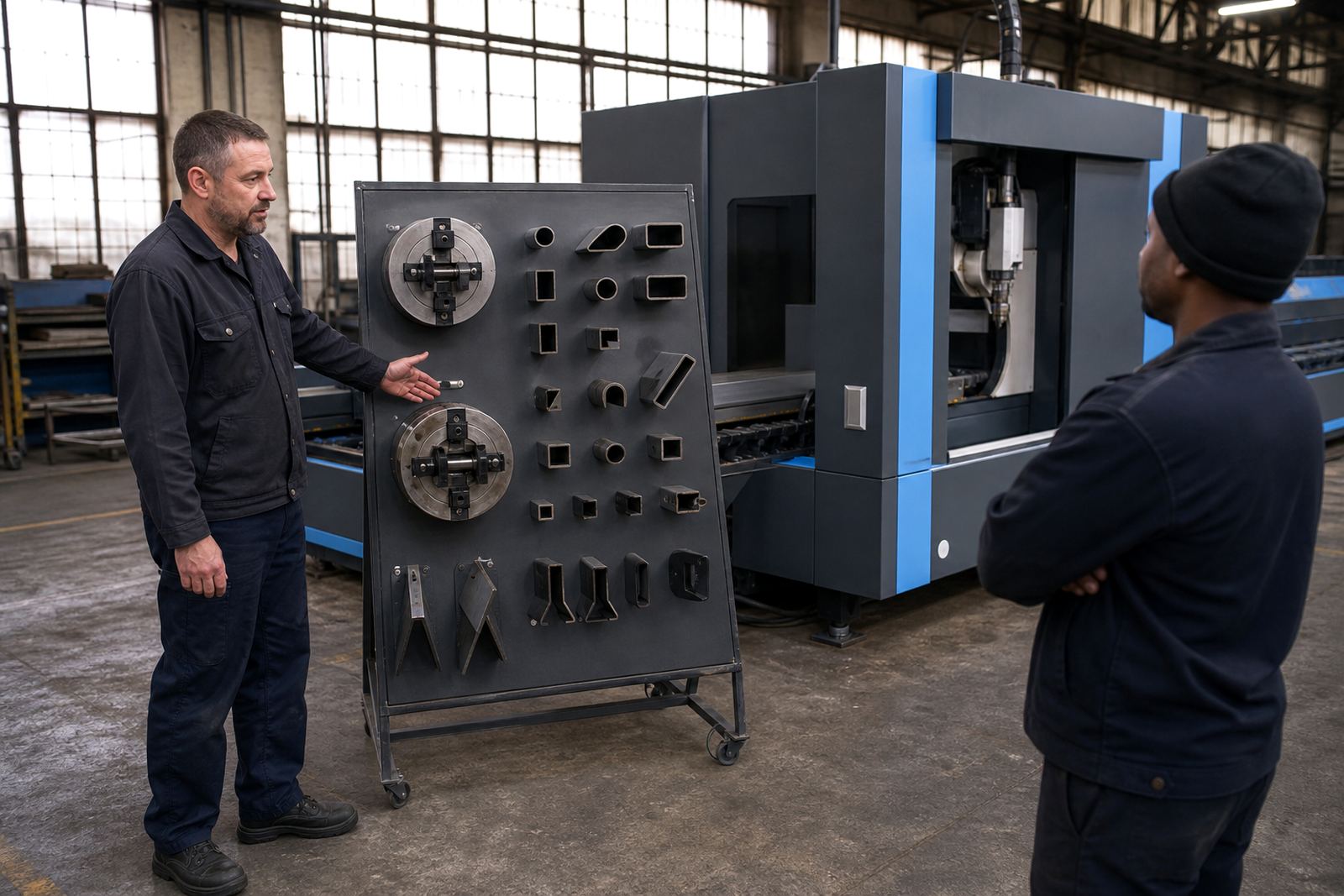
Round tube, square tube, rectangular tube, angle and channel all behave differently when they are moved toward the chuck area. A bundle of light-wall tube can flex and twist if the lift points are too far apart, while a heavier section can swing if the slings bite in the wrong place. The loading plan should follow the shape, length and surface finish of the stock, not just the weight on paper.
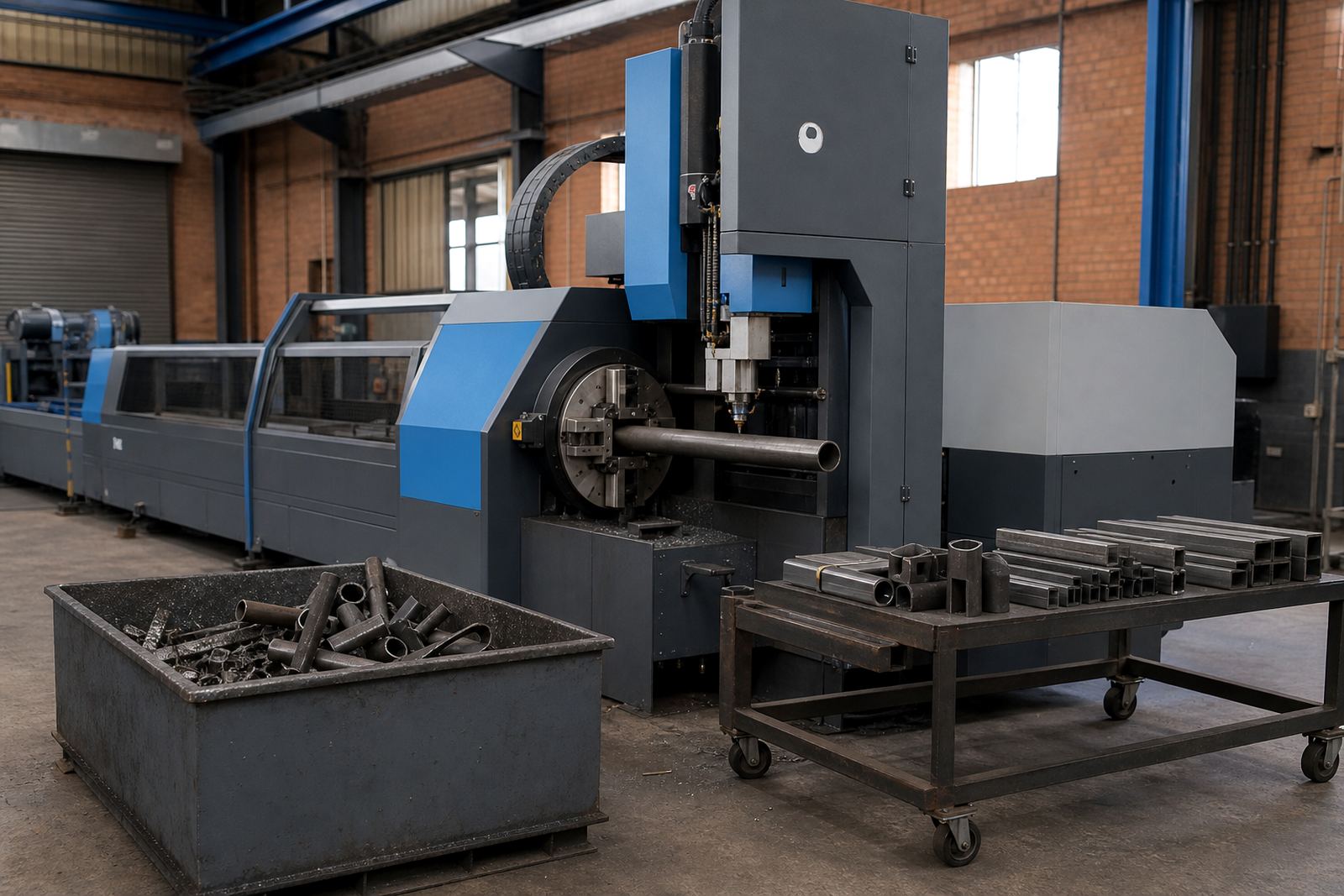
On a tube cutting line, the machine bed is only one part of the setup. The support table, infeed rollers, stock rack and chuck all have to agree on height and alignment. If one point sits low or sits proud, the operator ends up forcing the material into place and that puts strain on the chuck jaws, the tail support and the part quality later in the cycle.
- Check the outside diameter, wall thickness and length before the move.
- Confirm where the lifting straps or clamps can sit without bruising the tube.
- Keep the load stable before it reaches the machine throat.
Support points decide how calm the loading feels
Support points are what keep stock under control while it moves from yard, rack or crane hook to the machine. For long lengths, more support points are better than fewer, because sag in the middle can cause a bend that the operator then has to fight at the chuck. That is where scratches, scuffed edges and small knocks start showing up before the first cut is made.
Good support also protects the profile itself. Angle and channel can twist if they are left hanging from one end, and a bent lead end can create loading trouble for the whole bundle. If the stock arrives from a supplier in steel service centres around Johannesburg or Durban, the packaging should be opened in a way that keeps the sections together until the handling gear is in position.
- Use rollers, stands or fork support that matches the stock length.
- Keep the load level as it moves into the machine area.
- Remove banding only when the lift is controlled and stable.
One voice on the floor keeps the move orderly
Loading goes best when one person gives the instruction and everyone else follows that call. In a busy workshop, it is easy for a rigger, operator and driver to talk at the same time. That is when the stock starts moving before the chuck is ready or before the tail support is in the right place. A clear hand signal or verbal call cuts down confusion and keeps the line of movement steady.
At a fabricator in Wadeville, a tube bundle coming off a truck can pass through a yard with tight turning space, a low roof section and a narrow machine bay. In that setting, the route matters almost as much as the lift itself. The crew should walk the path first, check for sharp edges, uneven paving and low overhead points, then move the stock in one controlled run instead of stopping and starting near the machine.
- Assign one person to call the lift and landing.
- Keep pedestrians clear of the machine throat and swing path.
- Use hand signals that the whole crew understands.
Chucks, jaws and the first grip on the tube
The first grip on the tube is where loading becomes machine work. A chuck that is not ready can mar the surface, grip off-centre or catch the end of a profile at an angle. For round tube, the jaws need the right contact on the outside diameter. For square and rectangular stock, the clamping face must sit square to the profile so the material feeds true. Angle and channel need extra care because one leg can catch before the other.
Before the chuck closes, the operator should check that the end of the stock is clean, straight and free from burrs that could jam in the jaws. Bevel heads make this more sensitive, because the cut path changes as the head angles through the cycle. If the stock is introduced badly at the start, the bevel cut later can carry that error through the whole part.
- Clean the leading end before the first grip.
- Check jaw wear and clamping pressure before loading starts.
- Make sure the stock sits centred before the chuck closes.
The machine bay needs space for people and parts
The loading area around a fibre laser tube machine should stay clear enough for people to move without squeezing past stock, guides or open covers. A cramped bay turns a routine job into a shuffle of feet, straps and loose ends. The space around the infeed side matters just as much as the cutting zone, because operators need room to adjust support and confirm the feed line.
Safety is not only about guarding. It is also about where the next movement happens. If bundles are stacked too close to the machine, the crew may have to cross over a live path to get the next length into position. Keeping the loading area tidy reduces the chance of a toe catch, a dropped end or a knock against the machine frame.
- Store the next bundle where it will not block the feed route.
- Keep straps, wedges and offcuts out of the walking line.
- Leave enough space for the operator to check the feed path.
Assist gas, cut quality and the loading link
Assist gases do not load the stock themselves, but they shape how the whole machine behaves once the part is in place. If the stock is loaded with a poor edge or a damaged lead end, gas flow and pierce quality can suffer on the first cuts. That shows up as rough edges, dross or a start point that needs cleaning before the part can move to the next operation.
For a tube machine, the loading method should support the cutting plan. Nesting software may place short parts between longer sections, and the operator still needs to keep the stock stable so the machine can feed without chatter. Good loading helps the software do its job because the real material line matches the planned line more closely. That matters on mixed batches, especially where one job has small brackets and another has long tube sections in the same shift.
Preventive maintenance also belongs in this picture. Chuck alignment, bevel calibration and feed support checks all help the loading area stay predictable. When those items drift, the crew tends to compensate during loading, and that is when bad habits start creeping in.
A cleaner loading habit pays off in the cut
Safe loading starts the cut, because proper stock support and a clean first grip set the machine up to cut accurately from the outset. When the stock is supported properly, when the team talks clearly and when the chuck takes the first grip cleanly, the machine spends less time correcting the job and more time making parts. That helps the workshop keep a steadier rhythm, whether the stock is heading into a small job shop in Pretoria or a production floor in Gqeberha.
Training helps the habit stick. Operators who understand tube behaviour, support spacing and the machine’s feed path make fewer awkward moves around the bay. Installation teams can set the line up neatly, but the everyday loading routine is what keeps it working the same way on a Monday morning and late on a Friday when the bay is full of material and the next bundle is already on the rack.
- Keep the loading route short and open.
- Match the support method to the stock shape.
- Teach every operator the same loading sequence.