Scrap only works when the flow is ordinary
In a tube cutting shop, offcuts are not waste until they are identified. A short piece of round tube can still suit a bracket, a brace, or a test cut, while square and rectangular tube often returns to the rack if the length is recorded and the end condition is known. Angle and channel cut-offs behave differently, so they need their own landing point instead of a mixed pile near the machine.
The mistake is usually not the scrap itself, but the pause after cutting. When the next operator has to guess whether a length is usable, the line slows and part mix-ups begin. A predictable path from machine to bin, then from bin to reuse area, keeps the work honest.
Separate tube offcuts before they become mystery lengths
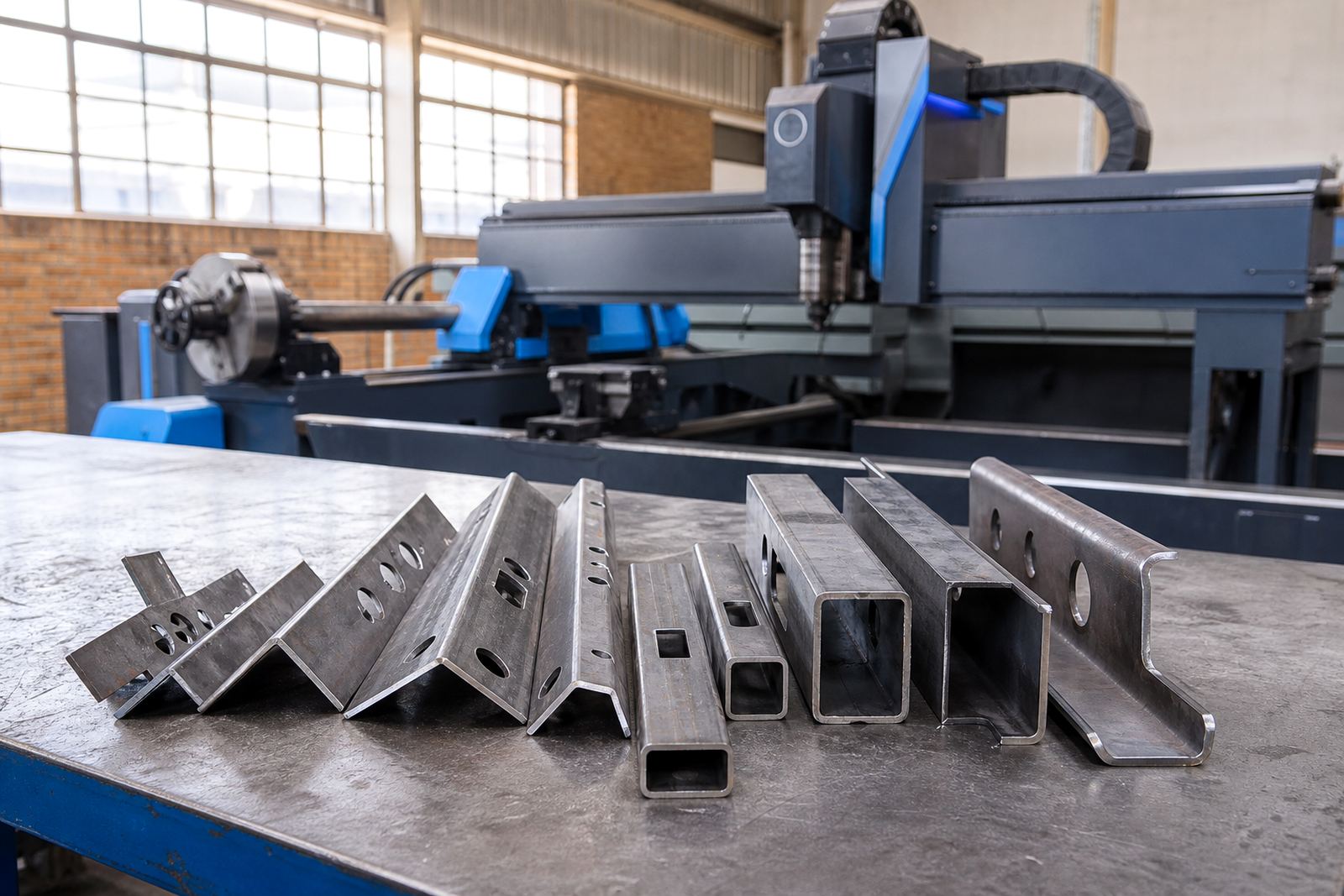
Round tube, square tube, rectangular tube, angle and channel should not travel together. Each profile has its own nesting behaviour, its own common remnant lengths, and its own storage habit. A mixed pile makes it harder to match the scrap to the next order, and it also leads to bent ends being missed.
- Give each profile a marked scrap area near the machine.
- Keep short usable lengths apart from true waste.
- Stack by size range, not by whichever piece arrived last.
- Remove damaged ends before a piece returns to stock.
In Wadeville, where one production shift may cut small furniture frames in the morning and heavier support tube later, this separation saves time at the rack. It also reduces the chance of sending a badly marked offcut back into the next nest.
The bin should sit where hands naturally go
Good scrap handling is a layout issue as much as a discipline issue. The collection point must be close enough to use without thought, yet clear enough not to block the chuck area, the unloading table, or the path used for completed parts. If the bin sits too far away, operators tend to drop offcuts wherever there is space.
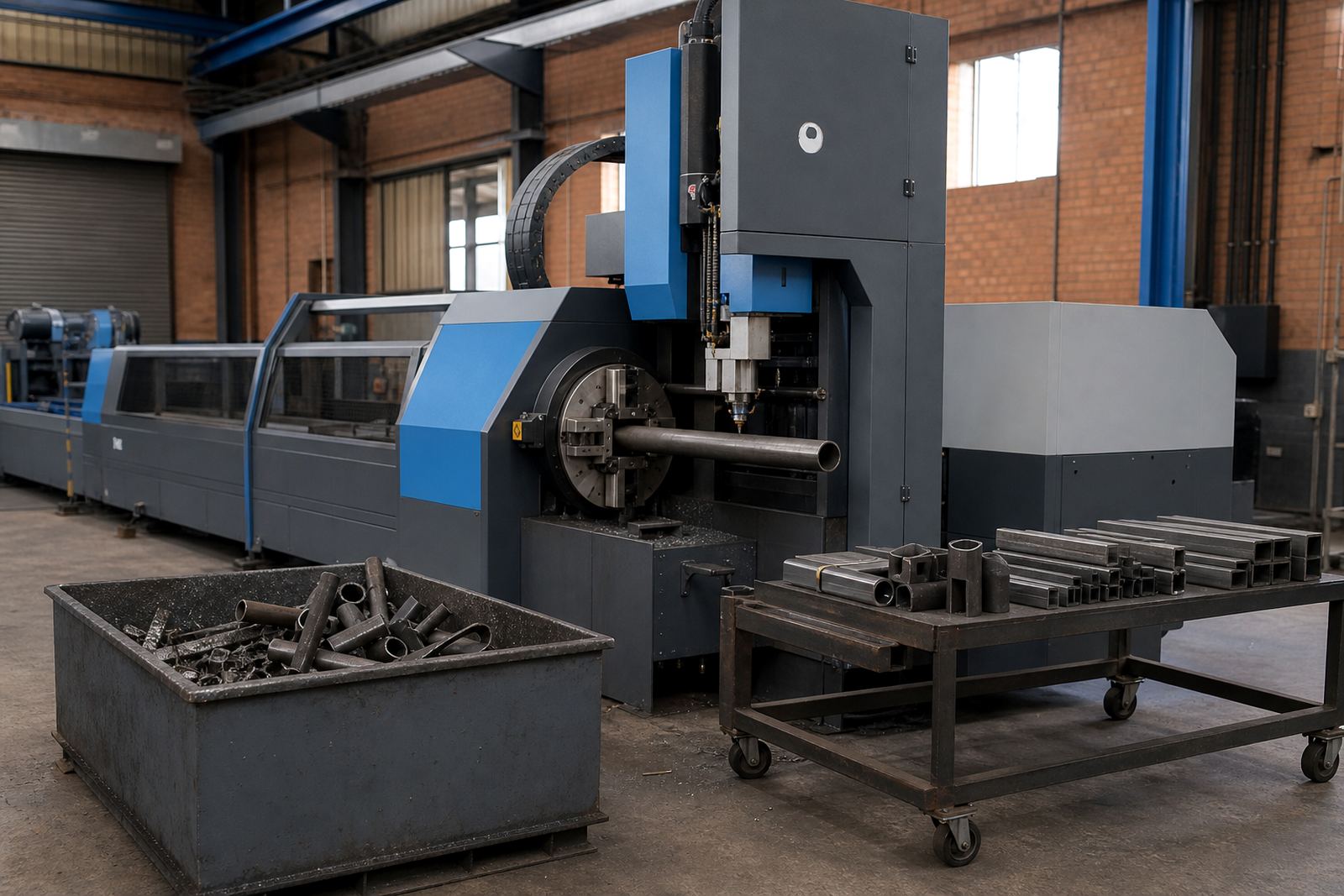
On a fibre laser tube machine, the unloading side should have a simple route for short cut pieces, rejected parts, and skeleton waste from profile work. That route needs labels, a bin for sharp ends, and a place for reusable stock. When the path is obvious, people follow it without debate.
Where there is bevel cutting, the offcuts can be awkward to stack because the ends are not square. Those pieces need firmer rules, especially when the shop cuts mixed batches for fabrication and assembly. A scrap plan that works on paper but fails at the machine is not a working plan.
Nesting changes the amount of scrap, not the need for order
Nesting software helps reduce waste, but it does not remove the scrap problem. It simply changes the shape of the leftovers. A well planned nest may leave shorter remnants, odd trim pieces, and parts that look usable at first glance but are not worth the risk of reusing without inspection.
Operators should record which nests produced usable remnant lengths and which ones should go straight to scrap. That note helps the next job avoid false savings. A remnant that once carried a good nest may already have edge damage, marking, or slight twist.
- Tag reusable remnants with size and profile.
- Keep a separate rack for confirmed stock pieces.
- Record cut losses from each common profile.
- Do not mix tested scrap with raw material.
In a plant cutting higher volumes for Gauteng and coastal clients, this habit protects planning. The office may see a neat material yield on screen, but the shop floor still needs a place for the leftovers that do not fit the next order.
Laser safety still matters after the cut is done
Scrap handling must respect the same safety rules as cutting. Fresh edges can be sharp, hot or awkward to grip. Long tube offcuts can spring when lifted badly, and short sections can slide through gloved hands if they are greasy from handling or gas residue. People working near the unloading area should treat all scrap as load bearing until they have checked it properly.
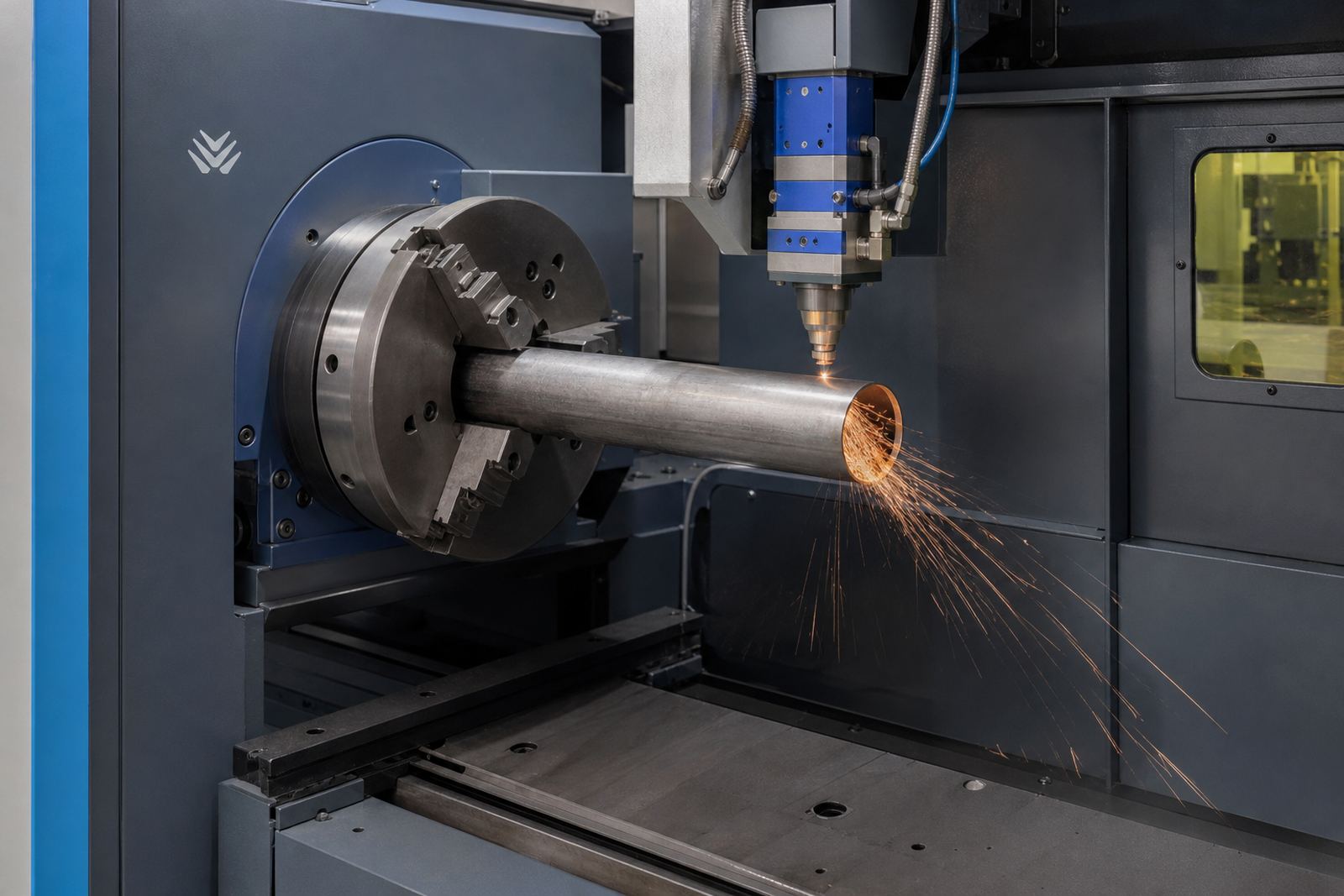
Assist gas setup also affects scrap. Clean cutting with the correct gas settings usually leaves neater ends, which makes reuse easier and storage safer. Poor gas setting can leave slag, burrs, and rough edges that cut gloves and scratch adjacent stock. The scrap bin should never become the place where bad cut quality gets hidden.
Clear floor space matters here too. Scrap left underfoot is not only untidy, it can shift under a wheeled trolley or trip a handler carrying a long length. The safest offcut is the one that is already sorted.
A Durban job shop lesson that saves a morning
A small fabrication shop in Durban, working close to the coast, had a recurring problem with mixed offcuts. The team cut round tube for rail sections, square tube for frames, and channel for supports, then dropped everything into one steel bin. By the next job, the bin held perfectly usable remnants alongside twisted scrap and duplicate lengths no one wanted to measure twice.
They changed three things. First, they marked separate bays for each profile. Second, they added a rack for confirmed reusable lengths. Third, they assigned one person on each shift to check end condition before pieces moved out of the machine area. The change did not make the shop quieter, but it made the floor easier to work on and the stock easier to trust.
That sort of arrangement suits both smaller job shops and larger production plants. The scale changes, yet the principle stays the same: cut scrap should be collected in a way that matches the material, the machine, and the next order.
A practical scrap routine that stays usable
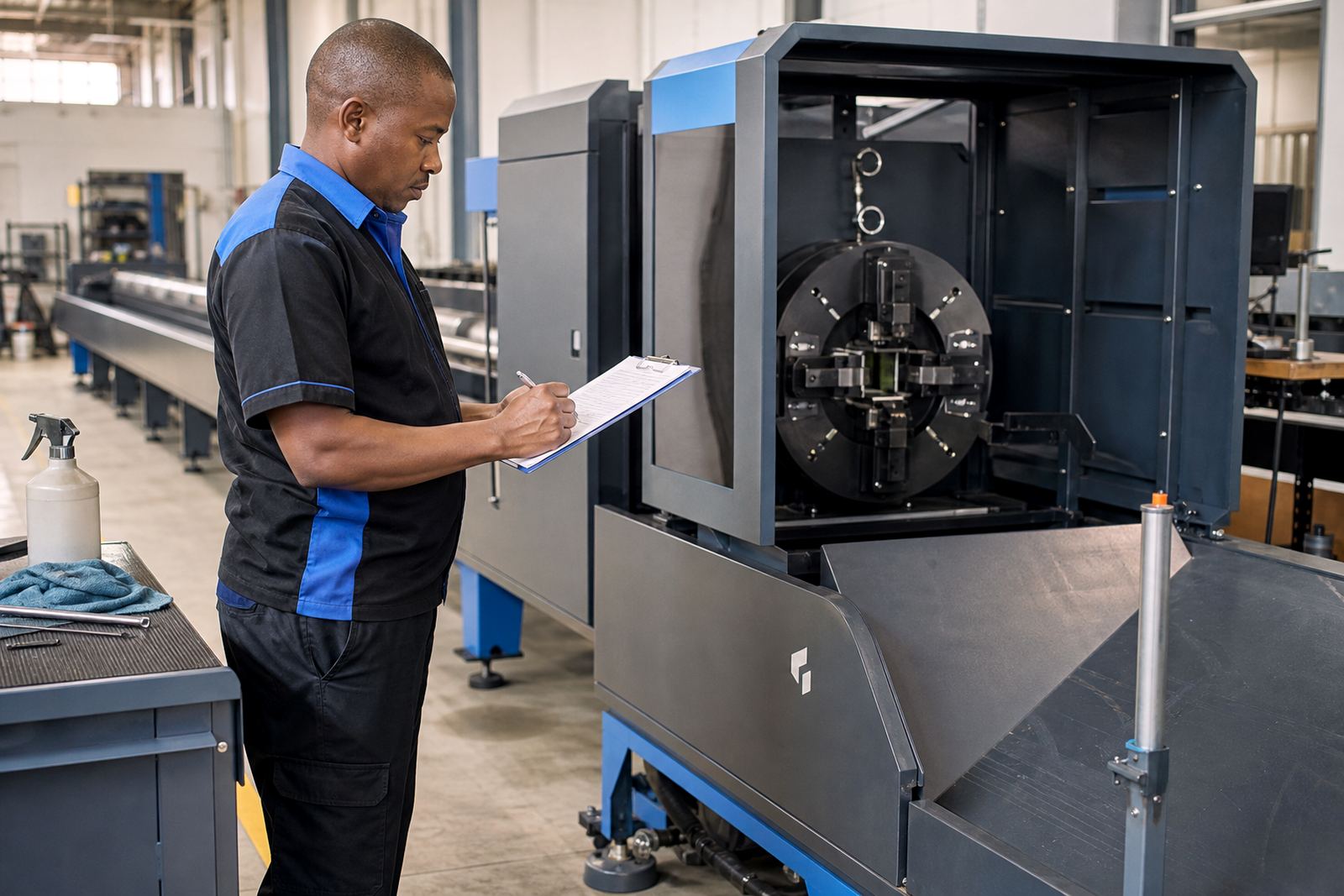
Scrap handling works best when it is part of the normal shift rhythm. Operators should know where each offcut goes, who checks reusable remnants, and how rejected pieces leave the line. Supervisors should inspect the collection point before the bin overfills, because an overfull scrap area quickly turns into a mixed pile.
- Empty scrap bins before they spill into walkways.
- Keep reusable remnants off the floor.
- Use profile labels that stay readable.
- Match the scrap route to the machine layout.
- Review waste patterns during maintenance checks.
For fabricators in Johannesburg, Pretoria, Cape Town, Gqeberha, Bloemfontein and Nelspruit, the aim is the same: less clutter, fewer mix-ups, cleaner stock handling. When offcuts are collected in a predictable way, the machine area stays usable and the next job starts with less searching.