Round tube does not sit still while it cuts
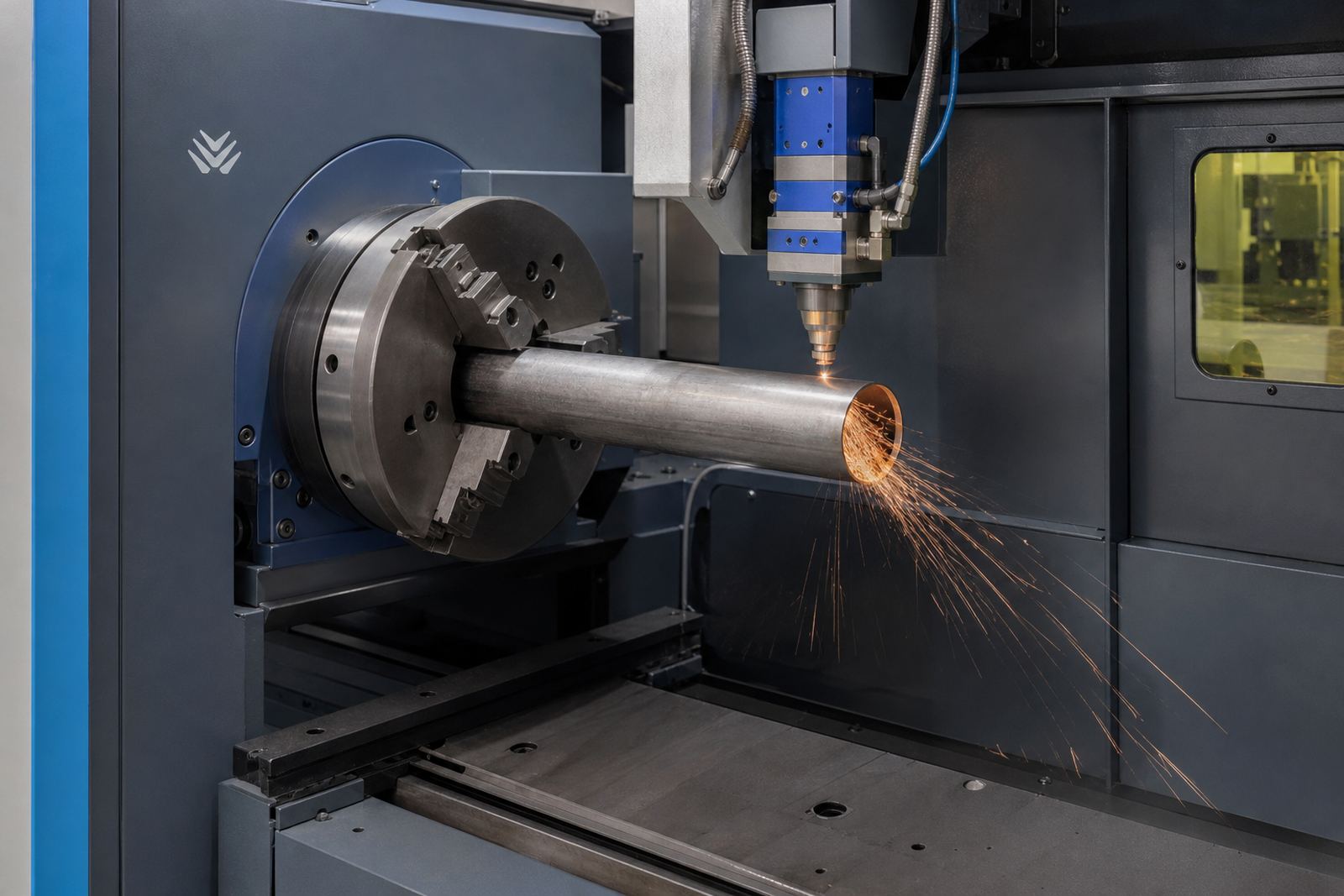
Round tube behaves differently from square or rectangular stock because the contact point changes as it rotates. That movement is useful for full circumference access, but it also means the machine has to hold centreline, control slip and keep wall vibration under control. Thin wall tube can chatter if the support is wrong, while heavier wall sections may drag if the chuck pressure is off.
A proper tube line watches the tube in rotation, not only the cut path. The part has to stay true enough for the next operation, whether that is welding, fitting a flange or assembly into a frame. A good cut on round tube leaves a clean edge and does not distort the bore more than the material allows.
- Short offcuts need stable tail support.
- Long lengths need feed control to prevent whip.
- Coated or oily tube needs grip checked before loading.
Support points decide how straight the job stays
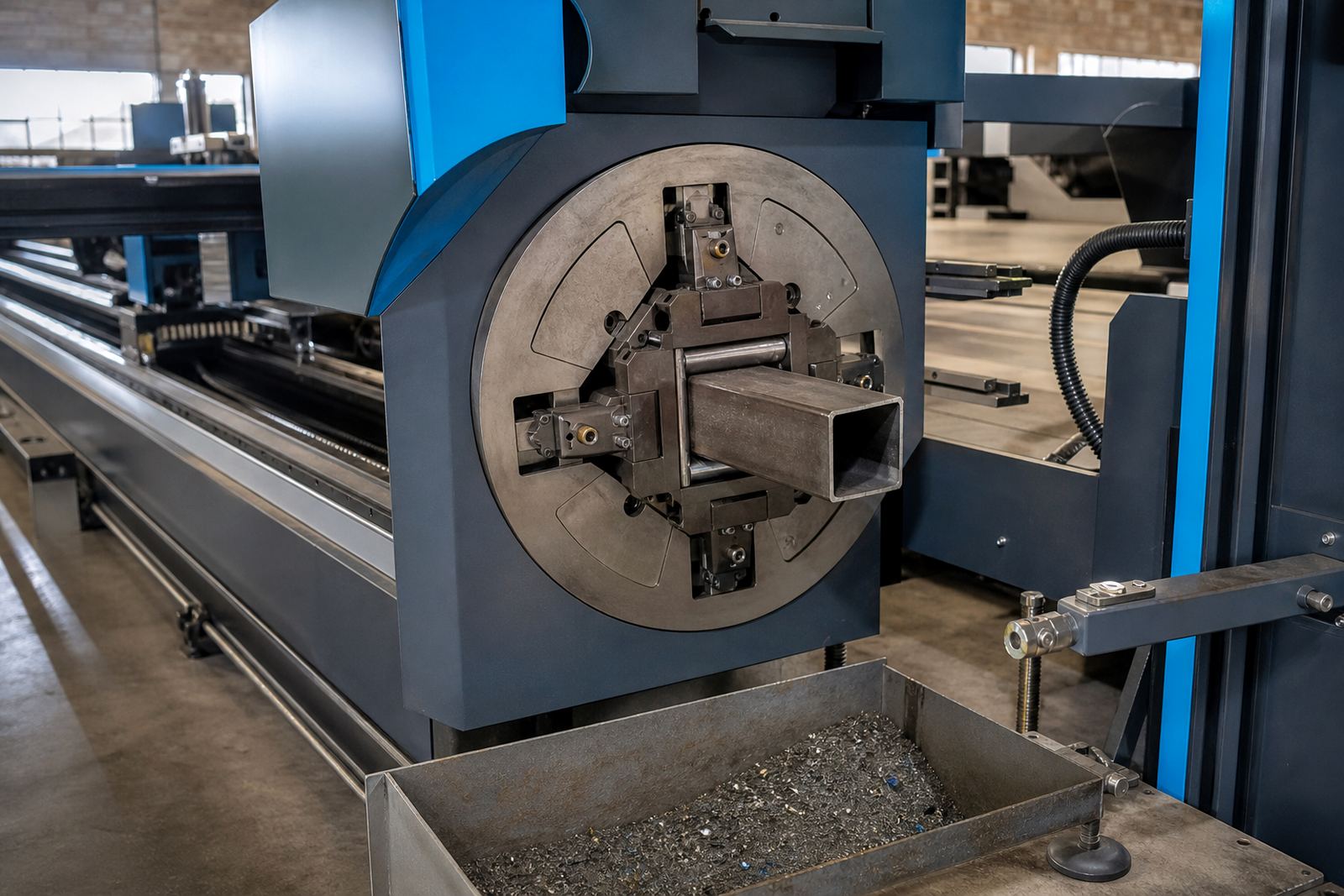
Round tube can look easy to load, then shift once the machine starts feeding it through. That is where rollers, support arms and chuck alignment do real work. If the tube sags between supports, the cut can wander. If it is clamped too hard, the wall may mark or deform near the end.
In a workshop, the best result usually comes from matching support to diameter and length rather than forcing one setup for every job. A 25 mm tube, a 76 mm handrail section and a larger structural tube each ask for a different balance of grip and carry. Wadeville shops that cut batch work often set the supports once, then check wear on rollers and jaws before the run starts.
- Check roller height against tube centreline.
- Keep jaws clean so swarf does not bruise the surface.
- Watch the first few cuts after a change in diameter.
Hole spacing and feature placement on curved stock
Round tube takes holes, slots and mitres differently because the surface curves away from the beam. Feature placement has to account for rotation and wall thickness, especially when the tube carries fittings, brackets or weld prep. A hole that lands too close to a seam or too near the end can distort during cutting or later during welding.
When a part needs multiple features, nesting software maps the tube length, sets each feature’s rotation and keeps the layout accurate across the job. On repeat work, that matters because one poor layout can create extra scrap across a full batch.
- Keep end features clear of the clamp zone.
- Allow for weld gap where the assembly needs it.
- Space slots so heat does not pull the wall oval.
Bevels, mitres and the edge that meets the weld
Round tube often goes straight into welded assemblies, so the edge quality has to suit the joint. Bevel heads help prepare the edge where the weld needs more access or a cleaner fit-up. On round sections, bevel depth and angle must be set with care because the cut line changes as the tube turns.
A tidy mitre on a round tube frame makes assembly easier and reduces grinding at the bench. It also helps the installer when the job is going into a handrail run, a support frame or a process rack. When the cut face is true, the fit-up gap stays manageable and the welder spends less time correcting the joint.
Assist gas choice changes the finish
Assist gas affects edge colour, dross and the final surface around the cut. On round tube, the gas choice also influences how much cleaning is needed before welding or coating. Oxygen can suit some thicker cuts, while nitrogen is often used where a cleaner edge is needed and oxidation must be kept down.
The practical question is not only what gas is available, but what the part must do after cutting. A tube that will be powder coated, galvanised or welded into a visible structure may need a different finish from a hidden internal part. For fabricators in coastal areas like Durban and Gqeberha, the edge condition matters because surface care starts earlier than final assembly.
- Set pressure for the wall thickness, not a guess.
- Keep lines and filters in working order.
- Check cut edge colour before moving into production.
A Wadeville handrail batch tells the story
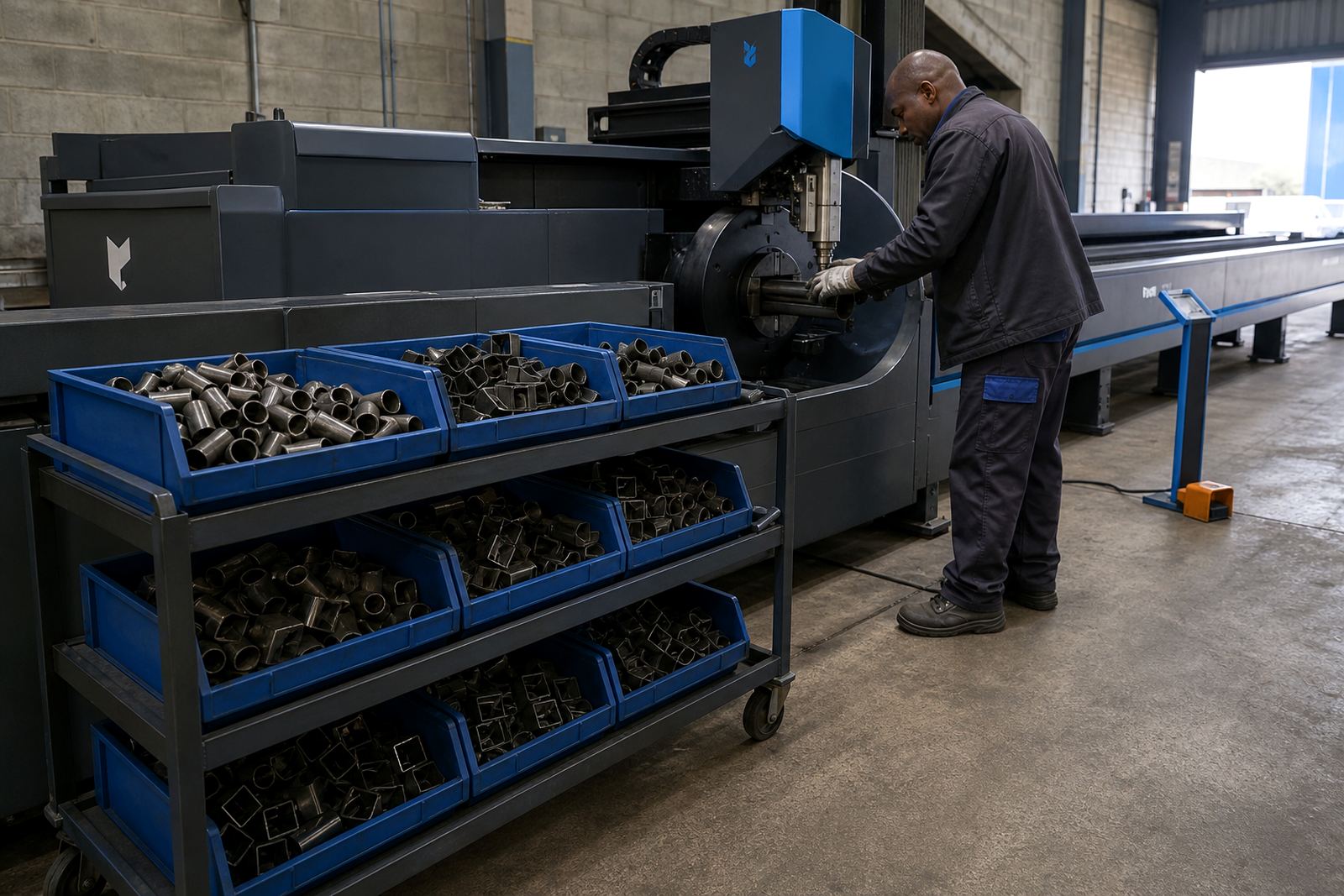
A local example is a handrail order built from round tube for a mixed indoor and outdoor fit-out in Gauteng. The workshop needed clean mitres, consistent hole positions for brackets and enough repeatability to keep the frame line straight through assembly. The tube lengths varied, and the clamp positions had to stay clear of the bracket holes.
The job moved cleanly because the machine setup matched the material. Support stayed even, chuck alignment was checked before loading, and the nesting file grouped similar parts to reduce changeover. That kind of preparation saves time at welding and at installation, where small errors on round tube show up as gaps, twist or a stubborn joint that refuses to sit square.
For fabricators moving between Johannesburg, Pretoria and the coast, the lesson is the same. Round tube rewards careful loading, sensible feature placement and a cutting path that respects the way the part rotates. The machine can do the cutting, but the setup decides how much correction the workshop has to do later.
Training points that keep round tube jobs under control
Operator training matters because tube work looks straightforward until the first batch exposes a weak setup. A team that knows how to read support wear, clamp pressure and feature order will cut more consistent parts and waste less material. Preventive maintenance helps too, especially on jaws, rollers and alignment surfaces that carry the load every day.
- Teach operators to check centre height before loading.
- Review nesting so similar diameters stay grouped.
- Inspect bevel calibration after tool changes.
- Keep a record of repeat settings for common tube sizes.
When the machine, the software and the crew work from the same setup, round tube stops being a problem part and starts behaving like a repeatable one.