Short runs need a machine that changes over fast
A job shop in Wadeville or Germiston may cut one off lengths in the morning, then switch to another drawing after lunch. That sort of work rewards a machine that loads tube quickly, grips different profiles securely and lets the operator move between round, square and rectangular sections without a fuss. Angle and channel bring their own handling quirks, so the chuck system must clamp them straight and keep the cut path steady.
For short runs, nesting is about keeping the scrap down while avoiding overcomplicated setups. If the operator spends too long setting a job, the cutting cell starts working for the software instead of the other way round, which is never the point.
Production batches ask for repeatability first
When a plant in Pretoria or Durban runs the same frame, rail or bracket set day after day, the priorities shift. Throughput matters, but so does every part landing in the same place after the hundredth cycle. A production line usually needs stable part loading, consistent chuck alignment and a bevel head that stays accurate across long shifts.
Repeat work also suits tighter process control. Assist gas settings, cut data and clamp positions should be locked down properly so the machine gives the same edge quality from the first tube to the last. That makes downstream bending, welding and assembly less of a chase.
- Short runs benefit from quick loading and easy changeovers.
- Production batches need fixed settings and repeatable part positioning.
- Bevel cutting is useful where weld prep must stay consistent.
- Stable nesting keeps material use under control.
The parts that matter in real tube cutting
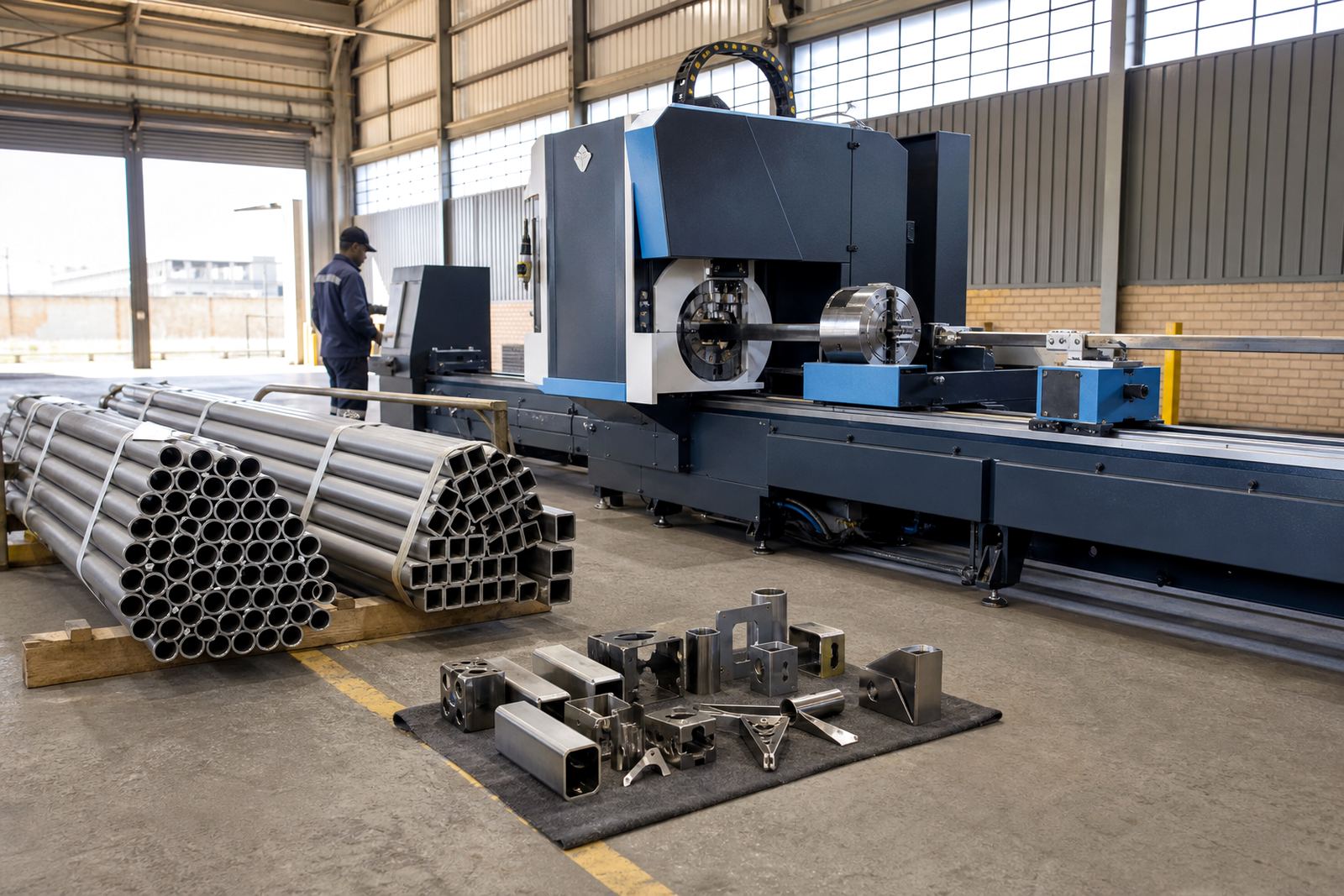
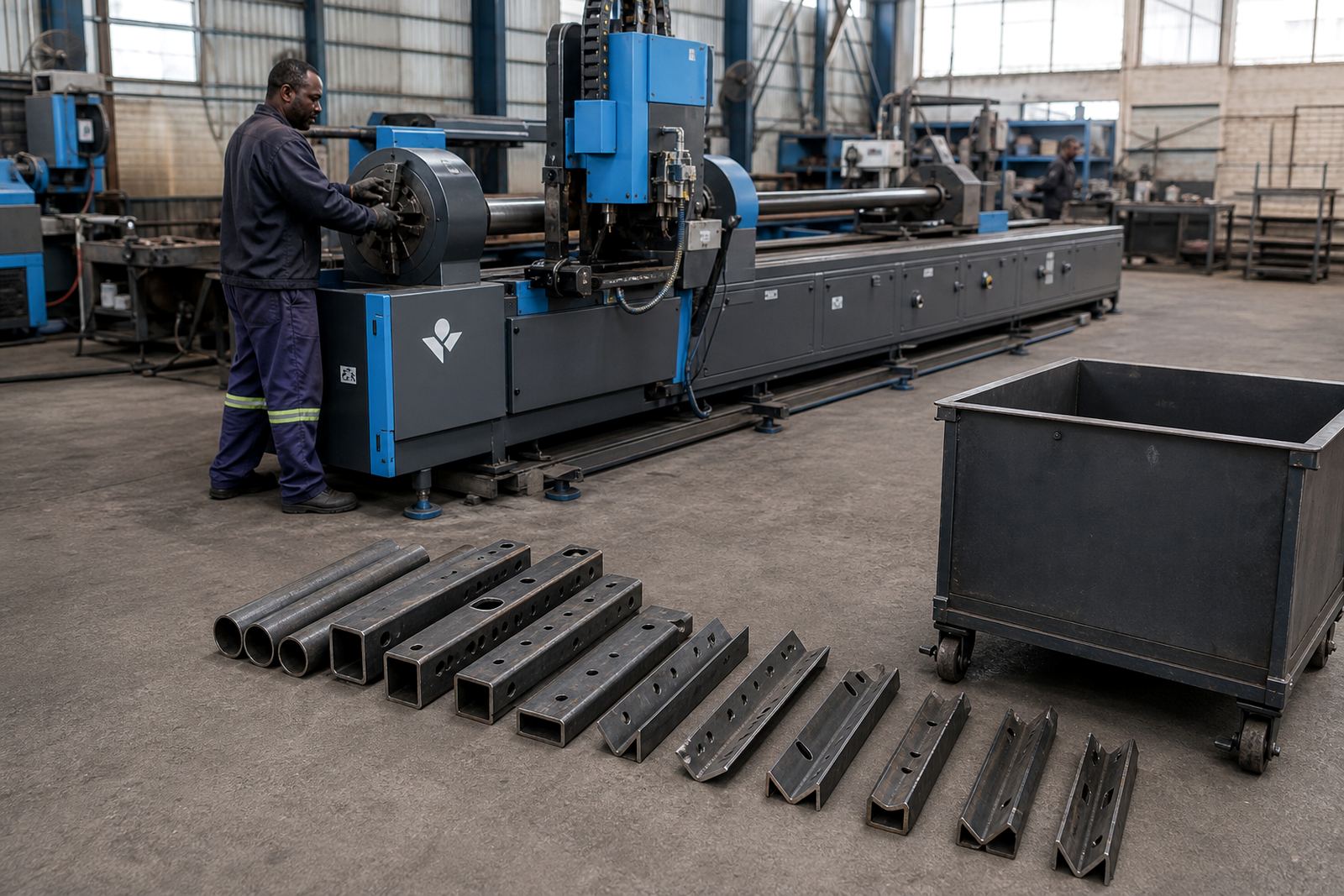
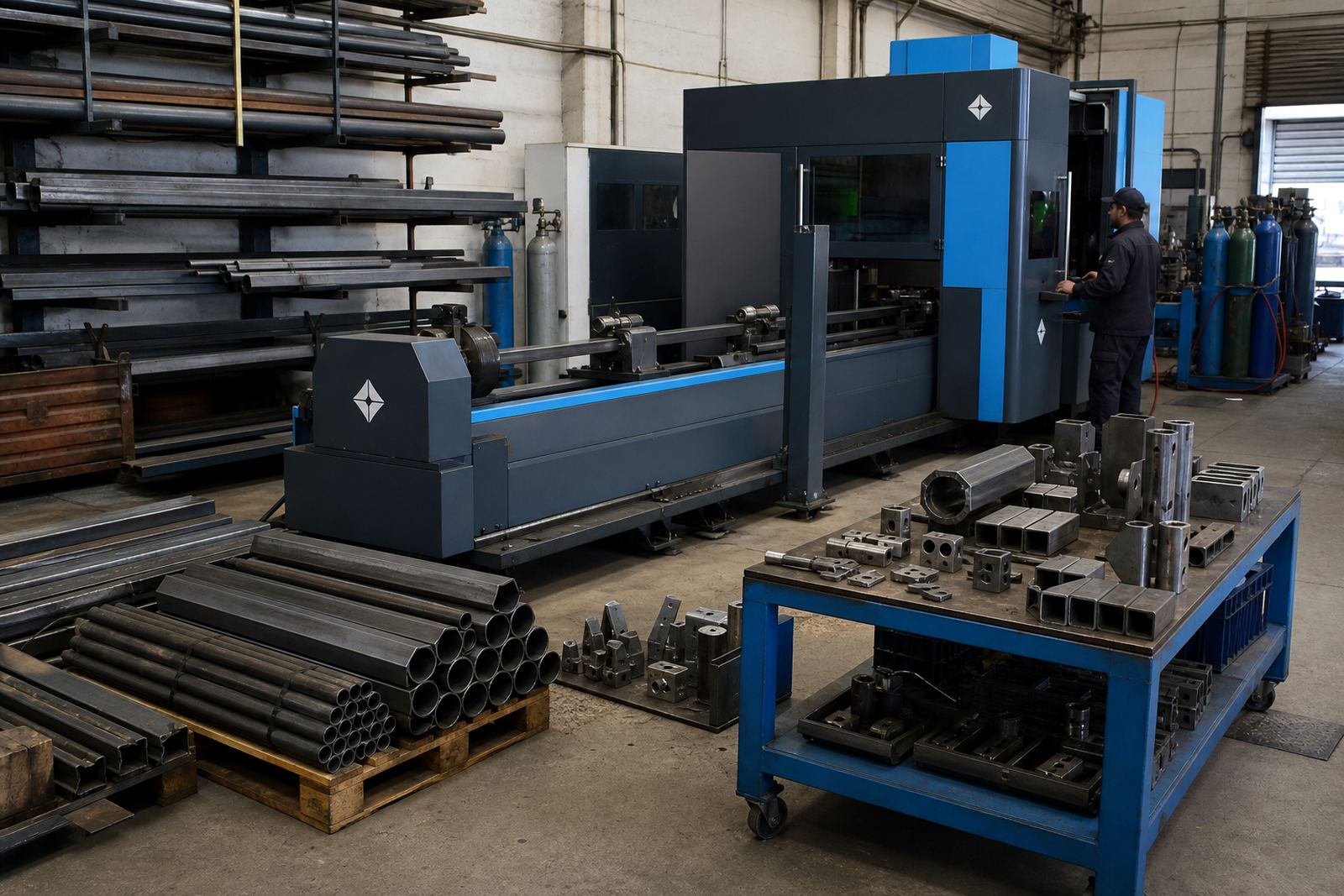
Round tube is only one piece of the picture. Many South African fabricators also cut square tube, rectangular hollow section, angle and channel for furniture frames, truck bodies, guards, stair parts and plant supports. A suitable machine needs the right chuck design for that mix, along with a bed and support system that protects finished lengths from twisting or marking.
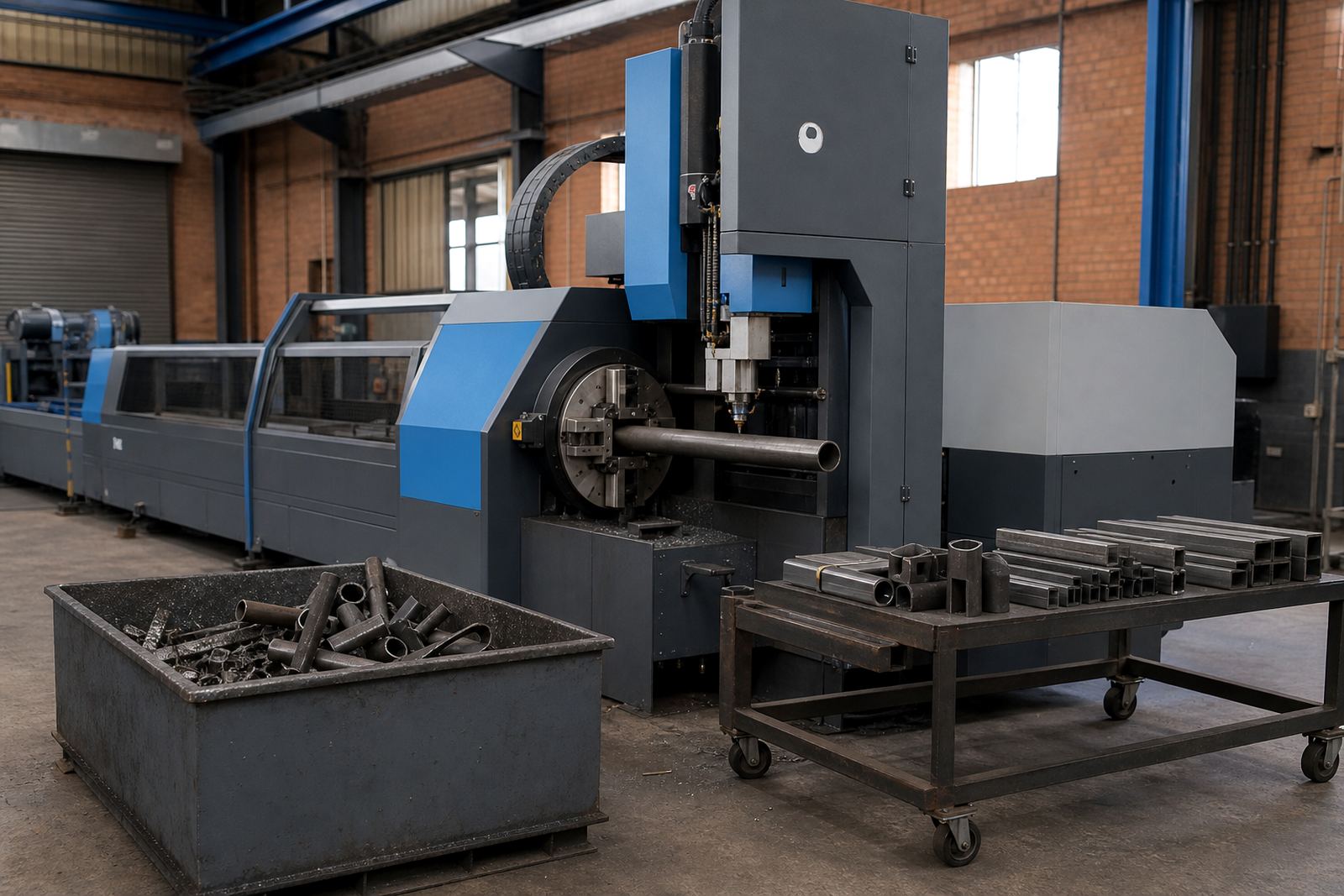
Bevel heads make a difference where joints need a cleaner weld prep or a shaped edge for fit-up. On thicker sections, a poor bevel adds filing and hand work later, and that cost shows up in labour long before it shows on a quotation.
- Chucks must grip different profiles without crushing thin walls.
- Bevel heads help where welded joints need preparation.
- Support rollers reduce sag on longer lengths.
- Safety guarding and extraction belong in the cell design.
Workflow changes the machine choice
A small shop may run a single operator across loading, nesting, cutting and sorting. In that case the machine must stay simple enough for one person to keep control of the job. A larger plant often has separate loading, offloading and inspection points, so the machine can be matched to a more structured flow with clearer handovers.
That difference changes the buying decision. Job shops usually want flexibility, while production plants often want speed with less variation. The right machine should suit the tube volume handled each shift, not the model with the longest spec sheet.
- Single-operator shops need clear screens and straightforward setup.
- Higher-volume plants need organised material flow around the machine.
- Training should fit how your operation runs day to day.
- Preventive maintenance protects uptime in both settings.
Job shop and production in Germiston
A fabricator near Wadeville may cut railing parts in the morning and production brackets in the afternoon. For the rail work, the team benefits from fast nesting changes and a chuck setup that handles mixed tube sizes without constant adjustment. For the bracket batch, the same site may lean on fixed part programs, a steady assist gas setup and measured bevel settings that hold from shift to shift.
That is the practical difference between job shop work and production work. One asks the machine to adapt quickly, the other asks it to repeat without drifting. The shop does not need two completely different philosophies, but it does need the right balance of flexibility and control.
Installation, training and service shape the long run
The machine on its own is only part of the decision. Site assessment, rigging and commissioning set the base properly, especially where floor space, access and material flow already have limits. If the machine is placed badly, even a well specified system can become awkward to run.
Operator training and nesting training matter just as much. Teams need to understand cut order, clamp positions, gas settings and routine checks before the first proper workload lands on the table. Preventive maintenance, chuck alignment, bevel calibration and remote diagnostics keep the equipment useful over time, and breakdown response has to be part of the plan before trouble shows up.
At LaserTube, Michael Dlamini leads the business from Wadeville, Germiston with a team that handles sales, applications, installation and service across Johannesburg, Pretoria, Durban, Cape Town, Gqeberha, Bloemfontein and Nelspruit. That spread matters because the machine must work in the plant, not only on paper.