What a tube laser actually cuts
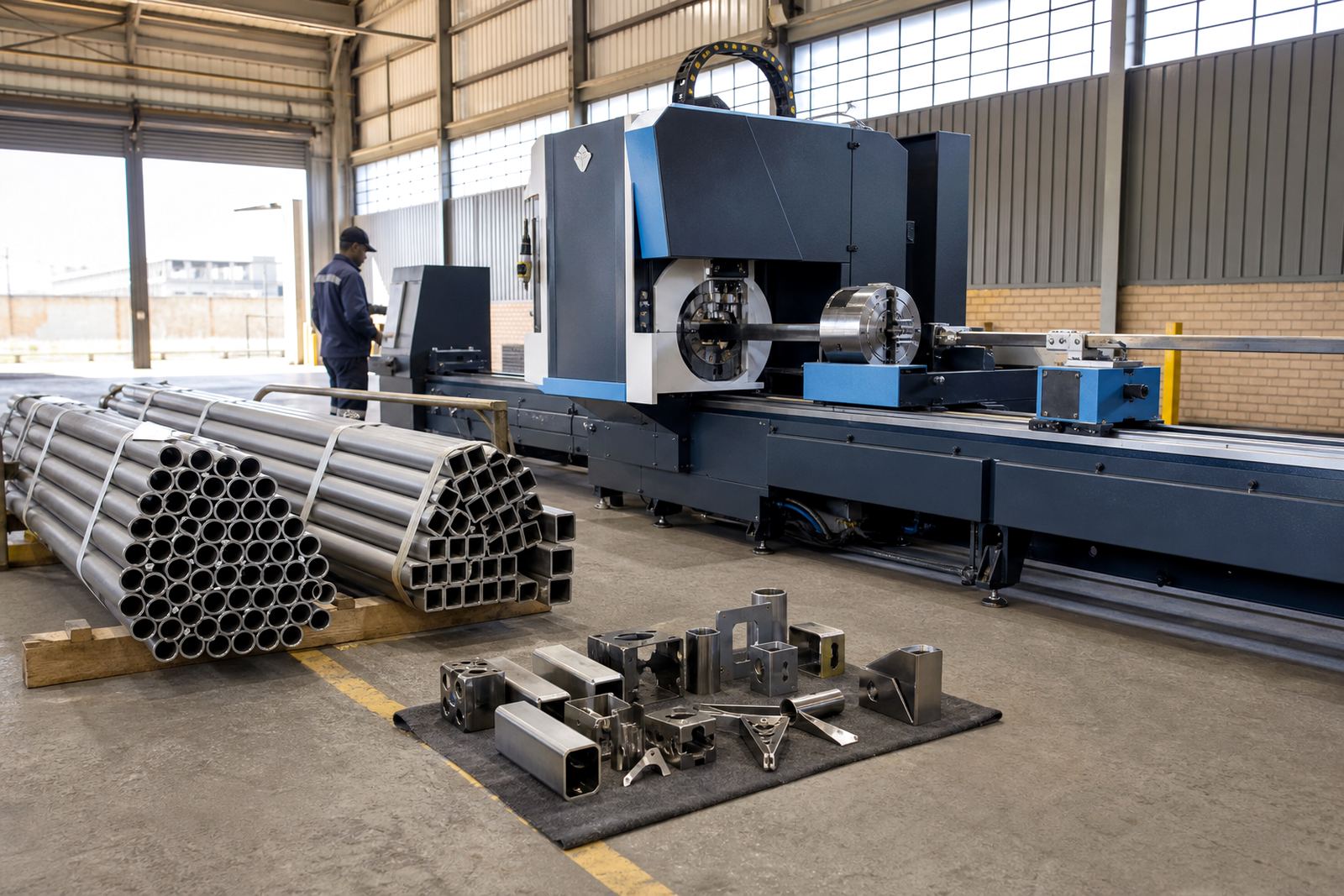
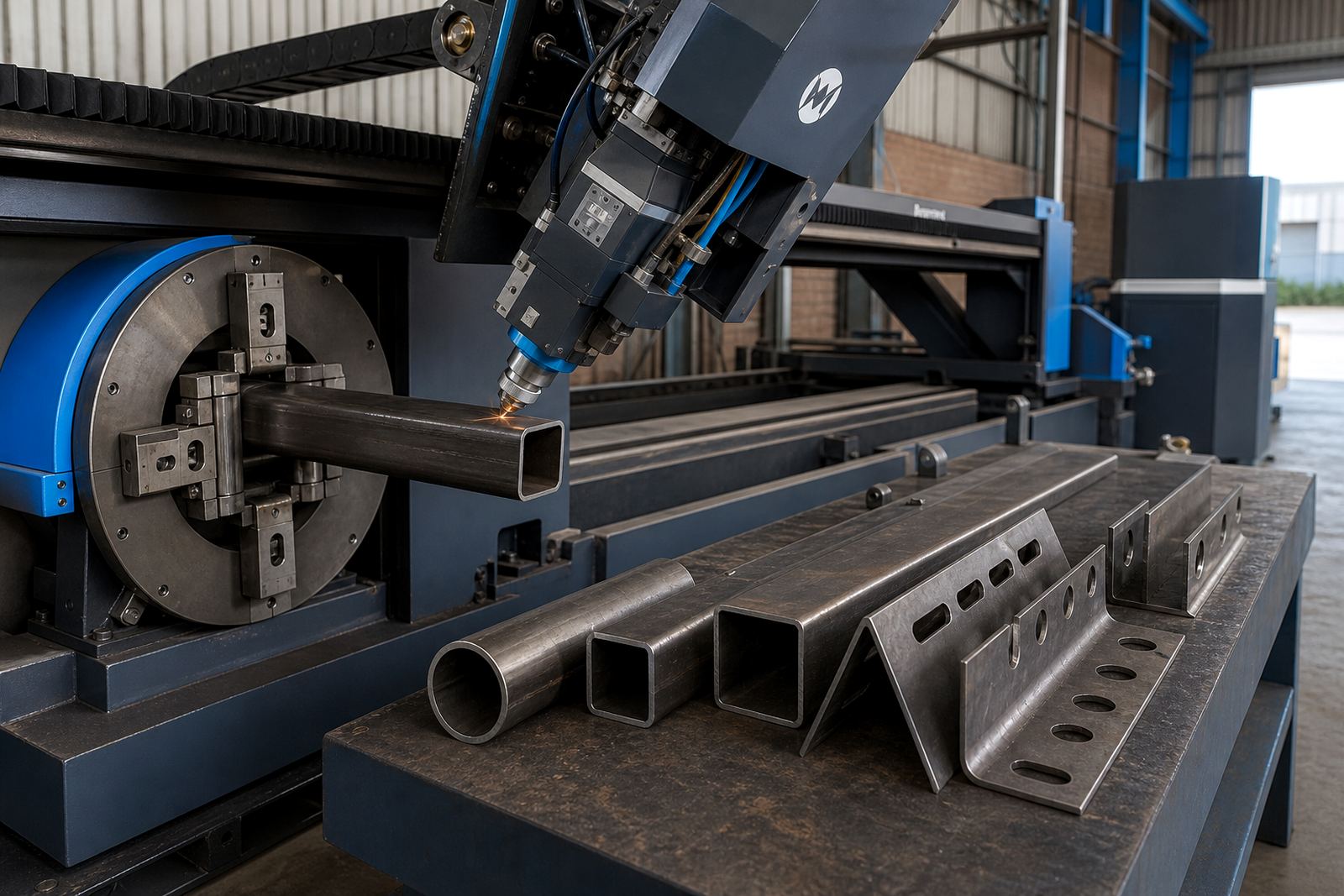
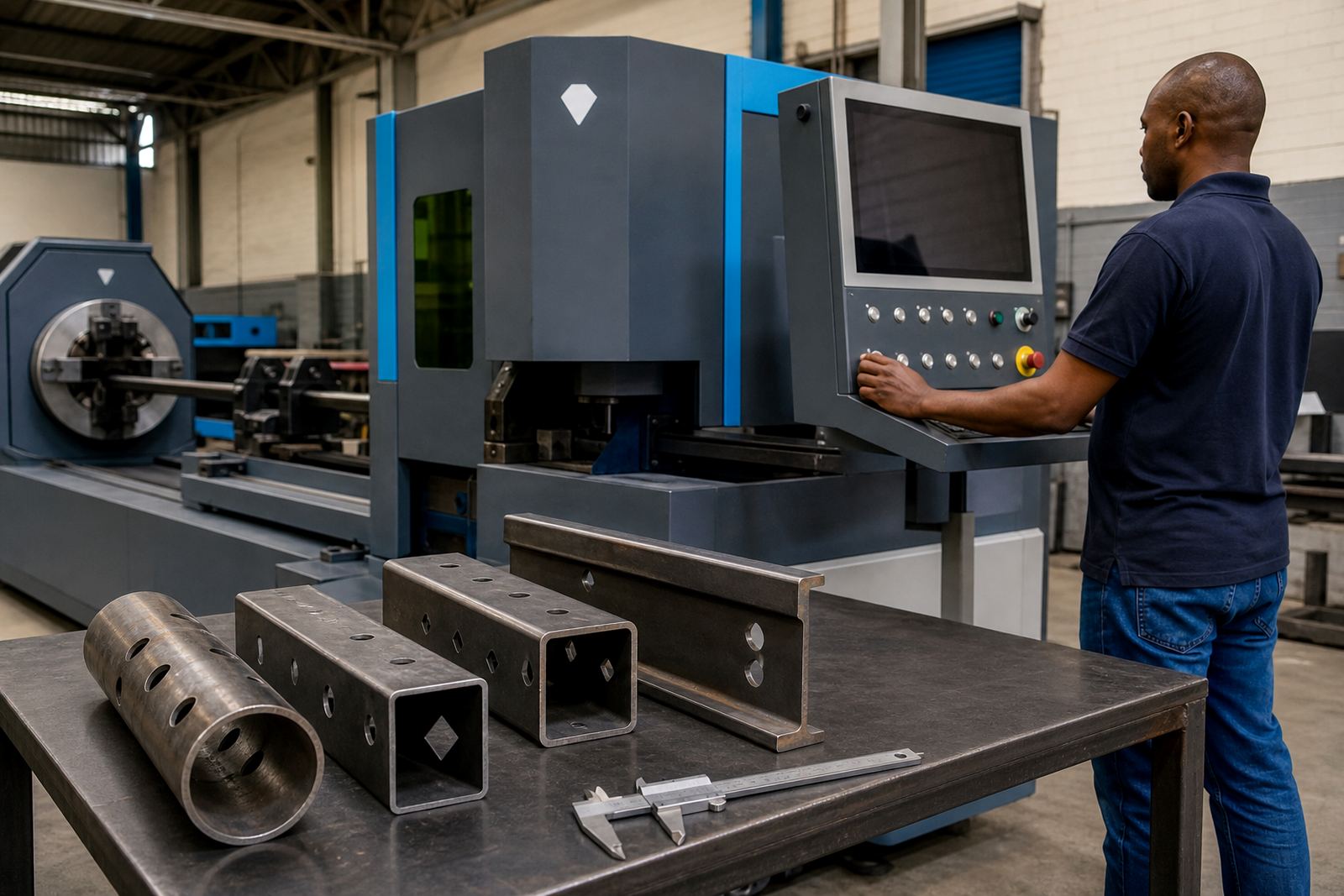
A fibre laser tube machine is built for hollow and open sections, not flat sheet. In a good setup, the material is loaded into a chuck system, supported along the bed and rotated while the cutting head follows the profile. That makes it possible to cut holes, slots, mitres, fishmouths and end preparations in one run, with far less manual marking than hand cutting or drilling.
The machine is usually used for round tube, square tube, rectangular tube, angle and channel. Some shops also process custom sections, but the real value is in repeated work where the same pattern must fit every time. A railing fabricator in Wadeville might cut stanchions, handrail rails and base details in the morning, then change over to support frames for a nearby plant after lunch. The machine helps keep those parts consistent, even when the batch is small.
Chucks, support and the way material moves
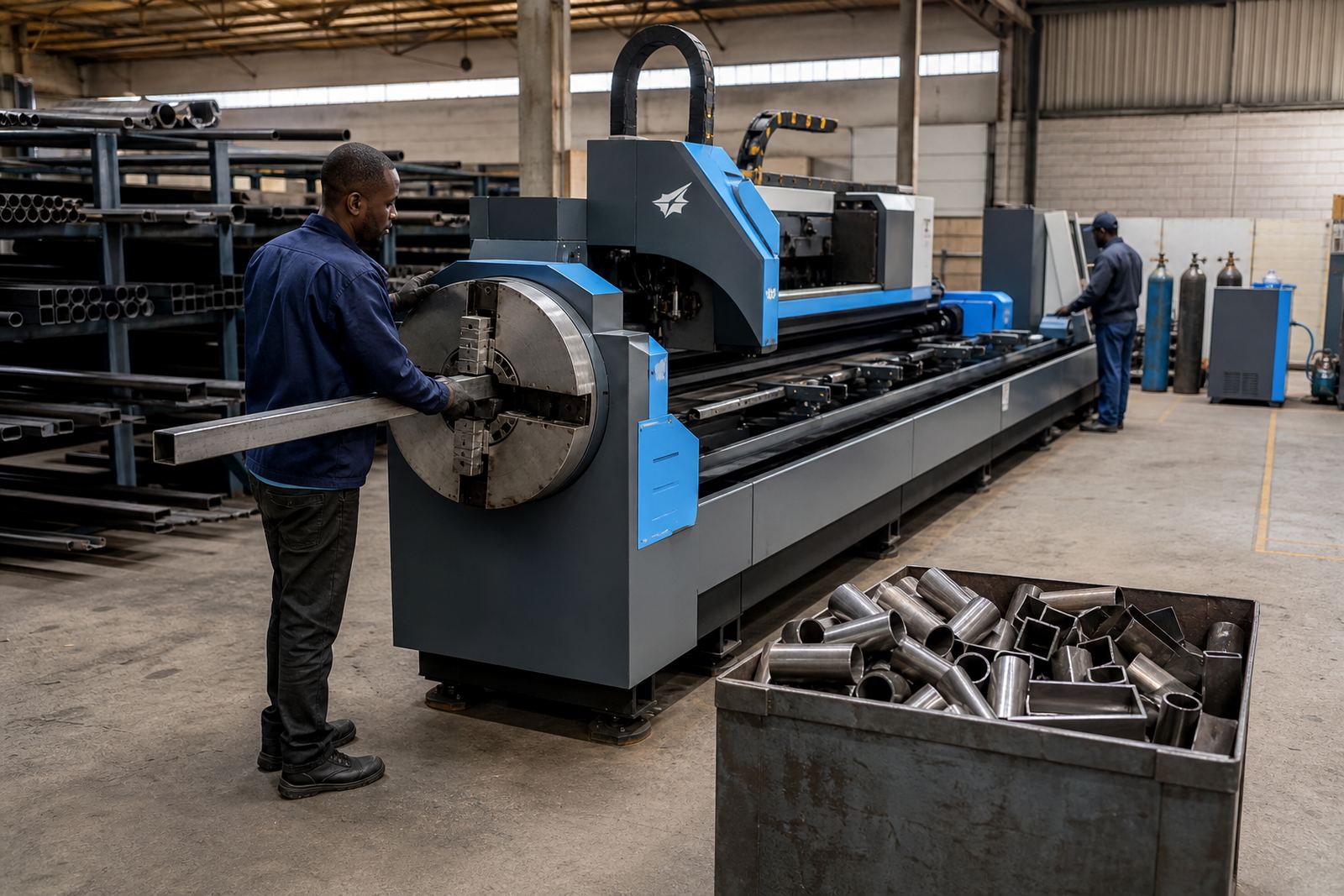
A machine like this relies heavily on the chuck as a key working component. It grips the tube firmly, holds it in the right position and turns it while the laser does the cutting. Many machines use front and rear chucks so longer sections stay stable through the full cut. For thin wall tube, proper clamping matters because distortion can spoil fit-up later in the workshop.
Support rollers, centring devices and correct loading practice all help the cut stay true. If the tube is bowed, dented or badly stored, the machine may still cut it, but the finished parts can drift out of tolerance. That is why incoming material checks matter. In a coastal town like Durban, where stock can sit in humid conditions, surface condition and storage discipline make a visible difference to cutting quality and to the life of consumables.
- Make sure the tube is straight before you load it
- Match chuck pressure to the wall thickness
- Keep the loading area clear for safe handling
- Keep stock raised off the ground and protected from damp.
Why nesting software changes the whole job
Tube cutting involves more than the machine alone. The nesting software tells the operator where each feature goes, how the parts are spaced and how to use the tube length wisely. When the nesting is done well, you reduce waste, cut cycle time and make the next assembly stage easier. It also helps with repeat jobs because the operator can save proven layouts and use them on similar work later.
For a fabrication shop in Pretoria working on farm gates, trailer parts or structural frames, nesting can be the difference between a tidy production day and a shop floor full of offcuts. The software should also handle part marking, drop management and part sequencing. If a job has many holes close together, the operator may need to slow the cut or change order so heat does not build up in one area.
- Use part labels that match the drawing set
- Plan the cut order around heat and movement
- Keep offcuts grouped for later use if they are still suitable
- Review the nesting before material is loaded
Bevel heads, angles and the join that comes after
Some tube laser machines are fitted with bevel heads, which allow the cutting head to tilt and put a chamfer on the edge. That matters where weld preparation is needed or where a part has to meet another section at an angle. It can save grinding later, but only if the calibration is correct and the operator understands the job drawing.
Bevel cutting is useful in structural work, brackets and frames where the final weld needs a better fit. It also helps where the tube must meet another tube in a tight joint. Bevel calibration should never be treated as a quick setting and forgotten. If the angle is off by even a little, the fit-up problem will show at the welding table and the finish crew will pay for it. Good operators learn to spot those issues early, before a full batch is run.
Assist gases, cut edge quality and safety
Assist gas clears molten material during cutting and plays a direct role in cut quality. It helps push molten material away from the cut, controls the edge finish and keeps the lens area cleaner. Different gases suit different materials and thicknesses, and the right pressure setting matters as much as the gas itself. A poor gas setup can leave burrs, dross or rough edges that slow down welding and assembly.
Safety is just as important. A tube machine has moving parts, reflected light, hot cut zones and loading risks. Operators need clear rules for loading, unloading and checking inside long sections. Use guards, interlocks and extraction on every shift to control fumes and dust, reduce risk around moving parts, and keep tube cutting safer during normal production. In busy shops around Johannesburg or Germiston, it is easy for shortcuts to creep in, so regular training keeps the work controlled.
- Check that the selected assist gas suits both the material and its thickness
- Watch the edge finish during the first cut of each batch
- Keep hands clear when the chucks are closing
- Use proper eye and body protection around the machine
From quote to finished part in Wadeville
A local fabricator in Wadeville may start with a mix of hand-cut tube and drilled sections, then move to a fibre laser tube machine when orders become more varied. The machine is not just for speed. It also helps with consistency, especially when the same frame or bracket is made for different sites across South Africa. A job that once needed several manual operations can often be reduced to one programmed sequence, then moved straight to welding and assembly.
That change brings new habits. Material needs to be sorted, drawings need to be checked and the operator needs to understand how the chuck system, nesting and gas settings work together. Installation, commissioning, operator training and nesting training all matter at this stage. Preventive maintenance keeps the machine steady, while chuck alignment, assist gas setup and bevel calibration protect cut quality. For shops in Cape Town, Gqeberha, Durban, Bloemfontein, Nelspruit, Pretoria and Johannesburg, the same basics apply even if the parts are different.
When a tube laser is understood properly, the machine stops being a mystery and becomes a controlled part of the workshop flow. That is where the real value sits, in cleaner parts, fewer hand fixes and a better fit on the weld table.