Why the first pulse matters on round and square tube
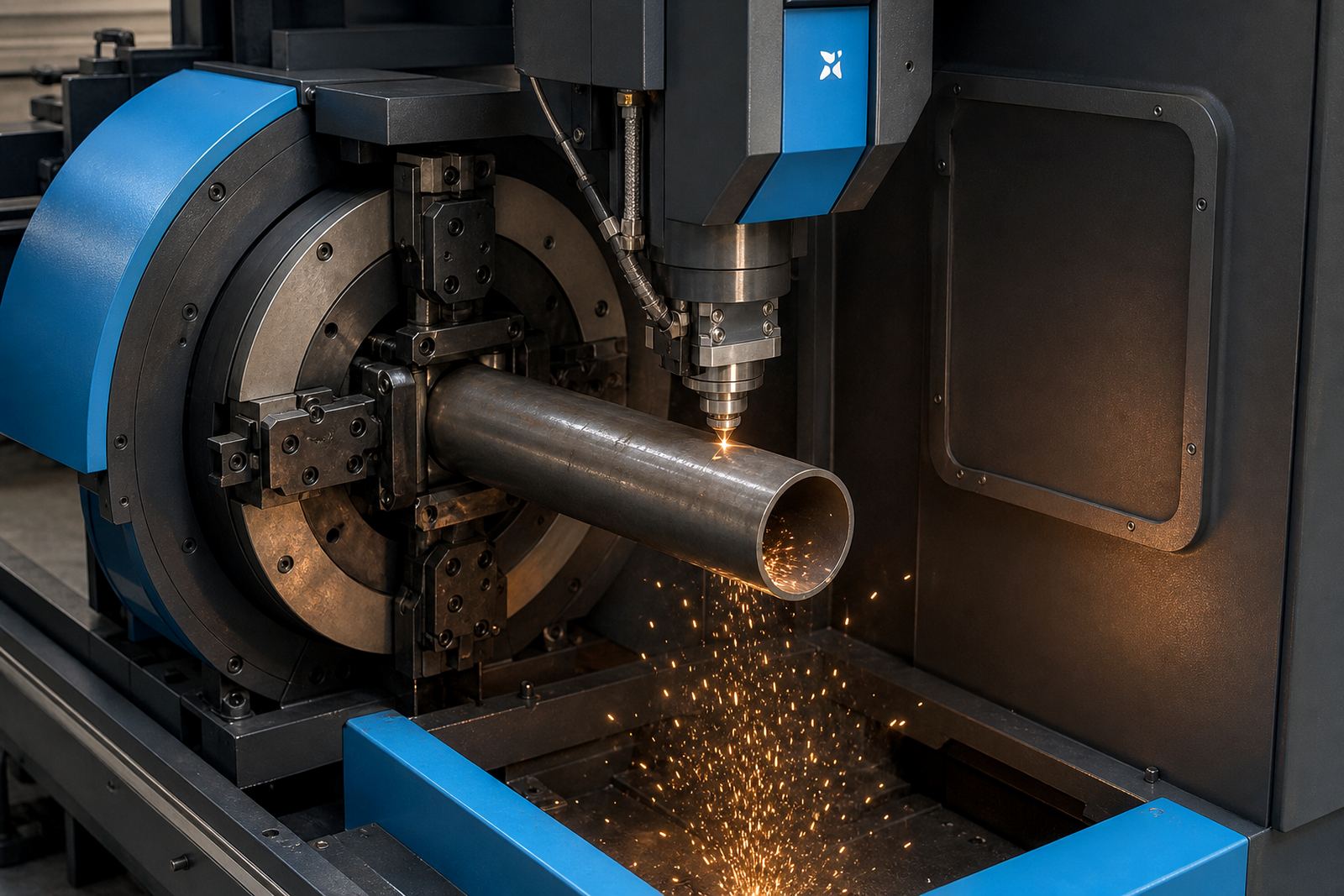
On tube and profile cutting machines, piercing is the point where the beam breaks through the wall before the cut can run. That first opening must be small, controlled and repeatable. On round tube, square tube, rectangular tube, angle and channel, the wall thickness, material grade and clamp position all change how the pierce behaves. A clean pierce is not just about getting through the metal, it sets the tone for the cut edge and the rest of the nesting sequence.
When the pierce is too aggressive, molten metal can blow back onto the nozzle, the lens window can take a hit and the edge near the start point often needs extra finishing. When it is too slow, cycle time stretches and heat builds up in one spot. On a busy shop floor in Wadeville or Germiston that adds up fast, especially when the machine is running mixed work through the day.
Good piercing is a matter of process control. Gas pressure, power ramp, pierce height and dwell time all need to suit the tube. On thicker sections, the machine may need staged piercing so the beam opens the wall without forcing too much splash into the kerf. That is where a stable chuck grip and a clean machine setup count.
What changes when the job is tube, not flat plate
Flat sheet and tube do not behave the same way under the beam. On tube, the pierce point may sit on a curved surface, a corner radius or close to a welded seam. That changes how the assist gas flows and how the molten pool escapes. A round section can let the pierce wrap differently to a square profile, while a channel can trap debris if the cut sequence is poorly set out.
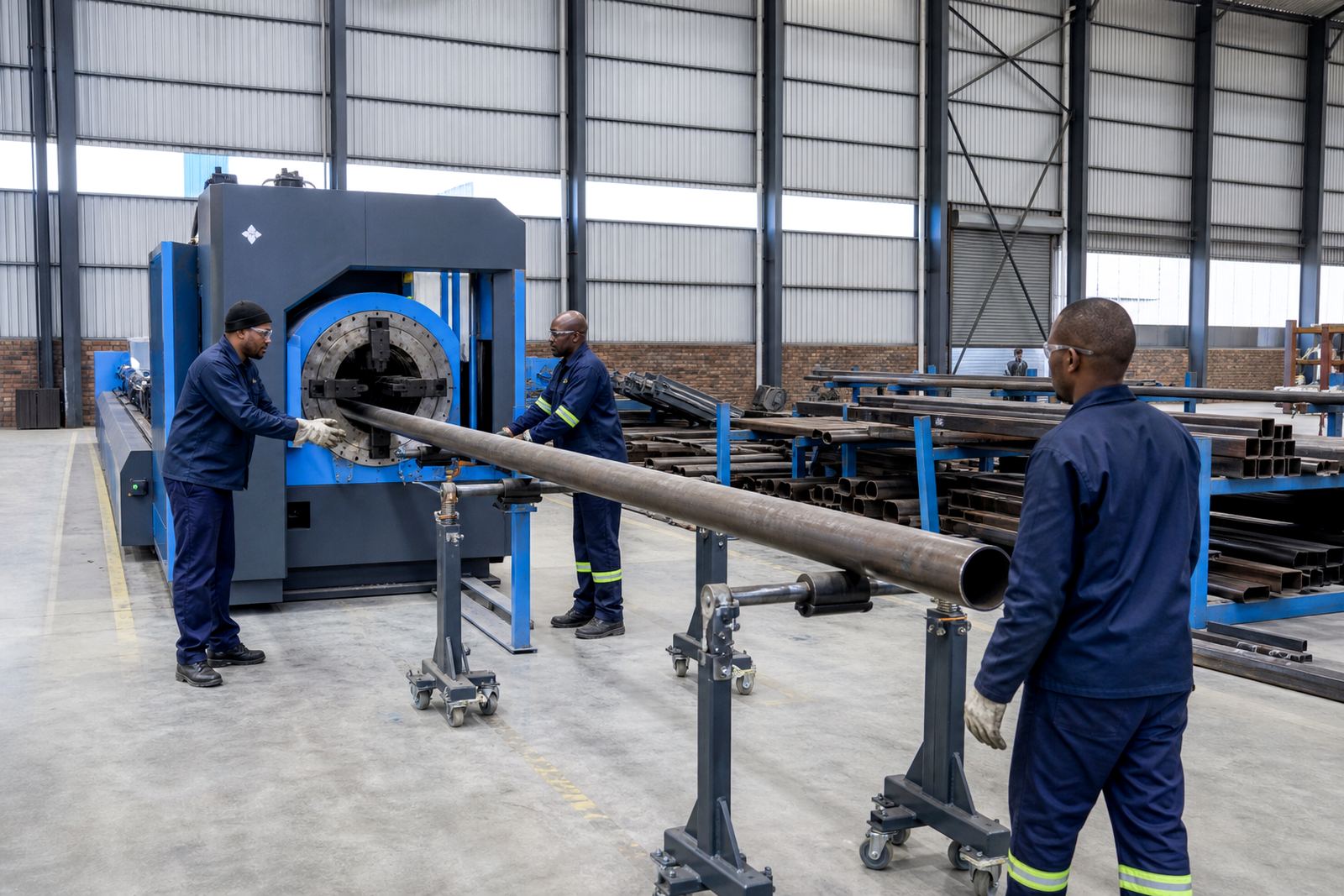
- Round tube needs steady rotation and a pierce location that suits the clamp gap.
- Square and rectangular tube can need corner-aware settings to keep the start point clean.
- Angle sections need careful support so the beam does not wander at the edge.
- Channel sections often need extra attention to slag escape and nozzle clearance.
- Welded seams can change the heat path and need test pierces before production.
Nesting software helps here, but only if the operator understands how the machine will move through each part. A neat layout on screen can still fail if the pierce lands too near a clamp jaw or if the order of cuts releases tension too early. That is why tube work is both programming and machine discipline.
Pierce settings that protect quality
Most piercing trouble comes from settings that are close, but not quite right. Power ramp, assist gas choice, nozzle size and pierce delay need to suit the wall thickness and finish requirement. Oxygen may be used on some thicker mild steel jobs where edge quality and pierce behaviour are balanced for production, while nitrogen is often chosen where a cleaner edge and less oxidation are needed. The point is not to use more gas, it is to use the right gas and the right pressure for the material.
On a tube line, the machine also needs the correct focus position and a pierce height that keeps the head safe from splash. If the head is too low, spatter can mark the nozzle and disturb the beam. If it is too high, the pierce can struggle to open the wall cleanly. A bevel head adds another layer, because the angle of entry changes the way the molten metal exits. That can be useful for weld prep, but it does call for tighter setup and better operator attention.
In practice, the best settings are the ones that can be repeated shift after shift. A good setup sheet is worth more than guesswork, and the machine should be checked on real material, not only on a display screen.
Mixed tube piercing in Wadeville
A fabrication shop in the Wadeville area may be cutting exhaust parts, frames and support members from mixed tube stock. One morning the job list can include 25 mm square tube with small slot features, then a batch of heavier wall section for a plant repair. If the same pierce routine is used on both, the light tube may scorch and the thicker tube may leave a rough start. That slows packing, rework and fitment later in the day.
For that kind of work, the team needs one setup for light tube, another for heavier wall section and a clear rule for clamp position. The operator should know when a pierce test is needed, when a seam may affect the start and when the nozzle needs inspection. In a shop that ships into Johannesburg, Pretoria, Durban, Cape Town and Gqeberha, small pierce faults can travel far before anyone spots them.
Michael Dlamini often sees that the real gain is not a big machine change, but better control of the first few seconds of each cut. If the pierce is stable, the rest of the profile cut is easier to manage and the machine spends less time recovering from bad starts.
Training habits that keep piercing under control
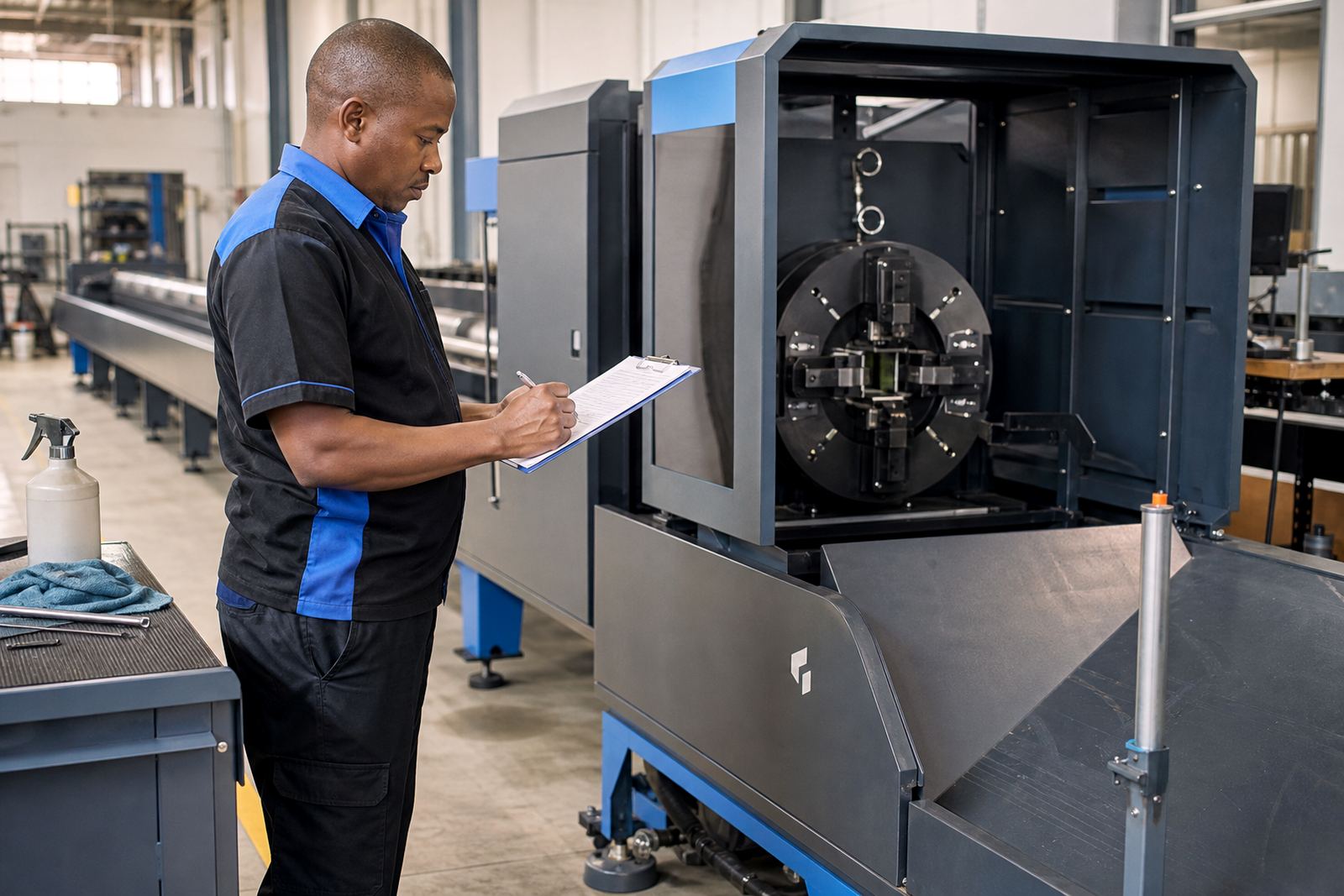
Operator training matters because tube piercing is not something a new hand should learn by trial on full production stock. The team needs to read the material, set the clamp position, check the nozzle and confirm the sequence before the first full run. Leanne Mabuza usually handles piercing within the full cutting routine, with settings and checks that match the rest of the job. Once the operator understands why a start fails, the adjustment becomes much easier to make.
- Check the tube wall thickness and material type before loading.
- Confirm the chuck grip so the section cannot twist during the pierce.
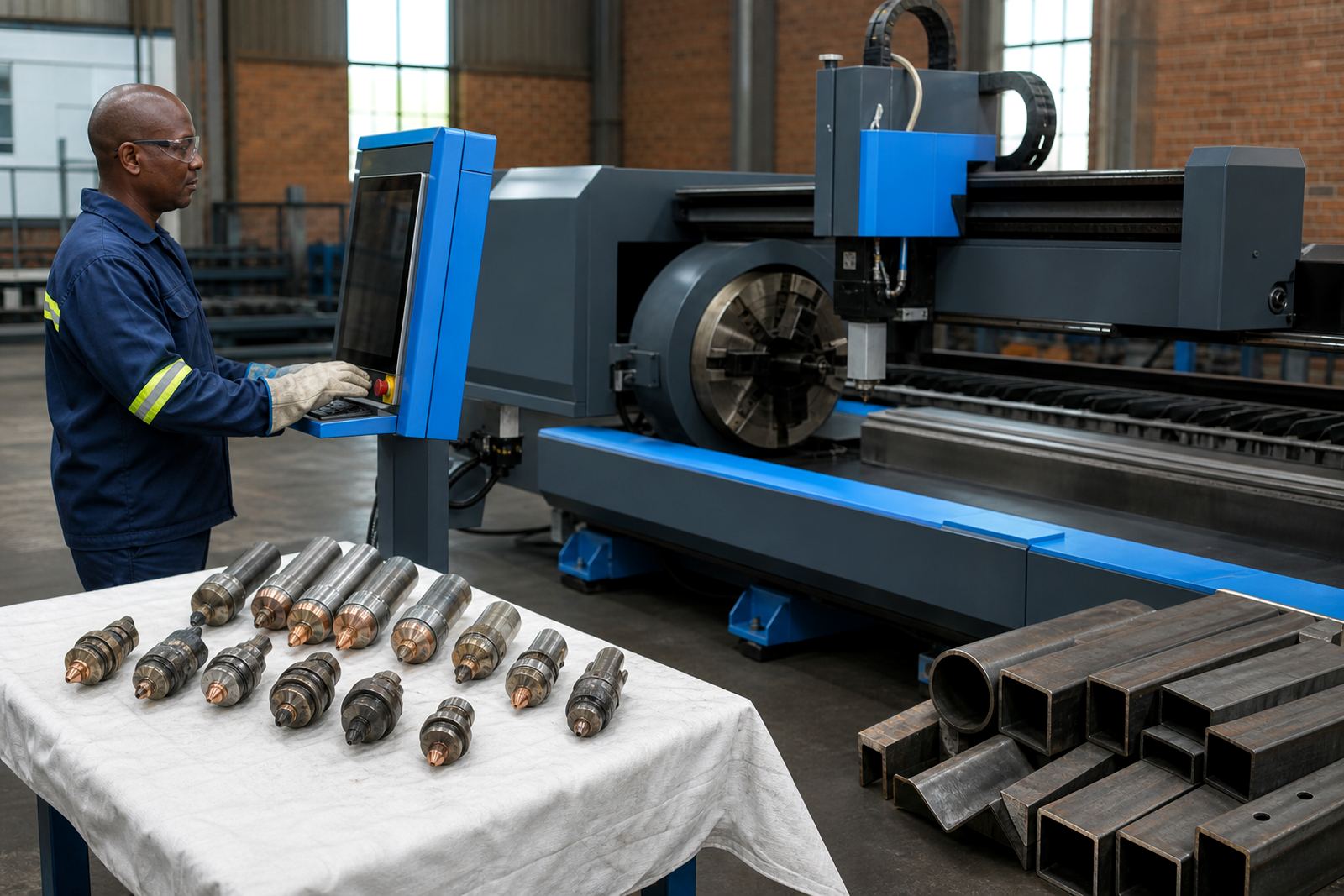
- Inspect the nozzle and lens window for splash or soot.
- Set the pierce height and focus for the actual profile, not a generic value.
- Use test pieces when the job has weld seams, tight tolerances or bevel cuts.
That discipline also helps with nesting software. A clever layout will not fix poor setup, but a sound setup lets the software do its job properly. The operator sees fewer interruptions, the machine holds its cycle better and the parts stay more consistent across the batch.
Maintenance points that stop pierce trouble from spreading
When piercing starts to drift, the fault is not always in the program. Chuck alignment, bevel calibration and assist gas setup all affect how the machine opens each feature. If the tube sits slightly off axis, the beam can enter at the wrong point and the start face will show it. If the line is restricted, the pierce may leave dross or create a wide burr. If the head is out of calibration, the angle cut can start poorly even before the full profile is engaged.
Preventive maintenance should include nozzle checks, motion inspection and a look at the chuck surfaces that hold the tube. Service technicians also need to verify that the assist gas system is stable and that the head moves exactly where the program expects. On busy plants, a small drift in setup can turn into a week of poor starts, extra handling and slow packing.
For fabricators running across South Africa, a clear maintenance habit is worth far more than waiting for a fault to become obvious. Pieter Visser often finds that the first clue is not a major stop, but a change in the look of the pierce mark. Catch it early and the machine stays easier to run.