How Surface Condition Changes the Cut Line
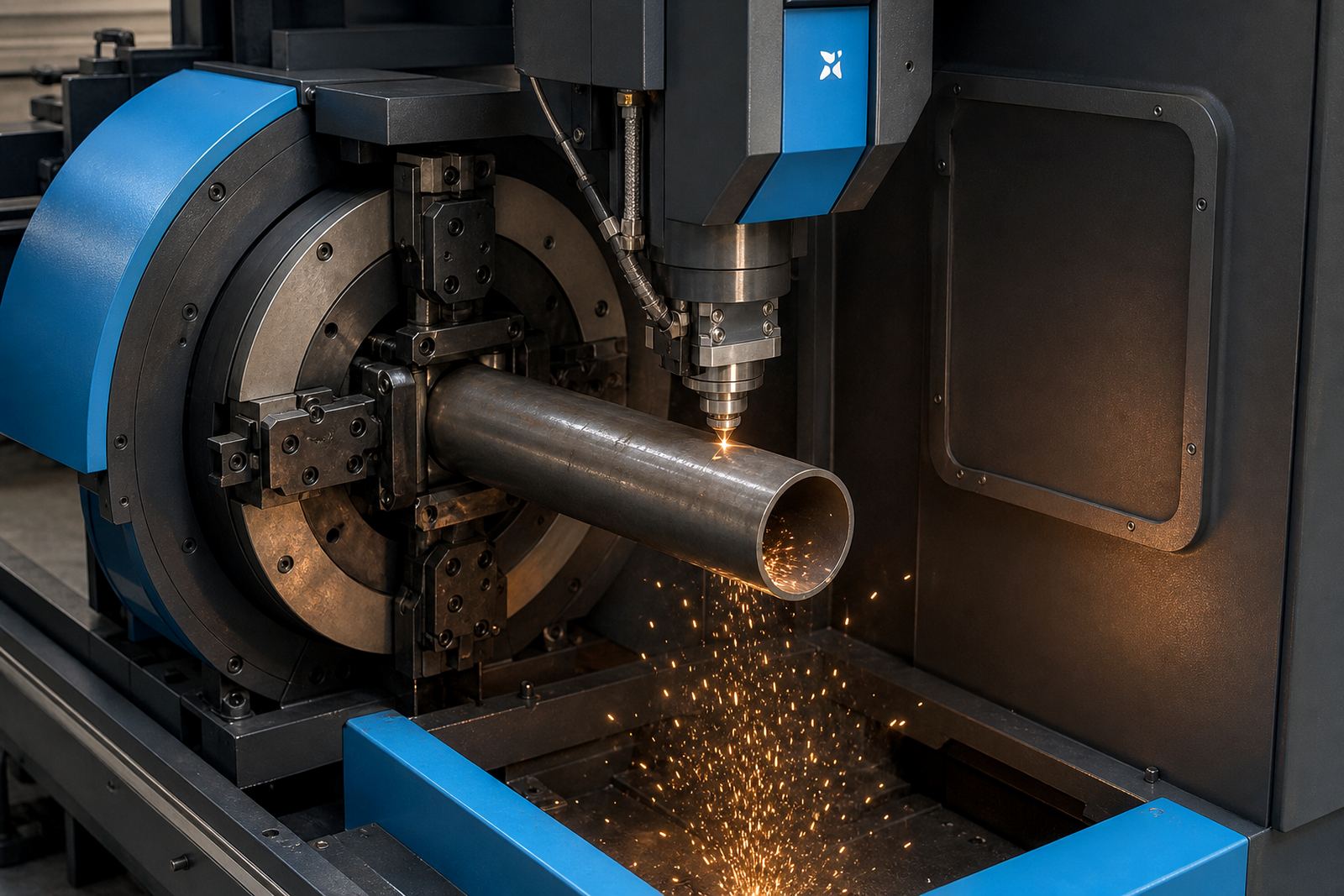
A clean, dry tube reflects the beam more evenly and gives the cutting head a steadier job. Rust patches, rolling oil and heavy scale disturb that balance, so the cut edge can show extra dross, rougher corners or slight variation from one section to the next.
On tube work, the issue is not only the visible edge. Surface contamination can also affect pierce behaviour, especially on thicker wall sections or where the tube has been stored outdoors in coastal humidity. Durban yards see this often, where a bundle can look usable on the outside but carry hidden rust on the contact faces and inside the profile.
That does not mean a machine cannot cut it. It means the operator has to work with the material in front of them, not the nominal size alone.
Rust, Mill Scale and Rolling Oil Are Not the Same Problem
Each surface issue behaves differently under a fibre laser. Rust is uneven and can create small changes in absorption along the tube. Mill scale is harder and often flakes at the cut edge, which increases cleanup. Oil can smoke, mark the lens protection and leave residue near the pierce point.
When these conditions are mixed, the job gets less predictable. A square tube with light oil and patchy surface rust may still cut well after settings are tuned, while a channel section with heavy scale at the flange edges may need slower feed and more inspection.
- Rust tends to create inconsistent edge finish.
- Oil adds smoke, residue and dirty cut zones.
- Scale can increase burrs and post-cut cleaning.
- Mixed surface conditions make setup more sensitive.
What the Operator Sees at the Machine
An experienced operator can read the material quickly. The first signs are usually changes in pierce sound, uneven sparks, or a cut edge that looks bright in one section and dull in another. On tube jobs with tight nesting, even small shifts can matter if the part needs accurate fit-up for welding.
Where a bevel head is used, surface condition can show up on the angled face as well. A slightly contaminated tube may still cut, but the bevel edge can need more attention before assembly. That matters on frames, handrailing members and structural parts where the weld prep must stay consistent.
On production plants, the real cost is rarely the cut alone. It is the extra handling, the extra inspection and the time spent cleaning parts before they leave the floor.
Cleaning Before Cutting Saves Time Later
The best time to deal with surface condition is before loading the bundle onto the machine. A wipe-down on oily tube, rejection of badly scaled stock, and proper storage off the floor all help keep the process steady. In a Germiston workshop handling mixed mild steel tube, that small discipline can cut down on scrap and rework.
There is no need to chase spotless mill finish on every job, but the incoming stock should match the work being done. A job shop cutting frames, trailers or racking can often tolerate light marks. Precision assemblies, decorative parts and mitred joints need much cleaner stock.
- Keep tube covered and raised clear of the floor.
- Separate oily stock from dry stock.
- Remove loose rust flakes before loading.
- Match material condition to the part tolerance.
Assist Gas, Nesting and Cut Settings Need to Match the Surface
Once the stock is on the machine, the gas choice and cutting parameters have to suit the material condition. Assist gas helps clear the kerf, but it cannot fully rescue poor stock. Dirty surfaces often need closer monitoring of pierce height, cut speed and lens protection, especially on long production runs.
Nesting software also plays a part. Parts placed on the cleaner sections of a tube can sometimes give more stable results, while heavily marked areas are better avoided when the job allows it. On large orders, that planning helps reduce variation between the first part and the last.
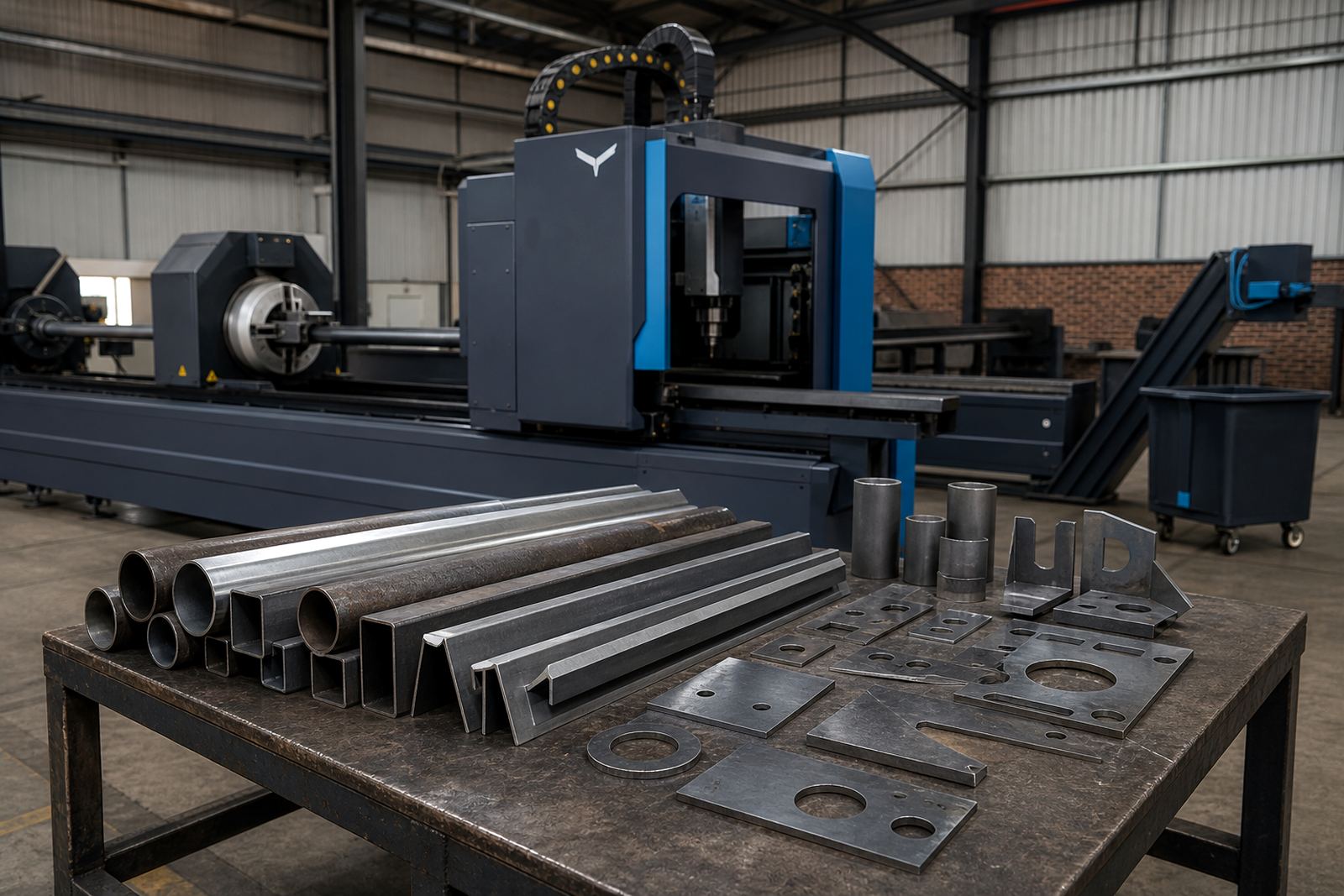
For round tube, square tube and rectangular tube, the same rule applies: the machine can only cut what arrives at the chuck. The better the input surface, the cleaner the output and the less time spent on finishing work.
A Wadeville Job That Showed the Difference
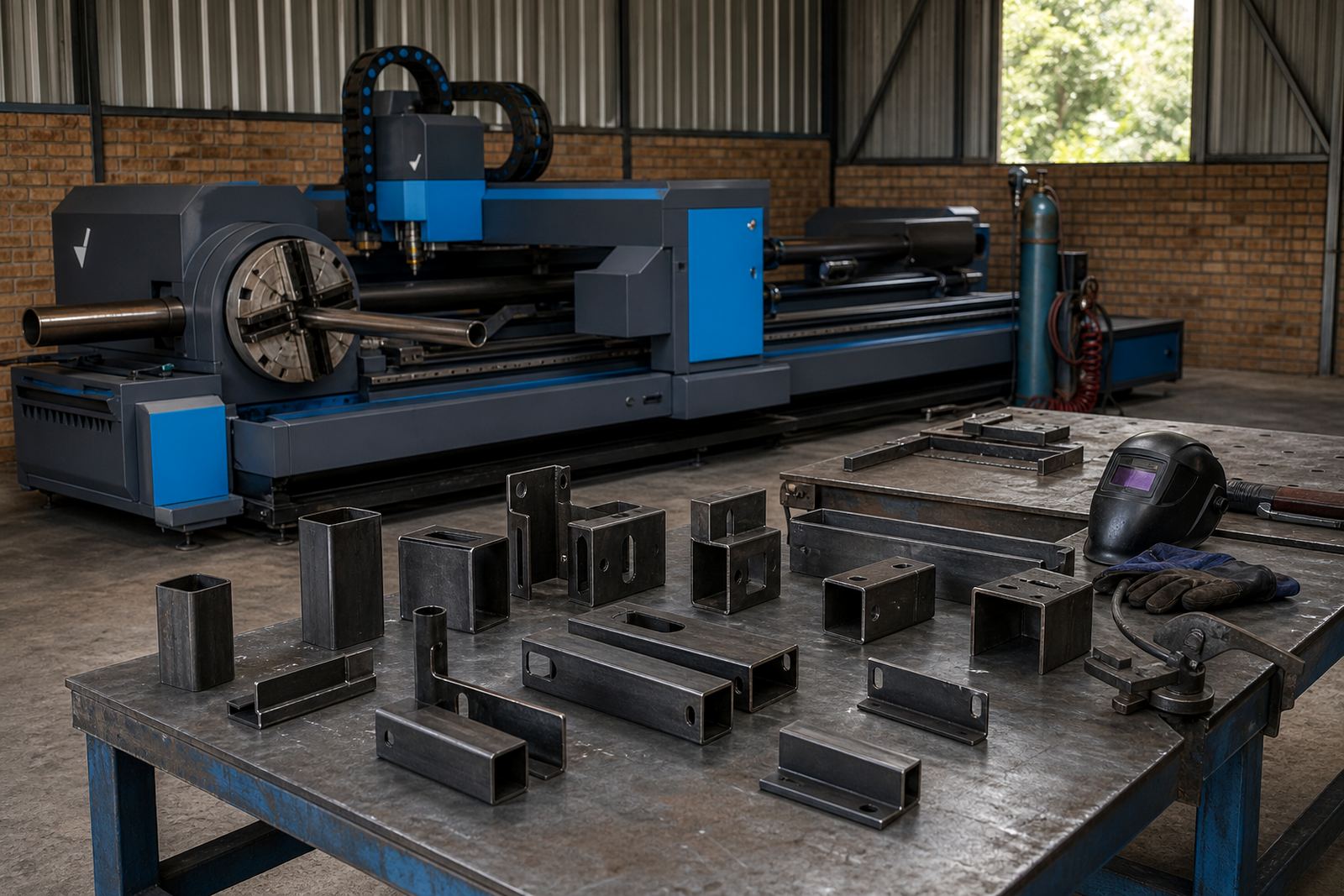
A fabrication team in Wadeville was cutting tube for welded frames and bracket sets, with stock arriving from different suppliers and storage areas. Some bundles were clean and dry, while others carried light oil and patchy scale from outdoor storage. The first group cut neatly with little clean-up, but the second group needed more inspection at the bevelled joints and more grinding at the weld prep areas.
After the team sorted stock by condition, adjusted the nesting plan and standardised the handling routine, the job settled down. The machine was doing the same kind of work, but the incoming material was no longer mixed at random. That reduced surprises at assembly and gave the welding team a cleaner surface to work with.
For plants running across Johannesburg, Pretoria, Durban, Cape Town and Gqeberha, that lesson holds up in any climate. Coastal air, yard storage and handling habits all leave a mark before the first cut starts.